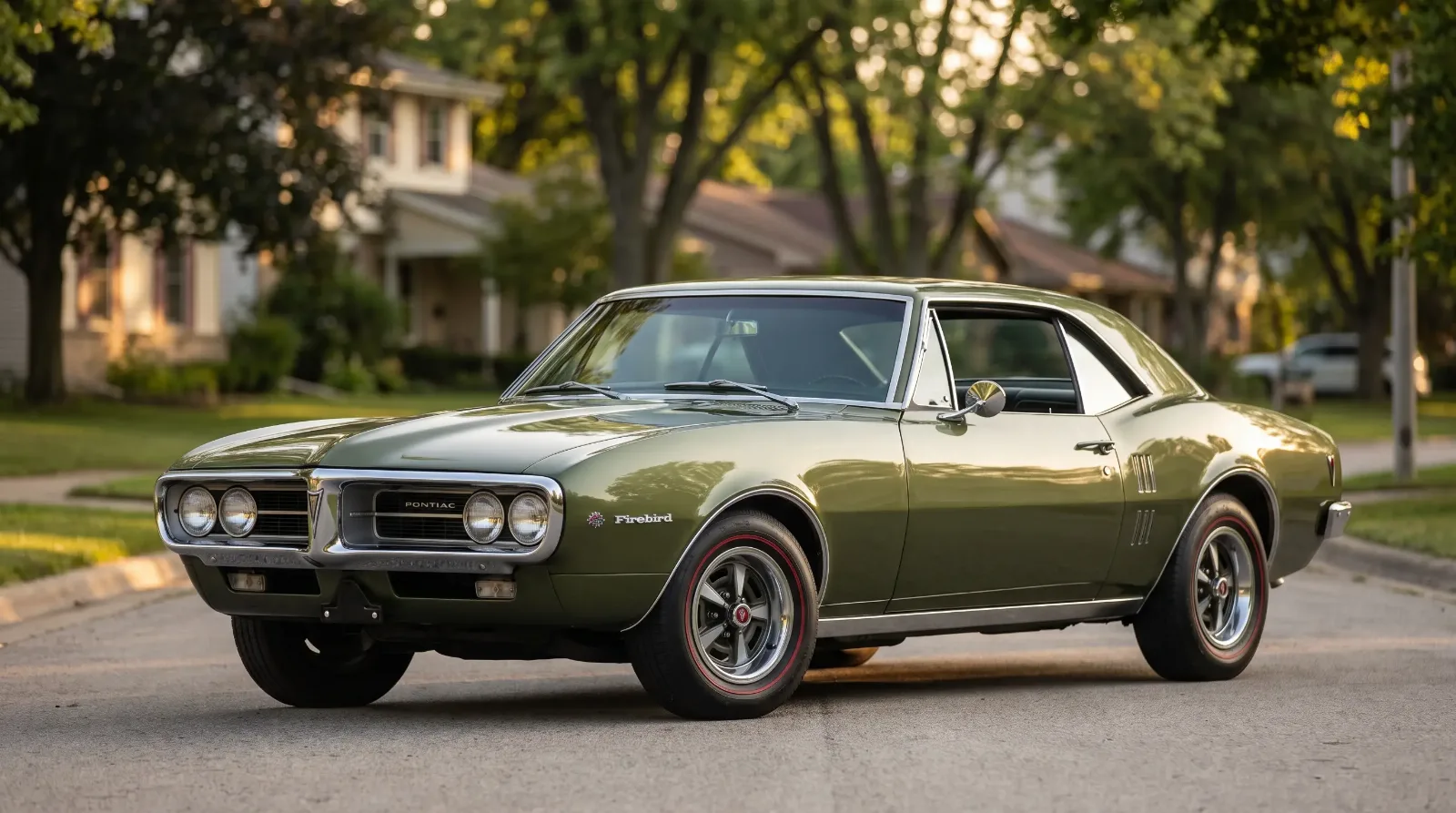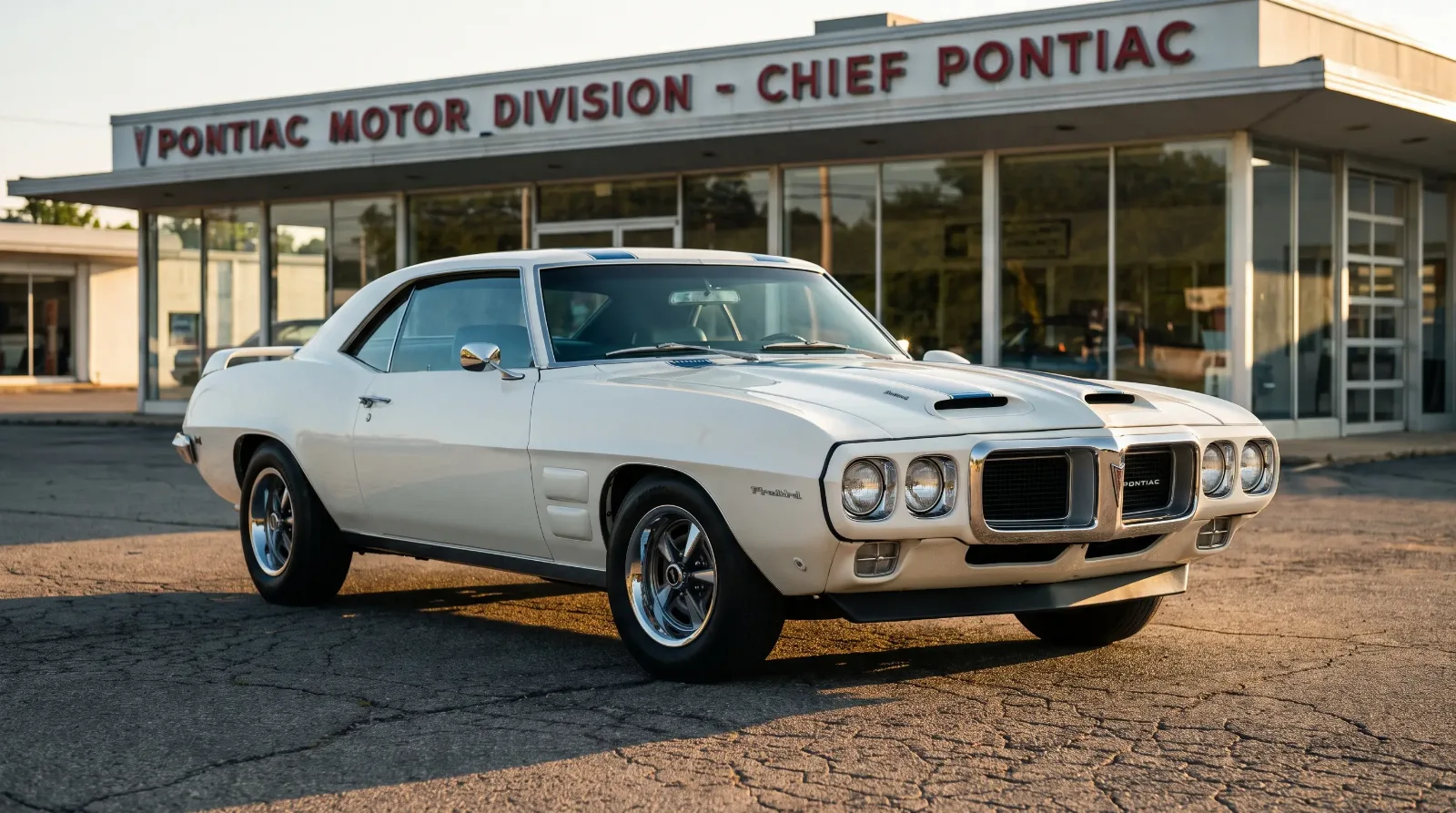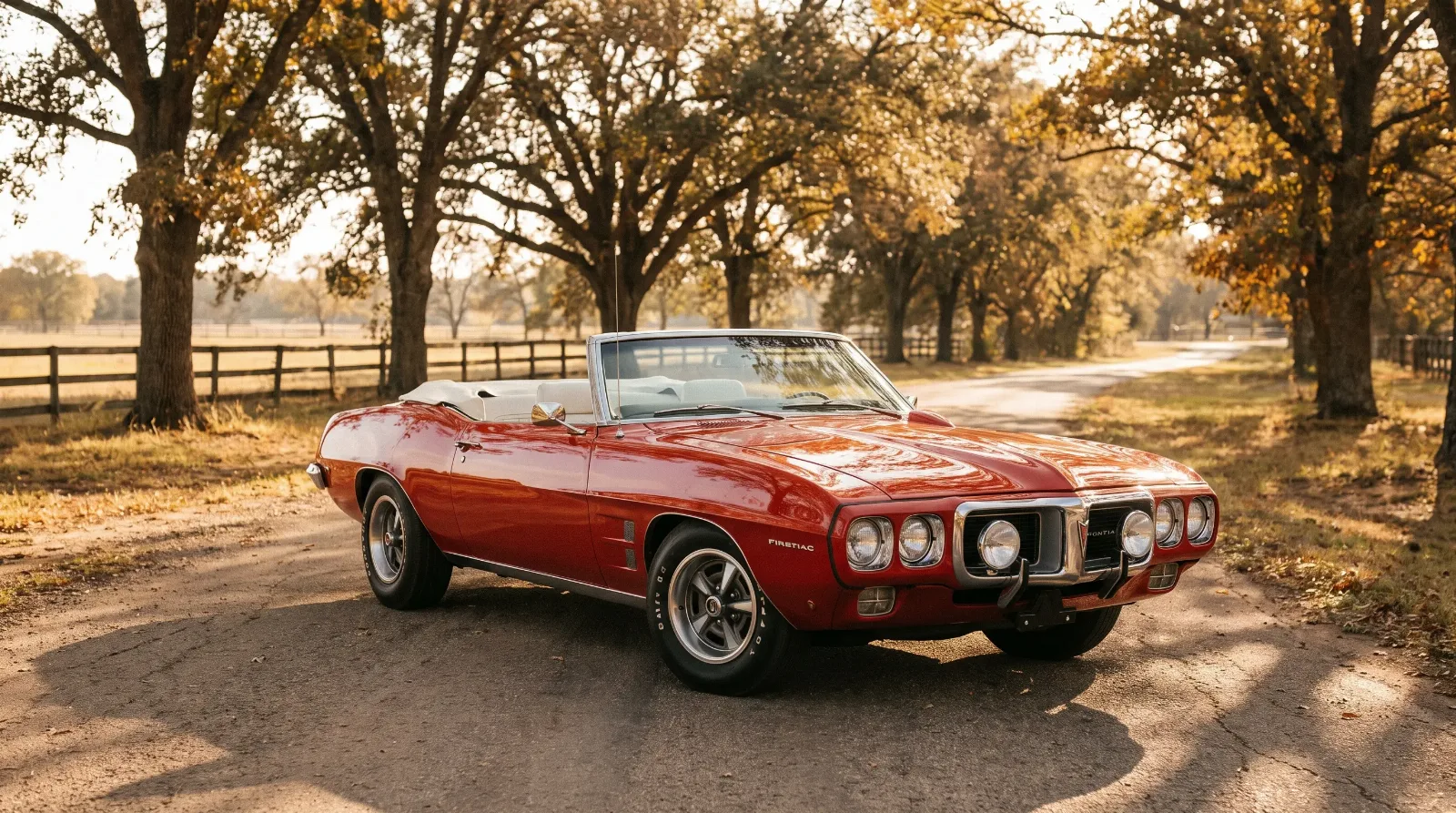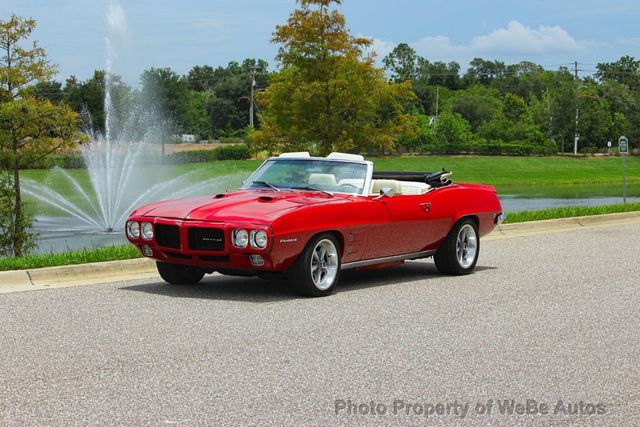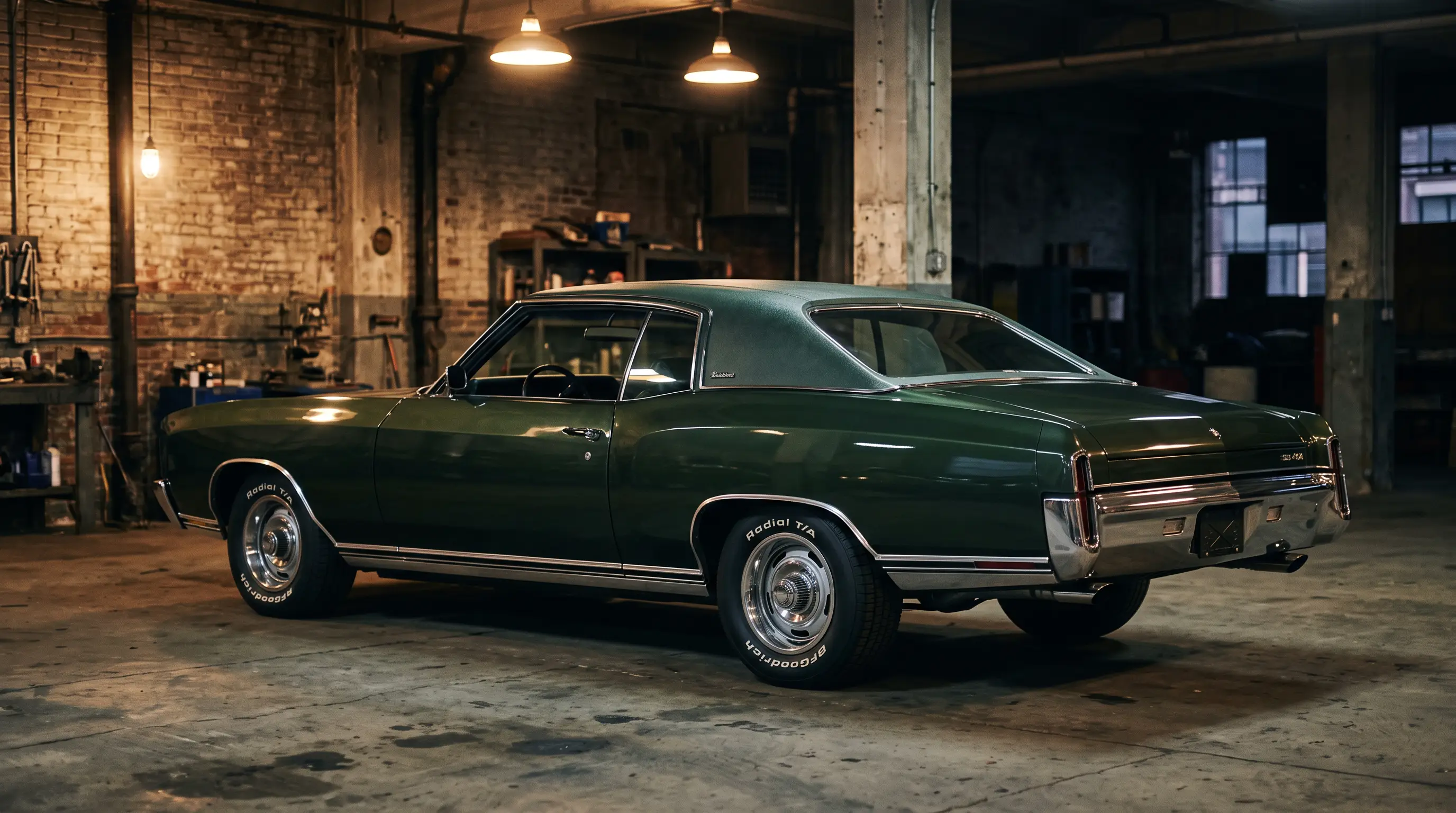
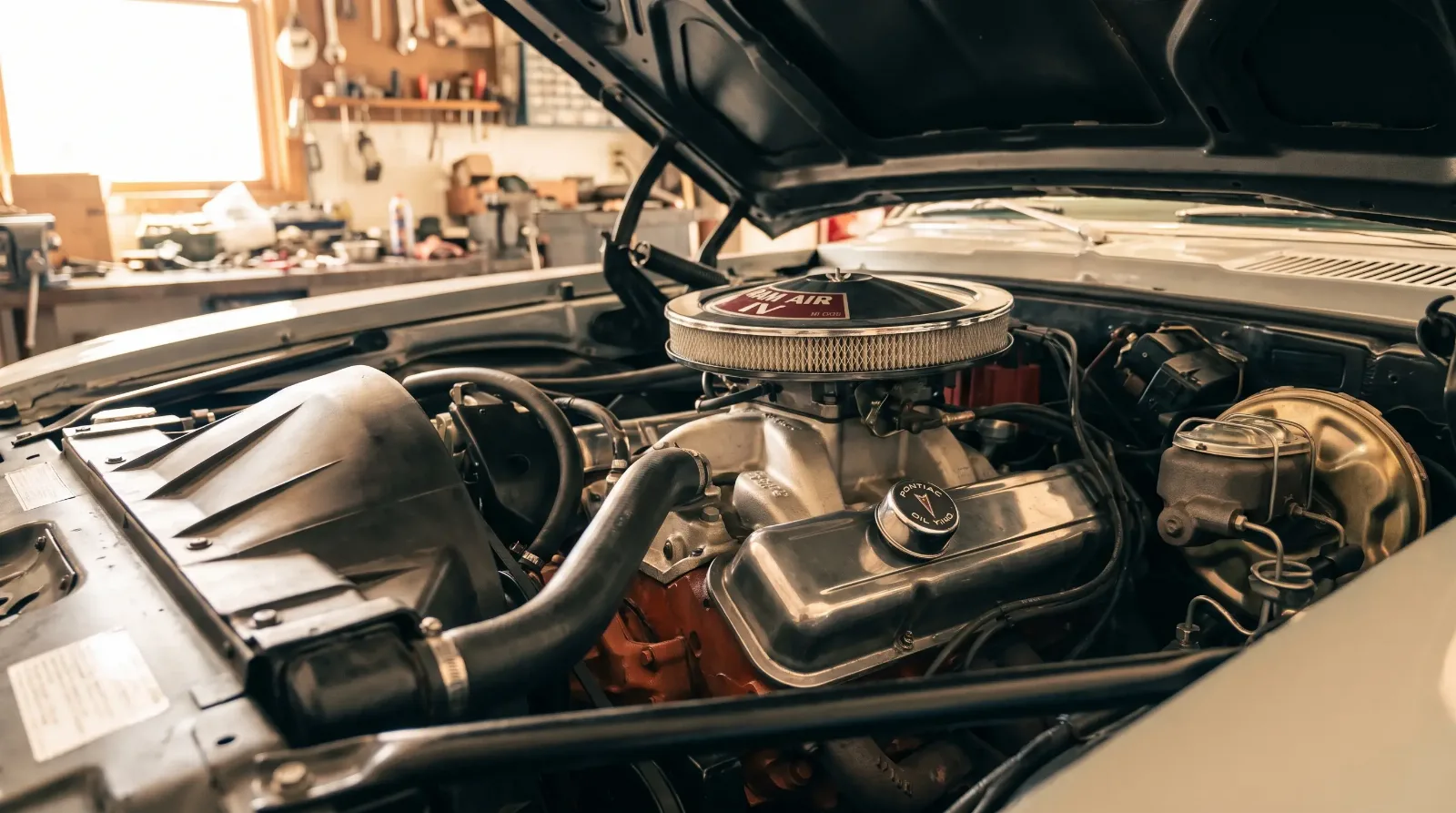
The Pontiac Firebird Ram Air IV existed for one model year, wore one displacement, and left a paper trail so thin that most owners still argue about exact production counts. For 1969, Pontiac slotted the Ram Air IV above the already potent Ram Air III as the last word in first-generation Firebird performance, a 400 cubic inch engine built around round-port cylinder heads, a longer-duration camshaft, and an aluminum intake manifold that few buyers ever saw on the order form. Understanding how the Firebird began in 1967 helps explain why this engine mattered: Pontiac had spent two years establishing the Firebird as a genuine performance car, not just a badge-engineered Camaro, and the Ram Air IV was the exclamation point on that argument.
A different kind of Ram Air
Ram Air as a concept was not new for 1969. Pontiac had offered functional hood scoops and stiffer valvetrains on Firebirds since the option's introduction, feeding cooler outside air to the carburetor instead of hot underhood air. The Ram Air III, standard on the Trans Am and optional elsewhere, used oval-port heads and a cast iron intake. The Ram Air IV took the same 400 cubic inch block and rebuilt the top end almost entirely. Pontiac's engineers fitted heads with round exhaust ports, larger valves, and improved porting that let the engine breathe at higher rpm than the III ever could.
The camshaft, known among Pontiac restorers by its factory casting number 9794041 (often just called the "041" cam), ran longer duration and more lift than the Ram Air III's cam, trading low-end torque for a much stronger pull past 4,500 rpm. Forged pistons replaced the cast units used elsewhere in the 400 lineup, giving the bottom end enough margin to survive sustained high-rpm use, which was the entire point of the package.
Numbers on paper versus numbers on the dyno
Pontiac's official rating for the Firebird Ram Air IV was 345 gross horsepower at 5,000 rpm with 430 lb-ft of torque at 3,400 rpm, only 10 hp above the Ram Air III's advertised 335 hp. That was deliberate. GM divisions in the late 1960s routinely under-rated their hottest engines to stay under corporate horsepower-to-weight guidelines and avoid drawing attention from insurers, and the Ram Air IV is one of the better-documented examples of the practice: the identical engine installed in the 1969 GTO carried a factory rating of 370 hp, a full 25 hp higher than the same engine wore in a Firebird. The round-port heads and higher-rpm cam meant the IV made its power later in the rev range and kept pulling where the III had already signed off. Independent dyno work done decades later by restorers has generally supported the idea that the real gap between III and IV was larger than the shared ratings suggested, though exact figures vary by engine condition and tune.
| Spec | Ram Air III | Ram Air IV |
|---|---|---|
| Displacement | 400 cu in | 400 cu in |
| Cylinder heads | Oval port | Round port |
| Intake manifold | Cast iron | Aluminum |
| Camshaft | Milder duration | McKellar #62, longer duration |
| Advertised rating | 335 hp | 345 hp |
How rare is rare
Exact Ram Air IV production numbers for the 1969 Firebird are one of the more contested figures in Pontiac history. The best-documented slice is the Trans Am: just 55 of the 689 hardtops built for 1969 carried the Ram Air IV, 46 with the close-ratio 4-speed and the rest with automatic, and no Ram Air IV convertible left the factory that year. Club researchers put total Ram Air IV output across all 1969 Firebird body styles, Trans Am included, at roughly 150 to 160 cars, almost entirely hardtops. Pontiac's own build sheets and dealer invoices, where they survive, remain the most reliable way to confirm a specific car, since the option was easy to add to a data plate long after the fact once the engine's reputation grew.
That gap between reputation and paperwork is exactly why documentation carries so much weight with this engine. A Ram Air IV without a matching PHS report or original invoice is a claim, not a fact, and serious buyers treat it that way.
"Every Ram Air IV story starts the same way, with someone insisting their car is one of a handful built. Half the time they are right. The other half, the block casting numbers tell a different story than the seller does."
— Tom Ramirez
Living with one today
A correctly built Ram Air IV is not a gentle engine. The longer cam duration means a rougher idle than the III, and the round-port heads want revs to make their power, so the car rewards a driver willing to use the whole tachometer rather than short-shift at 3,000 rpm. Parts availability has improved over the decades as reproduction round-port heads and correct intake castings became available, but original factory pieces still command a premium disconnected from their function, purely because of what stamped on them.
For collectors chasing first-generation Firebirds more broadly, the Ram Air IV sits at the top of a pyramid that starts with the base six-cylinder and climbs through the 326, the 350, and the 400 in its various states of tune. If the Ram Air IV feels like too specialized a starting point, a companion piece on the 1967-69 convertible covers a body style that could, in theory, be ordered with any of those engines, Ram Air IV included, for buyers who wanted the top down and the revs up at the same time.
What a real Ram Air IV costs to own
Ownership costs for a genuine Ram Air IV split into two categories that rarely overlap in the same invoice: the routine maintenance any high-compression 400 requires, and the premium tied to keeping numbers-matching parts on the car. Valve adjustments, ignition timing, and cooling system upkeep are no different from any other big-block Pontiac of the era, and a competent independent shop can handle them without specialized knowledge. The second category is where owners get into trouble. Correct round-port heads, the specific aluminum intake casting, and date-coded carburetors are scarce enough that a damaged original piece can cost more to replace correctly than an entire lesser 400 engine would cost to rebuild from scratch.
Insurance appraisers who specialize in muscle cars generally recommend a fresh engine inspection with casting number verification before any Ram Air IV changes hands, since the difference between a correctly matched car and a well-restored clone is almost entirely invisible to a casual inspection. Build sheets and casting numbers do not always agree with the story a seller tells, and when they disagree, the numbers win.
Sources and notes
- Pontiac Firebird - Wikipedia
- Is this rare Ram Air IV four-speed the finest of first-gen Firebirds? - Hagerty Media
- Sorting through Pontiac's Ram Air engine production - Hagerty Media
- 1969 Pontiac Firebird Trans Am Ram Air IV factory specifications - Automobile Catalog
- A $225K Trans Am is the one-of-none 1969 Ram Air IV convertible Pontiac never built - autoevolution
- The Difference Between the Pontiac Ram Air III and IV V8 Engines - HotCars