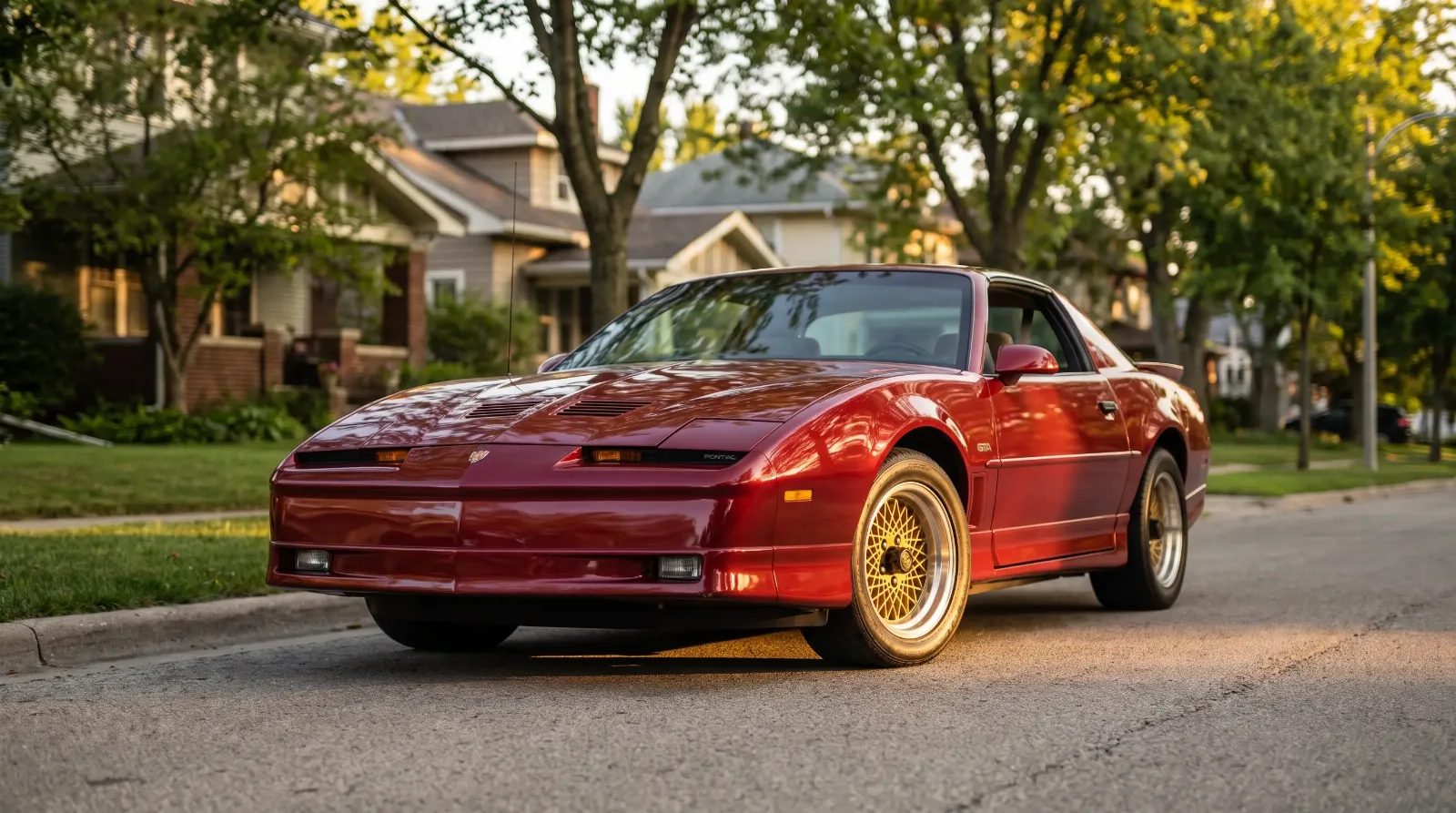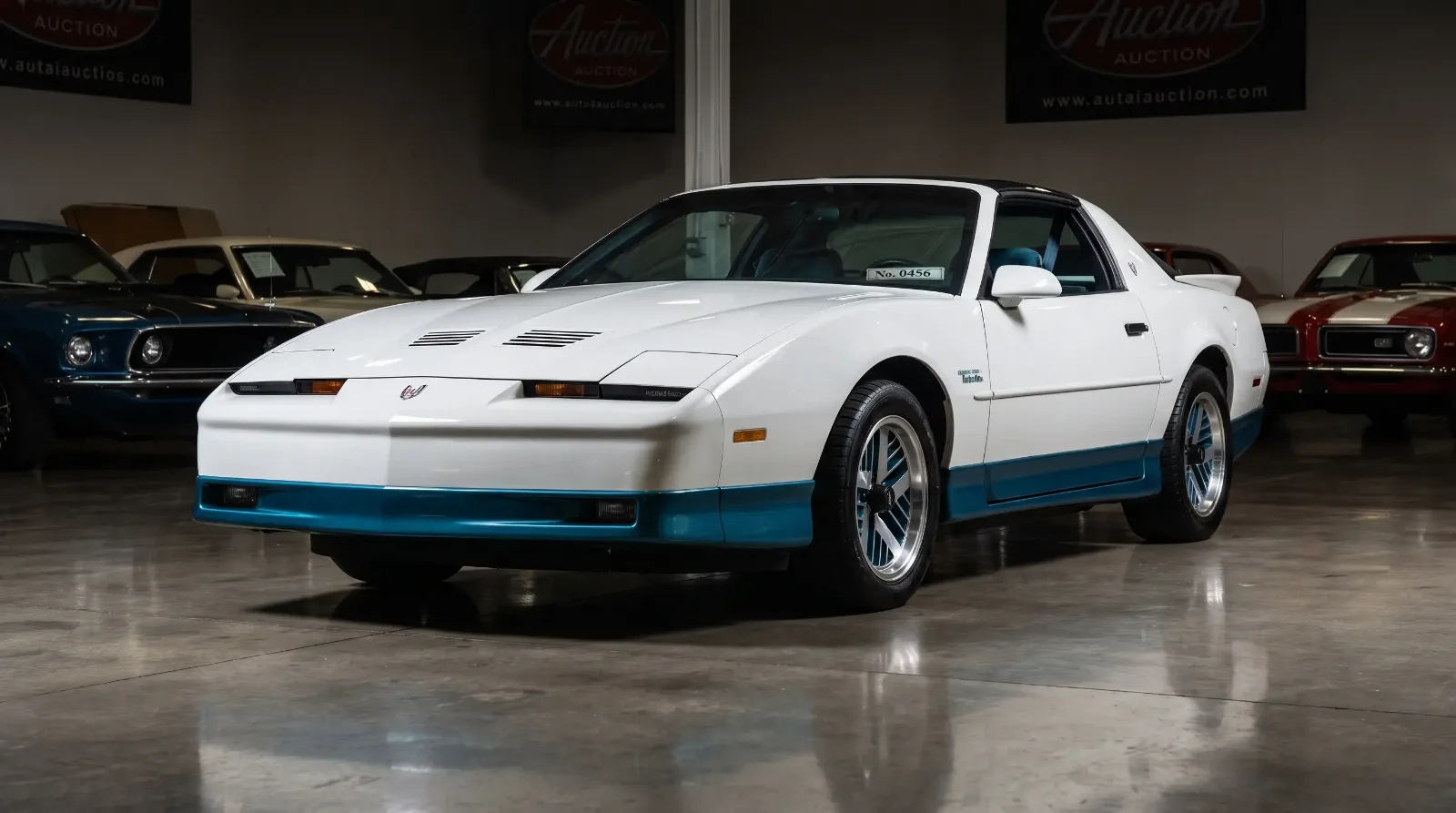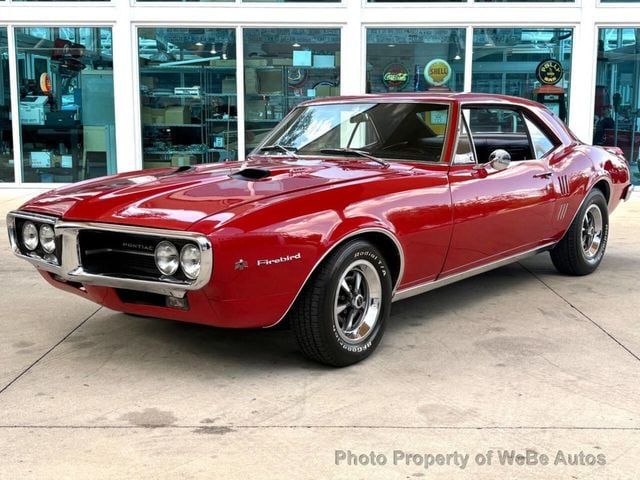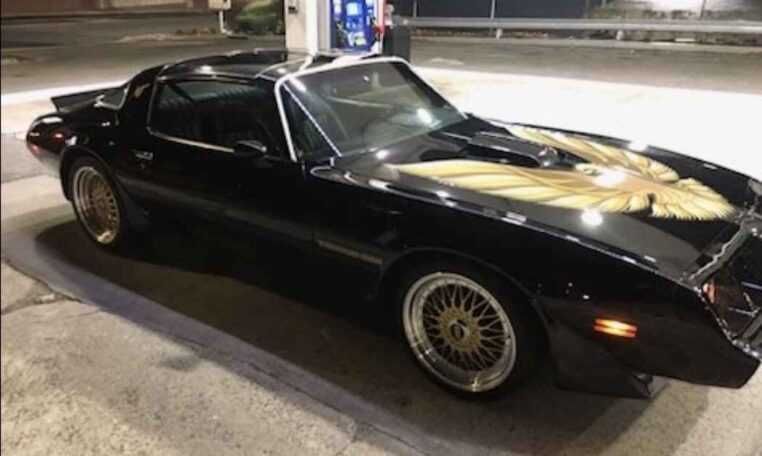
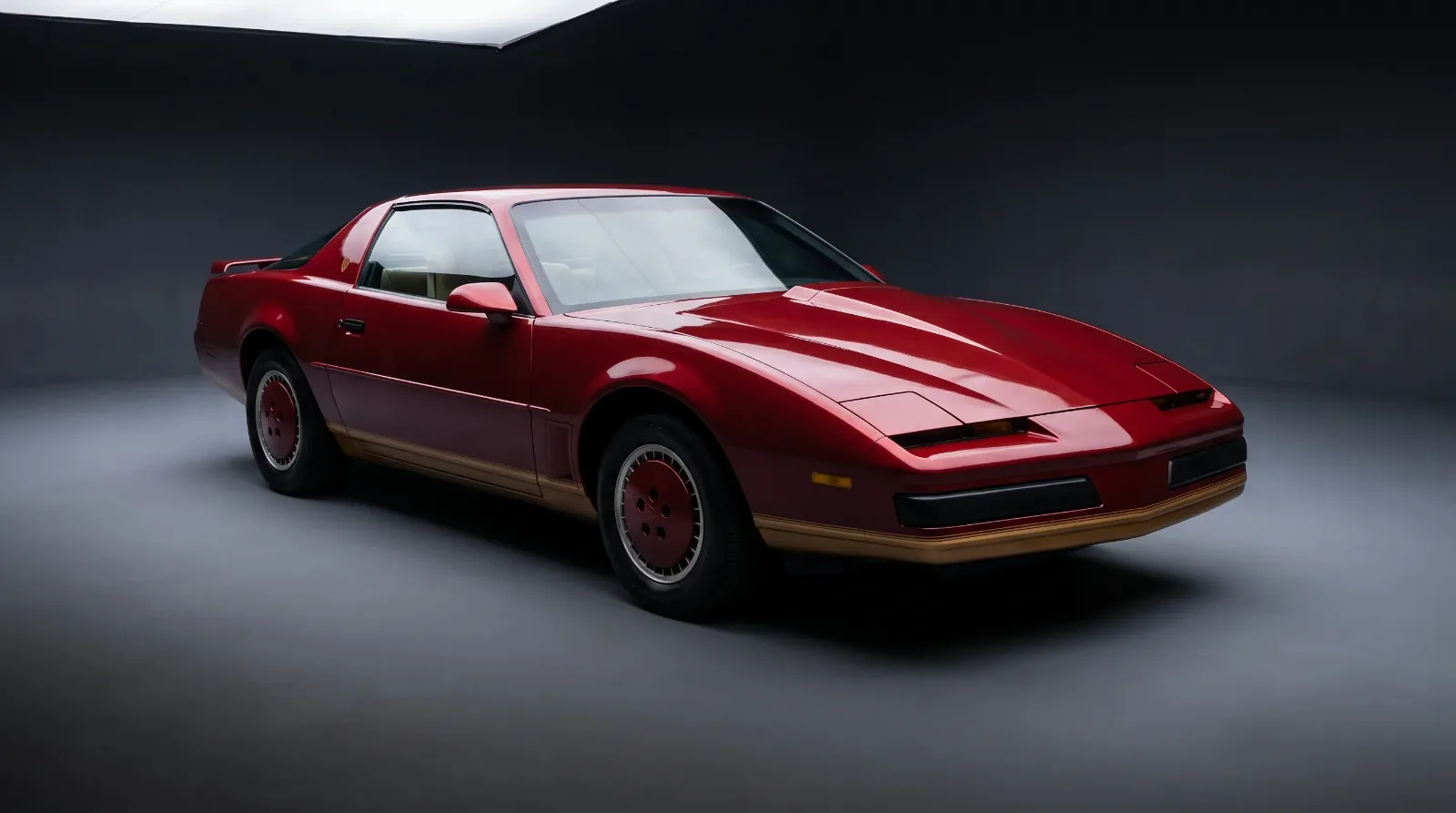
There was a guy at the club meet a few years back who still remembers walking into a Pontiac showroom in the fall of 1981 and not recognizing the car on the turntable. He had grown up on the long-hood, short-deck Firebirds of the 1970s, the ones with the big screaming chicken hood decal and the two-piece bumper. What sat under the showroom lights that day had a smooth, sloped nose, hidden headlights that disappeared flush into the bodywork, and glass that wrapped the whole front end like something out of a wind tunnel brochure. He told the story like he was describing a car from another planet. Turned out the paperwork settled it before the bench-racing even got going: that was the 1982 Firebird, and it really was built in a wind tunnel, not just styled to look like one.
What actually changed for 1982
The 1982 model year brought the third-generation Firebird, and it was not a facelift, it was a clean-sheet redesign. Pontiac moved away from the body-on-frame proportions of the second-generation car and toward a lower, smoother shape built around aerodynamic targets that GM's engineers had been chasing since the fuel crises of the previous decade. The hidden headlight setup was not just a styling flourish, it dropped drag by keeping the nose smooth at speed, and the wraparound rear glass and hatchback layout gave the car a completely different silhouette than anything Pontiac had built before.
The base 1982 Firebird coupe posted a drag coefficient of 0.33, while the Trans Am, with its ground-effects package and different nose treatment, came in slightly slipperier at 0.32. Those numbers held for the launch year; Pontiac would chase the figure down further as the decade wore on, eventually reaching 0.29 on later Trans Ams fitted with the aero wheel option. What is not in dispute is that the shape was a genuine departure, engineered for efficiency in a way the outgoing car never was.
| Feature | Second-gen Firebird (pre-1982) | Third-gen Firebird (1982 on) |
|---|---|---|
| Headlights | Fixed, exposed | Hidden, flush-mounted pop-up units |
| Body style | Notchback coupe | Hatchback with wraparound glass |
| Design priority | Muscle-era proportions | Aerodynamic efficiency |
| Chassis | Carryover second-gen platform | New third-gen platform |
The club floor argument, settled
Every time this car comes up at a meet, somebody insists it was rushed out to chase the new Camaro, and somebody else insists Pontiac had been planning this shape since the mid-1970s. Both halves of that argument miss the actual record. GM's F-body redesign was a joint program between Chevrolet and Pontiac, developed together and released for the same 1982 model year, which is exactly why the Camaro and Firebird share so much structure underneath while wearing different sheet metal and different noses. Neither brand was chasing the other. They were sharing an engineering budget and letting each division's styling studio put its own face on the same platform.
"Everybody at the club had a theory about that fuelie until somebody pulled the tank sticker, and just like that, the bench-racing was over. Same thing happens with the 1982 redesign every single time. Somebody swears it was rushed, somebody swears it was years in the works, and the actual development record ends the argument in about ten seconds."
— Wayne Coburn
What buyers get today
A well-kept 1982 to 1984 Firebird is a different ownership experience than an early Trans Am, and the community around these cars has grown more serious about that distinction over the past decade. Values for clean, unmolested early third-gen cars have crept up as buyers realize how few of them survived daily-driver duty into the collector years. The interior tech alone, digital dash options, electronic engine controls, was new territory for Pontiac at the time, and cars with that equipment still functioning correctly command real attention at meets now.
The community conversation around the third-gen Firebird has shifted from "why would you want one of these instead of a real Trans Am" to genuine appreciation for what the redesign actually accomplished. That shift did not happen overnight. It happened because enough owners kept driving these cars, kept documenting them, and kept showing up to defend the platform until the rest of the hobby came around.
Buying and inspecting one
If you are looking at one of these, the hidden headlight motors are the first thing to check. They were new technology for Pontiac at the time and they do fail, and a non-functioning motor is a real repair, not a five-minute fix. Beyond that, treat it like any other thirty-plus-year-old GM car: check the frame rails, check the hatch seals for leaks that rot the cargo floor, and ask for service records on anything with the digital dash option, since those units are getting harder to source in working condition.
The interior itself is worth a slower look than most buyers give it. The dash layout changed completely from the outgoing car, and the plastics used in that new dash have not aged evenly across every surviving example. Sun exposure warps the digital dash bezel on some cars and leaves it perfectly intact on others parked in the same region, which tells you climate history matters less than whether a car actually sat in direct sun for years at a time. Ask the seller where the car lived before you assume the interior condition tracks with the odometer.
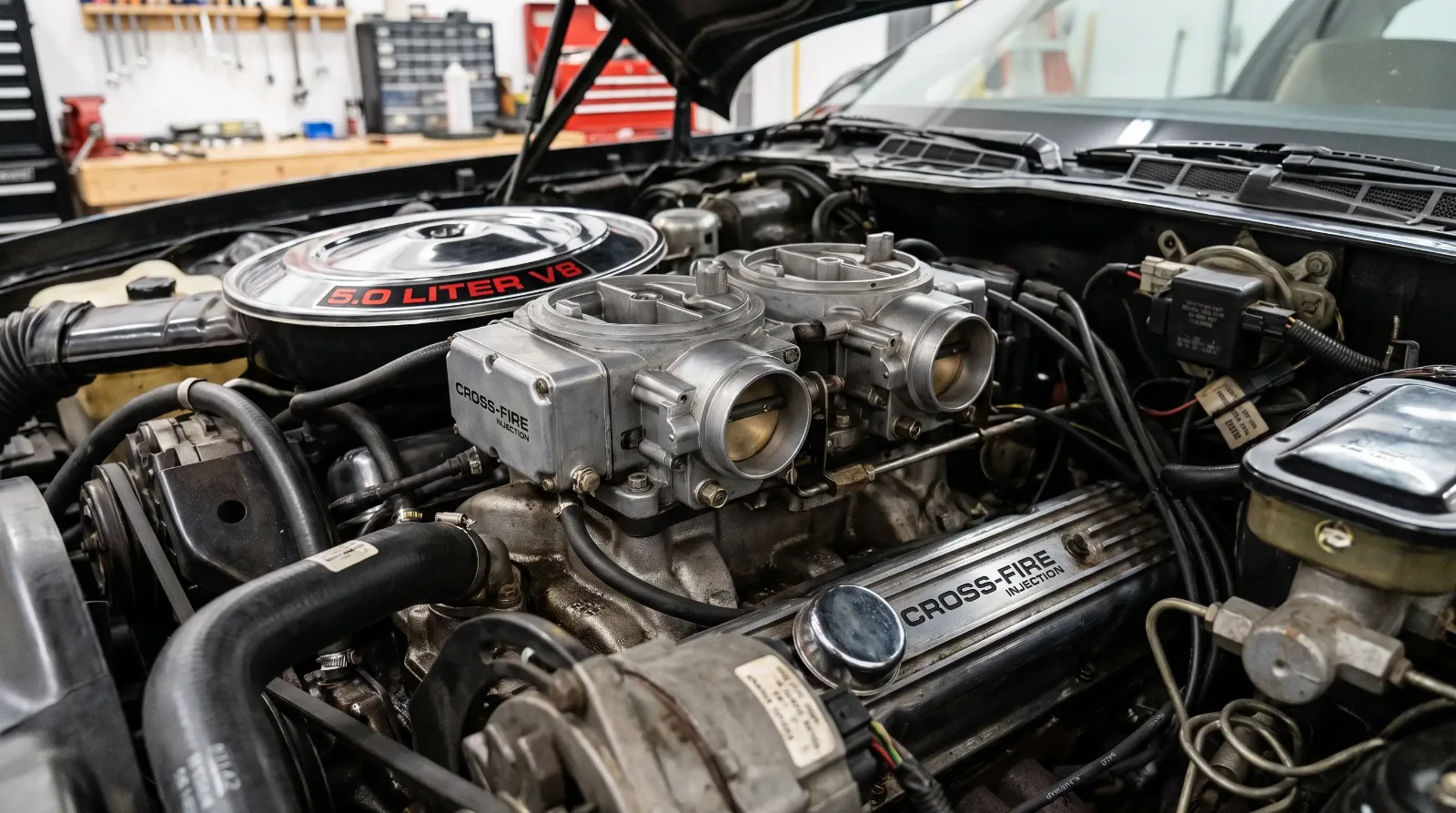
The story does not stop with the redesign itself. The engine side of this generation had its own growing pains, and if you want to keep reading the series, that piece covers exactly what Pontiac put under the hood of these new-shape cars and why the early years were rockier than the styling suggested. For the full arc of how the Firebird got here, our Firebird retrospective lays out every generation side by side.
Sources and notes
- Pontiac Firebird (third generation) - Wikipedia
- Don't Drag Me Down: 10 American Cars That Mastered Aerodynamics - Hagerty Media
- 1982 Pontiac Firebird Data Book
- The 1982-1992 Pontiac Firebird - HowStuffWorks
- 1982-1992 Pontiac Firebird/Trans Am (3rd Gen) Buyer's Guide
- Trans Am Aerodynamics - Third Generation F-Body Message Boards