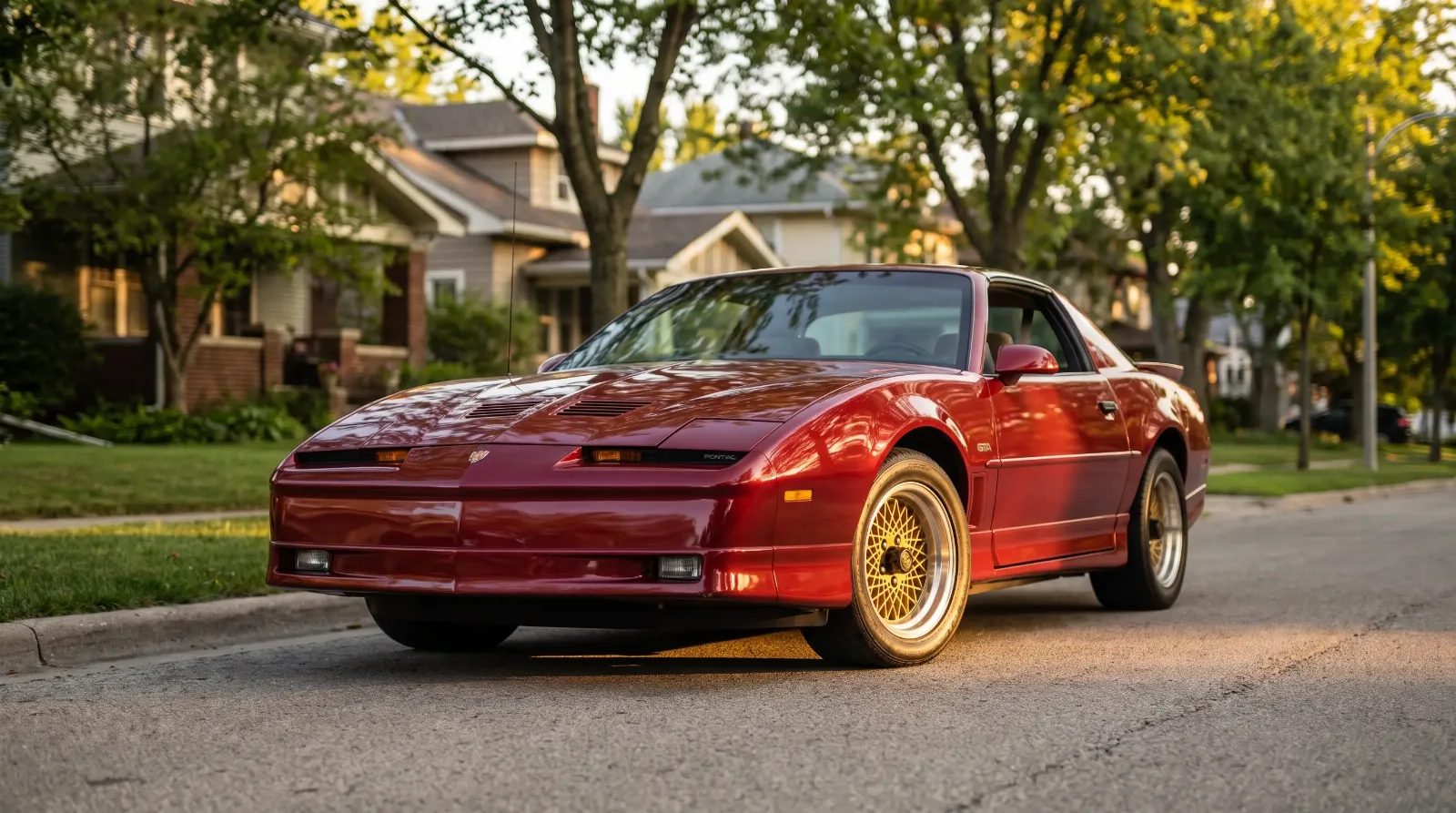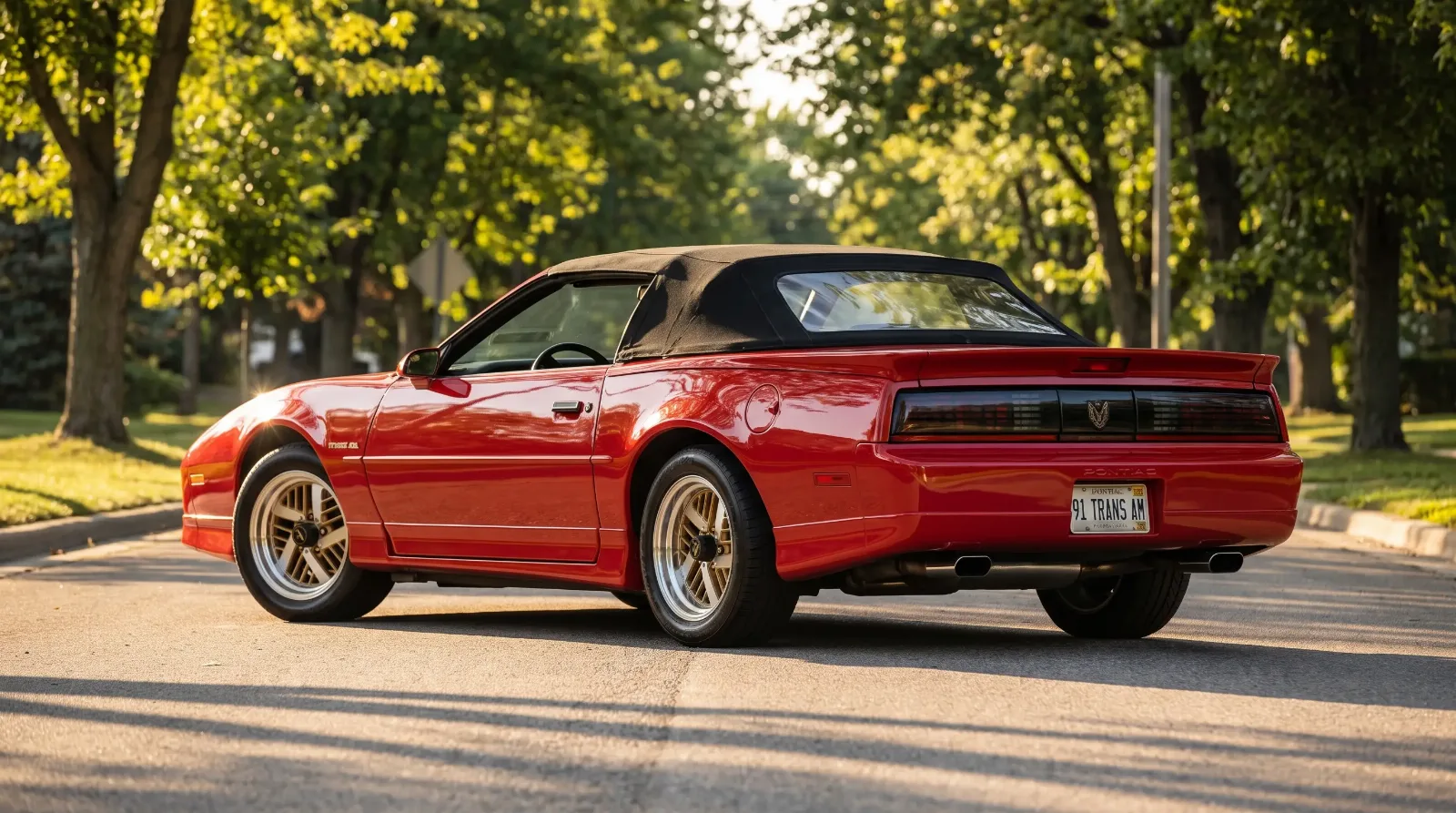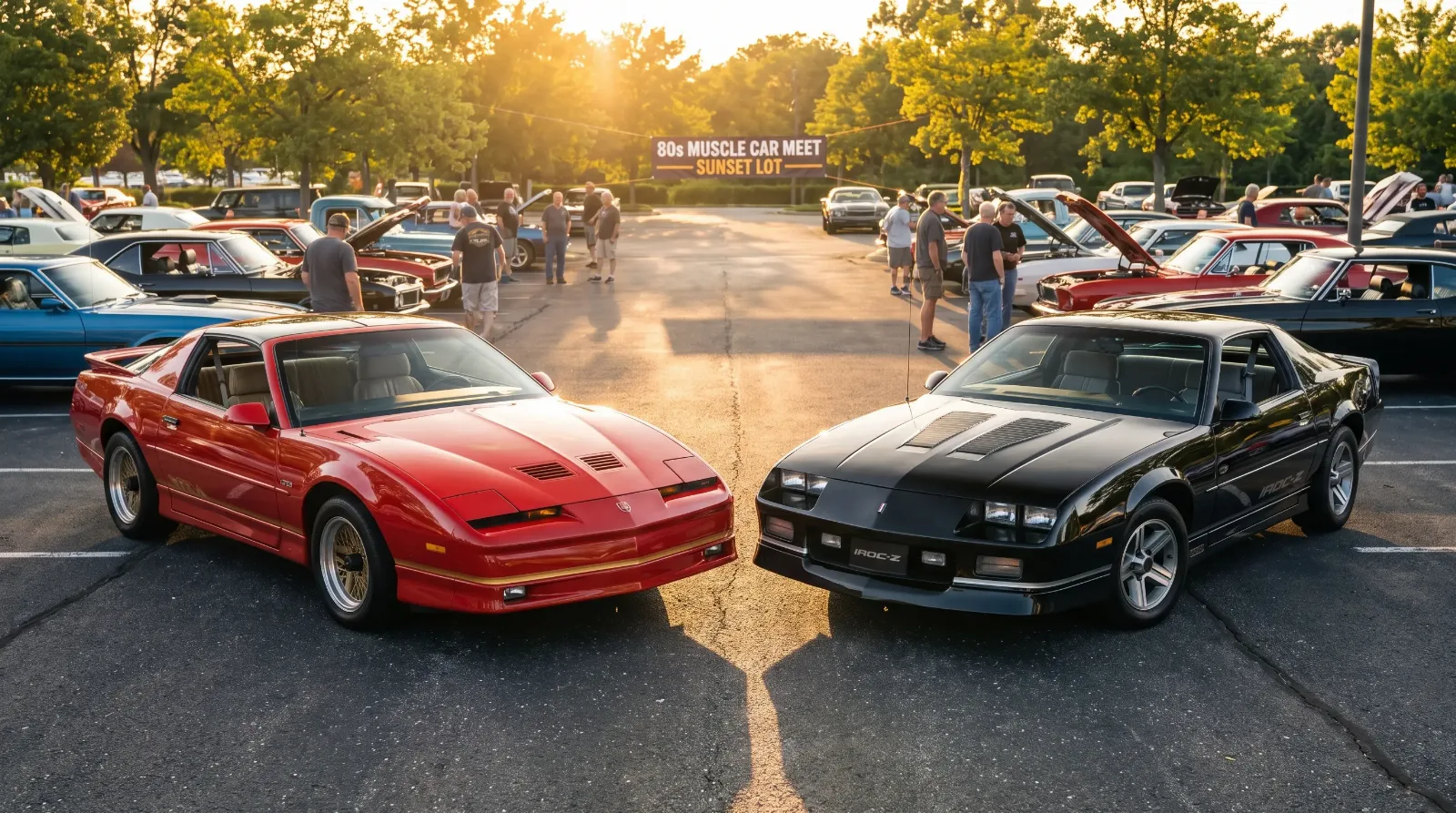
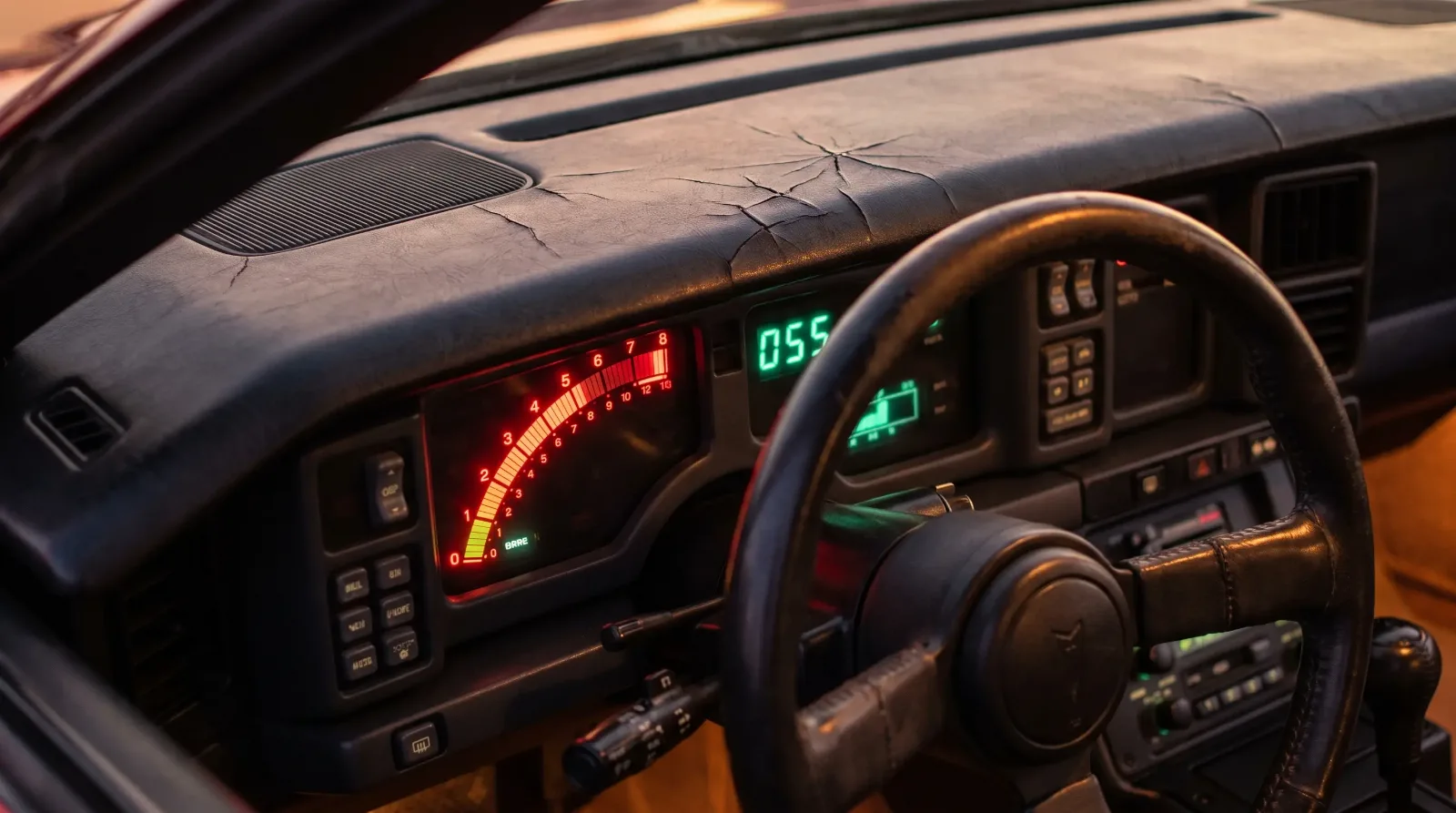
A member brought his 1985 Trans Am to a meet a while back specifically to show off something that barely worked anymore, a digital instrument cluster that flickered like a dying television whenever the car hit a pothole. He was proud of it anyway. Half the room gathered around to watch it glitch, and somebody said what everybody was thinking: nobody built dashboards like this before or since. That is the honest starting point for talking about the interior of the gen3 Firebird, because Pontiac's cabin design across 1982 to 1992 was ambitious, occasionally strange, and is now one of the more fragile parts of owning one of these cars.
The wraparound cockpit
Pontiac built the gen3 interior around a driver-focused cockpit theme, with the dash, console, and door panels angled toward the driver in a way that felt genuinely different from the flatter, more upright layouts of the previous generation. The idea was to make the car feel like it was built around the person driving it rather than around a bench of passengers, and for the era, it worked. The wraparound design carried through the whole run with detail changes along the way, and it is one of the reasons these interiors still photograph well even when the materials underneath have not aged gracefully.
The console itself grew more elaborate as the decade went on, picking up more switchgear, more trip computer functions on higher trims, and progressively busier graphics on the climate controls. None of it was subtle. That was rather the point.
Seating followed the same theme. Higher trims offered articulating bucket seats with adjustable lumbar and thigh support, a genuine step up from the flatter seats found on base cars, and they remain some of the more comfortable factory buckets from the whole decade when the foam underneath has not collapsed. Door panels picked up integrated speaker grilles and map pockets as the run continued, small details that added up to a cabin that felt considerably more finished by the end of the generation than it had at the start.
The digital dash option
From 1985 through 1988, Pontiac offered an optional electronic instrument cluster on the Trans Am, replacing the analog gauges with a digital display that included a speedometer readout, a bar-graph tachometer, and trip computer functions worked through a set of dash-mounted buttons. It looked like the future in a showroom in the mid-1980s, and it is exactly the kind of feature that has aged the way period electronics tend to age, which is to say unevenly and often poorly. Buttons wear out. Displays dim or drop segments. Repair options today mean either finding a good used unit from a donor car, which is getting harder every year, or sending a cluster out to one of the handful of specialists who still recap and repair these boards.
A running digital dash is a genuine point of pride at a show, for exactly the reason that member's flickering cluster drew a crowd. It is rare, it is period-correct, and it is a small miracle every time it works right. A non-functioning one is common enough that it barely affects a car's value unless the buyer specifically wants the option to be operational.
Materials that did not hold up
The dash pad itself is the interior's weak point on nearly every surviving gen3 car. The plastic used across most of the run is prone to cracking after decades of sun exposure, particularly on cars that lived in warmer climates without a windshield sunshade habit. A crack-free original dash pad on a car from this era is genuinely uncommon, and reproduction pads exist now precisely because so many original ones failed. Seat foam is the other common casualty, especially on cars with the optional articulating bucket seats, where the bolsters take the brunt of getting in and out over the years and flatten or split well before the rest of the upholstery shows its age. Door panel trim and console switch bezels are a smaller but just as telling wear point, since the plastics used there share the same sun sensitivity as the dash and often start showing hairline cracks around the same age.
| Interior wear point | Common failure | What to check |
|---|---|---|
| Dash pad | Sun cracking | Look along the defroster vents and gauge binnacle edge first |
| Digital cluster (if equipped) | Dead segments, dim display | Start the car cold and watch for flicker or dropout |
| Seat bolsters | Foam collapse, splitting | Check driver's outboard bolster specifically |
| Console switchgear | Worn or broken buttons | Cycle every function, not just the ones you expect to use |
Buying with the interior in mind
None of this should scare a buyer off. It should change what they budget for. A car with a straight dash pad and a functioning digital cluster, if so equipped, has survived the two things most likely to have gone wrong, and that is worth paying a premium for over a car with a cracked dash and a dead cluster that "just needs a new fuse," which it rarely does. Ask for cold-start video of the gauges if you are buying sight unseen. It tells you more in thirty seconds than most sellers' written descriptions manage in a full page.
"That flickering dash drew a bigger crowd than half the engine bays in the lot. Everybody wanted to see it fail in person, because they'd all heard the stories."
— Wayne Coburn
The cabin is only half the comparison most gen3 buyers eventually make. For a look at how Pontiac's approach stacked up against its closest rival, the next story in this set puts the two cars side by side. And for the complete history of the nameplate from its 1967 debut onward, the Classic Cars Arena Firebird guide covers every generation in one place.
Sources and notes
- Pontiac Firebird (third generation) - Wikipedia
- Trans Am digital dash discussion - ThirdGen.org
- 1987 Pontiac Trans Am GTA Digital Dash - TripleTransAm.com
- 1988 Firebird Trans Am GTA Digital Dash - Hawks Third Generation
- 1982-1992 Pontiac Firebird LED Digital Panel - Intellitronix
- Firebird & Trans Am Dash Parts - Firebird Central