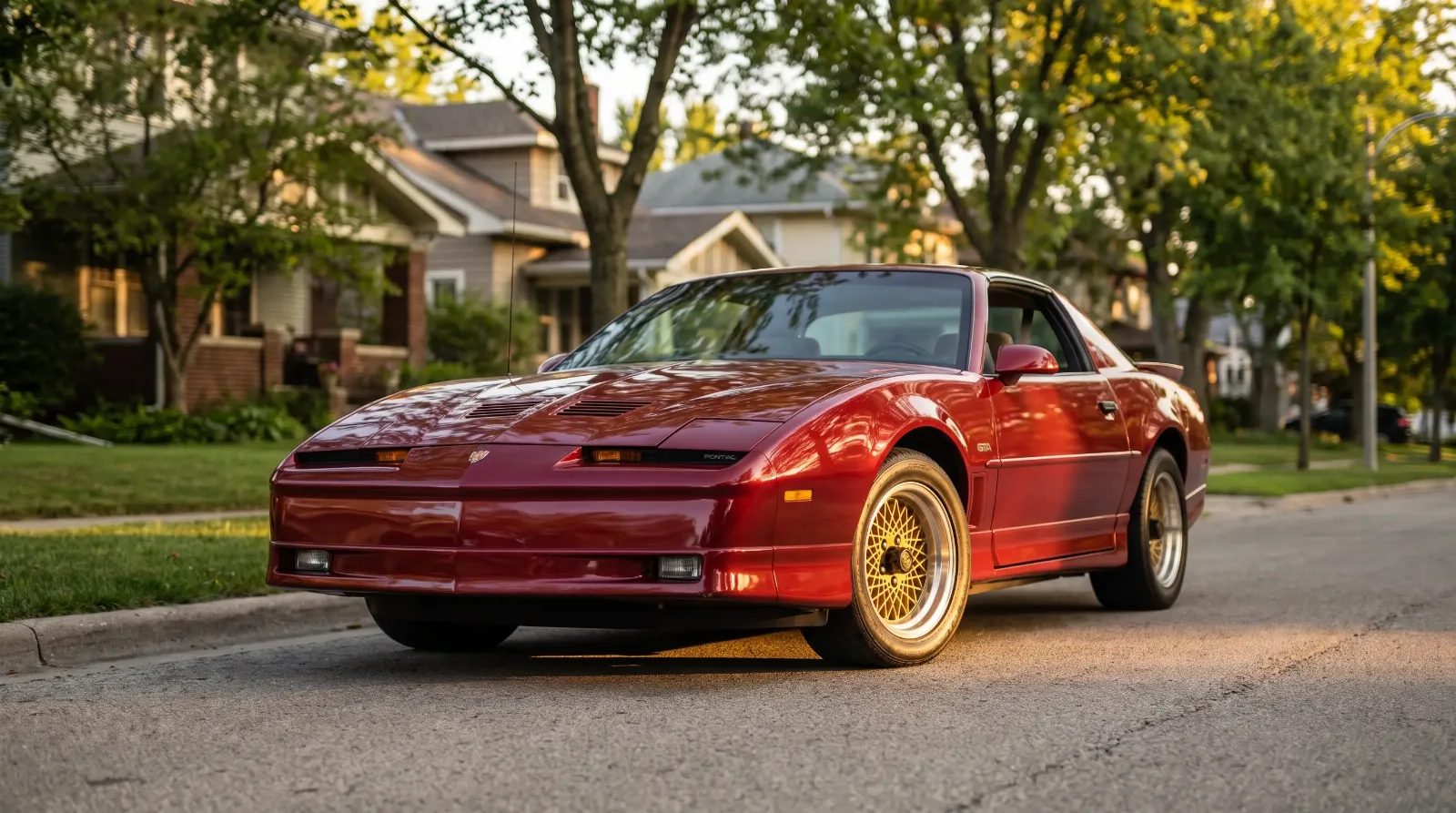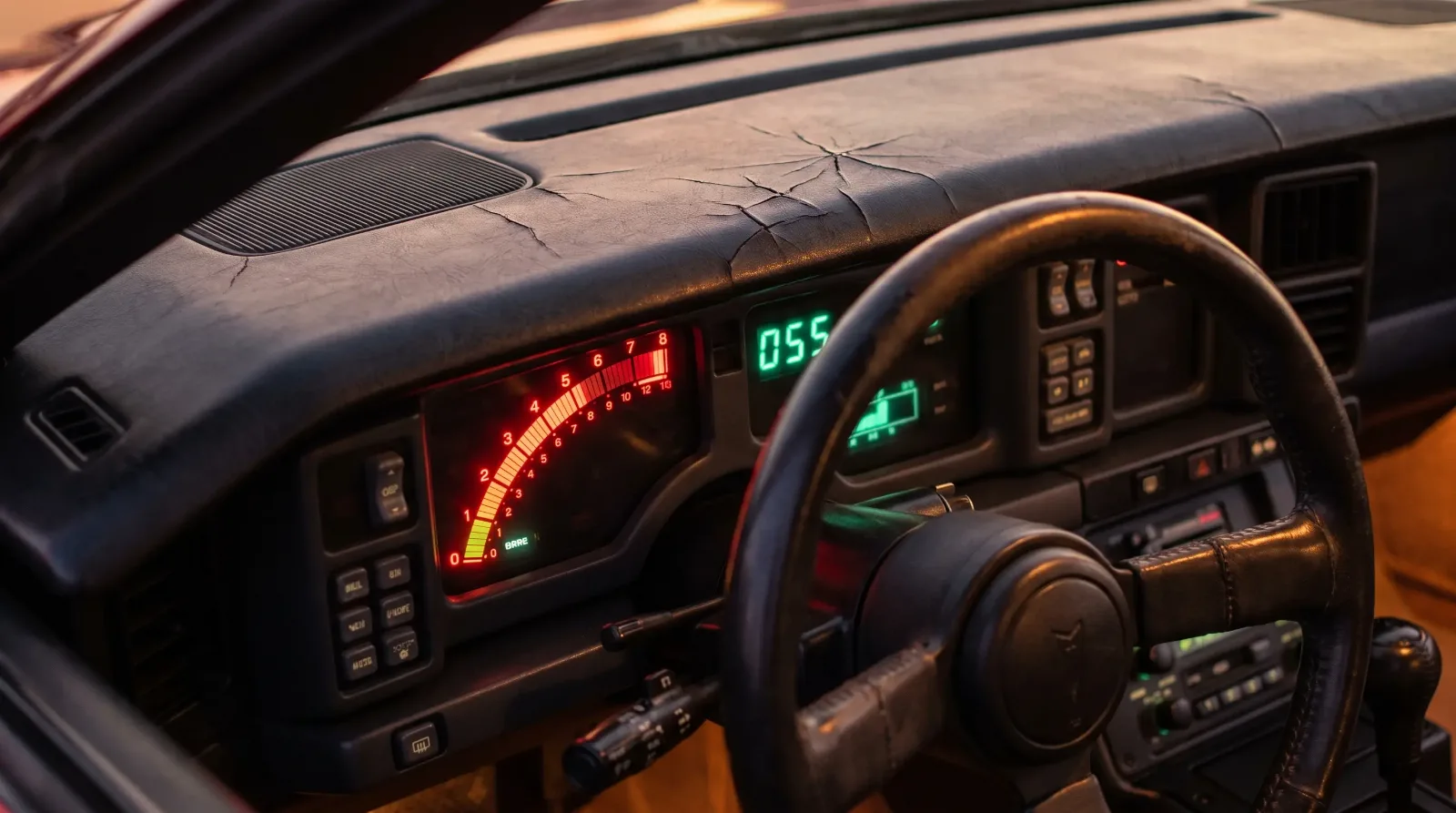
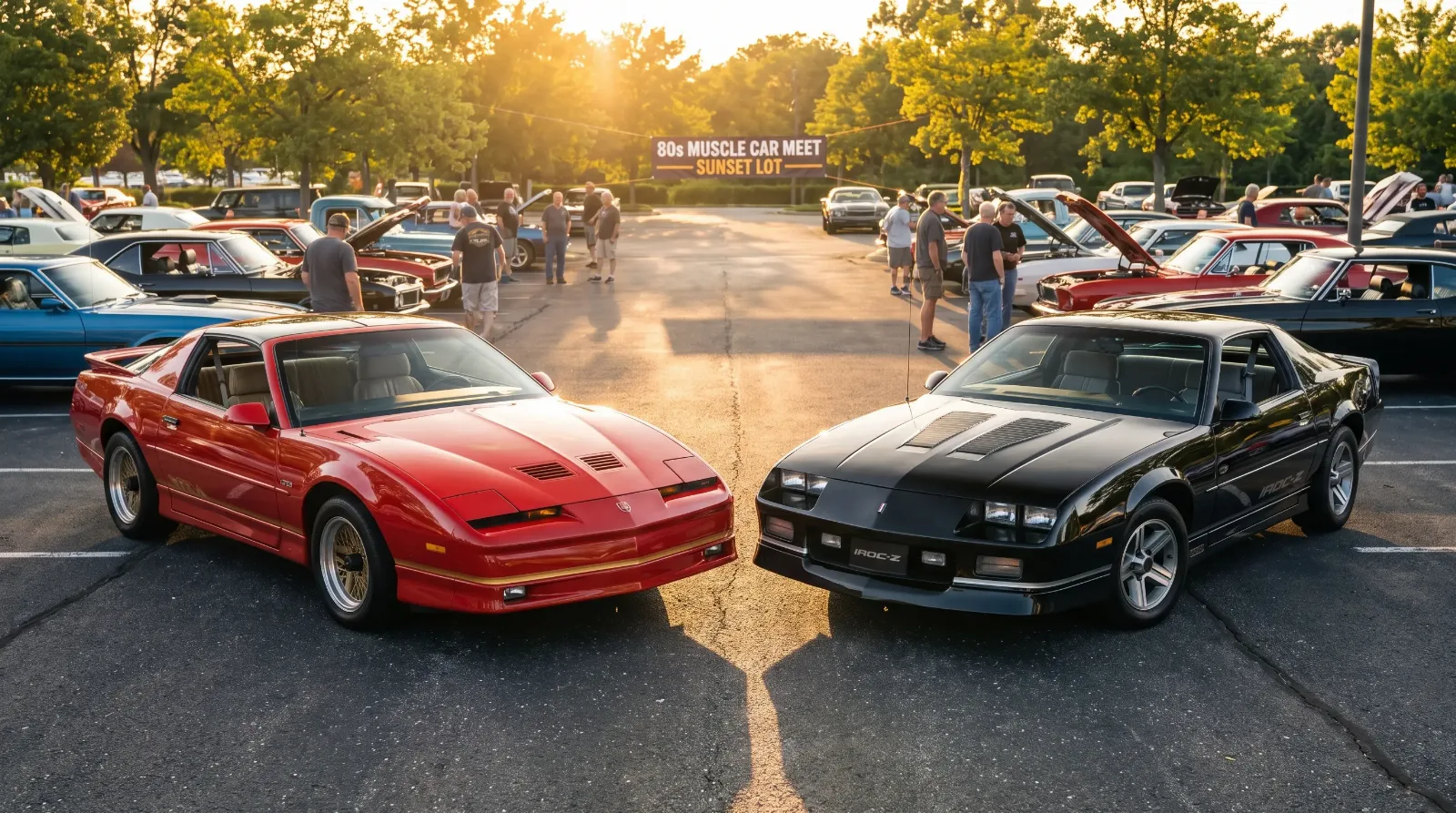
The build sheets tell you something the badges never will. Pull the factory paperwork on a 1985 Firebird Trans Am and a 1985 Camaro IROC-Z built the same month at the same plant, and you will find two cars sharing a platform, a floor pan, and a surprising amount of running gear, dressed up to look like rivals rather than siblings. That is the real story of the the 1980s Firebird against its Chevrolet counterpart, and it is a more interesting one than the parking-lot arguments usually get credit for.
One platform, two engineering philosophies
Both cars rode on GM's F-body platform, and both were assembled at the same facilities during the third generation, which ran from 1982 through 1992. The chassis, subframe, and much of the suspension geometry started from the same blueprint. Where the cars diverged was in tuning philosophy and the specific hardware Pontiac and Chevrolet chose to bolt onto that shared foundation. Pontiac's engineers leaned toward a slightly firmer, more feedback-heavy setup on the Trans Am, particularly once the WS6 package entered the picture with its own bar and spring rates. Chevrolet's approach on the top Camaro trims pursued a similar goal through different specification choices, and depending on which model year and which options box got checked, the two cars could feel meaningfully different from behind the wheel despite sharing so much underneath.
This is the detail that gets lost in casual comparisons. People talk about these two nameplates as if the rivalry was purely a styling exercise, two different bodies over an identical car. The build records say otherwise. Suspension component part numbers differ between the two makes even where the mounting points are shared, and that difference was deliberate engineering, not badge deep decoration. Steering feel is the clearest place to notice it from behind the wheel, since the two brands specified different ratios and effort levels on their flagship trims even in years when the rest of the chassis hardware overlapped closely.
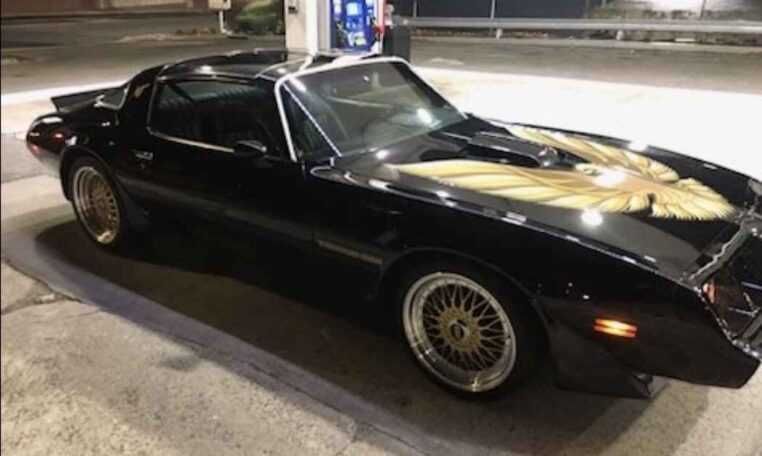
Exterior styling differed more obviously, and that is where most casual buyers stop looking. The Firebird's nose and hidden headlamp treatment gave it a distinct face from the Camaro's more angular front clip, and the two cars kept their own sheet metal identity even while sharing a windshield, roof stamping, and floor pan. A parts counter worker who has spent years sorting Firebird and Camaro requests can usually tell which panels interchange and which only look like they should from ten feet away.
Engines and the numbers that actually matter
Powertrain offerings tracked closely across both nameplates for most of the run, since both drew from the same corporate engine family, but the specific combinations and their factory ratings varied by year and by which car got a given update first. The 5.0-liter V8 was the volume performance engine through much of the decade, with the 5.7-liter arriving for 1987 in the Formula and Trans Am GTA, in a higher state of tune than the smaller V8. Tuned Port Injection arrived on the Trans Am for the 1985 model year, replacing the twin-throttle-body Cross-Fire setup and bringing the 5.0-liter to roughly 205 to 215 horsepower depending on tune. The same TPI upgrade landed on the Camaro IROC-Z the same year, at a near-identical 205 to 215 horsepower. When the 5.7-liter TPI followed for 1987, it made roughly 210 to 225 horsepower on the Firebird side and about 225 horsepower on the Camaro IROC-Z, close enough that neither nameplate held a meaningful edge.
What is worth stating plainly, because it gets confused constantly at shows, is that neither car had a consistent power advantage over the entire decade. Whichever nameplate got a given engine update first in a given model year often held a small edge until the other caught up the following year. Treating one make as categorically quicker across the whole generation is not supported by the build data, only by which specific model years are being compared.
| Category | Gen3 Firebird (Trans Am/Formula) | Third-gen Camaro (Z28/IROC-Z) |
|---|---|---|
| Platform | GM F-body | GM F-body |
| Top handling package | WS6 | Comparable Z28/IROC-Z suspension spec |
| Volume V8 | 5.0L, later 5.7L options | 5.0L, later 5.7L options |
| Fuel injection upgrade | Tuned Port Injection (mid-decade) | Tuned Port Injection (mid-decade) |
| Production location | Shared F-body assembly plants | Shared F-body assembly plants |
Trim hierarchy and where they actually differ
Pontiac's ladder ran from the base Firebird through the Formula and up to the Trans Am, with the GTA sitting at the top for the later years of the run as the loaded, most refined version of the platform. Chevrolet's equivalent ladder ran through the Sport Coupe and Berlinetta before reaching the Z28 and eventually the IROC-Z at the performance summit. The naming conventions differ enough that a buyer moving between the two makes for the first time can genuinely struggle to map one hierarchy onto the other, and dealers at the time did not always help, since both brands wanted their flagship to be seen as the definitive one.
The honest comparison point is model-year to model-year, top trim to top trim, rather than nameplate to nameplate as a blanket category. A well-optioned Formula can outperform a base-trim Camaro from the same year in a way that says nothing about the platforms generally and everything about the specific build sheets involved.
Which one holds up better today
Neither car has a decisive edge in the collector market as a blanket rule. Documentation matters more than badge preference at this point, the same way it does within the WS6 story on the Firebird side specifically. A build sheet naming the correct engine, transmission, and options package is worth more to an informed buyer than an assumption about which nameplate was "faster" in a given year. Buyers chasing a specific driving feel should test both, because the shared platform means the differences are real but subtle, and a spec sheet comparison alone will not tell you which one you actually prefer from the driver's seat.
"People keep score between these two like it's a permanent rivalry. The build sheets tell a quieter story, of two companies working from the same blueprint and making different choices with it, year by year."
— Tom Ramirez
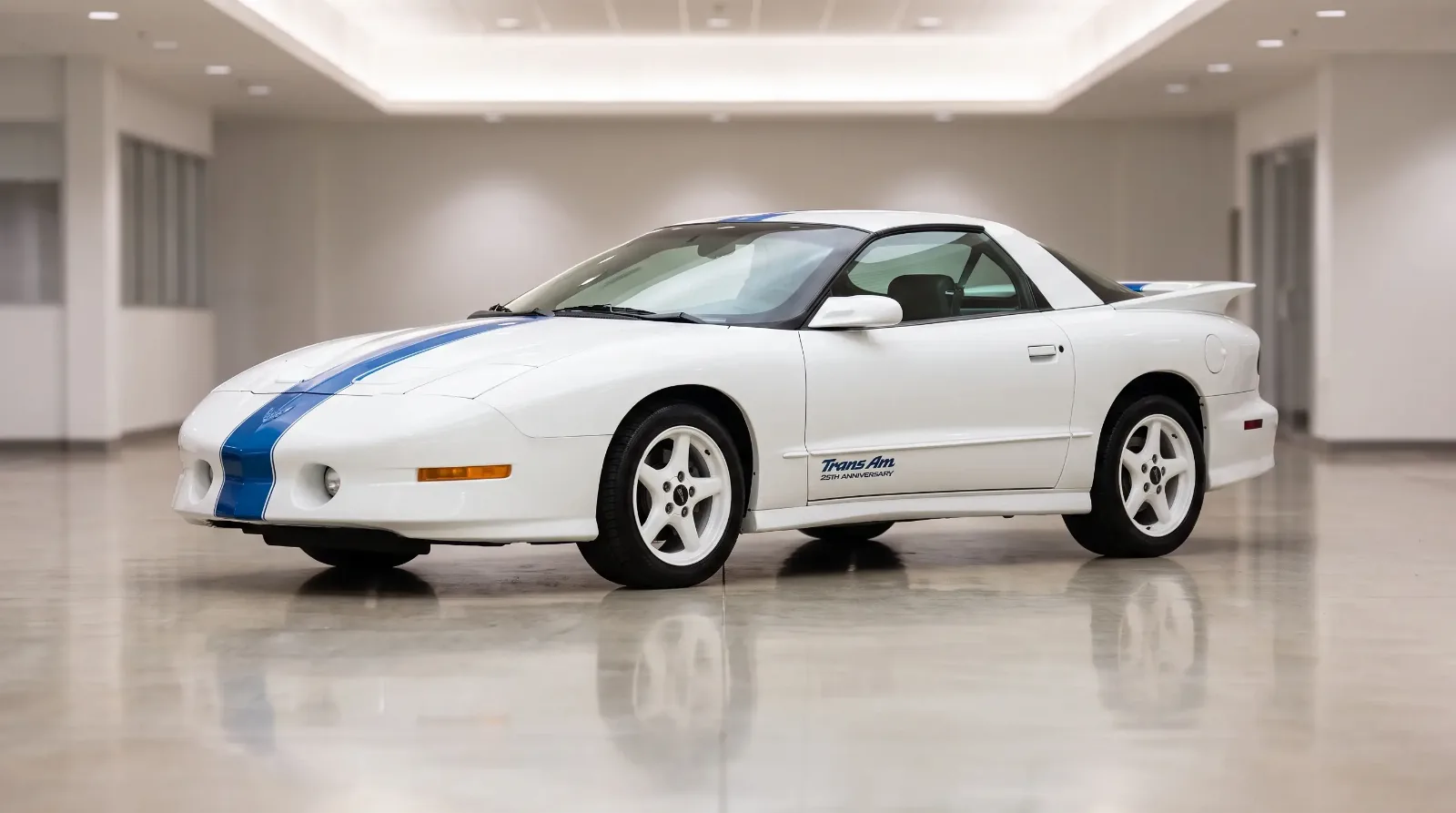
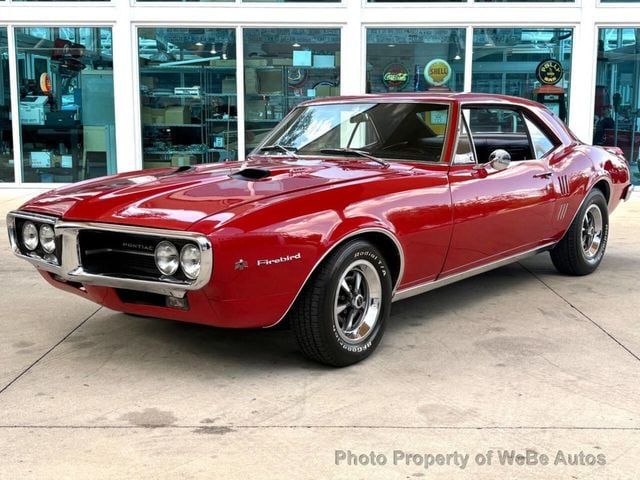
The gen3 Firebird's story continues past this comparison. For the milestone edition that capped off the run, keep reading the series, and for the complete history of the nameplate across every generation, our Firebird retrospective covers the full arc.
Sources and notes
- Chevrolet Camaro (third generation) - Wikipedia
- Pontiac Firebird (third generation) - Wikipedia
- 1987 Chevrolet Camaro IROC-Z 5.7 TPI Specs - automobile-catalog.com
- 1985 Chevrolet Camaro IROC-Z 5.0 TPI Specs - automobile-catalog.com
- 1988 Pontiac Trans Am GTA 5.7 TPI Specs - automobile-catalog.com
- GM EFI's Guide to the 3rd-Gen Chevrolet Camaro