Before there was a Bandit, there was Sonny Hooper, and before Sonny Hooper drove his gold Trans Am off a canyon bridge in a rocket-assisted stunt car, Burt Reynolds had already spent a decade building a screen persona that ran on horsepower. The 1978 film "Hooper" gets talked about as the lesser sibling to "Smokey and the Bandit," and in box office terms it was. But if you actually watch what the Hooper Trans Am does on screen, you start to understand that the Bandit's car was the polished version of an idea this film had already been rehearsing.
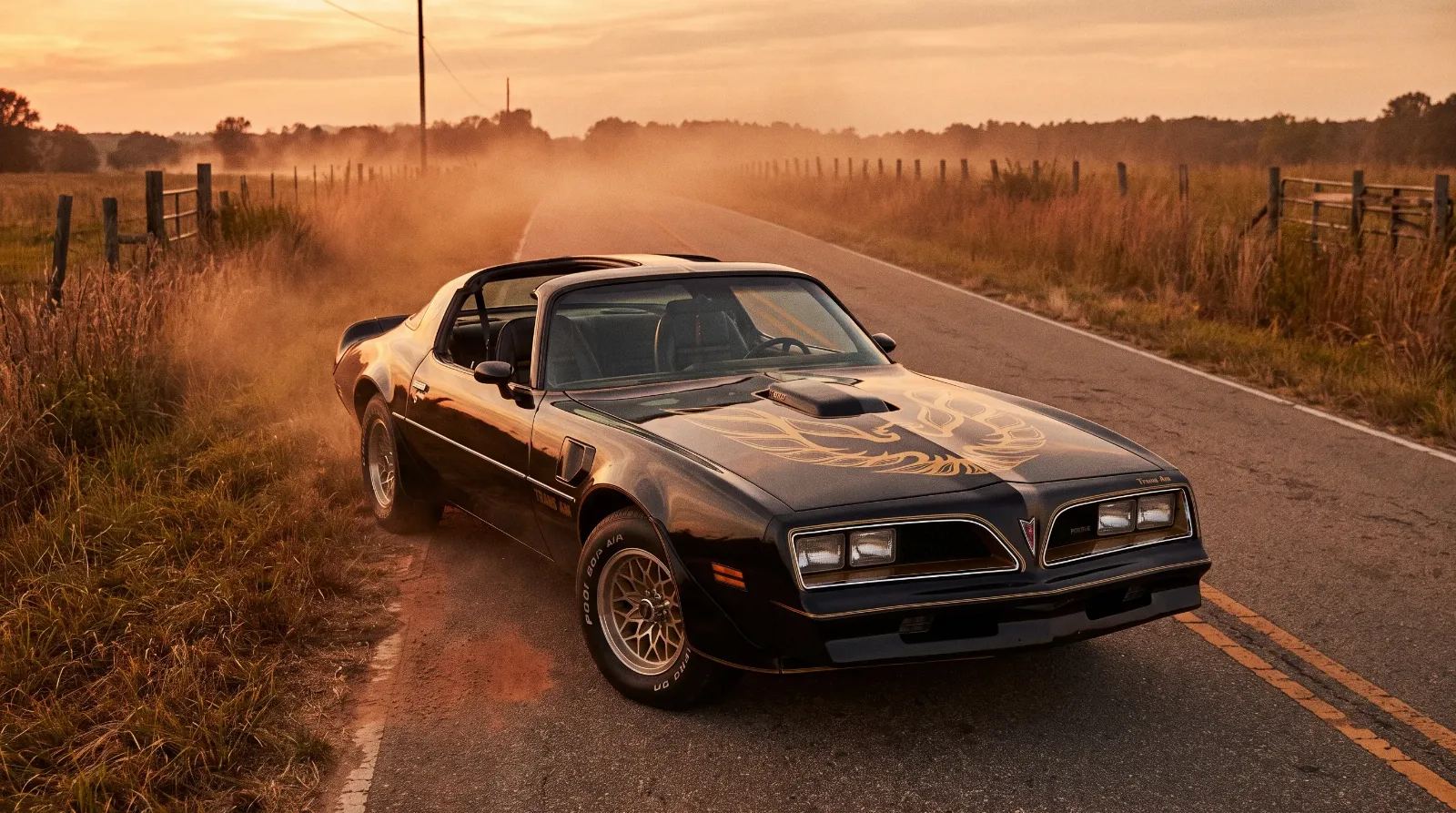
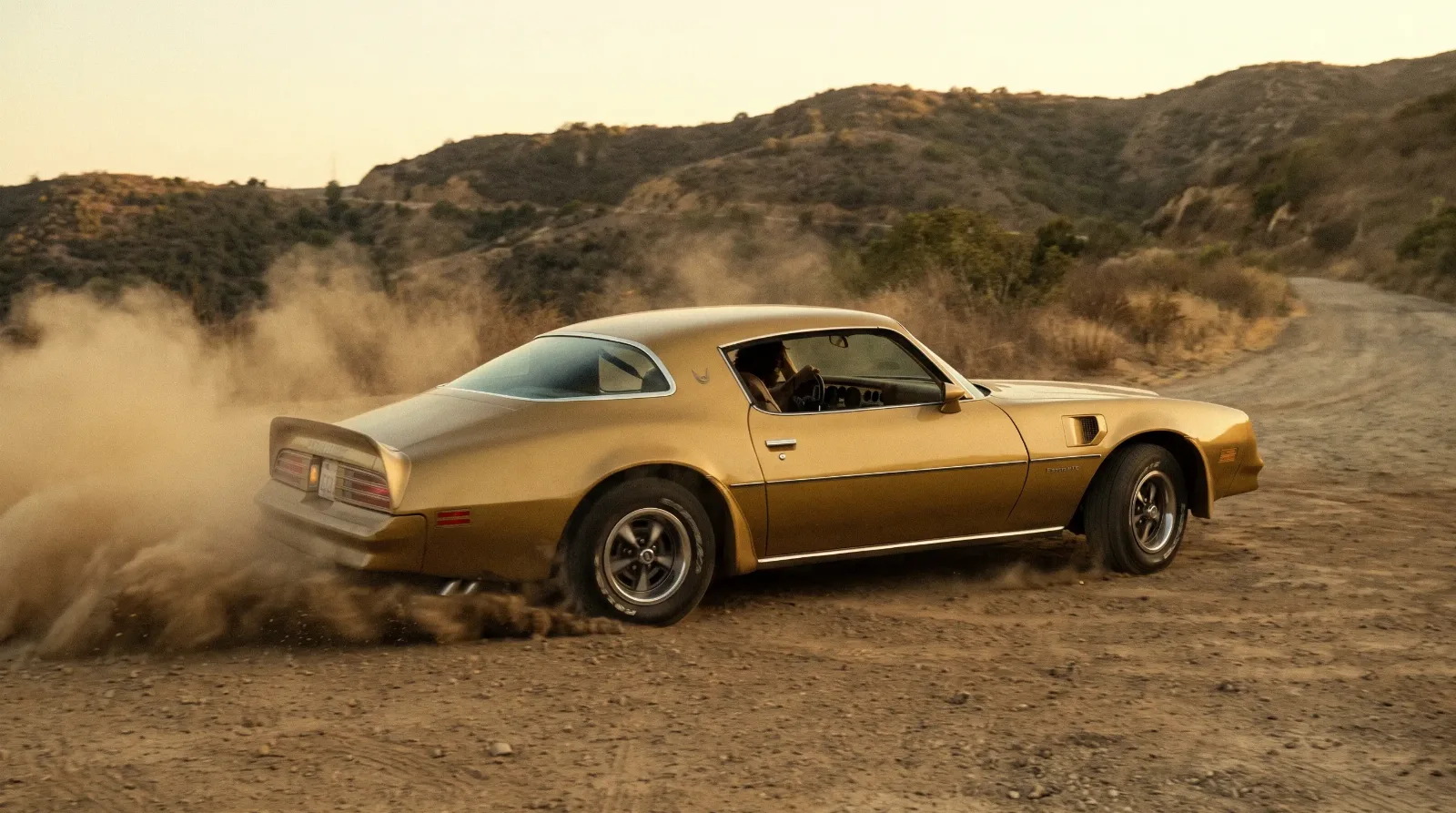
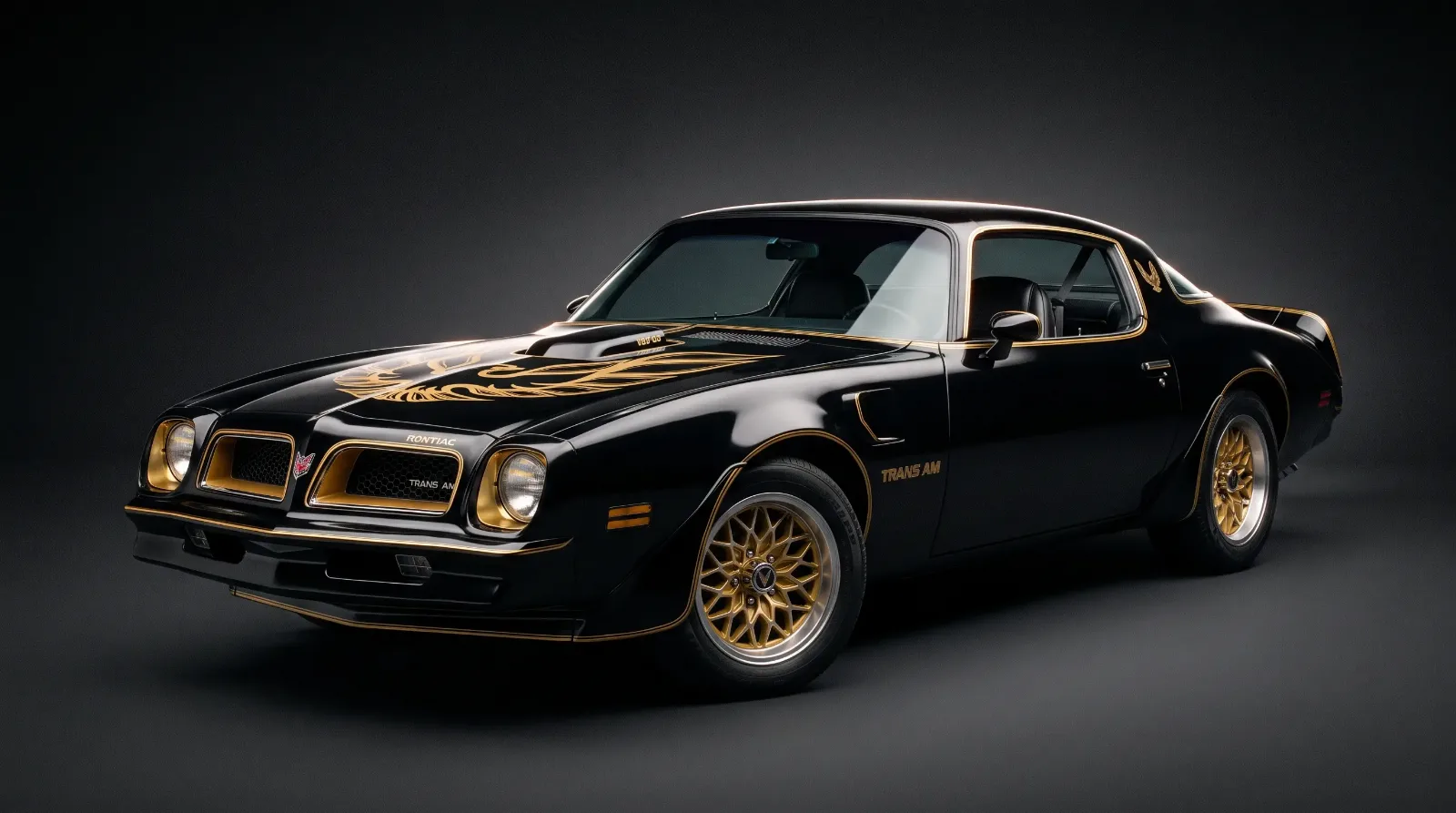
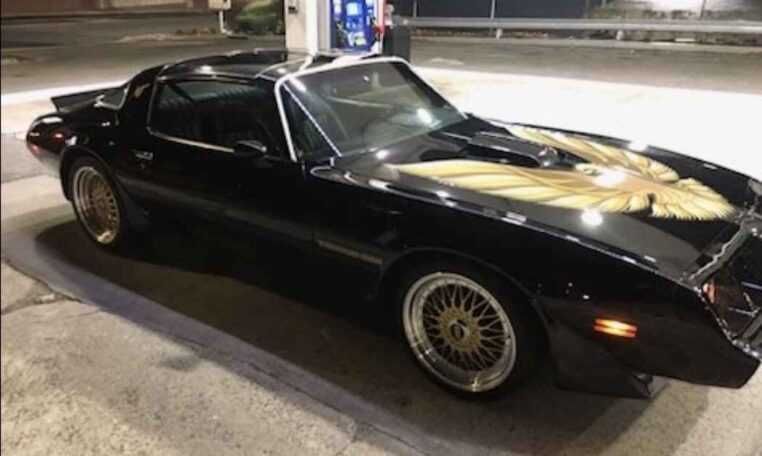
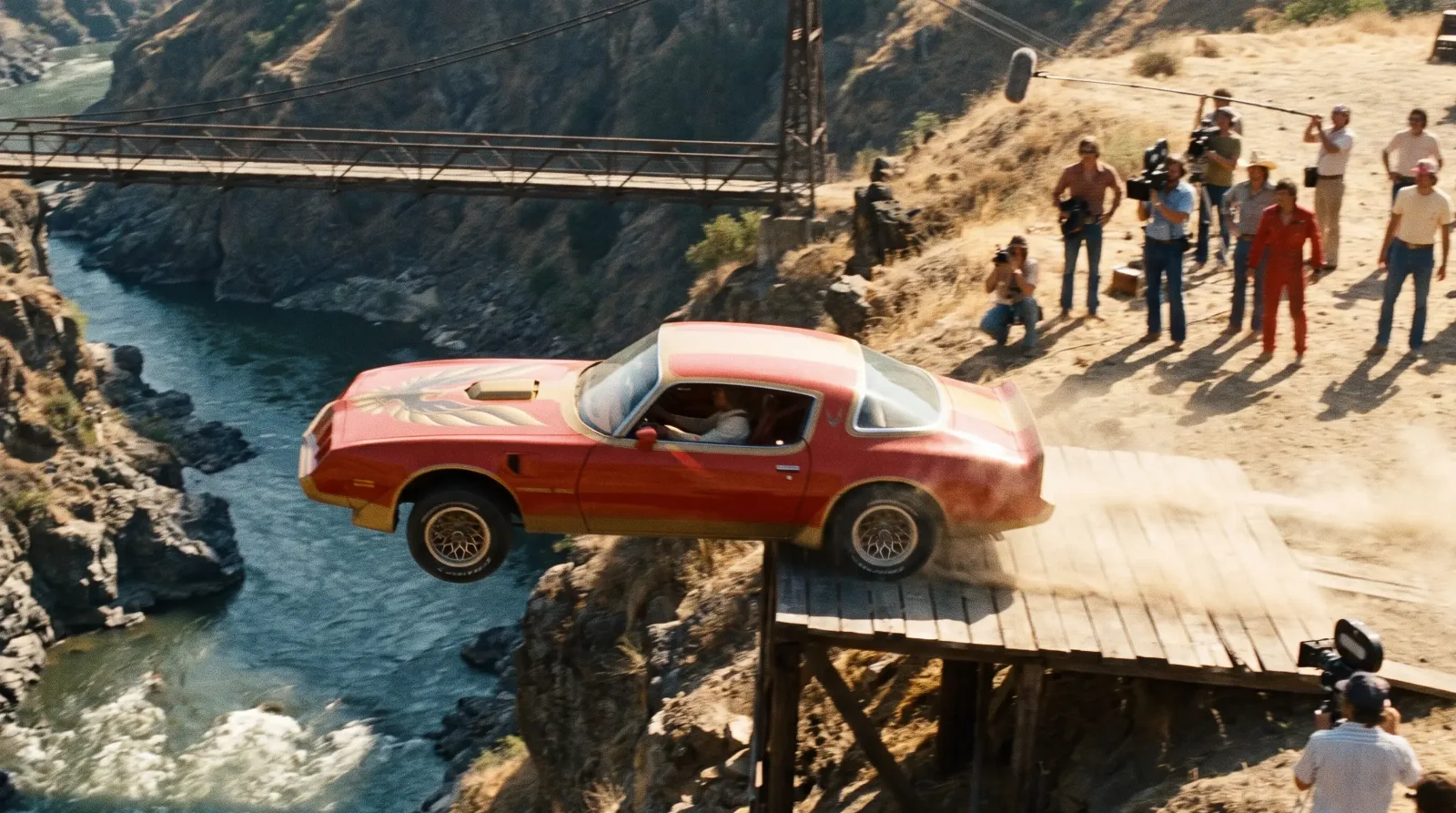
Reynolds plays Sonny Hooper, an aging Hollywood stuntman being nudged toward retirement by a younger rival, and the film's climax is built around a car jump meant to top every previous stunt in the business. The car dressed for the jump is a 1978 Pontiac Firebird Trans Am, painted differently than the Bandit's now-iconic black and gold, but unmistakably cut from the same cloth, right down to the screaming chicken hood decal that Pontiac had turned into a genuine cultural signature by that point in the decade. The vehicle that actually performed the leap was a purpose-built jet dragster with an elongated chassis, its bodywork painted to read as a Trans Am on camera, since a real Trans Am's weight distribution and aerodynamics made the jump impossible even with rocket assistance.
A stunt-driven film that needed a stunt-driven car
"Hooper" was never really about romance or crime the way "Smokey and the Bandit" was. It was a film about the stunt profession itself, co-starring real stunt performers and built around a philosophy that the work should look dangerous because it actually was dangerous. That meant the car used for the climactic rocket car jump was not a standing prop dressed up for a poster. Veteran stunt performer Buddy Joe Hooker made the actual leap in that disguised jet dragster, clearing a real, documented 325 feet across the Locust Fork River near Graysville, Alabama, a jump that set a record for rocket-assisted stunts at the time.
Hal Needham, who directed the film and had already worked with Reynolds on multiple projects, built his career as a stuntman on exactly this kind of practical, no-compromise car work before moving behind the camera. He understood the Trans Am's proportions and its wide rear track made it a stable platform for jumps in a way that a smaller or narrower car simply was not, and that engineering reality is a big part of why Pontiac's pony car kept getting cast in this role picture after picture.
How the Bandit borrowed from Hooper's blueprint
Here is the detail that gets lost when people treat these as unrelated films. Needham directed "Hooper" in 1978 and then wrote and directed "Smokey and the Bandit" the year before, in 1977, meaning the Bandit's Trans Am actually came first chronologically, but the two productions shared crew, stunt philosophy, and a director who kept returning to the same basic formula: put Reynolds behind the wheel of a Trans Am, put professional stunt drivers in the supporting cars, and build set pieces around what the machine could survive rather than what looked good on a storyboard.
That overlap is worth remembering when people talk about the Bandit chapter of Firebird history as if it happened in isolation. It did not. It happened inside a run of Needham and Reynolds collaborations that treated the Trans Am less like a costume and more like a stunt partner with its own limitations and strengths, learned picture by picture.
What made the Trans Am the obvious choice
By 1978 Pontiac's Trans Am had built a reputation that made it close to the default choice for any production wanting an American performance car with instant visual recognition. The wide stance, the shaker hood scoop, and that hood decal gave stunt coordinators a car that read clearly on camera even in wide shots, which mattered more than most viewers realize. A stunt car that looks generic from a distance does not register with an audience the same way, and Needham's productions were built around shots that needed to land visually as well as mechanically.
| Detail | Hooper (1978) |
|---|---|
| Featured car | 1978 Pontiac Firebird Trans Am |
| Director / stunt coordinator | Hal Needham |
| Lead actor | Burt Reynolds as Sonny Hooper |
| Signature sequence | Rocket-assisted canyon bridge jump |
| Related Needham/Reynolds film | Smokey and the Bandit, 1977 |
There was also a practical engineering case for the car beyond its looks. The Trans Am's mass distribution and relatively stiff structure, at least by the standards of mid-1970s American production cars, gave stunt teams a platform they had already learned to modify and trust across earlier projects. Reusing a known quantity mattered enormously when the stakes involved a car launching itself over a genuine gap rather than driving through a controlled set piece.
"People assume the Bandit's Trans Am invented that image, black and gold and loud. Watch Hooper and you'll see Needham had already worked most of it out. The Bandit was the polished version of a stunt formula this crew had been refining picture after picture."
— Patrick Walsh
The legacy that outlived the box office numbers
"Hooper" did respectable business in 1978 but never came close to matching "Smokey and the Bandit's" cultural footprint, and that gap has only widened with time. Ask a casual classic car fan about the Bandit's Trans Am and they know it instantly. Ask the same person about Hooper's car and you mostly get a blank look, even though the two vehicles share a director, a leading man, and a fundamental approach to what a Trans Am could survive on camera.
That is part of why this film deserves more attention from Firebird enthusiasts than it usually gets. It is not a footnote to the Bandit story. It is a parallel document of the same era, the same collaborators, and the same car, doing work that was arguably more technically demanding even if it never earned the same t-shirt and lunchbox afterlife. Readers curious about how Pontiac managed to turn one car into a recurring movie star across multiple productions should look at the next story in this set, which traces how the studio partnership eventually became an actual factory special edition you could order from a dealer.
What "Hooper" leaves behind, more than any single stunt, is proof that the Trans Am's screen career in the late 1970s was not an accident manufactured around one lucky film. It was a working relationship between a stunt-obsessed director, a willing leading man, and a car that kept proving it could take the punishment the script demanded.