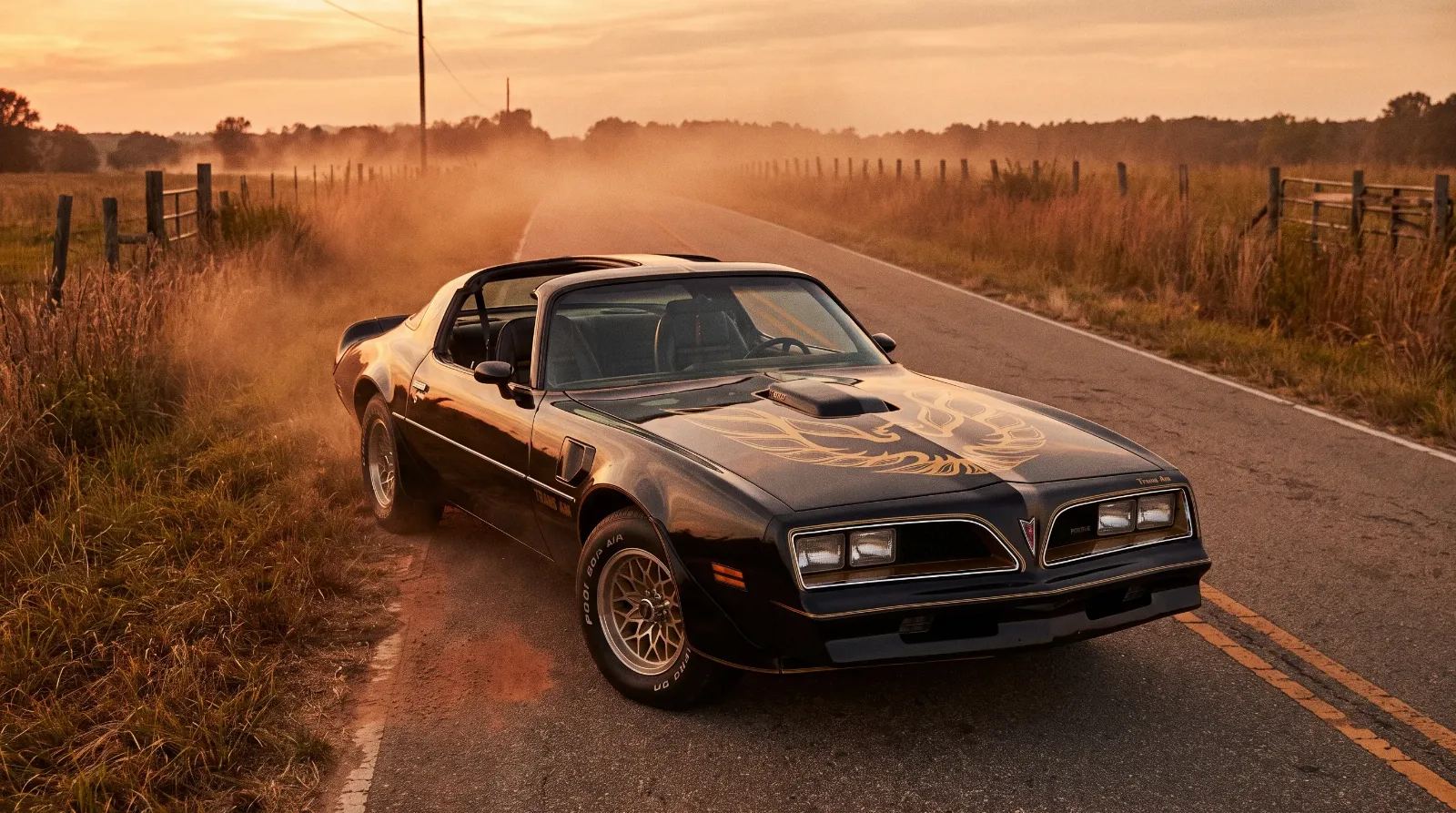
Walk into a Pontiac dealership in late 1976 and you could, in theory, order a Trans Am that looked like it had rolled straight off the set of a movie that had not even been released yet. The Trans Am Special Edition, the car most people simply call the Bandit edition today, arrived on Pontiac's order sheets around the same time "Smokey and the Bandit" was filming, and the overlap was not entirely a coincidence even if Pontiac's official story about it has always been a bit tidier than the truth.
Pontiac introduced the black and gold Special Edition package for the 1976 model year, a full year before the movie hit theaters in 1977, which surprises people who assume the film created the car. It did not. The film made the car famous. Pontiac had already been building toward this exact look through its Trans Am styling direction, and the timing between the dealership option and the film's production and release turned out to be close enough that the two became permanently linked in the public imagination.
What the Special Edition actually included
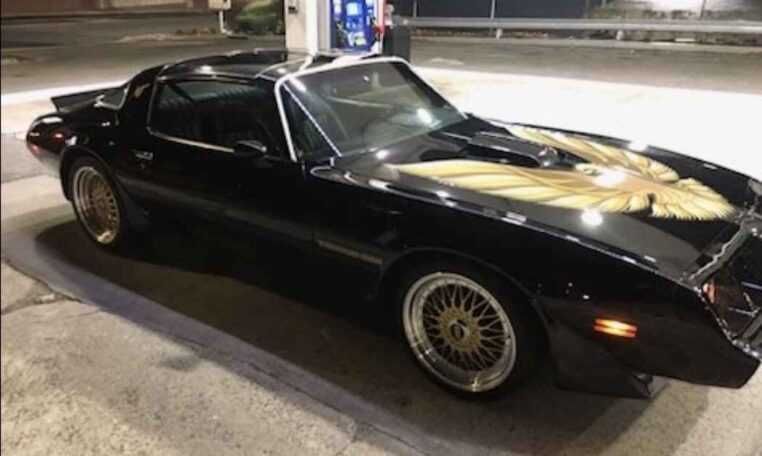
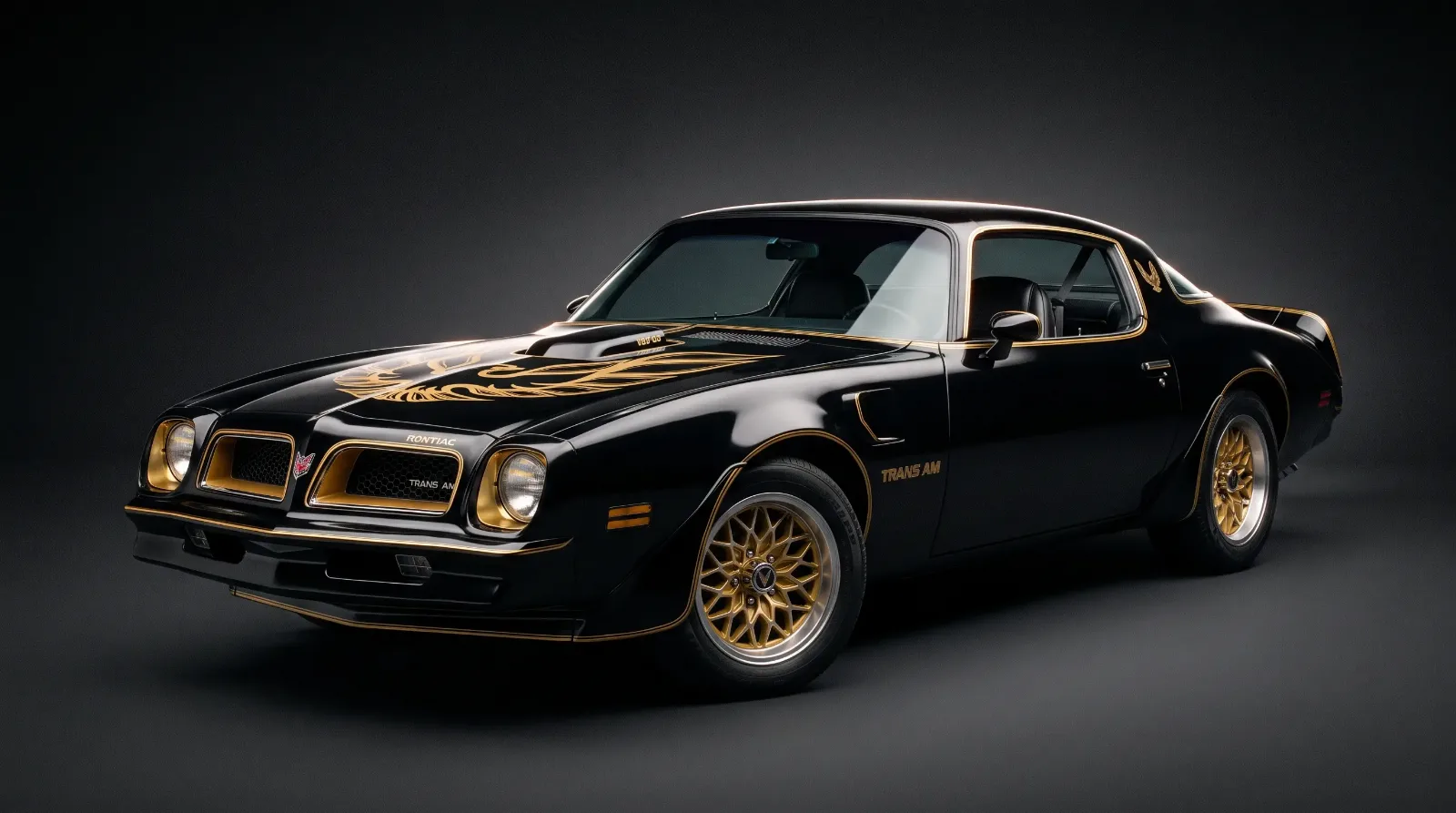
The package centered on black paint with gold accent striping, gold "screaming chicken" hood decal, gold aluminum wheels, and a build sheet that typically paired the look with the more performance-oriented drivetrain options Pontiac offered that year. Buyers could still option a Trans Am in other colors, so not every black and gold car on the road today is a documented Special Edition, and not every genuine Special Edition survives with its factory paint and trim intact, which matters enormously to anyone shopping one now.
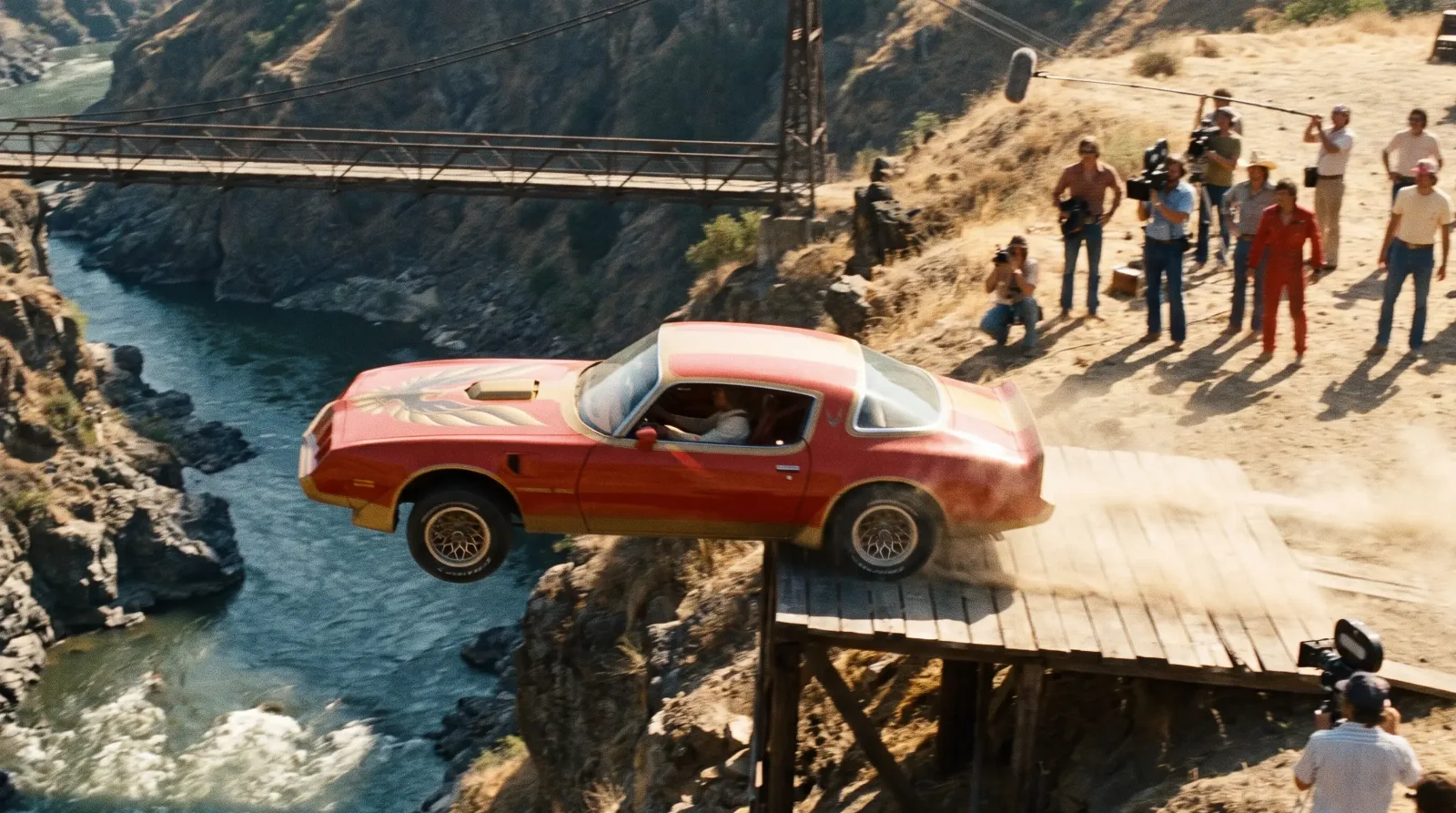
Under the hood, the era's emissions regulations meant power figures were modest by the standards of a decade earlier. A 400 cubic inch V8 was the more common engine paired with the package in the mid-1970s cars, rated around 200 horsepower in standard form and 220 horsepower with the optional W72 performance package introduced in 1977, a number that always disappoints people expecting movie-car performance. The Bandit's on-screen car benefited from editing, sound design, and stunt doubles built specifically for jumps. The showroom car was a good looking, reasonably quick Trans Am, not a race car.
Why the timing with the film still confuses people
Part of the confusion comes from how thoroughly the movie's marketing and the dealership option merged in the public mind after 1977. Pontiac was quick to lean into the association once "Smokey and the Bandit" became a hit, and dealership advertising in the following years openly referenced the film, even though the black and gold package itself predated the production. This is a case where how Hollywood made it a star is really a story about a car finding its audience after the fact rather than a car built to order for a script.
How to spot a genuine Special Edition today
Verifying a genuine factory Special Edition comes down to documentation more than appearance, since the black and gold look has been reproduced on countless clone builds over the decades. A verified car should have a matching build sheet, cowl tag codes that confirm the option package, and ideally a Pontiac Historical Services document tying the VIN to the factory order. Buyers relying on paint color alone are exposing themselves to paying original-car prices for a well-executed tribute.
| Detail | Trans Am Special Edition |
|---|---|
| Package introduced | 1976 model year |
| Signature colors | Black with gold striping and wheels |
| Common engine | 400 cubic inch V8, 6.6 liter |
| Film release that made it famous | Smokey and the Bandit, 1977 |
| Verification method | Cowl tag codes, build sheet, PHS documentation |
Because the package sat at the intersection of a genuine factory option and one of the most recognizable movie cars of its decade, the Special Edition has attracted both serious collectors and casual buyers chasing the Bandit look without much concern for originality. Both approaches are valid depending on what someone actually wants from ownership, but the market treats them very differently, and pricing between a documented original and a well-built clone can differ substantially.
"People walk up to a black and gold Trans Am expecting movie magic, and what they're actually looking at is a mid-1970s dealership option that happened to catch a film's attention at exactly the right moment. That accident of timing is the whole reason this car still sells."
— Patrick Walsh
What the package meant for Pontiac's broader lineup
The Special Edition's commercial success following the film's release gave Pontiac clear evidence that a strong visual identity, paired with the right cultural moment, could move cars in numbers that raw performance specifications alone rarely achieved during the malaise era. Sales of black and gold Trans Ams climbed noticeably through the late 1970s, and Pontiac continued refining the package through subsequent model years rather than treating it as a one-off tie-in.
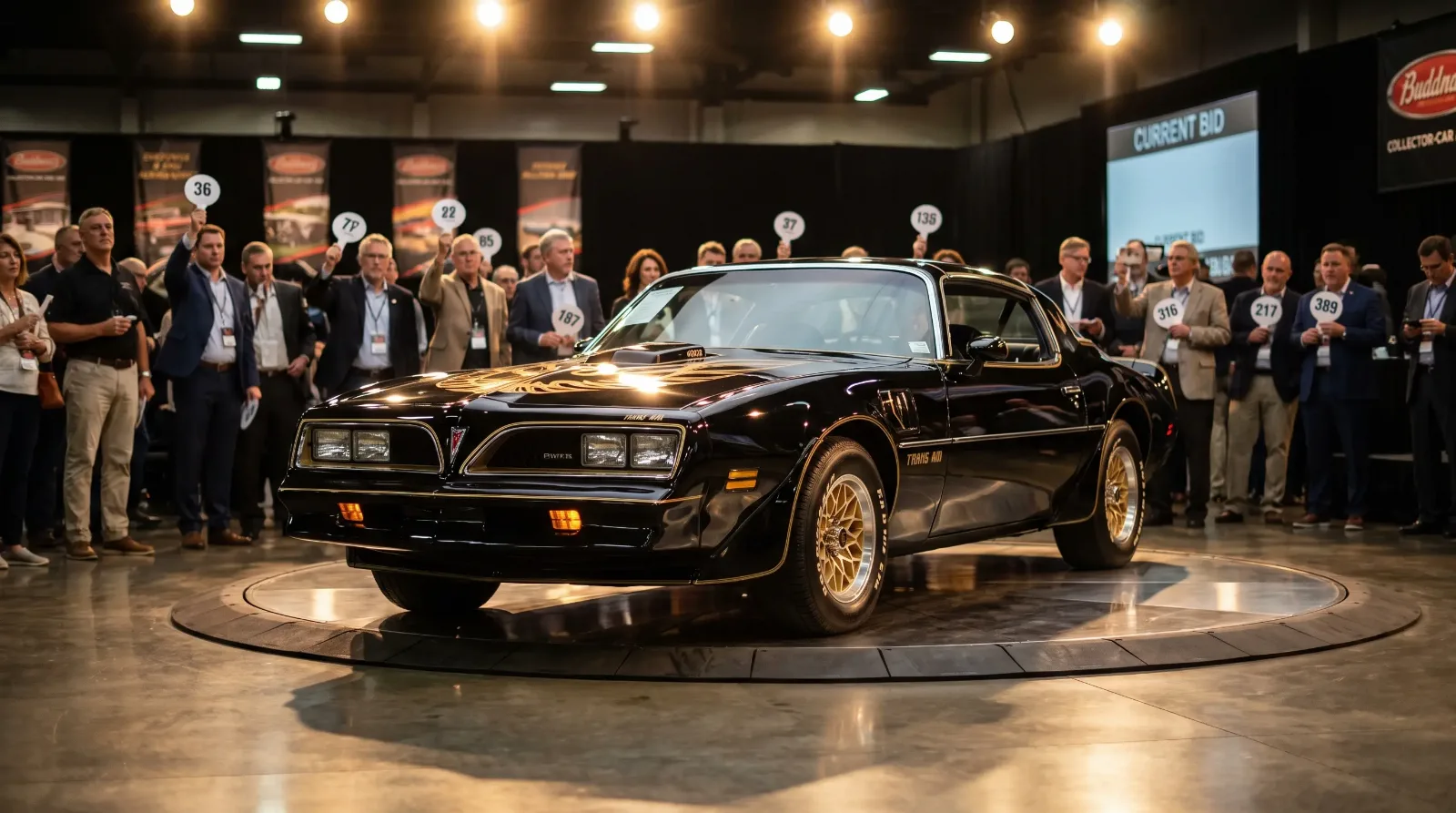
That success also shaped how the brand approached future special editions and anniversary packages, leaning into a formula where distinctive graphics and a recognizable persona did real commercial work. For readers tracking what happened to these cars once they left dealer lots and entered the collector market, another angle on the story picks up with what these black and gold Trans Ams actually bring at auction today, and why documentation matters as much as it does when real money is on the table.
The Bandit Special Edition remains one of the clearest examples in American car history of a factory option and a piece of pop culture reinforcing each other almost by accident. Pontiac built the look first. Hollywood gave it a story. And decades later, the two are so fused together that separating them feels almost beside the point, even though the actual timeline says otherwise.
Sources and notes
- The Real Story Behind Pontiac's Black-And-Gold Trans Am, Motorious
- The Black & Gold Trans Am is Born with the 1976 50th Anniversary T/A, Pontiac Trans Am Forum
- W72 Info, Trans Am Florida
- 1977-81 Pontiac Trans Am Bandit SE: Specs, History, Guide, Motogallery
- Pontiac Firebird (second generation) - Wikipedia
- Y82 Special Edition: 1978 Pontiac Trans Am, Barn Finds