
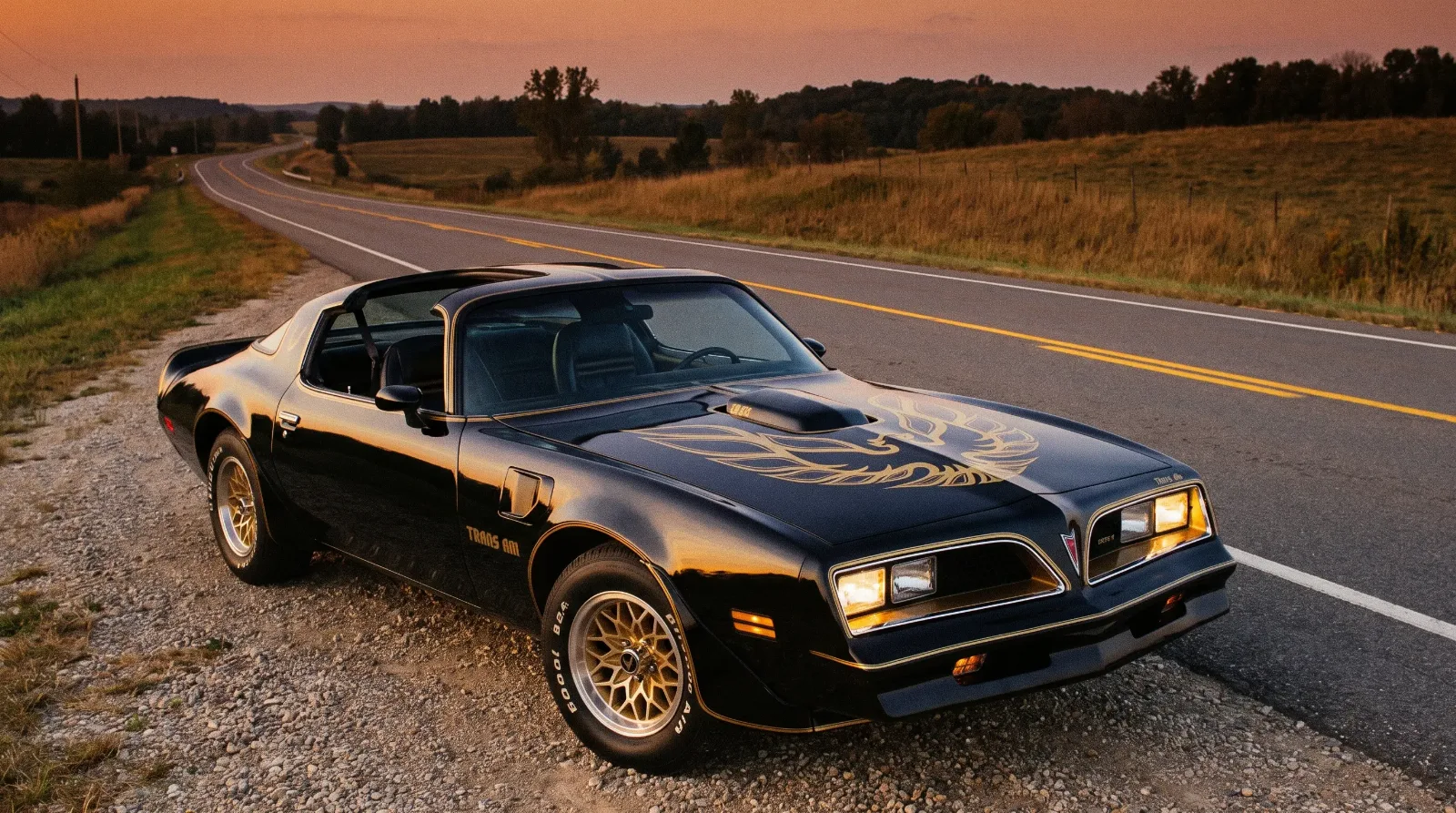
In the spring of 1977 a stuntman turned director handed Burt Reynolds the keys to a black-and-gold Pontiac and told him to drive fast and smile a lot. Hal Needham had spent years falling off horses and getting set on fire for a living, and his first film as a director was a shaggy chase comedy that most of Universal expected to disappear by August. Instead it became the second-highest-grossing movie of the year, and the bandit trans am parked at the center of it turned into one of the most recognizable cars ever built. Smokey and the Bandit did something no marketing department could plan. It took a mid-tier muscle car in the middle of the malaise era and made America want one.
Car Features
10 min read
Smokey and the Bandit: How Hollywood Made the Trans Am a Star
One summer, one stuntman, and one black-and-gold Pontiac turned a malaise-era coupe into a legend. How Smokey and the Bandit made the Trans Am a star.
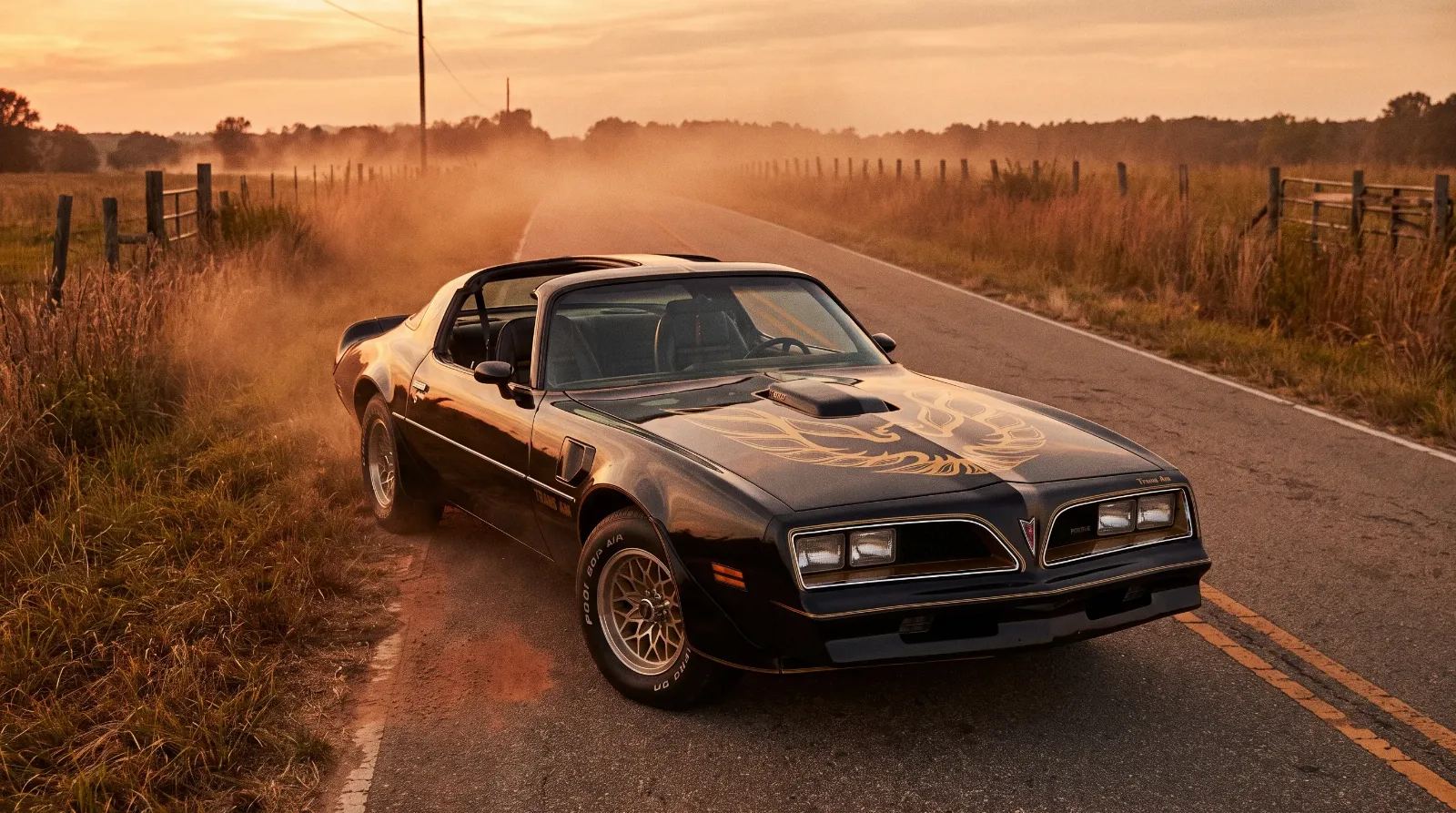
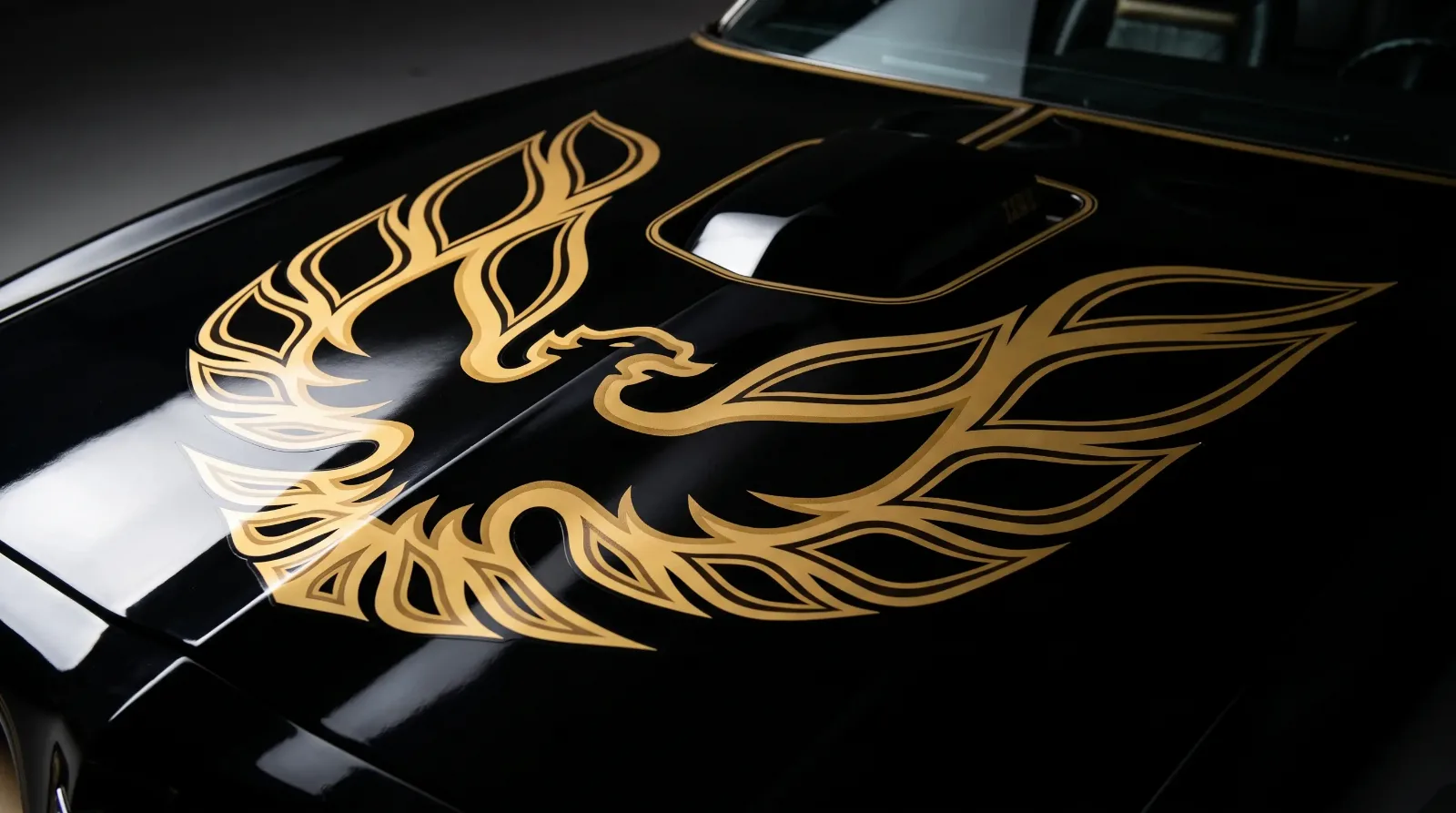
The story of how a screaming-chicken hood decal became shorthand for freedom, mischief, and a certain kind of mustached charm is really the story of the second-generation Firebird finding its moment. If you want the full arc of the model, from the 1967 debut through the third generation, our overview of Pontiac's Firebird history covers the ground. This piece is about the four years when the car stopped being a Pontiac and started being a character.
How a bootlegging comedy became a car commercial
Needham wrote the premise on a legal pad. A driver called Bandit is hired to haul 400 cases of Coors beer from Texas to Georgia in 28 hours, back when Coors could not be sold legally east of the Mississippi. The Trans Am is the blocker car, the fast decoy that keeps the law distracted while a truck full of contraband rolls behind it. That was the mechanical logic of the plot. The emotional logic was simpler. People watched Reynolds fling that black coupe sideways across county roads and decided they needed to feel that way too.
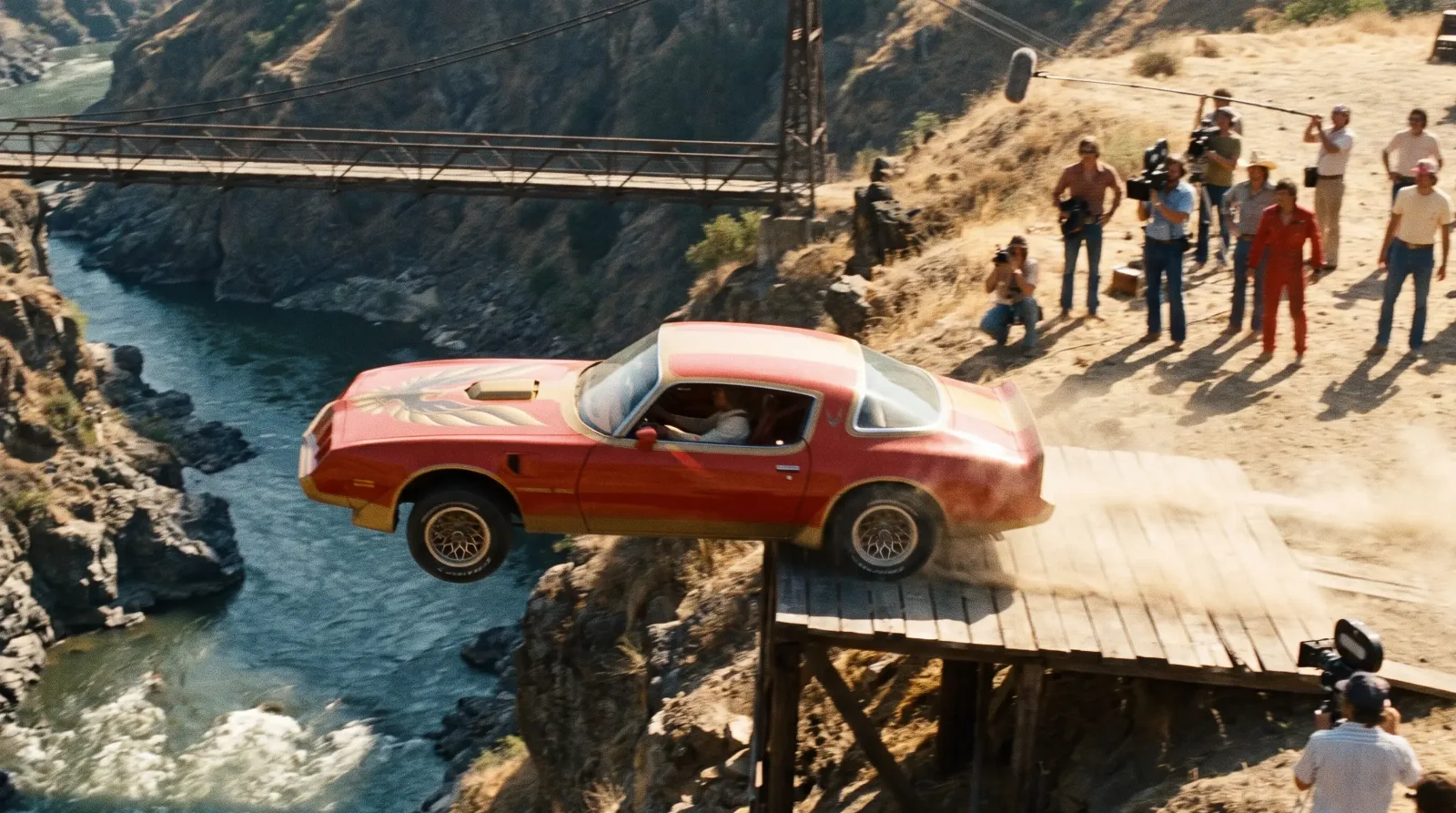
Pontiac had loaned Needham four cars for the production. By most accounts all four were wrecked or worn out by the end of filming, which tells you how the jumps and slides were done. There was no CGI, no digital cleanup, just a stuntman-director who understood exactly how much abuse a Firebird could take before it stopped being driveable. The famous bridge jump, staged over a dry creek, put one of the cars airborne and effectively ended its career.
What Pontiac got in return was the kind of advertising money cannot buy. Trans Am production had been climbing before the film, but it went vertical after. Sales roughly doubled across the late 1970s, and dealers reported buyers walking in and asking for "the Bandit car" by name, decal and all.
The car Pontiac almost let fade away
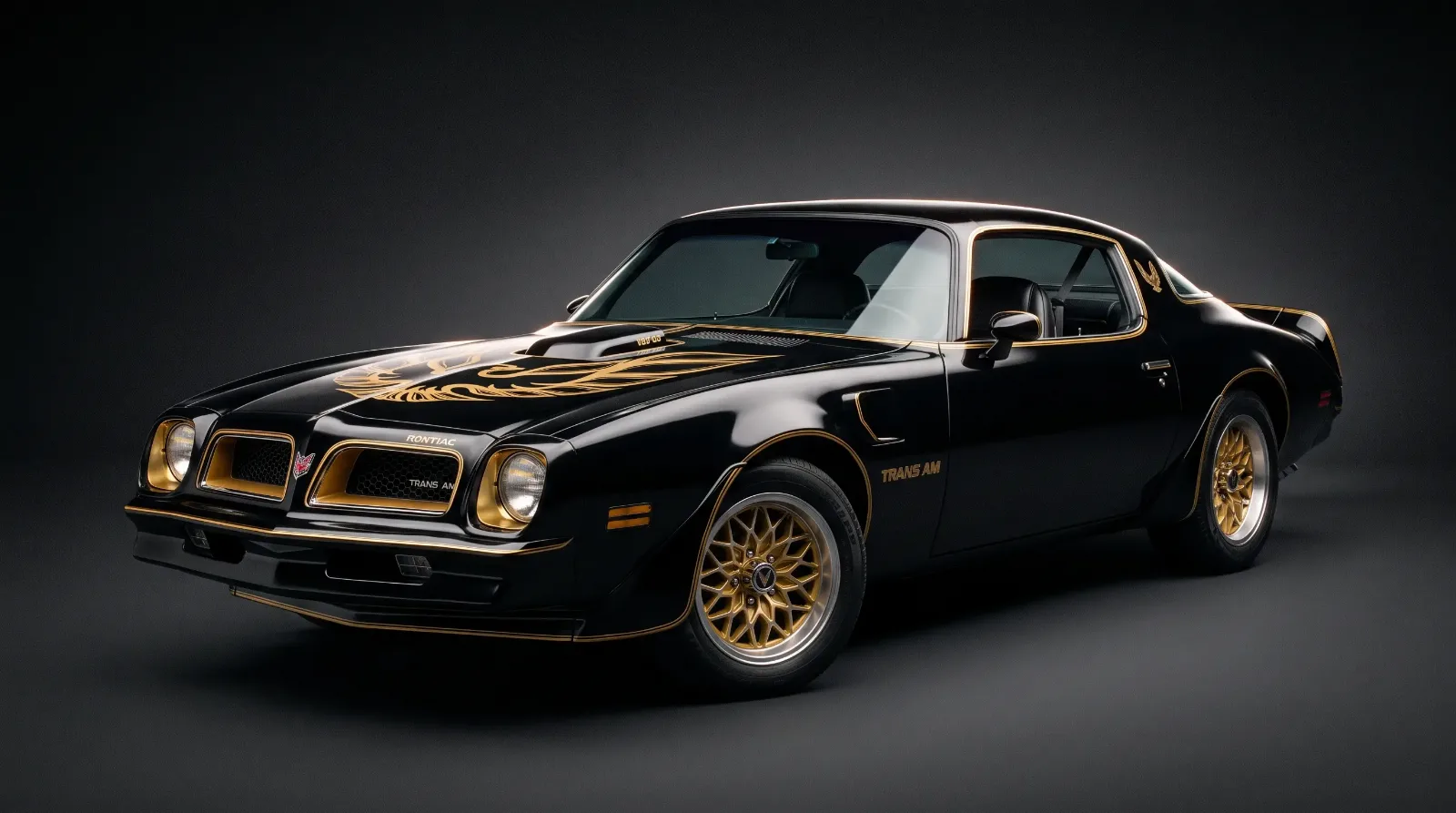
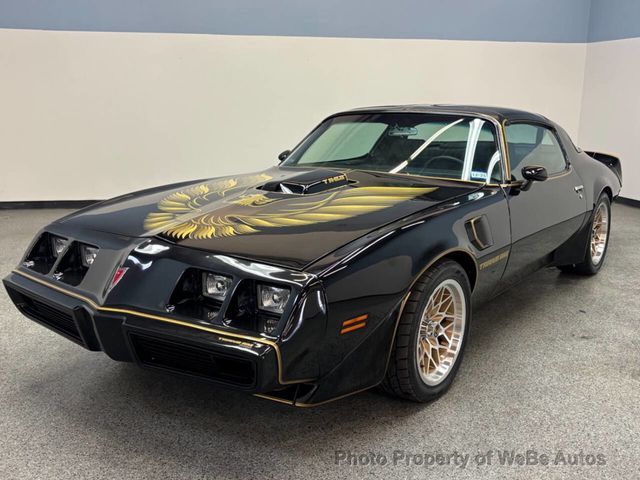
The irony is that the Trans Am was never supposed to be a volume seller. When John DeLorean's team introduced it in 1969 it was a homologation special, a low-production halo built to satisfy racing rules. By the mid-1970s emissions regulations and insurance surcharges had gutted the muscle car segment, and the Firebird survived partly because Pontiac kept the styling exciting even as horsepower fell. The black-and-gold Special Edition, order code Y82, arrived in 1976 as an anniversary tribute and stayed on the books because people liked how it looked. Needham chose it for the same reason.
Under the hood the picture was more complicated than the swagger suggested. The 1977 cars wore a "T/A 6.6" callout on the shaker scoop, referring to the 400 cubic inch Pontiac V8, but California and high-altitude cars were fitted with an Oldsmobile 403 instead because the Pontiac engine could not meet local emissions rules. Output was modest by 1960s standards, and the numbers below tell that story honestly.
| Spec | 1977 Trans Am Special Edition (Y82) |
|---|---|
| Engine | 6.6L (400 cu in) Pontiac V8; Olds 403 in emissions states |
| Horsepower | 200 hp (W72 400, 4-speed) |
| Torque | 325 lb-ft |
| Transmission | 4-speed manual or 3-speed automatic |
| Paint | Starlight Black with gold accents and hood bird |
| 0-60 mph | 9.3 sec (Car and Driver test, April 1977) |
| Body | Second-generation F-body, T-top optional |
The gap between the visual promise and the mechanical reality never seemed to bother anyone. The car looked fast standing still, and in a comedy about outrunning a sheriff that was the only spec that mattered. Readers who care about what these engines actually did, and how the 400 differed from the 403, can keep exploring the mechanical side of the Firebird story.
Burt Reynolds and the myth of the driver
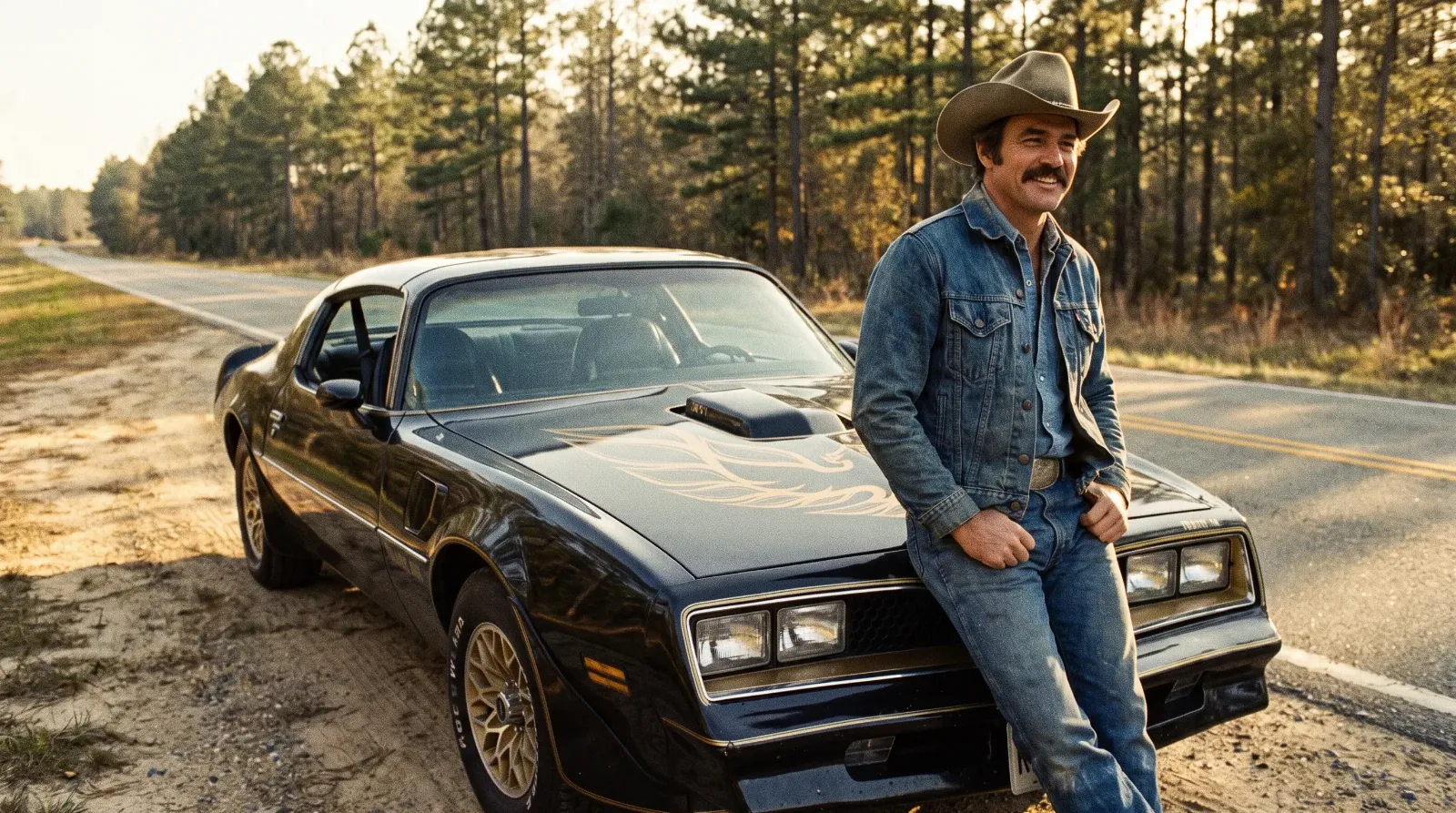
Reynolds did not do most of the hard driving. Needham and a team of stunt professionals handled the slides and the jump, and Reynolds was the first to say so. What Reynolds supplied was harder to fake. He gave the Bandit an easy, self-amused charm that made the whole enterprise feel like a party you wanted to be invited to. The car and the man became a single image. Cowboy hat, gold snakeskin boots, mustache, and a black Trans Am with the T-tops out.
That fusion of star and machine mattered for the car's legend. Reynolds owned Trans Ams personally for the rest of his life, and he understood that fans did not separate the actor from the vehicle. When he appeared at car shows decades later, the Bandit car was the thing people wanted photographed beside him. The association ran so deep that late in his life Reynolds lent his name to a series of officially licensed tribute cars, closing a loop that began with four borrowed Pontiacs on a Georgia back road.
"The genius of the Bandit car was never the horsepower. It was that a nation of commuters looked at a black Trans Am and saw a version of themselves that got to break the rules and get away with it. Pontiac spent a decade trying to sell excitement. Burt Reynolds sold it in one summer."
Patrick Walsh
The sequels that kept the legend rolling
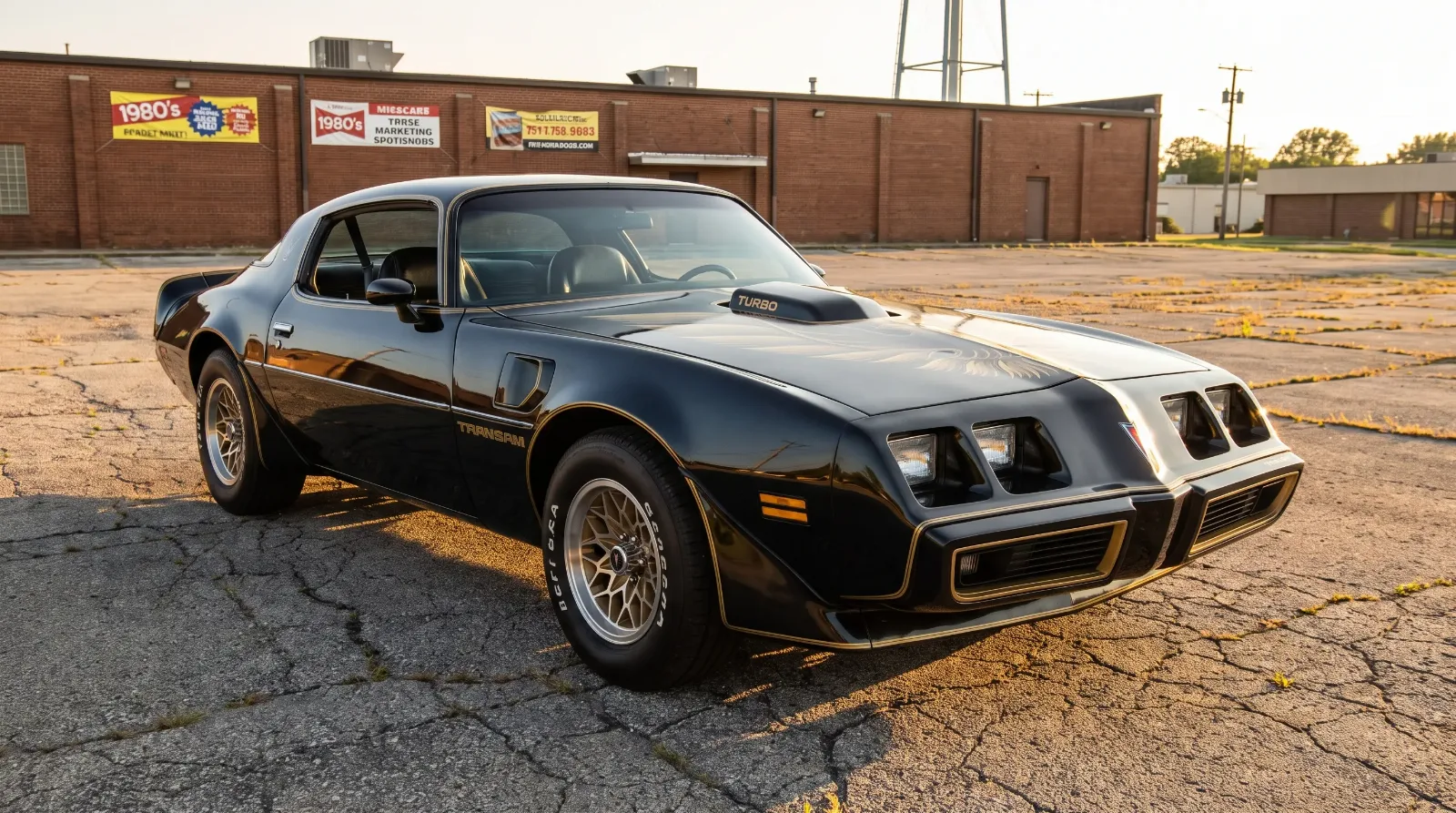
Success like that does not go unrepeated. Smokey and the Bandit II arrived in 1980 with the same core cast, Jackie Gleason still chewing scenery as Sheriff Buford T. Justice, and an elephant added to the cargo for reasons the plot never fully justified. The reviews were softer but the box office held, and a new fleet of Trans Ams got their turn in front of the cameras, now wearing the updated late-second-generation front end.
Smokey and the Bandit Part 3 followed in 1983 and is the film most fans quietly pretend never happened. Reynolds appears only briefly, the concept was reworked during production, and the magic that made the first film feel effortless had thinned out. By then the second-generation Firebird itself was gone, replaced by the sharper third-generation car for 1982. The sequels mattered less for their quality than for their persistence. They kept the black-and-gold Trans Am in theaters across two presidential administrations, cementing an image that would outlive the model line entirely.
KITT, Rockford, and the Firebird's second life on screen
The Bandit made the Trans Am a star, but it was not the only screen role that shaped the car's reputation. Television kept the Firebird in front of audiences for another decade. James Garner drove a gold Firebird Esprit in The Rockford Files from 1974 through 1980, a working private detective's car that traded the Bandit's flash for something more lived-in and believable. Garner, a genuine racing enthusiast, did much of his own driving, and the show's reverse-slide turns became a signature.
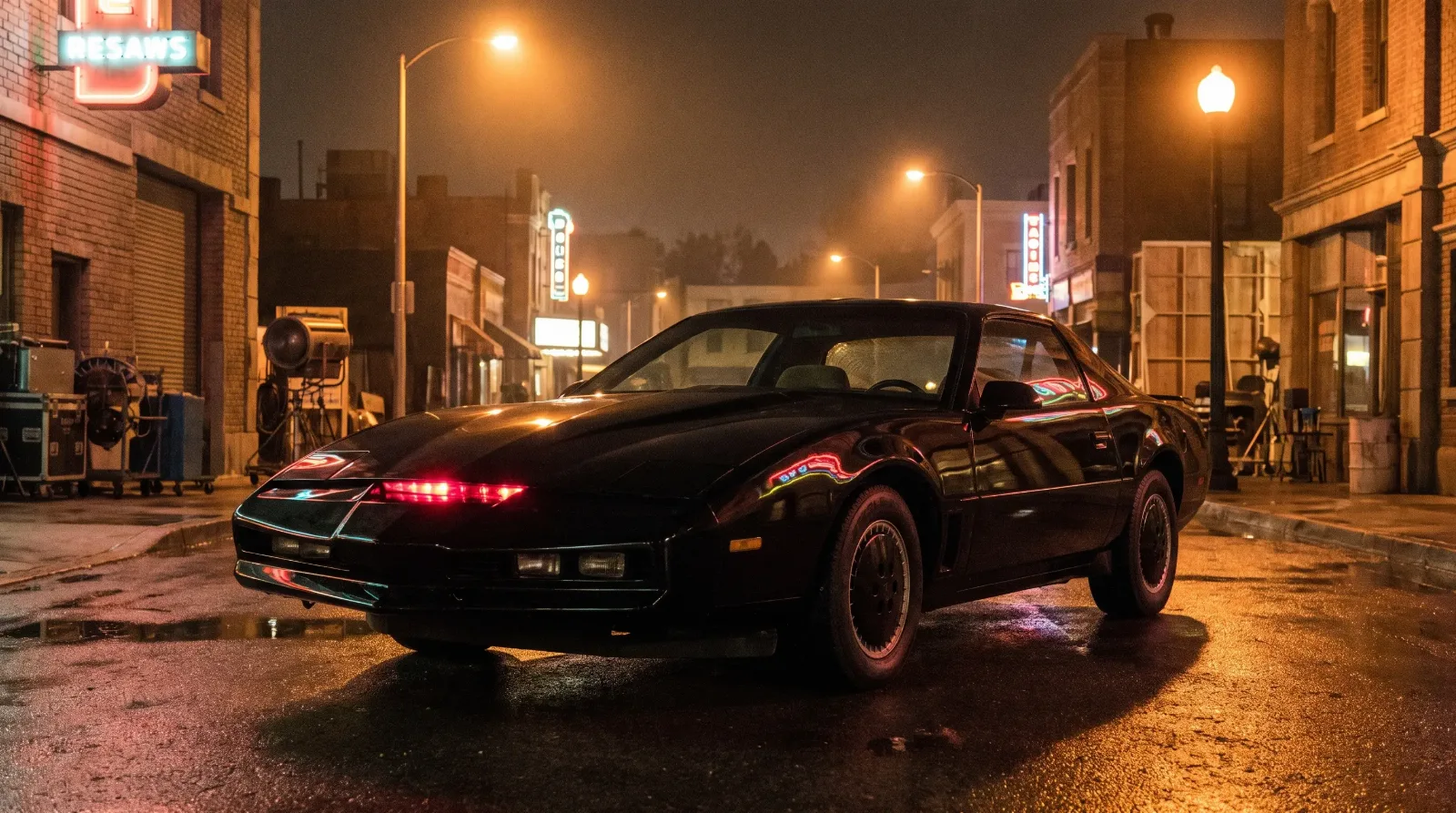
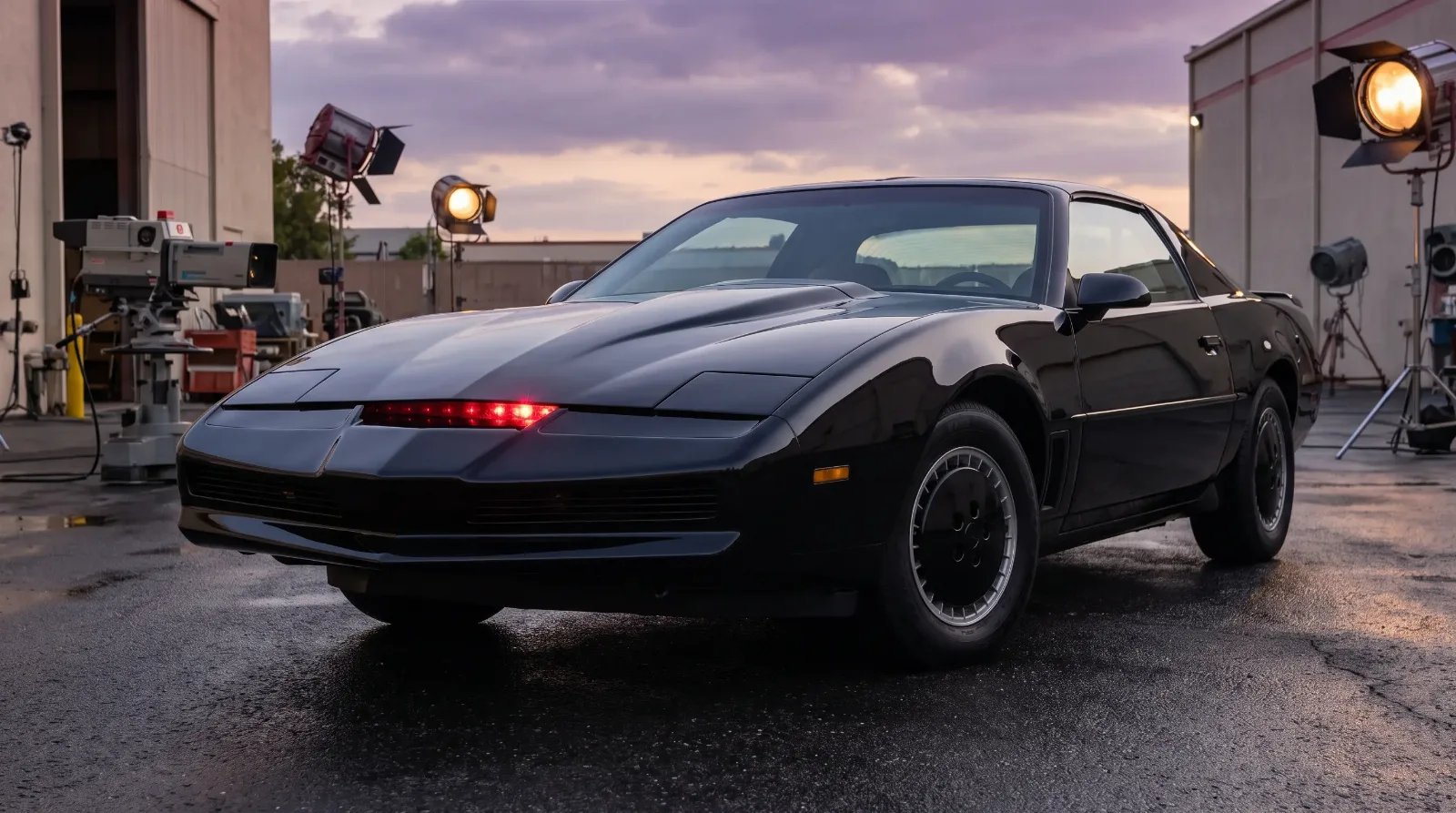
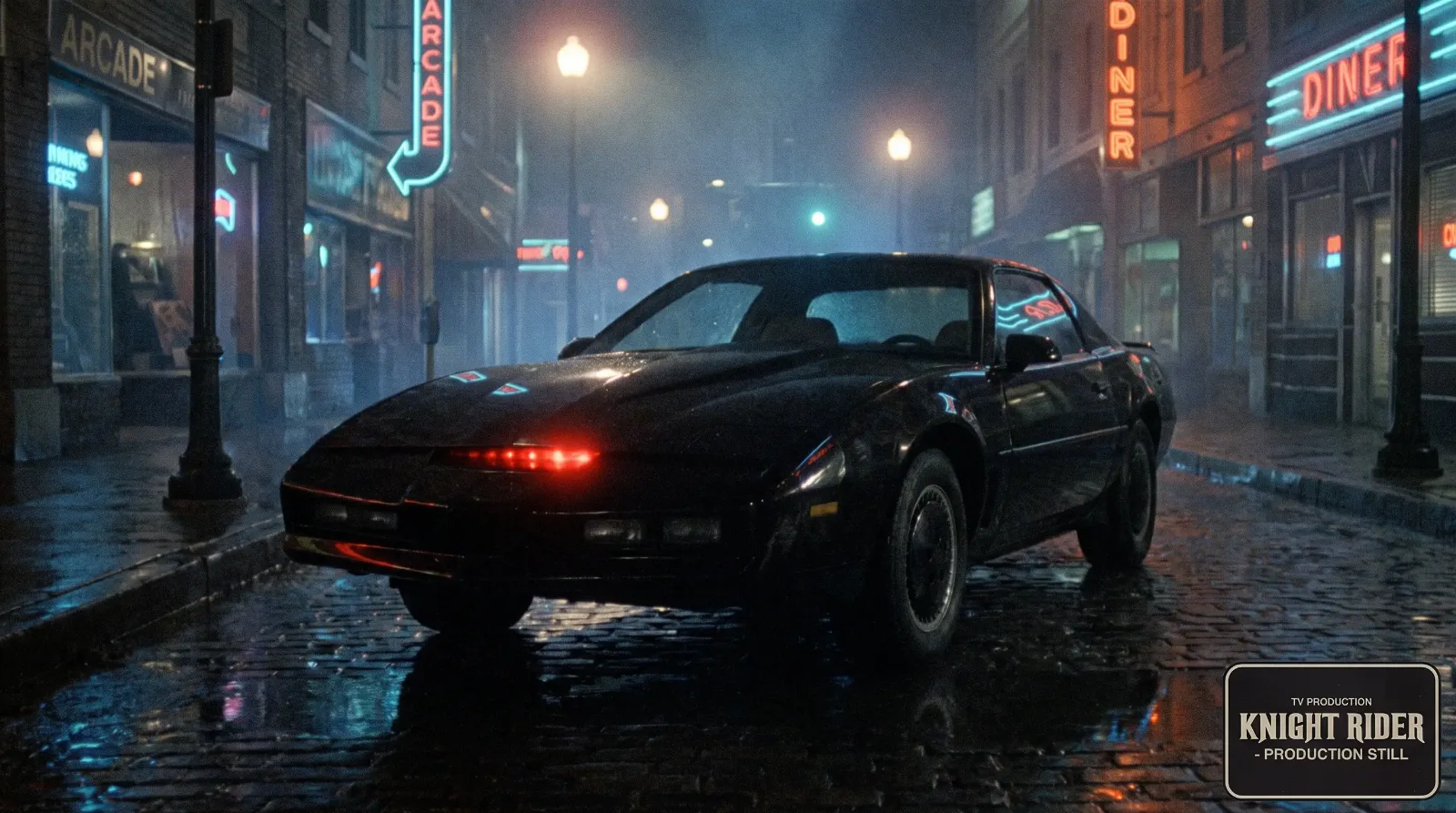
Then came the car that arguably rivaled the Bandit for pure cultural saturation. Knight Rider premiered in 1982 and cast a black third-generation Trans Am as KITT, an artificially intelligent crime-fighting machine with a red scanning light and a dry sense of humor. For a generation of kids too young to have caught Smokey and the Bandit in theaters, KITT was the Trans Am. The two black Pontiacs, one a bootlegger's blocker and one a talking supercar, bracketed the model's most famous decade and guaranteed that any black Trans Am on any street would draw a second look. The connections between the show car and the real GTA are worth their own conversation, but the takeaway is simple. Hollywood gave the Firebird two distinct legends and let them reinforce each other.
What a screen-linked Trans Am costs now
All of this history has a price tag, and the market sorts it carefully. An ordinary 1977 or 1978 Special Edition Trans Am in good condition trades in a sensible range, valued as a well-styled survivor of a lean era rather than a blue-chip muscle car. The premium starts when you add provenance. Cars with documented ties to the films, or to Reynolds himself, occupy a different tier entirely.
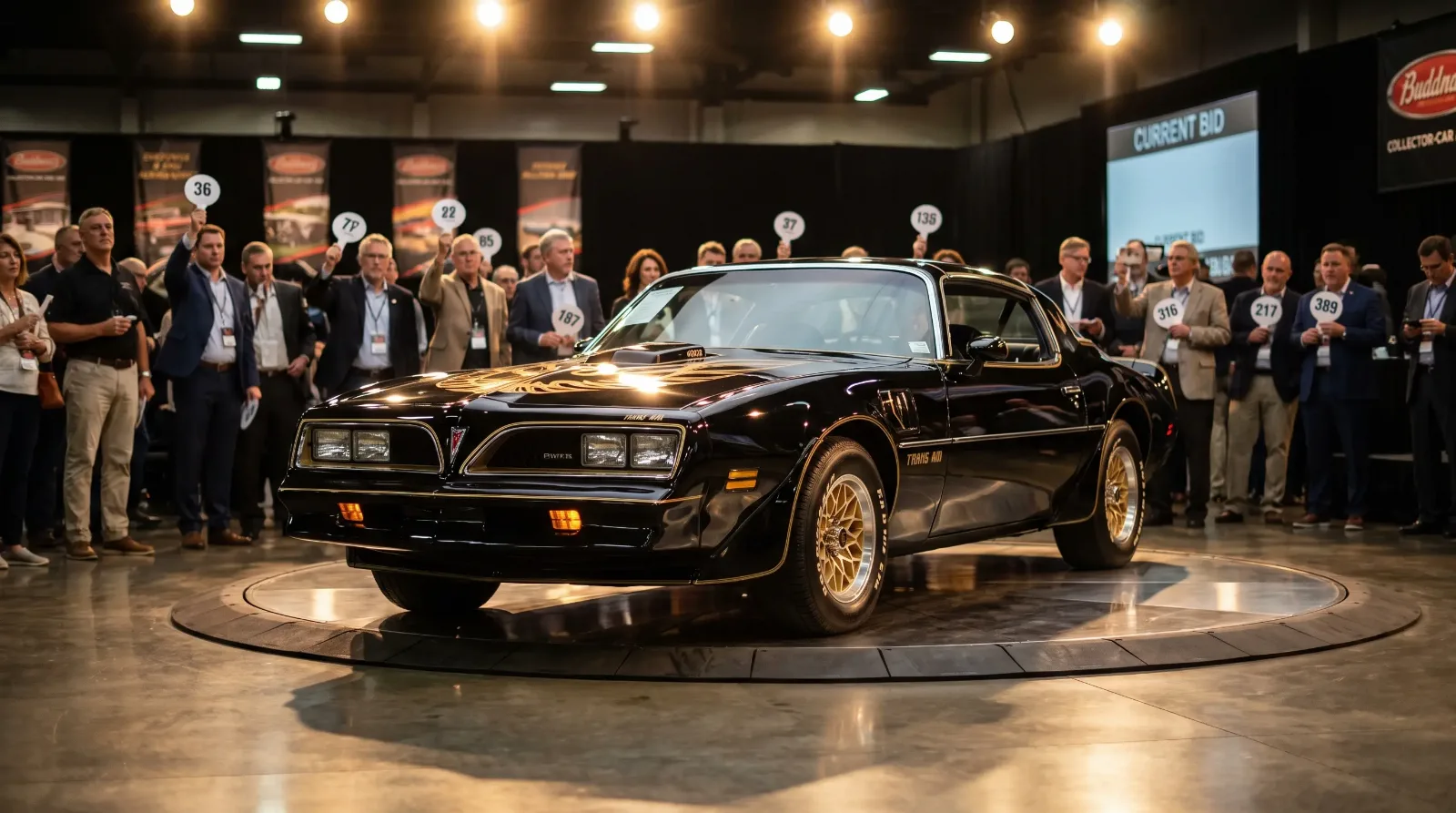
When Burt Reynolds sold pieces of his personal collection, a 1977 Trans Am tribute car he had owned and signed twice reportedly changed hands for $170,000 at auction, a number that has nothing to do with the car's mechanical specification and everything to do with the story attached to it. Screen-used cars from the productions are rarer still, since so many were destroyed during filming, and that scarcity keeps verified examples in strong demand. For most buyers the practical path is a clean, correct Special Edition that captures the look without the seven-figure fantasy, and there is a healthy supply of black-and-gold Trans Ams for sale for exactly that reason.
Nearly fifty years on, the bandit trans am occupies a strange and permanent place in American car culture. It was never the fastest thing Pontiac built, and it arrived at the worst possible moment for horsepower. What it had instead was a summer, a stuntman, and a movie star who made breaking the rules look like the most fun a person could have with a full tank of gas. That was enough to turn a black coupe with a gold bird on the hood into a legend the specifications could never explain on their own.
Sources and notes
- Smokey and the Bandit - Wikipedia
- The Real Story Behind Pontiac's Black-And-Gold Trans Am - Motorious
- Burt Reynolds' Second Bandit Trans Am Sells for $170,000 - Motor Authority
- 1978 Pontiac Firebird from The Rockford Files - Hagerty Media
- 1977 Pontiac Firebird Trans Am T/A 6.6 Specifications - Automobile Catalog
- Pontiac Firebird - Wikipedia
Related Reading
Article
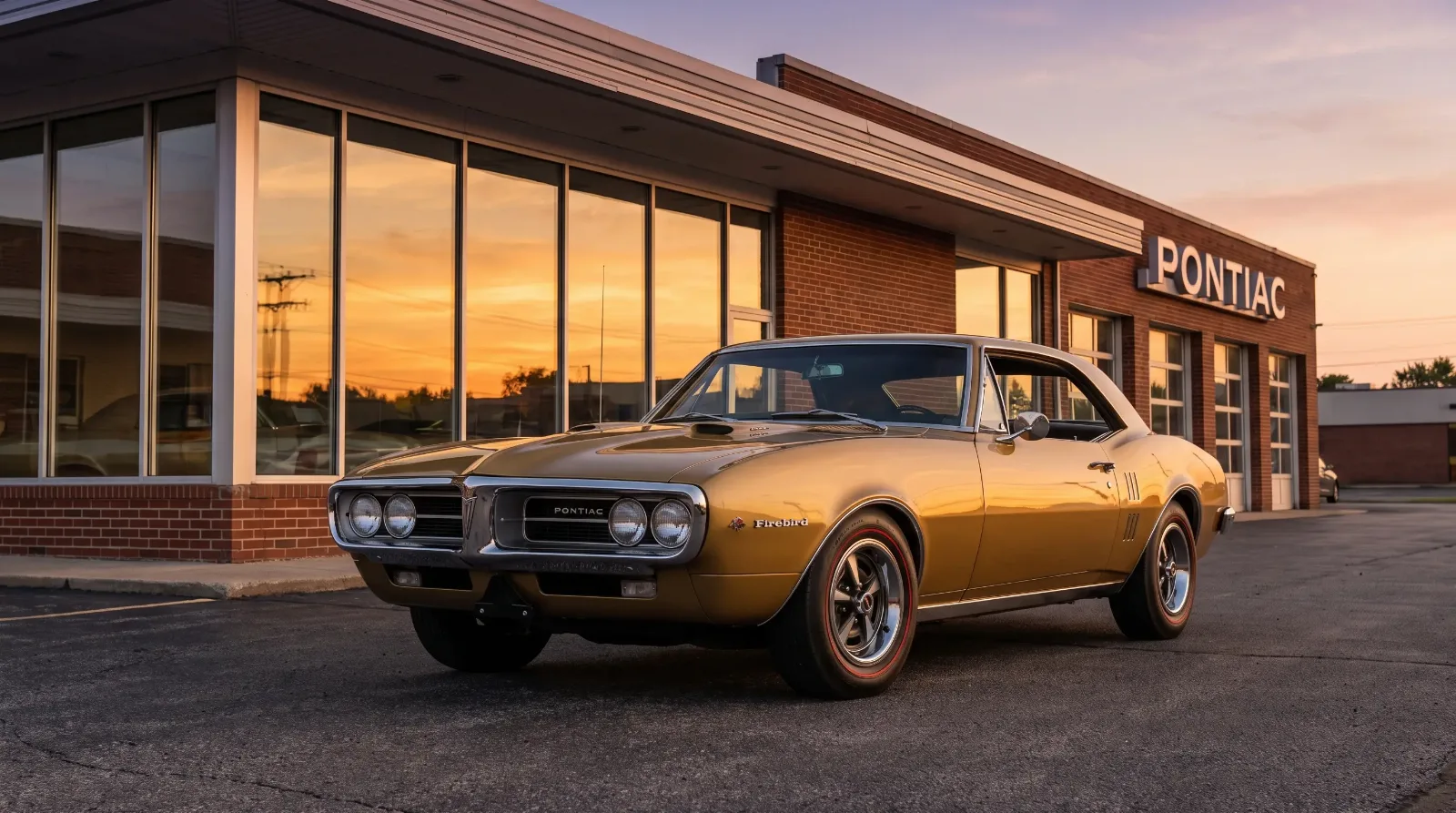
The Pontiac Firebird Story: From 1967 to the Screaming Chicken
Article
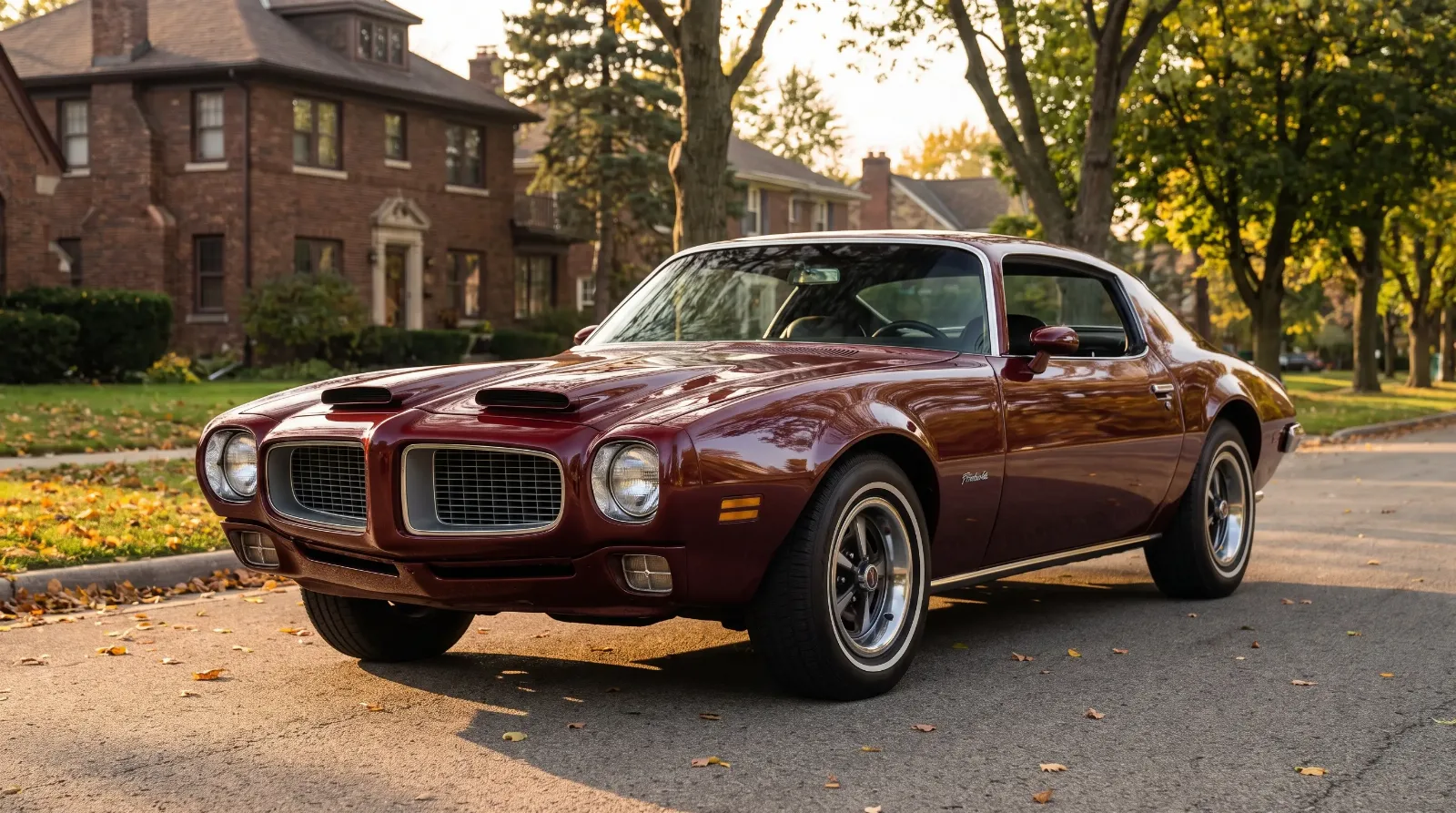
The Firebird Formula: Muscle Without the Wing
Article
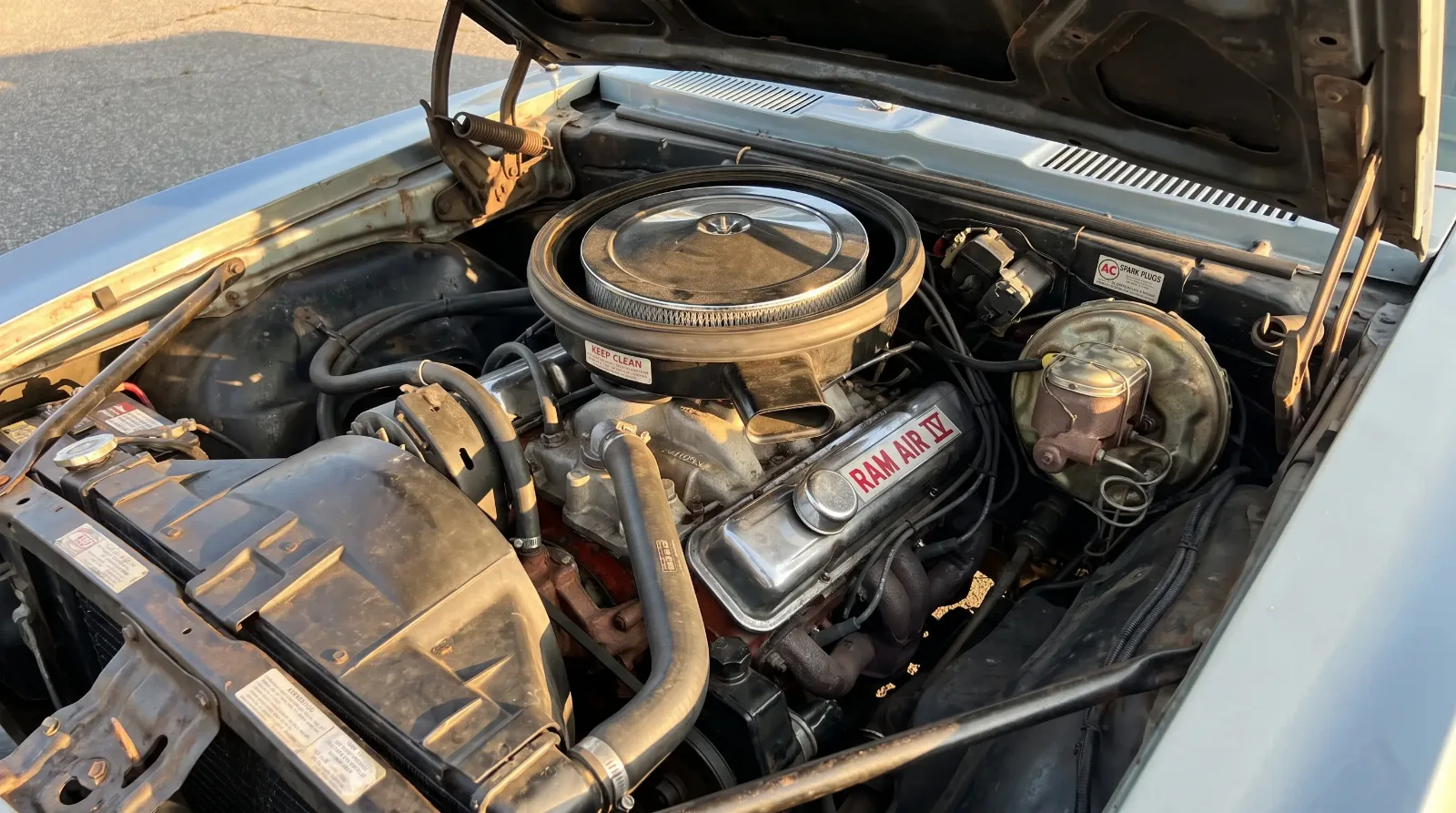
Pontiac Power: The 400, 455 and Ram Air Engines
Article
Smokey and the Bandit: The 1977 Black and Gold
Article
Burt Reynolds and the Bandit Legacy
Article
The Bandit II and III Cars
Article
Knight Rider: KITT the Trans Am
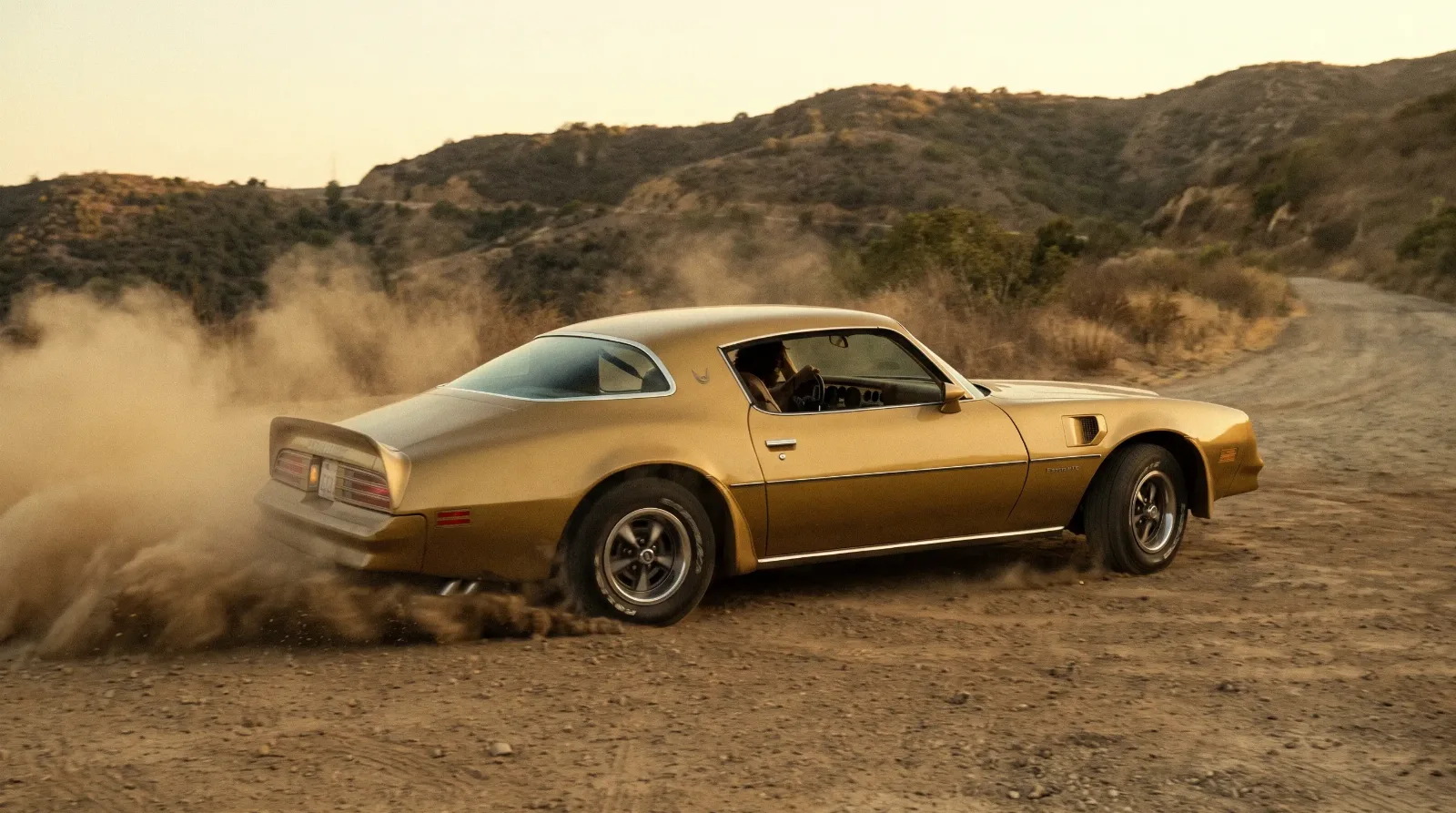
Article
The Rockford Files Firebird: TV's Unsung Gold Esprit
Article
Hooper and the Other Burt Films: Trans Am Before the Bandit
Article
The Bandit Special Edition Explained
Article
Movie Trans Am Auction Prices: What Bandit Cars Really Sell For
Article
The Screaming Chicken as Pop Icon
Article
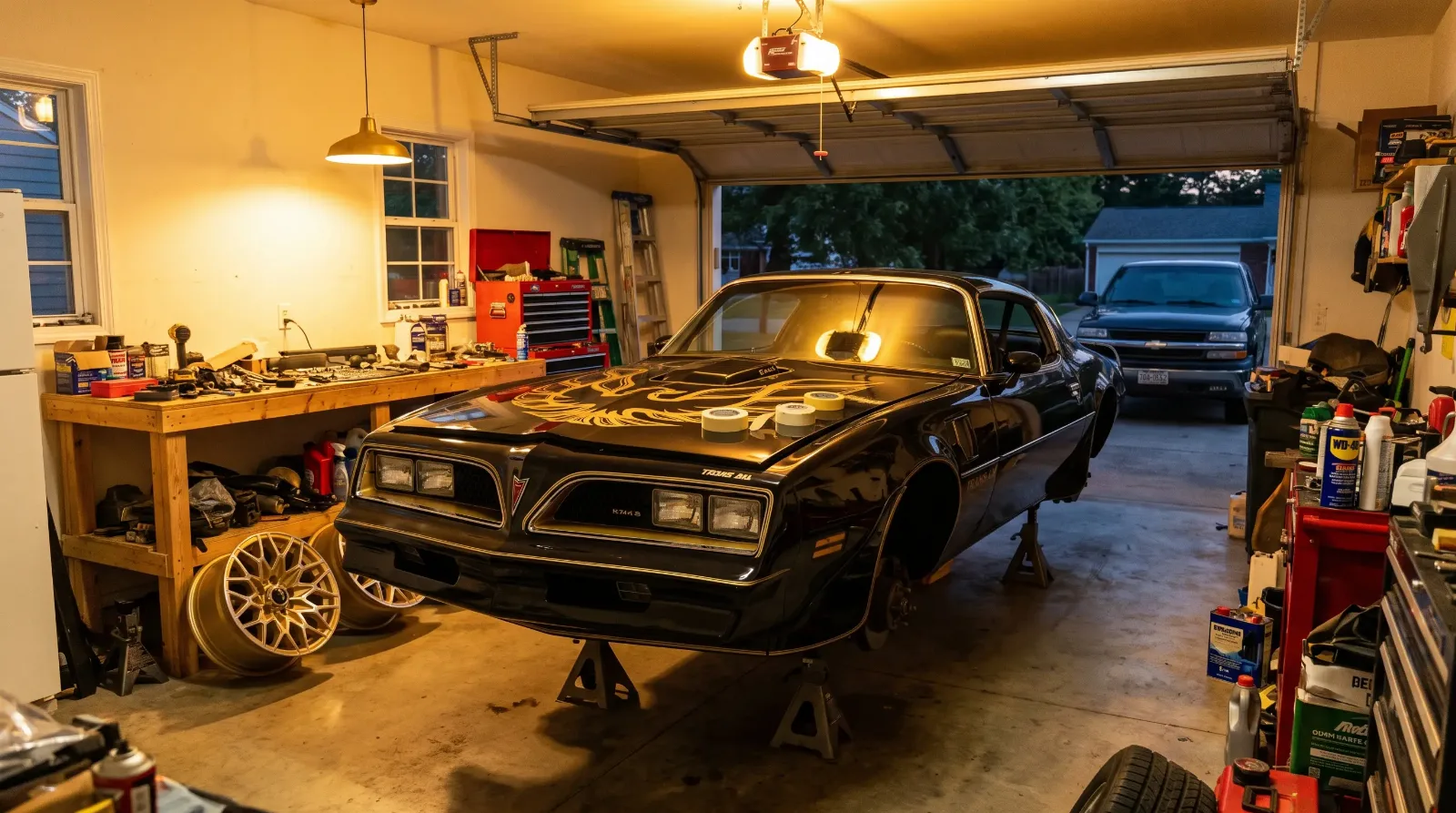
Bandit Tribute Builds
Article
The Trans Am in Music and TV
Article
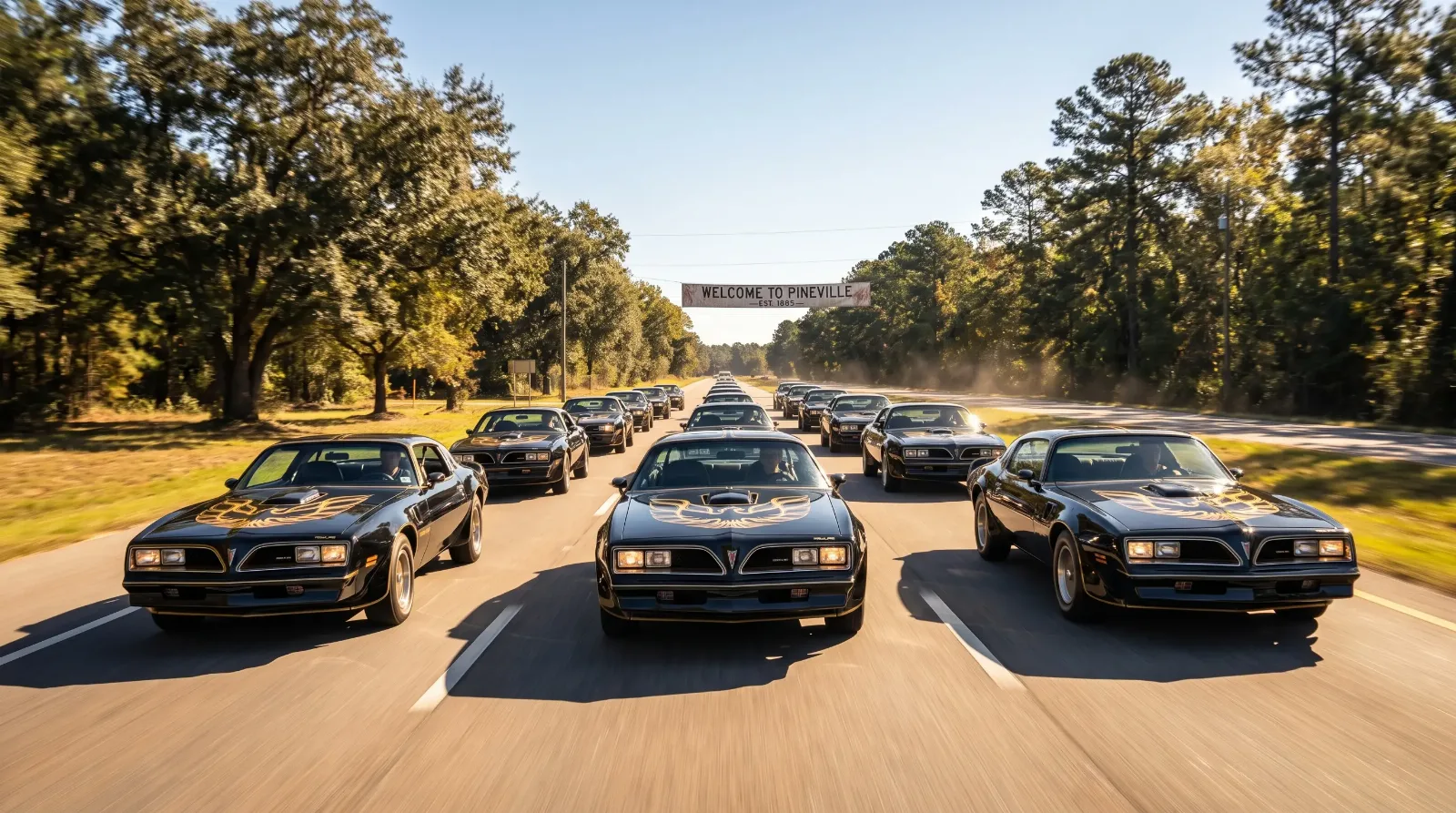
The Bandit Run Events
Article
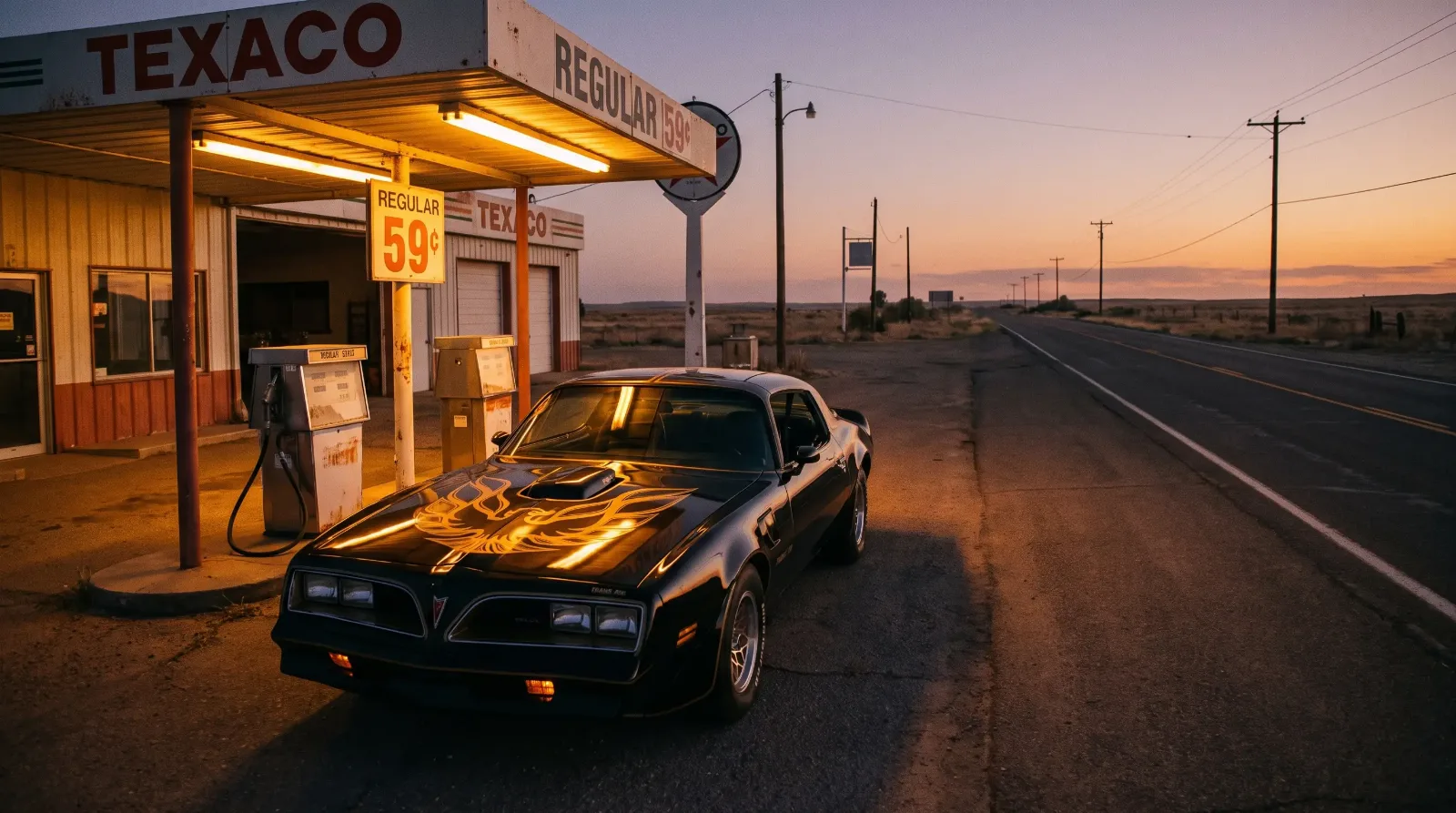
Why the Bandit Made the Trans Am a Star
Article
KITT vs the Real GTA
Article
Firebird Fandom and Clubs
Article
The Pontiac Firebird in Rock Music and 1970s Culture
Have a
Pontiac Firebird
for Sale?
Reach thousands of serious classic car collectors across the US.
Sell It Here →
Are You a Classic Car Dealer?
List your full inventory and connect with targeted classic car buyers.
Join as a Dealer →
#trans-am
#pop culture
#pontiac firebird
#movie cars
#Smokey and the Bandit
#Burt Reynolds
#Knight Rider

About the author
Patrick Walsh
Automotive journalist covering classic car shows, events, and the enthusiast community across North America.
Related Listings - Pontiac Firebird
Comments
Be the first to comment on this article.