I've had old-timers tell me about the day the flathead V8 showed up at the local Ford dealer like it was a religious experience, and honestly, after hearing enough of those stories, I believe them. In 1932, for the price of a four-cylinder car, Ford put a V8 in the hands of ordinary working people, and that single move reshuffled what "affordable" meant for the rest of the decade. That's the 1930s ford v8 story in a nutshell, but the details are where it gets good.
Before 1932, if you wanted eight cylinders, you paid for it. V8s and V12s belonged to Cadillac, Packard, and their kind, cars built for people who didn't check the price tag before test-driving. Henry Ford looked at that arrangement and decided it was wrong. He wanted a V8 that a regular family could afford, and he pushed his engineers to cast the entire engine block, both banks of cylinders, the crankcase, everything, as one single piece instead of building it up from multiple castings the way everybody else did.
Why casting it in one piece was the hard part
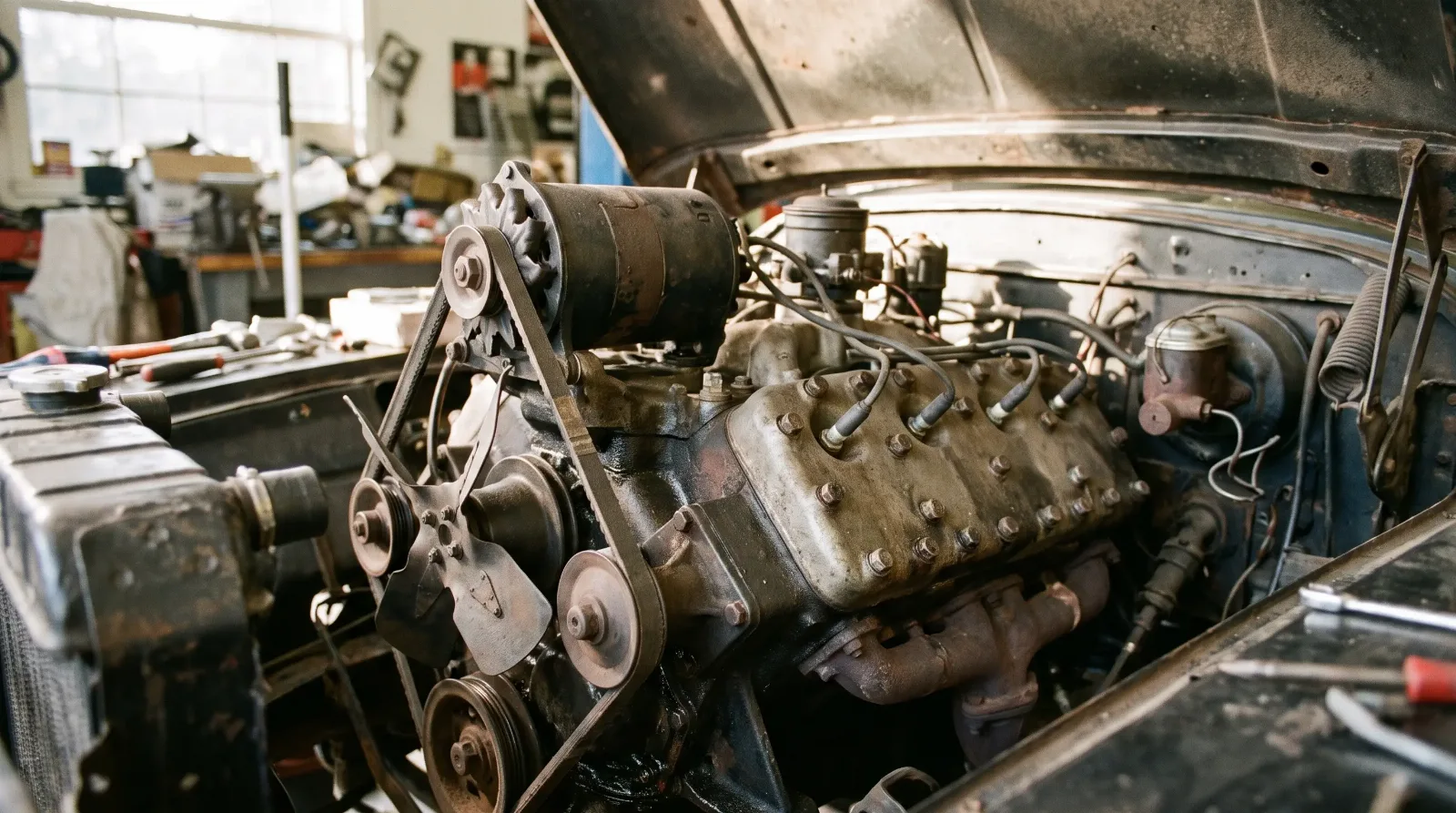
Casting a V8 block as a single unit sounds simple until you try it. The complex internal water passages needed to cool both banks of cylinders made the mold itself a nightmare, and Ford's foundry crews burned through a lot of failed attempts before they got a process that worked reliably at production volume. I've talked to guys who worked around old Ford machinists' stories passed down secondhand, and the consensus is that nobody else in the industry wanted to touch a one-piece V8 casting because the scrap rate looked ruinous on paper.
Ford's team got there anyway, and when the flathead V8 launched in the 1932 model year, it made 65 horsepower from 221 cubic inches, a real jump over the four-cylinder Model B that shared the same body that year. It wasn't the smoothest running engine, and it wasn't the most efficient, but it was cheap to build once the casting process was dialed in, and Ford could price it within reach of a mainstream buyer instead of a wealthy one.
Early flathead V8s weren't perfect right out of the gate either, and I think that part gets glossed over too. The first units had oil pump and cooling issues that Ford's engineers spent the next couple of model years chasing down, since that single-piece block made certain repairs a bigger job than a multi-piece design would have needed. Dealers dealt with more than a few warranty headaches in 1932 and 1933 before Ford got the bugs worked out, and the engine that people remember as bulletproof today took a couple of years of real-world running to actually earn that reputation.
What it actually meant on the street
Here's the part people forget: before the flathead, a fast car and an affordable car were two different categories entirely. The V8 blurred that line. A farm kid in Ohio or a delivery driver in Chicago could now own something with real acceleration for not much more than a base-model four-cylinder, and that changed the culture around cars in a way that's easy to underestimate from a distance. Hot rodding as a hobby traces a straight line back to this engine, because a cheap, plentiful, and genuinely tunable V8 sitting in junkyards and driveways across the country gave a whole generation of tinkerers something to build on.
Why the hot rod scene grew up around this engine
My own uncle used to talk about a neighbor who swapped a flathead into just about anything with four wheels and a frame, and that wasn't unusual. The aftermarket for speed parts, heads, cams, dual carburetor setups, grew up specifically around this engine because there were so many of them out there and they were simple enough for a shade-tree mechanic to work on with hand tools.
| Model year | Displacement | Approx. horsepower |
|---|---|---|
| 1932 | 221 cu in | 65 hp |
| 1934-1938 | 221 cu in | 85 hp |
| 1939 (Mercury 239 cu in) | 239 cu in | 95 hp |
The numbers climbed in the first few seasons as Ford refined compression ratios and carburetion, then held at 85 horsepower for most of the decade once the 221 cubic inch block was sorted out, the reason it's still known among owners as the "85 horse" flathead. The next real jump came in 1939, when a larger 239 cubic inch version for the new Mercury brand pushed output to 95 horsepower, but the basic architecture, that single-piece block, stayed the backbone of the engine for years after its debut.
"Everybody talks about the luxury cars from this decade, the V16s and the coachbuilt bodies, and sure, those are beautiful. But the flathead V8 is the engine that actually changed how regular people thought about what a car could do. That's the one that mattered on my street growing up."
— Gary Nowak
Living with a flathead today
What strikes me talking to owners who still run these engines is how forgiving they are compared to some of the more exotic multi-cylinder engines from the same decade. Parts availability is genuinely good, since so many were built and the hobbyist community around this engine never really went away. That said, the flathead's cooling design, with water flowing through those same complicated internal passages that made the original casting so hard, is a known weak point, and overheating issues show up regularly on cars that haven't had their cooling system properly maintained.
Head gaskets on these early V8s are another item worth watching, since the shared water jacket design between the two banks put more strain on the sealing surface than a conventional block layout, and a flathead running hot for too long will show it there before anywhere else.
If you're shopping this end of the market, a well-sorted flathead V8 car is one of the more approachable ways into pre-war ownership, both in terms of purchase price and ongoing parts support. You can see how that plays out in the current market by browsing pre-war classics for sale, where flathead-powered Fords tend to show up more often, and at friendlier prices, than the luxury makes covered elsewhere in this cluster.
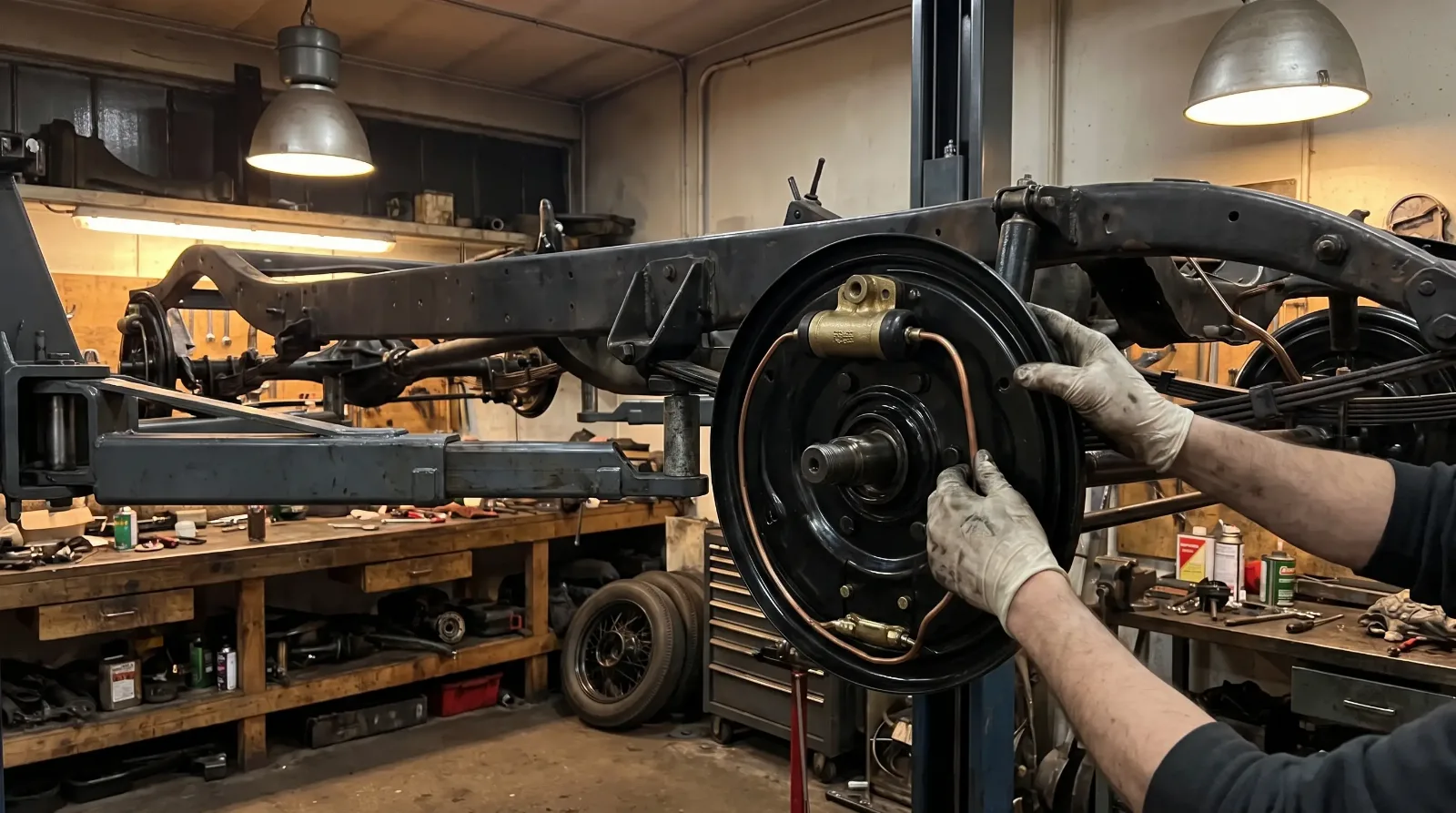
Where the V8 gave these cars go, a parallel engineering push through the same years worked on stop. The next installment covers how hydraulic brakes came together in the same stretch of years, and if you want the full arc connecting all of it, the pre-war classics story ties the engine, the brakes, and everything else in this era together.