There's a photograph that gets passed around at Mopar shows, grainy, a little washed out, of Richard Petty leaning against a stock car in the pits at a mid seventies superspeedway, arms crossed, that flat straw cowboy hat tilted just enough to read as confidence rather than showmanship. Ask ten people what car that is behind him and you'll get an argument, because the badge on Petty's number 43 in these years wasn't the Plymouth most fans still pictured him in. For most of the seventies it was a Dodge Charger, the car that carried him to two of his championships, even as NASCAR's rulebook and Detroit's shrinking model lineups quietly reshaped what that Charger actually was underneath. The story of how the Charger name ended up on the King's car says as much about the sport's politics as it does about the machine itself.
Why Petty was even driving a Dodge
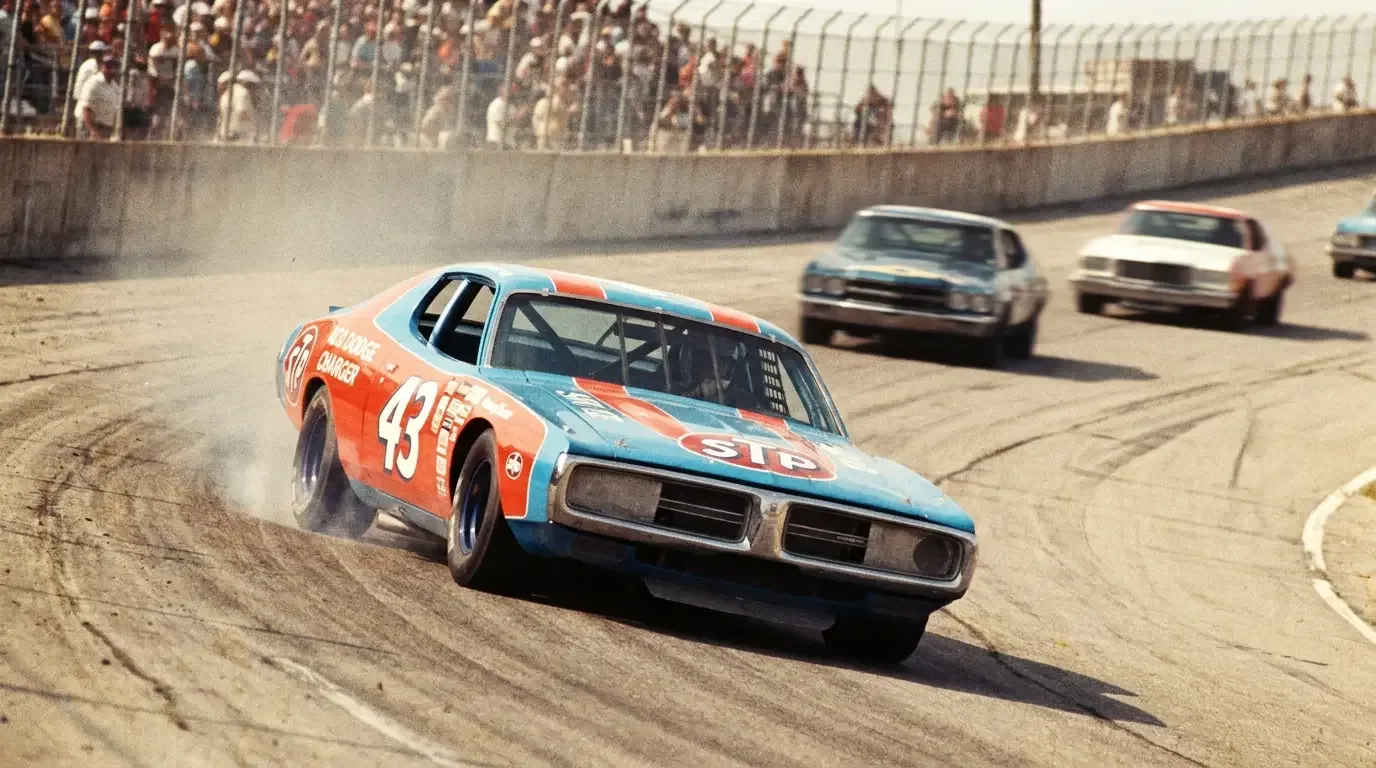
Richard Petty spent most of his early career in Plymouths, the Road Runner and later the winged Superbird carrying his number 43 to victory after victory. But Petty Enterprises switched to Dodge in 1972, and it was in a Dodge Charger that Petty won back-to-back Winston Cup championships in 1974 and 1975, the second of those on the back of a remarkable 13 wins in a single season. He kept racing the Charger through 1977 before Chrysler pushed the new Dodge Magnum on the team for 1978, so the Charger badge was a fixture on Petty's car for the better part of the decade, not a brief late-seventies detour.
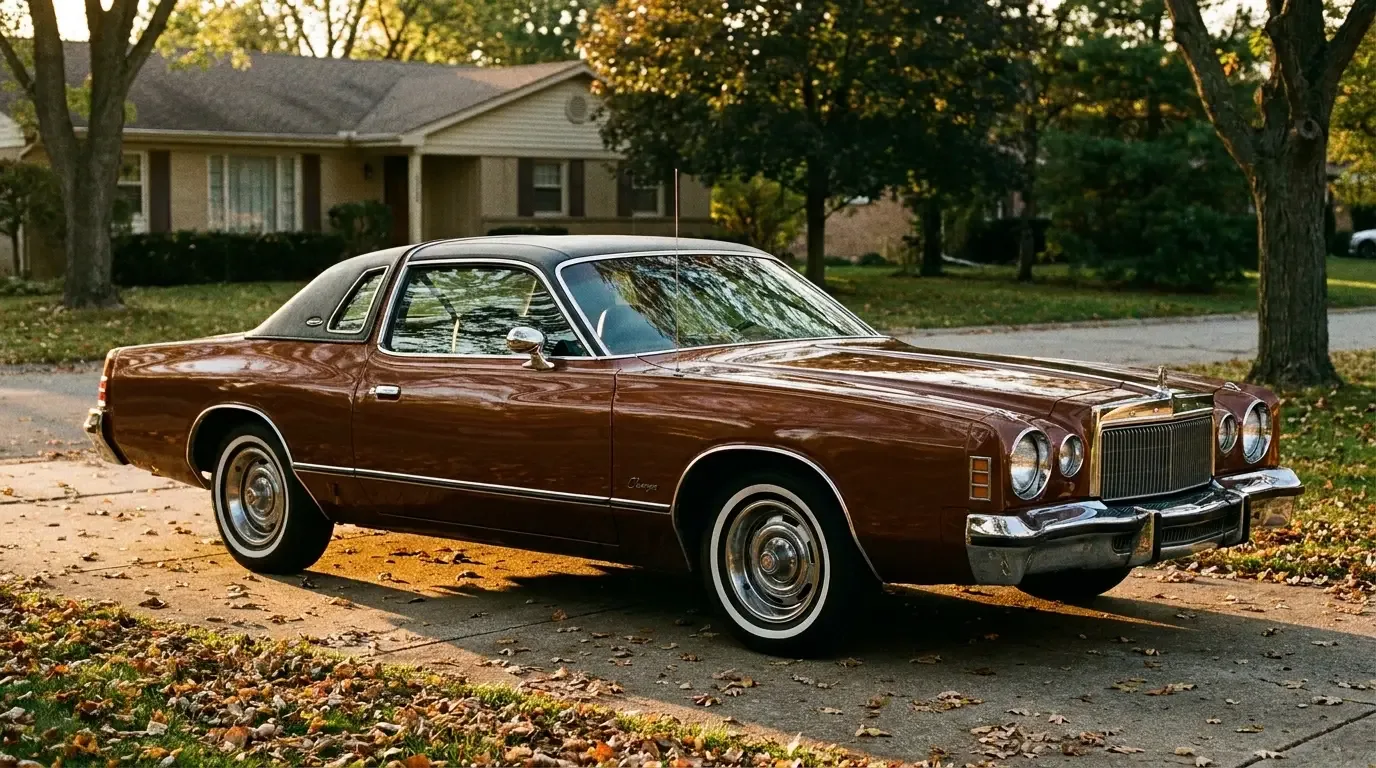
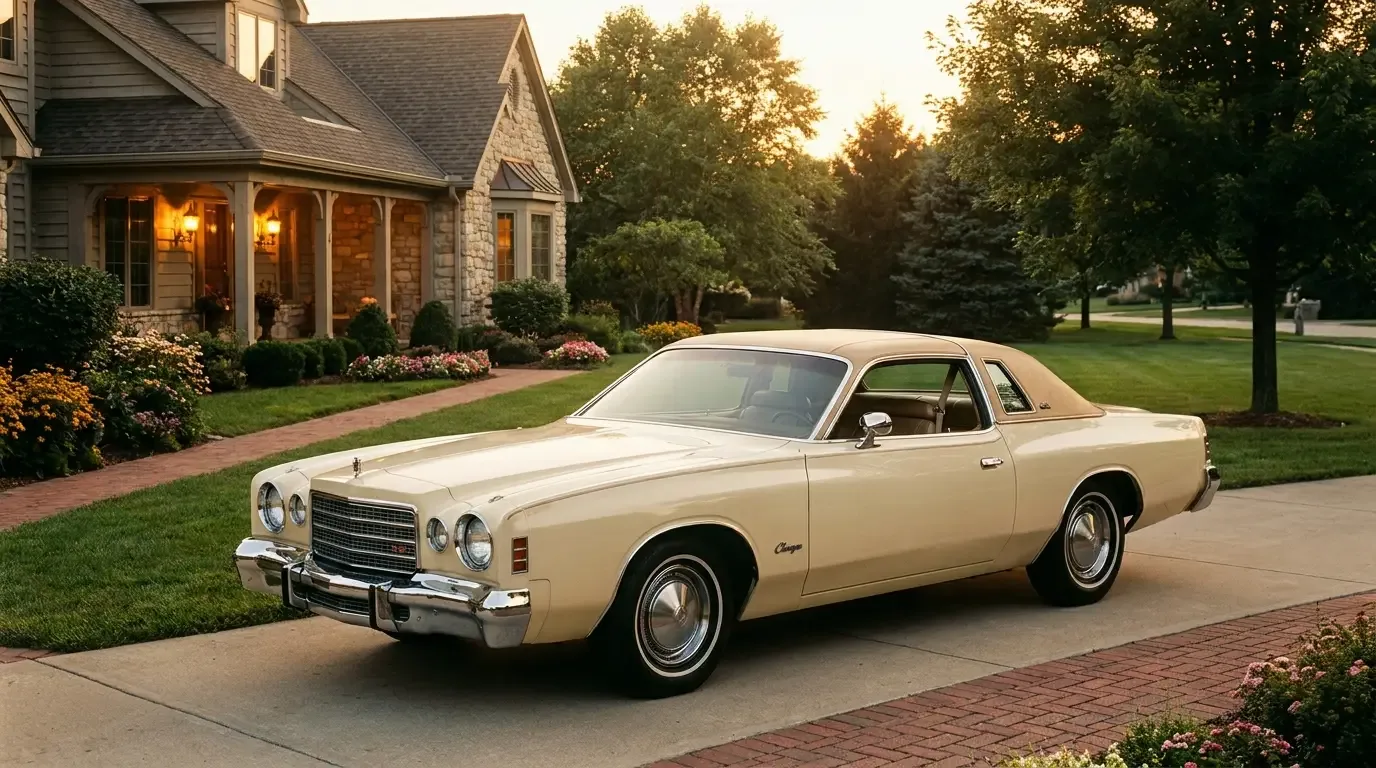
This wasn't Petty chasing a favorite car so much as going where the competitive sheet metal was. And there was a wrinkle: the personal-luxury Charger Dodge started selling in 1975 was too square to race, so NASCAR let teams keep bolting on the older 1974 Charger bodywork all the way through January 1978. The car that carried Petty's number 43 in 1975 wore a Charger badge, but its shape was really the 1974 Charger, not the opera-window coupe in the showroom.
What the car actually was underneath the skin
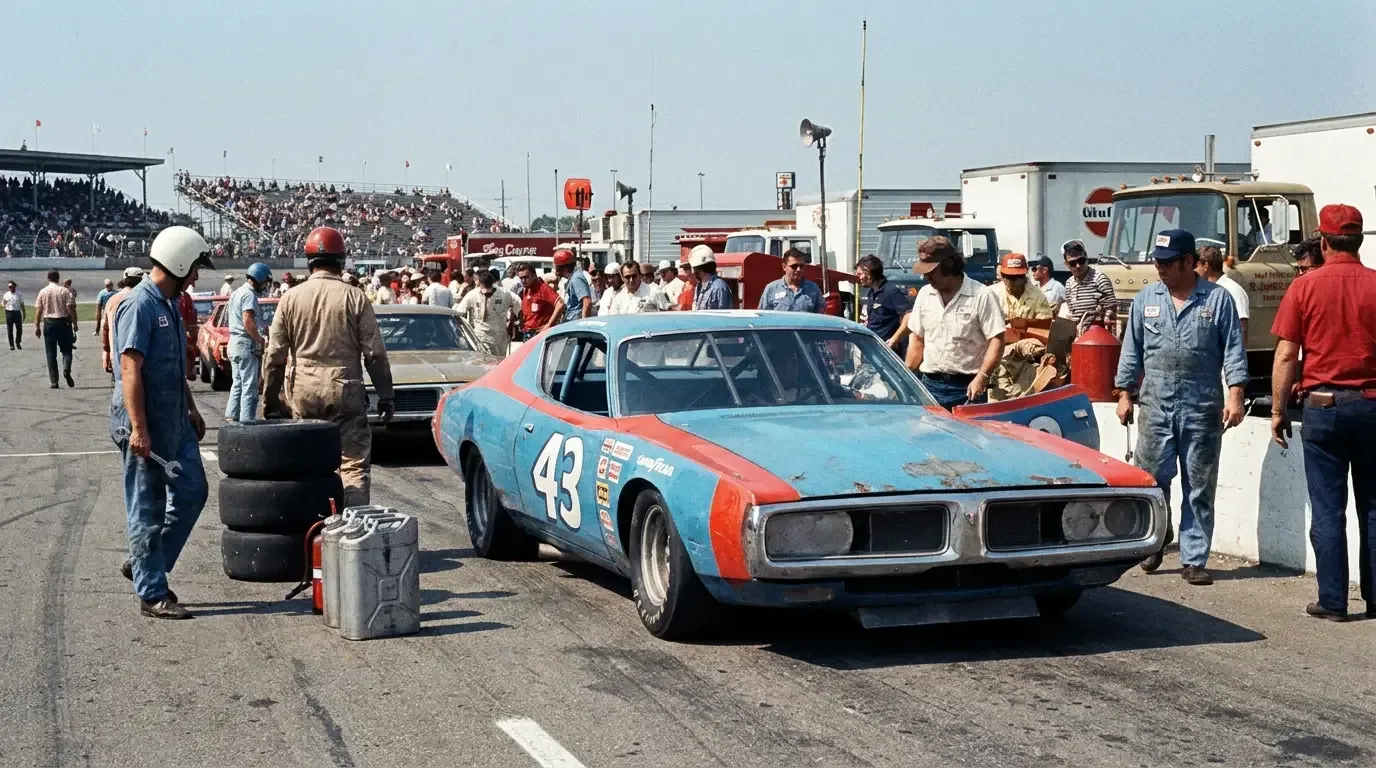
Strip away the manufacturer badge and the NASCAR Charger of this era bore only a loose resemblance to the personal-luxury coupe sitting in Dodge showrooms with opera windows and crushed velour. The race cars ran purpose-built tube-frame chassis, a big-block Chrysler engine tuned well past anything available to a street buyer, and aerodynamic bodywork shaped as much by wind tunnel testing as by whatever Dodge's styling studio had approved for retail sale. The connection to the street car was the silhouette and the name on the deck lid, not much more.
That gap between showroom and superspeedway is part of why this chapter of Charger history gets overlooked. Fans who know the earlier aero-war Dodges, the winged Daytona that chased 200 miles per hour on the banking, sometimes assume the story ended when that car was banned from competition. It didn't. The name kept racing, just wearing a very different body and carrying a very different mission, more about surviving a shrinking manufacturer commitment than chasing a speed record. For the full arc of that earlier chapter, dodge charger daytona covers how NASCAR's rule changes reshaped the sport before Petty ever sat in one of these later cars.
The races that mattered
Petty's Dodge years were, in fact, some of the most dominant of his career. He took ten wins and the championship in 1974, then followed it with 13 wins and a second straight title in 1975, one of the great single seasons in the sport's history. The Charger stayed under him through 1977. It was only when Chrysler forced the switch to the 1978 Dodge Magnum, a car the team never could get to handle, that the winning stopped: Petty failed to reach victory lane at all that year and, midway through the season, walked away from his longtime Chrysler relationship to race a Chevrolet instead. The Charger, in other words, was the winning car; the Magnum was the one that ended the partnership.
"I asked an old crew chief once what it actually felt like switching manufacturers mid-career, and he laughed and said nobody in the shop cared what badge was on the deck lid. They cared whether the car was fast on Sunday. Everything else was somebody else's problem to sort out."
— Patrick Walsh
Why this chapter still matters to collectors
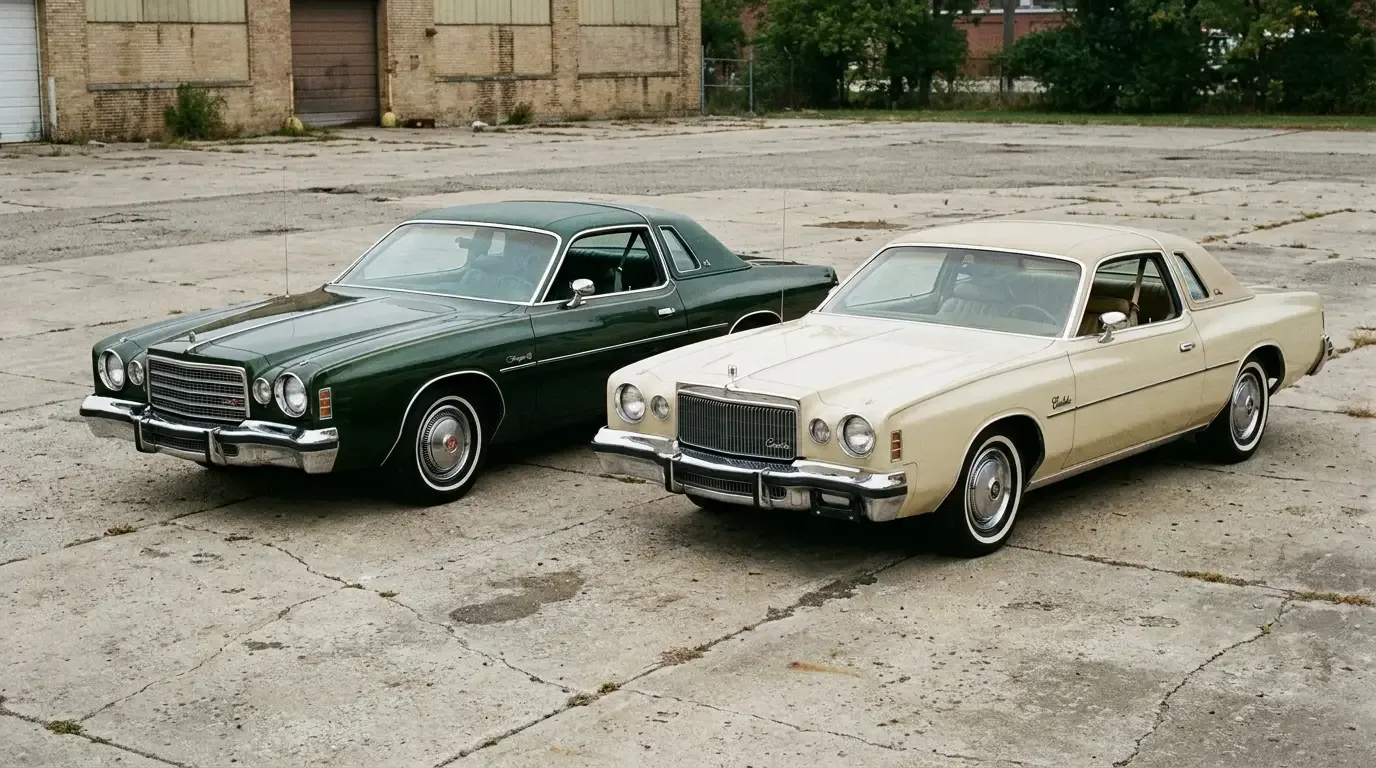
None of this NASCAR history directly touches the street Chargers that Dodge sold to regular buyers during these same years, the SE coupes with the vinyl roofs that couldn't be further in spirit from a tube-frame race car. But the racing connection still colors how people feel about the fourth-generation Charger nameplate, even the personal-luxury versions that never saw a racetrack. It's a reminder that the name carried real competition weight well past the muscle car era most people associate it with, and that reminder has helped nudge collector interest in the street cars upward over the last several years. For a closer look at how that competing personal-luxury coupe stacked up against its biggest period rival, the Charger Vs Cordoba story is worth reading, and the Charger feature on Classic Cars Arena covers the showroom side of this same stretch of years in full.
I keep coming back to that photograph, Petty leaning on a fender that could have said Plymouth two years earlier and Dodge that season, because it captures something true about racing in that decade. The manufacturers were scrambling, the rulebook was scrambling right along with them, and the drivers just kept showing up and driving whatever car the shop rolled out. That's not a diminished story. It's a resourceful one, and it's part of why this stretch of Charger history deserves more attention than it usually gets.
Sources and notes
- Richard Petty, Wikipedia - confirmed the 1972 switch to Dodge, the 1974 and 1975 championships, the 13-win 1975 season, and the winless 1978 that ended the Chrysler relationship.
- Hagerty on the 1978 Dodge Magnum - confirmed the Magnum replaced the Charger for 1978, handled poorly, and led Petty to leave for Chevrolet mid-season.
- Dodge Charger (B-body), Wikipedia - confirmed NASCAR permitted the older 1974 Charger bodywork on race cars through January 1978 because the 1975 body was uncompetitive.
- MoparInsiders on Petty's 1974 Charger Cup car - corroborated the purpose-built race chassis and the gap between it and the street car.
- Old Cars Weekly on Petty at Daytona - period context on Petty's Dodge-era superspeedway record.