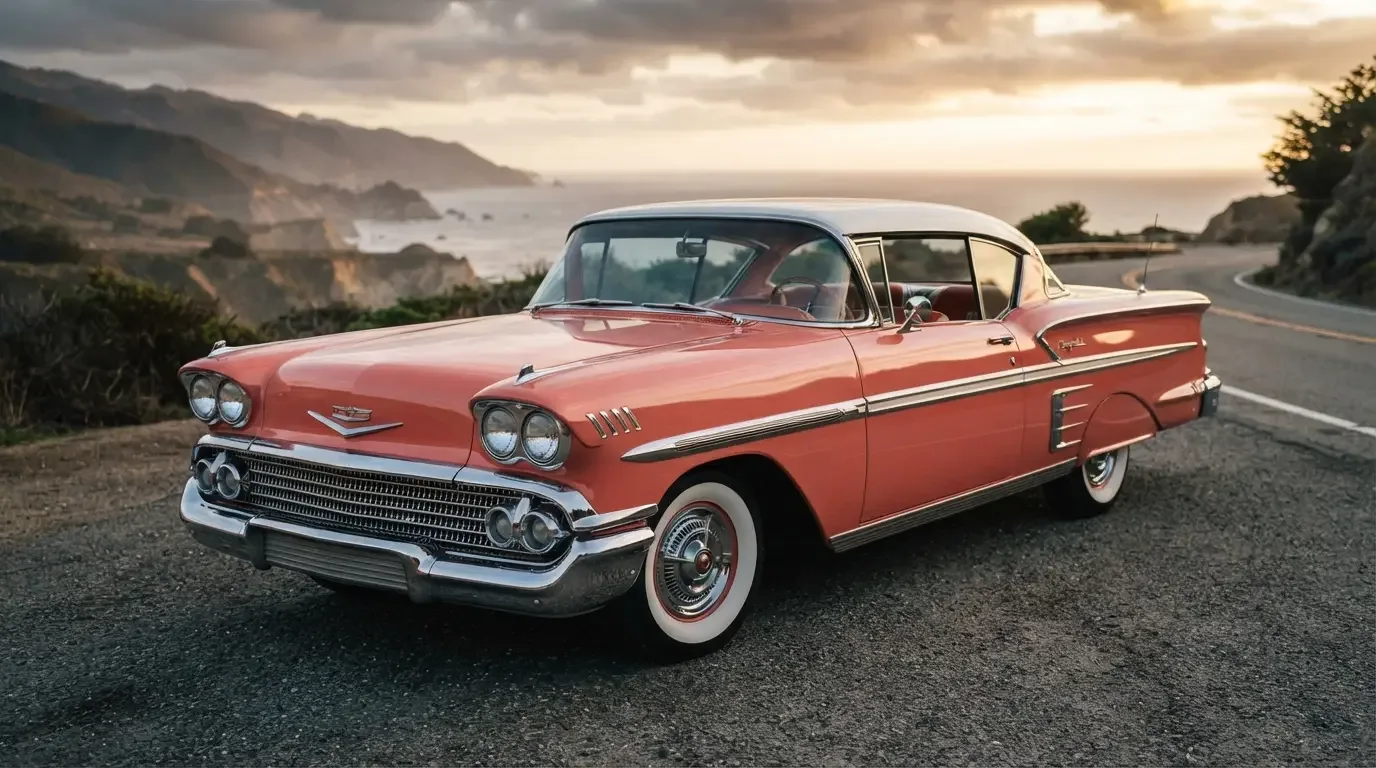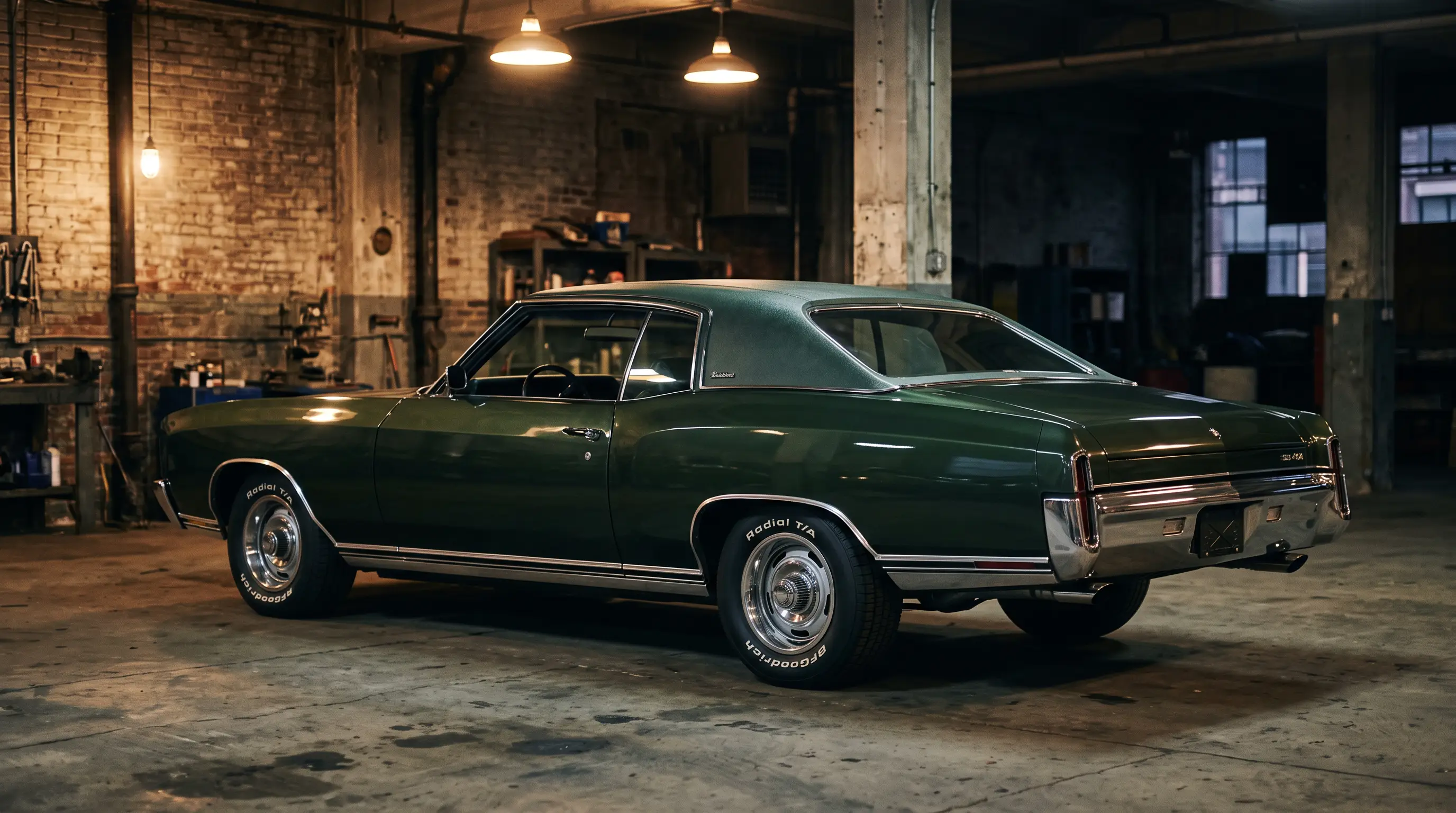
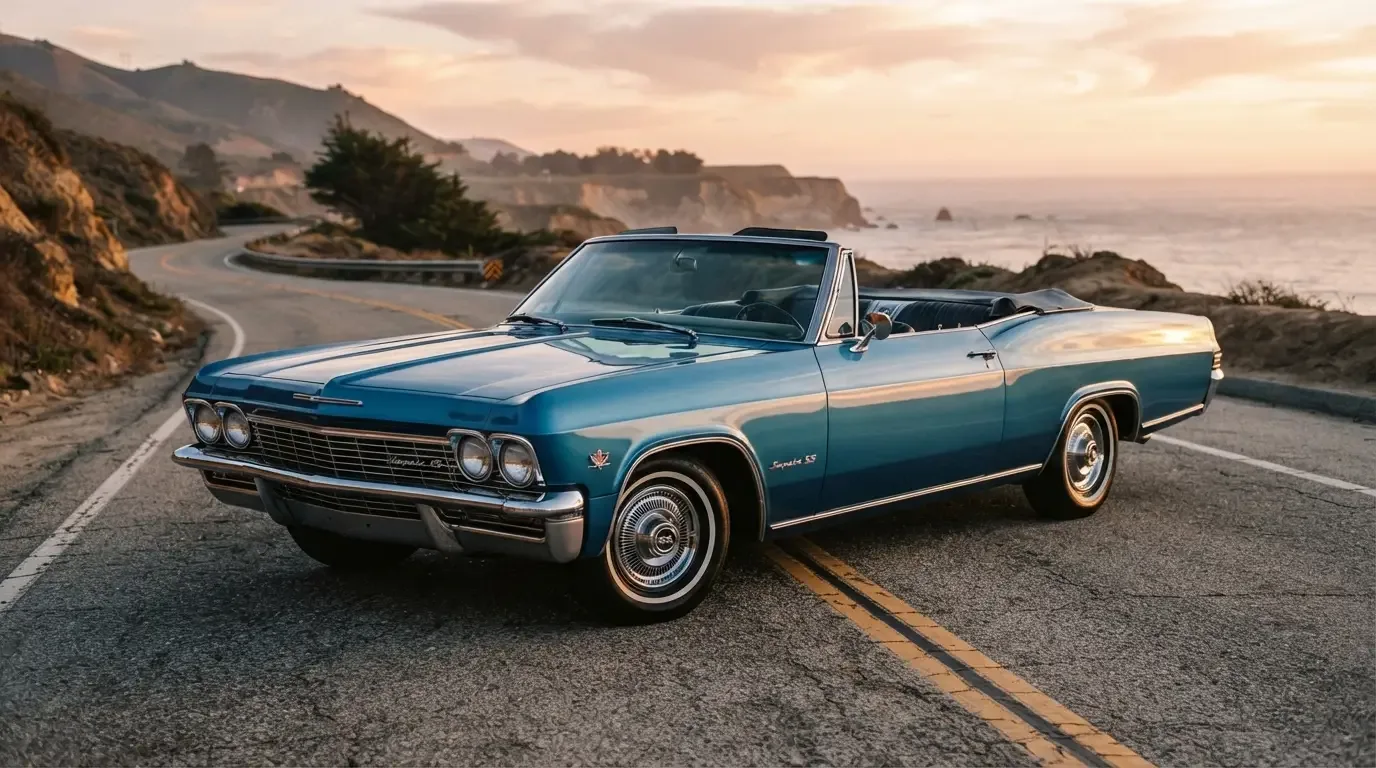
The salesman on the Chevrolet stand at the 1958 GM Motorama had a problem most people would envy. Customers kept walking past the sensible sedans and stopping cold in front of one car, a low two-door hardtop wearing a name nobody had heard before. They ran their hands along the chrome, crouched to look at the three round taillights per side, and asked the only question that mattered. What is that? The answer, a Chevy Impala, would go on to become one of the most produced cars in American history and, decades later, one of the most collected. The story of how a springbok's name ended up on the flank of a Chevrolet is the story of postwar America itself, told in sheet metal.
For a car that would eventually feel as common as a mailbox, the Impala started life as something special. It was not born a bread-and-butter sedan. It arrived as the crown jewel of the lineup, a car built to be looked at, and it never entirely lost that quality no matter how many millions Chevrolet made.
Born at the top of the range in 1958
The Impala name debuted for the 1958 model year, and here is the detail most people get wrong. It was not its own model. For that single year it was the top trim of the Bel Air series, offered only as a sport coupe and a convertible. Chevrolet had spent the mid-1950s building a reputation for value and dependability, the small-block V8 arriving in 1955 to change everything. By 1958 the company wanted a halo, something to sit above the pretty Bel Air and give showrooms a reason to gather a crowd.
The 1958 body was longer, lower, and wider than anything Chevrolet had built before, riding on a new X-frame chassis. Under the hood, buyers could order the new 348 cubic inch big block, a truck-derived W-engine that Chevrolet dressed up for passenger duty. The top version wore three two-barrel carburetors, the setup enthusiasts called Tri-Power. It was a lot of car for the money, and it sold on looks as much as speed. Those triple taillights, one of the few Impala cues that survived nearly its entire classic run, were there from day one.
There is a certain irony in that first year. The 1958 recession hit the auto industry hard, and it was a strange moment to launch a premium Chevrolet. Yet the Impala found its buyers anyway, proof that even in a bad year, Americans would stretch for the prettiest thing on the lot.
The 1959 restyle and a name that stood on its own
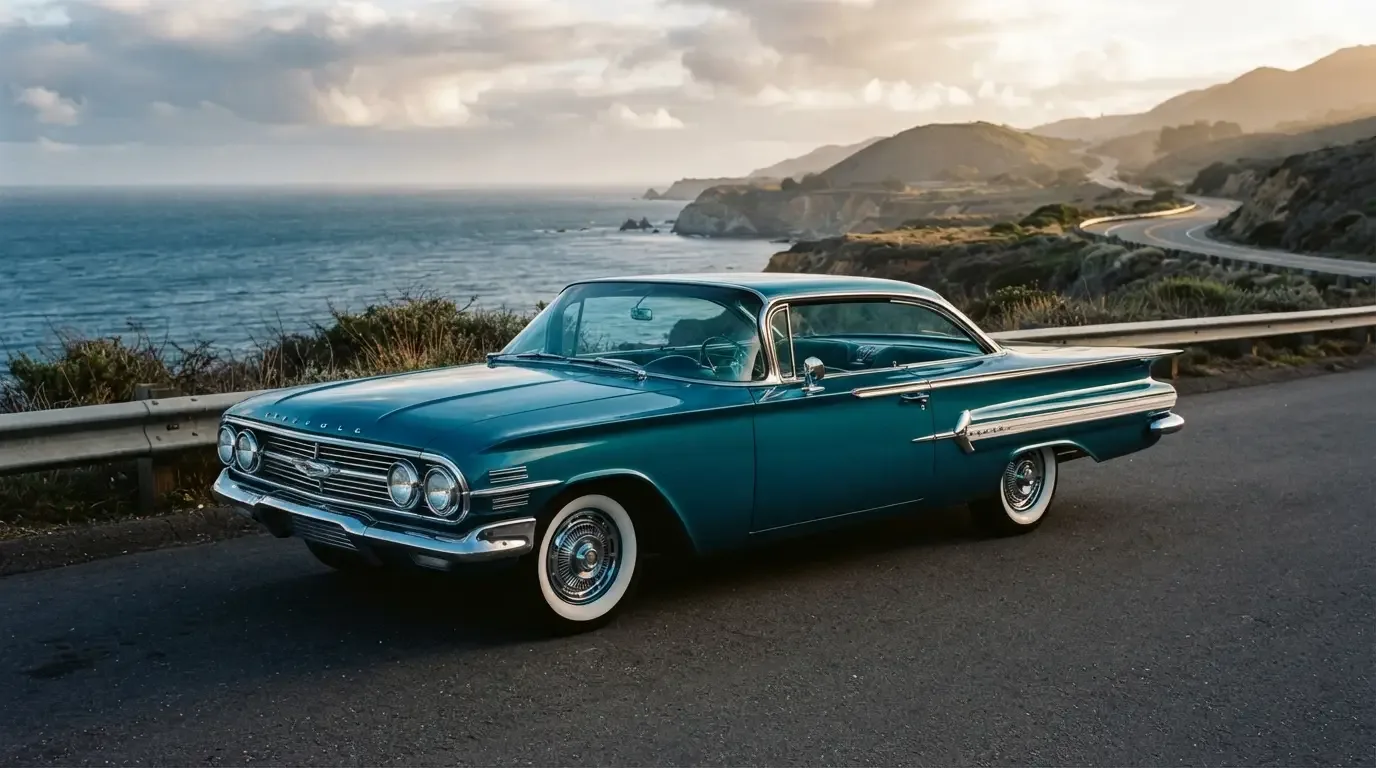
If 1958 was the tease, 1959 was the moment the Impala became a household word. For that year Chevrolet promoted the Impala to a full model line of its own, above the Bel Air and Biscayne, and gave it a body so dramatic it still divides opinion. The rear end sprouted enormous horizontal fins that fanned out like wings, and the taillights became teardrop shapes people nicknamed cat's eyes. Up front the car wore a wide grille and hooded headlamps. Nothing about it was subtle.
The 1959 and 1960 cars are pure jet-age fantasy, styled during the years when America was looking at rockets and dreaming. They are also, to modern eyes, some of the most distinctive Chevrolets ever built. A 1959 Impala convertible in the right color stops traffic at any show, and collectors have quietly bid these cars up as the population of clean survivors thins out. For 1960 Chevrolet toned the fins down slightly and brought back a version of the round triple taillights, restoring the cue that had become the model's signature.
What matters here is the shift in identity. In two model years the Impala went from a trim badge to the name that defined the top of Chevrolet's full-size range. Everything that followed, all those millions of cars, flowed from that decision.
The Super Sport and the legend of the 409
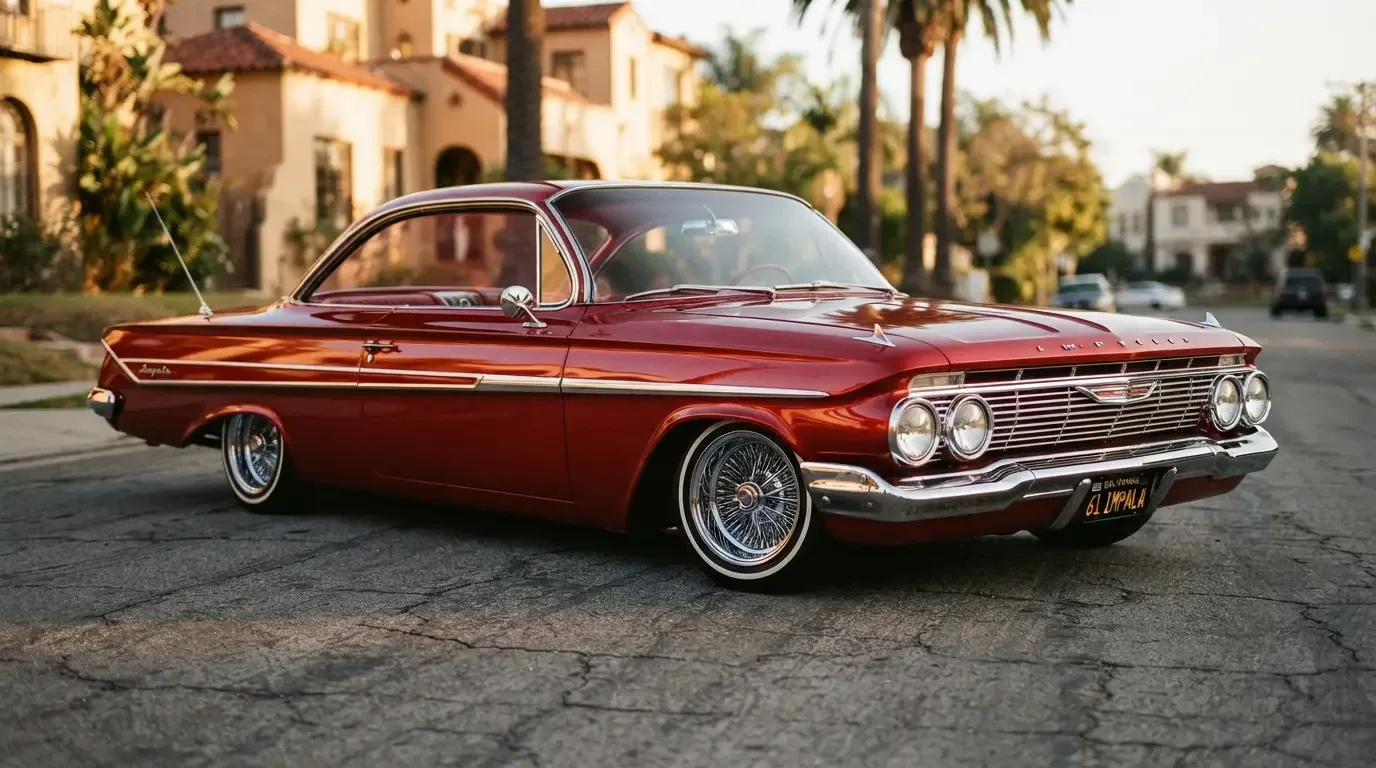
By the early 1960s Chevrolet understood that its full-size car could be more than transportation. In 1961 the company introduced the Super Sport, the SS package that would become one of the most valuable letters in the collector world. Early SS cars got upgraded trim, special wheel covers, and, more to the point, access to Chevrolet's hottest engines.
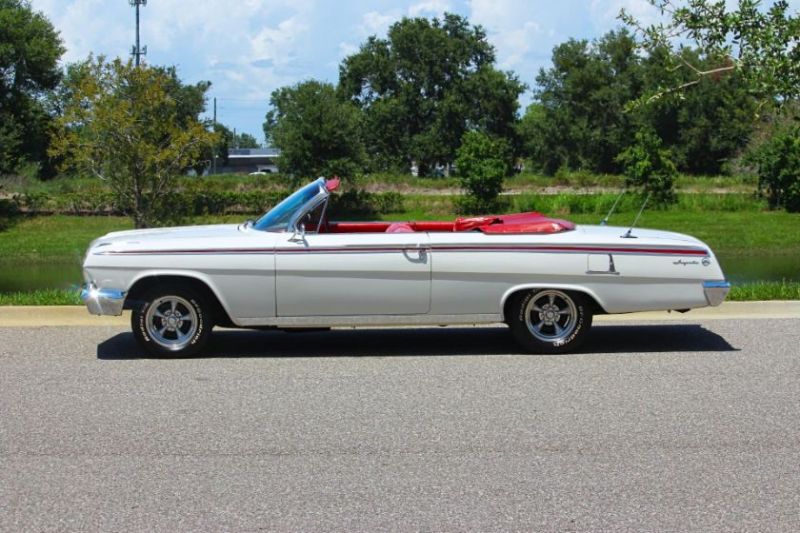
The one everyone remembers is the 409. Introduced during 1961, the 409 cubic inch W-engine turned the family Chevrolet into a genuine street terror, and it did not stay a secret for long. In 1962 the Beach Boys released a song built around the number, and suddenly a big-block engine code was pop culture. Kids who would never own one could sing about it. The 409 gave the Impala a performance credibility that the sensible sedans down the street could only dream of, and it drew a line between the Impala and every other car in the Chevrolet catalog.
These SS cars, especially the 409 convertibles, sit at the very top of the classic Impala market today. A documented, numbers-matching 409 SS is a blue-chip piece, and buyers chasing one need patience and paperwork. For collectors working further down the range, a clean small-block SS coupe offers a lot of the same swagger for a fraction of the money, which is part of why the Impala remains one of the most approachable ways into big American iron.
1965 and the year Chevrolet made a million
The 1965 model year is the one the record books remember. Chevrolet gave the full-size line a complete redesign, softening the boxy early-1960s look into curved, flowing sheet metal, and the public responded in numbers that have never been matched. Chevrolet sold more than one million Impalas in the 1965 model year alone, roughly 1.05 million by most tallies, a figure that still stands as a record for a single nameplate in a single year in the United States.
Think about what that means. In one year, one model, from one brand, put over a million cars on American roads. The Impala had become the default choice for a huge slice of the country, the car you bought when you wanted something handsome and roomy and did not want to think too hard about it. It was in driveways, at drive-ins, and parked outside every diner in the nation.
The 1965 redesign also introduced the Caprice as a luxury trim of the Impala, a car that would spin off into its own model the following year and slowly pull the top-end buyers upward. For now, though, the Impala reigned. Big-block power grew too, with the 396 arriving in 1965 and the 427 following, giving the SS versions serious muscle to go with the new curves.
The Coke-bottle years and the SS 427
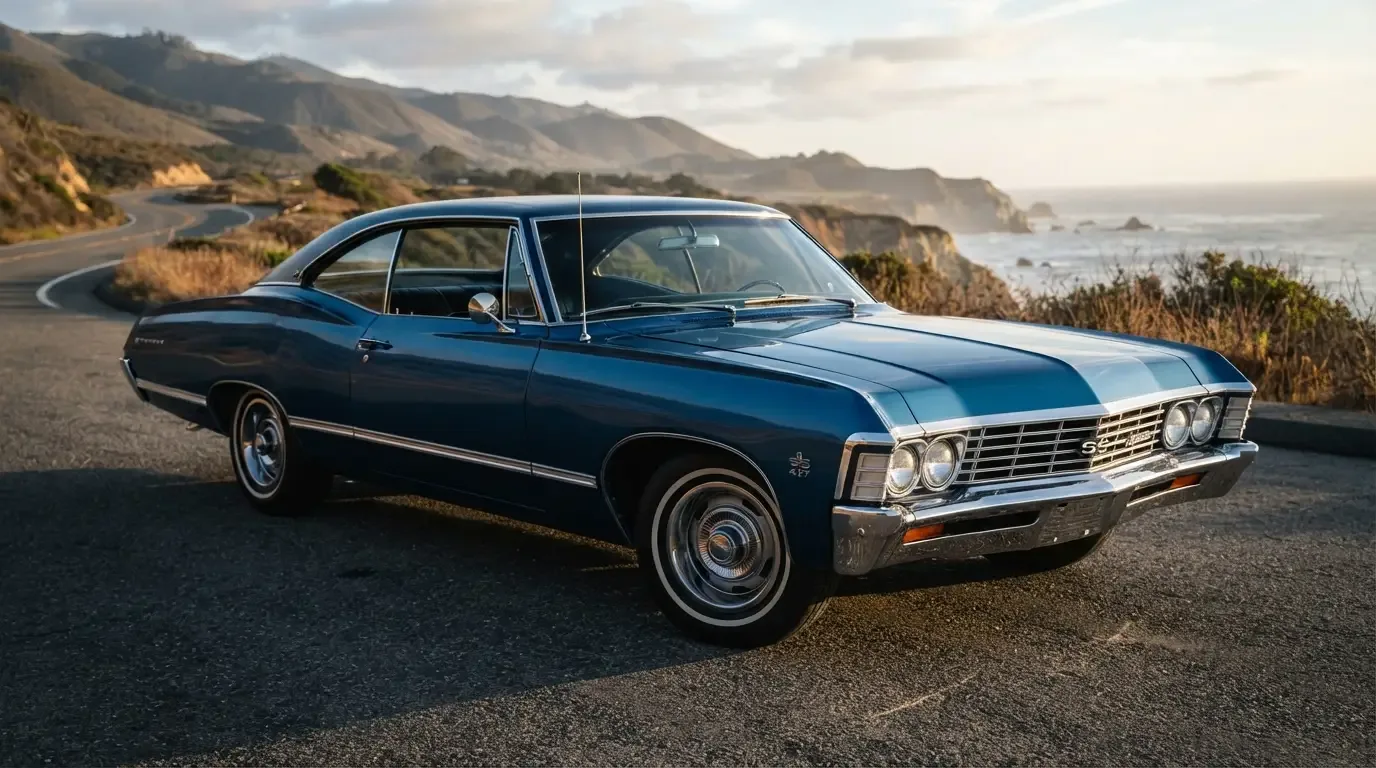
For 1967 and 1968 Chevrolet gave the Impala the shape stylists called the Coke bottle, with a pinched waist and muscular rear haunches that echoed the fashion of the era. These are handsome cars, more aggressive than the 1965 and 1966 models, and they carry a following of their own. The fastback coupe body of these years, with its long sloping roofline, is one of the best-looking full-size Chevrolets of the decade.
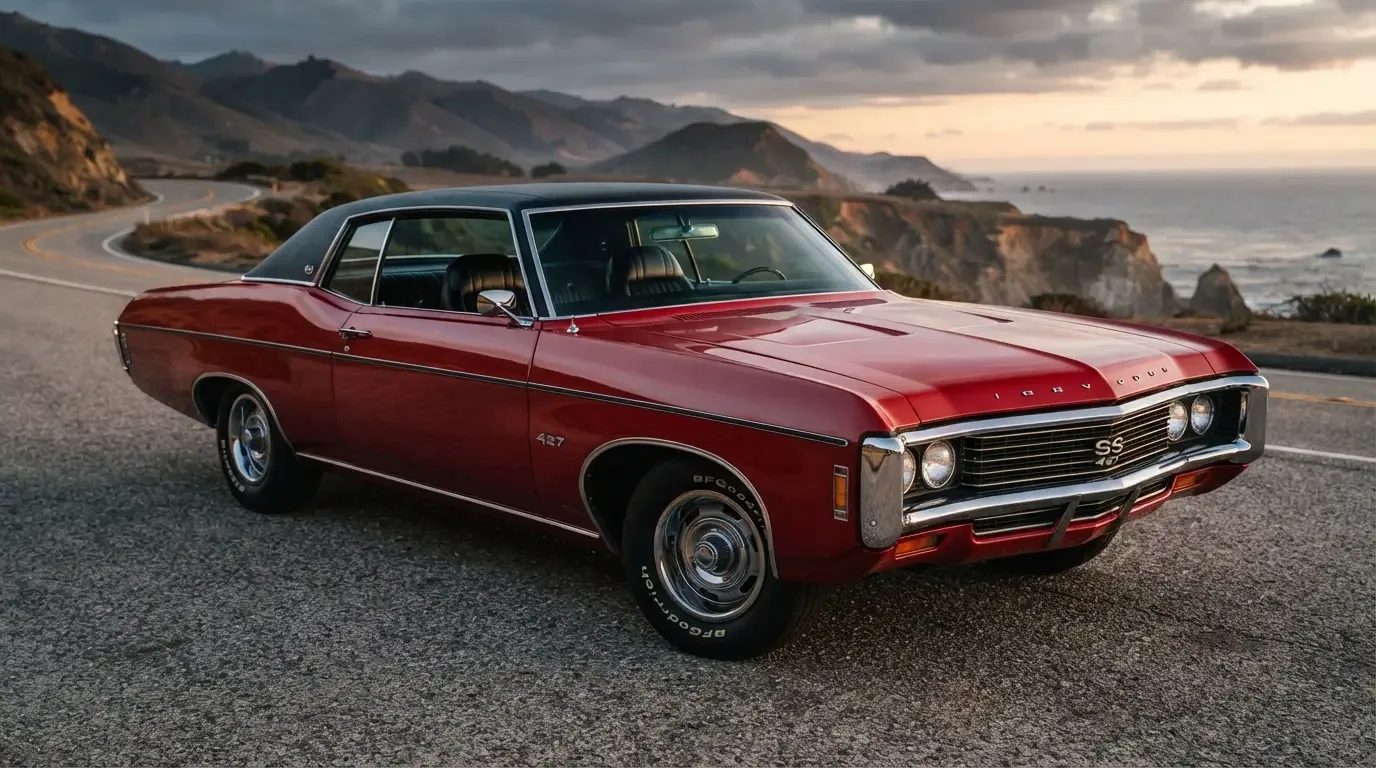
Performance reached a peak here with the SS 427, a package that put Chevrolet's big 427 cubic inch engine under a special hood with its own badging. The full-size muscle car was always a slightly odd proposition, a heavyweight fighter in a world moving toward the lighter Chevelle and Camaro, but there is something honest about a two-ton hardtop with a 427 in the nose. It was never the quickest thing Chevrolet built, but it had presence that the smaller cars could not match.
By the end of the 1960s, though, the Super Sport option was fading from the full-size line. Chevrolet's performance energy had moved to the intermediate and pony cars, and the Impala was drifting back toward its comfortable role as America's family car. The SS badge left the full-size Impala after the 1969 model year, which is exactly why those earlier SS cars command the premiums they do now.
"People forget that for a stretch in the middle of the 1960s, the Impala was not a niche car or a collector's dream. It was simply the car America drove. That ubiquity is the whole point. When something is everywhere, nobody thinks to save it, and that is why the good ones are so hard to find today."
- Patrick Walsh
The big-body 1970s and the end of the classic era
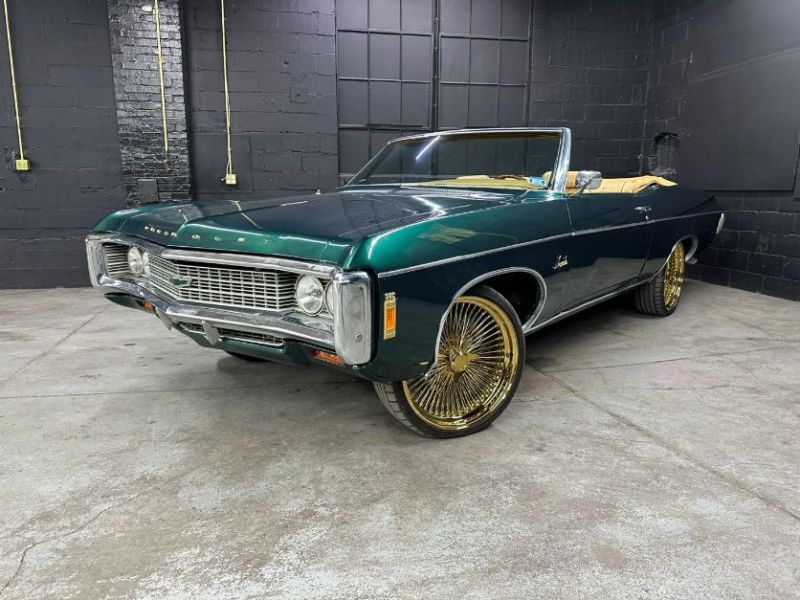
The Impala kept getting bigger. The 1971 through 1976 cars are the largest Chevrolets ever built, full-size in a way that later generations of drivers can barely picture. These were the road-trip cars, the six-passenger cruisers that swallowed families and luggage and highway miles without complaint. They are also, for a long time, the cars enthusiasts overlooked, dismissed as too big, too soft, too much a product of a changing industry.
That view is finally shifting. As the muscle-car market has priced out ordinary buyers, the big 1970s Impalas have started to look like tremendous value, comfortable classics you can actually use. A clean early-1970s Impala convertible offers open-air cruising for money that would not buy you a project Chevelle. The classic era of the Impala, the pre-1980 run this story covers, closes with these big cars, and they may be the last genuine bargains left in the catalog.
Anyone serious about the model eventually wants to see the range laid out in the metal, from a jet-age 1959 convertible to a curvy 1965 hardtop to one of those enormous 1970s cruisers. Browsing a good selection of a classic Chevrolet Impala for sale is the fastest way to understand how much the car changed across two decades while somehow always staying recognizably an Impala.
Colors, chrome, and the details buyers remember
Part of what made the Impala an object of desire was how much of it there was to see. These were cars sold in an era when a color chart was a serious sales tool, and Chevrolet leaned into it. The palettes ran from restrained factory whites and blacks to Roman Red, Ermine White, and the turquoise and coral tones that now read as pure period charm. A 1959 Impala in one of those soft late-fifties hues, brightwork gleaming, is a time capsule of American optimism, and color is often the first thing a collector falls for.
The chrome was the other half of the pitch. Early Impalas wore acres of it, from the wide grilles to the spears along the flanks to that leaping antelope badge tucked behind the rear side windows. Inside, the cars offered a level of trim that ordinary sedans did not, with patterned upholstery, brushed metal accents, and on the SS cars a floor console and bucket seats that turned a family car into something that felt sporting. These interior details drive value today. A correct, unfaded interior is one of the hardest things to find on a survivor, and reproducing it faithfully is expensive, so original cabins carry real weight at auction.
None of this was accidental. Chevrolet understood that a full-size car sold on feeling as much as function, and the company spent its styling budget where buyers would notice. That investment is exactly why the classic Impala photographs so well now and why it draws crowds at shows the way it drew them on the Motorama stand.
The Impala as a cultural machine
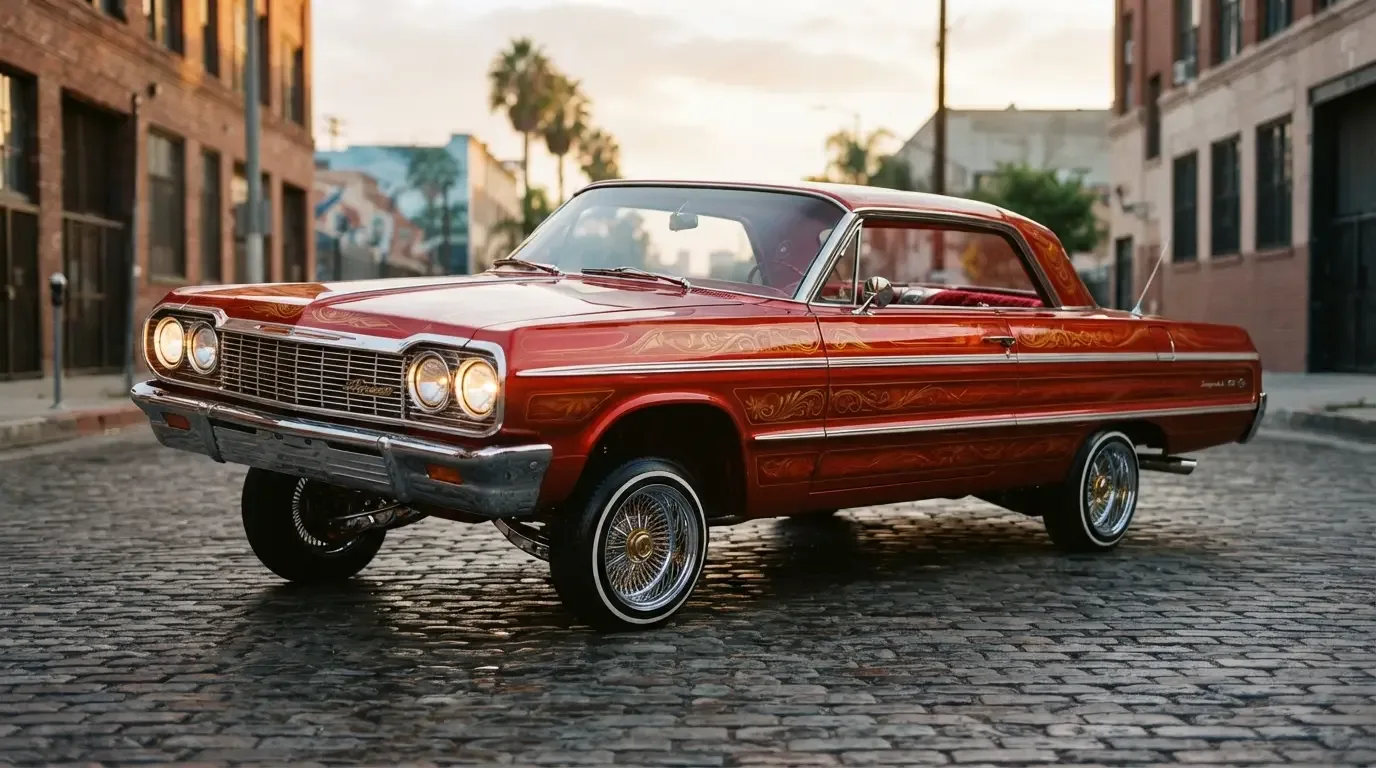
No account of the Impala is complete without the second life it found on the street. The 1958 through 1964 cars, and the 1964 in particular, became the foundation of Chevrolet lowrider culture in Southern California and beyond. Low, chromed, painted in colors GM never imagined, dropped on hydraulics, and cared for like heirlooms, these Impalas became rolling art and community symbols. The 1964 Impala SS is arguably the single most important car in lowrider history, celebrated in music, film, and countless car shows.
That cultural weight is not separate from the collector value, it is part of it. The Impala means something different depending on who is looking. To one buyer it is a numbers-matching 409 to be preserved in concours condition. To another it is a 1964 hardtop to be reimagined from the wheels up. Both are legitimate, and both keep demand for good cars high. Few American models carry that kind of dual identity, prized equally by the preservation crowd and the custom world.
"The Impala is one of the only cars I can think of that lives two lives at once. There is the concours Impala, judged on originality down to the paint markings, and there is the street Impala, a canvas for people who never cared what the factory intended. The car is big enough to hold both, and that is a rare thing."
- Patrick Walsh
What to know before you chase one
The classic Impala market rewards the buyer who does homework. The gap between a genuine SS 409 and a base six-cylinder sedan wearing SS badges is enormous, and the badges alone prove nothing. Documentation matters more here than on almost any other Chevrolet, precisely because so many millions were built and so many have been modified over the years. The best cars come with a paper trail, and the paper is often worth as much as the metal.
Below is a quick reference to the classic-era generations, the way most collectors think about them when they talk shop.
| Generation | Model years | Signature trait | Collector note |
|---|---|---|---|
| First | 1958 | Top Bel Air trim, triple taillights debut | One-year-only body, rising interest |
| Second | 1959 to 1960 | Batwing fins, cat's eye lights | Jet-age styling, strong convertible demand |
| Third | 1961 to 1964 | SS package and the 409 | Blue-chip SS cars, lowrider icons |
| Fourth | 1965 to 1970 | Curved sheet metal, record sales | 1965 volume year, SS 427 muscle |
| Fifth | 1971 to 1976 | Largest full-size bodies | Underrated value, usable classics |
Why the Impala still matters
It is easy to overlook a car that was once everywhere. Familiarity breeds a kind of blindness, and for years the Impala was simply too common to seem special. That is changing, and it should. This was the car that carried a huge share of postwar America, that gave the 409 to the Beach Boys and the 1964 hardtop to a whole street culture, that set a sales record in 1965 no single nameplate has touched since.
The classic Chevy Impala is not one car but a whole run of them, each generation a snapshot of what America wanted in a given year, from tail fins to Coke-bottle curves to sheer size. Collectors are finally catching up to what those Motorama crowds understood in 1958. The Impala was always worth stopping to look at. The only difference now is that the good ones are getting harder to find, and the people who saved them look a little smarter every year.