There is a production figure that gets quoted at nearly every Chevrolet gathering, and for once the figure is close to the truth. The 1965 impala and its full-size Chevrolet siblings sold in numbers that no single American nameplate had reached before, with the model year total commonly cited at more than a million cars. I want to be careful with that claim, because casual retellings tend to inflate it, but even the conservative reading of the factory records makes 1965 the high-water mark for the full-size Chevrolet. This is the story of how that happened, what changed under the sheet metal, and why the 1965 and 1966 cars still sit at the center of the Impala story.
A clean-sheet body for a new generation
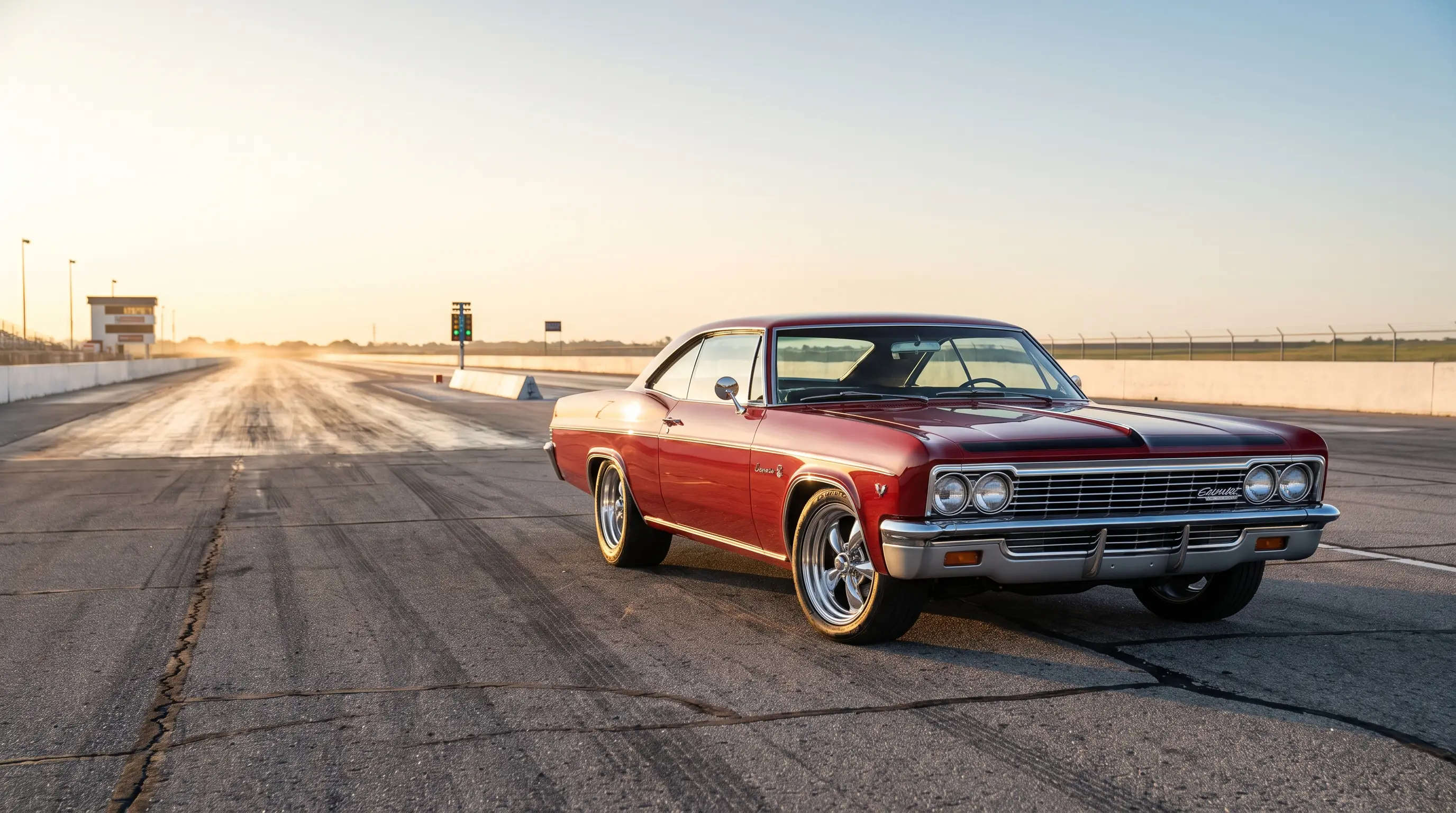
For 1965 Chevrolet redesigned the full-size line from the ground up. The old X-frame chassis, which had carried the cars since 1958, gave way to a new full-perimeter frame that ran along the outer edges of the body. The engineering benefit was real. The perimeter frame allowed a lower floor, improved side-impact structure, and a smoother ride, and it let the stylists drop the roofline and soften the shape. The result was a car that looked longer and more relaxed than the sharp-edged 1964 model it replaced.
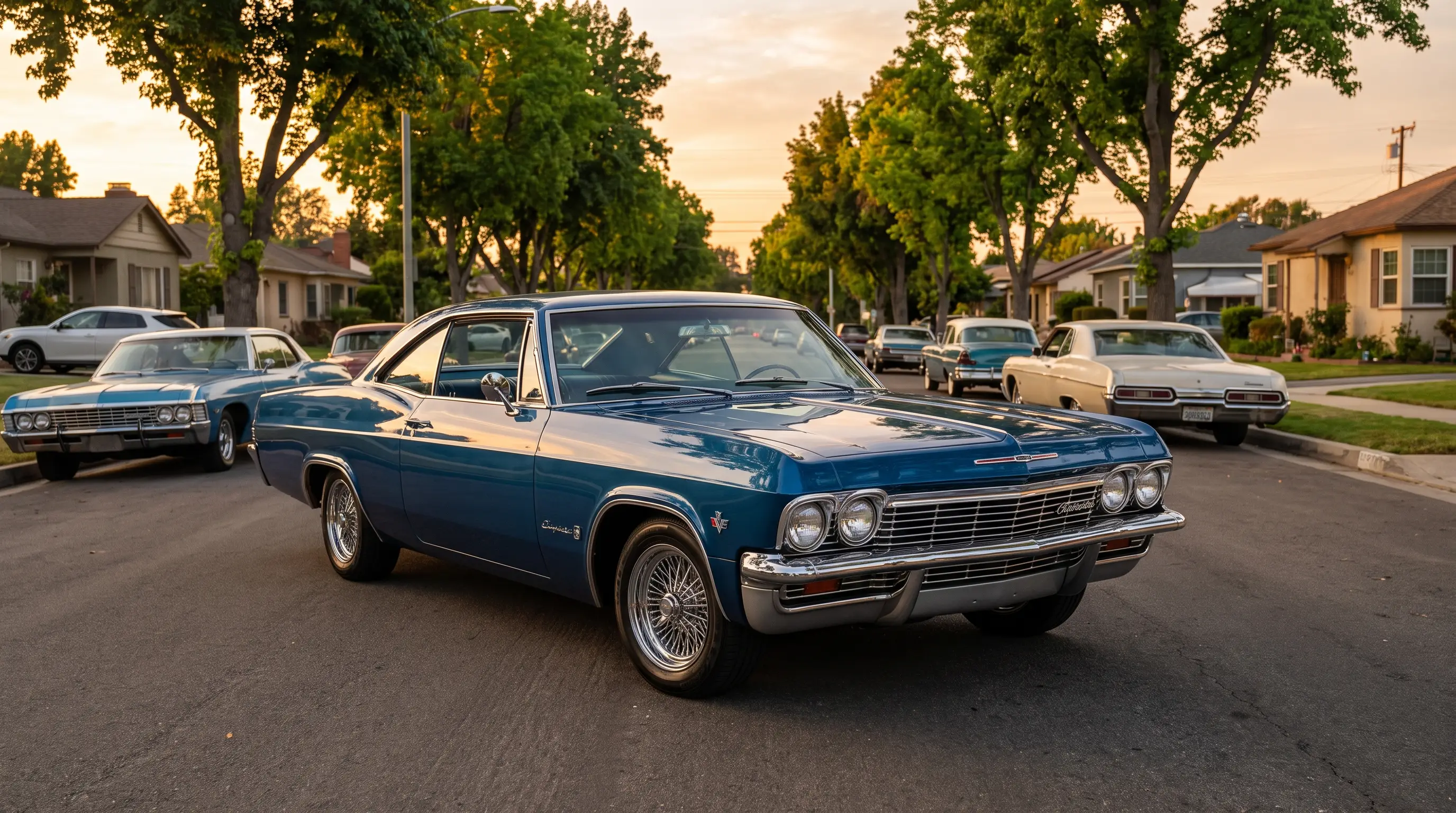
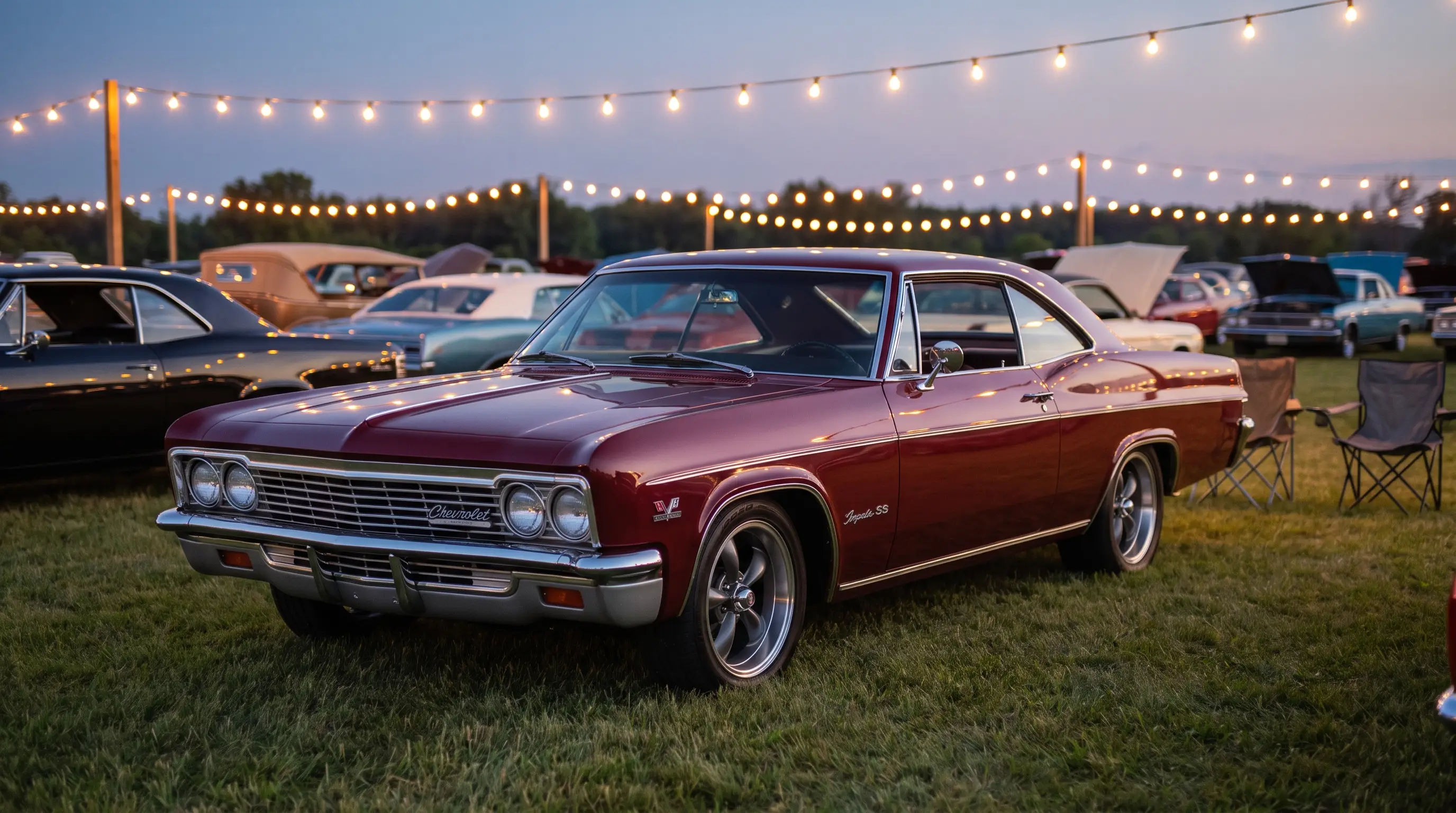
The styling change is easy to see even from across a show field. The 1965 cars adopted gently curved side glass and a flowing profile, and the rear received a restyled treatment that kept the Impala tradition of round taillights, six of them across the standard cars. If you want to trace how this generation fits into the longer arc of the nameplate, our the chevy impala story sets the full timeline in order. For now the point is simple. The 1965 redesign gave buyers a genuinely new car at exactly the moment they were ready to buy in record numbers.
The sales record, stated carefully
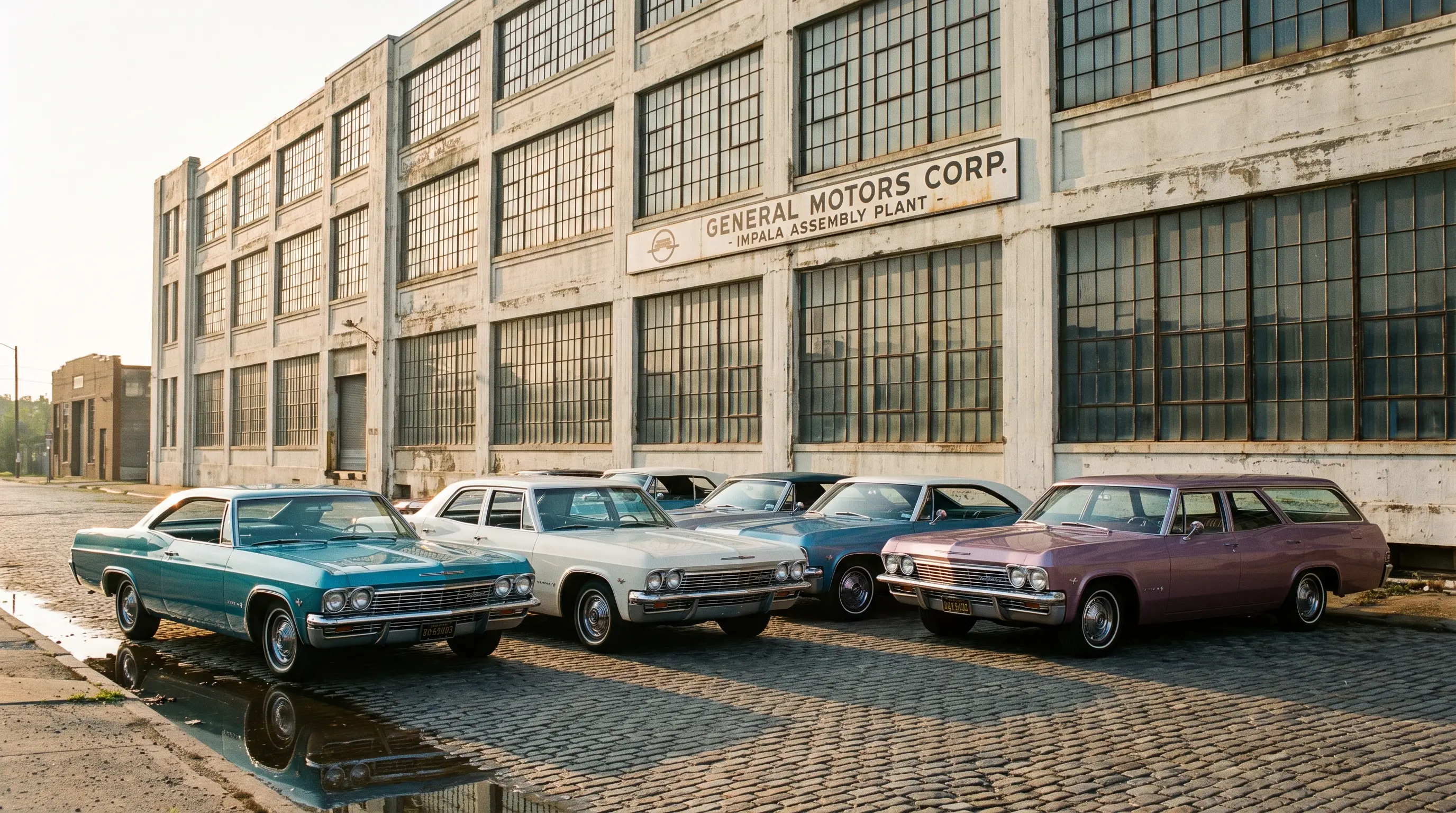
I spend a lot of time correcting numbers, gently, so let me state this one with the caution it deserves. The figure you will hear is that Chevrolet built more than a million full-size cars for 1965, and that the Impala accounted for the largest share of that total. Counting the standard Impala series and the Super Sport together, the commonly cited total lands around 1,046,000 cars for the model year, which is where the "millionaire" claim comes from. What matters is not the exact digit but the scale. No competing full-size nameplate came close, and the record stood as a benchmark for years afterward.
Several things lined up to make it happen. The economy was strong, the redesign was fresh, and the full-size Chevrolet occupied a sweet spot in the market where a working family could buy a genuinely handsome car without stepping into luxury pricing. The Impala sat above the Bel Air and Biscayne in the hierarchy, offering nicer trim and more comfort while sharing the same sturdy mechanicals. For a lot of American households in 1965, an Impala was the reasonable aspiration, and they bought it by the hundreds of thousands.
The Caprice arrives and changes the ladder
One factory decision from this period is often misremembered, so let me correct it plainly. People sometimes describe the Caprice as a separate 1965 model line. It was not, not at first. For 1965 the Caprice arrived as a luxury option package on the top Impala four-door hardtop, a way for Chevrolet to test appetite for a more upscale full-size car without committing to a whole new series. The response was strong enough that Chevrolet promoted the Caprice to its own model line for 1966, sitting above the Impala in the pecking order.
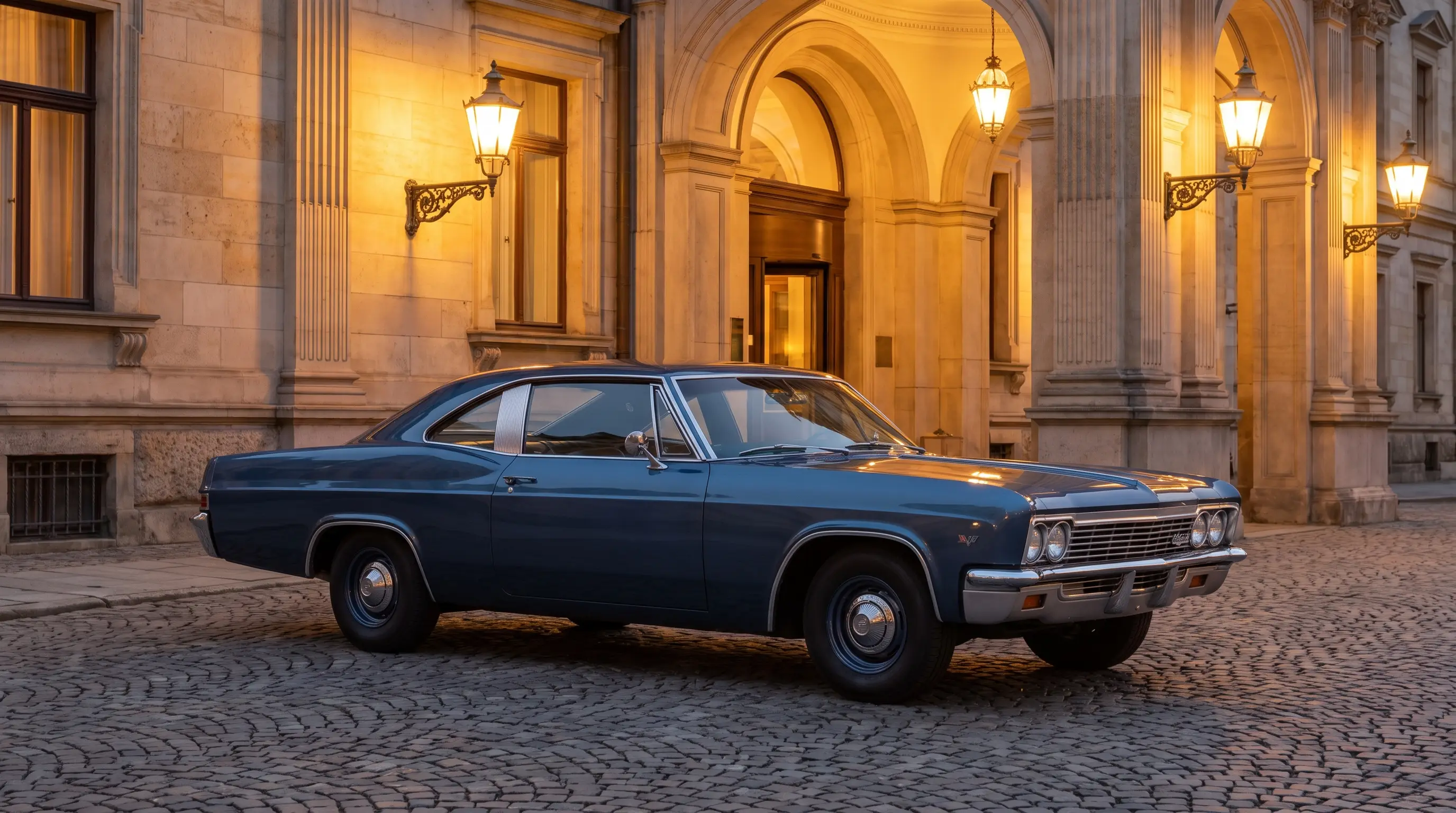
That matters for how we read the 1966 cars. With the Caprice pulling away the buyers who wanted the plushest full-size Chevrolet, the Impala settled into its role as the volume leader, the car for people who wanted style and comfort at a sensible price. The 1966 restyle was mild, an evolution of the 1965 shape with revised trim and detailing rather than a new body. The two years look enough alike that newcomers often mix them up, and the surest way to date one at a glance is the front and rear trim.
What you could put under the hood
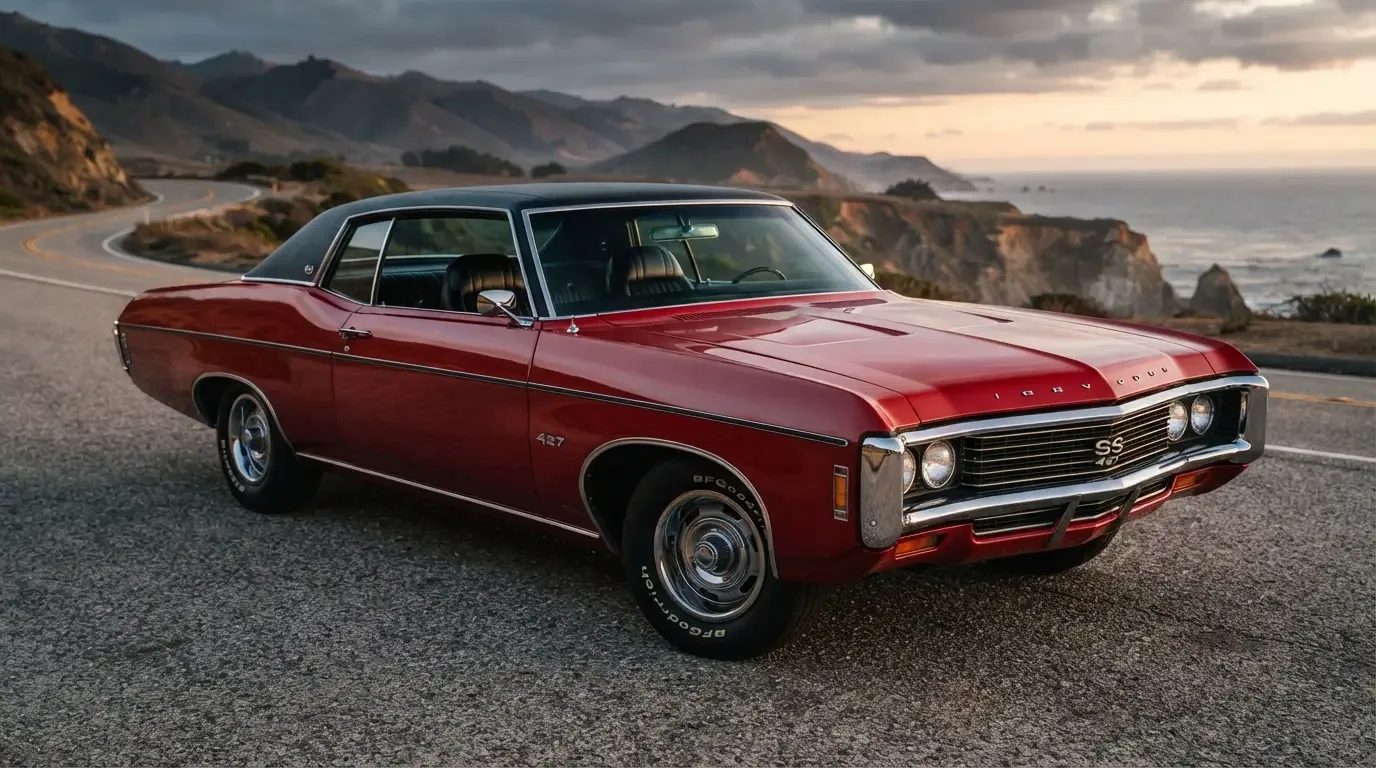
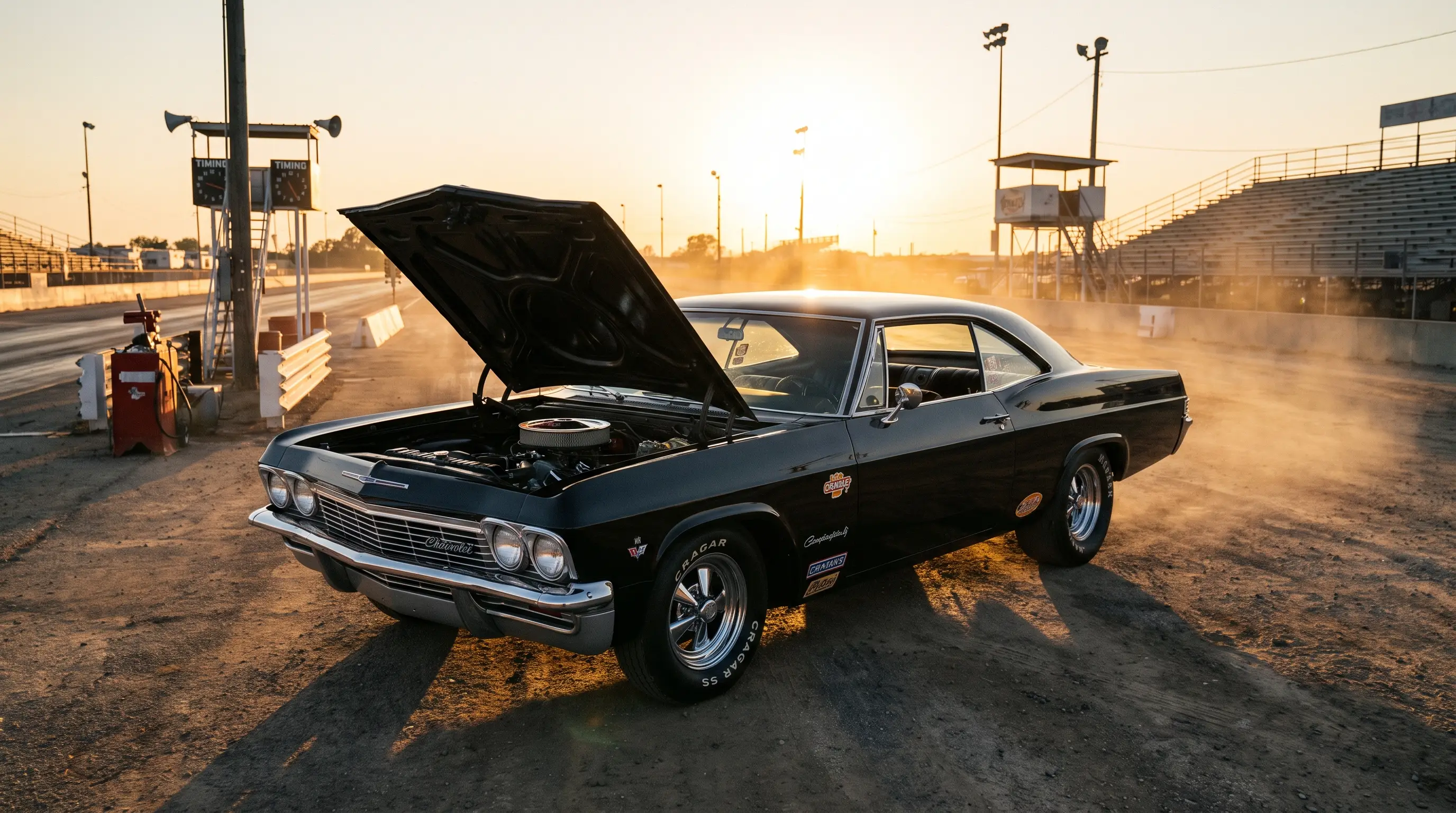
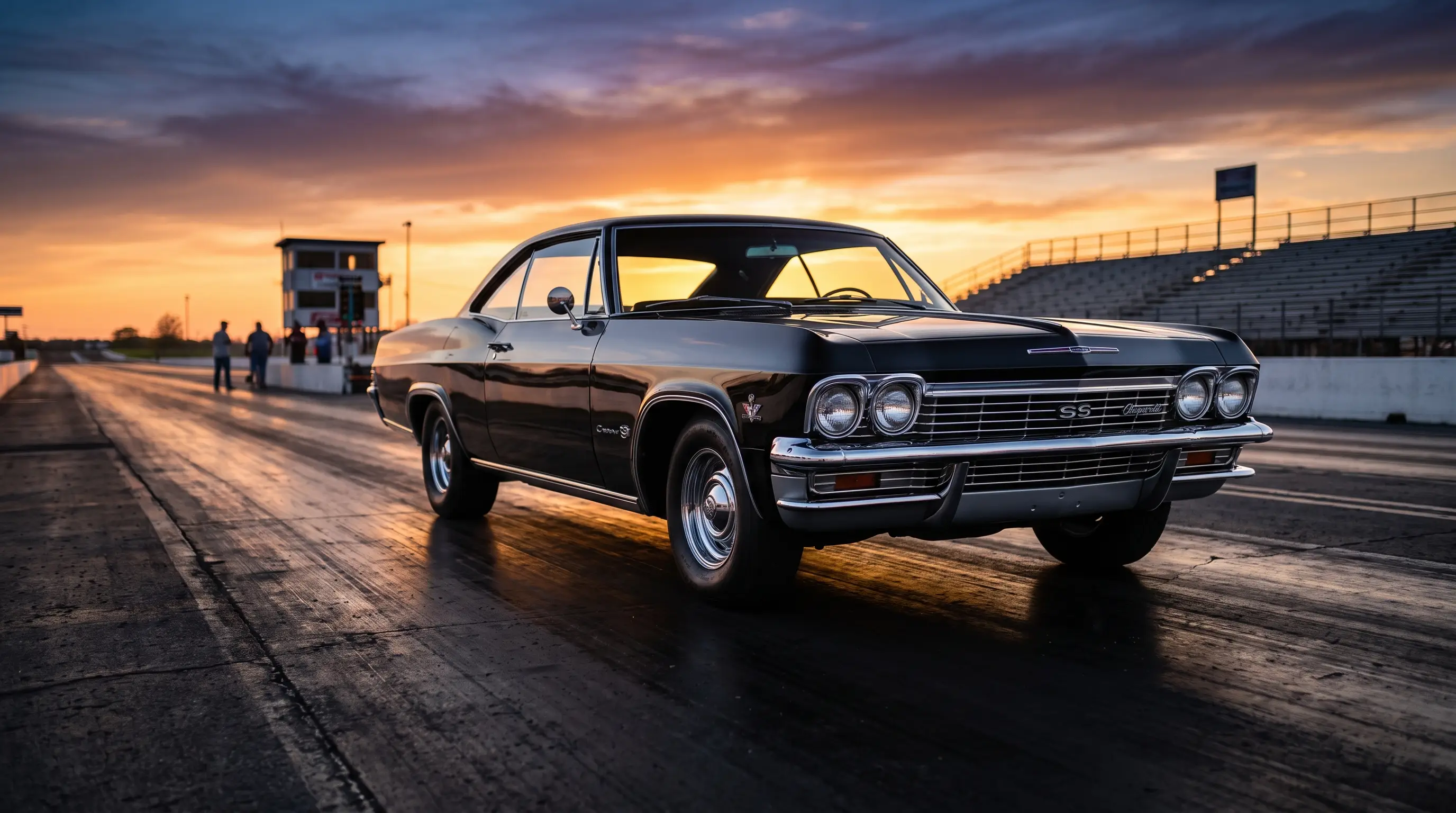
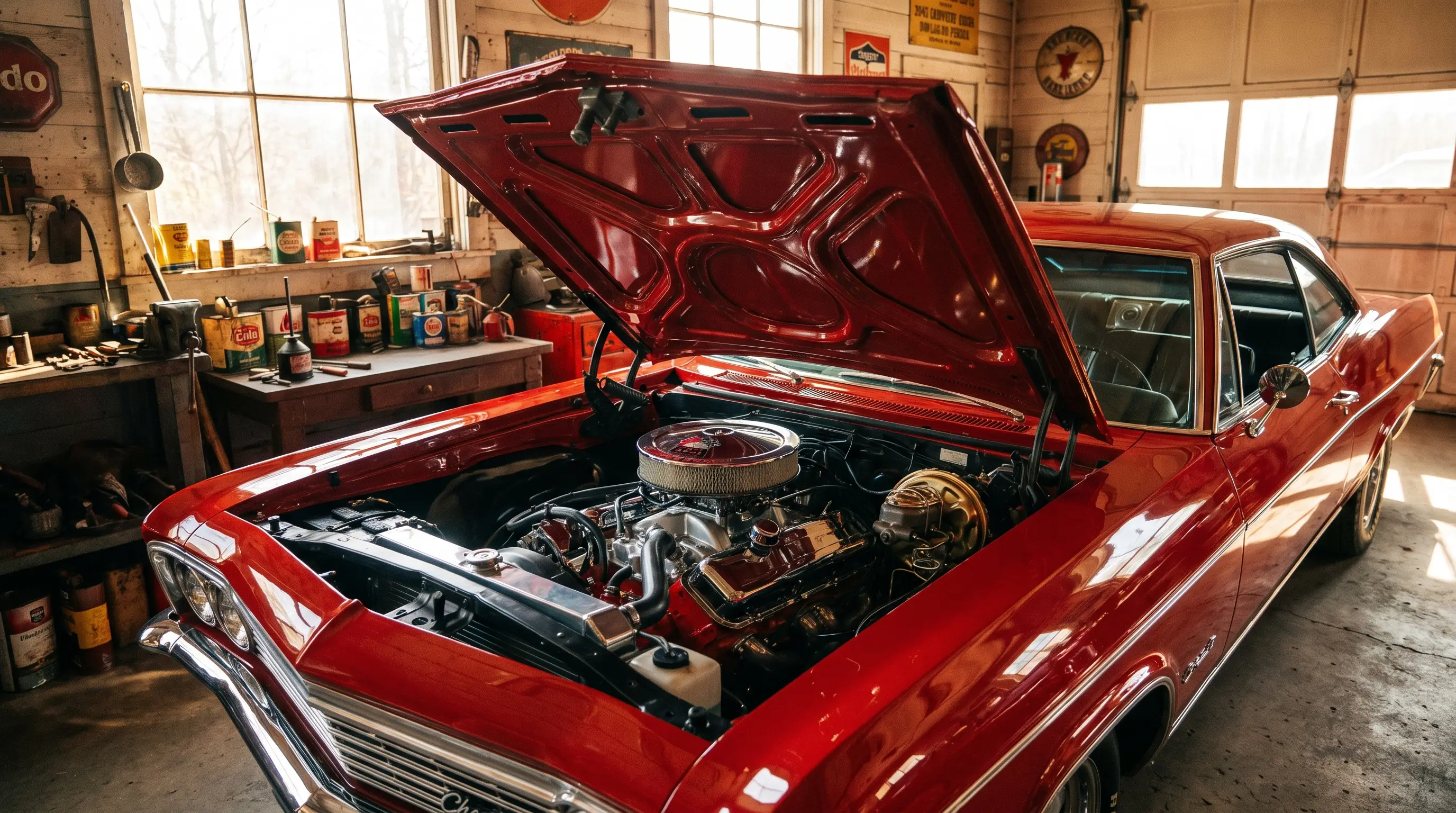
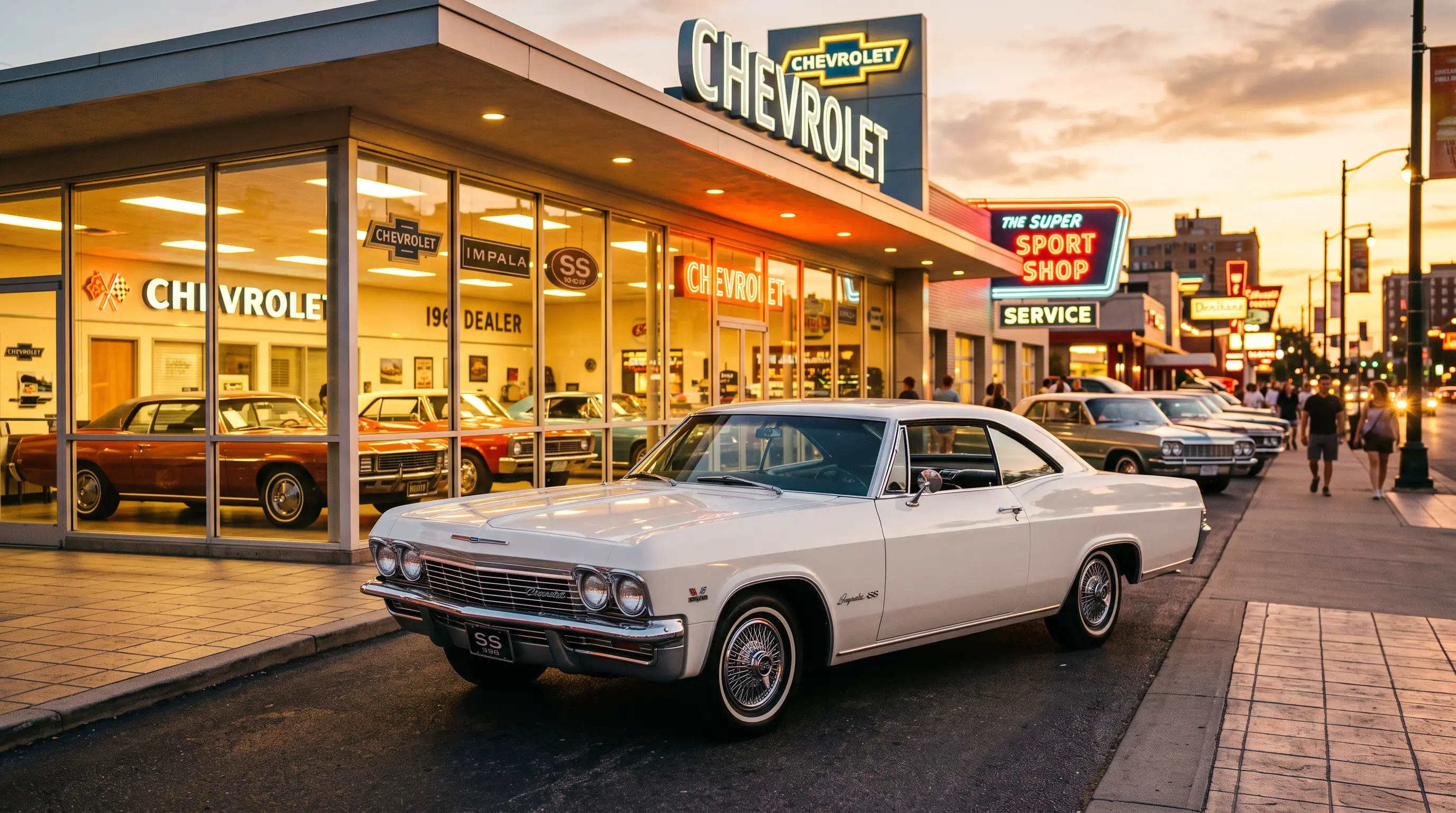
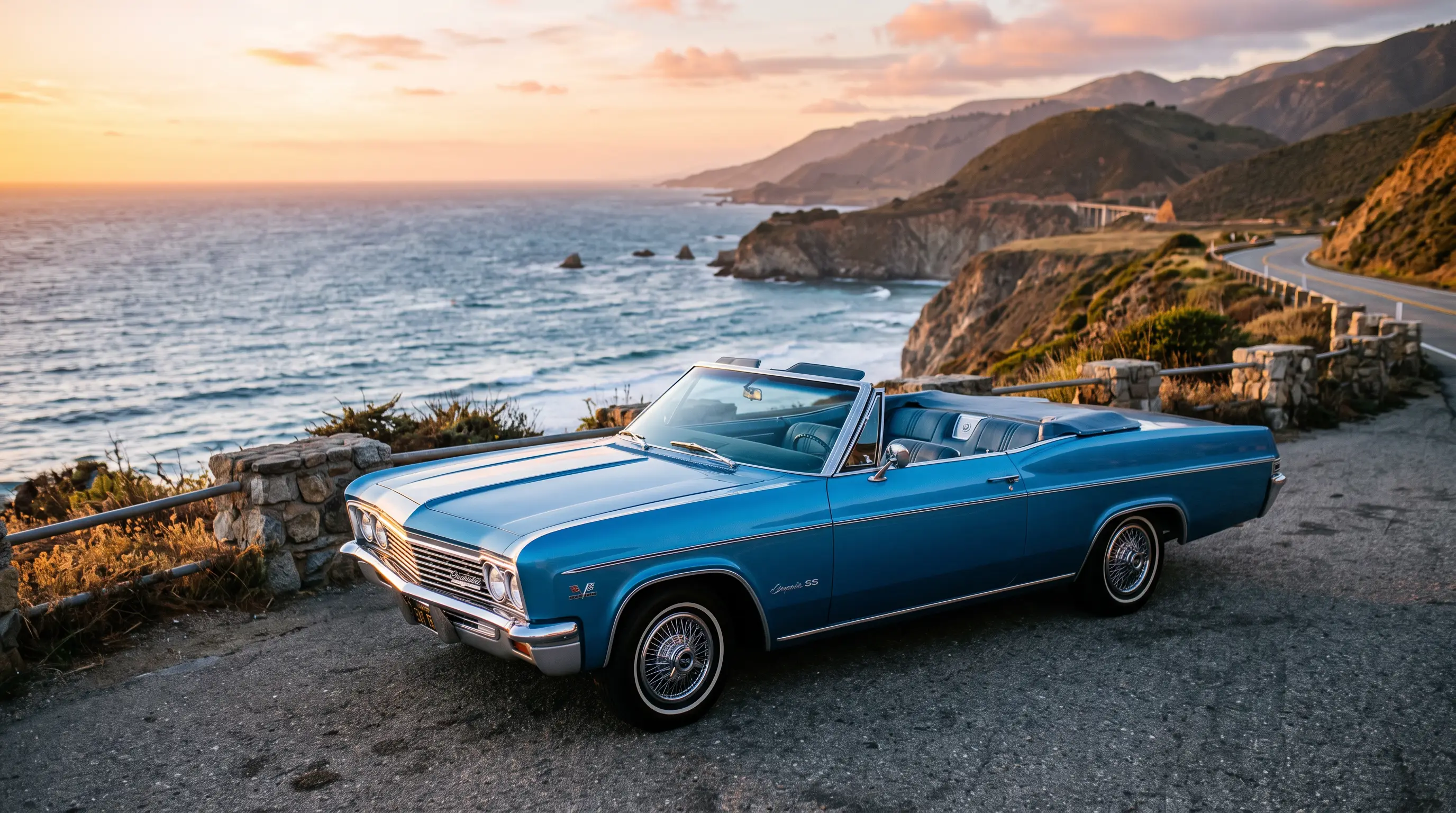
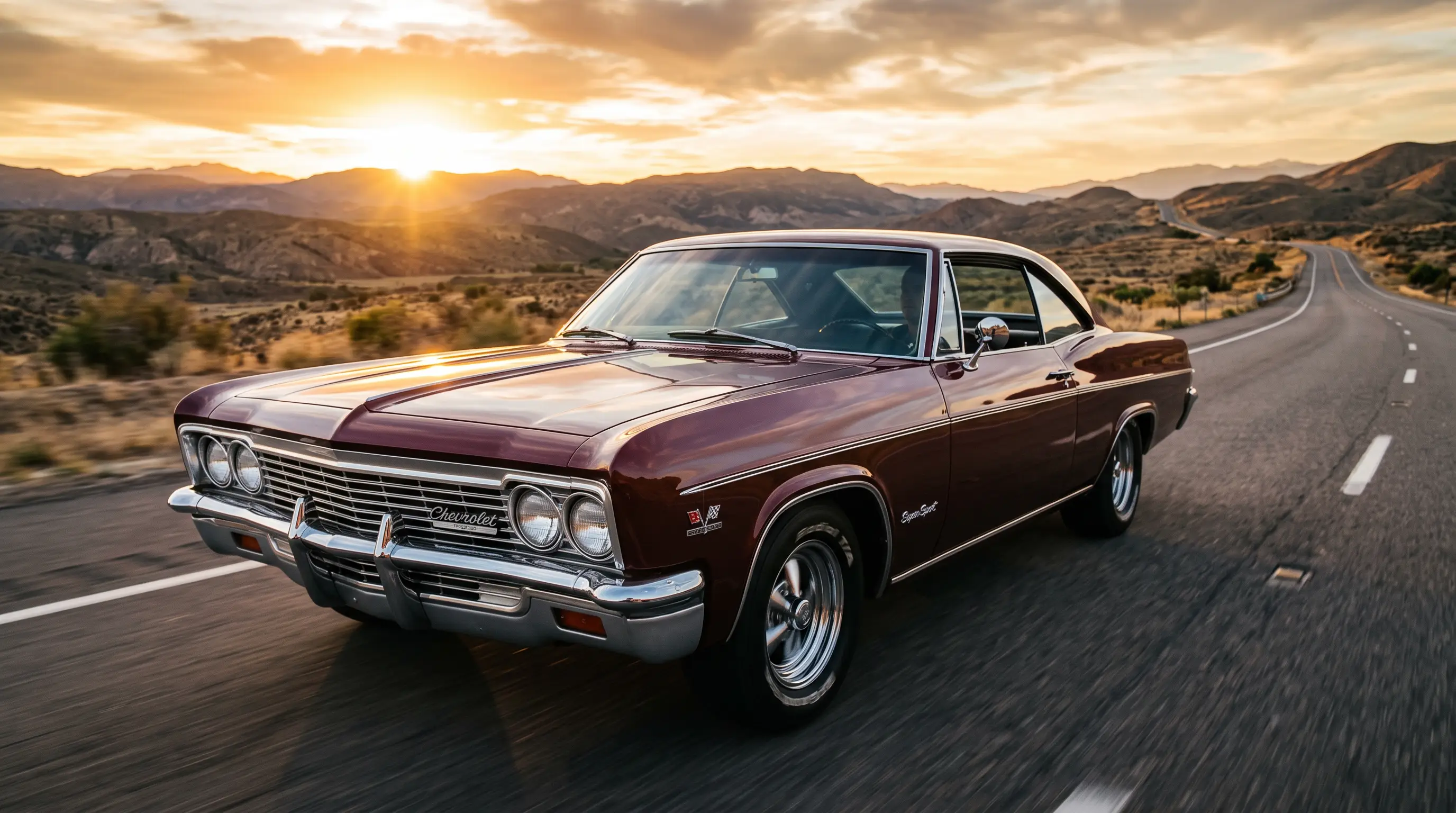
The engine lineup during these two years spanned an unusually wide range, and this is where the Super Sport comes into the conversation. A buyer could order a mild six-cylinder for economy or climb all the way to the big-block V8s that had just arrived. The Mark IV big-block, introduced for 1965, replaced the old W-series 409 and brought the 396 cubic inch engine, with the 427 following for 1966. The Impala SS package dressed the car with bucket seats, a console, and specific trim, and when paired with a big-block it turned the family car into something with real presence.
"The records show a car that meant different things to different buyers in the same showroom. One family wrote the check for a six-cylinder sedan, and the kid two doors down ordered a 396 Super Sport. Same nameplate, same year, entirely different intentions."
- Tom Ramirez
It is worth stating that most 1965 and 1966 Impalas left the factory as ordinary family cars, not Super Sports and not big-blocks. That is not a knock. It is the reason the sales figures reached the heights they did. But it does shape the collector market today, because the desirable big-block SS cars are a small slice of a very large production run, and that scarcity drives their value well above the standard sedans.
The convertible, the hardtop, and the body styles that mattered
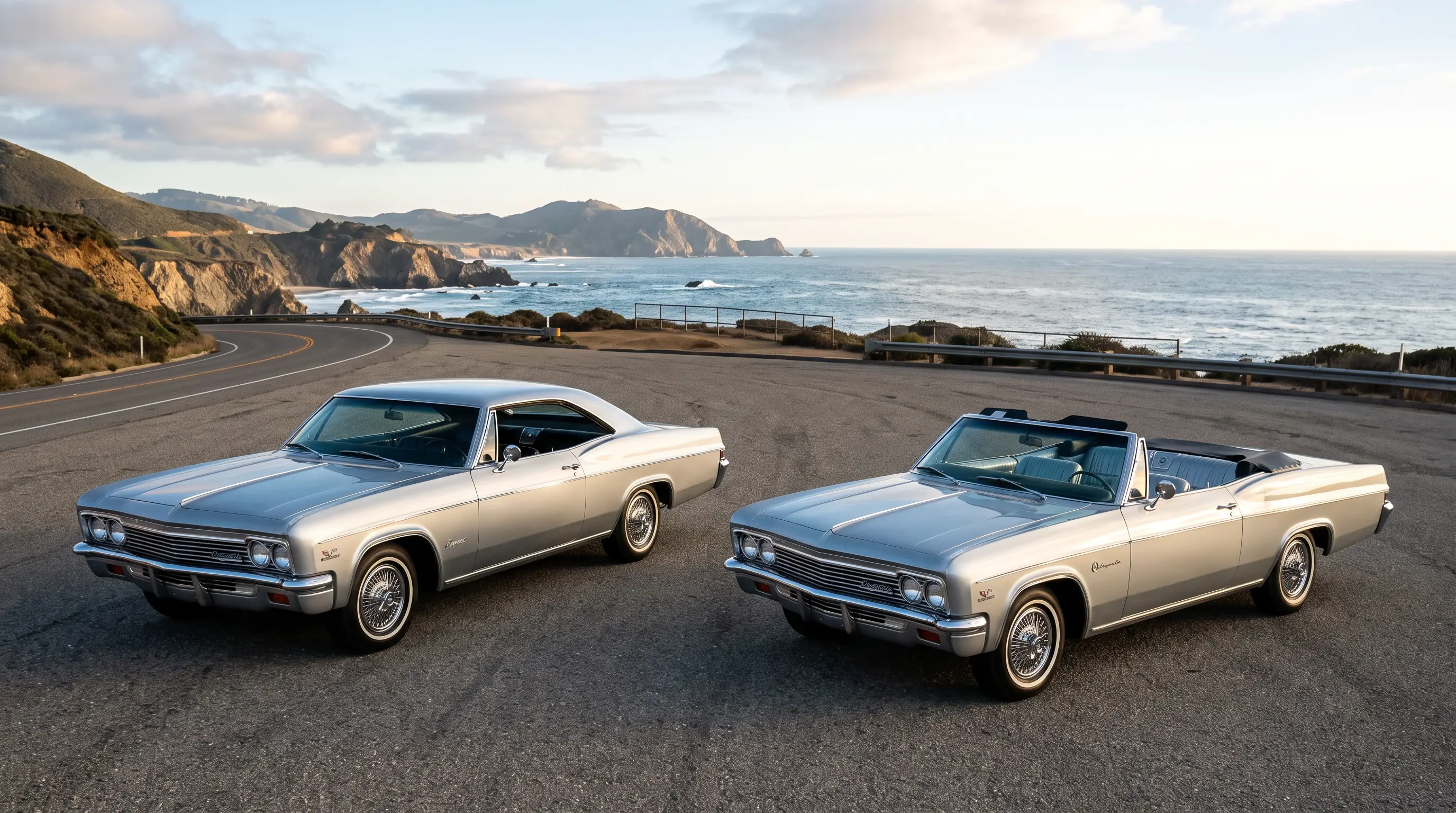
The full-size Impala came in a wide spread of body styles across these two years, and the choice a buyer made in 1965 has a direct effect on what a car is worth today. The four-door sedan and four-door hardtop were the volume sellers, the practical family choices, and they make up the bulk of what survives. The two-door Sport Coupe, with its lower roofline and cleaner profile, was the stylish pick, and it remains the shape most enthusiasts want. Above all of them, in desirability if not in numbers, sits the convertible.
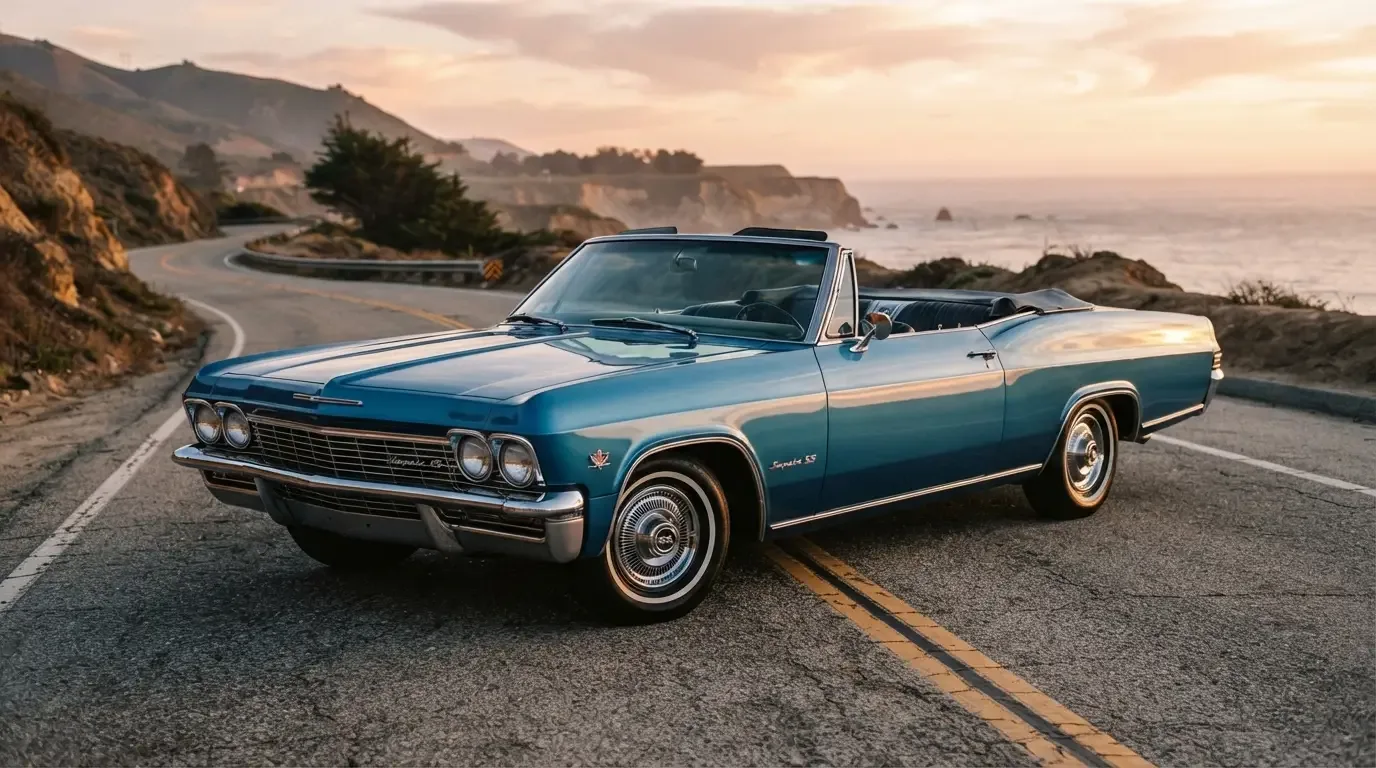
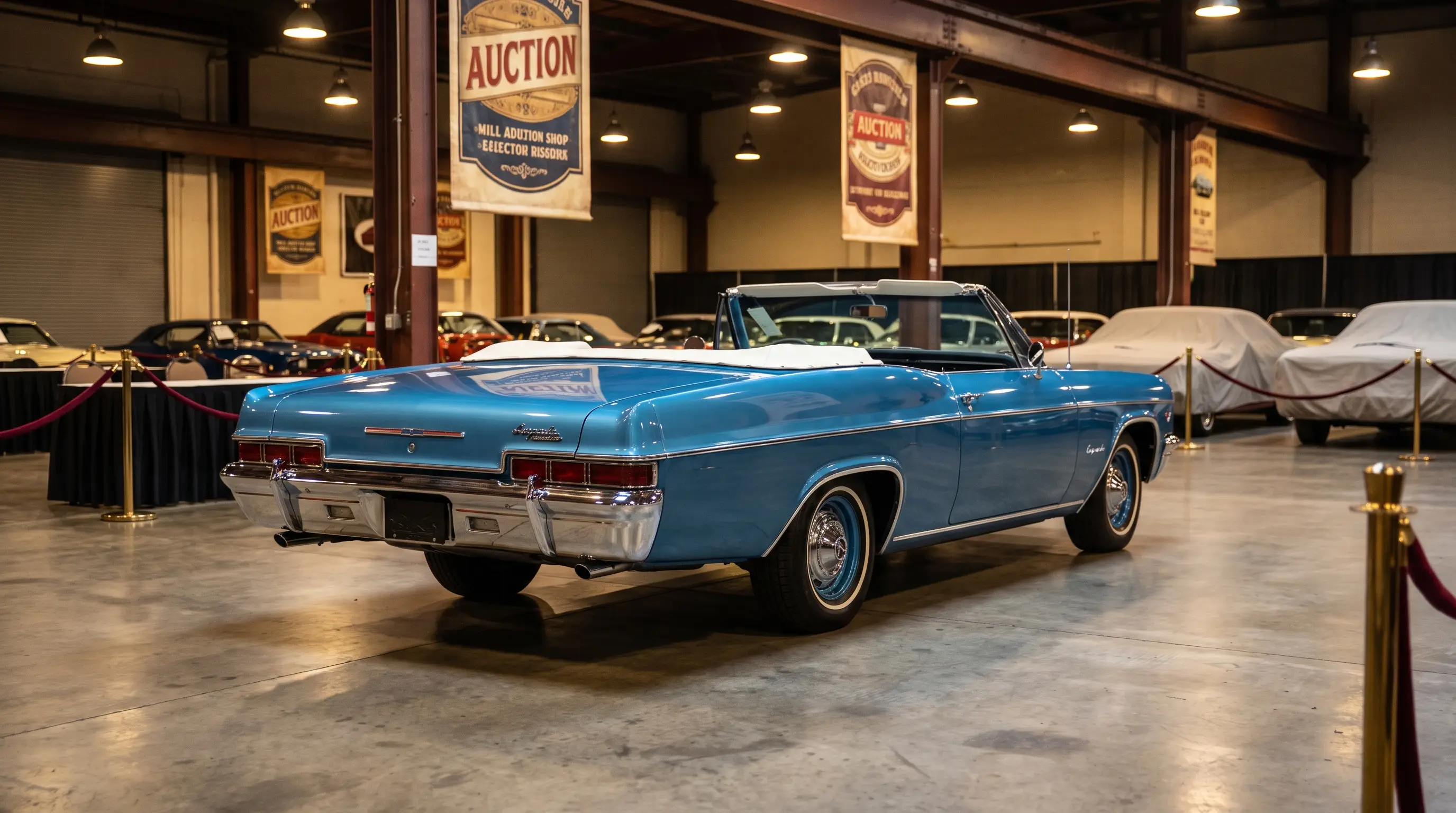
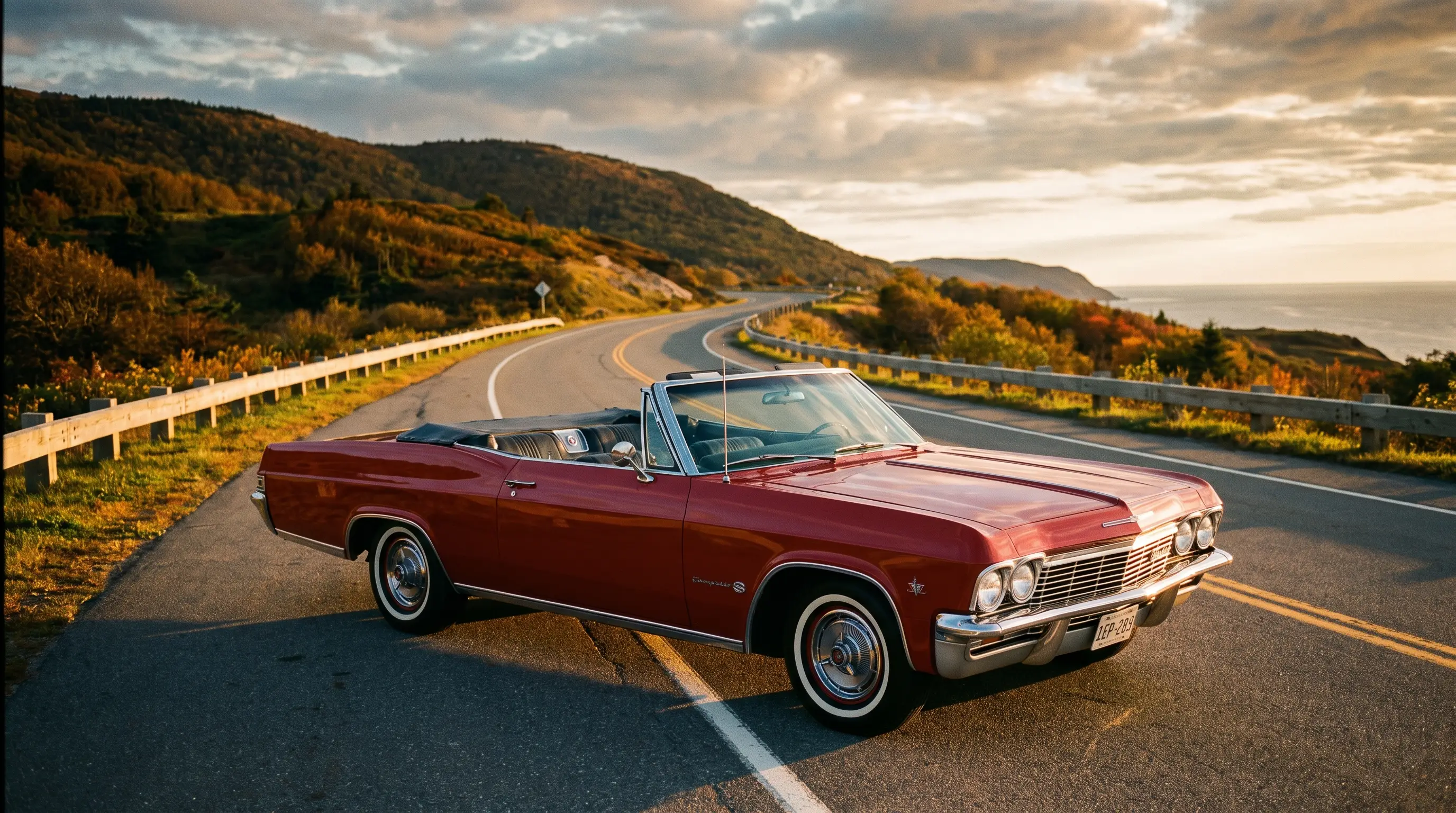
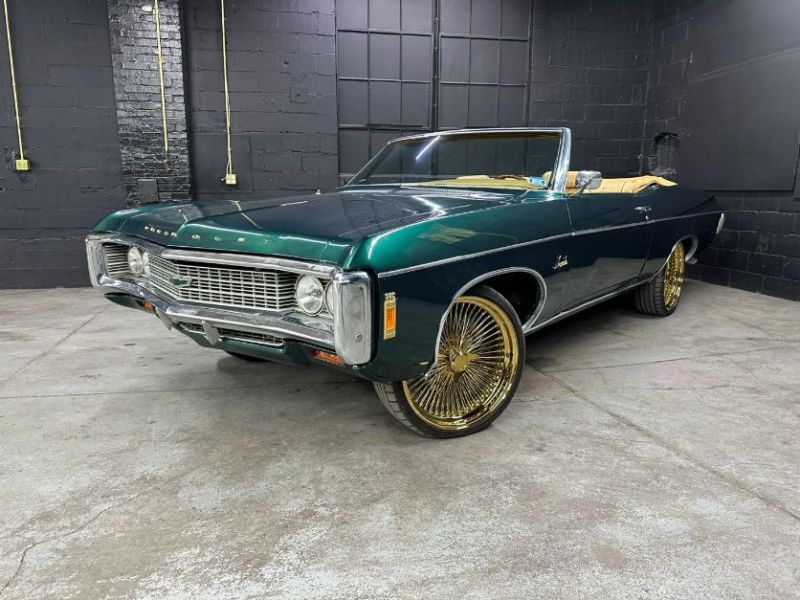
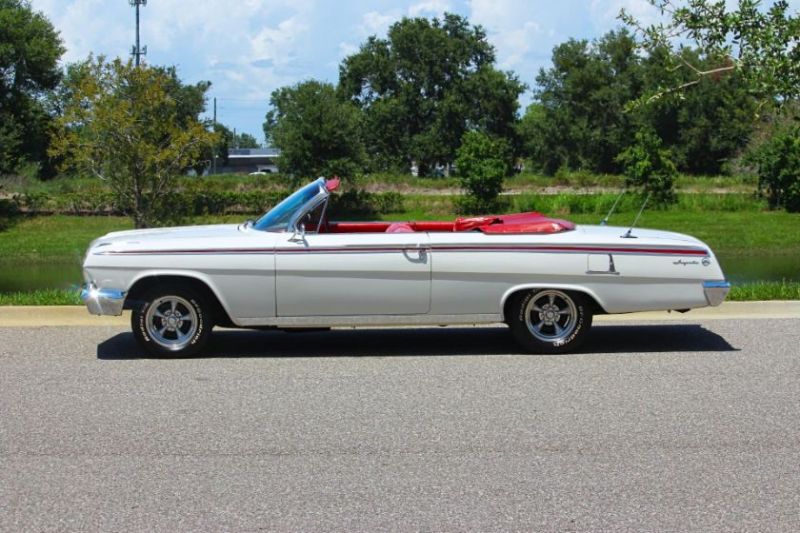
The convertible is worth pausing on. Chevrolet built far fewer open cars than closed ones, and time has been harder on them, since a soft top and the structure around it demand more upkeep than a steel roof. A well-kept 1965 or 1966 Impala convertible, especially one with a V8 and the SS package, is one of the more desirable full-size Chevrolets of the decade. The math is simple. Start with a low-production body style, add a desirable option package, and the survivors that remain in good order become genuinely scarce.
There is a lesson in this for anyone reading a listing. The same year and the same engine can produce very different values depending on the body style stamped in the paperwork. A six-cylinder four-door sedan and a big-block SS convertible are both 1965 Impalas, and the gap between them at auction can be enormous. Knowing which body you are looking at is the first thing to sort out before anything else.
Colors, trim, and the look of the era
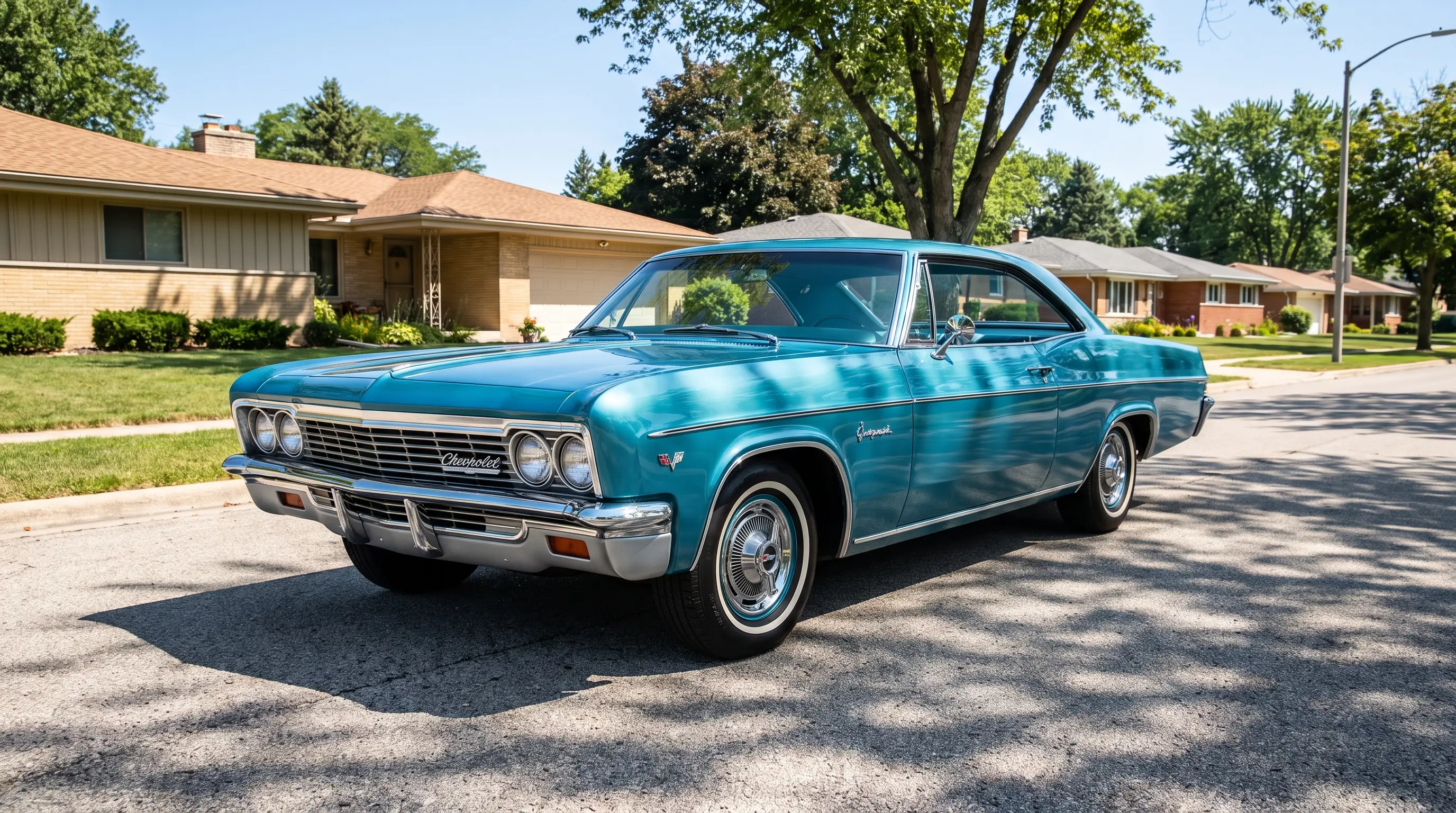
Part of what makes these cars appealing is how they wore the palette of the mid-1960s. Chevrolet offered a broad range of colors, from restrained whites and blacks to the bright turquoise and gold tones that read as unmistakably period today. The Impala's trim, the bright rocker moldings, the crossed-flags emblems, and the row of taillights, gave even a modestly optioned car a sense of occasion. This was a time when a family car was expected to look handsome, and the Impala delivered that at a price ordinary buyers could reach.
The interiors matched the exterior ambition. Cloth and vinyl combinations in coordinated colors, a full-width instrument panel, and on the SS cars bucket seats with a center console gave the cabin a genuinely upscale feel for a mass-market car. It is one reason the Impala pulled buyers up from the plainer Bel Air and Biscayne. For not much more money, the Impala looked and felt like a step up, and in 1965 a very large number of families decided that step was worth taking.
Reading the two years apart
Since the 1965 and 1966 cars share so much, a little orientation helps. I will keep this to identification and history rather than any mechanical work, because the how-to side belongs to a specialist and a service manual, not to a magazine feature.
| Detail | 1965 | 1966 |
|---|---|---|
| Body status | All-new redesign | Mild restyle of 1965 |
| Frame type | Full-perimeter (new) | Full-perimeter |
| Caprice status | Option package on Impala | Separate model line |
| Top big-block | 396 (Mark IV, new) | 396 and 427 (Mark IV) |
| Standard taillights | Six round | Six round, revised trim |
| Approx. Impala volume (incl. SS) | ~1,046,000 | ~775,000 |
Why this generation still matters to collectors
The 1965 and 1966 Impalas occupy an interesting spot in the hobby. They are simultaneously common and coveted. Common, because so many were built and a healthy number survived. Coveted, because the specific desirable configurations, the SS big-block hardtops and convertibles, are genuinely scarce and carry the styling that many enthusiasts consider the high point of the full-size Chevrolet. That split makes the generation approachable for a first-time buyer and rewarding for a serious collector, which is a rare combination.
The survival rate also means parts and knowledge are relatively easy to find, and a strong club network keeps documentation flowing. For anyone weighing a purchase, it helps to study what is actually changing hands, so it is worth taking time to look over the classic Impalas on the market and compare condition against asking price before committing. The gap between a tired driver and a documented SS is wide, and it pays to know where a given car sits.
The 1965 model year sits in the record books as the moment the full-size Chevrolet reached its widest audience, and the cars themselves earned that place with clean styling, a modern chassis, and a range broad enough to serve a whole neighborhood. The generation that followed took the story in a bolder stylistic direction, and if you want to see where it went next, that is the next chapter. The 1965 and 1966 cars, though, are where the Impala became the default American family car, and that is a distinction no marketing budget can manufacture.
Sources and notes
- Today I Learned: The Chevrolet Impala Is a Millionaire - Hagerty
- Chevrolet Impala (fourth generation) - Wikipedia
- 1958-90 Impala and Passenger Car Production Figures - Paddock Parts
- 1965 Chevrolet Impala Series Specifications - Conceptcarz
- 1966 Chevrolet Impala Series Specifications - Conceptcarz
- 1965 Chevrolet Impala Valuation - Hagerty