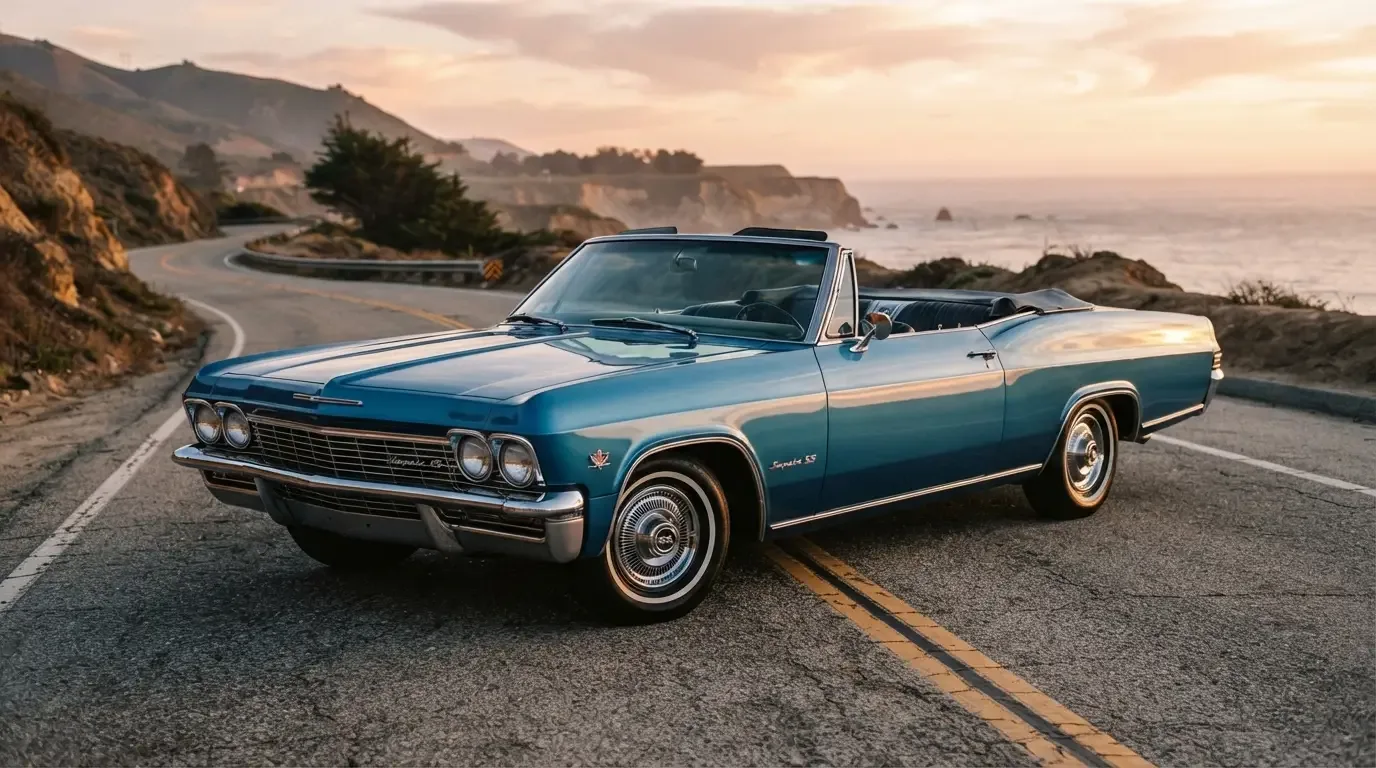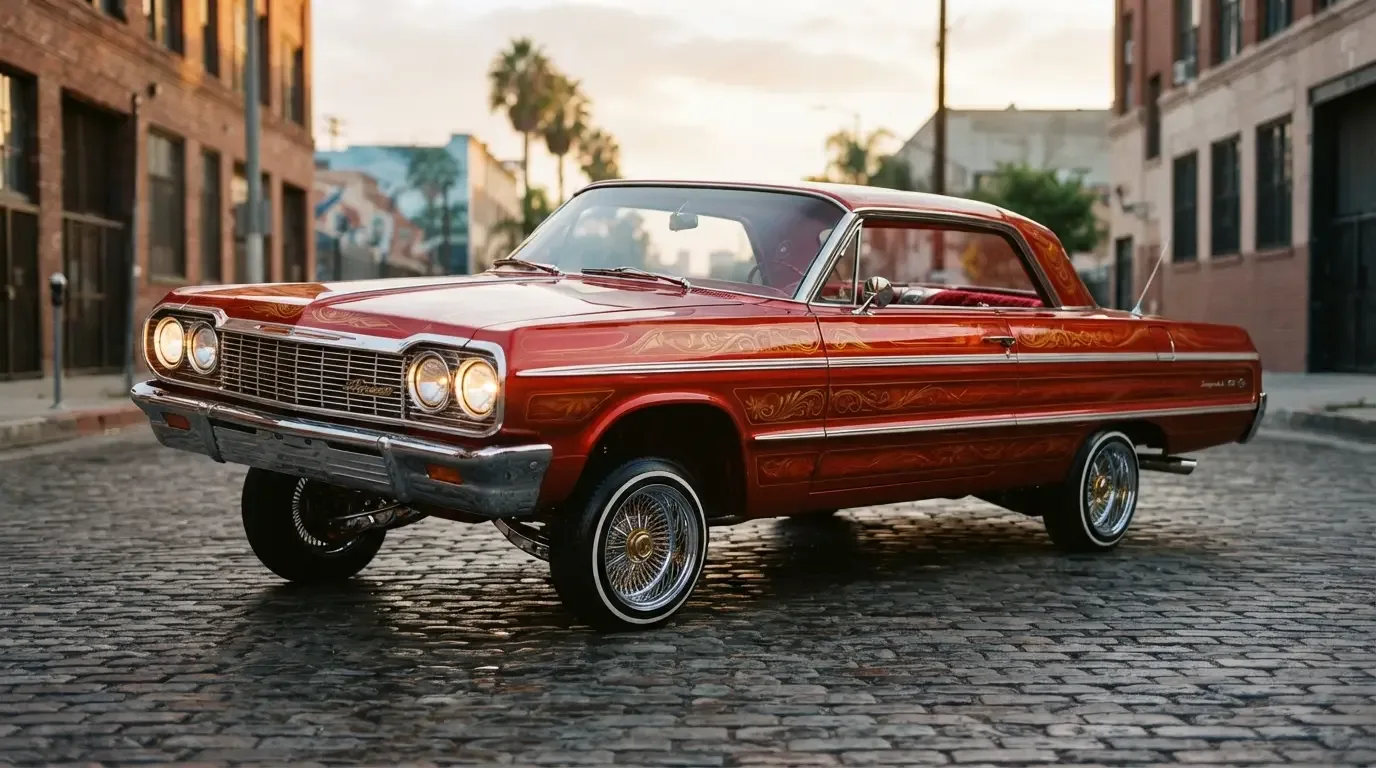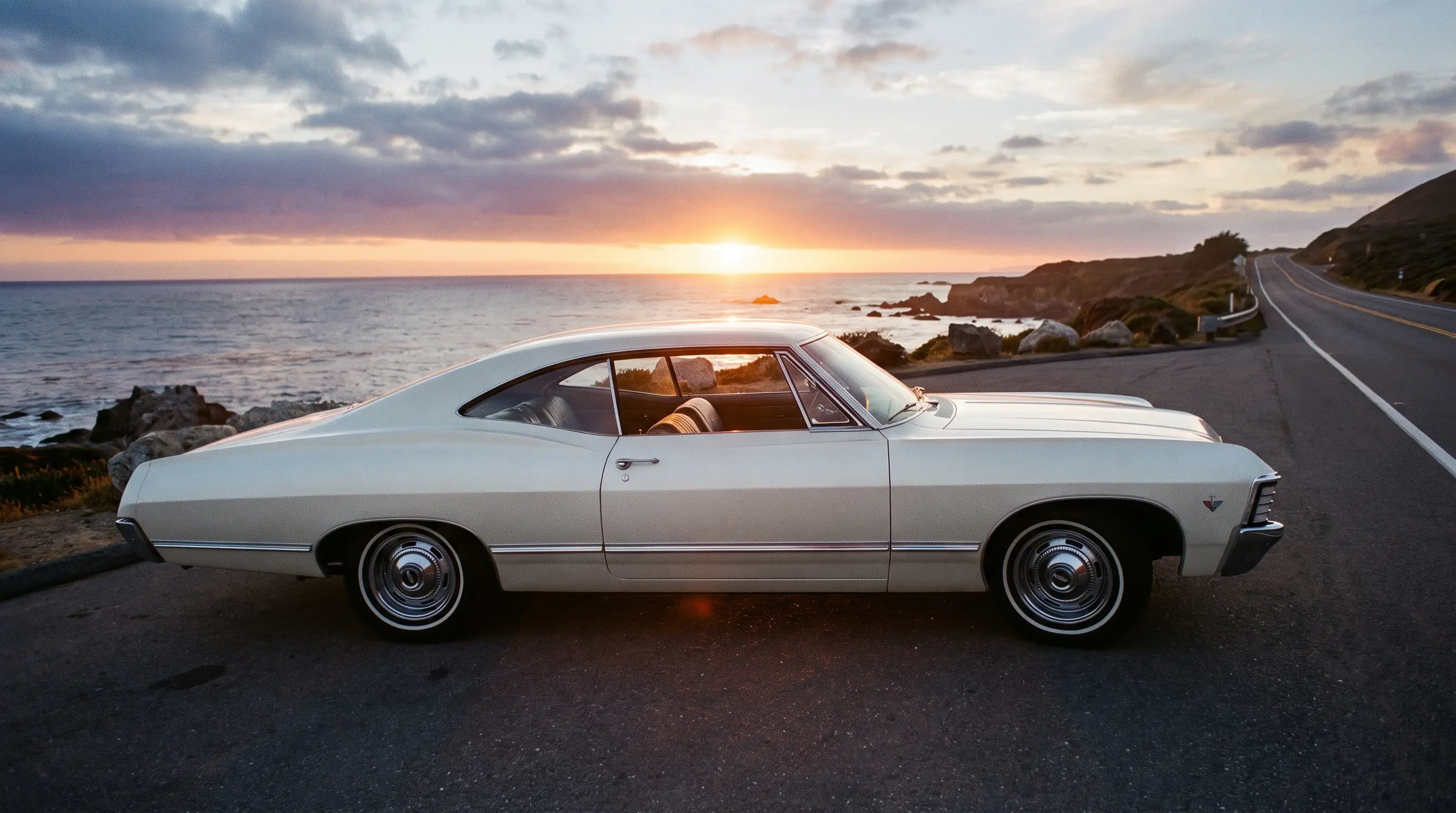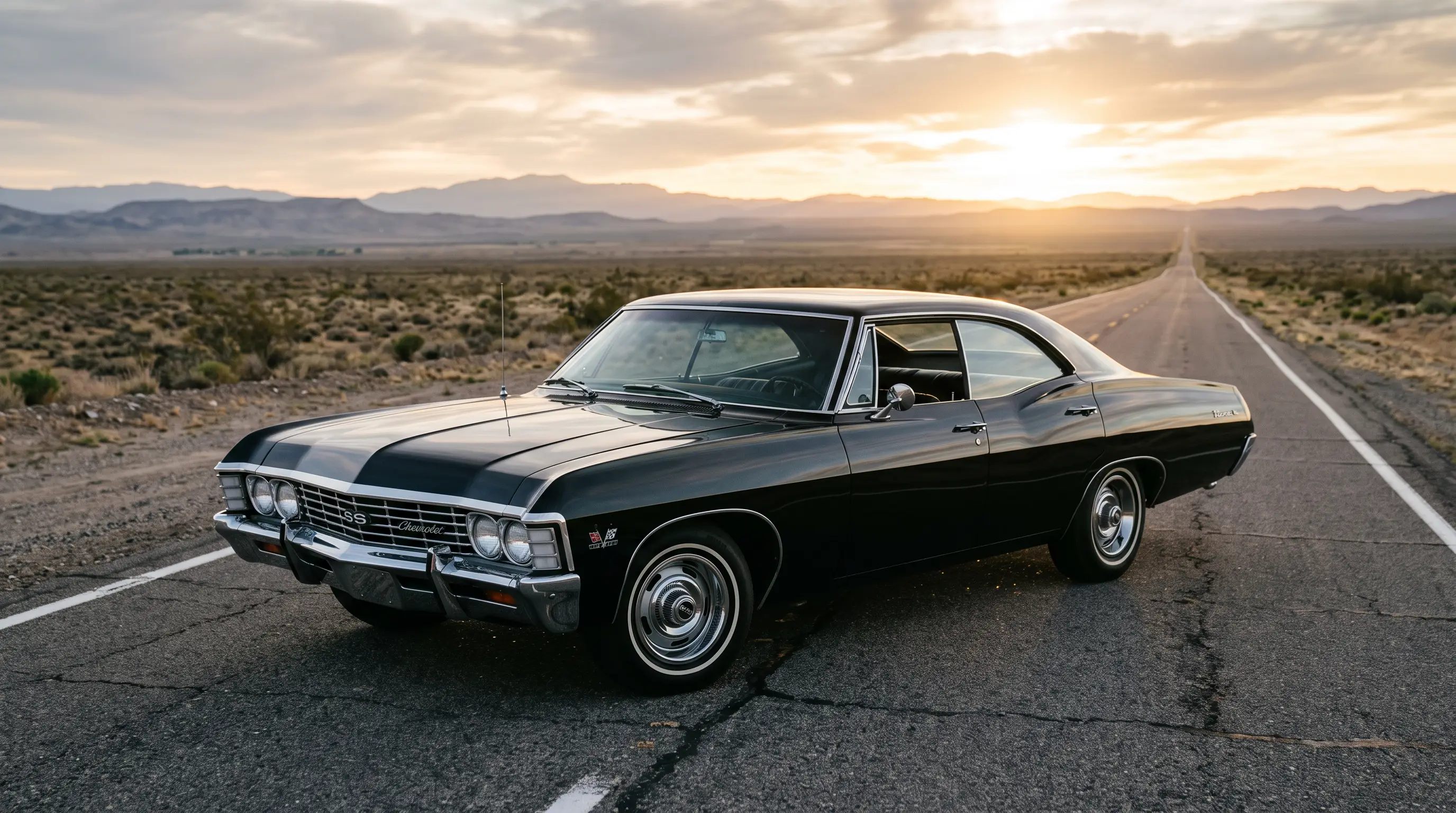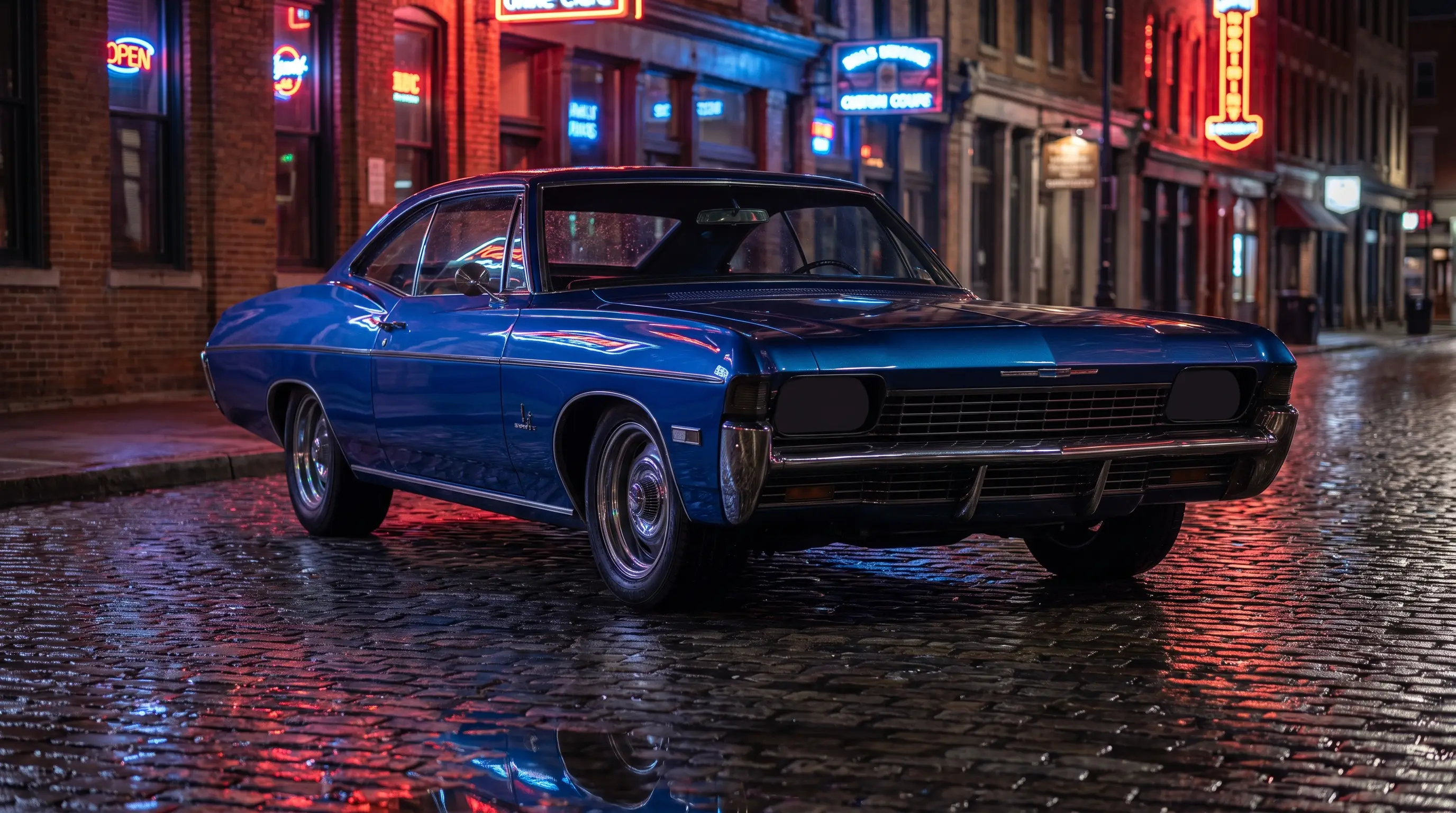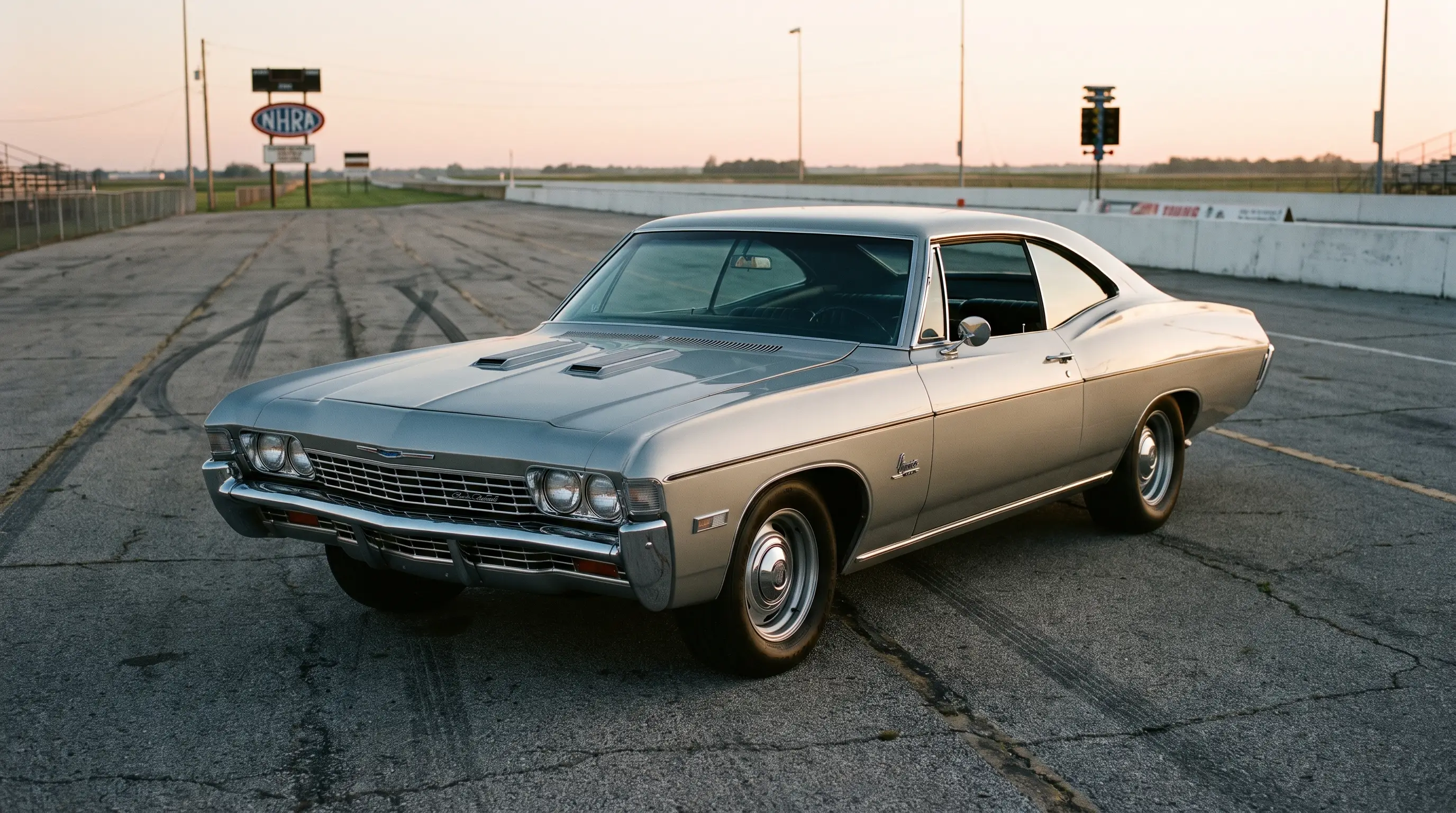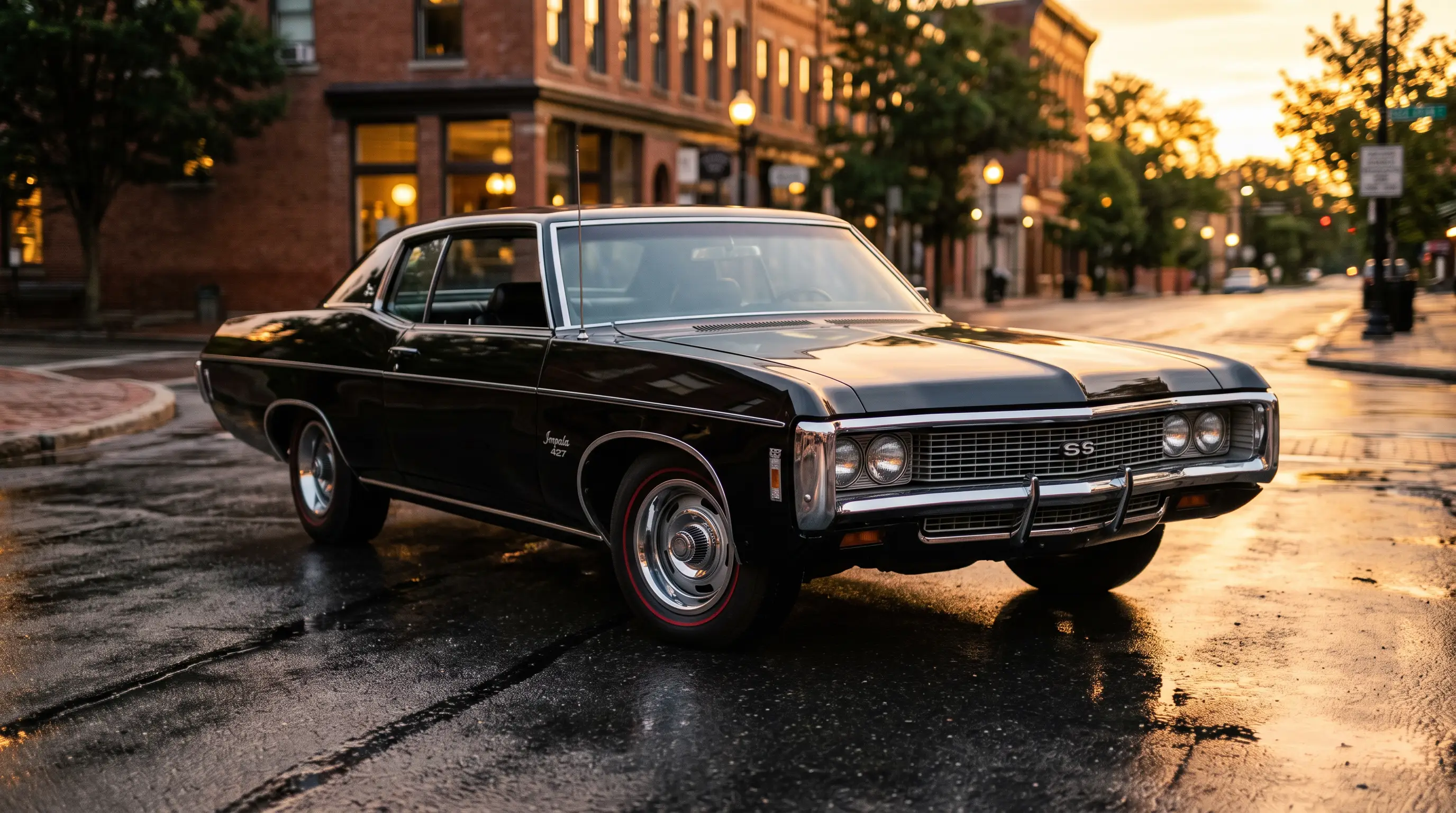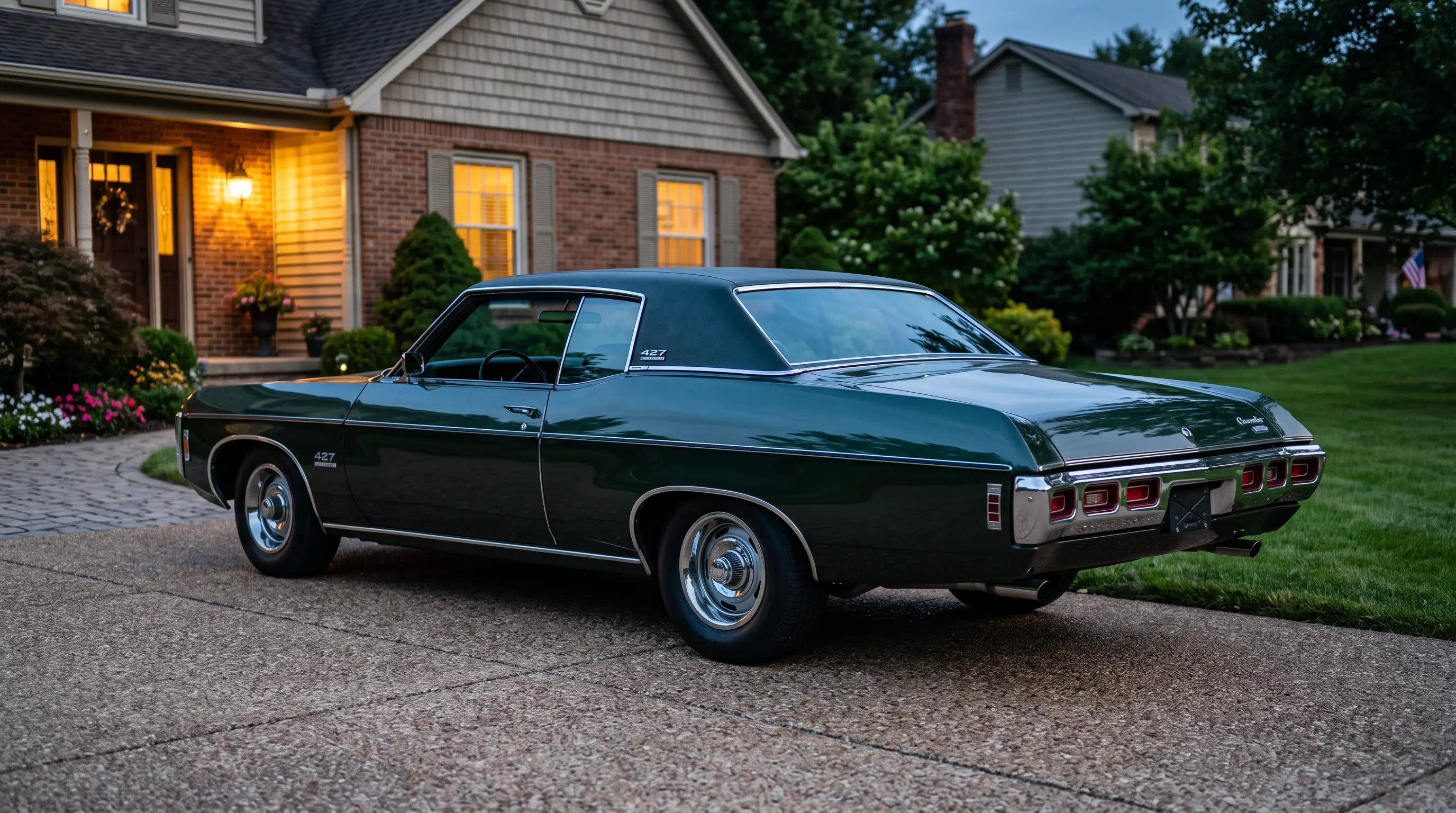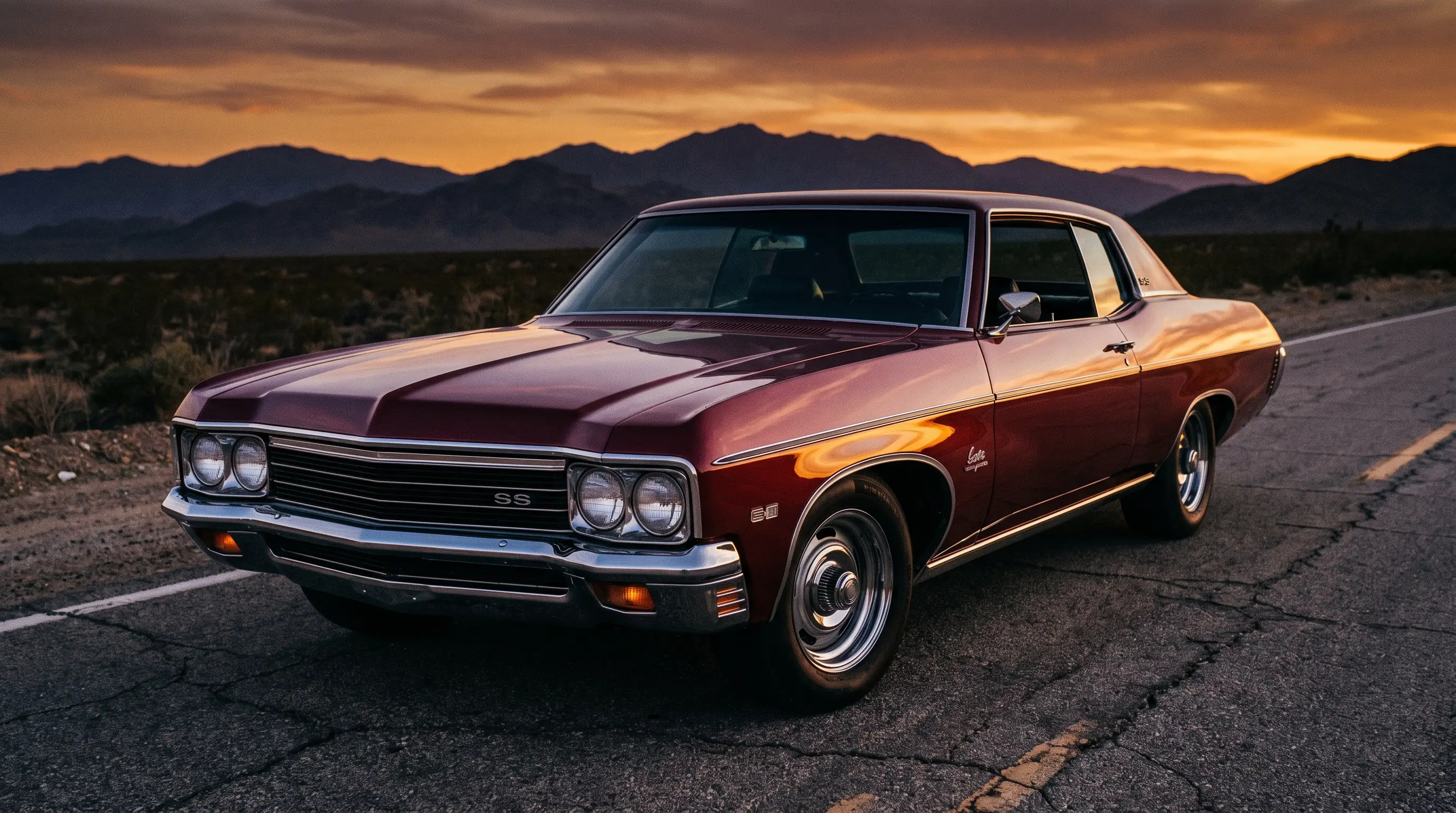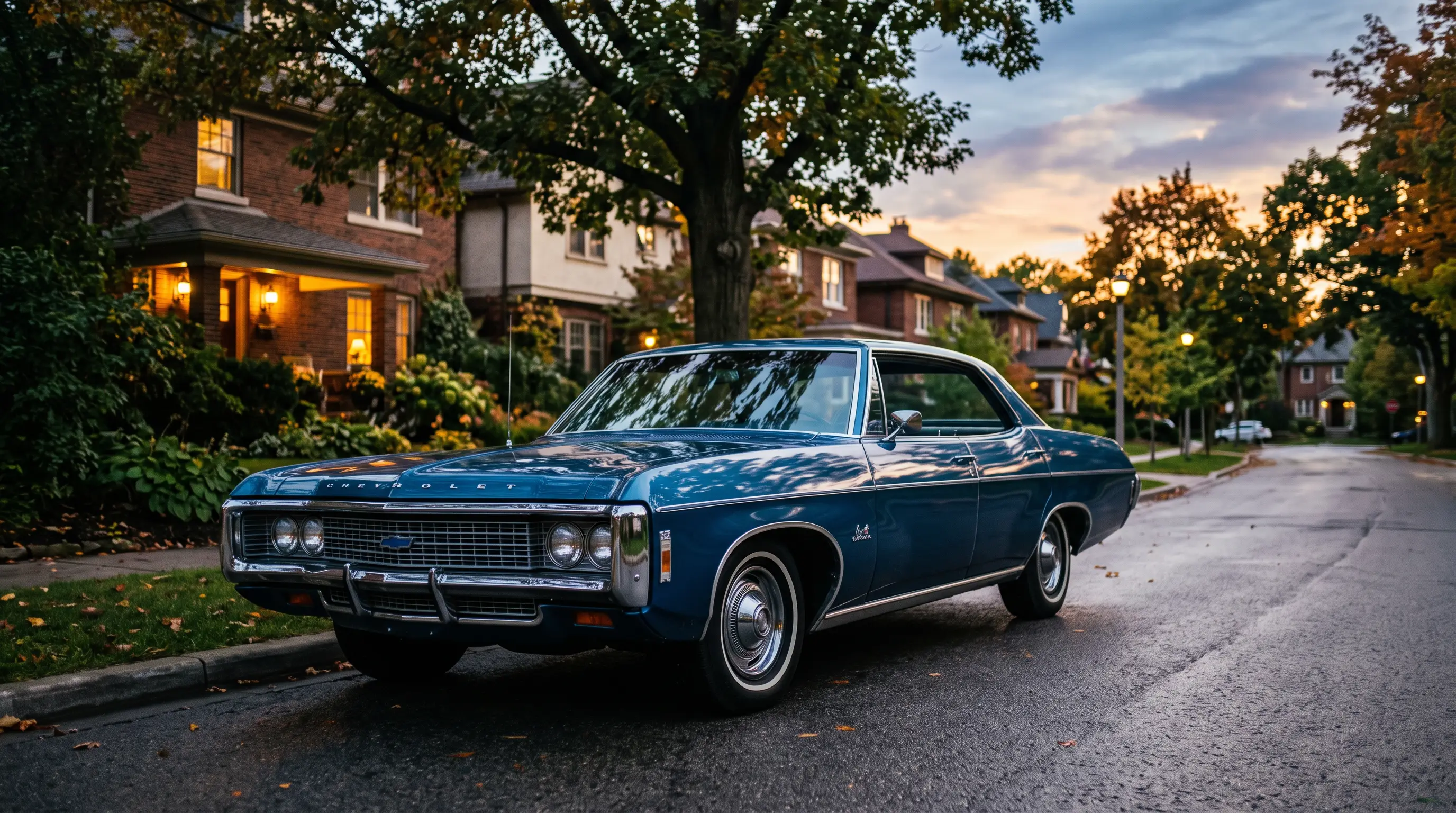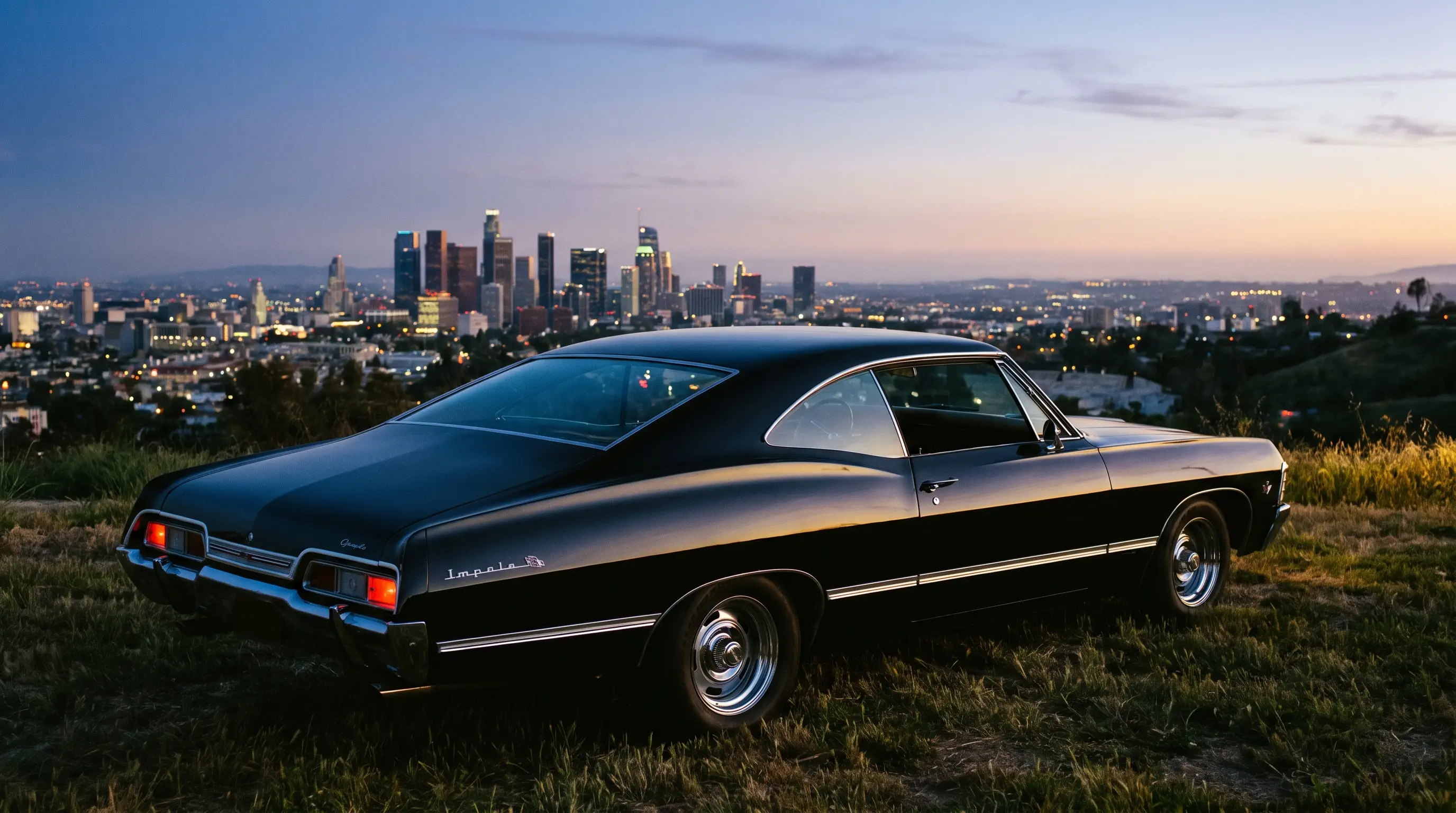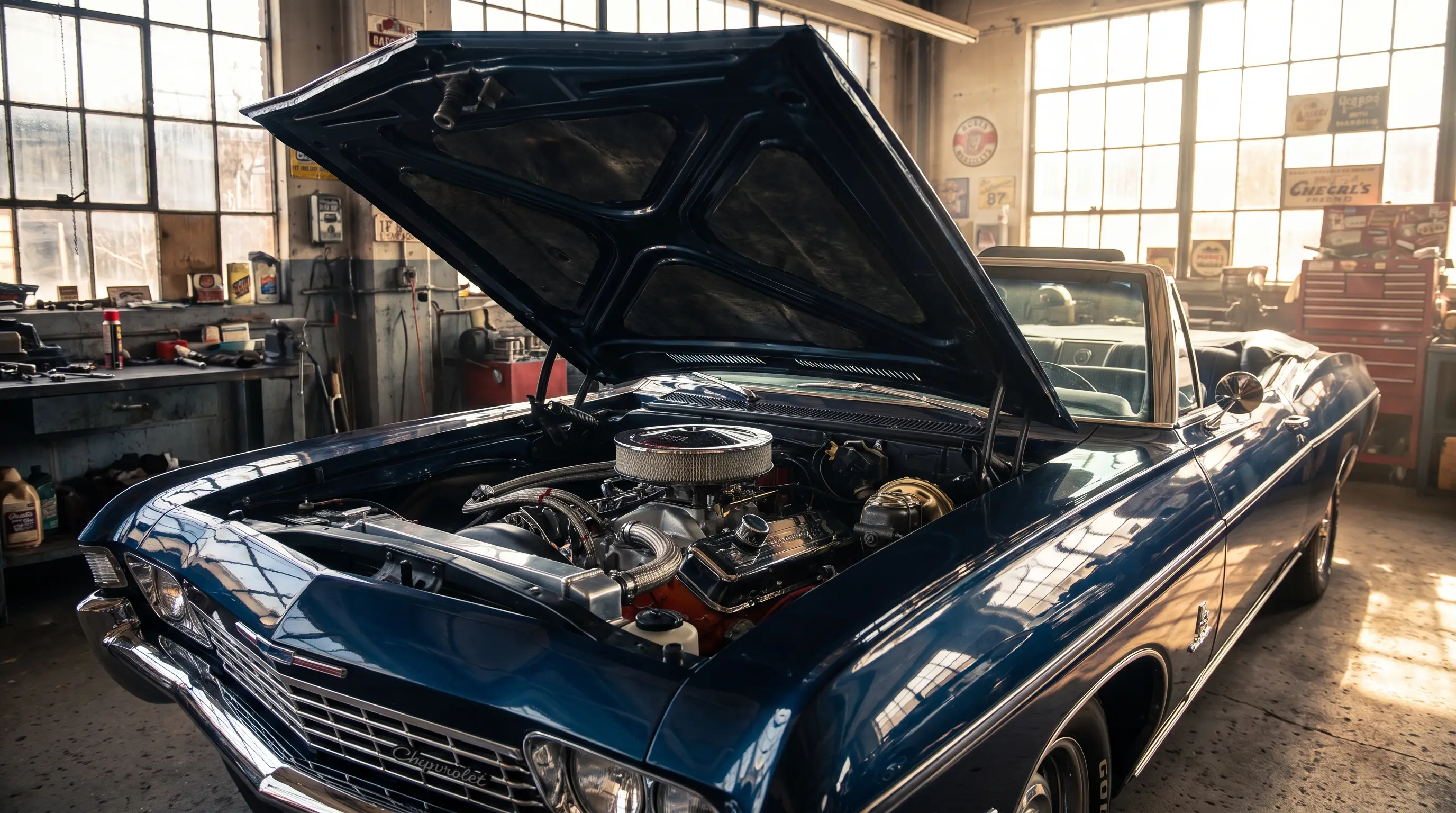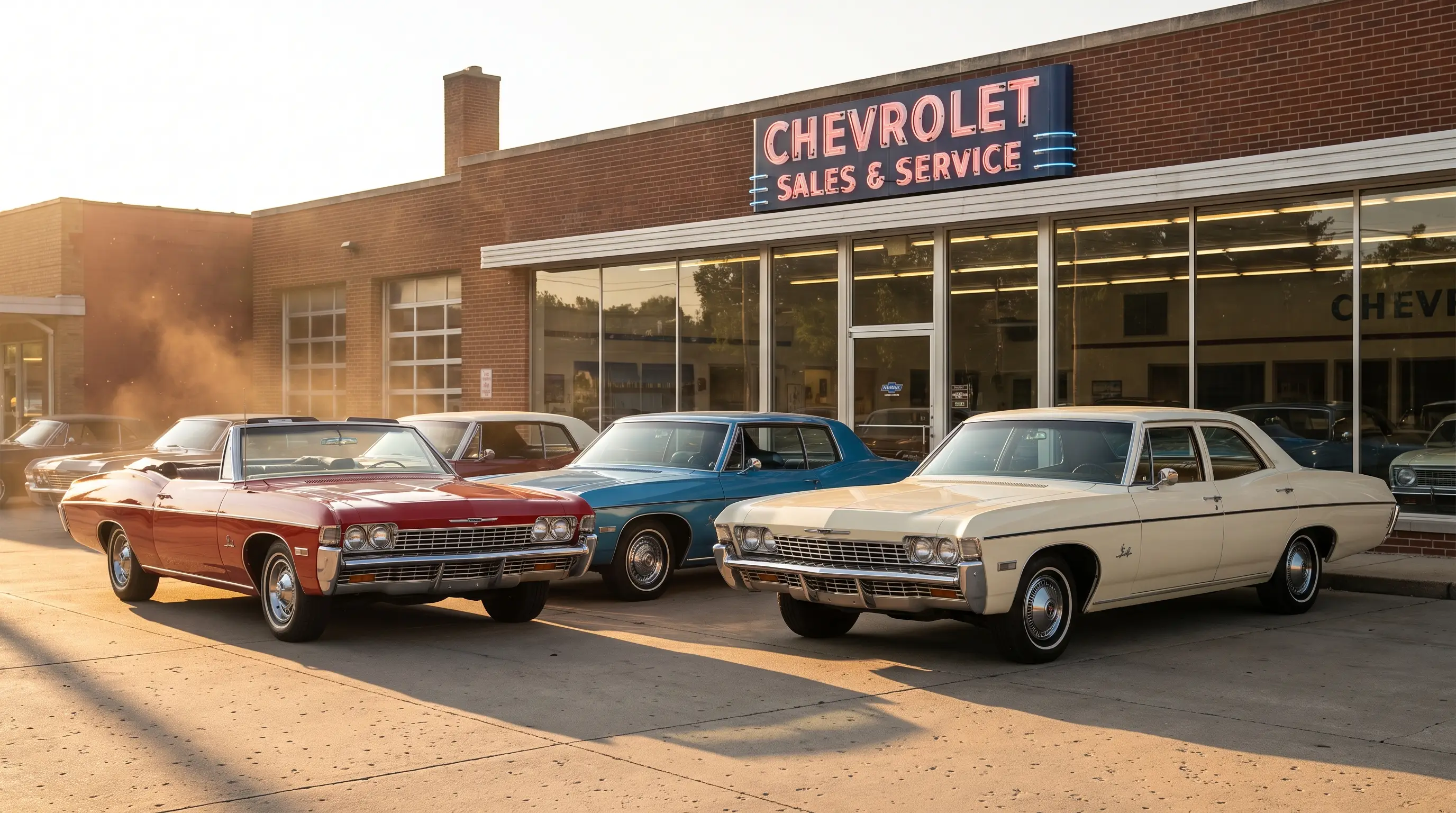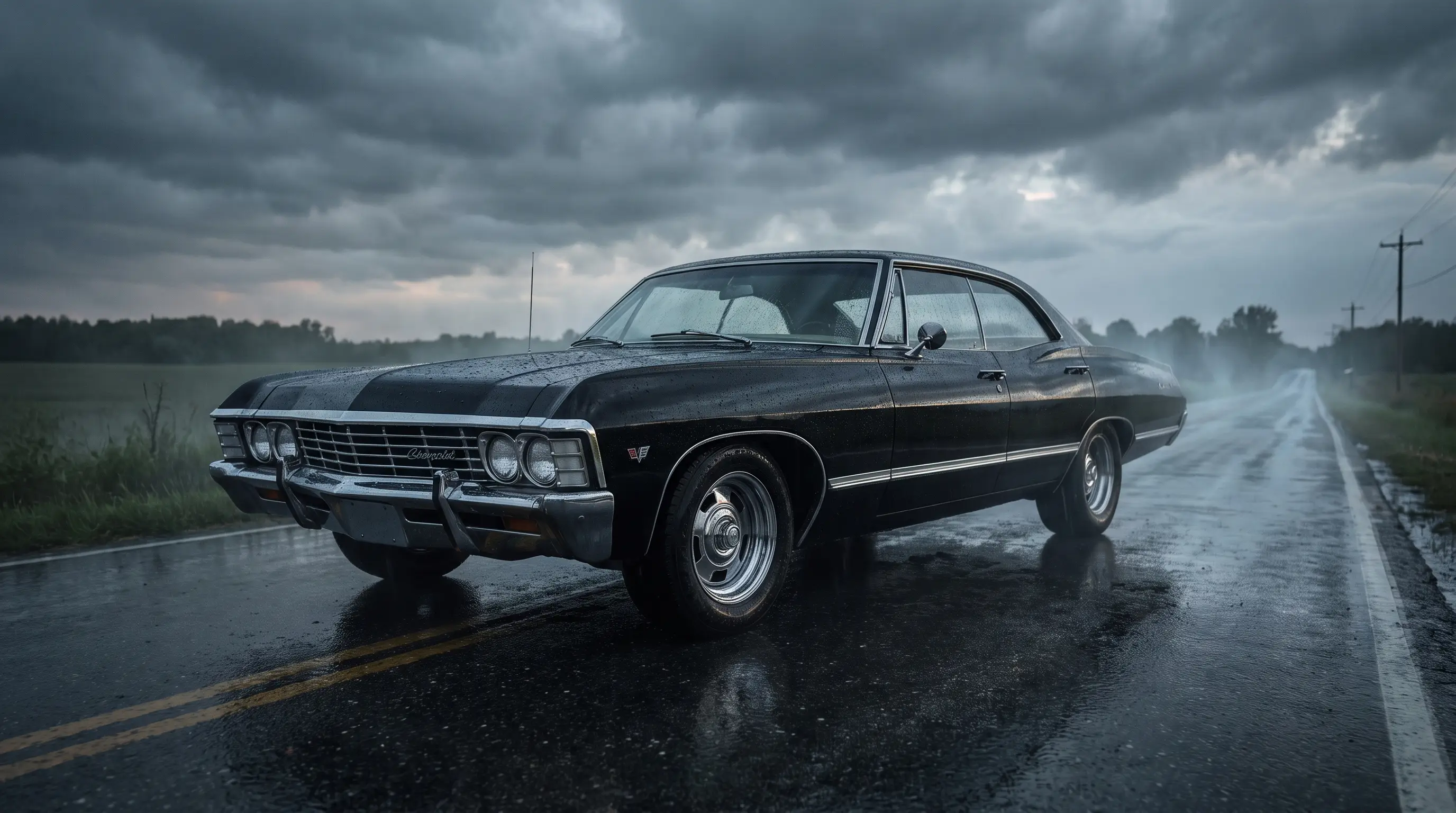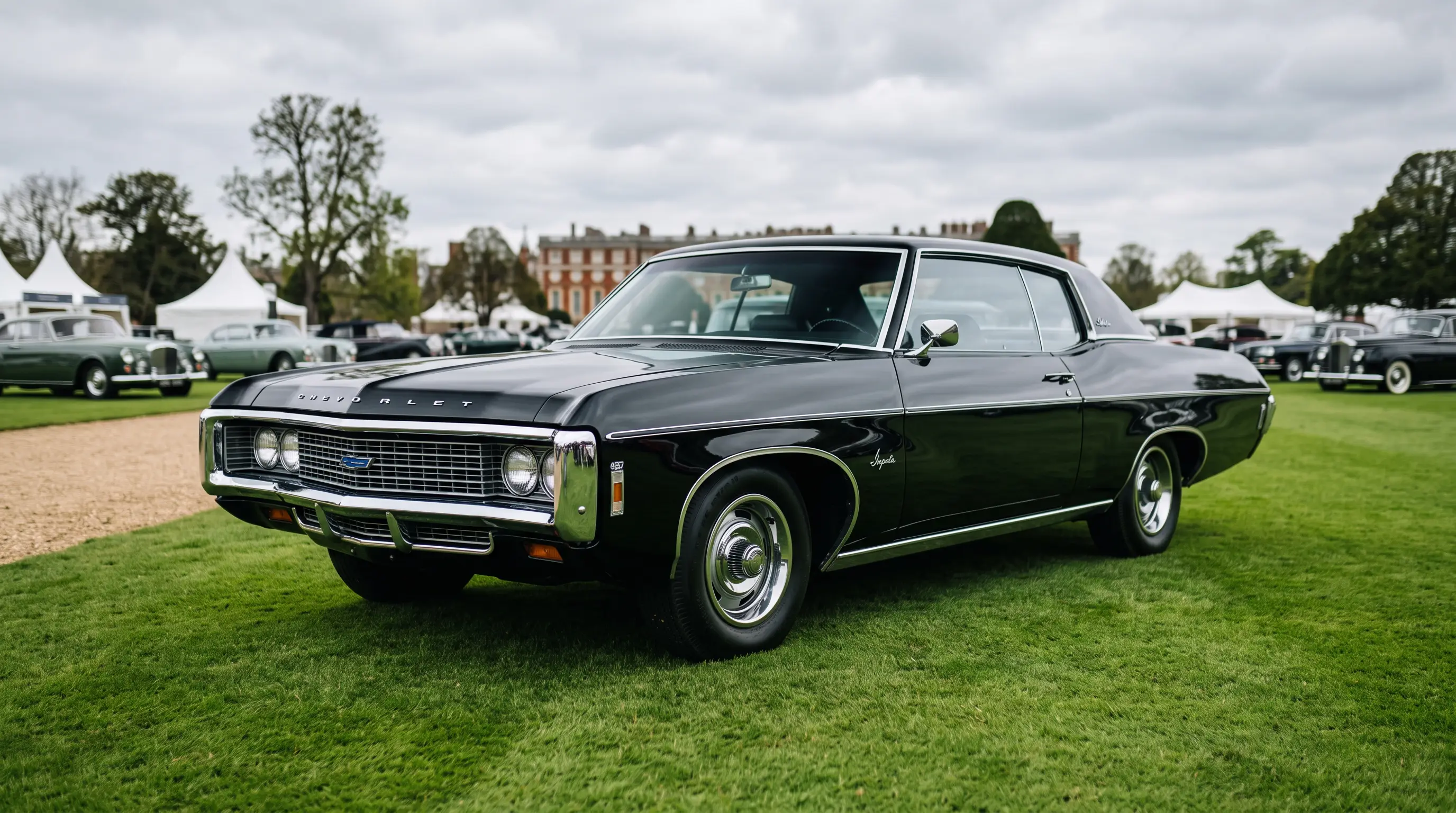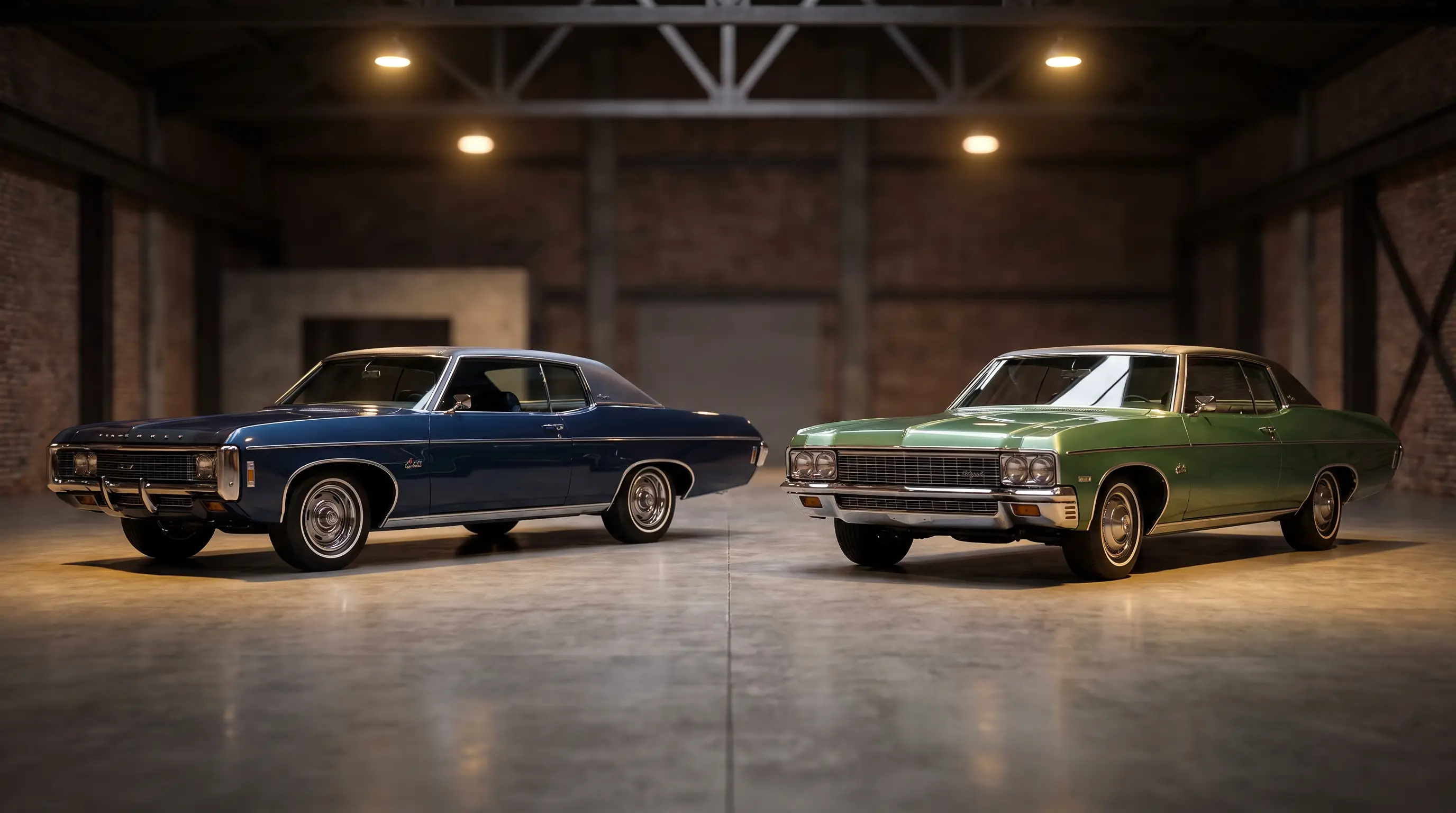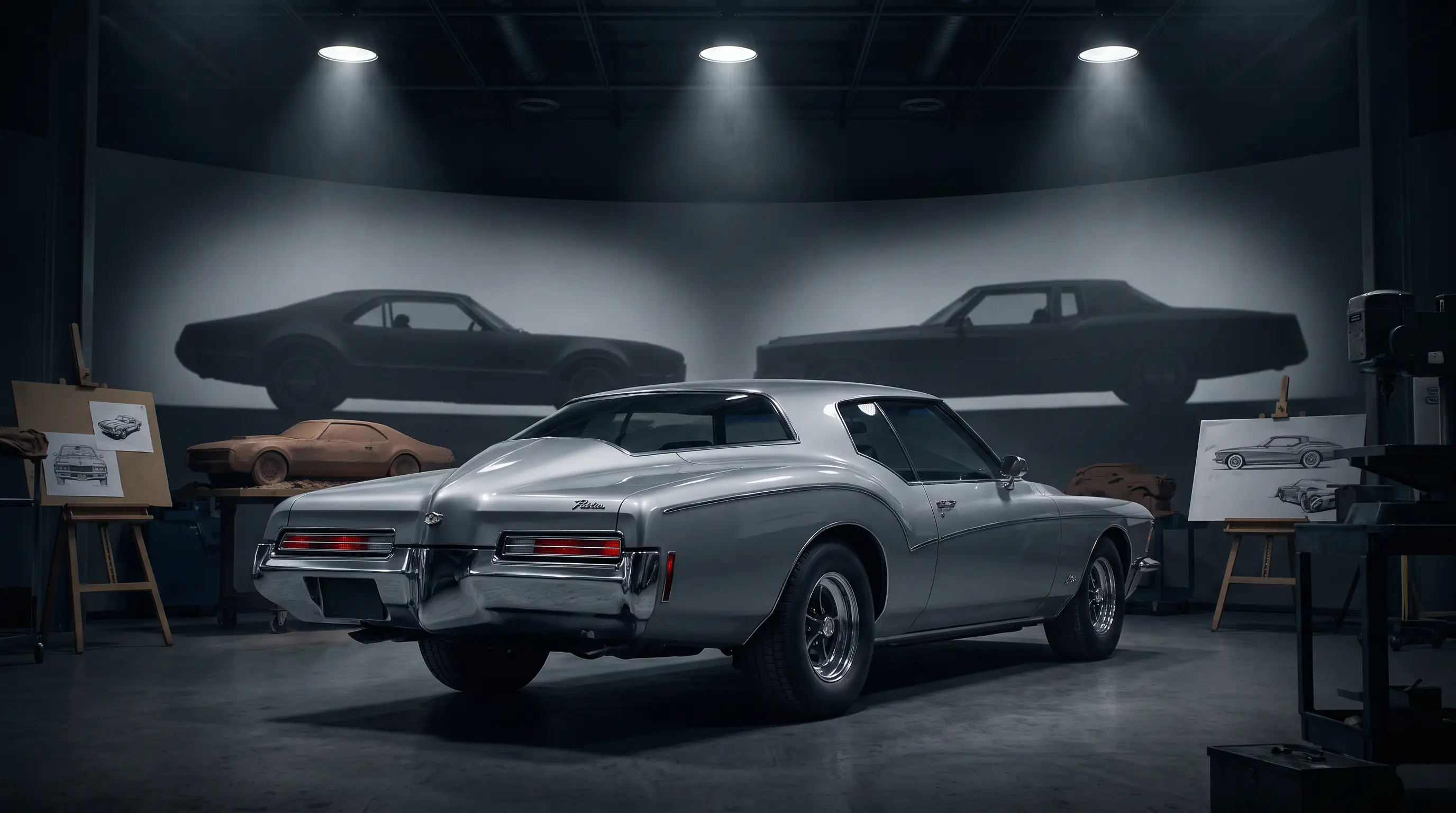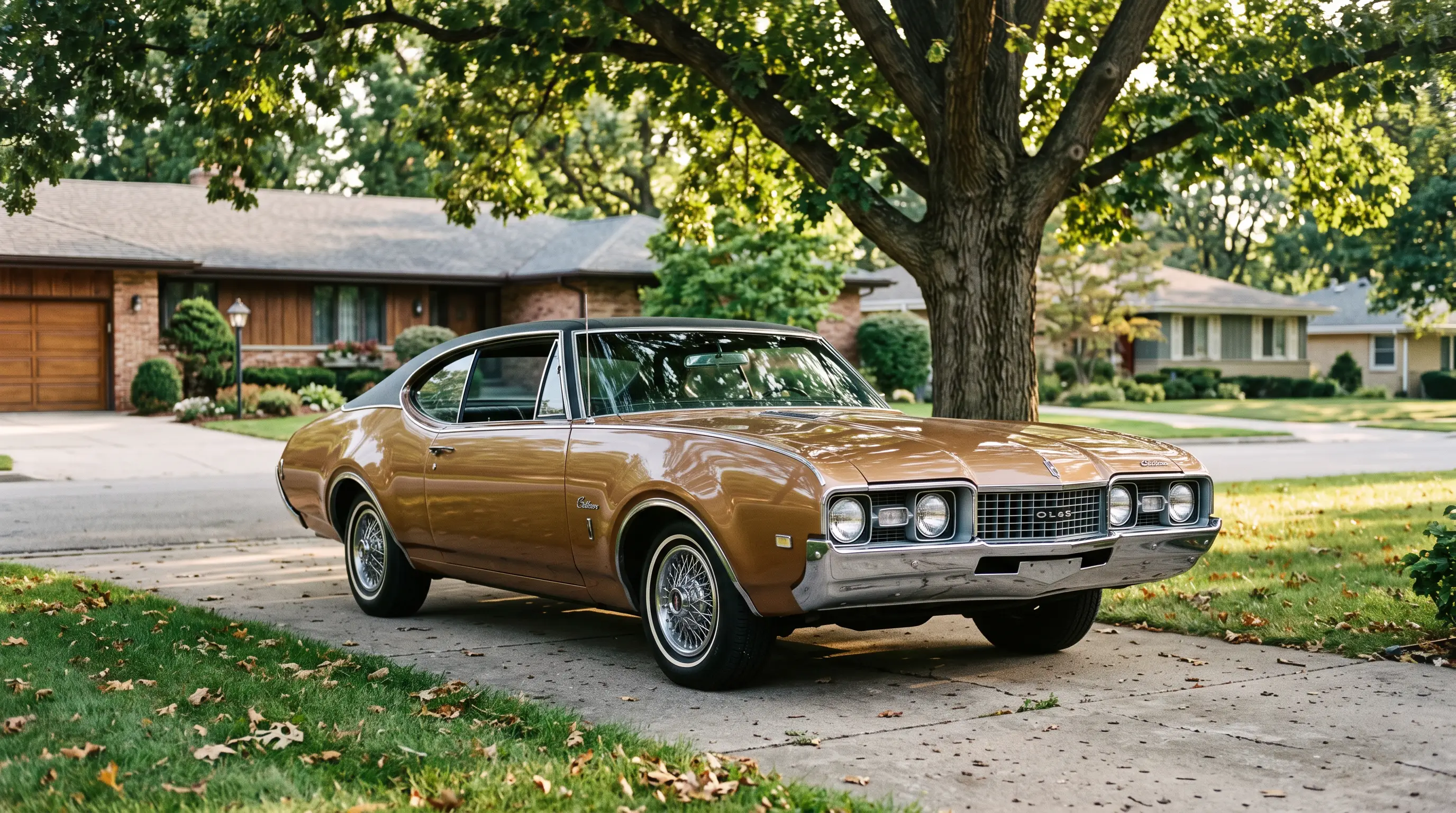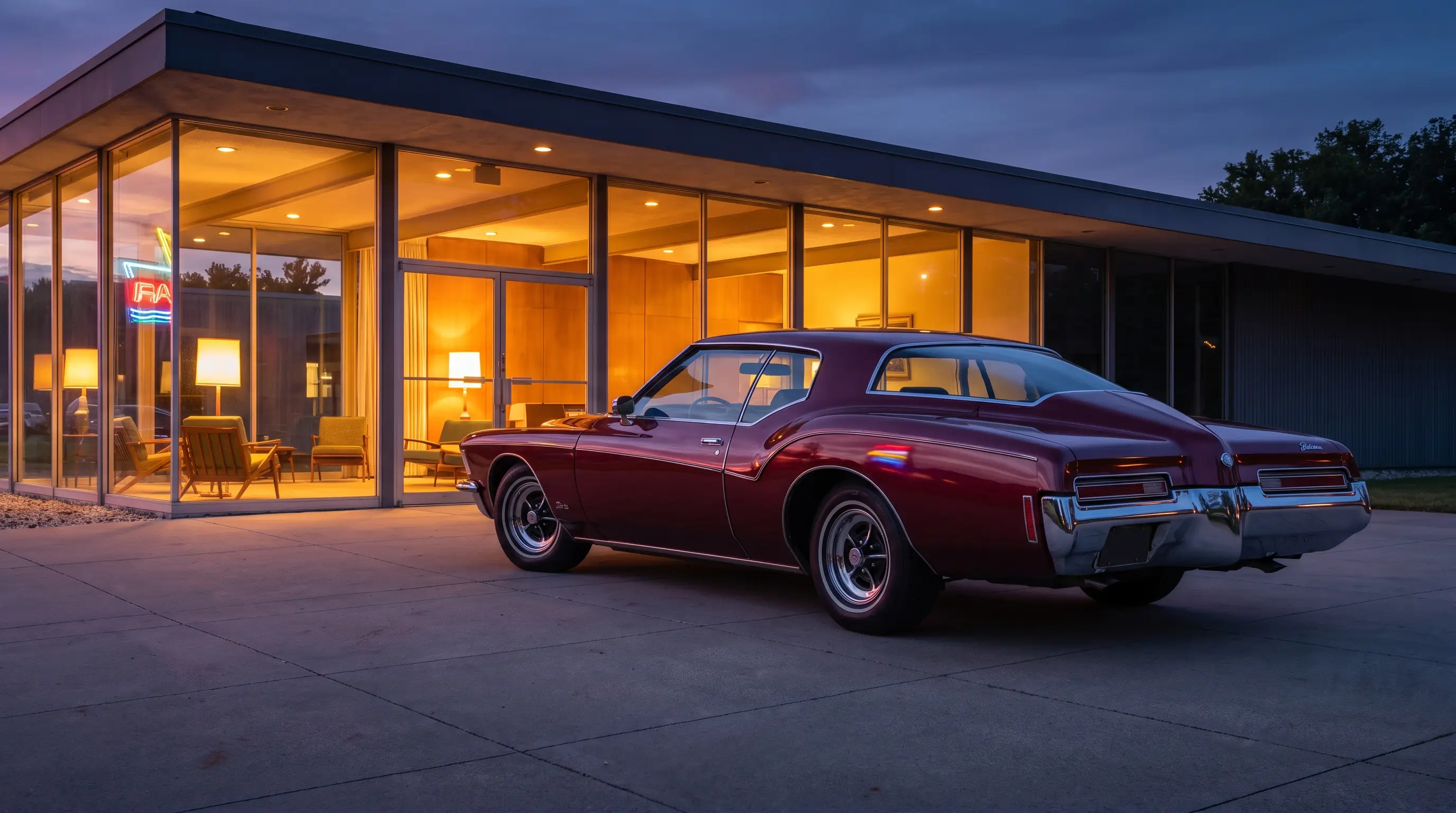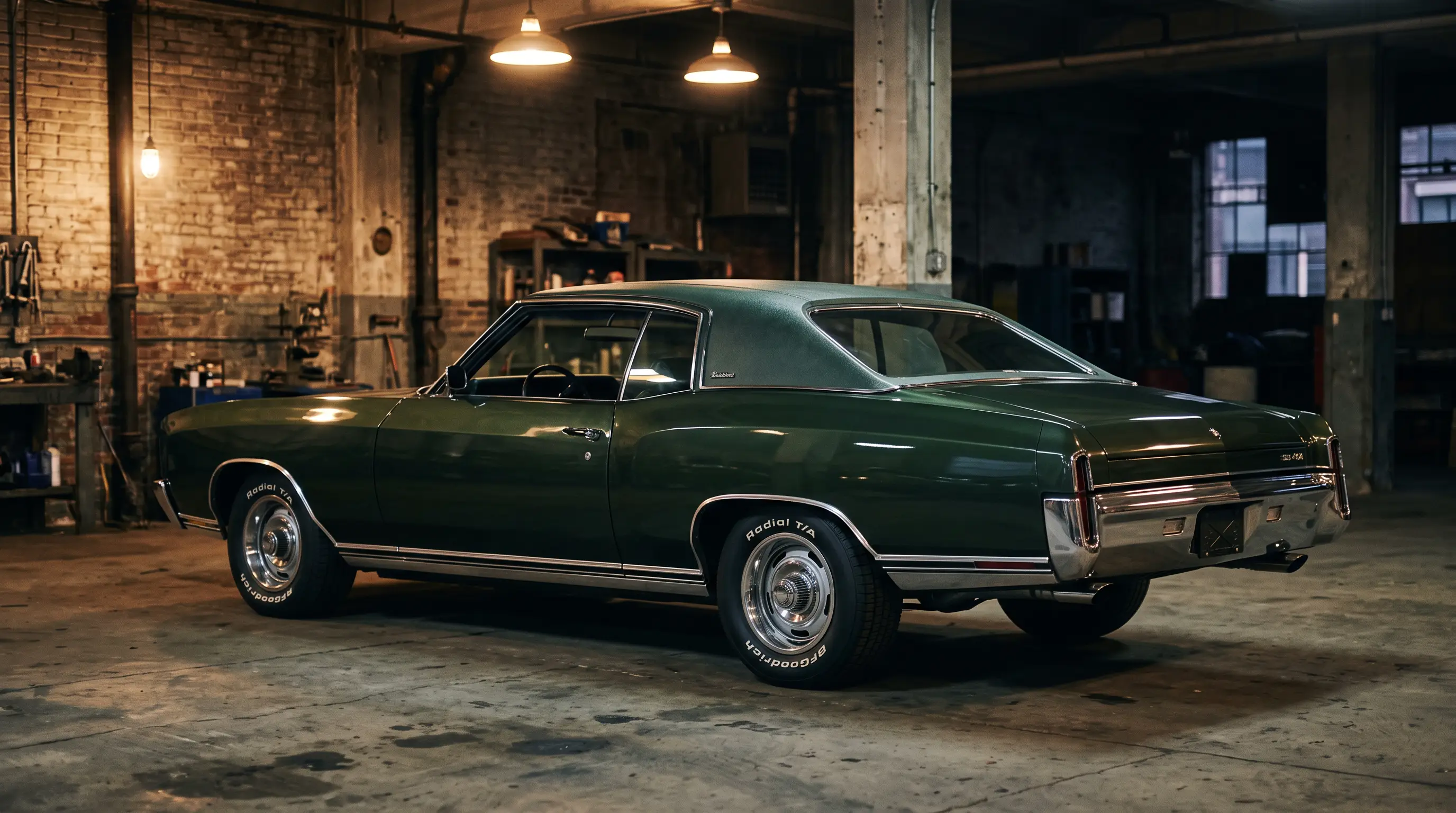
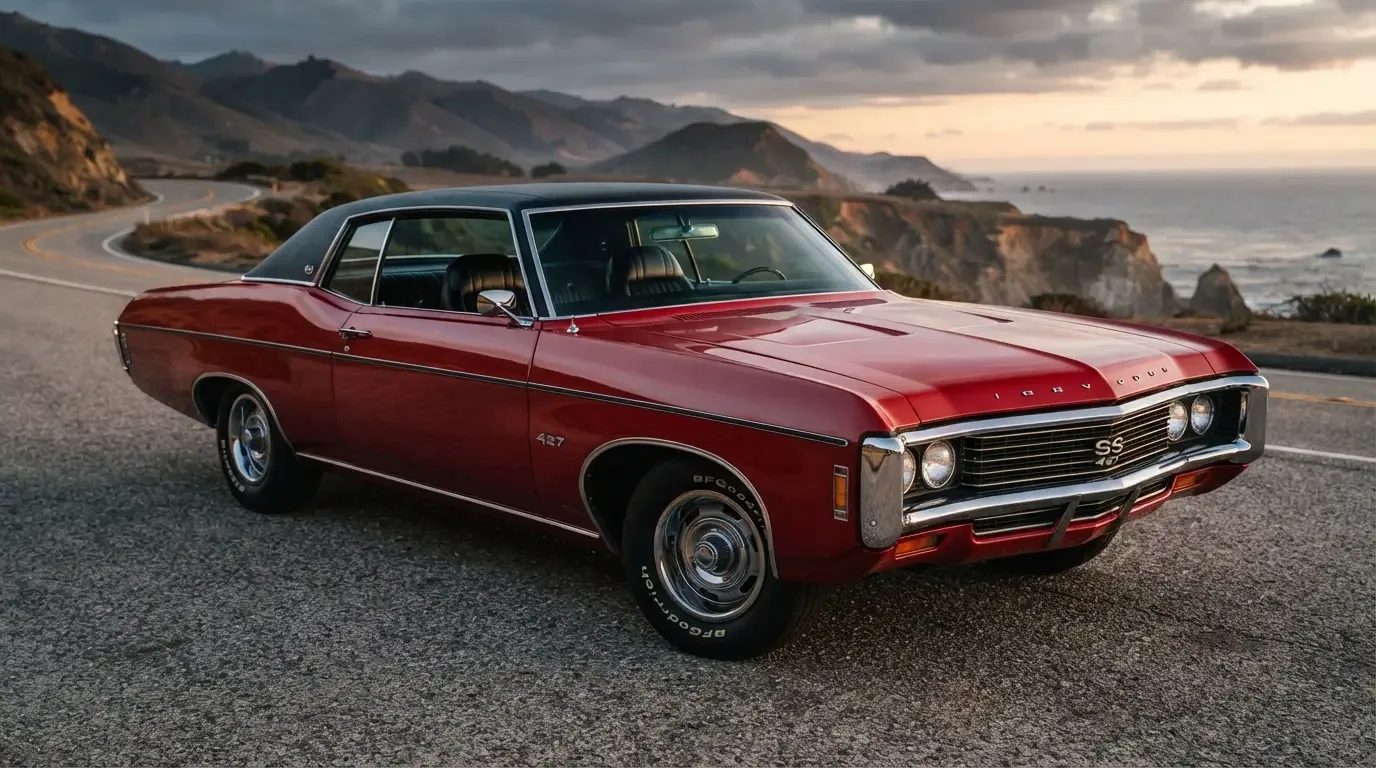
The 1967 impala arrived with a shape that the design studios called the Coke-bottle line, a body that pinched inward at the beltline and swelled over the wheels the way a certain glass bottle does. It was a deliberate move away from the long, calm surfaces of the 1965 and 1966 cars, and it marked the start of a four-year run that took the full-size Chevrolet from clean elegance toward a heavier, more sculpted look. Across these years the Impala stayed America's volume favorite while quietly hosting one of the more interesting big-block stories of the decade, the SS427. This is how that generation unfolded, year by year, from the factory records outward.
The Coke-bottle body and what drove it
For 1967 Chevrolet reshaped the full-size line around the flowing hip that had spread across American styling in the mid-1960s. The fenders arched over the wheels, the roofline on the Sport Coupe took on a fastback-influenced sweep, and the whole car looked lower and more muscular even though the underlying perimeter frame carried over from the previous generation. The change was cosmetic in the engineering sense and transformational in the showroom sense. A 1967 Impala looked like a different animal from a 1966, and buyers noticed.
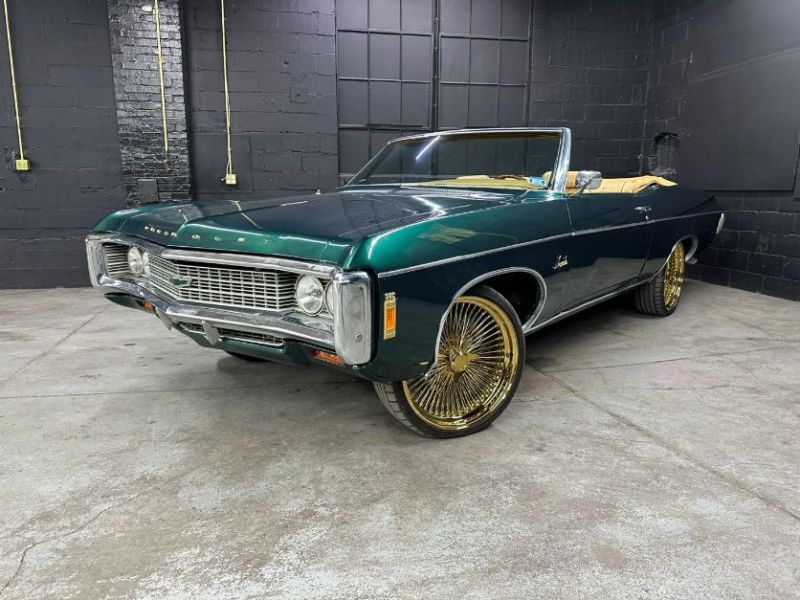
The styling evolved through the run. The 1968 cars brought revised front and rear treatments and, on many models, hidden headlight options on the upper trims. The 1969 restyle grew the body and introduced the loop-style front bumper on some models, and the 1970 cars refined that theme further before the next full redesign. If you want the whole nameplate laid out in sequence, our our chevy impala retrospective puts every generation in order. Here the focus stays on these four years, because they hold a particular tension between mass-market comfort and genuine performance.
The SS427, a big engine in a big car
The performance headline of the era is the SS427. The Super Sport package had been an Impala fixture since the early 1960s, but by this generation Chevrolet offered it tied specifically to the 427 cubic inch Mark IV big-block, sold as the SS427. This was not a lightweight muscle car in the Chevelle or Camaro mold. It was a full-size two-door carrying a large-displacement engine, and the character was different. Where the intermediate muscle cars felt sharp and nervous, the SS427 delivered its performance with a long-legged, effortless authority.
The top 427 in these cars was rated at 425 hp in its strongest street tune (the L72), with milder 427 versions rated well below that. Because the SS427 was a low-volume option on an enormous production run, genuine examples are scarce today, and that scarcity has made them a focus for collectors who want big-block performance in an unexpected body. I always caution buyers here, because the value gap between a real documented SS427 and a standard Impala with added badges is large enough to attract misrepresentation.
The year the total peaked and then softened
The full-size Chevrolet remained a sales giant through 1967 and 1968, though the record set in 1965 was not matched. What the factory records show is a gradual shift in where buyers spent their money. The Caprice, now its own line, pulled the luxury-minded customers upward, while the intermediate Chevelle and the compact and pony-car offerings pulled younger performance buyers toward smaller, cheaper cars. The Impala stayed the broad center of the range, but the center was slowly narrowing as the market fragmented.
That context helps explain why the SS packages thinned out toward the end of the run. Chevrolet had newer, lighter platforms better suited to the muscle-car buyer, and putting the performance budget into a two-ton full-size car made less sense every year. 1969 was the last year Chevrolet offered the Impala SS at all; there was no Super Sport package on the full-size Impala for 1970, a quiet ending for a badge that had defined the car's sporty image for most of the decade.
"The paperwork tells a story the badges cannot. A genuine SS427 shows up in the trim tag and the documentation, and when a seller cannot produce either, the honest conclusion is that you are looking at a tribute, not the real thing."
- Tom Ramirez
The Custom Coupe and the formal roof
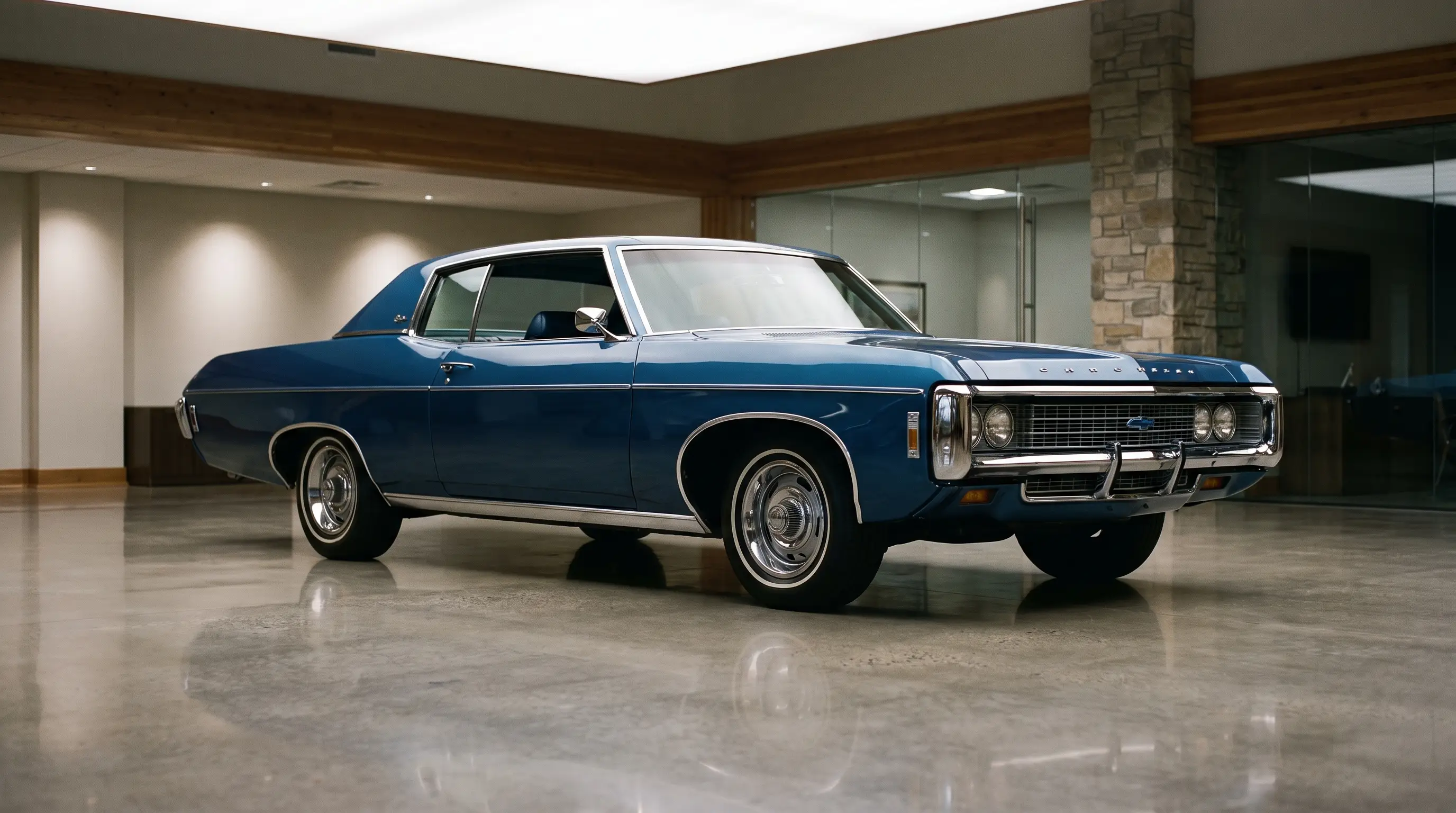
One body style deserves its own mention, because it marked a shift in taste that carried the full-size Chevrolet into the next decade. Alongside the flowing fastback Sport Coupe, Chevrolet offered a formal-roof two-door, sold in this era as the Custom Coupe. Where the fastback swept down to the tail in one continuous line, the Custom Coupe had a squared, upright rear roof with a more formal look, closer to the character of the upscale Caprice.
The two rooflines coexisting on the same car tells you something about where the market was heading. The fastback appealed to the buyer who still wanted a sporty full-size Chevrolet, while the formal roof spoke to the buyer who wanted quiet good taste. As the decade closed, taste moved steadily toward the formal look, and the fastback faded. That makes the fastback cars of 1967 and 1968 a snapshot of a specific moment, the last stretch when a big Chevrolet was allowed to look overtly sporty before the whole class turned toward dignified restraint.
For collectors, this split is one of the more interesting things about the generation. The two rooflines create two very different cars from the same order sheet, and they attract different buyers today. Neither is wrong. They simply reflect two ideas of what a full-size Chevrolet was supposed to be, sold side by side in the same showroom.
The full-size Chevrolet in a changing market
To understand why this generation feels transitional, it helps to look at the whole showroom around it. By the late 1960s Chevrolet's lineup had grown crowded. The Camaro had arrived to fight the Mustang, the Chevelle covered the intermediate ground, the Nova served the compact buyer, and the Corvette held the sports-car flag. The full-size Impala, once the natural default for a Chevrolet buyer, now had to define itself against all of them. It responded by leaning into what it did best, which was space, comfort, and presence.
The engine range reflected that positioning. Most Impalas of this era left the factory with a small-block V8 or a mild six, engines chosen for smooth, quiet family duty rather than for the strip. The big-block and the SS427 were the exception, ordered by a small fraction of buyers who wanted something more. That mix is exactly what you would expect from a car whose main job had become carrying a family in comfort, with the performance option available for the few who cared.
It is worth saying plainly that this was not a decline so much as a redefinition. The Impala sold in huge numbers throughout the generation. It simply stopped trying to be all things to all buyers and settled into being the roomy, handsome, sensible full-size Chevrolet, while the performance energy moved to the lighter cars better suited to it. The SS427 is the memorable last flourish of the older idea, a big car with a big engine, built for people who liked their power delivered with dignity.
Telling the four years apart
Because the generation shares its basic body while changing details each year, orientation matters for anyone shopping or researching. I will keep this to identification and history, not mechanical procedure, since the hands-on work belongs to a specialist with the car in front of them.
| Year | Styling marker | Performance note |
|---|---|---|
| 1967 | New Coke-bottle body, fastback Sport Coupe roof | SS427 available |
| 1968 | Revised front and rear, hidden headlight options on upper trims | SS427 continues |
| 1969 | Larger restyle, loop front bumper on some models | SS427 offered, its final year |
| 1970 | Refined front and rear, end of the generation | No Impala SS package offered |
One practical note on the fastback roofline. The 1967 and 1968 Sport Coupe models with the sweeping rear glass are among the most sought shapes of the generation, and they photograph beautifully, which is part of why they carry a premium. A formal-roof four-door from the same year is a fine car and a fraction of the price, so knowing which body you are looking at is the first step in reading a listing correctly.
Where these cars sit in the hobby today
This generation lives in an interesting middle ground. It lacks the record-setting fame of the 1965 model year and the classic simplicity of the earlier cars, yet it offers arguably the most dramatic styling of any full-size Impala and, in the SS427, a genuine performance story. For collectors that combination is appealing, because prices for standard cars remain reasonable while the desirable configurations have real upside. It is a generation where doing your homework pays off directly.
The wide production numbers mean survivors are not hard to find, and the range of condition and configuration is enormous, from unrestored family sedans to fully sorted SS427 hardtops. Anyone shopping should study the spread before setting a budget, so it is worth reviewing the classic Impala for sale and comparing what the documented cars ask against the drivers. The difference in price tracks the difference in paperwork and originality more than anything else.
The 1967 through 1970 Impalas are the boldest-looking full-size Chevrolets of the classic era, and the SS427 gave the generation a performance chapter that the sales charts alone would never suggest. The styling divides opinion, which is exactly what makes these cars interesting to study. From here the culture of the Impala took an entirely different turn, one built in driveways and body shops rather than at the factory, and if that side of the story appeals to you, keep exploring. The full-size Chevrolet's second act was only beginning.
Sources and notes
- Chevrolet Impala (fourth generation) - Wikipedia
- When Is An Impala Not An Impala? When It's An SS427 - Chevy Hardcore
- 1968 Impala SS-427 Sport Coupe 425-hp Specs - Automobile Catalog
- 1969 Impala SS-427 Custom Coupe Specs - Automobile Catalog
- Chevrolet Impala SS 1958-1969 - Engine Factory
- 1967 Chevrolet Impala SS 427 - Sports Car Market