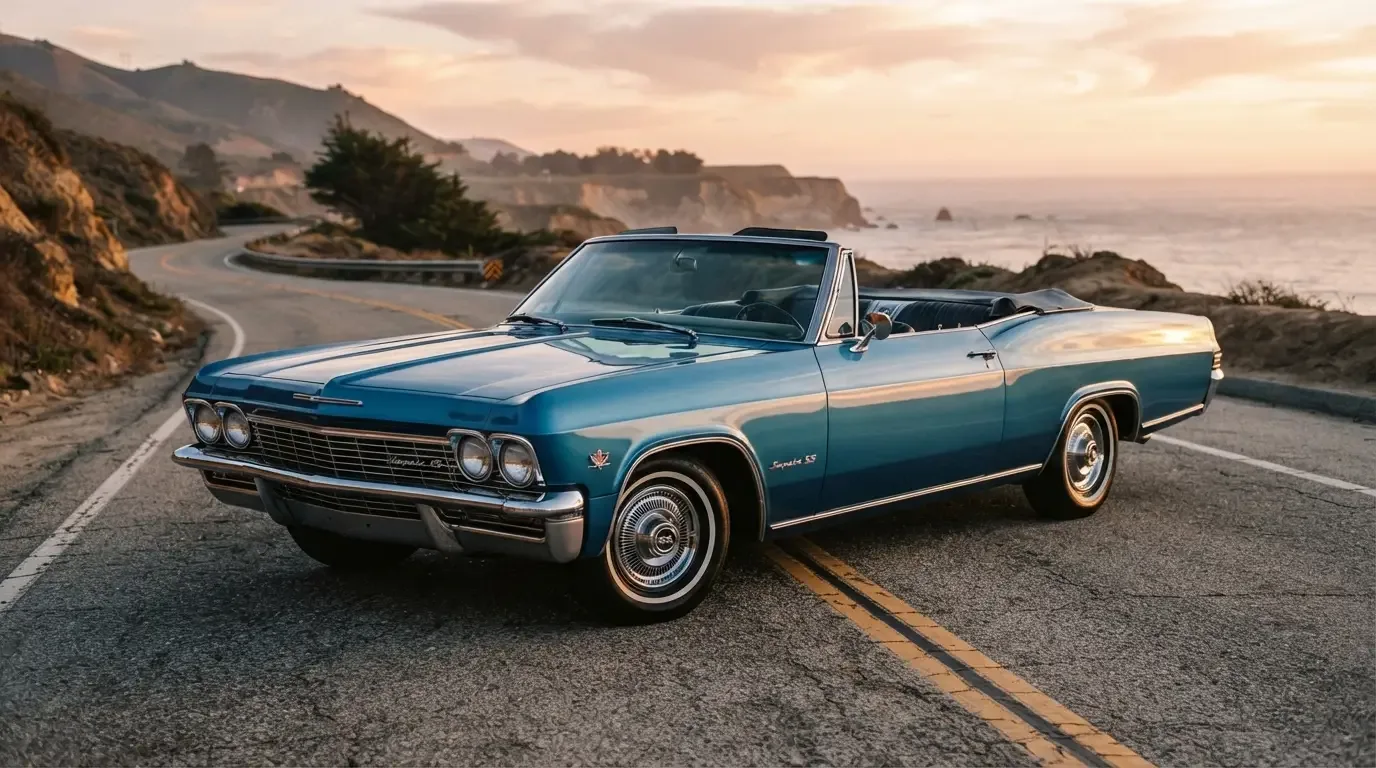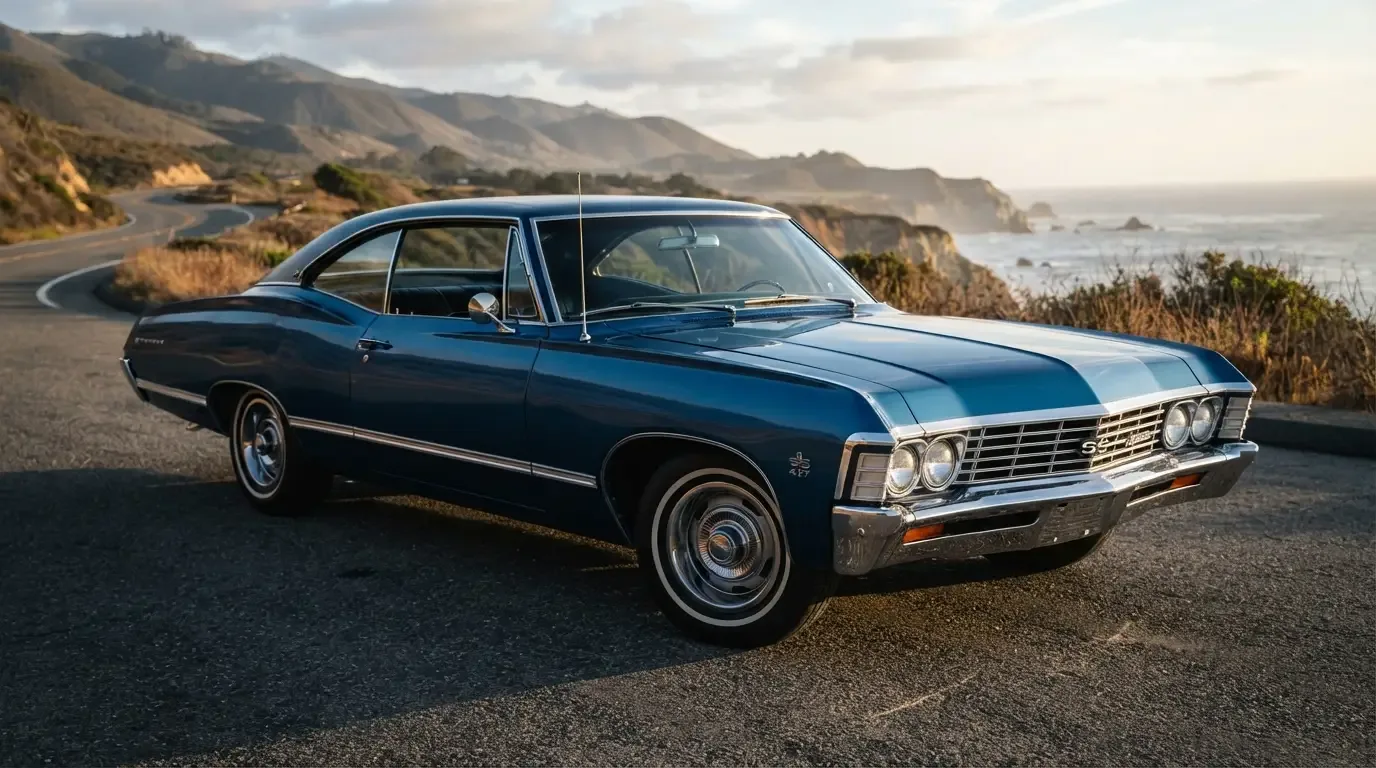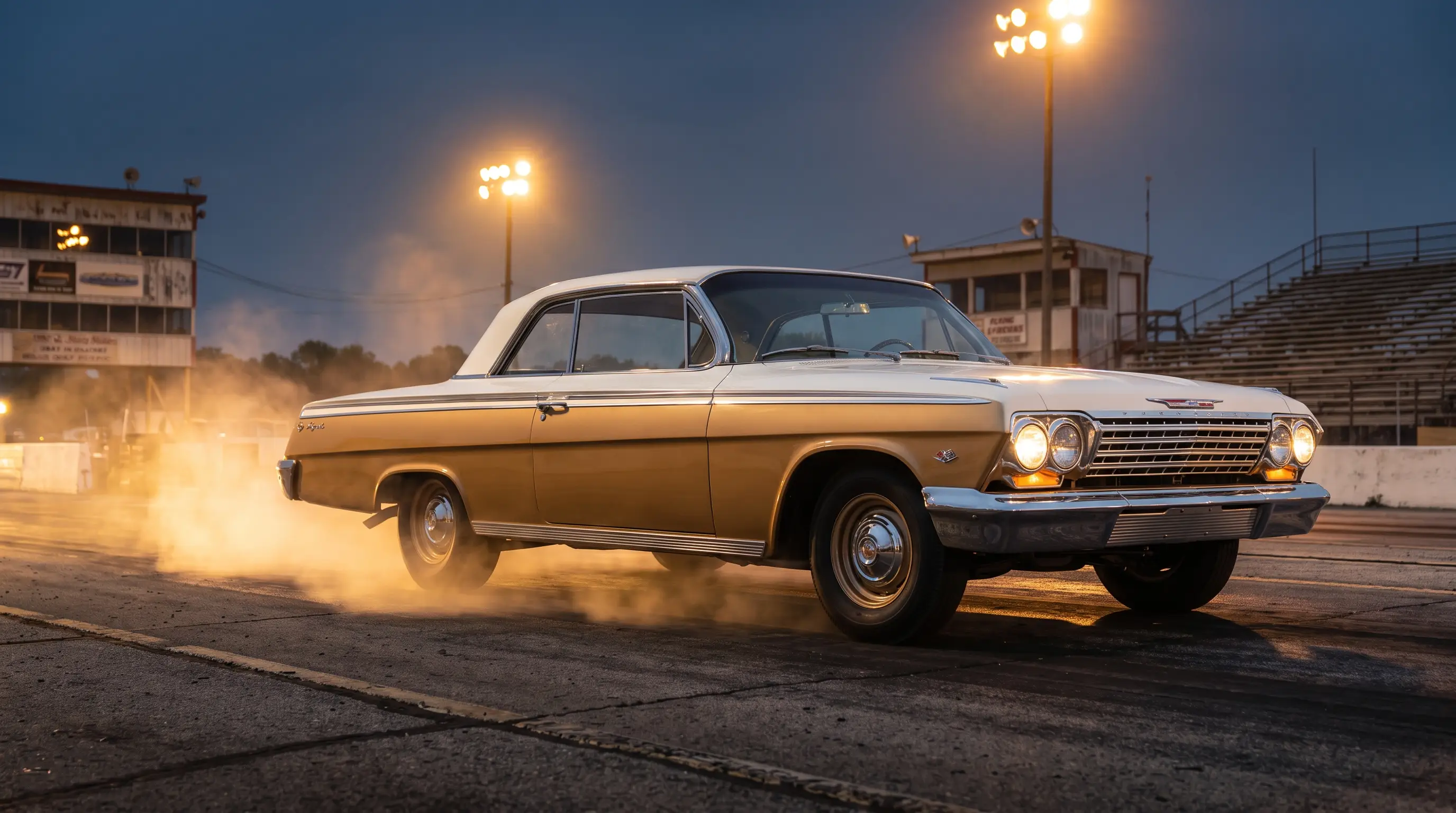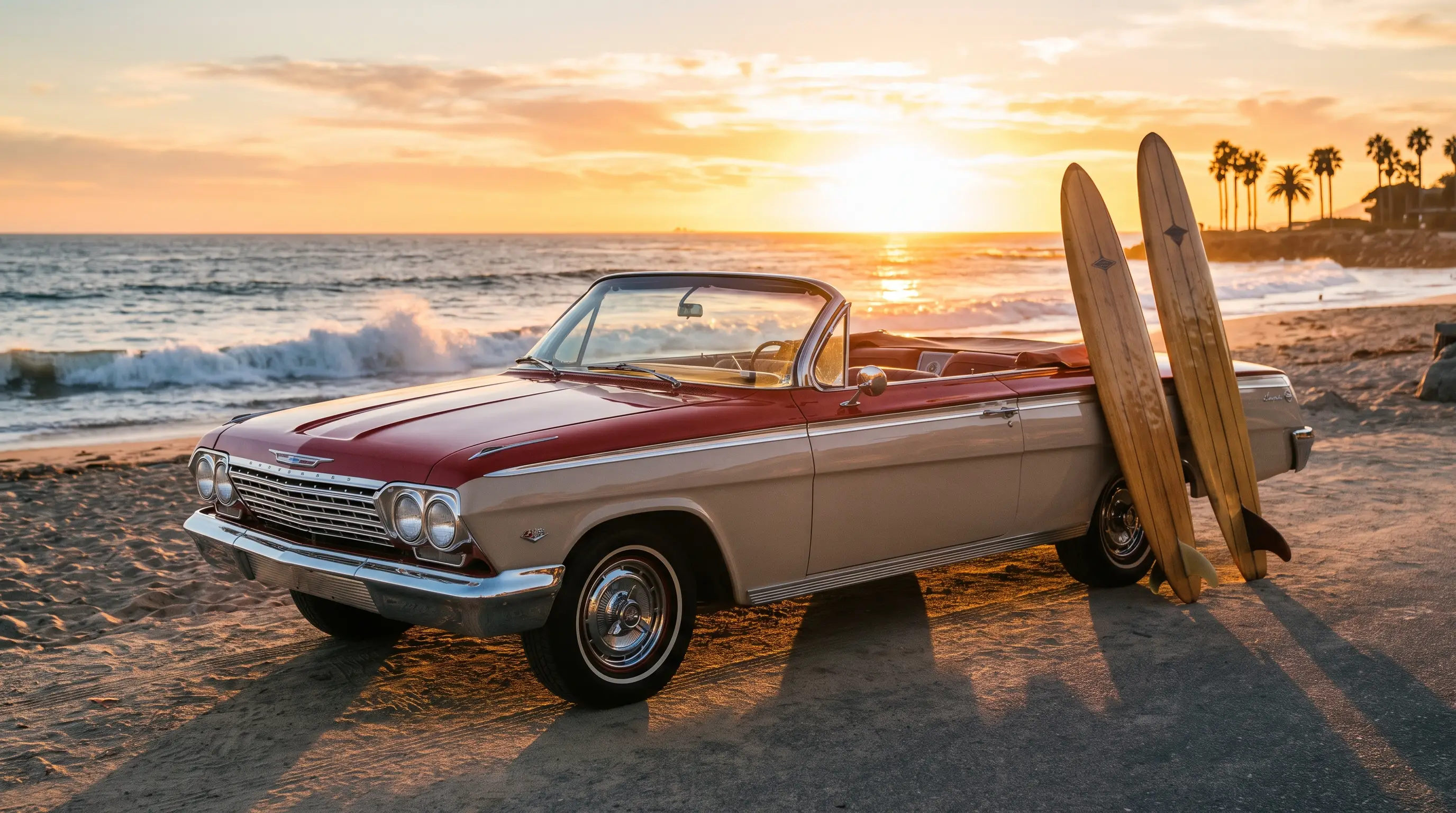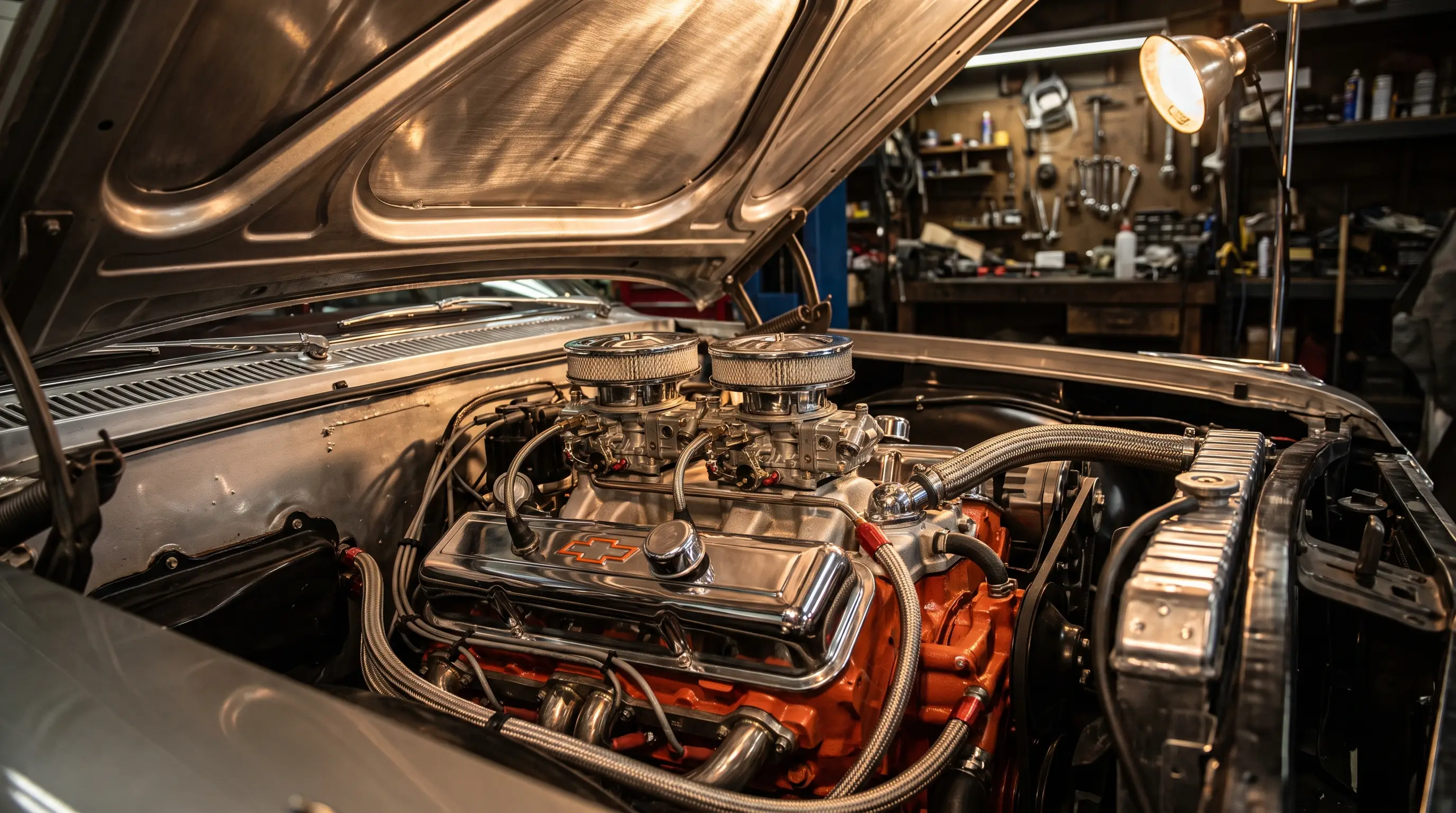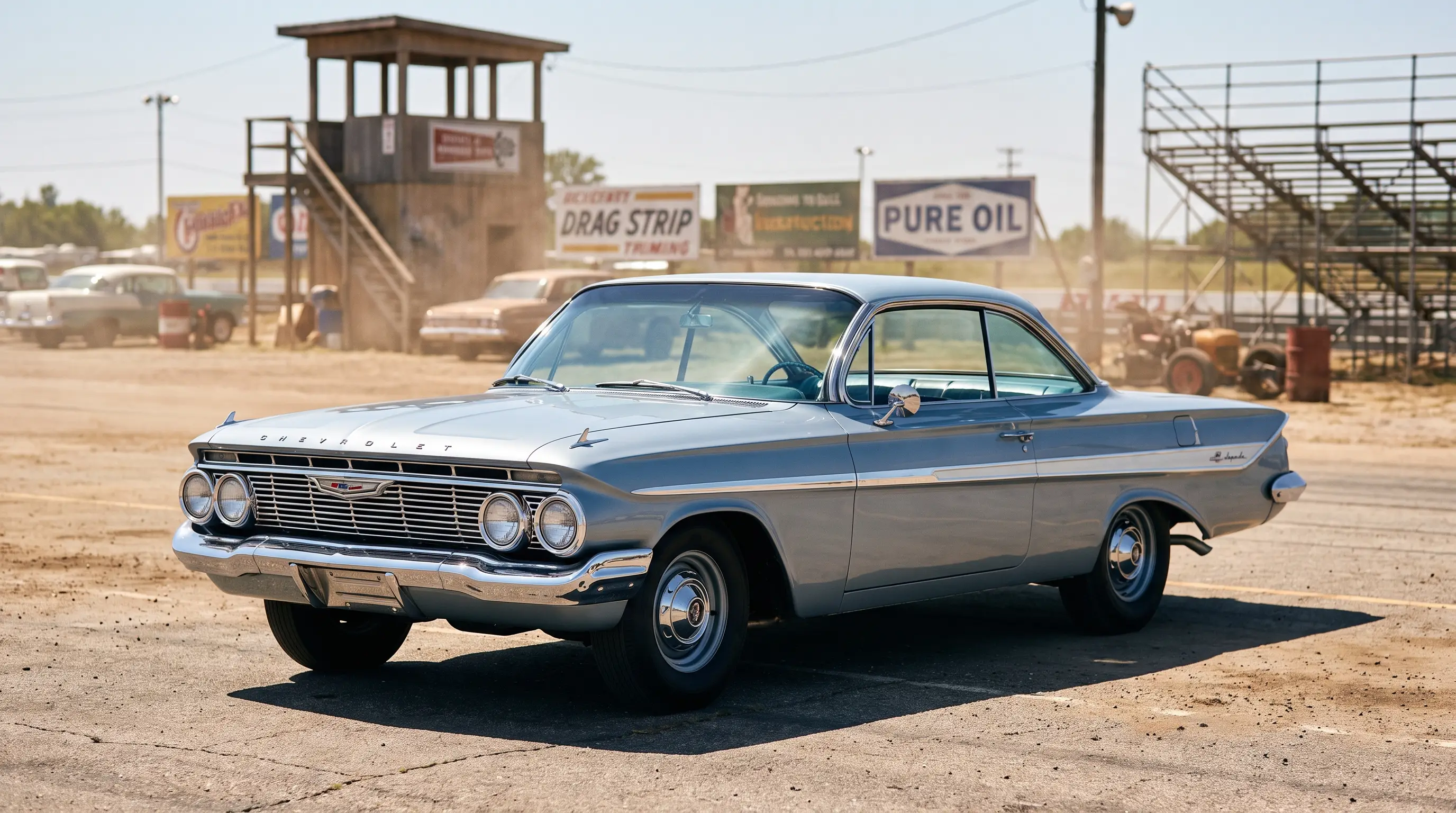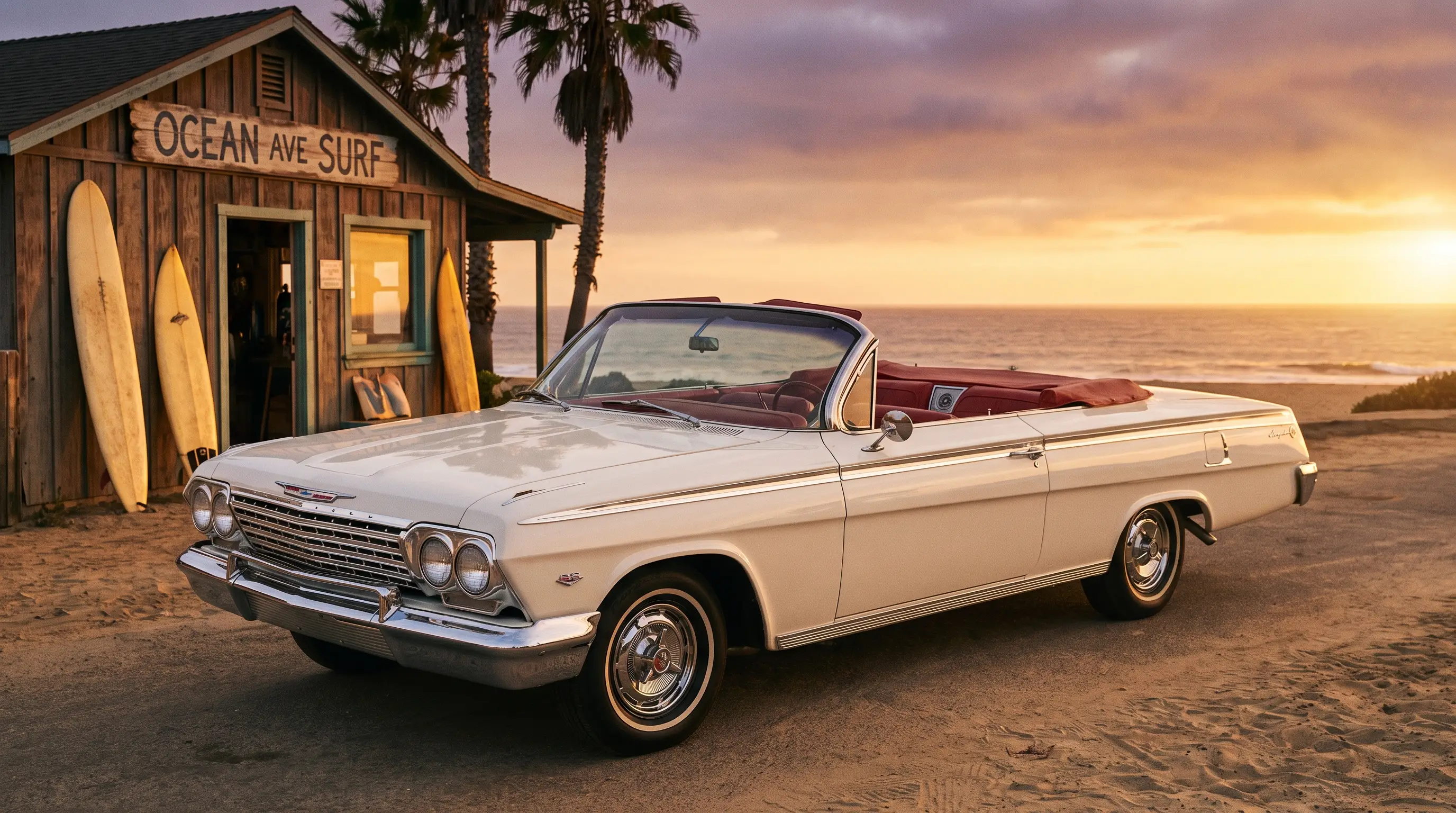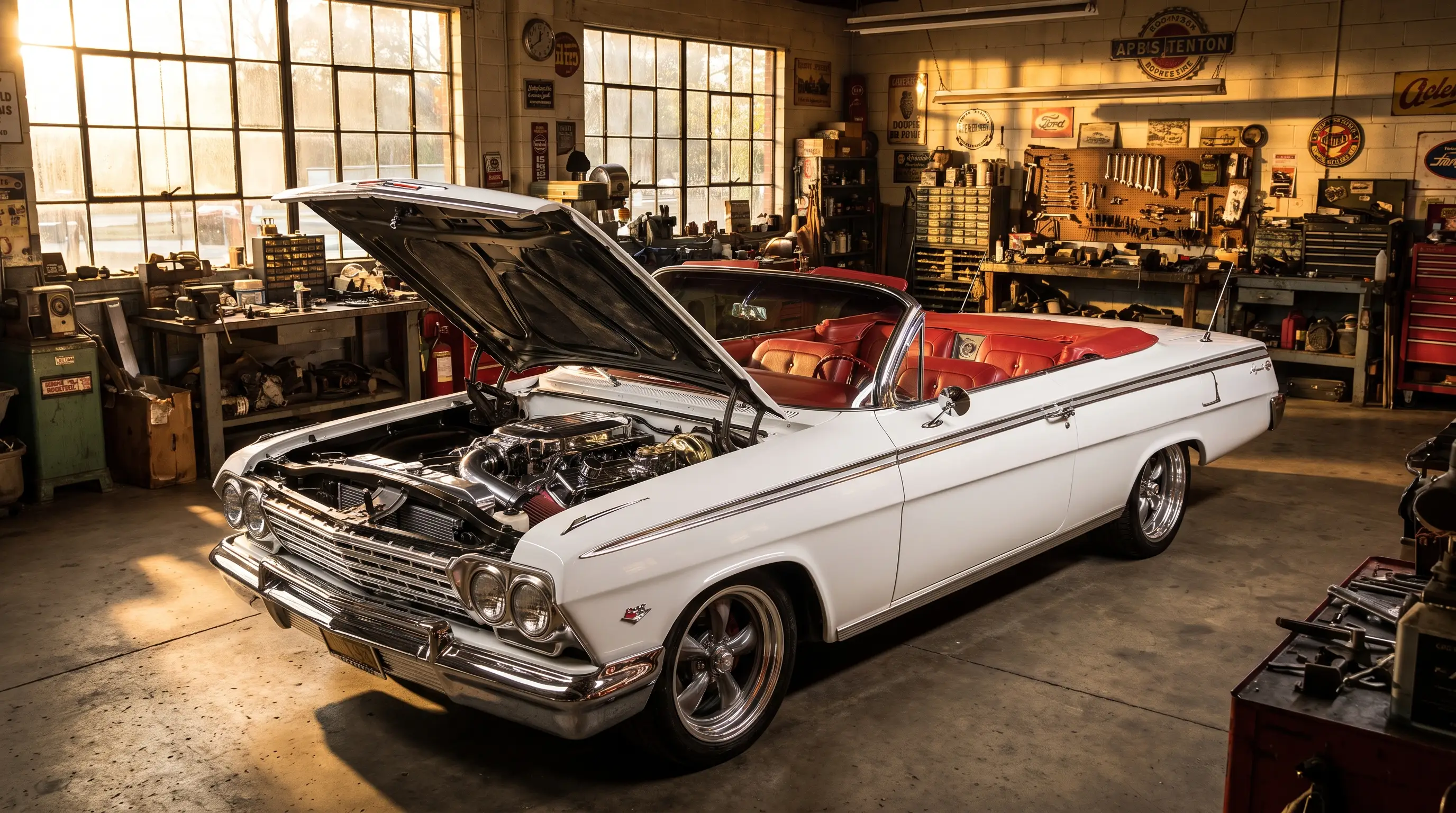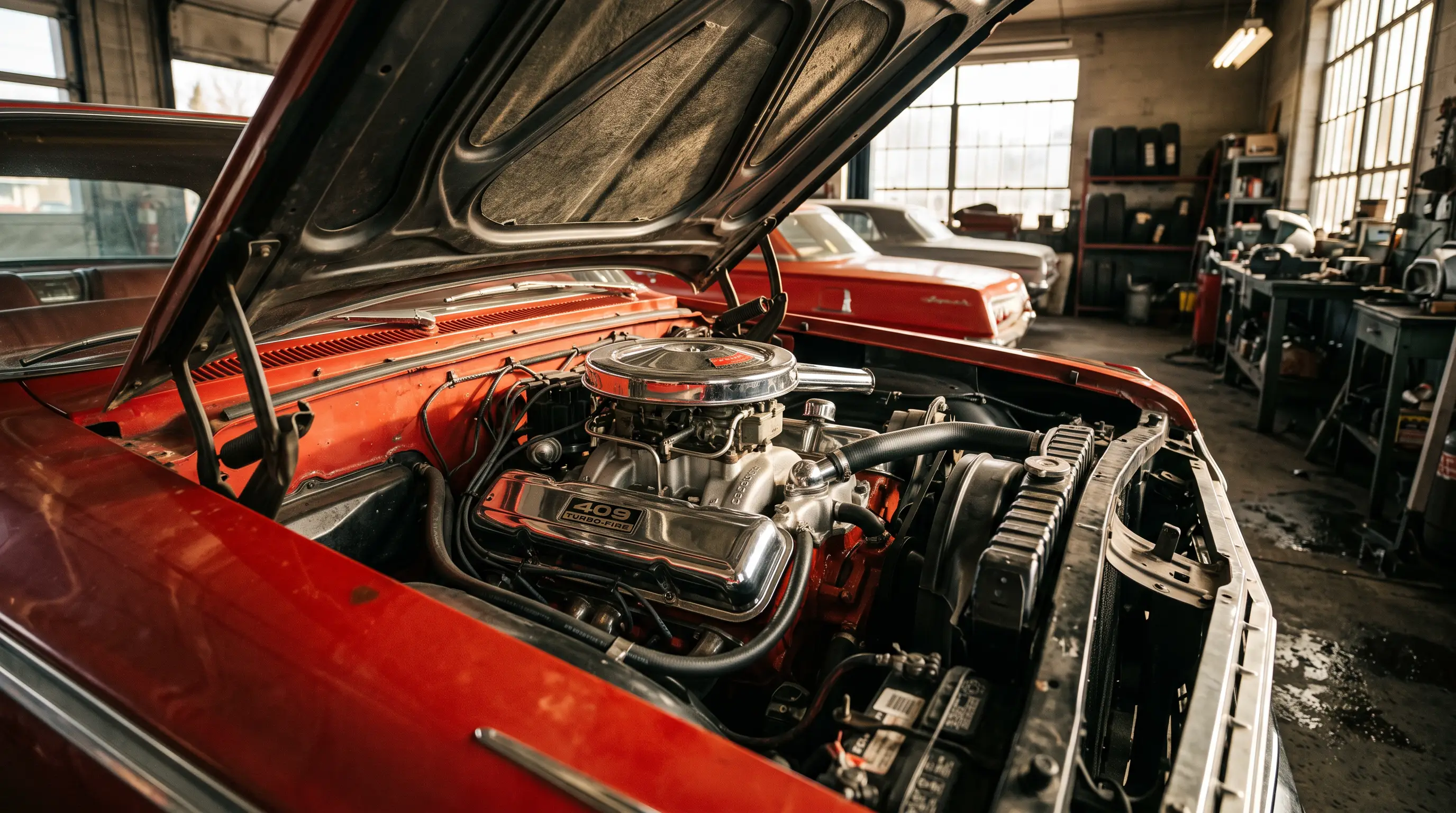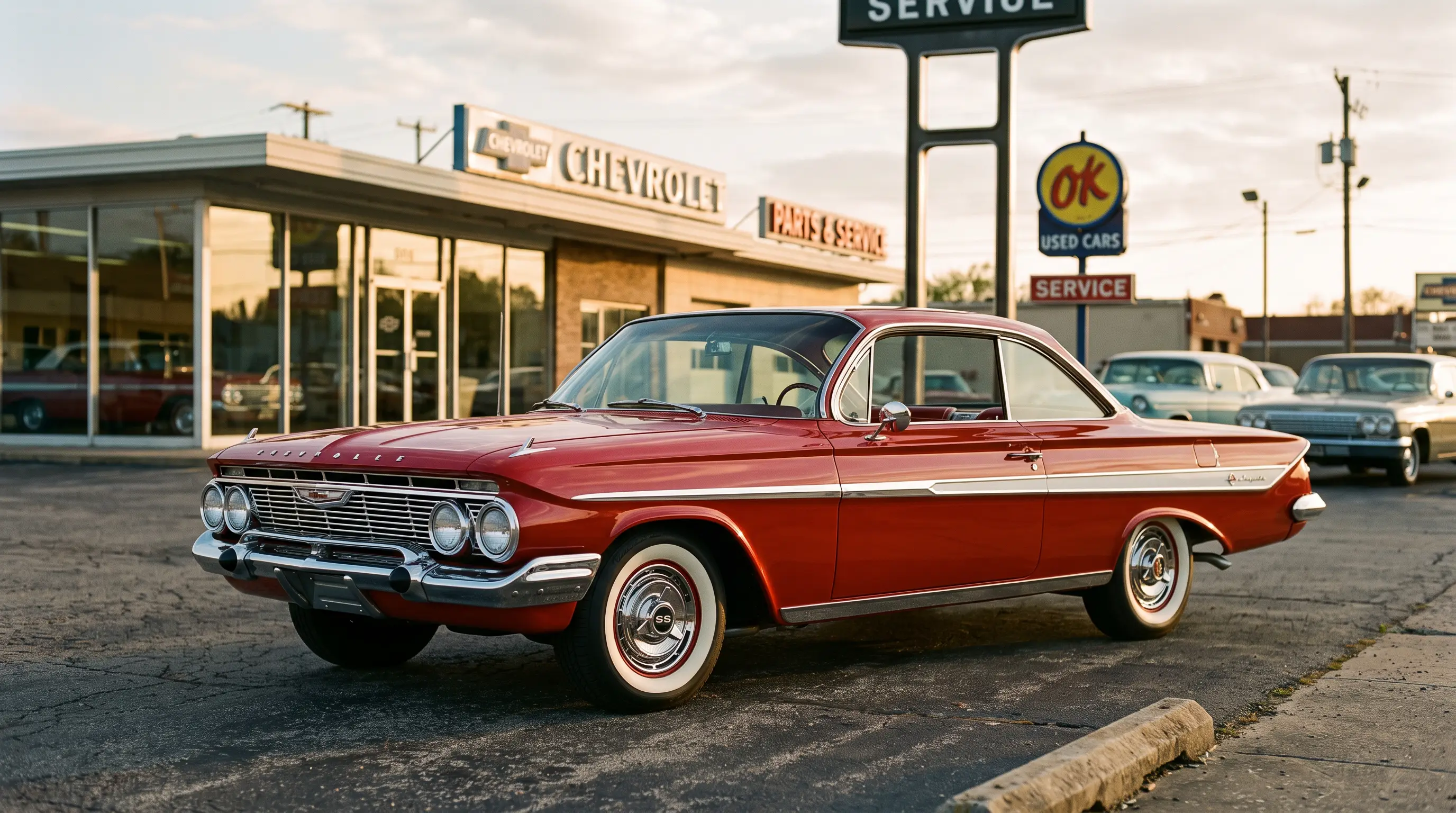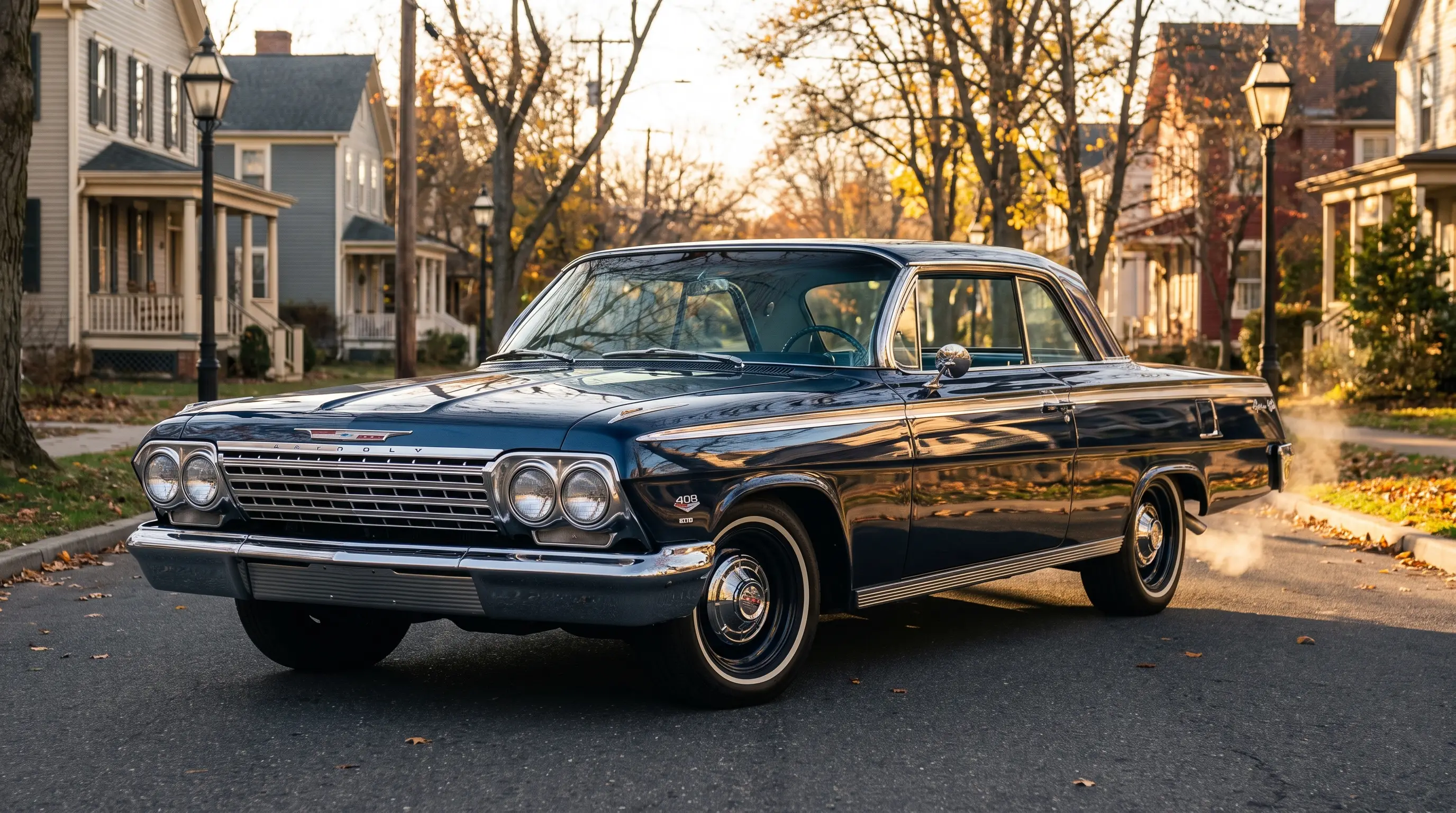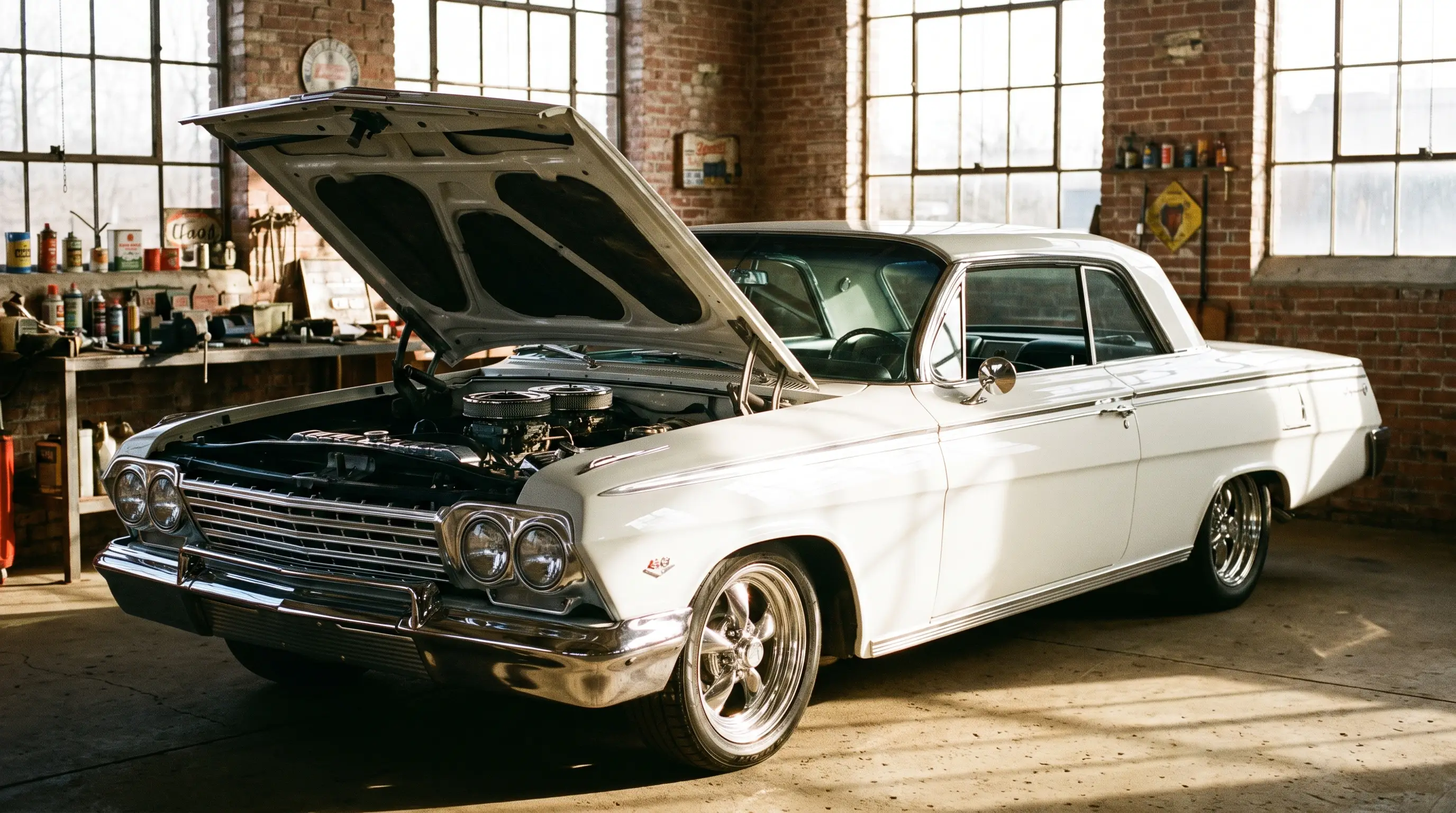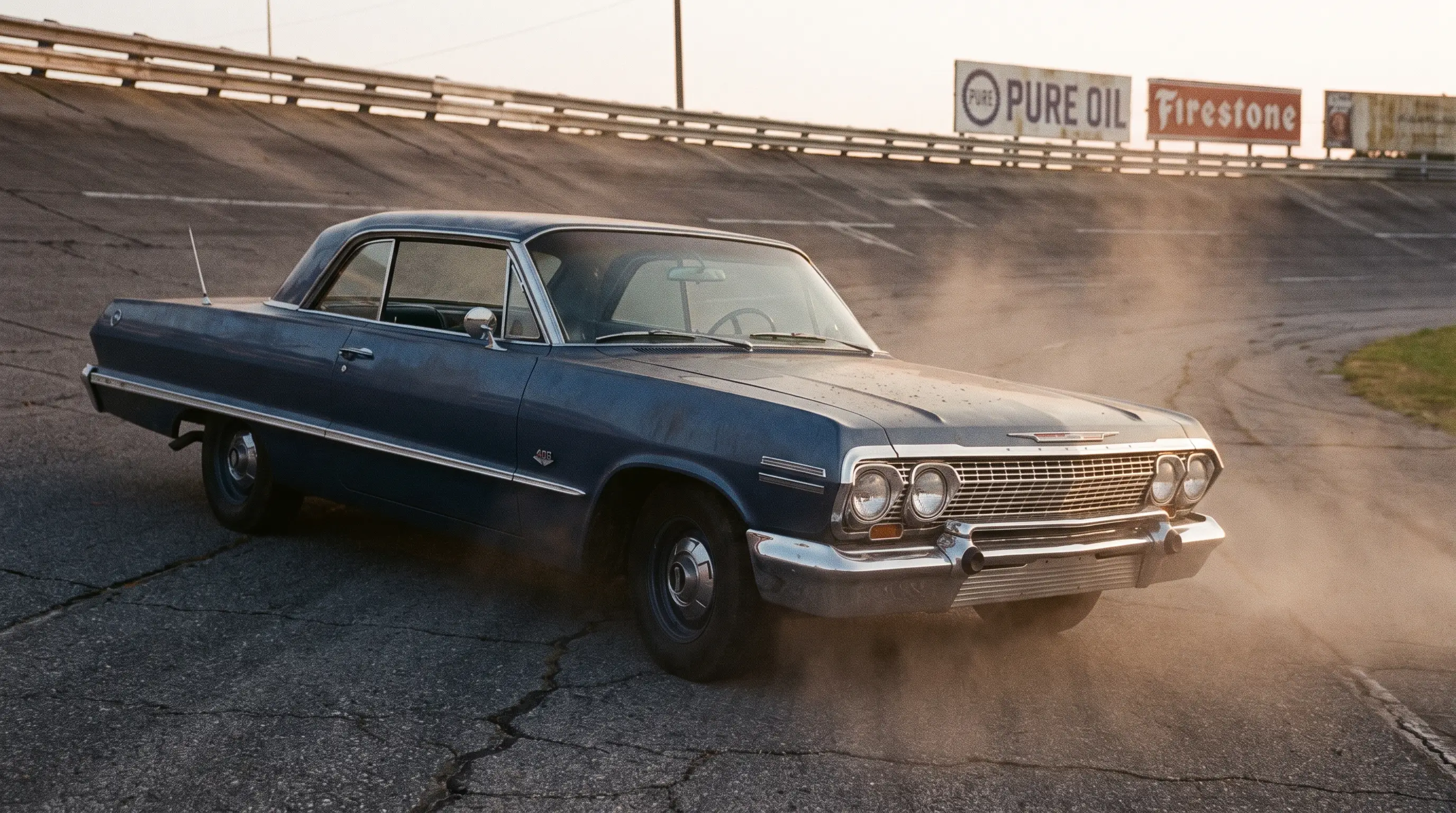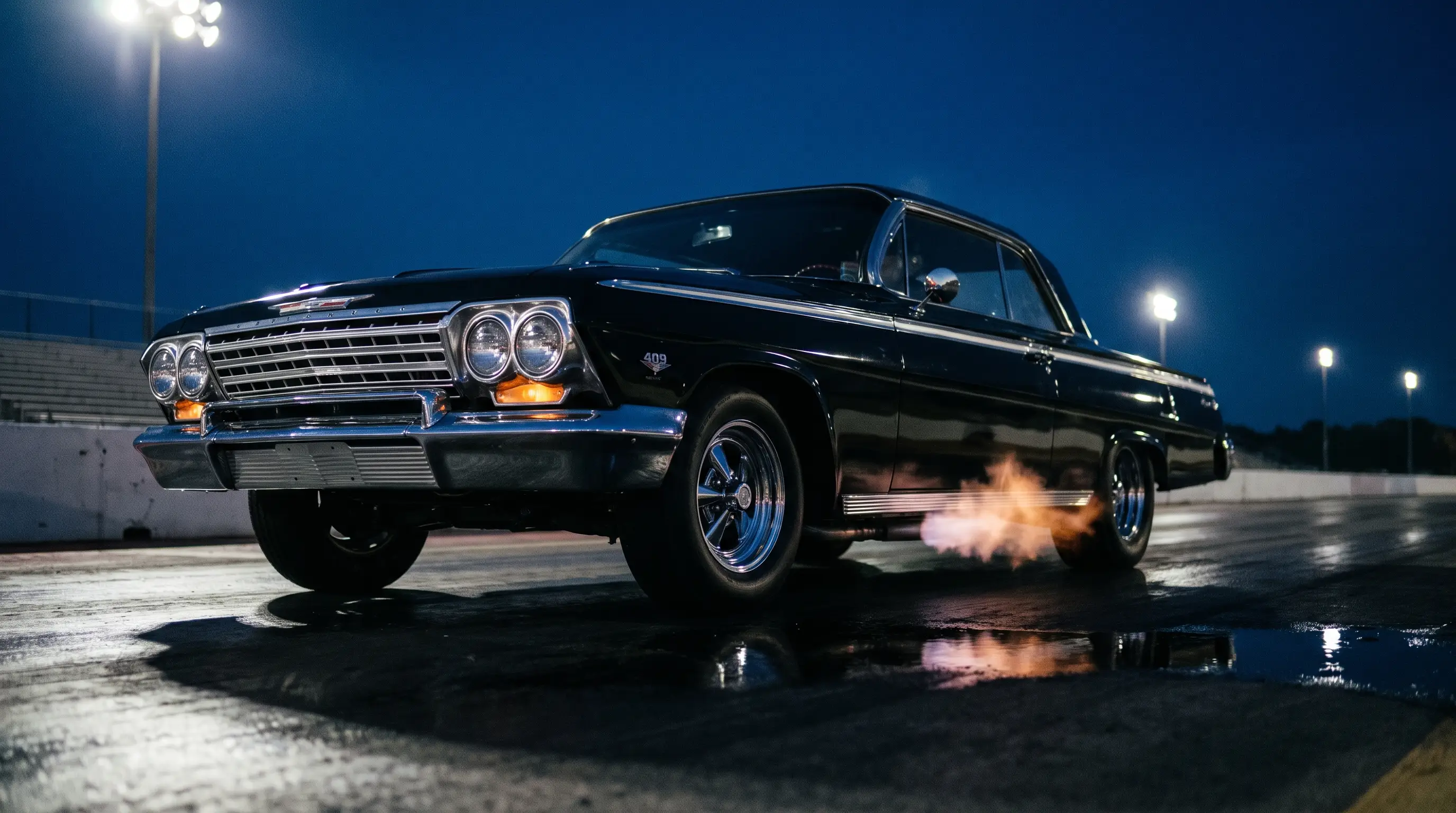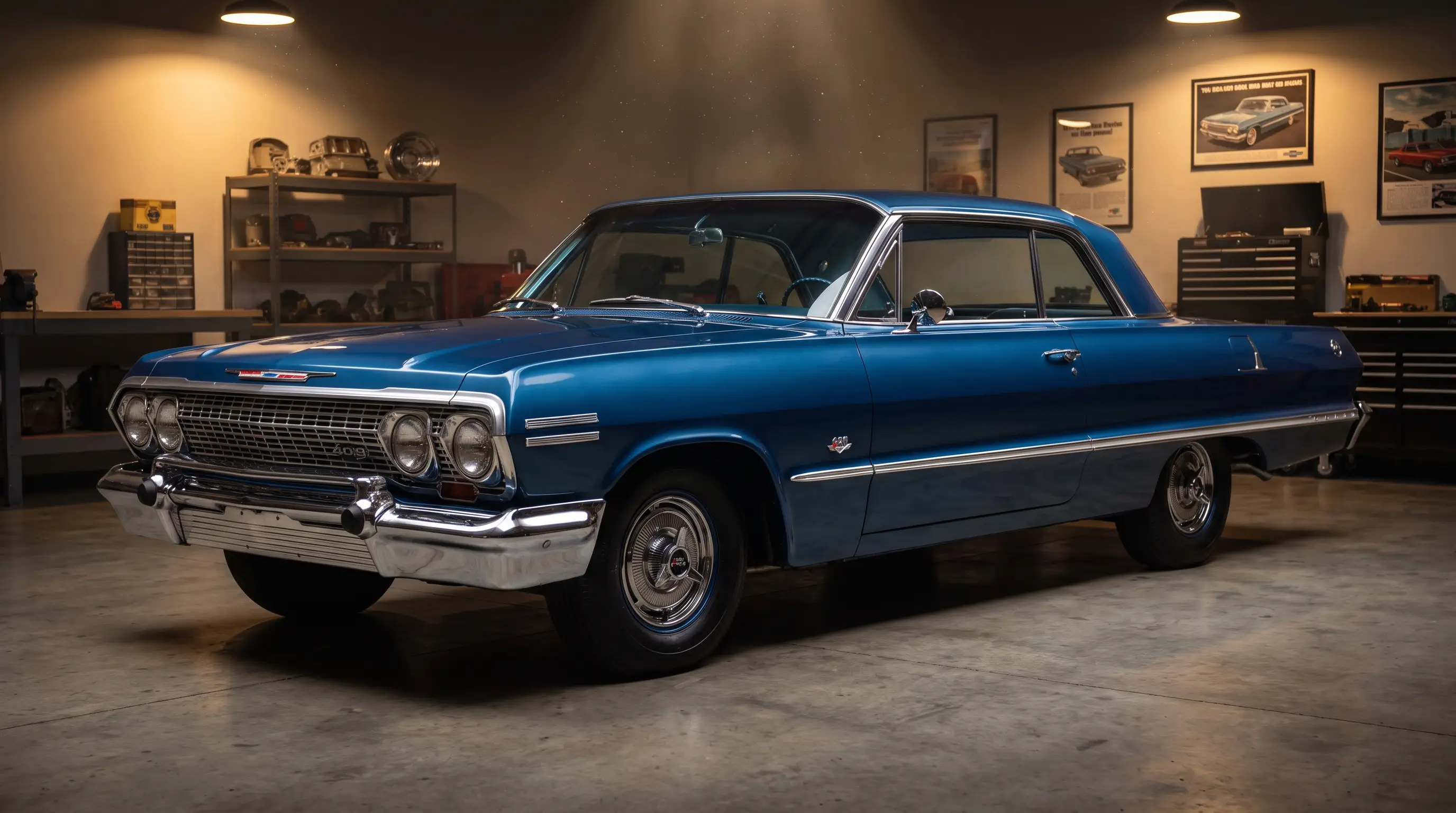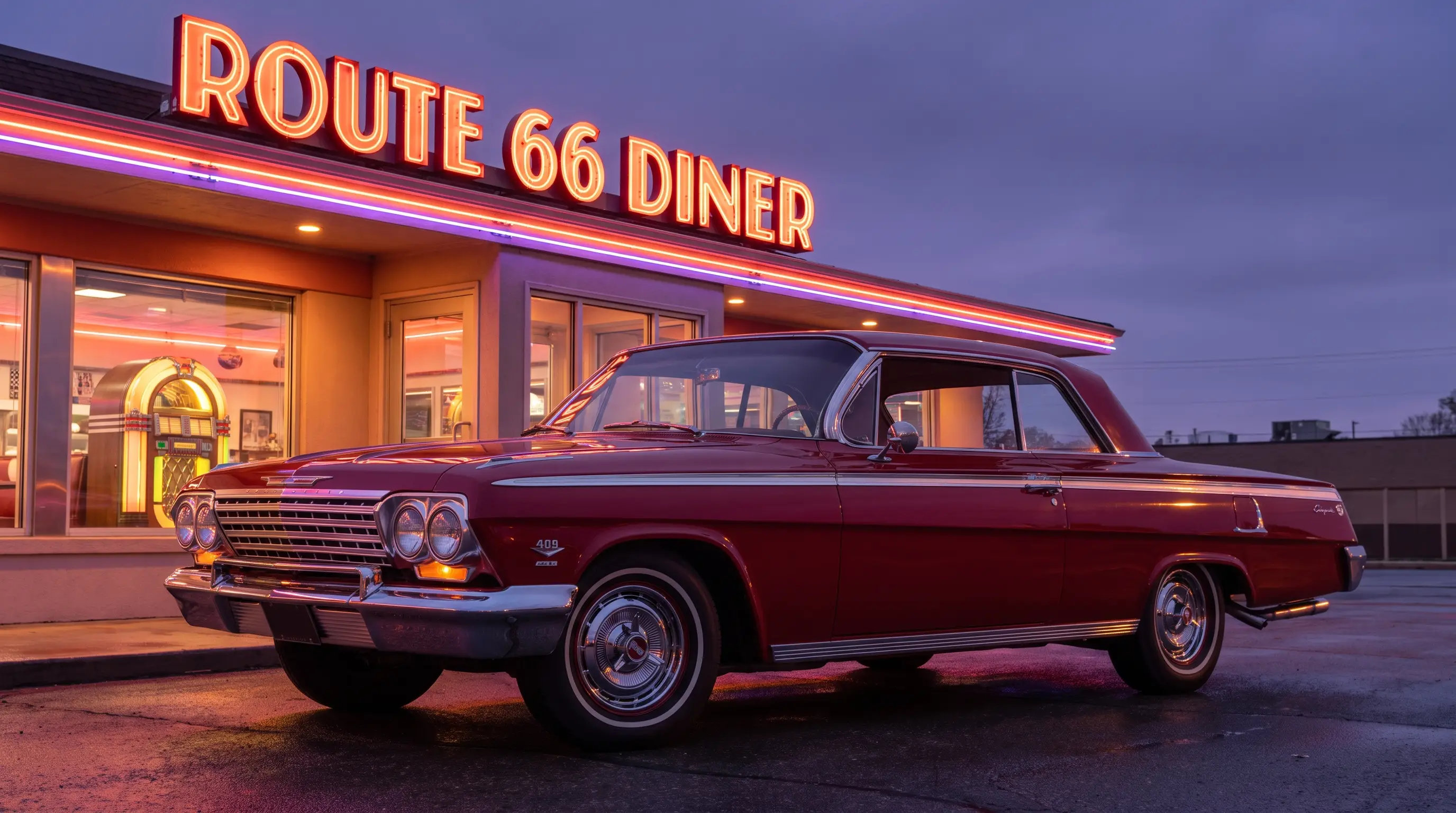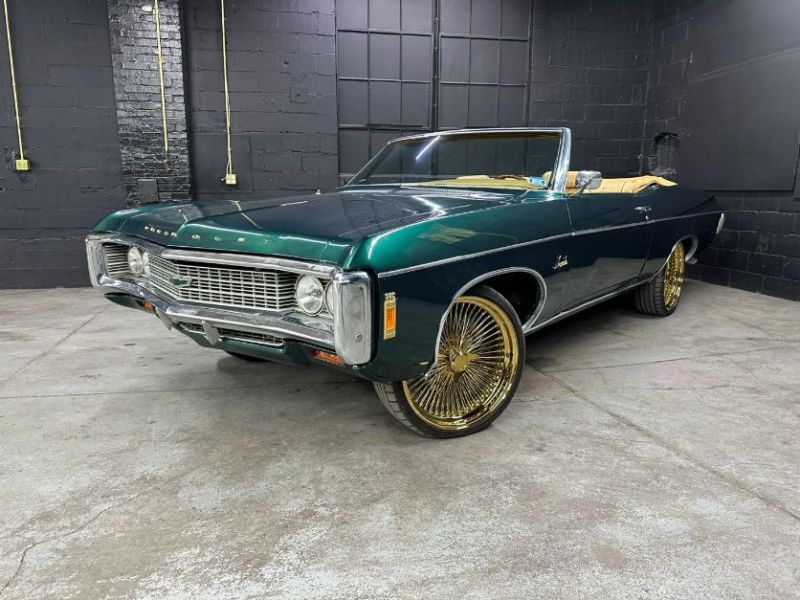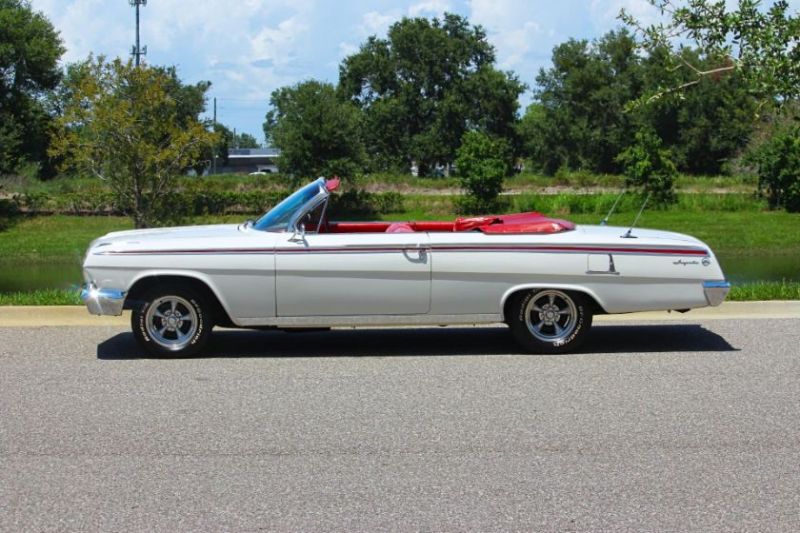

The first time I heard a 409 Impala at full song, I was eleven years old and standing in a gravel lot behind a VFW hall in Ohio. A neighbor named Del had one, a white 1962 hardtop, and he fired it up so we kids could hear it. Del did not say much. He just let the engine talk, and the engine had plenty to say. Years later I found the build sheet for that car tucked in a club member's binder, and it confirmed what my ears already knew. That was a real dual-quad 409 impala, the genuine article, not a badge somebody bolted on later. This is the story of that engine, told the way the old-timers in my club still tell it, over coffee and photocopied paperwork.
An engine that arrived almost by accident
The 409 did not show up as some grand corporate plan. It grew out of the 348 cubic inch W-series V8 that Chevrolet had been building since 1958, a tall-deck truck-derived engine with an odd combustion chamber design that put the wedge in the block deck rather than the cylinder head. Chevrolet engineers bored and stroked that 348 into a 409 for the 1961 model year, and it slipped into the catalog quietly around the middle of the year. Very few people ordered one at first. The story I heard from a retired dealer in our region was that most salesmen did not even know how to spec it, and the ones who did steered buyers toward the softer, cheaper options.
That first 1961 409 made a rated 360 hp with a single four-barrel carburetor. It was strong, but it was still a niche piece, ordered mostly by drag racers who read the fine print. If you want the full arc of how the model got here, our chevy impala history lays out the years before and after in order. For this piece I want to stay parked on the engine itself, because the engine is where the legend lives.
The song that did what advertising could not
Here is the part everybody knows, or thinks they know. In 1962 two young songwriters named Brian Wilson and Gary Usher wrote a two-minute record called "409," and the Beach Boys put it out as a B-side. It opened with the sound of a real engine revving, recorded, so the story goes, in Usher's own driveway late at night while the neighbors slept. The lyric was simple, almost a want ad set to a beat, a kid saving his pennies and his dimes for a four-speed, dual-quad, positraction 409.
What that record did for Chevrolet is hard to overstate. No print ad in a car magazine reached the number of teenagers a hit single reached in the summer of 1962. Suddenly the 409 was not just an engine option buried on an order form. It was a thing kids sang along to on the radio without knowing a carburetor from a camshaft. I have talked to men in their eighties who told me flat out that they wanted a 409 impala before they had any idea what the number meant. The song got there first. The knowledge came later, if it came at all.
The magic of a number matching a number
Part of why the 409 stuck in people's heads is a coincidence of arithmetic. For the 1962 model year the top dual-quad version was rated at 409 horsepower, which meant you could say the words "409 horsepower from 409 cubic inches" and have it be true. Marketing people dream about a line that clean. It sounds engineered, almost fated, even though it was really just where the numbers happened to land that year.
The engine did not stand still. By 1963 the hottest dual-quad 409 climbed to a rated 425 hp, and Chevrolet built a small run of aluminum-nosed Z11 cars that were really a stretched 427 version aimed straight at the drag strip. Those Z11 cars are their own separate rabbit hole, built in tiny numbers and priced for people who intended to race and nothing else. The street 409, though, is the one that mattered to the culture. You could order it in an ordinary Impala, drive it to school, and still line up at the strip on Sunday.
What it was like to live with one
I want to be honest here, because the club exists to keep the record straight, not to sell a fairy tale. A dual-quad 409 was not an easy car to own in 1962. Two four-barrel carburetors need tuning, and they need someone who understands them. Cold mornings were a negotiation. Fuel economy was a joke. The solid-lifter versions wanted their valve lash checked, and if you neglected it you heard about it. Several of our longtime members who bought these cars new have told the same story, which is that the 409 rewarded a certain kind of owner and punished everybody else.
But when it was right, it was glorious. The torque came on early and hard, the exhaust note was deep and slightly menacing, and a well-sorted dual-quad car could embarrass a lot of more expensive machinery at a stoplight. That combination of everyday body and serious engine is exactly what made the full-size Chevrolet such a favorite of the era. If your taste runs to the mid-decade cars, the 1965 and 1966 models are worth a look too, and they carried the torch in their own way once the W-motor bowed out.
"Every club has that one member who swears his 409 is numbers-matching. About half the time the paperwork agrees with him, and the other half he goes quiet and changes the subject."
- Wayne Coburn
The specifications, kept simple
People ask me for numbers, so here they are in one place. I have marked the ones I would want a build sheet to confirm before I quoted them at an auction, because rated horsepower in this era was a moving target and the sources do not always agree.
| Detail | Figure |
|---|---|
| Engine family | Chevrolet W-series V8 |
| Displacement | 409 cubic inches |
| First model year offered | 1961 (mid-year) |
| Last model year offered | 1965 (mid-year, replaced by Mark IV big-block) |
| Single four-barrel rating (1961) | 360 hp |
| Dual four-barrel peak (1962) | 409 hp |
| Dual four-barrel peak (1963) | 425 hp |
| Cultural launch moment | Beach Boys single "409," 1962 |
The 409 at the strip and on the track
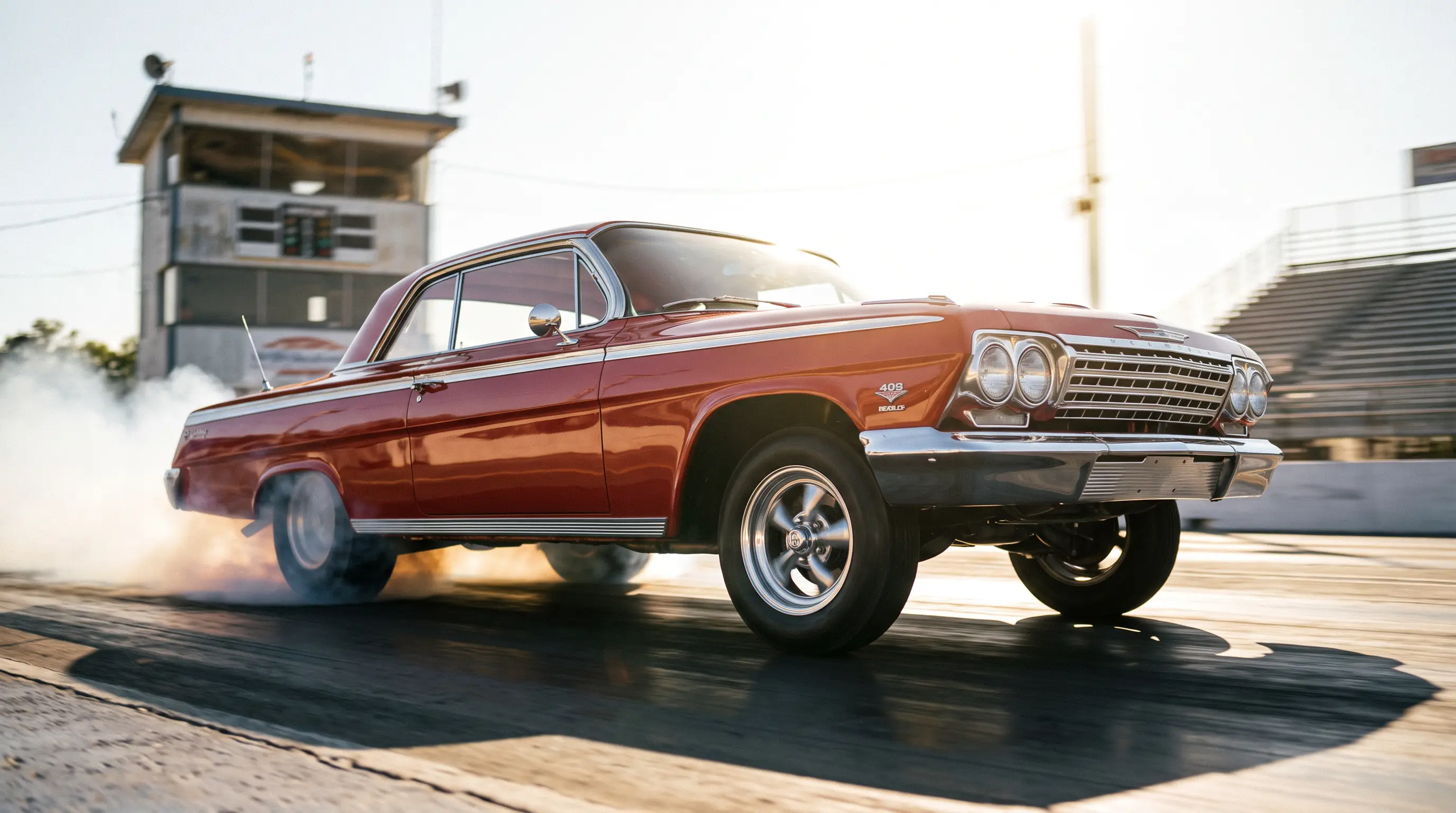
The song made the 409 a household number, but the drag strip made it a serious one. This engine arrived right as organized drag racing was becoming a national weekend pastime, and the 409 landed in the middle of it. The lightweight Z11 cars I mentioned earlier were built specifically for that world, with aluminum body panels up front to shave weight and a special high-compression setup meant for the quarter mile and nothing else. Only a handful were ever made, which is why a genuine one today is treated less like a used car and more like a piece of racing history.
On the stock-car side the 409 saw duty too, though its record there is a matter my club argues about over coffee to this day. What is not in dispute is that Chevrolet had stepped back from open factory racing support during part of this period, which limited how far the engine could go in sanctioned competition. Even so, privateers ran 409-powered full-size Chevrolets, and the engine earned a reputation for stout low-end power that suited the heavy cars it lived in. One of our older members keeps a folder of period race programs, and the 409 shows up in the entry lists often enough to prove it was more than a street legend.
What I take from all of it is that the 409 earned its fame twice. Once on the radio, where the song reached kids who never saw a strip, and once at the track, where the engine backed up the hype with real results. It is rare for a motor to win both the popularity contest and the credibility contest, and that double life is a big part of why collectors chase these cars so hard now.
Why it disappeared, and why that made it bigger
The 409 did not fade away slowly. It was replaced. For 1965 Chevrolet introduced the Mark IV big-block, the engine everyone now calls the 396 and later the 427, and that new design was better in almost every measurable way. It breathed easier, revved happier, and did not carry the W-motor's quirks. From an engineering standpoint the decision was obvious, and the 409 was retired after a short overlap.
Here is the thing about being replaced right at your peak. You never get the slow, sad years where the magic wears off. The 409 went out while it was still a hero, still tied to a hit song, still the engine kids dreamed about. That is a big reason the cars command the attention they do today. A genuine dual-quad car with paperwork is a blue-chip piece, and the values reflect it. If you want to see what survives and what the good ones are asking, you can shop classic Impala listings and get a feel for the market before you ever raise your hand at a sale.
How to tell a real one from a story
Because these engines carry a premium, they attract creative sellers, and part of what the club does is help newcomers keep their footing. I am not going to walk you through the mechanical inspection, that is a job for a marque specialist with the car on a lift. What I can tell you is what the paper trail should look like and why it matters so much for this particular engine.
Del sold that white 1962 car sometime in the 1970s, and none of us knows where it went. Every so often at a swap meet somebody will describe a white dual-quad hardtop with a particular dent in the trunk lid, and for a second the whole table leans in. We have never found it. But the paperwork survived in a club binder, photocopied and passed along, and as long as that survives the car is not really gone. That is the whole point of what we do. The engine made the noise, the song spread the legend, and the documentation is what keeps the legend honest.