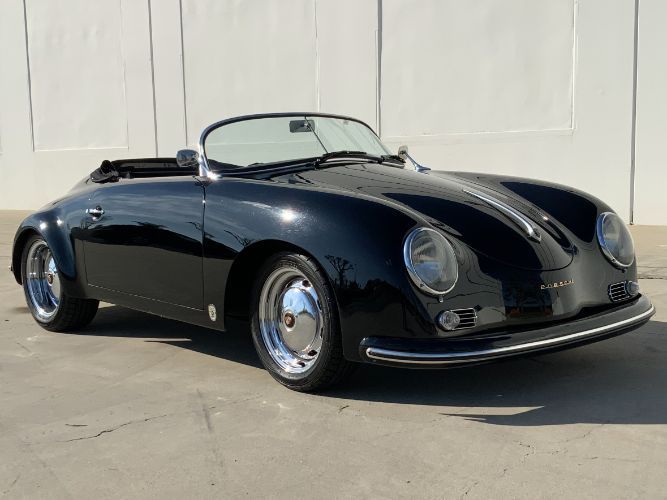
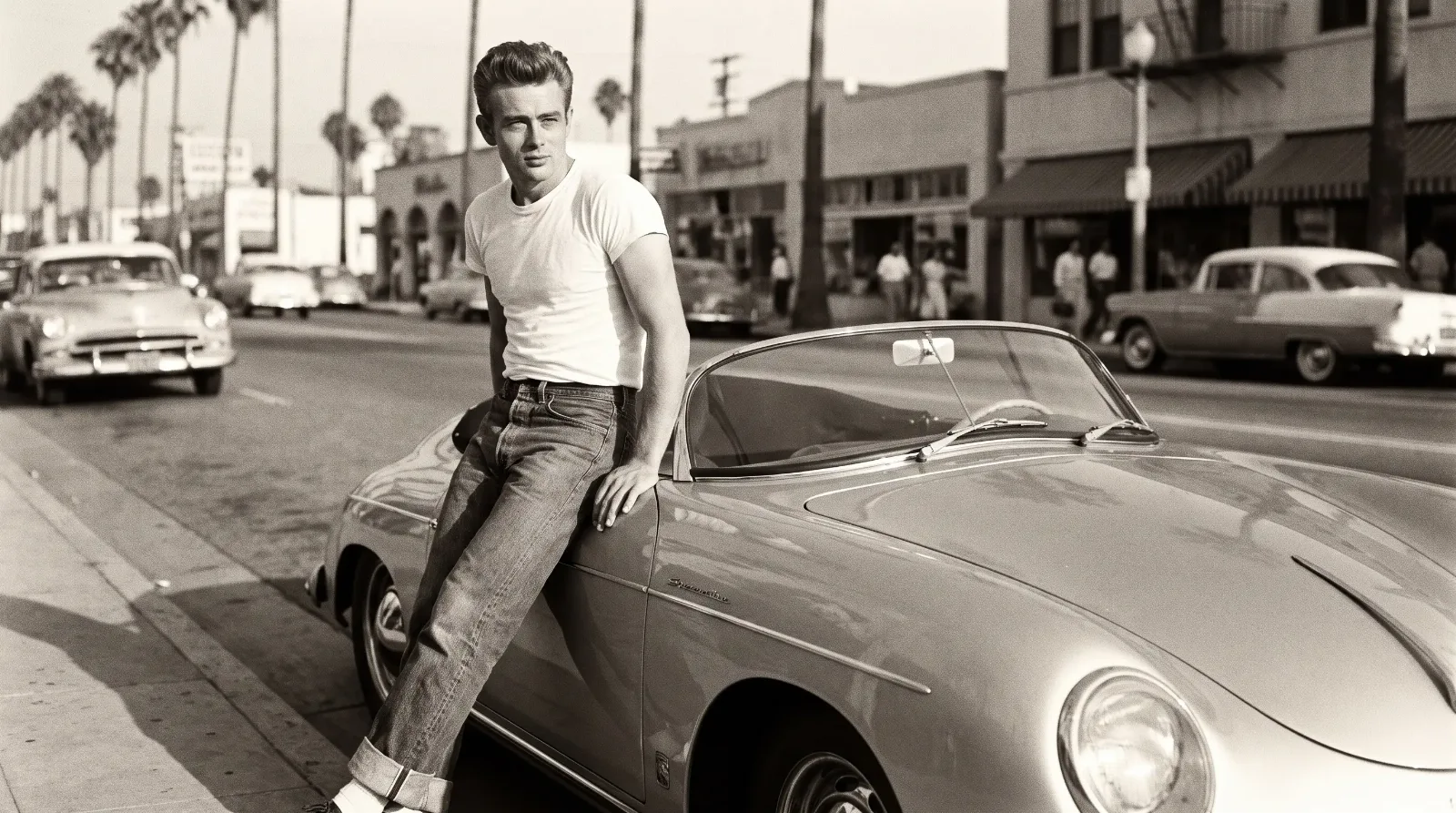
Few objects in automotive history carry as much cultural weight as the silver Porsche that James Dean owned for nine days before his death on September 30, 1955. The james dean porsche 356 story is not really about the 356 Speedster as an engineering achievement, though it was a genuinely quick car for its era. It is about how one actor's brief ownership of one specific 356 turned a niche European sports car into a symbol recognized well outside enthusiast circles, and how that symbolism still shapes what people expect a 356 Speedster to mean when they encounter one today, whether at auction or parked at a coffee show.
The car itself: a 550 Spyder, not a standard Speedster
A point of frequent confusion is worth settling directly: the car Dean was driving when he died was a Porsche 550 Spyder, a purpose-built racing model, not a 356 Speedster off the regular production line. The two are related but distinct. The 356 Speedster was Porsche's stripped-down, low-windshield roadster built for the American market at the urging of importer Max Hoffman, aimed at weekend racers and buyers who wanted open-top motoring without the cost of a full competition car. The 550 Spyder was a mid-engine racing car built in far smaller numbers, using a four-cam engine developed specifically for competition. Dean owned both across his brief time as a Porsche driver: a 356 Speedster he used for road driving and amateur competition, and the 550 Spyder, nicknamed "Little Bastard," that he had taken delivery of on September 21, 1955, just nine days before he died on Highway 46 near Cholame, California.
How the Speedster became attached to Dean's legend anyway
Because Dean drove a 356 Speedster in period photographs, in his amateur racing appearances at events like the Palm Springs Road Races, and in the months leading up to his death, the Speedster and the Spyder became conflated in popular memory almost immediately. Magazine and newspaper coverage after the crash often paired photographs of Dean with his Speedster alongside the story of the Spyder crash, and that blurring has persisted for seventy years. The practical result is that the 356 Speedster inherited a share of the mystique that technically belongs to a different, rarer car, and Porsche dealers and later cataloguers of Dean-adjacent cars have had to be careful to distinguish the two when authenticity and provenance are at stake.
Why the association still moves the market
Provenance research on any 356 Speedster from the 1954 to 1956 window inevitably runs into buyers asking, sometimes only half seriously, whether a given car has any connection to Dean's ownership or to the racing scene he briefly ran in. None do, in any documented sense beyond the general period and model overlap, but the question itself reveals something real: cultural association changes how a model is perceived even when it has no bearing on a specific car's history or value. Auction houses cataloguing Speedsters from this era will sometimes note the Dean connection as context for the model's broader significance, carefully worded to avoid implying any direct link to a specific chassis. This matters for buyers because enthusiasm built on cultural mythology can distort expectations about what a 356 Speedster actually is: a lightly equipped, mechanically modest roadster relative to later Porsche models, valuable today more for its rarity, its role in Porsche's American market strategy, and its honest driving character than for any inherent link to a Hollywood tragedy.
| Detail | 356 Speedster (Dean's road car) | 550 Spyder (Dean's race/crash car) |
|---|---|---|
| Purpose | Road use, amateur club racing | Purpose-built competition racing |
| Engine | Pushrod flat-four | Four-cam racing flat-four |
| Production context | Regular production model for U.S. market | Small-batch competition model |
| Fate | Sold separately by Dean's estate | Destroyed/dispersed after the September 30, 1955 crash |
"The Speedster gets treated like it was there at the end, but it wasn't. What it did was appear in every photo of Dean looking effortlessly at home in a Porsche, and that image outlasted the correction."
— Sarah Whitfield
Max Hoffman's role, and why a Speedster existed for Dean to buy at all
None of this cultural weight would have attached to the Speedster if the model had never existed, and it very nearly did not. Max Hoffman, the New York importer who brought Porsche to American buyers in the early 1950s, pushed the factory hard for a cheaper, lighter, open-top variant that could compete on price with British roadsters from MG and Triumph. Porsche's standard cabriolet was too expensive and too well equipped for that market segment, so Hoffman convinced the factory to strip the specification down: a lower, simpler folding top, thinner seats, minimal weather equipment, and a lower windshield that gave the car its distinctive low profile. The result, introduced for the 1954 model year, was priced low enough to move real volume in the American market Hoffman understood better than the factory itself did. That commercial decision, made for reasons that had nothing to do with Hollywood, is what put an affordable, characterful open Porsche within reach of a young actor with a growing income and a documented enthusiasm for sports car racing. Dean's ownership was possible because Hoffman had already built the case that entry-level American buyers wanted, and got, a genuinely stripped-down Porsche rather than a badge-engineered compromise.
Separating the myth from the object when you are evaluating a car
For anyone researching or buying a genuine 356 Speedster from this period, the practical advice is straightforward: judge the car on its own documented history, not on the general cultural moment it happens to share with a famous death. Ask for chassis-specific ownership records, verify engine and body numbers against Porsche's own archive where possible, and treat any undocumented claim of celebrity connection with real skepticism. The Speedster does not need a Hollywood connection to justify its place in Porsche history; Max Hoffman's push for an affordable open Porsche variant, aimed squarely at the American sports car buyer, is a compelling story entirely on its own. Readers wanting the fuller arc of how the 356 line reached this cultural moment, and where it went afterward, can pick up the 356 chapter for the model's development history, or follow the next story in this set to see how a later generation of owners reinterpreted the same platform for a very different subculture. Both threads connect back to the broader Porsche saga that this single car, and this single tragic afternoon in 1955, only briefly intersected.
Sources and notes
- Death of James Dean - Wikipedia
- Little Bastard - Type550.com
- A Legend in Front of the Camera and Behind the Wheel - Palm Springs Life
- James Dean and his Speedster - Speedsters.com
- Porsche 356 A 1500 Super Speedster, chassis 80126 - Supercar Nostalgia
- Porsche 550 Spyder Guide - History, Specs, James Dean, and Values - Renndriver