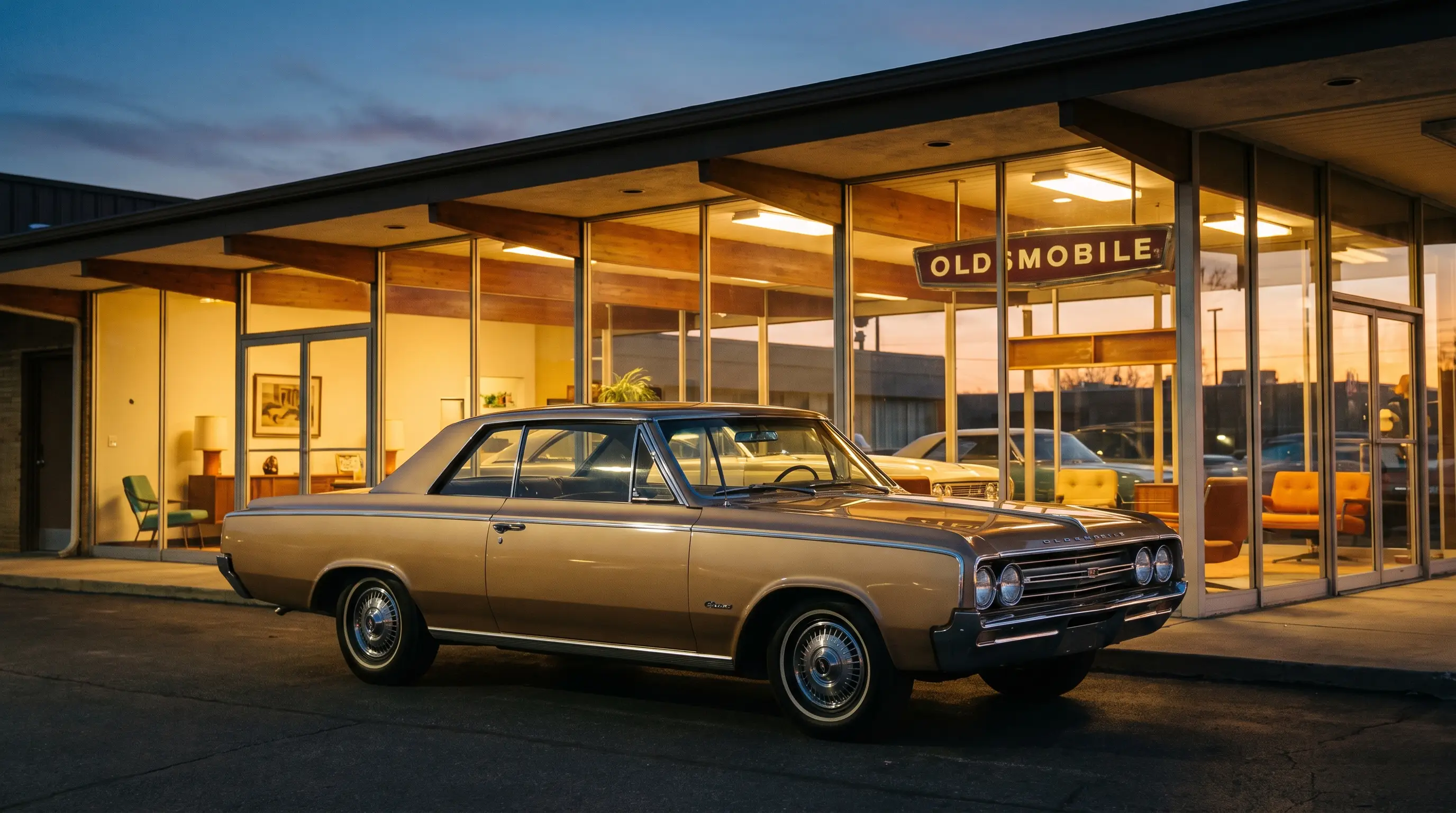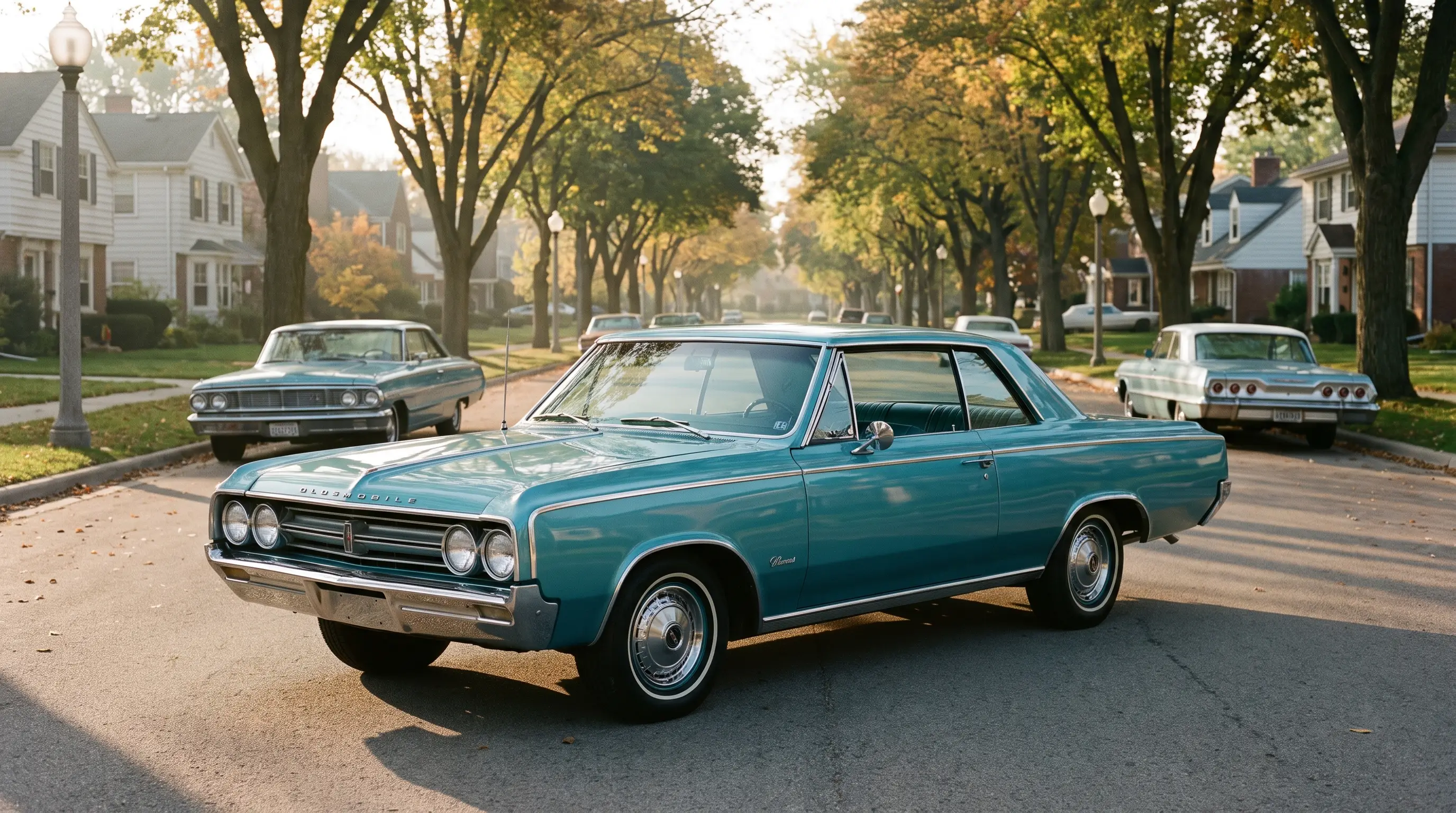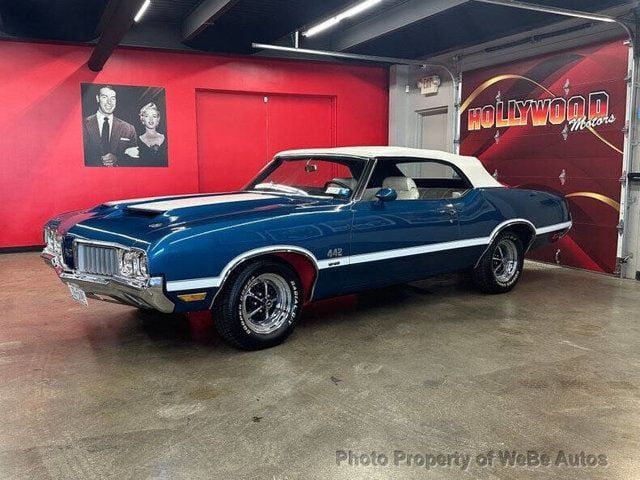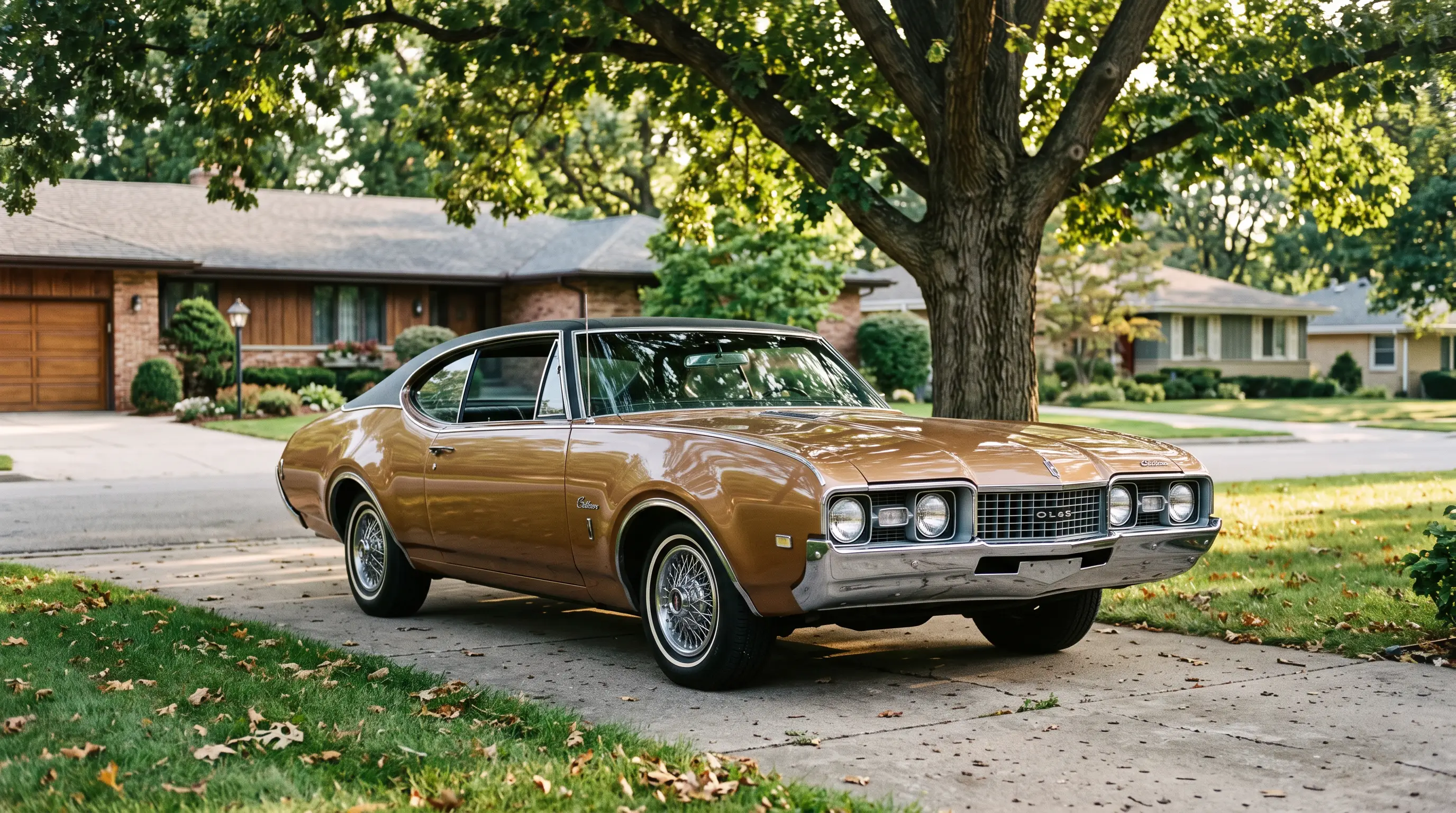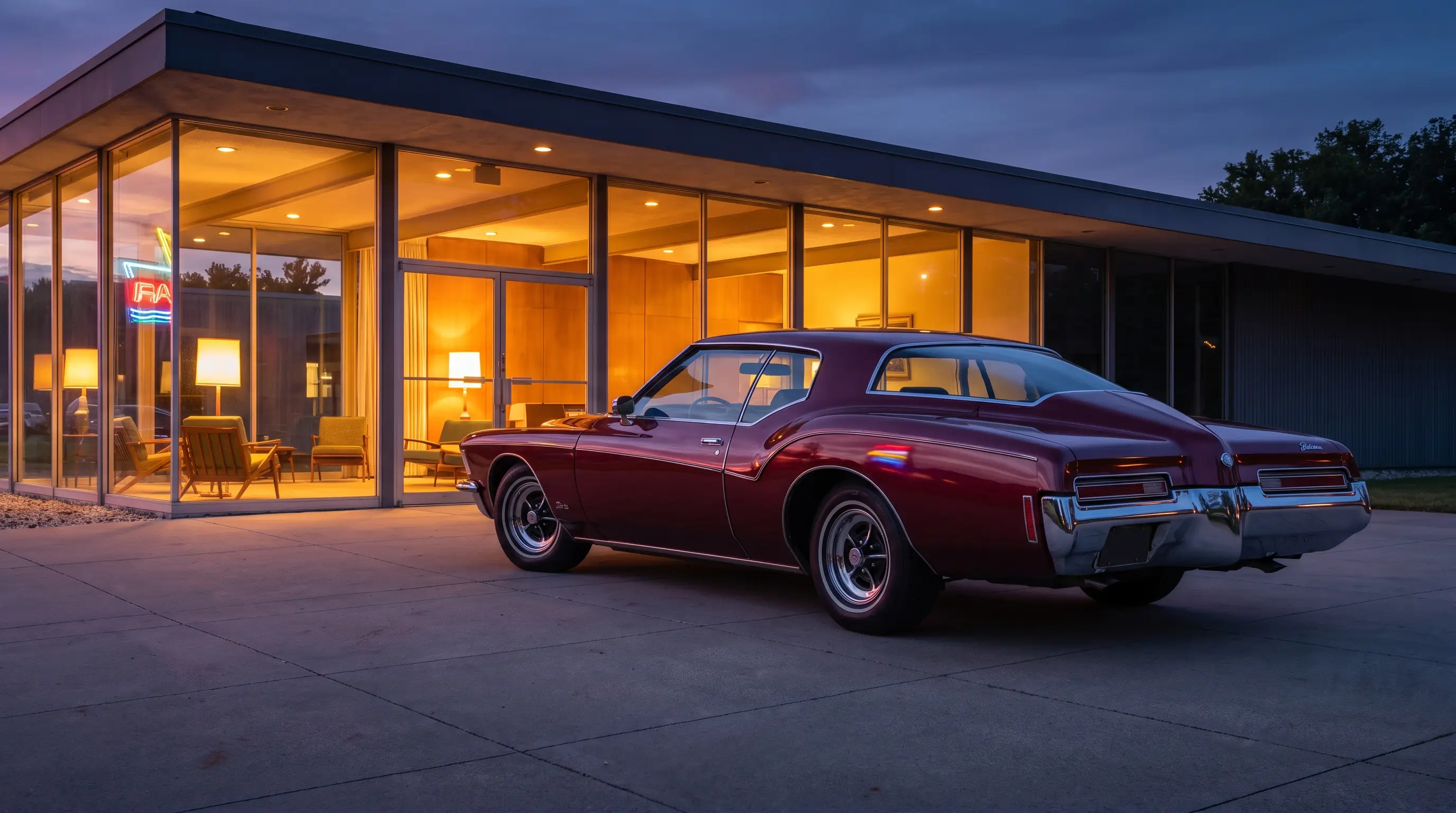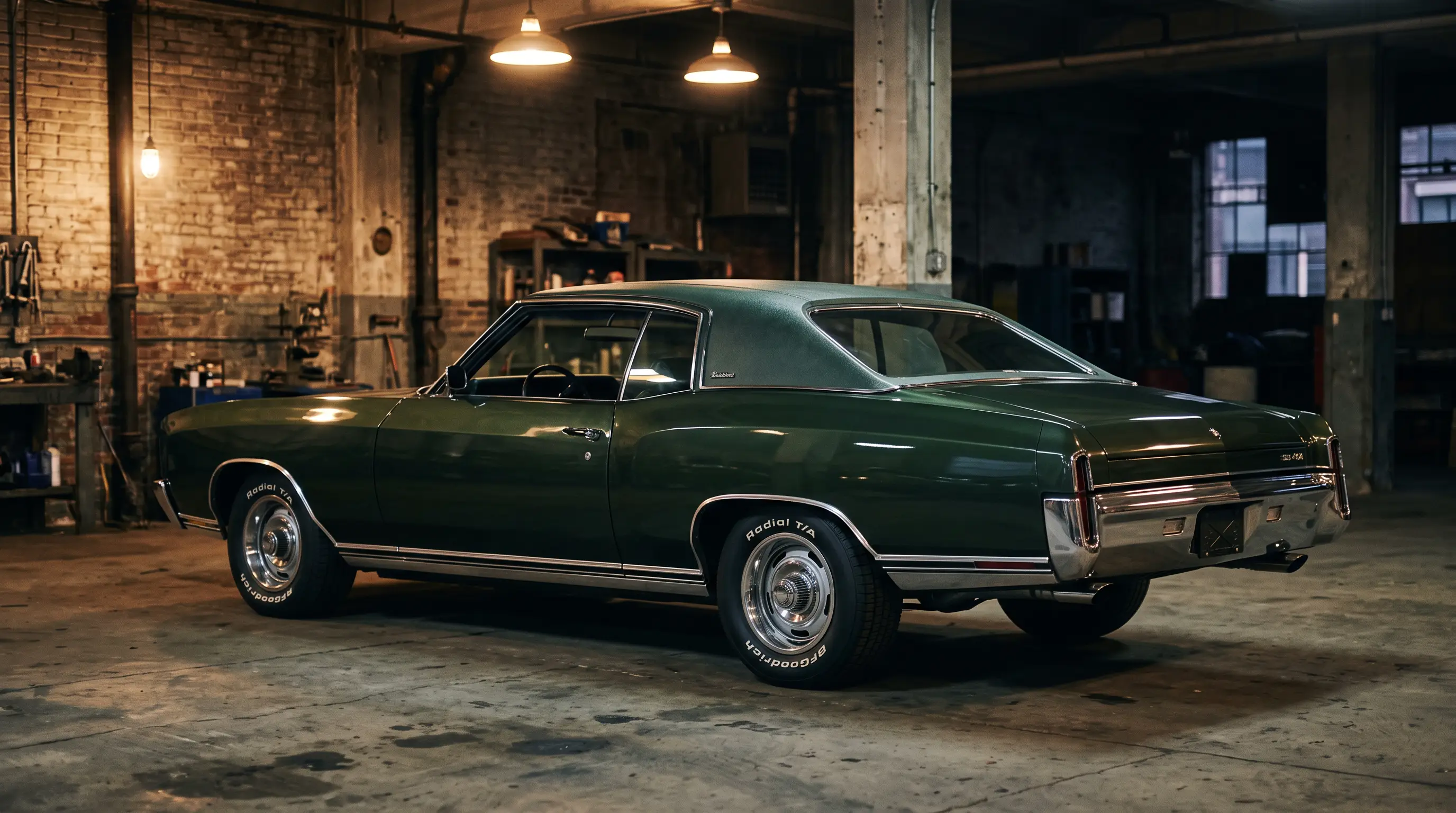
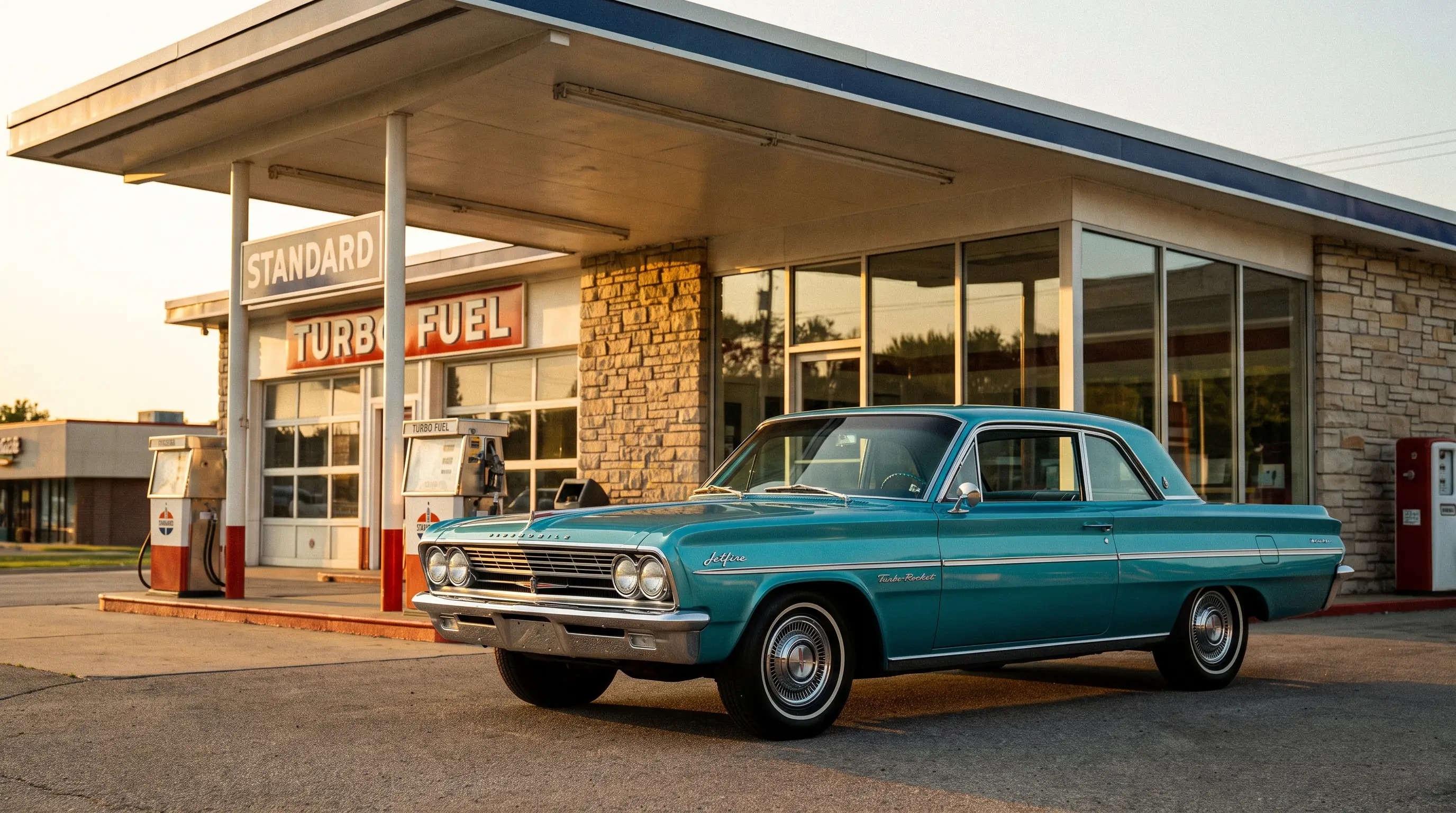
The Oldsmobile Jetfire is the answer to a trivia question most people get wrong. Ask a room full of car enthusiasts which manufacturer built the first turbocharged production car in America, and Chevrolet's Corvair Monza Spyder usually gets the credit. The record says otherwise. The F-85 Jetfire beat the Corvair to market by a matter of weeks in the spring of 1962, and it did it with a small aluminum V8 wearing a Garrett AiResearch turbocharger, at a time when almost nobody outside aviation and heavy trucking had reason to know what "turbo lag" even meant. Oldsmobile built 9,607 of them across two model years (3,765 for 1962 and 5,842 for 1963), and the car it belongs to, the Cutlass's close sibling on the F-85 platform, has never gotten the credit its engineering earned.
An aluminum V8 with an aviation part bolted to it
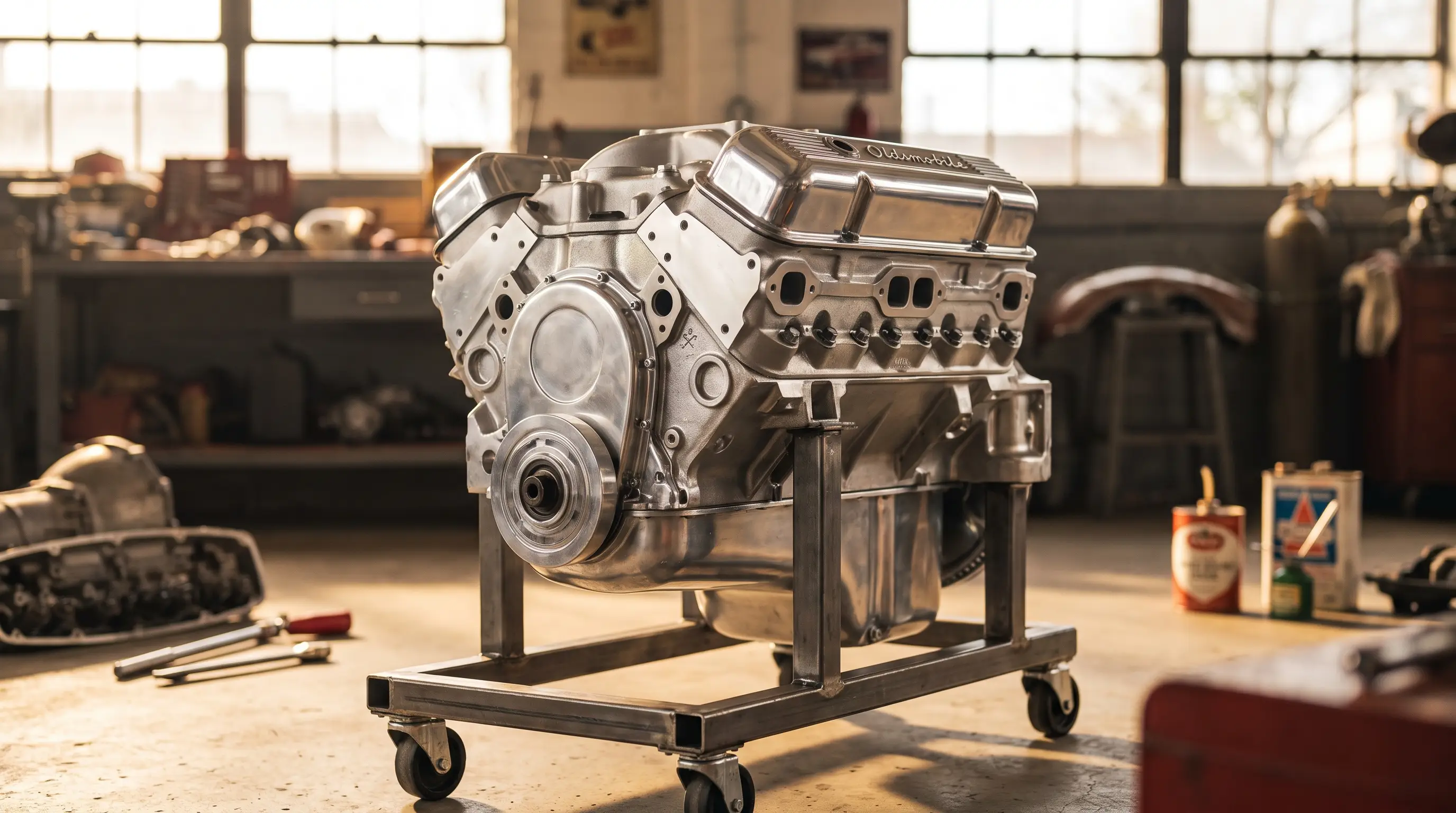
The starting point for the Jetfire was Oldsmobile's 215 cubic inch aluminum V8, the same basic block architecture shared across Buick, Oldsmobile, and Pontiac's compact lineups in the early 1960s and later famous for its second life under the hood of Rover and Land Rover products after General Motors sold the tooling overseas. On its own, the 215 was a competent, lightweight small-displacement engine. Oldsmobile's engineers wanted more from it without adding cubic inches, and turbocharging was the way to get there without a bigger, heavier block.
Compression was raised to 10.25:1, aggressive for the pump gasoline of the day, and a single Garrett AiResearch turbocharger fed by a side-draft carburetor pushed 5 psi of boost into the intake. The result was 215 horsepower and 300 lb-ft of torque out of a 215 cubic inch engine, a specific output of one horsepower per cubic inch that no other American production engine matched that year. For a car in the F-85's weight class, that was a genuinely quick package, and Oldsmobile marketed it as the performance flagship of the compact lineup before the Cutlass name had grown into the muscle car it would become later in the decade.
Turbo Rocket Fluid and the compromise nobody saw coming
Raising compression that high on 1962 pump fuel while also adding boost pressure is a recipe for detonation, and Oldsmobile's engineers knew it. Their solution was a small reservoir under the hood filled with what the factory called Turbo Rocket Fluid, a mix of distilled water and methanol injected into the intake to suppress knock under boost. It worked, but it asked something of the owner that no other Oldsmobile buyer had to deal with: remembering to keep the tank filled.
Run the car dry of Turbo Rocket Fluid and the engine's control system pulled boost and retarded timing to protect itself, which meant a driver who ignored the warning light got a car that felt flat and gutless exactly when they expected the turbo rush. Worse, a small number of owners who did not want to keep buying the proprietary fluid mix started running plain water, or nothing at all, and either damaged engines or lived with a permanently detuned car. Dealers were not universally prepared to service the turbo and its plumbing either, and a turbo Jetfire that developed a boost leak or carburetor issue could sit at a shop where nobody wanted to touch it.
Why the idea was ahead of the market it launched into
The Jetfire was not a failure of engineering so much as a failure of timing and infrastructure. Turbocharging a production gasoline engine to this level of output was legitimately advanced for 1962, and the fundamentals Oldsmobile worked out, feeding boost into a naturally-aspirated-derived block, managing detonation with injected fluid, protecting the engine when that fluid ran low, would not look out of place described to a modern engineer. What the Jetfire lacked was a service network trained to support it, a fluid supply chain convenient enough that owners did not resent it, and a fuel-injection or electronic control layer sophisticated enough to manage boost without asking the driver to be part of the safety system.
Oldsmobile pulled the plug after the 1963 model year, and the Cutlass line moved forward on conventional naturally aspirated V8s for the rest of the decade, engines that would eventually grow into the 330 and 400 cubic inch blocks that defined the muscle era. It would be more than a decade before turbocharging returned to an American production car in any serious way, and by then the supporting technology, better engine management, more boost-tolerant fuel, had caught up to the idea Oldsmobile tried first.
What a surviving Jetfire actually represents
Finding an original, unconverted turbo Jetfire today means finding a car that survived both its own mechanical complexity and a factory-sanctioned invitation to simplify it. That combination makes surviving examples with the turbo hardware, the Turbo Rocket Fluid tank, and the correct badging genuinely rare within an already low production run. For anyone curious about how the Cutlass began as a platform sibling to this same F-85 generation, the Jetfire is a reminder that Oldsmobile's engineering ambition in this era went well beyond bigger displacement. The story of the redesign that followed it, a companion piece covering the 1964 A-body change, shows where that same platform went once the turbo experiment ended and cubic inches took over as the path to power.
| Spec | 1962-63 Oldsmobile Jetfire |
|---|---|
| Platform | F-85 compact |
| Engine | 215 cubic inch aluminum V8, turbocharged |
| Turbocharger | Garrett AiResearch, single unit |
| Compression ratio | 10.25:1 |
| Output | 215 hp / 300 lb-ft |
| Anti-detonation system | Turbo Rocket Fluid injection (water/methanol) |
| Production span | 1962-1963 model years only |
"People want to file the Jetfire under quirky failed experiment, and the production numbers make that easy to do. But read the engineering, not just the sales figures. Oldsmobile solved problems in 1962 that the rest of the industry didn't touch again until the late 1970s."
— Tom Ramirez
The lesson Oldsmobile carried forward
The Jetfire's short production run did not erase what its engineers learned from it. Boosting a smaller displacement engine to match or beat a larger naturally aspirated one, managing detonation under load, and building a forced-induction system a factory could actually assemble on a production line, all of that groundwork mattered even after Oldsmobile shelved the turbo itself. The Cutlass name that the Jetfire shared its platform with went a different direction for the rest of the 1960s, chasing displacement instead of boost, but the two paths came from the same engineering department wrestling with the same basic question: how do you make a compact car genuinely quick without making it enormous. The Jetfire answered that question first, even if the market wasn't ready to keep buying the answer.