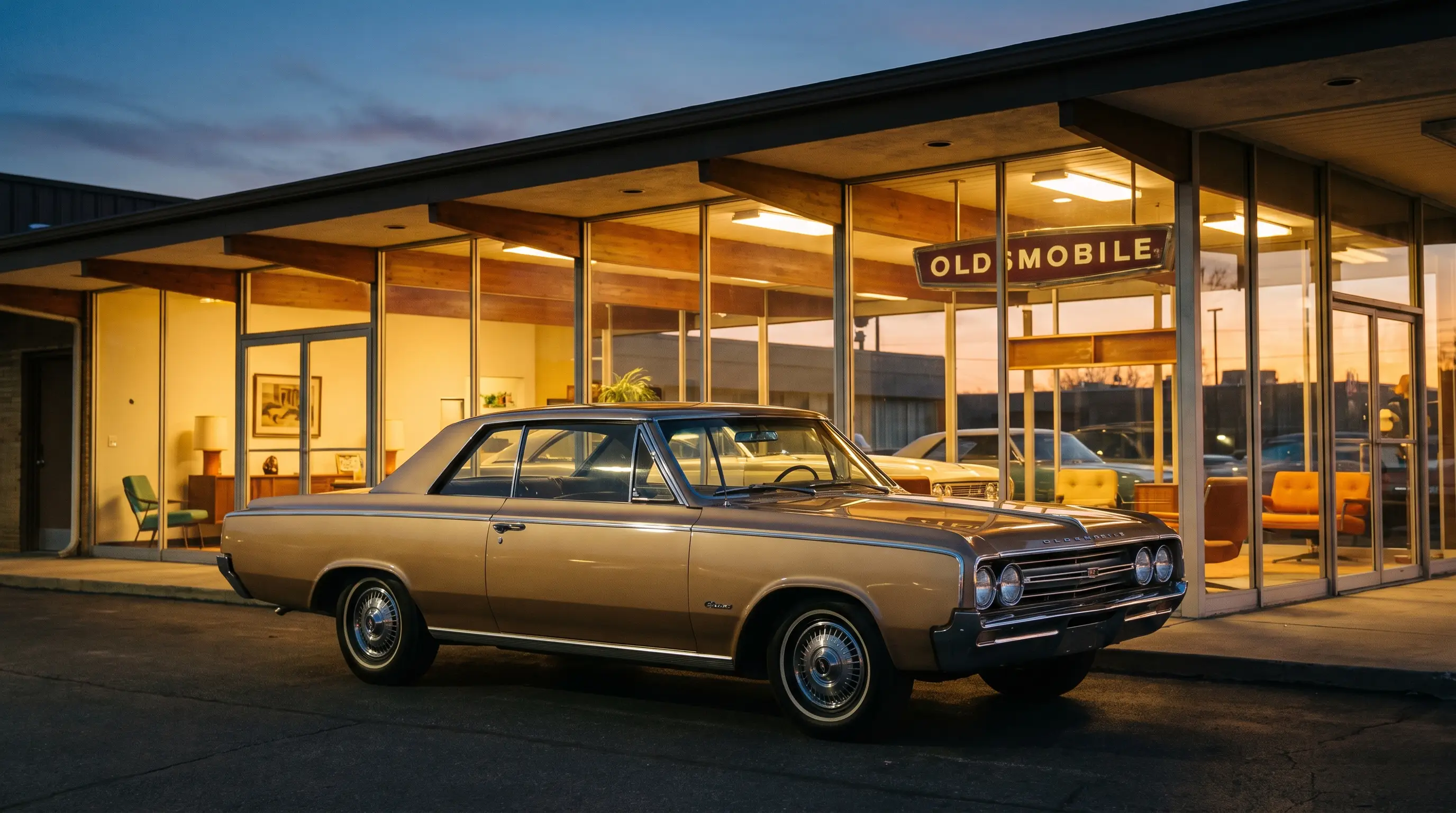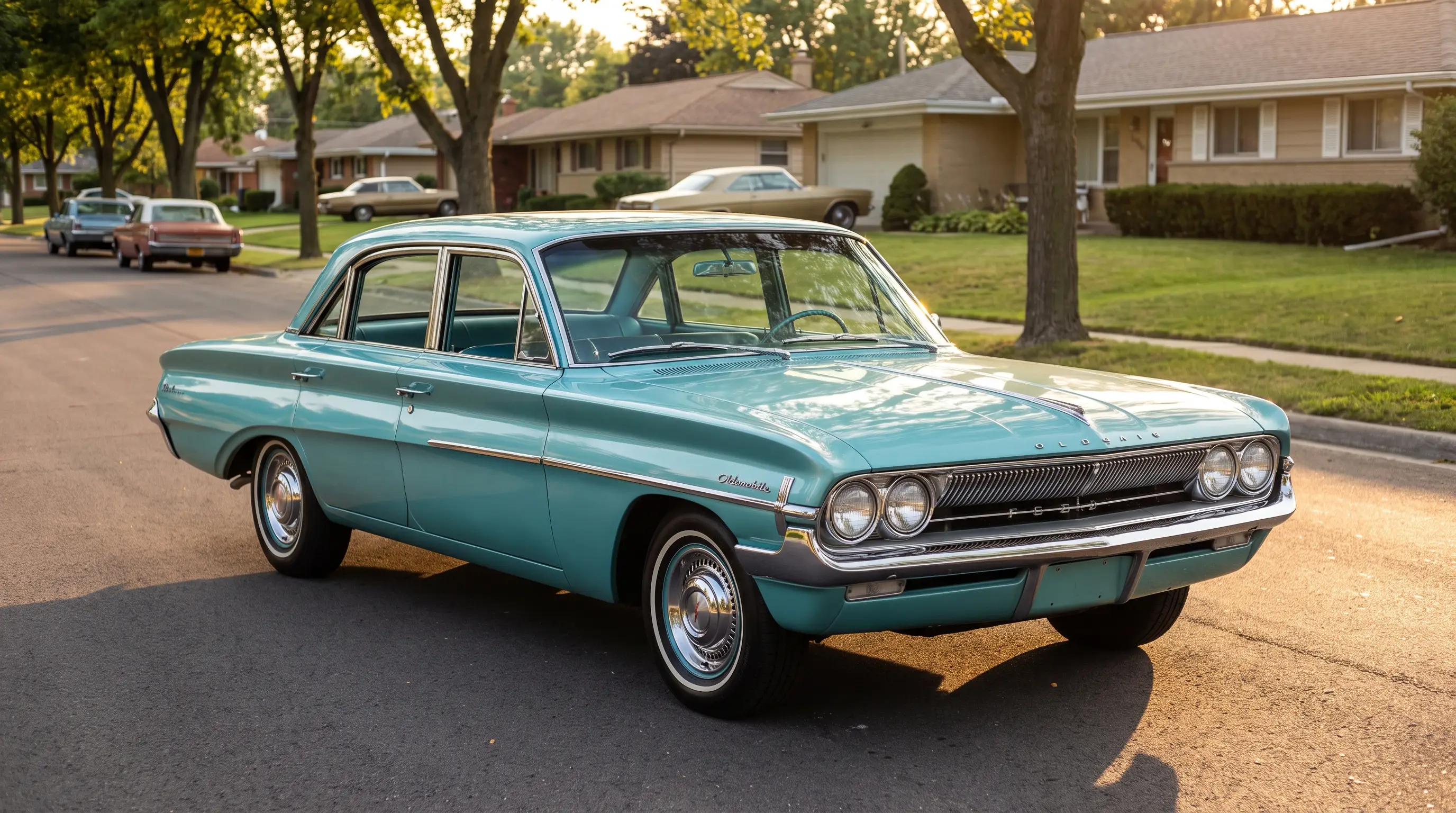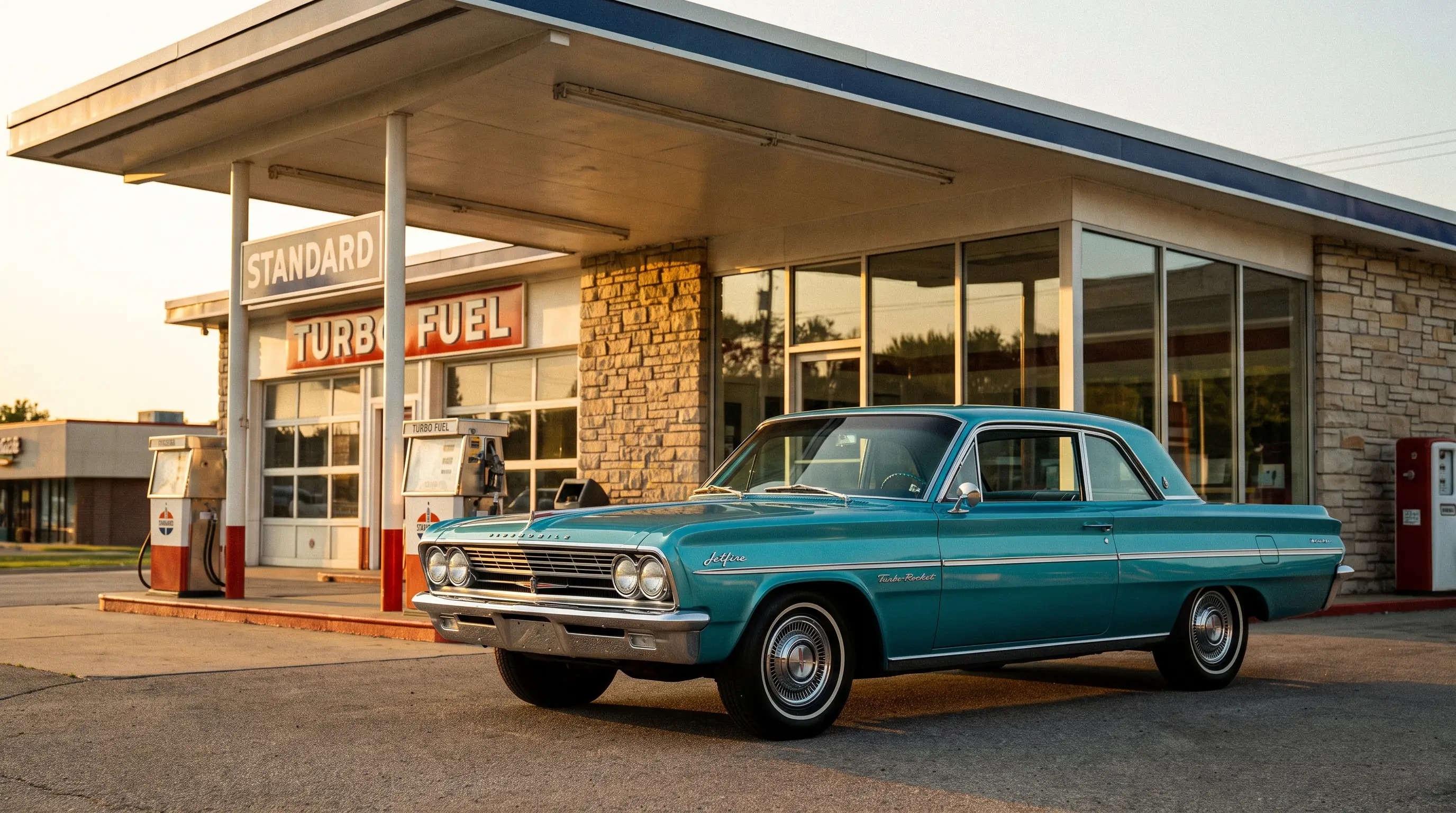
Oldsmobile built exactly one aluminum V8 in its history, sold it for a handful of years, then walked away from it entirely, and that decision turned out to be one of the more consequential mistakes in the division's engineering record. The 215 cubic inch V8 was light, compact, and genuinely clever for 1961. It was also expensive to cast correctly at scale, and that single fact explains almost everything about why it disappeared from Oldsmobile showrooms just as quickly as it arrived.
Why an aluminum V8 in 1961 at all
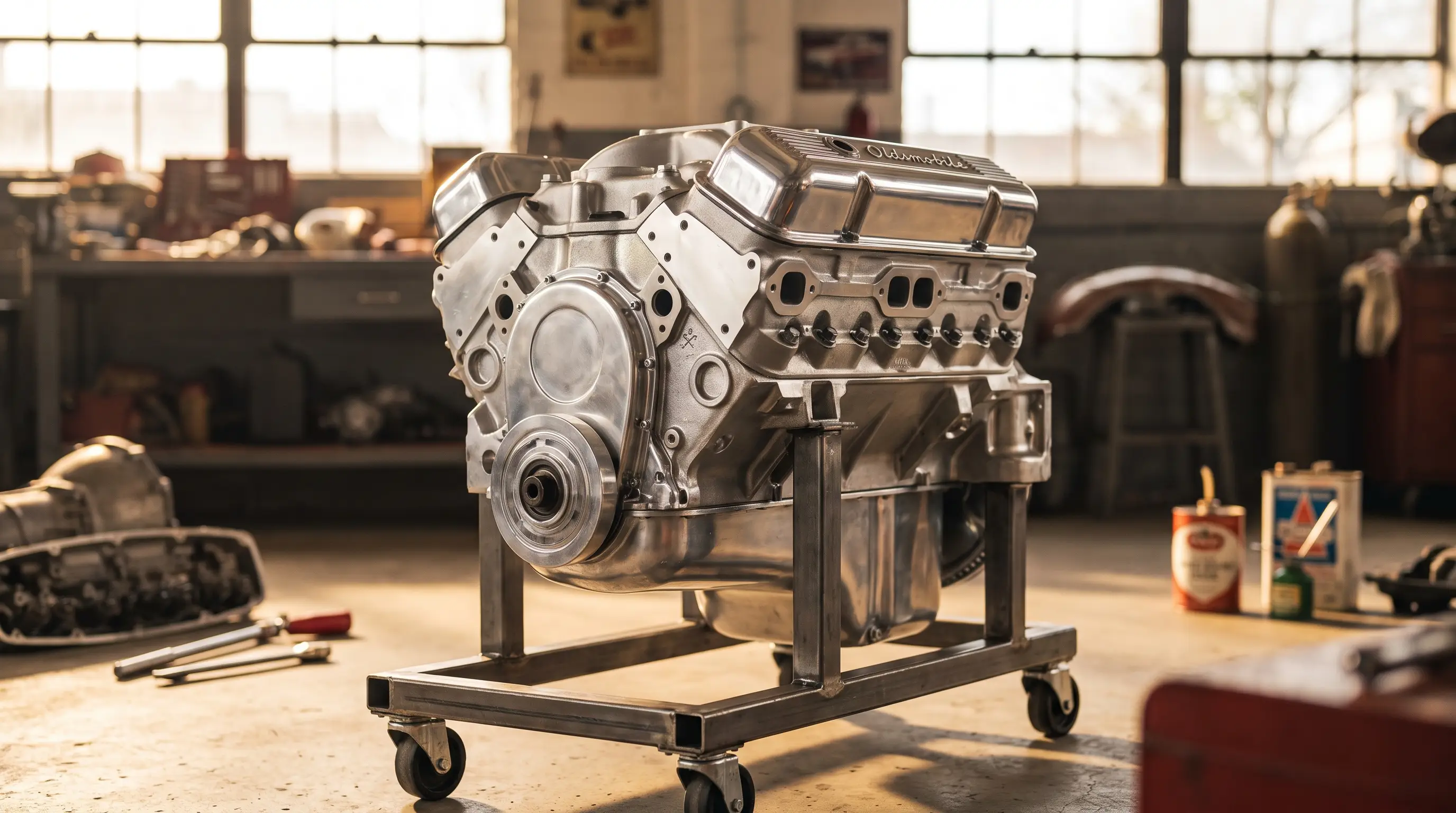
General Motors' compact push for 1961, which produced the Corvair, Tempest, Special, and F-85, needed engines that matched the weight-saving logic of the smaller unibody platforms. Buick and Oldsmobile jointly developed a 215 cubic inch V8 cast in aluminum rather than iron, with a dressed engine weighing right around 320 pounds, close to 100 pounds lighter than the cast iron small-blocks GM divisions were building at the time. Buick and Oldsmobile each built their own version with different cylinder heads and induction, but the basic architecture, bore, and stroke were shared between the two divisions. This was not a badge-engineered engine wearing two names. It was a genuinely joint development program.
The engineering case for aluminum went beyond simple weight reduction. A lighter engine block shifted weight distribution toward the rear of a compact car, improving handling balance in a way that mattered more on these smaller platforms than it would have on a full-size Oldsmobile. It also let engineers put a genuine V8 into a car that would otherwise have been stuck with a six-cylinder, since the packaging and front-end weight of an iron block of comparable displacement would have compromised the F-85's proportions and ride characteristics.
In the Oldsmobile F-85 and its Cutlass trim, this engine gave a car that otherwise competed with the Corvair's flat-six a real performance advantage. How the Cutlass began covers the broader story of that compact platform, but the aluminum V8 is the specific piece of engineering that made the early Cutlass trim feel like more than a badge on a family sedan.
It is worth being clear about what the two divisions did and did not share. Buick and Oldsmobile used the same basic bore centers and deck height, which kept tooling and machining costs down, but each division's engineers designed their own cylinder heads and intake arrangements to suit their own performance goals. Oldsmobile's version leaned toward a slightly different state of tune than Buick's, and neither division treated the shared block as an excuse to stop doing independent engineering work on top of it.
The casting problem nobody could solve cheaply
Aluminum engine blocks in the early 1960s were difficult to cast without porosity defects, and the process General Motors used demanded tighter quality control and higher scrap rates than a comparable iron block. Every division running the 215 dealt with an abnormally high scrap ratio tied to hidden porosity, since air-gauge leak checks could miss flaws on blocks that were already 95 percent finished, and the cost of solving that problem at mass-production volume kept climbing rather than settling down as the tooling matured. Oldsmobile's engineering staff understood the engine's performance case perfectly well. What they could not solve, at the volumes GM needed, was making it consistently affordable to build.
The economics only got worse as GM's other divisions ramped up production of their own compacts using conventional iron blocks at a fraction of the aluminum engine's per-unit cost. An engineering department can justify a more expensive component when it delivers a clear competitive advantage that buyers will pay for. It has a much harder time justifying that cost once the sales data shows most buyers are not distinguishing between engine materials at the showroom, only between price tags and horsepower numbers on the window sticker.
By 1963, Oldsmobile had already moved toward a turbocharged version of the aluminum V8 for its Jetfire model, a genuinely bold engineering swing that layered forced induction onto an engine still fighting its own casting economics. That turbo chapter is its own story, but it shows Oldsmobile was still trying to make the aluminum architecture work rather than simply giving up on performance from a small-displacement engine.
The Jetfire's turbocharger setup required its own fluid injection system to control detonation, a genuinely advanced solution for the era and a clear sign that Oldsmobile's engineers still believed in the underlying architecture even as the casting economics kept working against it at the corporate level. Reliability issues with that injection system, more than any flaw in the aluminum block itself, ended up souring buyers on the Jetfire faster than the division would have liked.
The switch to iron, and where the tooling actually went
Oldsmobile replaced the 215 with a conventional iron-block V8 for the F-85 and Cutlass line within a few years, ending the division's run with aluminum passenger car engine blocks for decades. The story does not end there, though, and this is the part factory-documentation research keeps turning up: General Motors sold the tooling and the design rights for the 215 to Rover in Britain, where it was developed, refined, and produced for more than three decades across a wide range of Rover, Land Rover, and MG products. An engine that Oldsmobile judged too costly to keep building at Detroit volumes became one of the longest-serving V8 architectures in British automotive history, a genuinely unusual afterlife for a domestic compact car engine.
| Spec | Oldsmobile 215 aluminum V8 |
|---|---|
| Displacement | 215 cubic inches (3.5L) |
| Construction | Aluminum block and heads |
| Primary applications | 1961-1963 F-85 and Cutlass trim; turbocharged in the Jetfire |
| Later life | Sold to Rover, produced for decades in British vehicles |
"The 215 wasn't a failure. It was an engine Detroit couldn't afford to keep building at the volumes it needed, and Rover proved for thirty years that the design itself had nothing wrong with it."
— Tom Ramirez
Why this engine still matters to Cutlass history
The 215's short American life does not diminish its importance to the Cutlass story, it explains a piece of it. Oldsmobile's willingness to chase advanced engineering, aluminum construction, turbocharging, on a compact car in the early 1960s set a tone the division carried into the muscle era that followed. How the Cutlass legend began traces that continuity in more detail, and the next story in this set picks up exactly where this one leaves off, with the turbocharged version of this same aluminum block. If you are chasing an early Cutlass with this engine intact and correctly documented, treat the block casting numbers as seriously as any big-block buyer treats a numbers-matching 442. For anyone shopping rather than researching, a classic Oldsmobile Cutlass for sale listing with a documented early V8 is a rarer find than most buyers expect.
Sources and notes
- Hagerty: How Buick's little aluminum V-8 saved Britain's bacon
- TeamBuick: Buick Special 215-300 Lightweight Engines
- Wikipedia: Buick V8 engine
- Jalopnik: Why Oldsmobile's Turbocharged V8 Pushed GM's Fabrication Capabilities Past Its Limits
- Museum of American Speed: V-8 Cylinder Oldsmobile 215
- Auto History Preservation Society: Oldsmobile 1961-1963 215 CID Rockette V8 Described