Wire wheels are the first thing your eye lands on when a lowrider rolls up slow. Before you clock the candy, before you read the murals, you see spokes catching the light and a skinny whitewall wrapped tight around chrome. Get the wheels wrong and the whole car reads as a fake, no matter how clean the bodywork is. Get them right and even a plain single-stage paint job looks like it belongs. I've built cars both ways over the years, and I can tell you the wheels are never the place to save money.
Why wire wheels became the lowrider standard
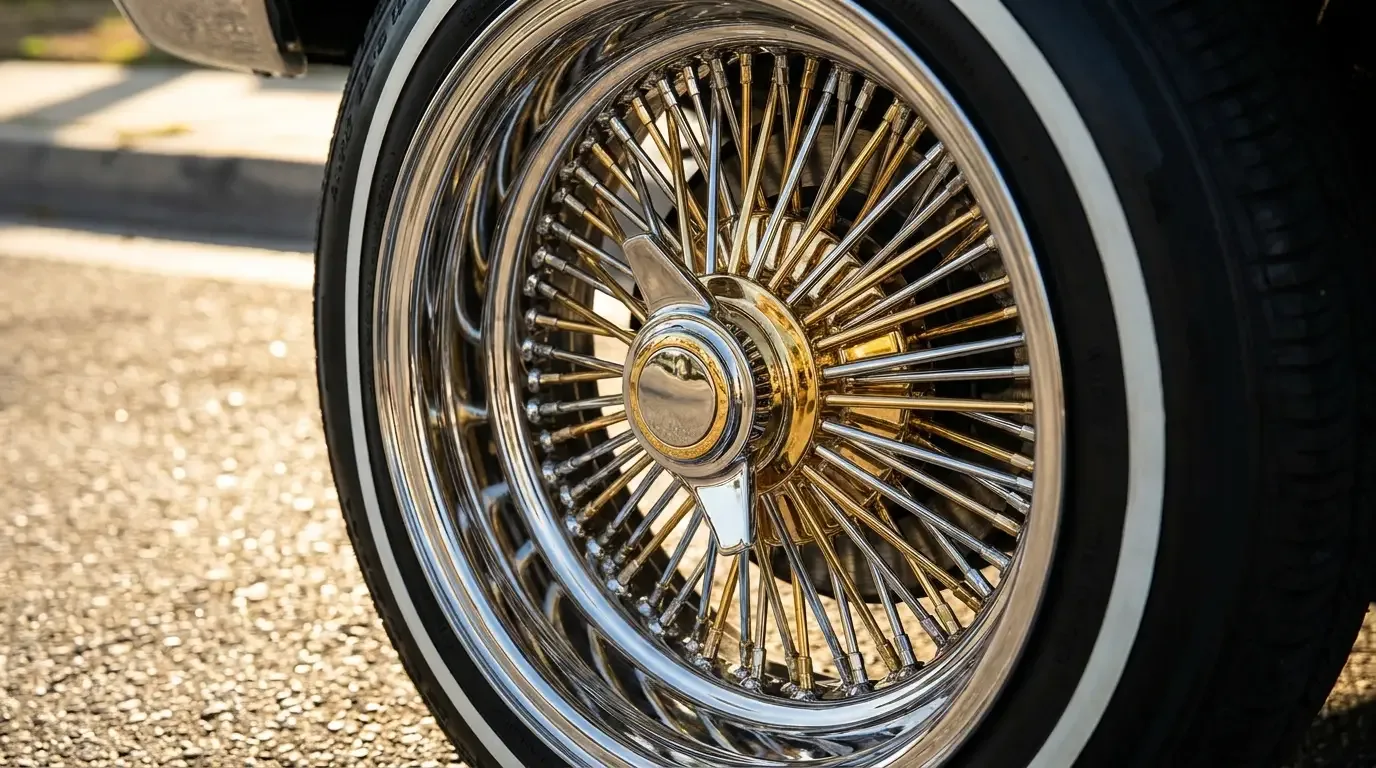
The look goes back to the way lowriders grew out of custom culture in Southern California. Guys wanted a wheel that was the opposite of a fat muscle-car mag: narrow, tall in the spoke count, dressed with a knock-off cap instead of lug nuts. A true wire wheel is built from a hub, a rim, and dozens of individual steel spokes laced by hand, then trued so the whole thing spins straight. That construction is why they look alive when the car moves. Solid cast wheels made to imitate the look never do the same thing, because the light has nothing to travel through.
The knock-off is the other signature. Instead of bolting the wheel on with lug nuts, the wire wheel spins onto a threaded adapter and locks with a single large spinner cap that you knock tight with a lead hammer. Two-bar and three-bar spinners are the common styles, and the good ones thread on with real precision. This is the same basic idea used on old racing and sports cars, adapted to a slow cruiser. It looks clean because there are no visible fasteners, just the cap and the spokes.
13x7 and 14x7: the sizes that define the look
Two sizes carry the lowrider world: 13x7 and 14x7. The first number is the diameter, the second is the width. A 13-inch wire wheel is the classic, the size most people picture on an Impala laid out on the switches. The 14-inch is a hair taller and reads a little more conservative, common on bombs and on cars where the owner wants a touch more tire. Both are usually a 7-inch width, which is narrow by modern standards and part of why the stance looks right.
The reverse offset is what tucks the wheel in and pushes the dish deep into the barrel, giving that recessed, staggered spoke look people chase. Standard offset sits flatter. On most classic lowrider platforms the 13x7 reverse is the default answer, and it pairs with a small tire that keeps the car sitting low without rubbing when the suspension cycles.
| Spec | 13x7 | 14x7 |
|---|---|---|
| Diameter | 13 in | 14 in |
| Width | 7 in | 7 in |
| Common spoke counts | 72, 100, 88 cross | 72, 100, 88 cross |
| Typical tire | 155/80R13 whitewall | 175/70R14 whitewall |
| Signature use | Impalas, G-bodies | Bombs, cruisers |
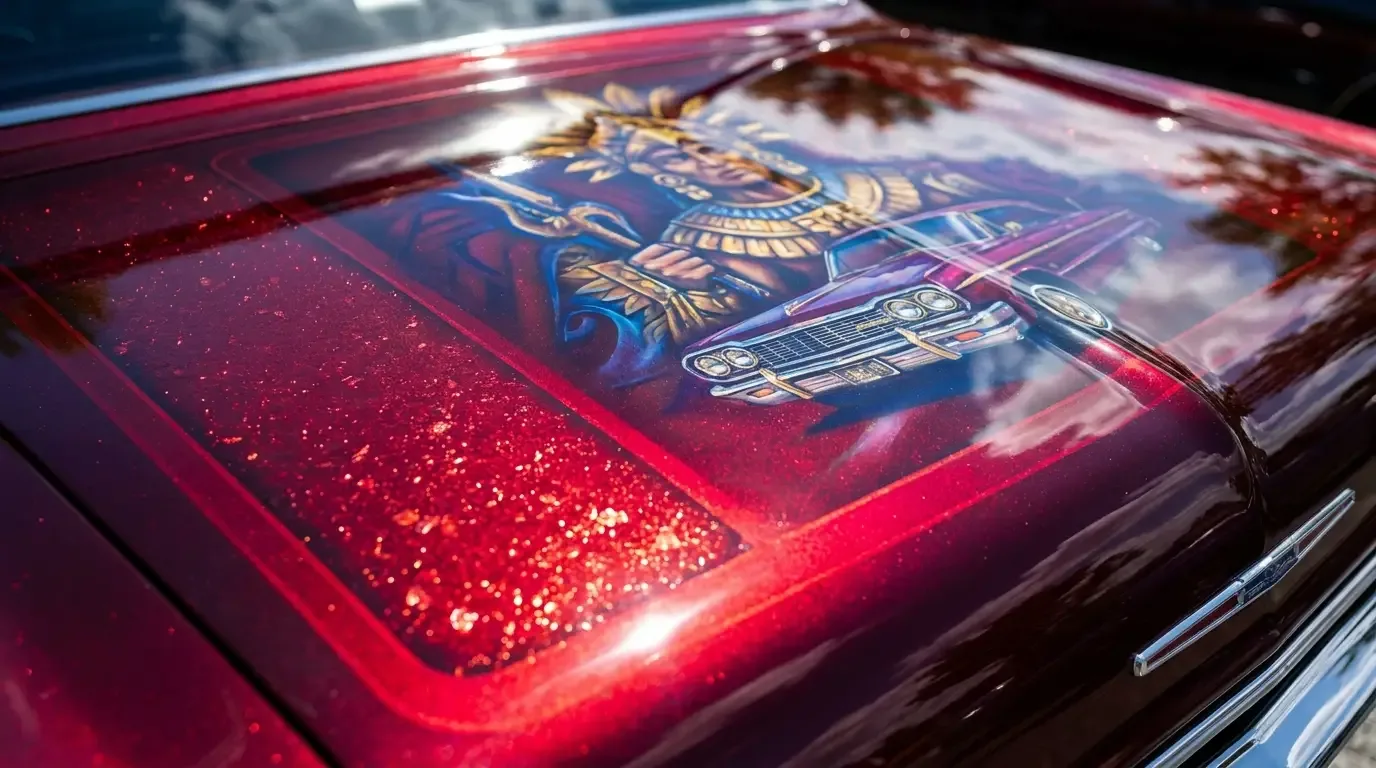
Spoke count is where taste comes in. A 72-spoke wheel is the traditional, clean look. Hundred-spoke wheels pack more metal into the same face and read busier and flashier. Cross-lace patterns like an 88-cross weave the spokes in an X for a different texture. None of these is more correct than another, it comes down to the car and the builder's eye. The same eye that picks a color for the lowrider paint should pick the spoke pattern, because the two have to agree.
Gold, chrome, and the cost of shine
Finish is the next big decision. Straight chrome is the everyday standard: bright, mirror-clean, and it works with any color car. Gold is the flex. Some guys run all-gold spokes and nipples, some do a gold-center-and-chrome-lip combo, and some accent just the knock-offs and the hub in gold. Gold plating is real 24k over the chrome layer, and it costs more because it is a plating process on top of a plating process. It also needs more care, because gold is soft and the plating is thin.
Two-tone finishes, engraving, and painted centers all exist, but the honest truth is that shine only lasts if the base plating is done right. Cheap chrome flashes bright on day one and then hazes, pits, and lifts within a season or two, especially anywhere they salt the roads. Good triple-plated chrome, copper then nickel then chrome, holds up for years. You are paying for the layers you cannot see.
"I tell every customer the same thing. Buy the wheel once. I've watched too many guys in the neighborhood save a few hundred bucks on a set, then chase rust across two summers until they buy the real ones anyway. That's not a deal, that's paying twice."
— Hector Morales
Zenith and Dayton quality versus the cheap stuff
When people talk about the best wire wheels, two names come up: Zenith and Dayton. These are the wheels with a reputation built on tight tolerances, quality spokes that hold true, knock-offs that thread clean, and plating that lasts. They cost real money, and a genuine set is often stamped and serialized so you know what you have. On a serious build, a Zenith or Dayton-style wheel is treated the way a numbers-matching engine is treated, as proof the owner did it right.
The cheap import wire wheel is a different animal. From ten feet it can look close. Up close and over time the differences show: spokes that loosen and rattle, rims that will not stay true, chrome that pits fast, and knock-off threads that cross and gall. A loose spoke is not just ugly, it is a wheel slowly coming apart while you drive on it. That is why the quality of the wheel matters as much for safety as for looks.
Skinny whitewalls finish the wheel
A wire wheel is only half dressed without the right tire, and for lowriders that means a skinny whitewall. The narrow tire lets the dish and spokes show, and the white stripe frames the whole wheel. Wide modern tires bury the wheel and kill the stance. The 155/80R13 is the go-to for a 13-inch setup because it is tall enough to look right and narrow enough to disappear behind the whitewall.
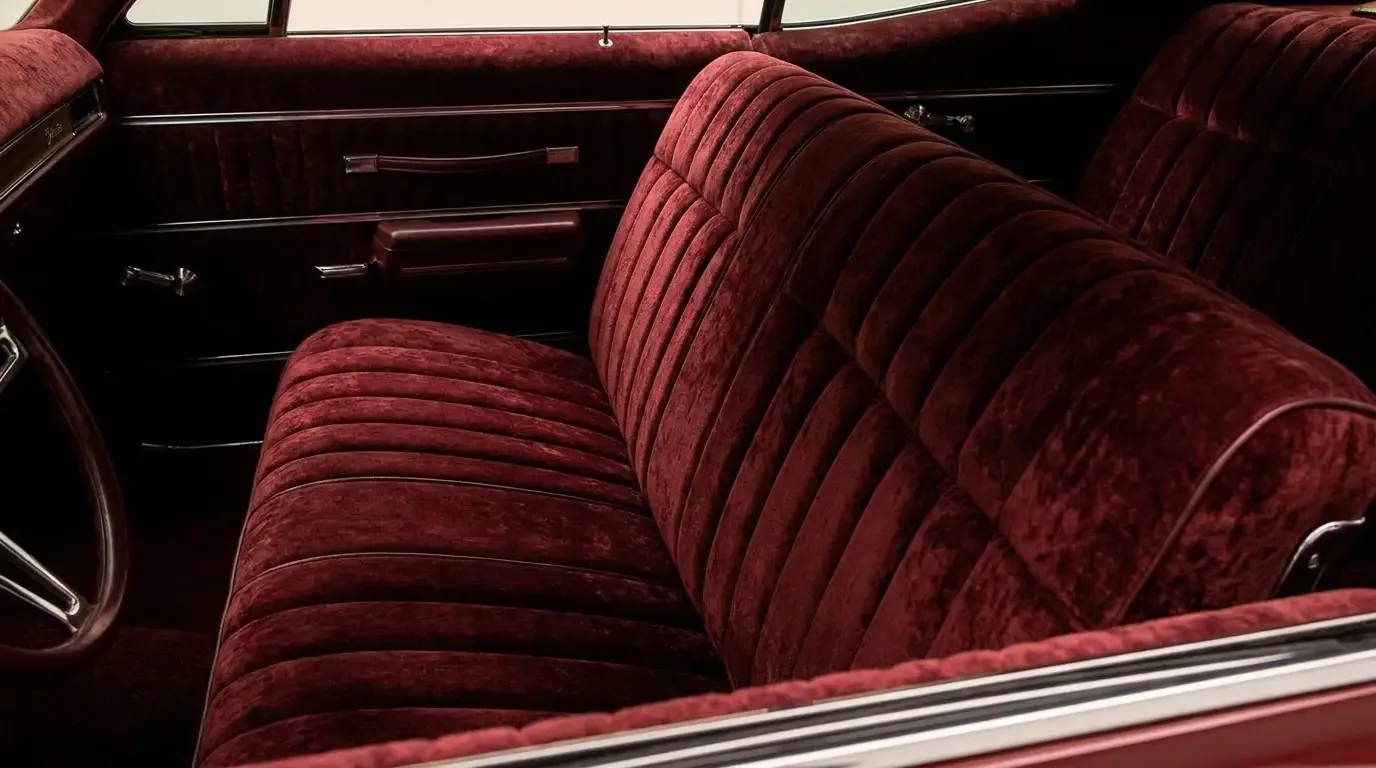
Whitewall width is its own choice. A wider white band reads old-school and pairs well with a bomb, while a thinner line looks sharper on a slammed Impala. Keeping those whitewalls clean is a chore, because they yellow and scuff, but a scrub with the right cleaner brings them back. The wheels and tires are the foundation the rest of the car builds on, right alongside the paint and the Lowrider Tuck-and-Roll Interiors that finish the interior. When you go shopping, look closely at the wheels on any of the lowriders for sale, because a good set of Zeniths or Daytons under a car tells you the owner spent money where it counts.
Sources and notes
- Builder and shop interviews on wire wheel construction, lacing, and plating.
- Period and enthusiast press covering lowrider wheel and tire trends.
- Manufacturer reference material on wire wheel sizing, offset, and knock-off fitment.
- Club and cruising community knowledge on finish care and long-term durability.