
Open the door on a serious lowrider and the inside should stop you the same way the outside did. Rows of tight pleated rolls running door to door, seat to headliner, everything upholstered until there is barely a hard surface left to touch. That is tuck and roll, and in our community it has always been the honest test of a build. Anybody can buy a candy paint job and bolt on wire wheels. A real tuck-and-roll interior is hours of hand work that you cannot fake, and a trained eye reads it in about three seconds.
Car Features
8 min read
Lowrider Tuck-and-Roll Interiors
Inside the rolled-and-pleated tradition: the Tijuana roll, the materials, and what separates a real tuck-and-roll interior from a cheap imitation.
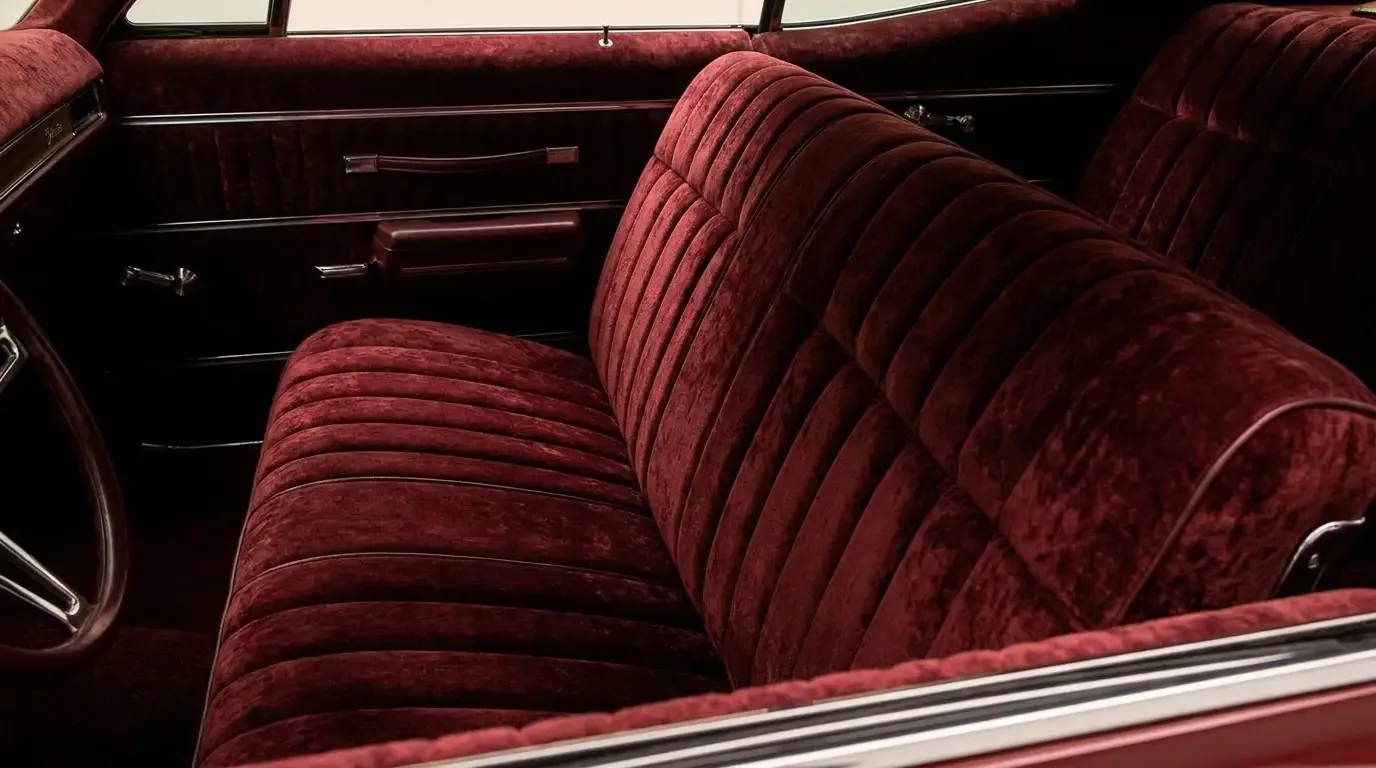
I've pulled apart enough interiors over the years to know exactly where the craft lives and where people cut corners. The paint is what pulls people to the car, and the interior is what tells them whether the owner actually finished the job. The same discipline that goes into lowrider paint has to carry through to the seats, or the whole car reads as half done. So let's walk through what tuck and roll actually is, where it came from, and how the good stuff gets made.
What tuck and roll actually means
Tuck and roll is a specific upholstery technique, not just "fancy seats." The upholsterer sews long parallel channels, stuffs each one with foam or cotton batting, and the filled tube of material creates a raised roll. The "tuck" is the tight seam pulled down hard between each roll, and the "roll" is the padded ridge that stands up between the seams. Do it right and you get a run of even, plump pleats with crisp valleys between them, all marching in a dead-straight line across the panel.
The reason it looks so rich is repetition and consistency. Every roll has to be the same width, every seam pulled to the same tension, or the eye catches the wobble immediately. On a full car that means the door panels, the seats front and rear, the headliner, the kick panels, and often the trunk all carry the same pleat width so the whole interior reads as one piece. That is why a proper job is measured in days of labor, not hours.
The Tijuana roll and where the tradition comes from
The border shops earned their reputation on volume and speed. Labor was cheap, the upholsterers were fast, and a car owner could drop off a bare interior in the morning and drive home that evening with the whole thing rolled and pleated. Word traveled through the custom scene fast. Hot rodders, kustom builders, and the early lowrider crowd all made the run south, and "getting your Tijuana roll done" became part of the ritual of building a car.
What started as a budget move turned into a signature look. The tight, uniform pleats became one of the visual markers of a West Coast custom, and the lowrider community carried it forward long after the border-shop economics changed. Today the technique is done in shops all over the country and in Mexico both, but the name stuck and the tradition is still understood as rooted in that cross-border craft. When a builder says a car has a "real Tijuana roll," they mean the tight traditional pleat, not the loose modern imitation.
Materials, and why the fabric choice makes or breaks it
The material you roll matters as much as the stitching. Two things have carried the tradition, and each behaves differently under the needle.
- Crushed velvet. The classic plush lowrider look, deep and soft, and it catches light so the pleats show real depth. It is period-correct for the 1970s and 80s show cars. The downside is it is fragile, it fades in the sun, and it stains, so it lives on cars that get trailered more than driven.
- Leather and vinyl. Leather is the durable high-end choice and it holds a crisp roll beautifully, but it is expensive and harder to work because it does not stretch like cloth. Good vinyl is the practical middle ground, it takes a tight pleat, it survives sun and spills, and a skilled hand can make it look nearly as rich as leather.
- Cloth and tweed. Traditional woven cloth was common on early builds and is coming back on retro-styled cars that want a period feel rather than the glossy show look.
The filler underneath matters too. Old cars used cotton batting, which packs down over time and leaves the rolls looking tired. Modern shops use closed-cell foam that holds its shape for decades. When I check an interior I press each roll, and if they feel flat and lumpy the job is either old or was done cheap.
| Material | Look | Durability | Best for |
|---|---|---|---|
| Crushed velvet | Deep, plush, light-catching | Low, fades and stains | Trailered show cars |
| Leather | Rich, crisp rolls | High | High-end builds, drivers |
| Vinyl | Clean, glossy, sharp pleats | High | Daily-cruised cars |
| Cloth/tweed | Matte, period-correct | Moderate | Retro and traditional builds |
Matching the interior to the theme
A tuck-and-roll interior is not chosen in isolation. It has to answer the paint and the theme of the car, and on the best builds the two are planned together. A car finished in deep candy will usually pull a matching or complementary color inside, so a candy burgundy exterior gets burgundy or cream rolls, not whatever the shop had on the shelf. The layered color discipline behind a job like Lowrider Candy Paint and Flake is exactly the kind of planning that should carry into the seats.
Beyond color, the interior often continues the story the car is telling. Owners tie in the same imagery from their murals, run engraving and gold plating on the interior hardware to match the exterior trim, and pick pleat patterns that suit the era of the car. A 1960s bomb wears a different interior than a 1980s Euro-clip show car, and getting that period feel right is part of what separates a thoughtful build from a parts-catalog one. When the paint, the plating, and the rolls all speak the same language, the car reads as finished. When they fight each other, the eye knows something is off even if the owner spent big money.
"I can walk a show and tell you which cars were built by someone with a plan. It's the interior every time. If the rolls match the paint and the pleat suits the year of the car, that owner cared about the whole thing, that's someone who respects the craft. A wild paint job over mismatched seats just tells me they ran out of money or ran out of patience."
Hector Morales
Judging a tuck-and-roll job
If you are buying a car or building one, here is what actually matters when you look at the work up close.
None of this is exotic once you know what to look for. Tuck and roll is one of those crafts where the difference between good and great is entirely in the hands of the person doing it, and no shortcut hides that. Spend an extra minute inside the car and it will tell you the truth about how it was built.
Sources and notes
- Period custom-car and lowrider press covering West Coast upholstery trends from the 1940s through the 1980s.
- Upholstery and trim-shop references on pleat construction, filler materials, and fabric selection.
- Builder and upholsterer interviews on the Tijuana-roll tradition and cross-border shop history.
- Car-show and club observation of interior workmanship and theme matching.
Related Reading
Have a
Classic Car
for Sale?
Reach thousands of serious classic car collectors across the US.
Sell It Here →
Are You a Classic Car Dealer?
List your full inventory and connect with targeted classic car buyers.
Join as a Dealer →

About the author
Hector Morales
East LA lowrider builder and lifelong member of the car-club scene, writing lowrider culture, hydraulics and custom paint from the inside.




Comments
Be the first to comment on this article.