
Walk any lowrider show and the cars stop you before the hydraulics ever do. The paint does it. A candy job under the sun looks like it has a light source buried under the clear, and when the car rolls two feet the color shifts and deepens. That is not an accident and it is not a rattle can. It is layers, patience, and a painter who knew exactly what he was doing. The build style grew straight out of the story of the lowrider, and paint has always been where the owner spends the real money and the real ego.
Car Features
9 min read
Lowrider Style: Paint and Murals
Candy, flake, murals, striping, plating, and tuck-and-roll. A builder's look at the crafts that make a lowrider finish, and what they cost.
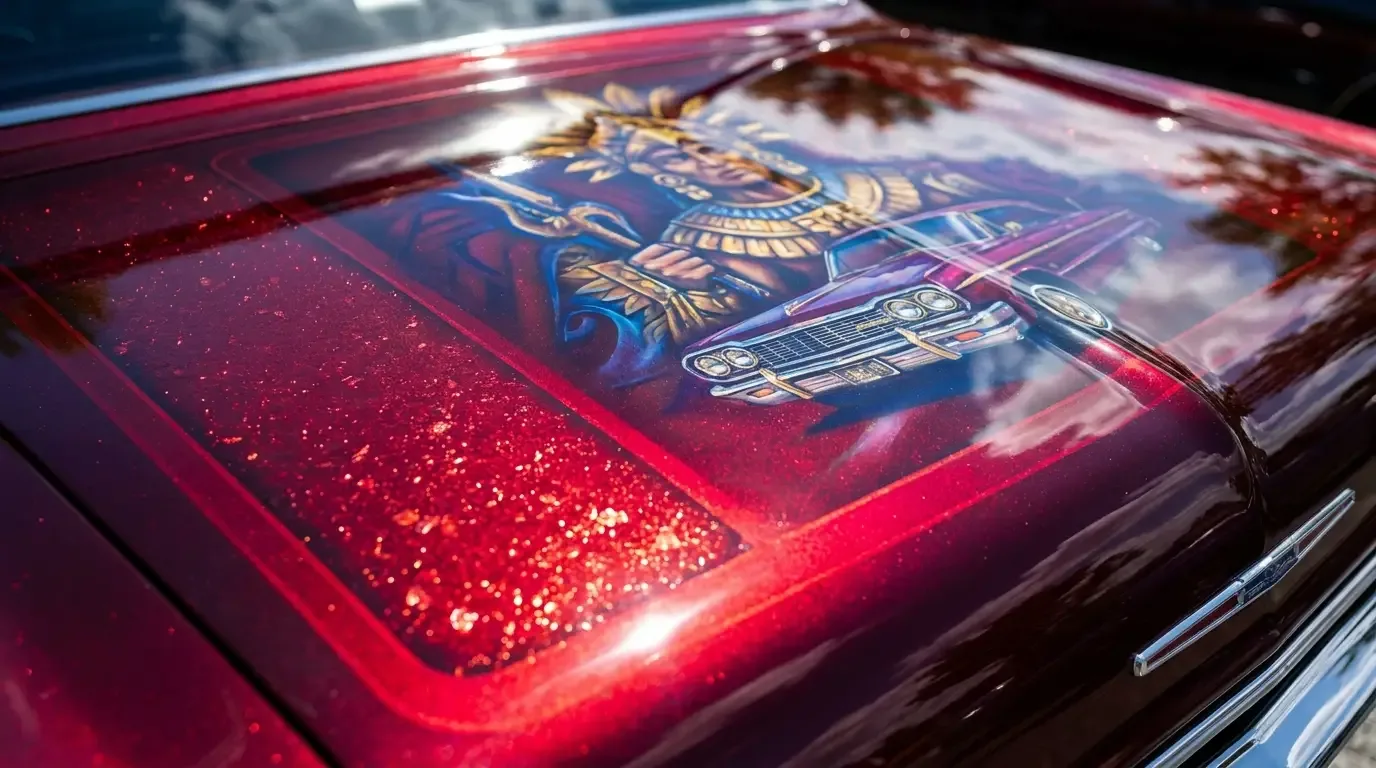
I have been around these cars long enough to tell you what separates a car that gets respect from one that gets polite nods. It is almost never the frame swap or the pump setup. It is the finish. So let me walk through how lowrider paint and bodywork actually goes together, what each piece costs in effort, and where people cut corners that a trained eye catches from across the parking lot.
Candy paint and metal flake, the two things everyone gets wrong
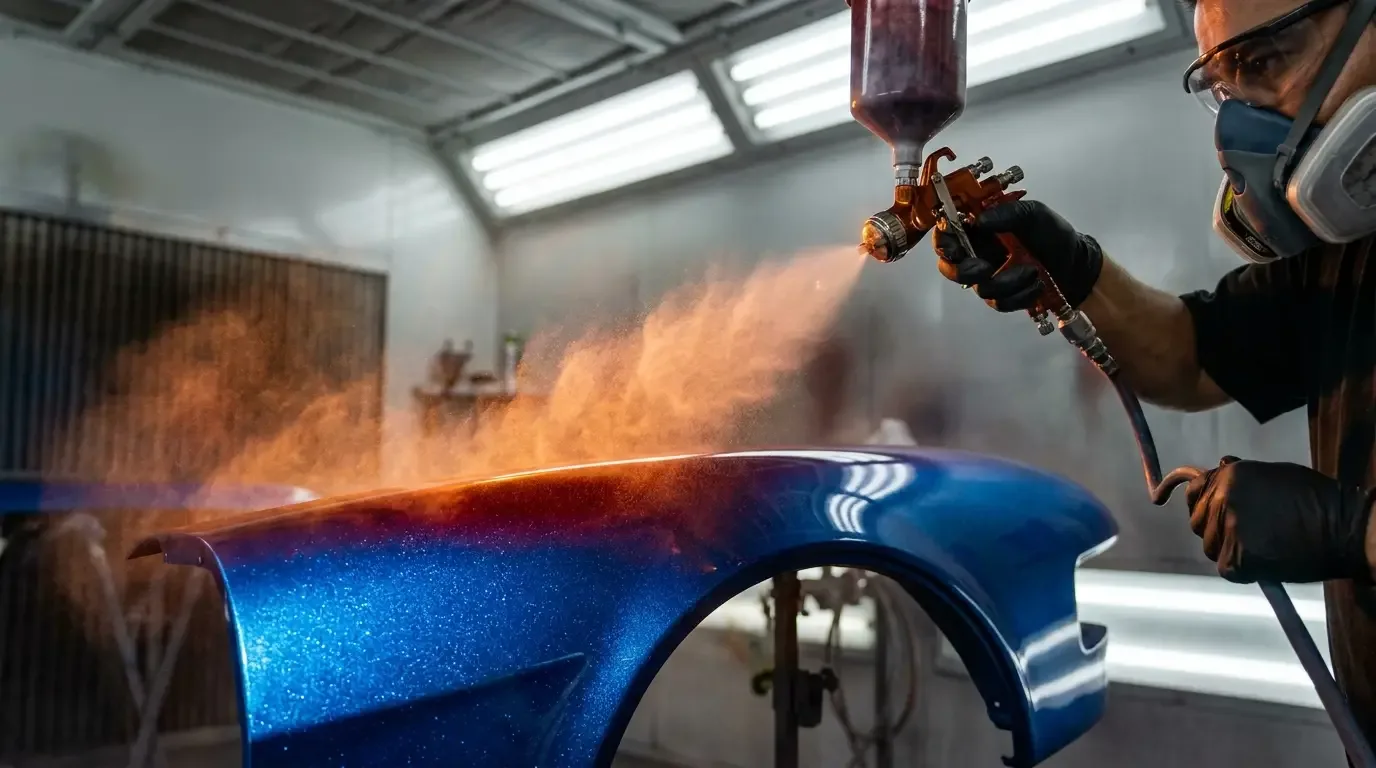
Candy is a transparent tinted coat sprayed over a bright base, usually silver, gold, or white. Light goes through the candy, bounces off the metallic base, and comes back out through the color. That is why a real candy apple red glows instead of sitting flat like a solid red. The catch is that candy is unforgiving. Every panel has to receive the exact same number of coats or you get "striping," where one door reads darker than the fender next to it. A painter shooting candy is counting passes out loud.
Metal flake is the other signature, and it is heavier work than it looks. Real flake is polyester or aluminum particles suspended in clear, and the big chunky flake from the 1960s and 70s is coming back hard on traditional builds. The problem is that flake has edges. You spray it, then you bury it under coat after coat of clear and sand it flat, or the surface feels like sandpaper and looks cheap. A proper flake job can carry ten or more coats of clear just to level the surface before final color-sanding and buffing.
| Finish element | What it is | Relative effort | Common failure |
|---|---|---|---|
| Base coat | Bright metallic ground for candy | Moderate | Uneven, causes candy striping |
| Candy color | Transparent tinted layer | High, coat counting | Panels don't match |
| Metal flake | Suspended flake in clear | Very high, heavy clear | Rough surface, exposed edges |
| Murals | Airbrushed artwork | Very high, artist rate | Cheap art dates the whole car |
| Pinstriping | Hand-brushed line work | High skill, fast hand | Wavering lines, wrong scale |
| Gold plating | Electroplated trim and parts | Cost driven | Peeling, pitting over time |
Murals, where the car tells a story
A mural is where the lowrider stops being a paint job and becomes a statement. The best ones are airbrushed by hand, often across a trunk lid, a hood, or the rear quarters, and they carry meaning. Aztec imagery, religious scenes, portraits of family, neighborhood landmarks, lowriders inside the mural of a lowrider. This is the part of the culture outsiders sometimes treat as decoration, and that reading misses the point. The imagery is personal and it is chosen with care.
Good mural work is expensive because you are paying an artist by the hour, and a skilled airbrusher on a trunk can spend days getting the shading and depth right. Then the whole thing disappears under clear so it becomes part of the paint rather than sitting on top of it. That clear-and-sand step is what protects the art and lets it be buffed to the same glass finish as the rest of the car. A mural that is not buried in clear will chip at the edges and look tacked on within a season.
- Trunk lids and hoods are the classic mural canvas because they open and put the art at eye level.
- Continuity matters. A mural should carry the same clear depth and buff as the surrounding paint.
- The strongest murals connect to the owner's family, faith, or neighborhood, not generic flames.
Pinstriping, the discipline that separates painters
Pinstriping is hand-brushed line work, done with a long-bristled brush called a dagger or a sword, dragged in one confident pass. There is no undo. A striper loads the brush, holds a breath, and pulls a line the length of a fender without lifting. Symmetry is done by eye or by folding a pattern, and the scale has to match the car. Too thick and it looks clumsy, too thin and it vanishes.
On a lowrider, striping frames the panels, outlines the murals, and ties the flake and candy together into one composition. It is often the last thing done and the cheapest per hour of the high-skill trades, but the good stripers have hands that took decades to train. When you see clean, even, mirrored striping across a hood, you are looking at real craft, and it is the detail that tells me whether the owner hired someone who knew the tradition or someone who owned a brush.
"I judge a lowrider by the striping first. Anybody can throw candy and bury flake in clear if they buy enough product. But you cannot fake a pulled line. A wavering stripe tells me the whole build was rushed, and a clean one tells me the owner respected the craft enough to pay for a real hand."
Jim Vasquez
Gold plating and wire wheels, the jewelry of the build
Once the paint is right, the metal gets attention. Gold plating on trim, grilles, bumper pieces, and engine parts is electroplated, and it is a cost decision more than a skill decision. It reads as luxury, and on the right car it works. The risk is longevity. Cheap plating pits and peels, especially on parts that see heat or road spray, so quality plating with proper preparation and thickness is worth the premium.
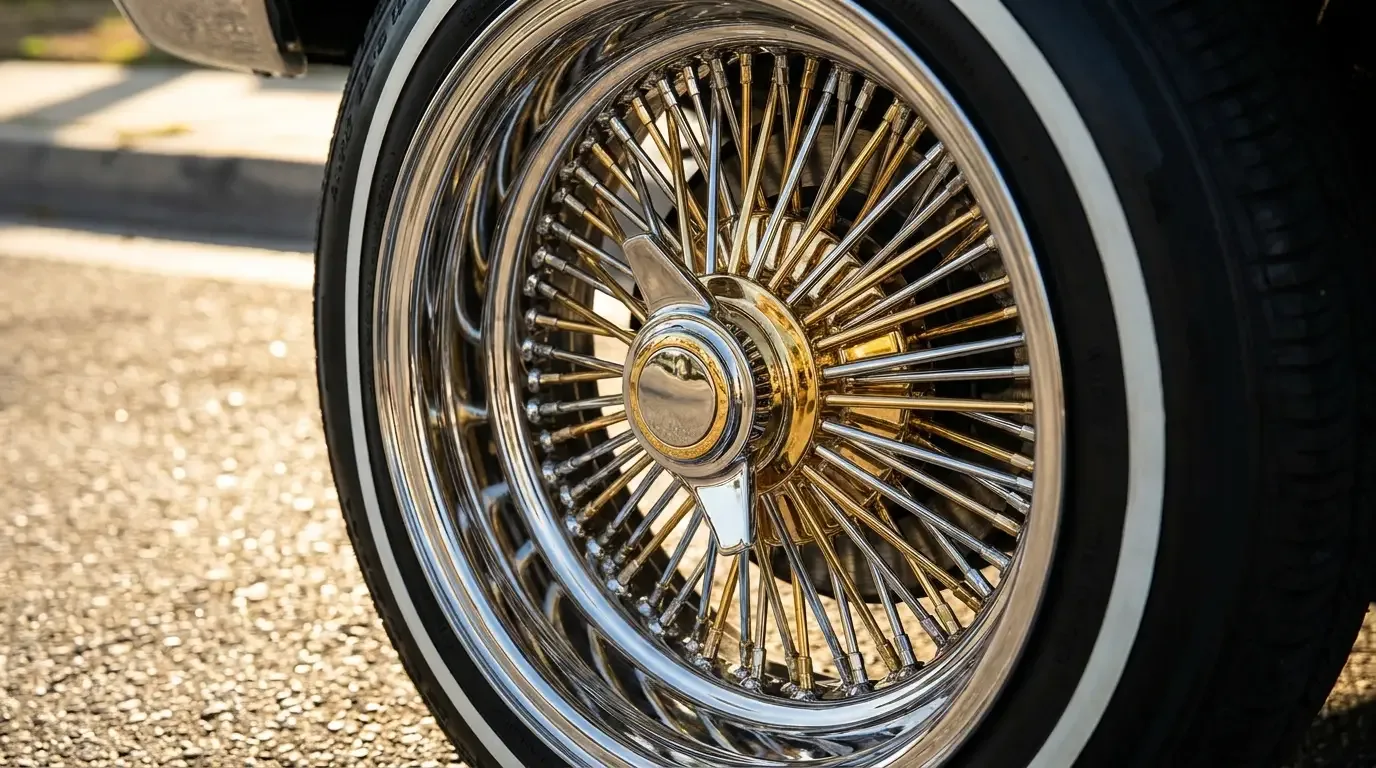
Wire wheels are the other piece of jewelry, and they are non-negotiable on a traditional lowrider. Chrome or gold spoke wheels, often 13 or 14 inch with knock-off spinners, are the correct look. The spokes catch light the way the paint does, and a set laced and trued by a good wheel builder rides straight and stays true. This is the same instinct that runs through the older lowrider bombs, where restrained chrome and correct wheels matter as much as the paint.
Tuck-and-roll interiors, where the money hides
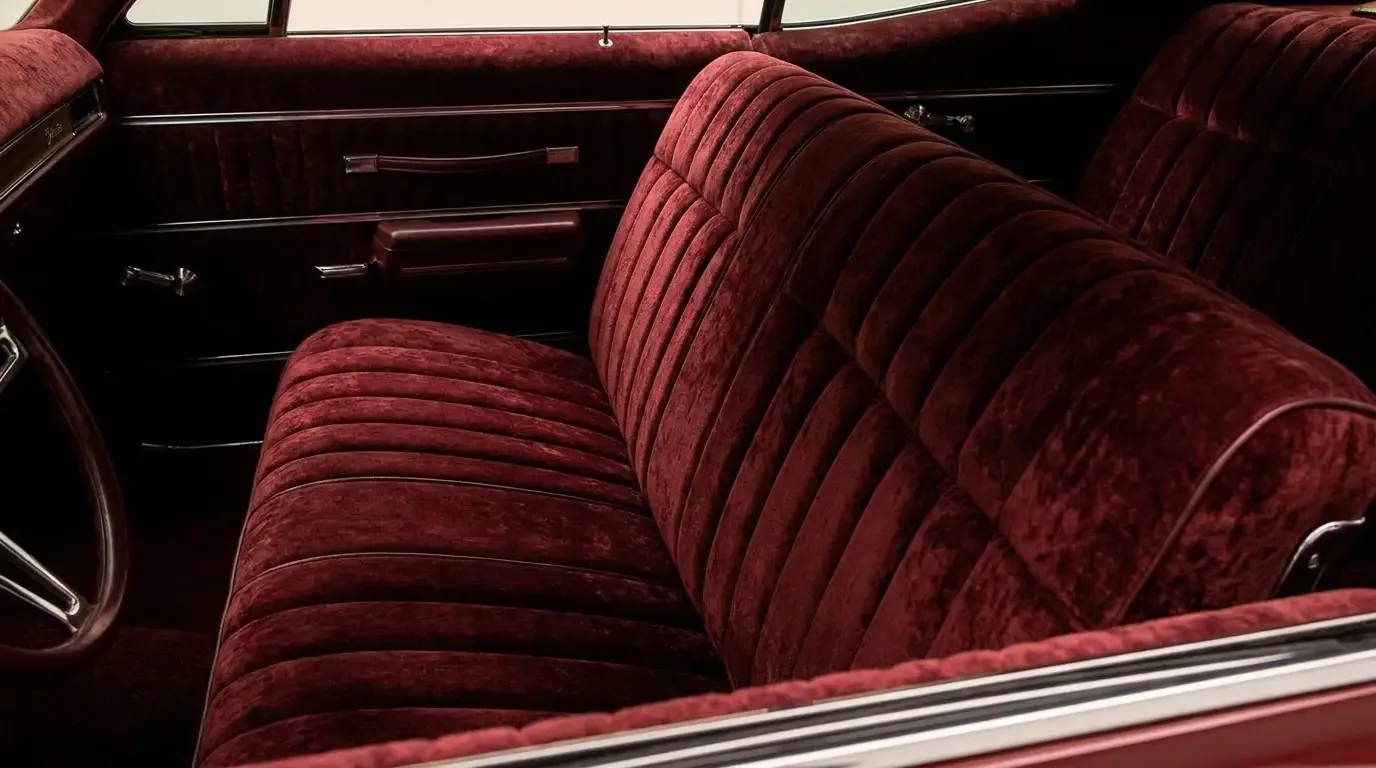
Open the door and the story continues. Tuck-and-roll upholstery is the traditional lowrider interior, rolled and pleated panels sewn into tight parallel channels, done in vinyl or leather. The technique is old, it came out of the same mid-century custom scene as the paint, and it takes a trimmer with real patience to keep every pleat the same width across a seat and door card. Diamond-tuck and button work show up on the higher builds.
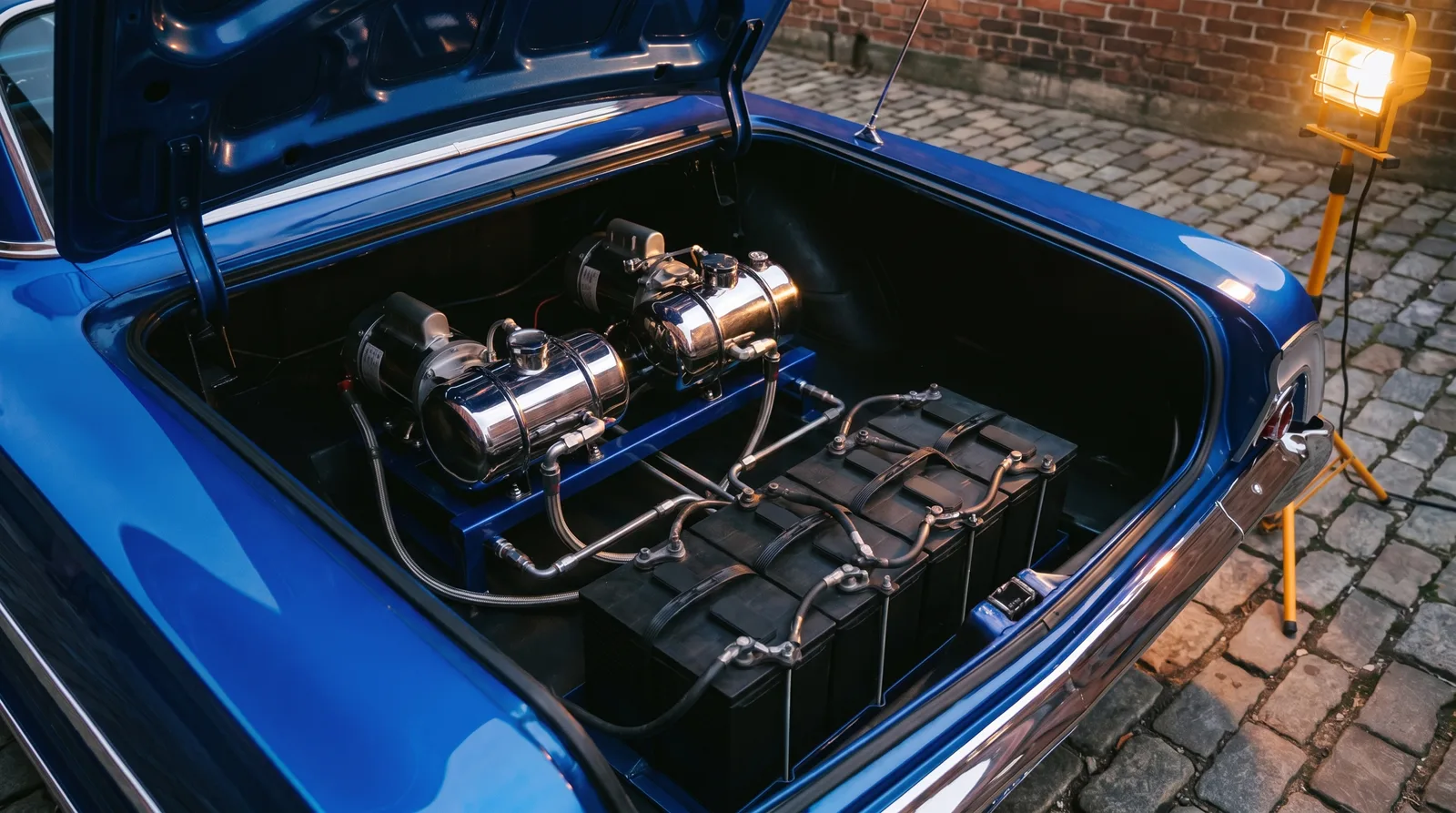
A full tuck-and-roll interior is one of the most labor-intensive parts of a serious build, and it is where a lot of quiet money goes. The best interiors color-match or deliberately contrast the exterior candy, carry the same care into the headliner and trunk, and are trimmed all the way through. When a car is done right, popping the trunk reveals upholstery and often a mural, because the trunk on a lowrider is a display space, not a place to hide the battery bank.
How it all comes together, and what it costs
The reason a top lowrider takes years is that none of this can be rushed and each stage has to respect the last. Bodywork has to be dead straight before candy, because candy shows every ripple. Flake has to be buried and leveled before art goes on. Murals and striping have to be clear-coated and buffed to match. Then the car is disassembled again for plating and interior. A finished show car is dozens of separate crafts stacked in the right order.
Costs vary enormously with ambition, but the pattern holds. Paint and bodywork is usually the single largest line, murals and plating scale with how far the owner wants to go, and the interior quietly eats hours. People shopping for project lowriders for sale should understand that a rough car with good bones is cheap, and a finished show car is expensive precisely because someone already paid for all of this labor. Buying the finish is almost always cheaper than commissioning it.
Sources and notes
- Period and contemporary lowrider press covering custom paint, mural, and upholstery technique.
- Custom paint and airbrush references on candy, metal flake, and clear-coat process.
- Builder and painter interviews on pinstriping, mural, and tuck-and-roll practice.
- Club and show-judging conventions on wire wheels, plating, and finish standards.
Related Reading
Have a
Classic Car
for Sale?
Reach thousands of serious classic car collectors across the US.
Sell It Here →
Are You a Classic Car Dealer?
List your full inventory and connect with targeted classic car buyers.
Join as a Dealer →
About the author
Jim Vasquez
Southern California hot rod and custom car builder with roots in the traditional kustom kulture scene.
Comments
Be the first to comment on this article.