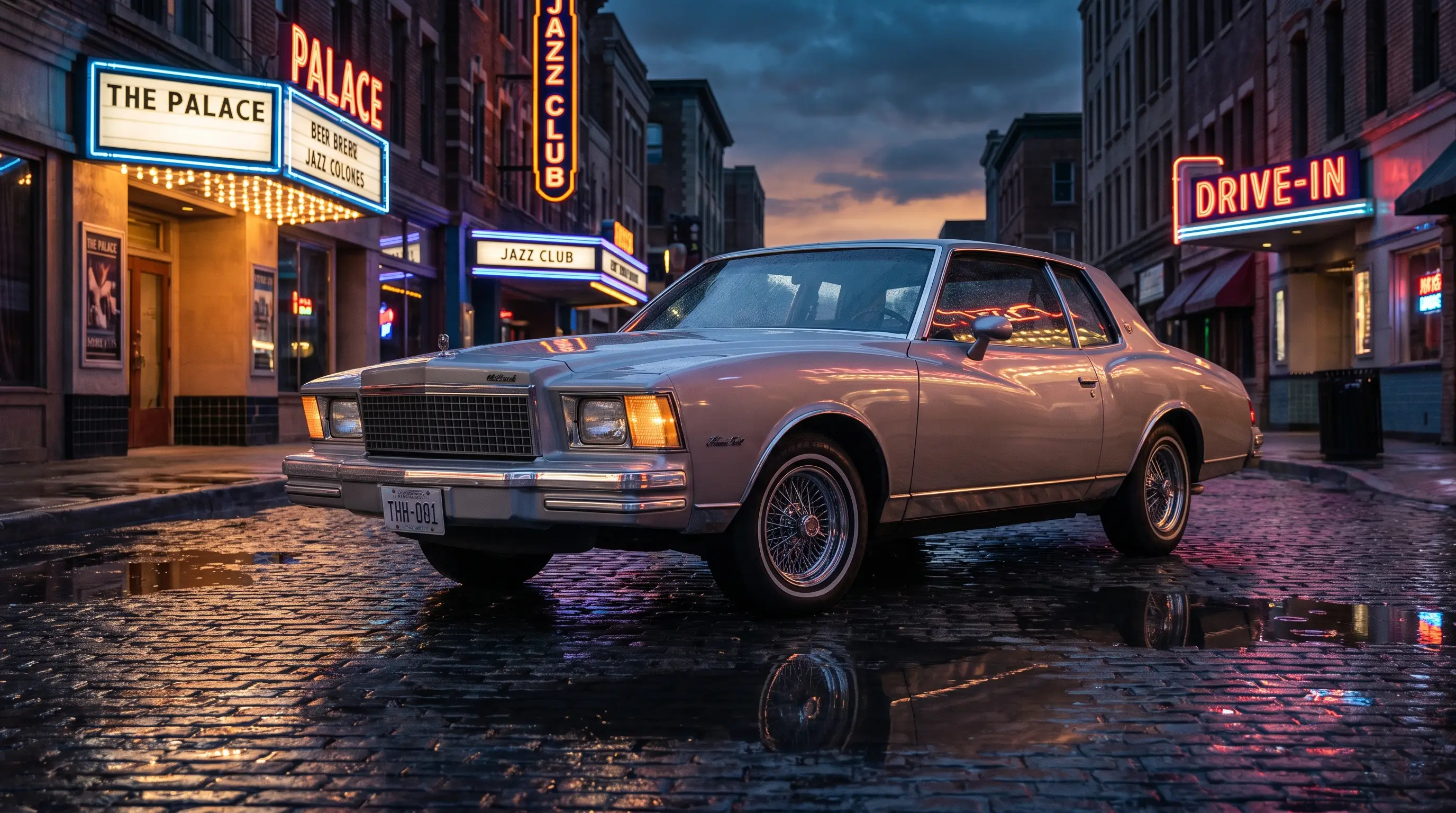
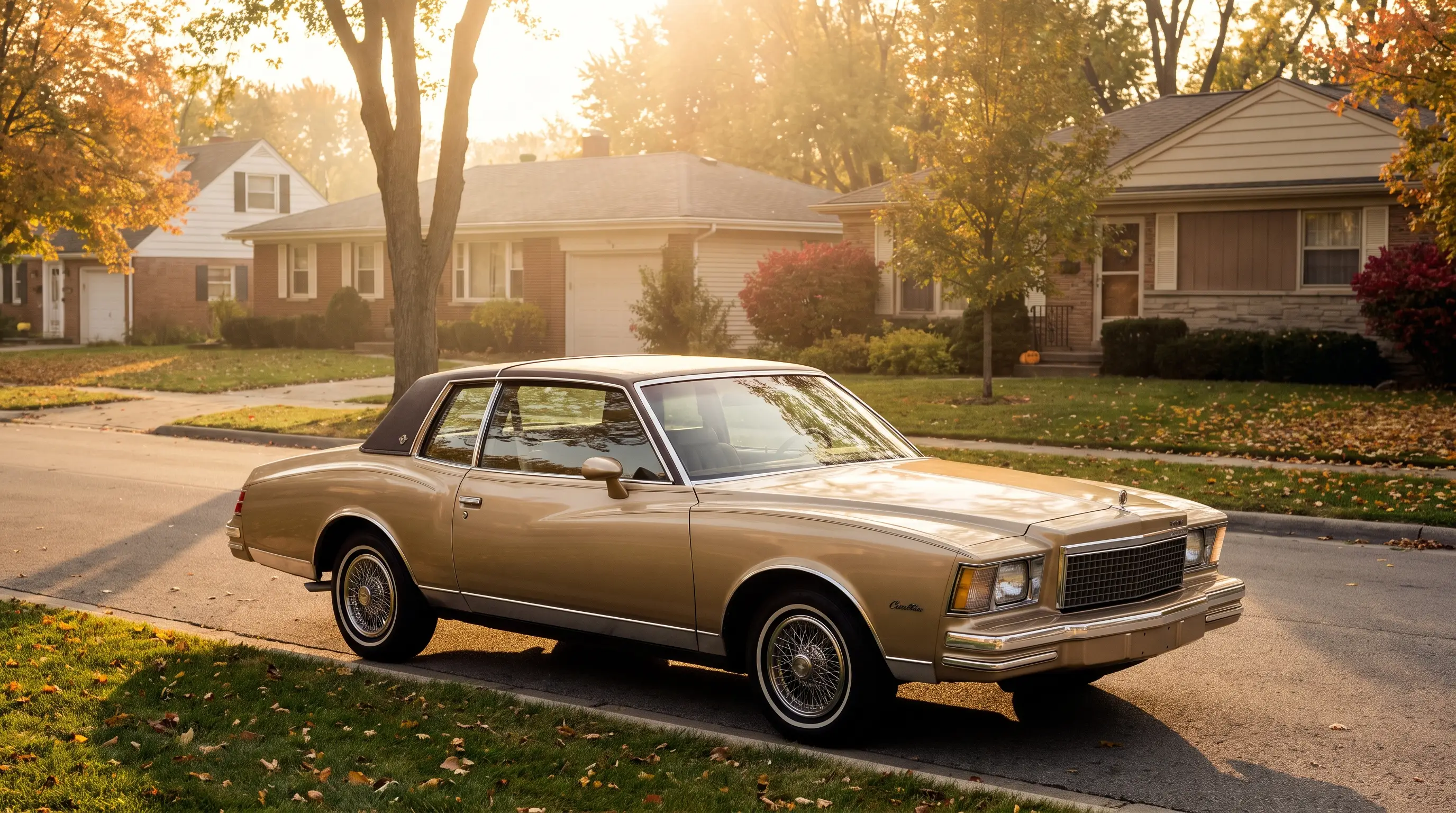
Chevrolet took roughly 700 pounds off the Monte Carlo for 1978, and the car that resulted felt less like a trimmed version of the old model and more like a genuinely different vehicle wearing a familiar name. The monte carlo 1978 lighter nimbler character shift is one of the more underappreciated redesigns in the nameplate's history, mostly because it happened during a decade nobody remembers fondly, but the engineering behind it was smarter than the era usually gets credit for.
The Colonnade Monte Carlo that ran from 1973 through 1977 had grown heavy and long, a product of an industry-wide drift toward bigger cars that ran straight into the fuel crises of the decade. General Motors answered with a downsizing program across its intermediate cars, and the Monte Carlo was one of the earliest and most complete examples of what that program could do. The 1978 car shed length, shed width, and shed real weight, all while keeping the long hood proportion that had defined the nameplate since 1970.
Downsizing on purpose, not by accident
It is worth being precise about why this happened, because the popular version blames the oil embargo alone. The embargo mattered, but so did the federal fuel economy rules that followed it, and so did a buying public that had simply grown wary of big engines and bigger fill-ups. Chevrolet had a choice. It could keep building a large, thirsty coupe and watch it age out, or it could reengineer the car for a changed market and try to keep the personal luxury feel intact. It chose the harder path, and the 1978 Monte Carlo is the result. For the full account of how that redesign came together, read 1978 monte carlo history.
The important detail is that Chevrolet did not simply shrink the car and hope. It protected the visual cues that made the Monte Carlo recognizable, then reengineered everything underneath. A buyer walking a showroom in 1978 saw a car that was clearly still a Monte Carlo, just tighter and more manageable. That balance between honoring the nameplate and modernizing the package is the whole story of this generation.
What the scale actually showed
The numbers tell the story better than any adjective. The 1977 Colonnade car rode a 116-inch wheelbase and stretched about 212.7 inches overall, tipping the scales well past 4,000 pounds in typical trim. The 1978 redesign brought the wheelbase down to 108.1 inches, cut overall length to roughly 200 inches, and dropped curb weight to around 3,150 pounds. That is close to 700 pounds gone and about 13 inches of length removed, without giving up the interior room. Chevrolet actually improved rear seat and trunk space in the smaller car, which is the kind of packaging win that rarely gets mentioned.
None of this came at the total expense of comfort, which is the part the engineers deserve credit for managing. The ride stayed composed rather than harsh, the cabin stayed quiet, and the car still looked substantial from the curb despite being meaningfully smaller in every dimension that mattered. Plenty of downsizing programs across the industry failed to hold that balance. The Monte Carlo's version is one of the better ones from the period.
| Spec | 1977 Colonnade | 1978 Downsized |
|---|---|---|
| Wheelbase | 116 in | 108.1 in |
| Overall length | About 212.7 in | About 200 in |
| Curb weight | Over 4,000 lbs | Around 3,150 lbs |
| Base engine | V8 | 231 V6 |
| Handling character | Soft, cruiser-tuned | More alert |
How the lighter car changed on the road
Weight is the enemy of every quality a car needs to feel good, and removing 700 pounds changed the Monte Carlo in ways that went well beyond the fuel gauge. Less mass over the front wheels, a shorter wheelbase, and a tighter turning radius gave the car a willingness to change direction that the Colonnade version never had. Period road testers noticed it. The new car felt more alert and easier to place, even with broadly similar engine output, and that is a meaningful shift for a nameplate whose identity had always leaned on comfortable cruising rather than agility.
The engine lineup reflected the new priorities honestly. The base engine was now a 231 cubic inch Buick V6 rated around 105 horsepower, an unthinkable choice on a 1970 car, paired in base form with a manual transmission. The V8 buyers wanted was the 305, good for about 145 horsepower with the automatic. A 267 V8 joined the menu for 1979. None of these were quick, and Chevrolet did not pretend otherwise. They were built for durability and reasonable economy, which is exactly what the moment called for.
Keeping the Monte Carlo feel in a smaller box
The genuine achievement here was preserving the sense of occasion. Chevrolet kept the personal luxury character through careful option packaging rather than standard equipment. Air conditioning, deluxe interiors, and power accessories stayed on the extra-cost list, which let the base price sit at roughly 4,785 dollars and undercut the rest of the personal luxury class, while a fully loaded car could climb well past 8,000. The car a buyer actually ordered still delivered the plush cabin and the quiet ride that defined the nameplate.
Not everyone loved the new proportions. Some period editors thought the shorter car looked stubby from certain angles compared to the flowing Colonnade lines, and that criticism is fair. But the trade was worth it. A car that drove better, parked easier, and sipped less fuel kept the Monte Carlo relevant to a buyer base that was rapidly losing patience with oversized domestic coupes. A close look at how the outgoing and incoming cars compared side by side is worth its own read, and a related story covers exactly that transition in more detail.
"Downsizing gets remembered as something manufacturers were forced into, and that is true, but the good downsizing programs turned a regulatory problem into a genuinely better driving car. The 1978 Monte Carlo is one of the clearer examples of that happening right, and the sales prove buyers agreed."
- Tom Ramirez
Why this generation still matters
The market rendered its verdict fast. The downsized car sold about 358,000 units for 1978, split between the Sport Coupe and the Landau, numbers that matched or beat the bigger cars it replaced. Sales stayed strong the following year before tapering as the decade closed. That volume mattered for more than one balance sheet, because it proved the smaller, lighter formula could still move in quantity and still feel like a proper Monte Carlo.
It also set up the nameplate's most celebrated era. The downsized platform, refined over a few model years and eventually landing as the rear-drive G-body, is the exact car that later wore the reborn SS badge and went NASCAR racing. None of the 1980s glory happens without the 1978 redesign proving the concept first. For anyone weighing whether this generation is worth pursuing today, there are Monte Carlos for sale now representing this exact downsized era, cars increasingly appreciated because they drive better than their size and price suggest.
Seven hundred pounds is a lot of car to remove without losing what made the original special. Chevrolet managed it in 1978, and the Monte Carlo was better for it.
Sources and notes
- Wikipedia: Chevrolet Monte Carlo
- Conceptcarz: 1978 Chevrolet Monte Carlo Specifications
- Mac's Motor City Garage: A New Dimension in Luxury, The 1978 Chevrolet Monte Carlo
- Ate Up With Motor: Disco-Era Darling, The Chevrolet Monte Carlo
- Motogallery: 1978-1980 Chevrolet Monte Carlo Base, 3rd Gen Buyer's Guide