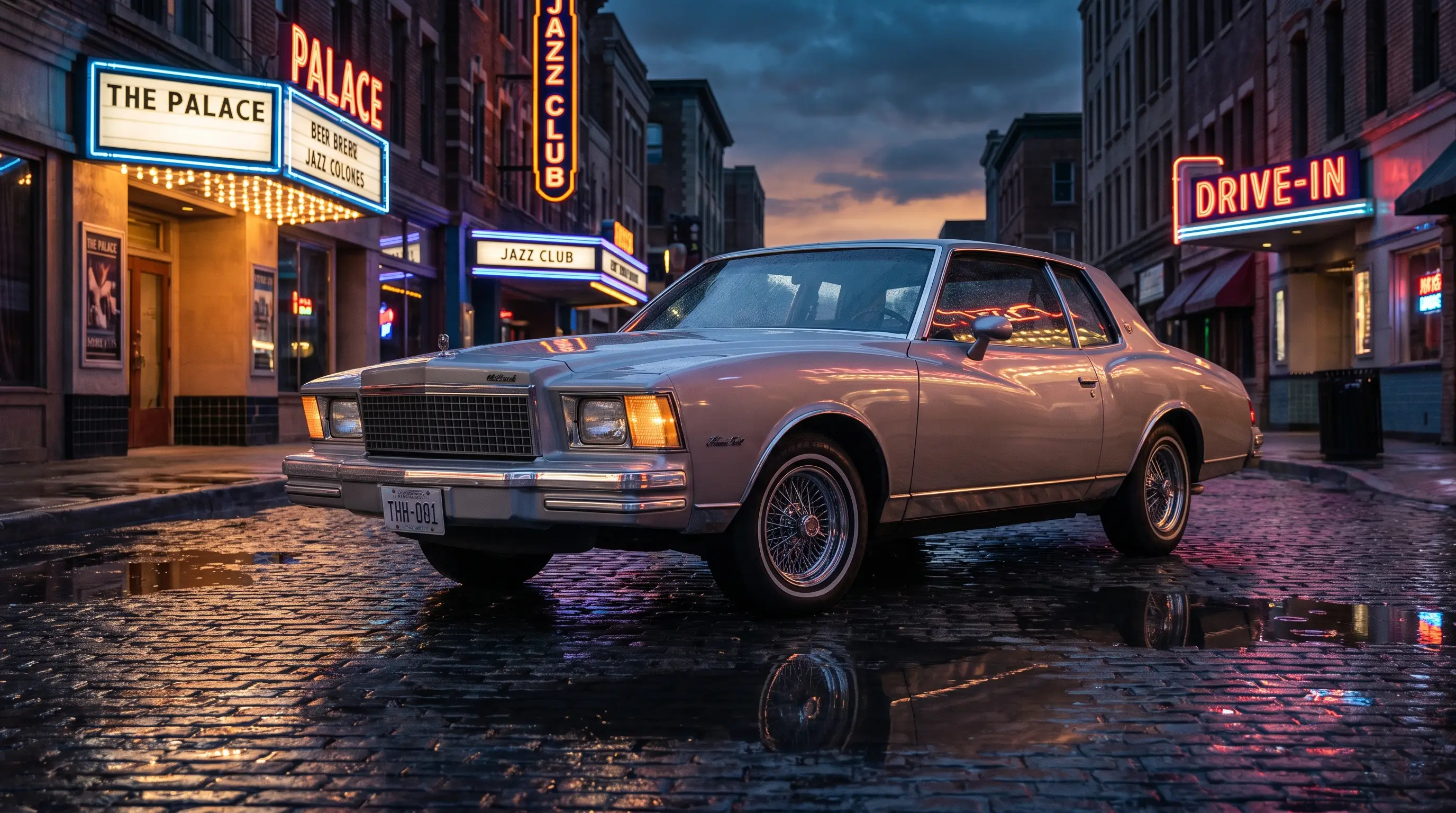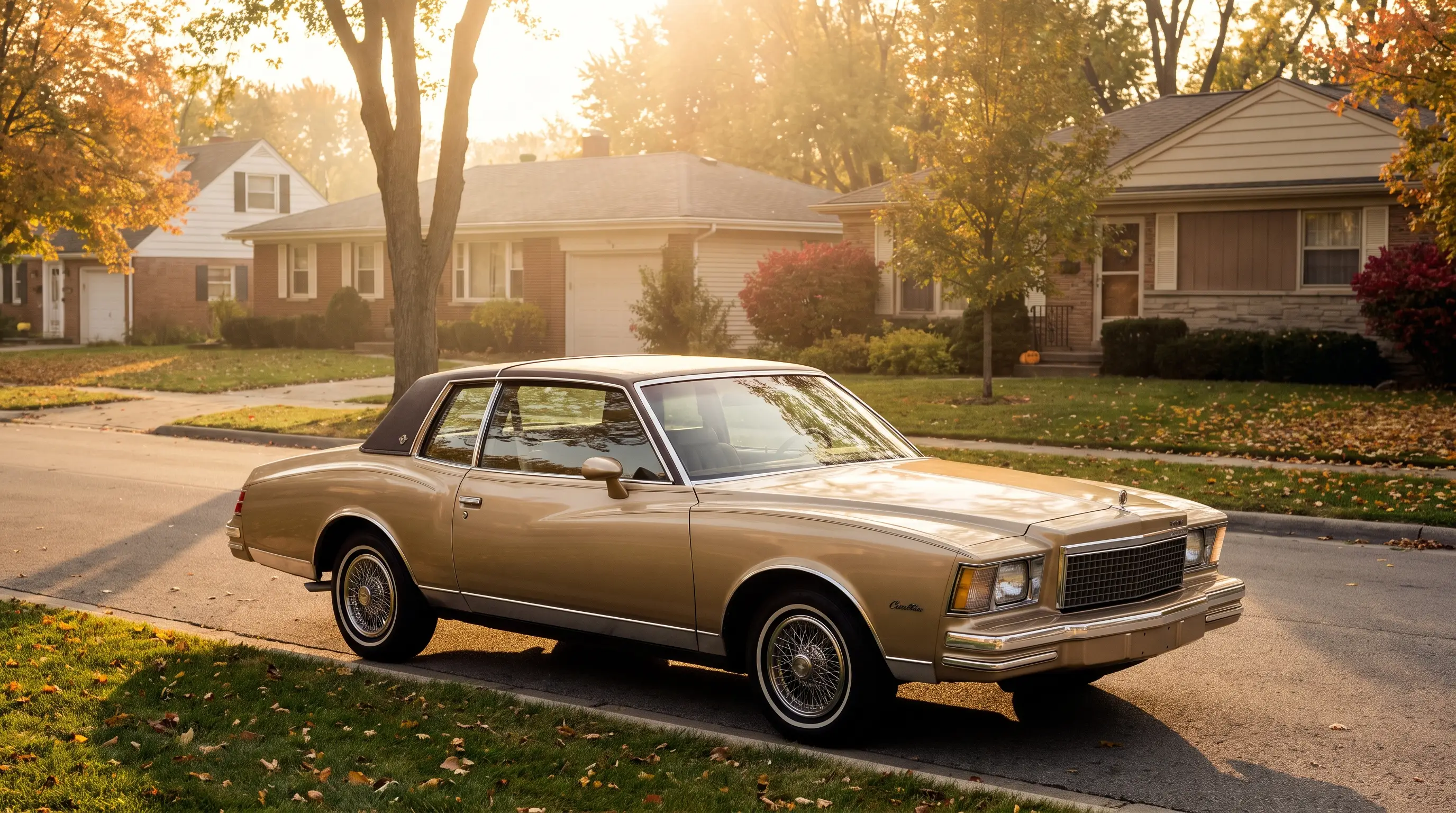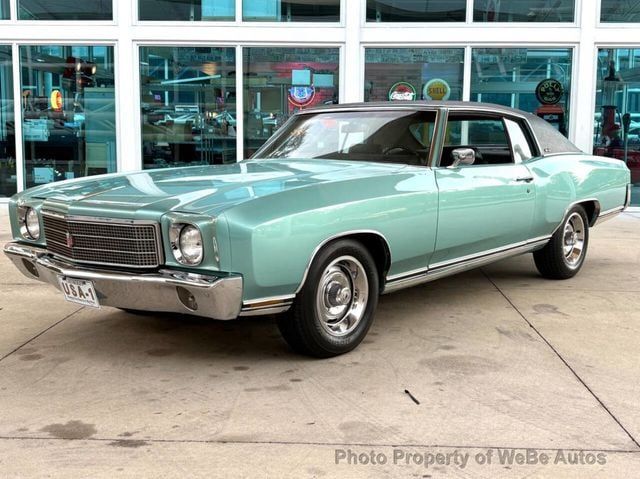
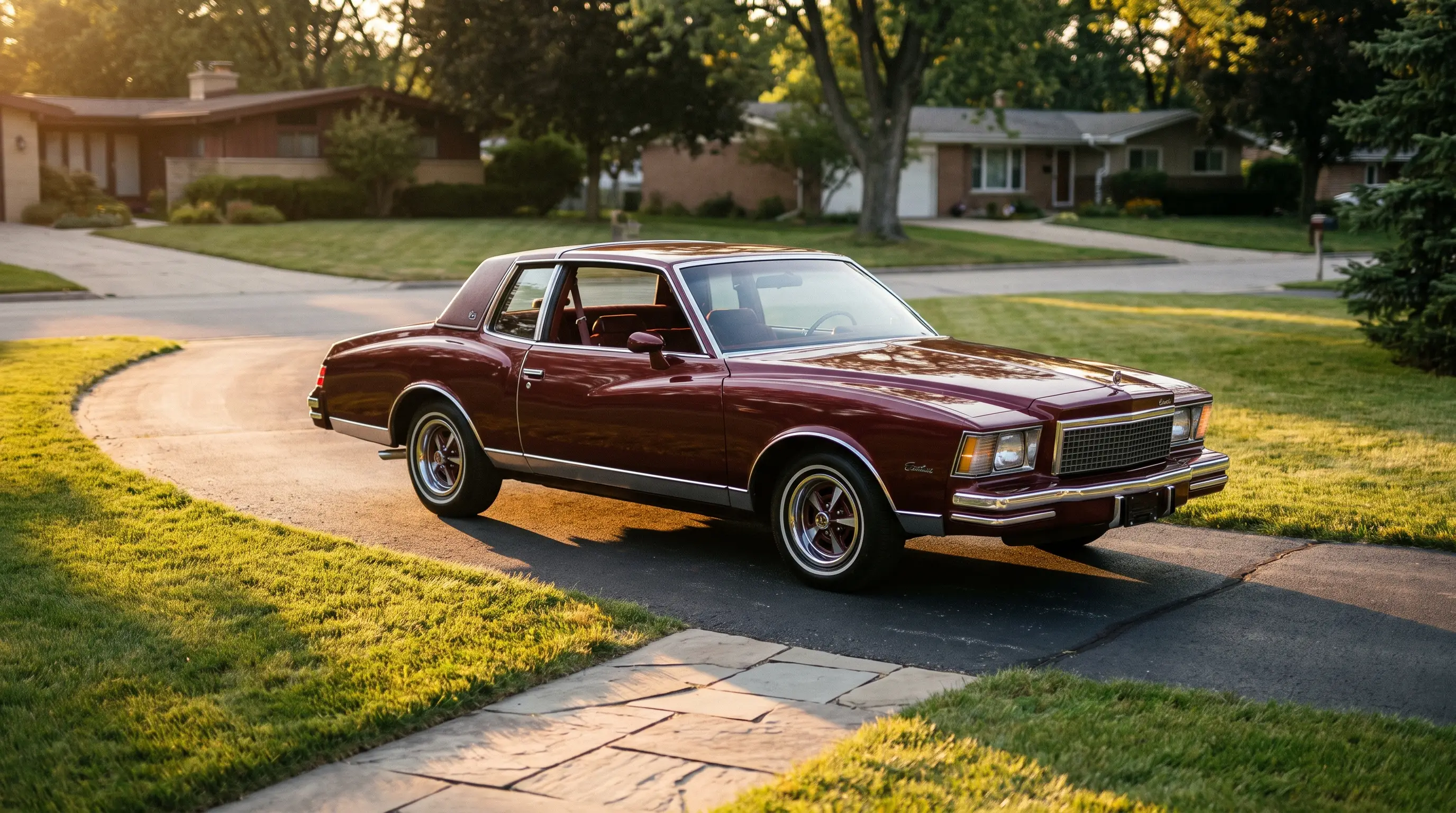
Park a 1977 Chevrolet Monte Carlo next to a 1978 and the two look like cousins separated by a generation rather than a single model year. That is the point of a monte carlo 1978 vs 1977 before after comparison. One design cycle turned a long, heavy Colonnade coupe into a trimmer, lighter personal luxury car, and the change is one of the clearest before-and-after studies in American automotive history. The nameplate stayed the same. Almost everything measurable about the car did not.
The 1977 car was the last of the second generation, a body style General Motors had introduced in 1973 and refined through the middle of the decade. The 1978 car was a clean-sheet redesign built to meet a market that had changed underneath the old model. Studying the two side by side shows exactly how Detroit navigated the shift from the excess of the early 1970s to the discipline the late 1970s demanded, and it shows how a careful manufacturer could shrink a car without erasing its identity.
Two cars, one nameplate, one model year apart
The most striking thing about this pairing is how little the two cars share beyond the badge and the broad idea. The 1977 Monte Carlo belonged to the Colonnade family, with fixed rear quarter windows, heavy bumpers mandated by federal impact rules, and the long, formal proportions that defined the personal luxury coupe at its most indulgent. The 1978 car kept the personal luxury mission but delivered it in a package that was smaller in every external dimension, a direct response to fuel prices and federal economy standards that had made the old approach untenable.
For collectors and historians, that makes the transition year unusually instructive. Most redesigns evolve a car gradually. This one drew a hard line. The 1977 represents the end of one philosophy and the 1978 the start of another, which is why the two are studied together far more often than any other consecutive Monte Carlo model years. For the full account of how the newer car came to be, our archive holds our complete history of the downsizing.
The dimensions, side by side
The measurements make the contrast concrete. The 1977 Monte Carlo rode a 116-inch wheelbase and stretched roughly 212.7 inches from bumper to bumper, with a curb weight that ran comfortably past 4,000 pounds in typical trim. The 1978 redesign cut the wheelbase to 108.1 inches, trimmed overall length to about 200 inches, and brought curb weight down to around 3,150 pounds. That is a reduction of close to 700 pounds and roughly 13 inches, achieved in a single model year.
What makes the engineering notable is that the interior did not shrink to match. Chevrolet actually improved rear seat room and trunk capacity in the smaller car through more efficient packaging. The old car spent much of its length on overhang and bulk that did nothing for the passengers. The new one put its reduced footprint to better use, which is the sort of detail that separates a thoughtful downsizing from a crude one.
| Attribute | 1977 Monte Carlo | 1978 Monte Carlo |
|---|---|---|
| Generation | Colonnade (second) | Downsized (third) |
| Wheelbase | 116 in | 108.1 in |
| Overall length | About 212.7 in | About 200 in |
| Curb weight | Over 4,000 lbs | Around 3,150 lbs |
| Base engine | V8 | 231 V6 |
Under the hood, before and after
The engine bays tell their own before-and-after story. The 1977 car offered V8 power as its foundation, in keeping with a segment that still expected eight cylinders even as output had fallen sharply from the muscle era. The 1978 car marked a genuine break by making a 231 cubic inch Buick V6 the standard engine, a first for the nameplate and a signal of how far priorities had moved toward economy. Buyers who wanted eight cylinders stepped up to the 305 V8, rated around 145 horsepower, which was the popular choice for anyone who wanted the traditional feel.
Neither car was fast by the standards of a decade earlier, and honesty about that is important. The value of the 1978 change was not more power but more efficiency for the same experience. A lighter car with a smaller, more economical engine could deliver the quiet, comfortable drive the Monte Carlo had always promised while asking far less at the pump, and in 1978 that trade sat at the center of nearly every purchase decision in the class.
What buyers gained and what they gave up
An honest comparison records the losses as well as the gains. Buyers moving from a 1977 to a 1978 gave up outright size and a measure of the road presence that came with it. Some also found the shorter proportions less graceful, a complaint period reviewers noted when they described the new car as looking stubby from certain angles. For a customer who bought the Monte Carlo precisely because it was large and imposing, the downsized car asked for a real adjustment.
What they gained, though, outweighed the loss for most. The 1978 car was easier to park, more willing through a corner, and considerably cheaper to run. It retained the plush interior and the quiet ride that defined the nameplate, and it kept the lowest price in the personal luxury class. The result was a car that broadened its own audience, appealing to buyers who had found the earlier land yachts a handful while still satisfying loyalists who cared most about comfort and style. The sales figures, near 358,000 for 1978, confirm that the market accepted the trade.
"When you place the 1977 and the 1978 side by side, you are looking at two answers to two different questions. The Colonnade car answered what luxury meant when fuel was cheap. The downsized car answered what it meant when fuel was not. Both are honest artifacts of their moment, and that is exactly why they belong together in any serious study of the nameplate."
- Sarah Whitfield
How the collector world reads the two today
In the current collector market, the two years occupy different niches, and understanding that helps a buyer choose well. The 1977 Colonnade cars appeal to enthusiasts who want the last of the big personal luxury coupes, with the presence and the period flavor that only the larger body delivers. The 1978 cars appeal to buyers who want something easier to live with and often more affordable, a car that drives better than its price point suggests and carries the added significance of marking a turning point in the nameplate's history.
Documentation matters more than year for either car. Original build records, honest mileage, and unmolested condition drive value in this class far more than the badge on the fender or the size of the body. A well-kept 1978 with a documented history is a more rewarding ownership prospect than a tired 1977, and the reverse holds just as true. Anyone weighing the two should study honest examples of each before deciding, and it is easy to find a classic Monte Carlo from either side of the divide to compare in person.
The 1977 and the 1978 are the same nameplate photographed at two different moments, one at the close of an era and the other at the opening of the next. Read together, they explain how the Monte Carlo survived a transition that ended plenty of its rivals.
Sources and notes
- Wikipedia: Chevrolet Monte Carlo
- Conceptcarz: 1978 Chevrolet Monte Carlo Specifications
- Ate Up With Motor: Disco-Era Darling, The Chevrolet Monte Carlo
- Mac's Motor City Garage: A New Dimension in Luxury, The 1978 Chevrolet Monte Carlo
- Motogallery: 1978-1980 Chevrolet Monte Carlo Base, 3rd Gen Buyer's Guide