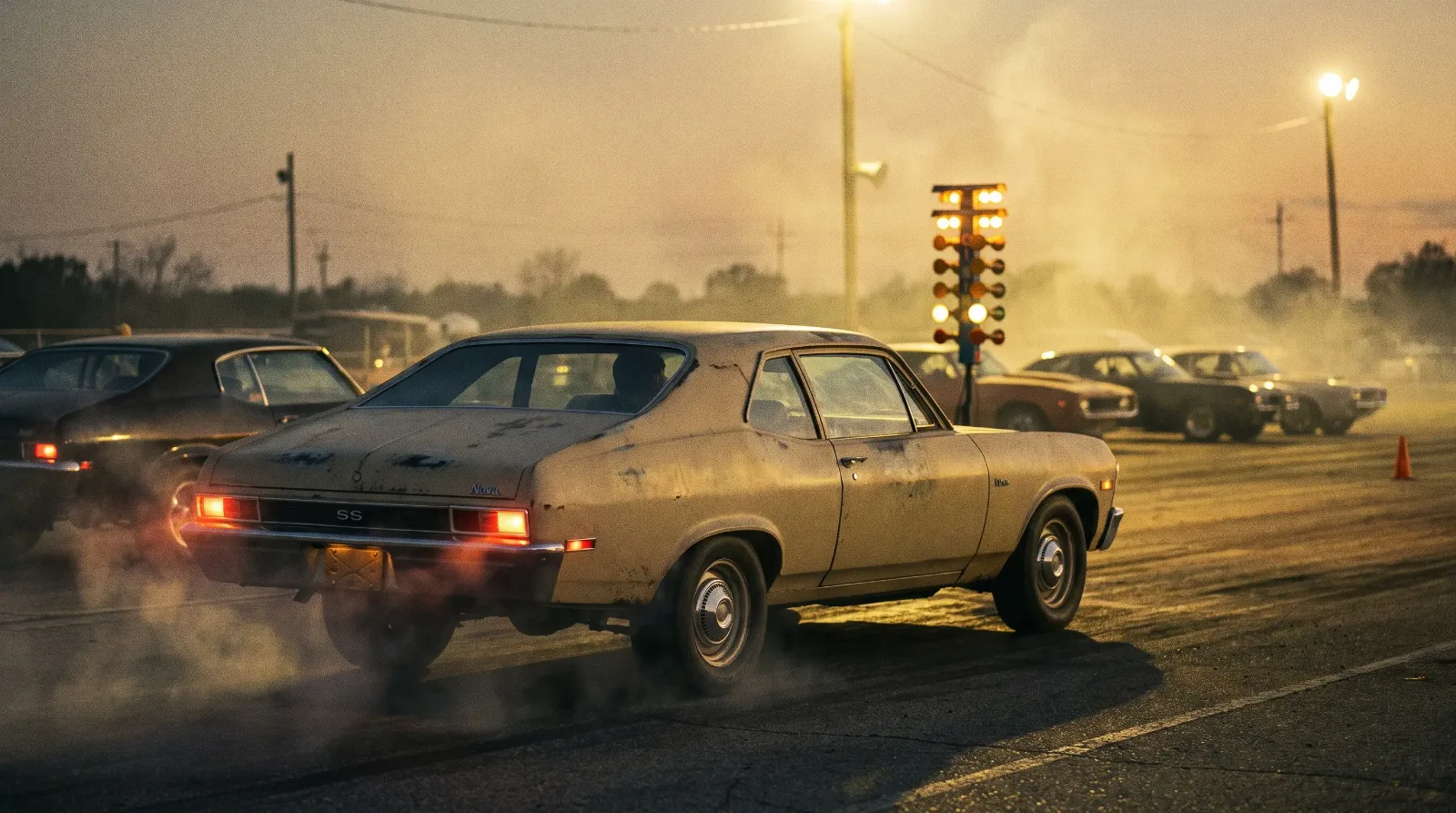
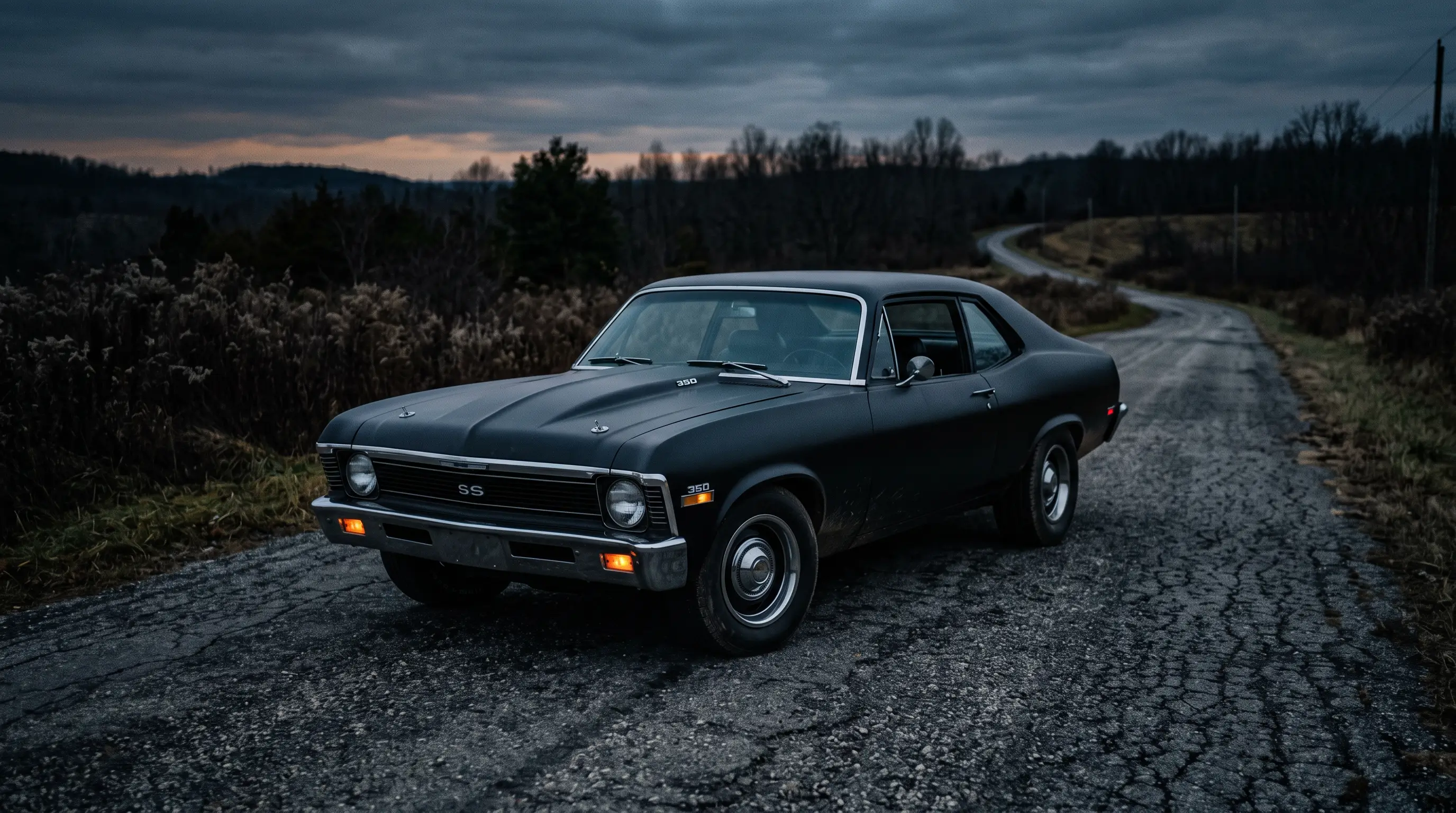
The flat-black Chevy Nova comes screaming out of a Texas backroad at night, headlights cutting through dust, a skull and crossed lightning bolts painted across its hood, and for about ninety seconds a beat-up compact that Chevrolet built for grocery runs turns into the most menacing car in modern cinema. That is the image most people carry out of Quentin Tarantino's 2007 film Death Proof, and it is the reason a whole generation of moviegoers who had never heard of a Nova SS suddenly wanted one. The death proof Nova was never a real stunt car built to survive anything. It was a movie prop dressed to look invincible, driven by a killer, and the gap between that fiction and the actual car is worth understanding.
What the movie actually put on screen
Death Proof follows Stuntman Mike, played by Kurt Russell, a killer who uses his "death proof" stunt car, the matte black Chevy Nova SS, to murder young women in staged crashes during the film's first half. That Nova is armored for exactly one seat, Mike's own, which is the film's dark joke about the whole idea of a "death proof" car: it only protects the person doing the killing. Reliable production sources place the car as a 1971 Nova SS, though some later listings of the surviving screen cars describe it as a 1970, so the exact model year still gets argued over even among people who have handled the actual prop.
The much-discussed hood-surfing stunt belongs to a different car entirely. In the film's second half, after Mike survives his first rampage and stalks a new group of stuntwomen, Zoë Bell, playing a fictionalized version of herself, rides the hood of a white 1970 Dodge Challenger at highway speed in a real, unfaked stunt while her friend Kim drives. Mike chases them in a second stunt car, a 1969 Dodge Charger, not the Nova. The Nova's fame rests on being the disguise for a killer in the first half, not on the hood stunt people often misremember it for.
Both muscle cars in the film are dressed-up period pieces built for hard use, and Tarantino wanted practical car work rather than digital effects throughout. The Nova specifically was chosen partly because an ordinary-looking compact made an effective disguise for a killer's car, and partly because it could take the abuse a working stunt vehicle needs to survive.
The cars behind the cars
Production designers on a stunt-heavy film do not build one hero car and hope for the best. Death Proof needed multiple examples of the Nova used in Mike's first rampage, since a car doing repeated hard braking, drifting, and staged collisions takes damage that no single vehicle survives across a full shoot schedule. Some of the cars carried reinforced towing rigs and hydraulic-operated door hardware visible in close shots, while others were kept closer to stock appearance for dialogue scenes and static shots where the mechanical reinforcement would have been obvious on camera.
That is standard practice across stunt-driving productions, but it matters here because it explains why fans who go looking for "the" Death Proof Nova sometimes find conflicting details about year, trim, and equipment. There was never a single car. There was a small fleet built to survive a script that demanded real cars take real abuse, and the matte black paint and hood graphic were consistent even when the mechanical specification underneath was not.
Why a Nova, and not a Camaro or a Mustang
Tarantino builds his car choices out of genre memory, not just spec sheets. A Camaro or a Mustang would have signaled hero car, the kind of machine a studio picks when it wants the audience rooting for speed and style from frame one. A Nova signals something else. It is the car nobody expects to be dangerous, the compact grocery-getter your uncle drove to work, which makes it the perfect disguise for a killer's stunt car, since nobody watching expects the unassuming compact to be the one doing the hunting.
That instinct lines up with decades of real Nova culture. The car built its reputation on the strip and in budget builds precisely because it looked unassuming while hiding real small-block muscle underneath, the same theme covered in a companion piece about the Nova's drag racing history. Death Proof just put that sleeper reputation on a movie screen for an audience that had no idea it already existed.
The collector market noticed
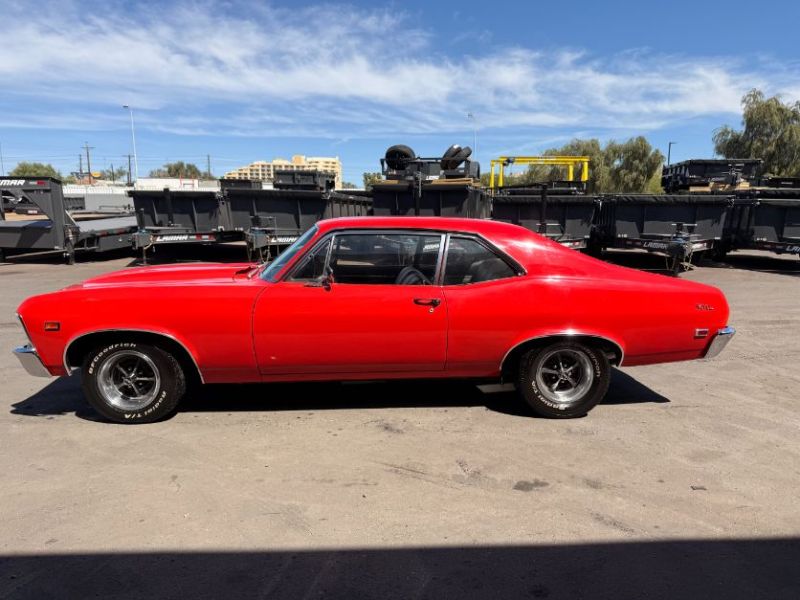
Films rarely move classic car prices in a straight line, but Death Proof did give the 1968 to 1972 Nova SS a visibility boost it had not had in years. Enthusiasts who grew up watching the movie started asking dealers and swap meets specifically about "the Death Proof Nova," and sellers noticed. It is not the reason Nova values climbed over the following decade, that had far more to do with broader muscle car appreciation and shrinking supply of clean originals, but the film put a new generation of buyers in front of a car they might otherwise have overlooked in favor of Chevelles and Camaros.
What the movie got right, whether intentionally or not, is the same thing that makes the Nova durable as a collector car today. It is honest, unpretentious, mechanically simple, and cheap enough to actually drive and modify without the anxiety that comes with a numbers-matching Corvette. Stuntman Mike's Nova was a costume. The real cars people are restoring and buying are not.
"Tarantino did not put a supercar in that chase because a supercar would have lied to the audience. He put a Nova in it because everyone in that theater already half-believed, deep down, that the quiet car in the driveway might be hiding something."
— Patrick Walsh
Finding your own, minus the death proofing
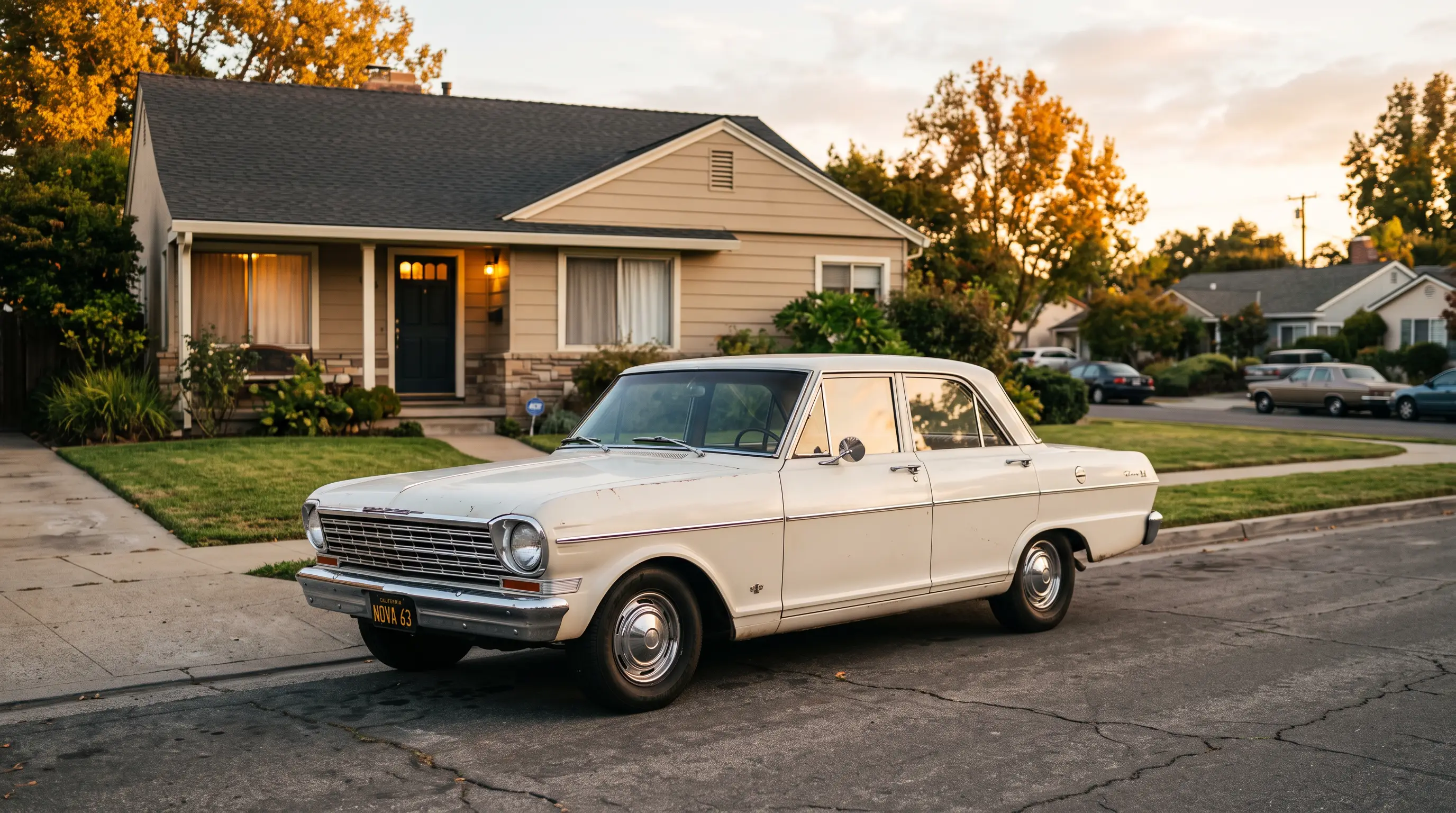
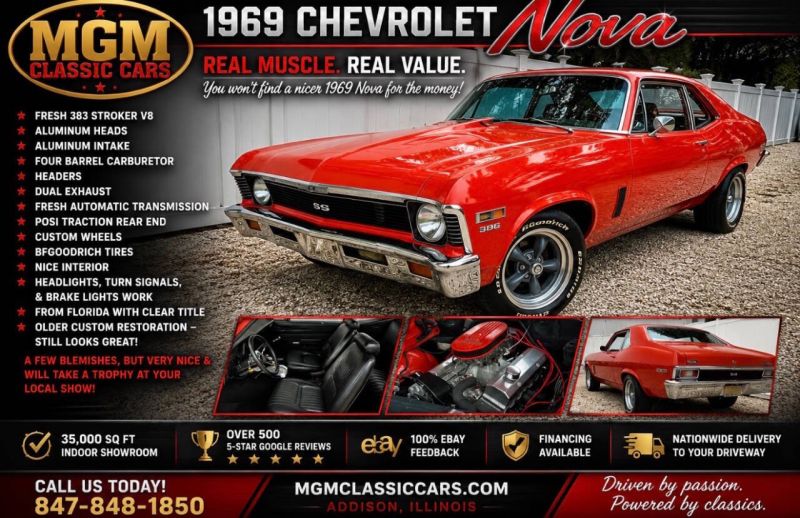
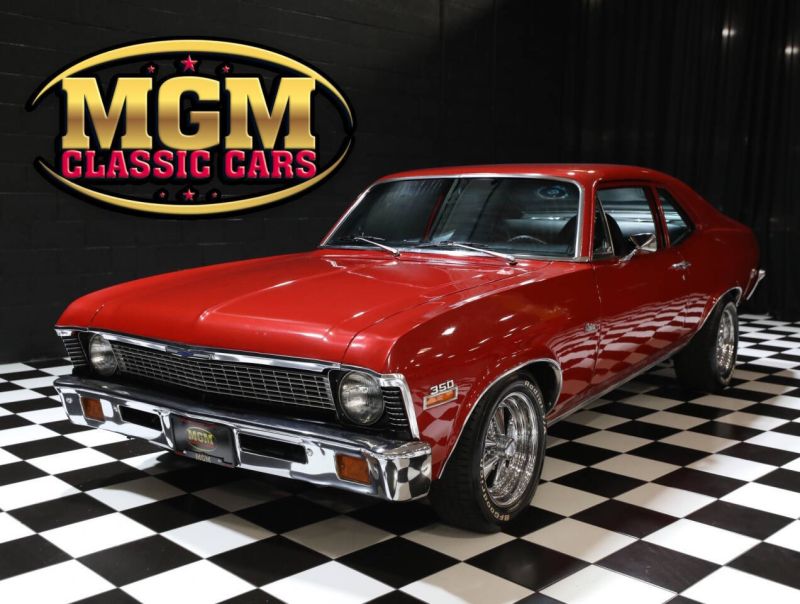
If the film sent you looking for a second-generation Nova of your own, the good news is that the platform is far more accessible than the Camaros and Chevelles it shared parts with. Clean SS-badged cars from 1968 through 1972 show up regularly, and even six-cylinder survivors make excellent small-block swap candidates for buyers who want the look without chasing a numbers-matching engine. This is exactly why the Nova has held on as a favorite among first-time muscle car buyers, a theme explored more fully in the piece on why the Nova endures.
Whatever pulled you toward the model, whether it was a movie chase scene or a memory of a family car, there are real, unstunted examples of the era on the market right now. A look through classic Chevy Novas for sale is a good place to start, and none of them require a hood rig or a Hollywood insurance policy to enjoy.