I grew up hearing the older guys at the gas station talk about the years right after the war like they were some kind of turning point, and honestly, they were right. A bunch of young men came home from overseas knowing more about mechanics and engines than they ever would have learned in a normal peacetime job, and they came home to a country full of cheap, worn-out Fords from the 1930s just sitting around waiting for someone to do something with them. That combination is where hot rodding as we know it really got its start.
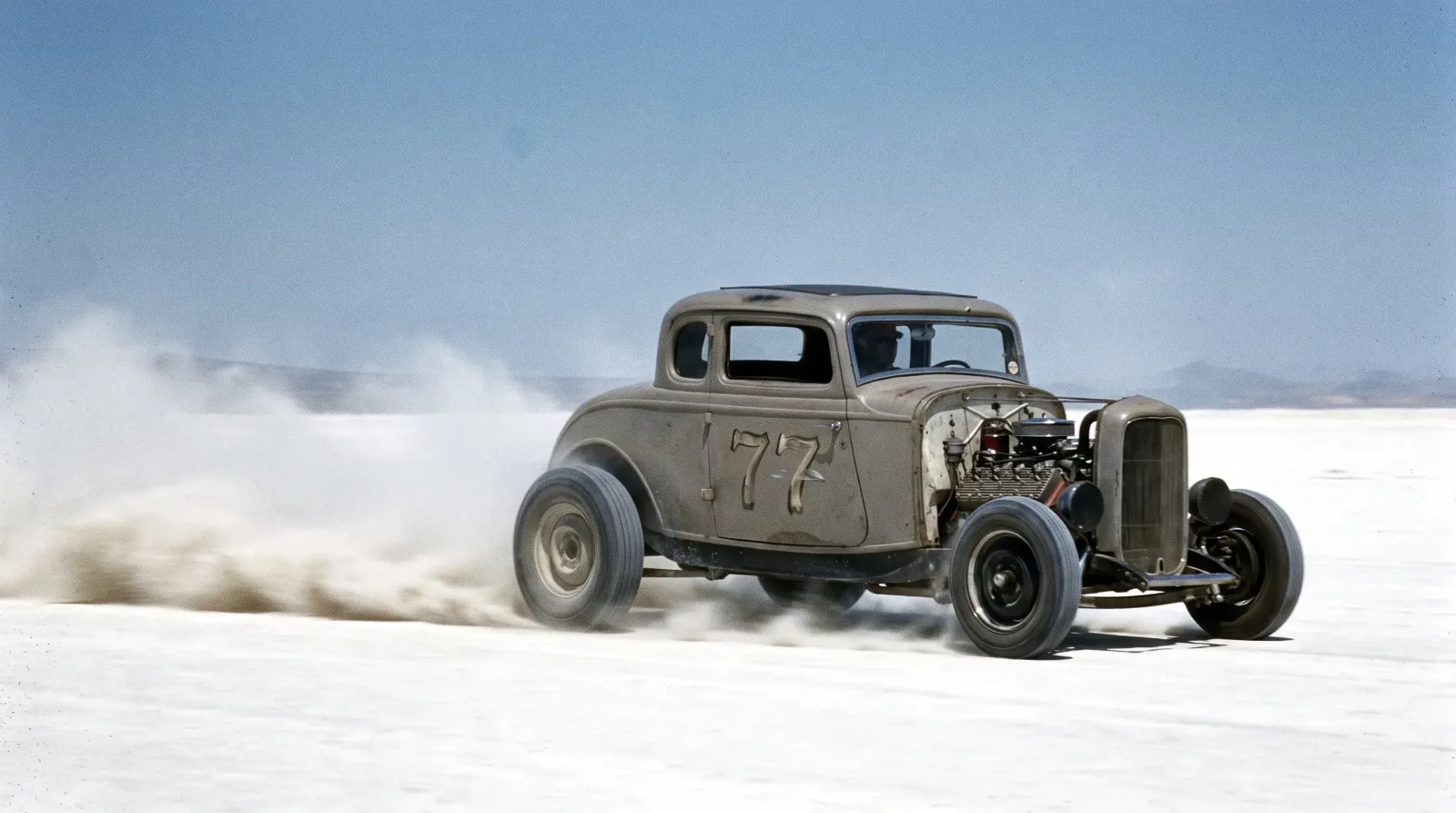
These weren't rich guys building show cars. These were guys pulling fenders off a Model A, dropping in a bigger engine, and taking the thing out to a dry lakebed or a stretch of empty road to see how fast it would go. It was cheap, it was loud, and it changed car culture forever. If you want the wider decade this fits into, more on late 1940s hot rods covers that ground.
Where the skills came from
The war taught an entire generation of young men things they never would have picked up otherwise. Aircraft mechanics learned precision work on engines that had to run perfectly under real stress. Tank mechanics learned to keep heavy, complicated machinery running with whatever parts were on hand. That kind of hands-on mechanical education, done under pressure, with no room for guessing, came home with them.
Add to that the fact these guys had a little bit of money saved from military pay and a lot of restlessness after years of discipline and structure, and you get a generation primed to tinker. Cars from the 1930s were plentiful and cheap because nobody had built new cars during the war, so a 1932 Ford Model B or a similar prewar car could be had for almost nothing. Strip off the extra weight, drop in a better engine, and you had something that could genuinely move.
The flathead V8 and what it made possible
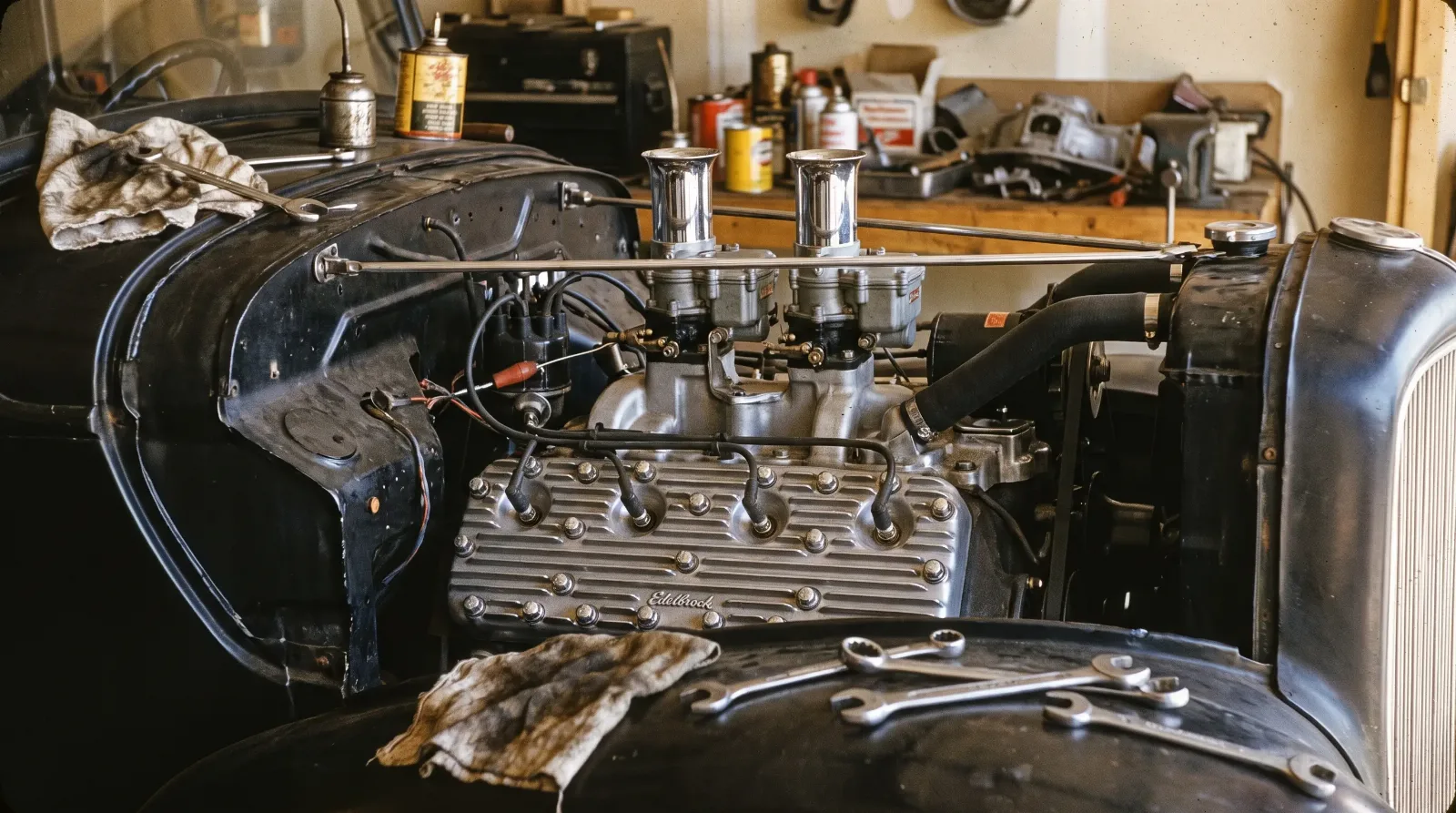
Ford's flathead V8, introduced back in 1932, became the engine of choice for this whole movement, and there's a good reason for that. It was affordable, it was everywhere thanks to years of production, and it responded well to the kind of modifications a guy could do in his own garage with basic tools. Multiple carburetors, better exhaust, ported and relieved heads, the flathead took to hop-up work in a way that made backyard speed genuinely achievable.
Stock, the flathead V8 made somewhere around 85 to 100 horsepower depending on the year and displacement, which doesn't sound like much today. But a hopped-up flathead in a stripped-down Model A body, with all that excess weight gone, could move a lot quicker than the numbers alone suggest. That's the whole hot rod philosophy right there: power-to-weight, not raw power.
The dry lakes and where racing started
Southern California's dry lakebeds, places like El Mirage and Muroc, gave these guys somewhere legal and wide open to actually test what they'd built. You'd drive your car out there on a Sunday morning, line up with everybody else who'd done the same thing, and run it flat out across the salt to see whose modifications actually worked. There was no glamour to it. It was just a bunch of guys with stripped-down Fords chasing speed and comparing notes afterward.
That dry lakes scene led directly to organized timing and eventually to the drag strip as we know it today. The Southern California Timing Association, formed before the war out of that same lakebed racing crowd, kept running meets afterward, and returning GIs swelled its ranks with guys who wanted an official, honest number to compare against each other rather than just bragging rights at the gas station.
| Element | Typical choice, late 1940s |
|---|---|
| Donor chassis | 1928-1932 Ford Model A or Model B |
| Engine | Ford flathead V8, hopped up with multiple carburetors |
| Weight reduction | Stripped fenders, hood, bumpers, sometimes windshield |
| Testing ground | Dry lakebeds (El Mirage, Muroc) or empty rural roads |
"I remember the old guys at the station saying the whole thing started because nobody had money for a new car and everybody who'd just gotten back from the war knew exactly how an engine worked. Necessity built that culture as much as any love of speed did."
— Gary Nowak
The women who were part of this too
The picture people usually paint of this era is all young men, and mostly it was, but that's not the whole story. Women were out at the dry lakes too, some racing themselves, most working alongside husbands and brothers on the mechanical side. It didn't get much attention in the magazines at the time, but if you talk to anyone who was actually there, they'll tell you the garages weren't as one-sided as the old photos make it look.
I bring that up because it matters for understanding how this culture actually spread. It wasn't just a bunch of guys at one track. It was families, whole neighborhoods sometimes, pooling knowledge and parts and Sunday mornings around a shared obsession with making an old car go faster than it was ever supposed to.
What it turned into
By the early 1950s, this backyard, dry-lakes scene had grown into an organized subculture with its own magazines, its own vocabulary, and eventually its own commercial industry selling speed parts to guys who wanted to build a hot rod without inventing every trick themselves. The postwar hot rod tradition became a genuine American institution, one that's still going strong at cruise nights and swap meets to this day.
If you want to see where that tradition stands today, the hot rod tradition is alive and well and worth a look. And if you're curious about the rarer cars from just before this era, the ones that became donor material for some of these early builds, a related read covers that ground too.
Sources and notes
- Wikipedia: Ford flathead V8 engine specifications and history
- The Flat-Spot: Spec history of the Ford flathead V8, 1932-1953
- Hagerty: Ford's flathead V8 gave power to the people
- Kustomrama: Southern California Timing Association history
- Street Muscle: Brief history of SCTA and El Mirage dry lake racing
- SCTA-BNI: El Mirage general information