Price is the cleanest lens for looking at any car market, and the 1920s is no exception. Strip away the nostalgia and look at what changed hands for real money in that decade, and a pattern falls out fast: the expensive cars were expensive because of who built the body, not just who built the chassis. That distinction still drives values today, and it is the whole point of the expensive 1920s cars guide.
Chassis money versus coachwork money
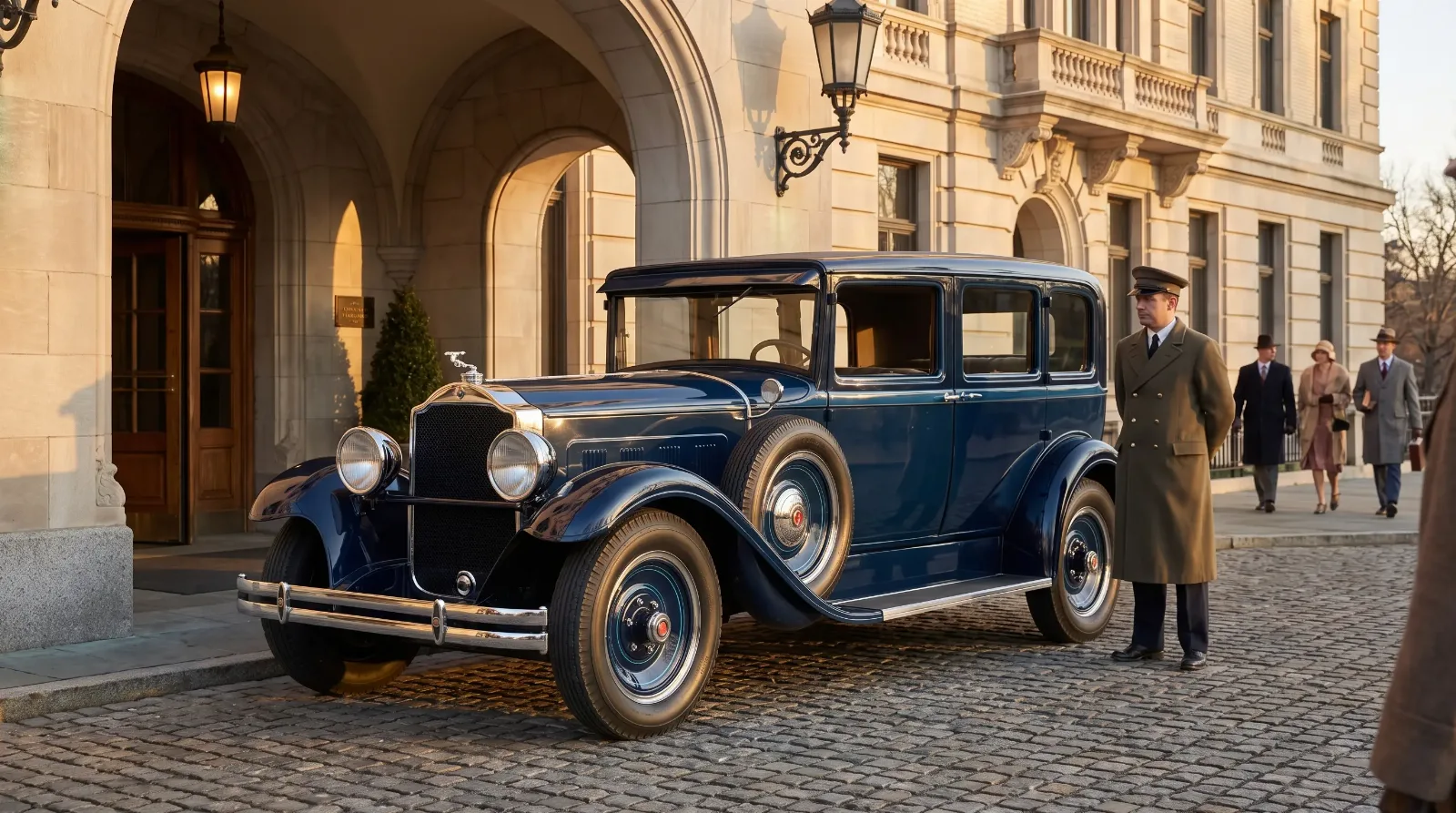
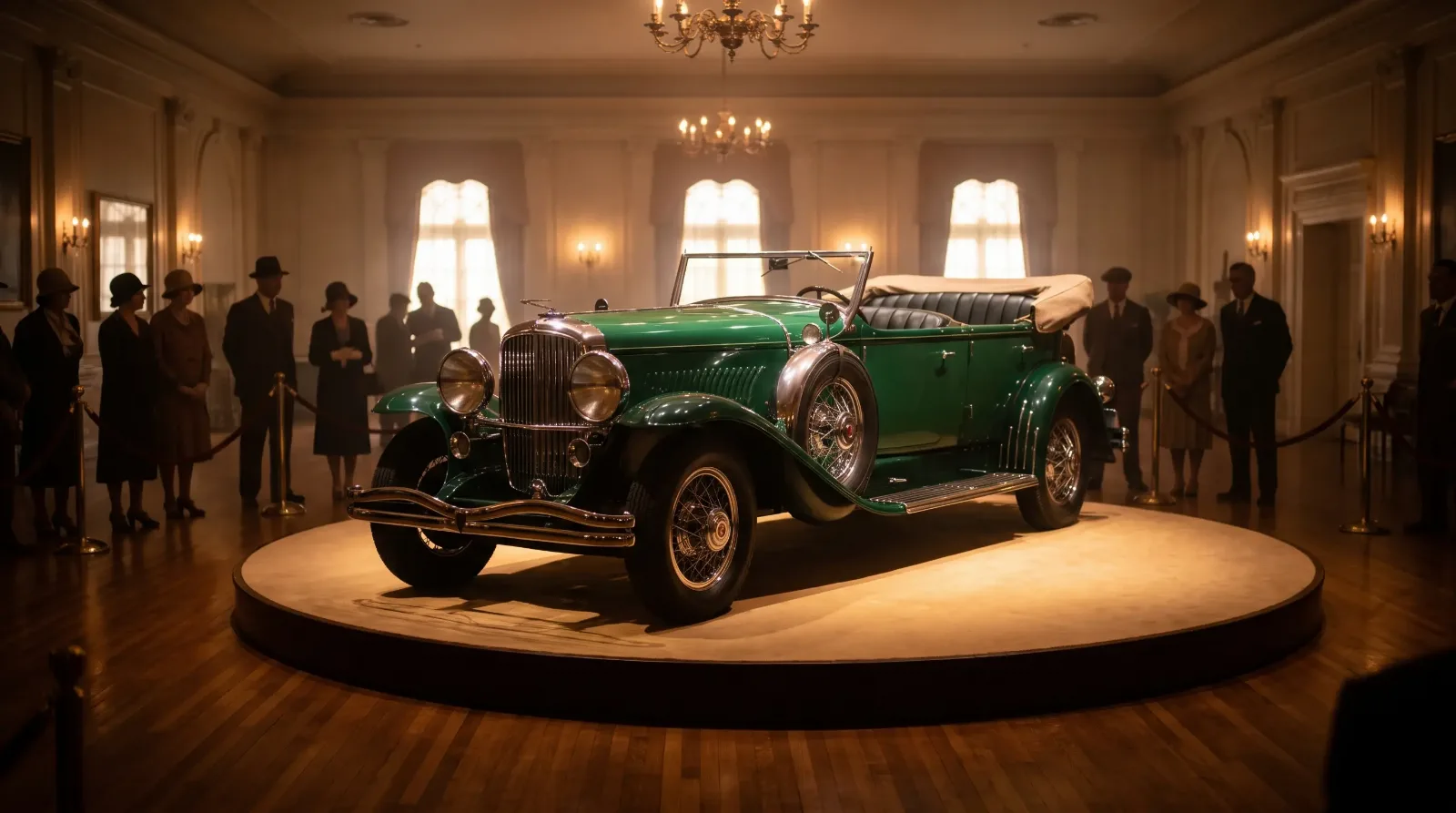
A wealthy buyer in 1925 did not walk into a showroom and drive off in a finished car the way we do now. They bought a rolling chassis from Duesenberg, Packard, Pierce-Arrow, or Rolls-Royce, and then sent it to a coachbuilder like LeBaron, Brewster, or Murphy to have a body built to order. The chassis alone could run into the thousands. The custom body on top of it could cost as much again, sometimes more, depending on the coachbuilder's reputation and how much silver, leather, and hand-formed steel went into the job.
That two-step pricing is why raw "cost when new" figures can mislead a modern reader. A Duesenberg Model J chassis in the late 1920s carried a price tag around 8,500 dollars before a single body panel was fitted, and a fully bodied custom example typically ran 13,000 to 19,000 dollars, at a time when a Model T cost around 300 dollars. That is not a gap. That is a different market entirely.
| Marque | Approximate new price range, custom-bodied |
|---|---|
| Duesenberg Model J | 13,000 to 19,000+ dollars |
| Rolls-Royce Phantom I | 13,000 to 16,000 dollars |
| Packard Custom Eight | 4,500 to 8,000 dollars |
| Pierce-Arrow Model 80/81 | 3,500 to 6,000 dollars |
| Ford Model T Touring | Around 300 dollars |
Who was actually buying these
The customer list reads like a business directory of the era. Industrialists, movie studio heads, oil money, and a fair number of bootleggers with cash that needed a respectable place to go. Duesenberg in particular cultivated a Hollywood clientele, and the phrase "it's a doozy" entered the language because everyday people understood exactly what that name signaled about the buyer's bank account.
What is worth remembering is that most of these buyers were not car people in the enthusiast sense. They were buying a rolling statement, the same way a mansion or a private railcar signaled arrival. The engineering underneath mattered, and on cars like the Duesenberg it was genuinely advanced for the period, but the buying decision usually started with the coachbuilder's name and the color of the leather.
"The number on the invoice tells you what a rich man was willing to spend in 1928. It does not tell you what the car is worth to a collector today. Those are two separate questions, and I have watched plenty of buyers confuse them and pay for it."
— Marcus Feld
What that money bought, mechanically
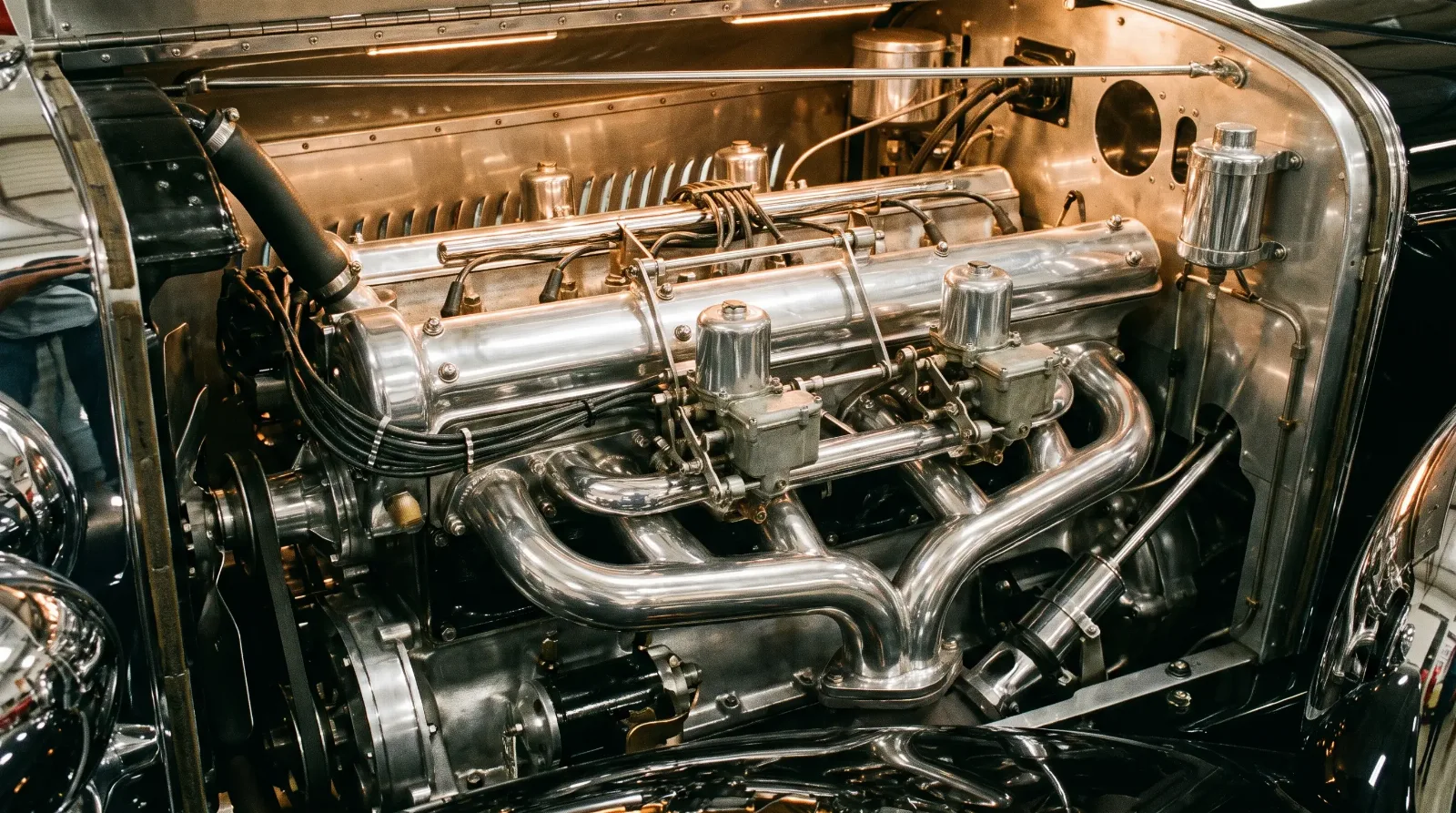
Expensive did not always mean fast, but on the Duesenberg it meant both. The Model J's straight-eight made around 265 horsepower in standard tune, a number that would not be matched by most American production cars for another three decades. Rolls-Royce and Packard traded outright speed for silence and smoothness, engineering their chassis and engines to be felt as little as possible from the back seat, which was where the money usually sat.
The mechanical sophistication is part of why these cars survive as well as they do. A Duesenberg or a Packard Custom Eight was over-engineered relative to what the roads and speeds of the day actually demanded, which means the surviving examples were built to a tolerance that has held up. That is a real factor in read on if you want the fuller picture of what set the luxury makes apart mechanically and not just on price.
What that money buys today
Values have not moved in a straight line since 1929, but the hierarchy has held up remarkably well. Duesenberg Model J examples with documented coachwork routinely bring seven figures at auction now, with the rarest bodies by Murphy or LeBaron pushing well past that. Packard and Pierce-Arrow sit a tier below but still command serious money for original or correctly restored cars, especially those with matching numbers and a documented ownership chain.
This whole top tier of the market is really part of the golden age of the automobile, a period when engineering, coachbuilding, and raw wealth converged in a way that has never quite repeated. If you want to see what is actually changing hands from this era right now, there is a steady flow of antique cars on the market, though anything genuinely top-tier tends to move through specialist auction houses rather than open listings.
Because these were custom-order machines, no two coachbuilt cars from the top tier are ever quite identical, even when they share a chassis and a body designer. A Murphy-bodied Duesenberg built for one client might differ from another built the same year in fender line, interior trim, or paint scheme, since the whole point of ordering from a coachbuilder was getting something nobody else had. That built-in rarity is part of why values at this level do not behave like a normal used-car market. A collector is not just buying horsepower and a badge, they are buying the only example of a specific design decision made by a specific client and a specific coachbuilder in a specific year, and that combination cannot be reproduced no matter how much money changes hands.
This is also why fakes and re-bodied cars are such a persistent problem at the top of the market. A common chassis with an added replica body can look convincing to an untrained eye, and the financial incentive to pass one off as original is enormous when the difference in value between a genuine coachbuilt car and a re-bodied one can run into the millions.
The honest caveat
Buying at this level is not a casual hobby. Documentation, provenance, and originality carry more weight than they do almost anywhere else in the old-car world, because the money involved attracts fraud and re-bodying the way any high-value market does. A car wearing a famous coachbuilder's badge is worth verifying before it is worth admiring. Get the chassis number checked against factory records, get an expert who knows the specific marque to look it over, and understand that at this price point the paperwork is half the car.