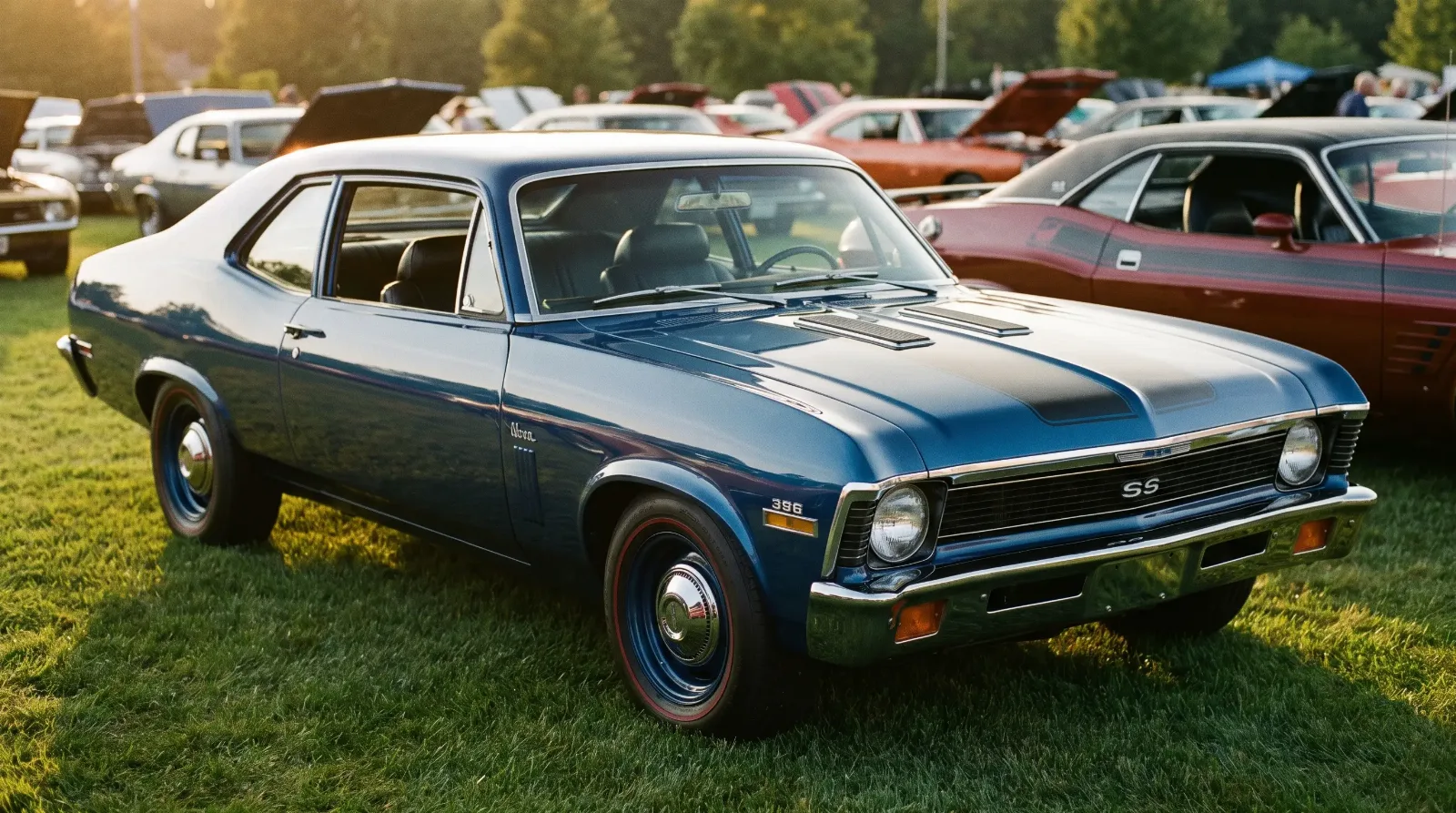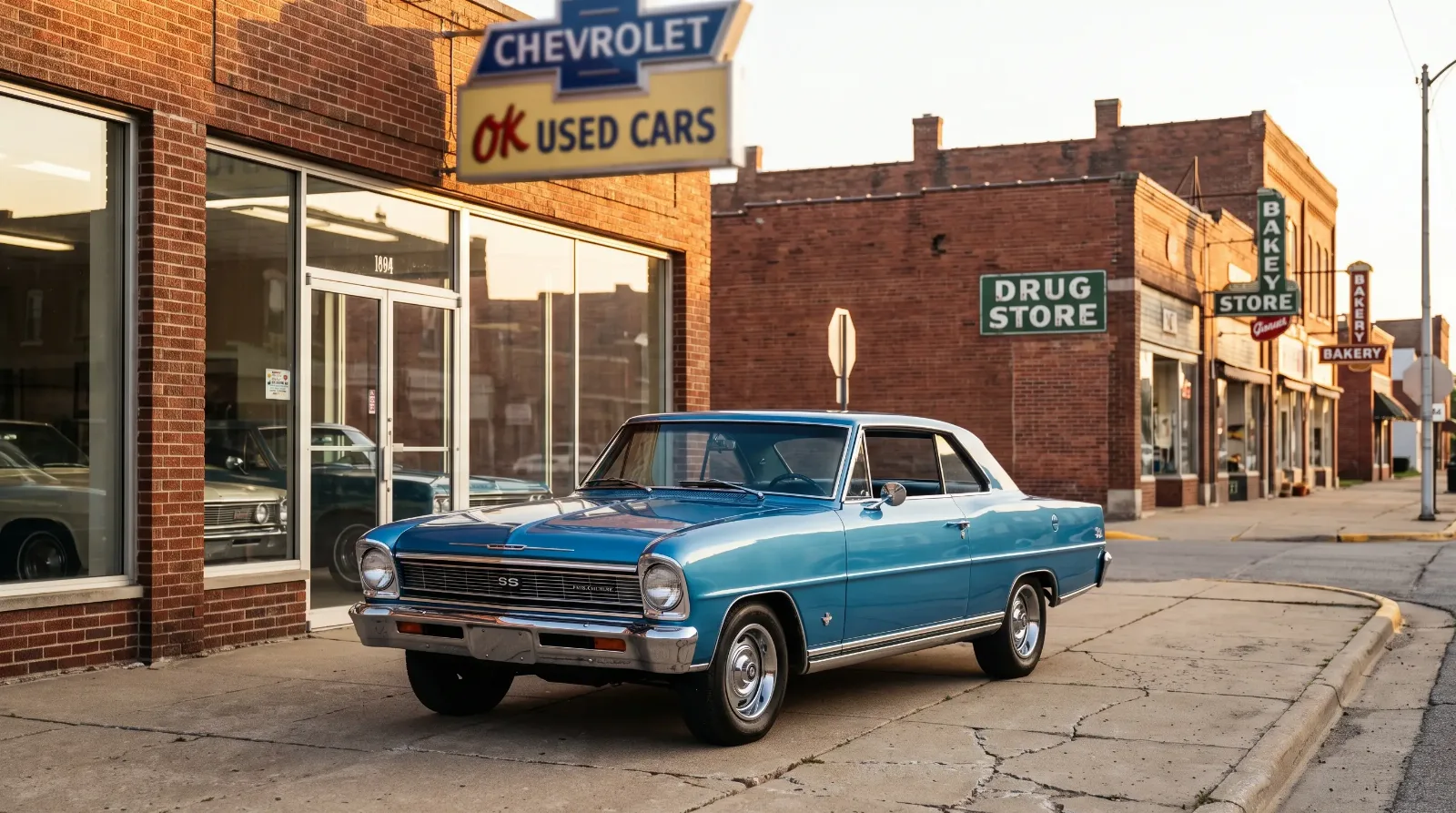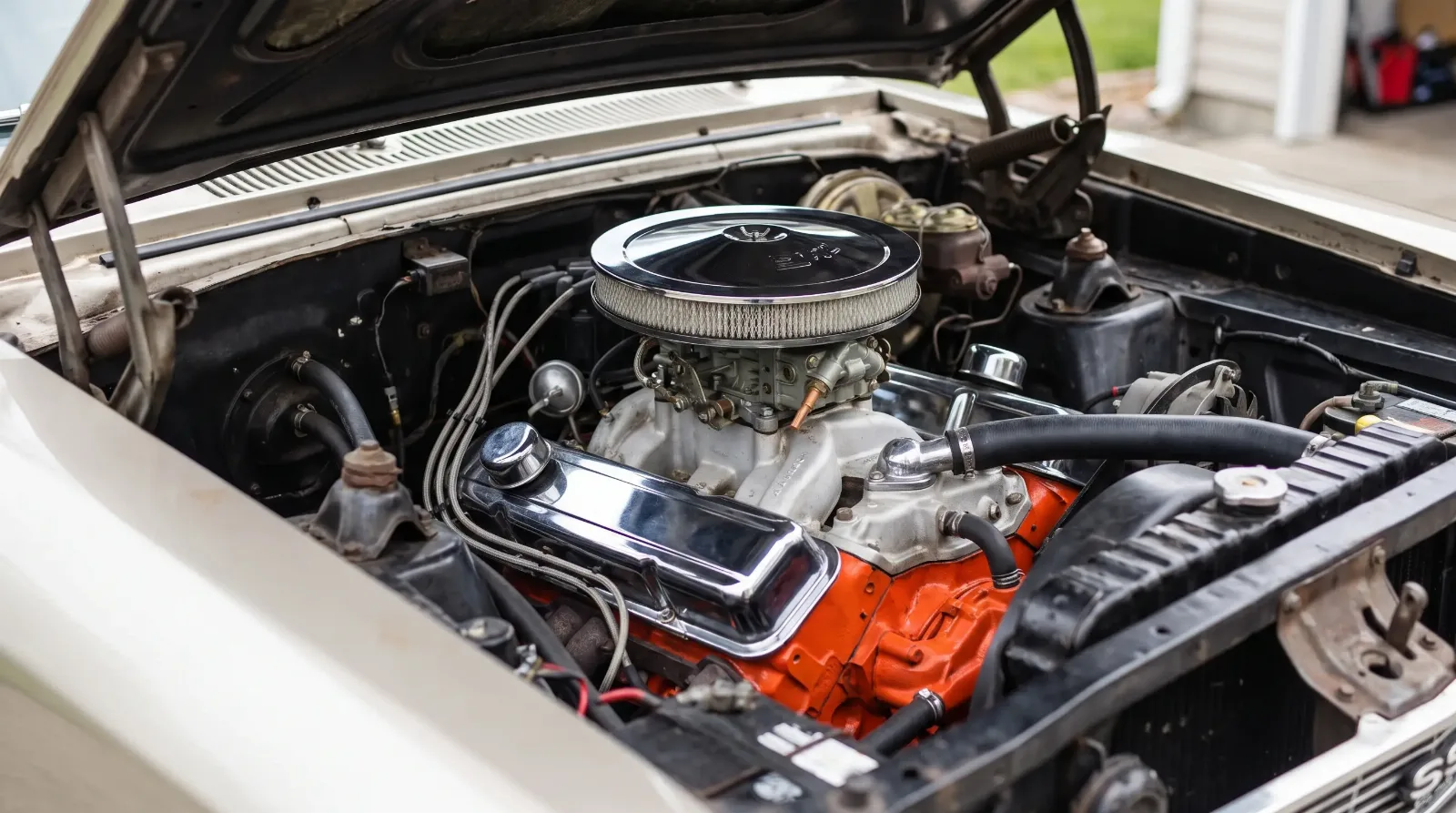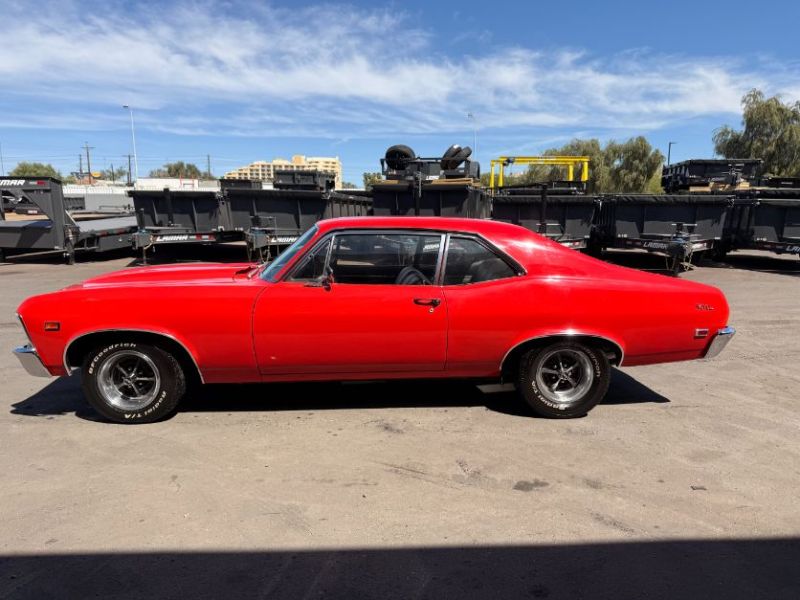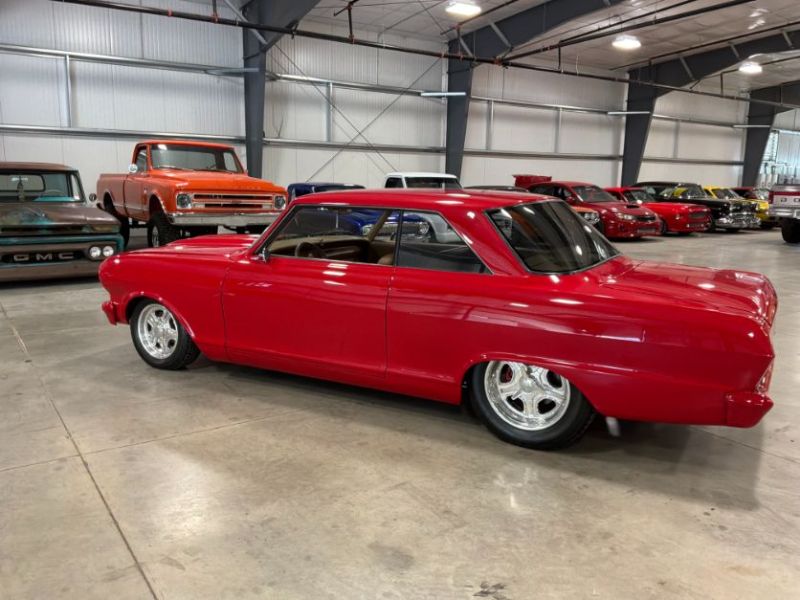
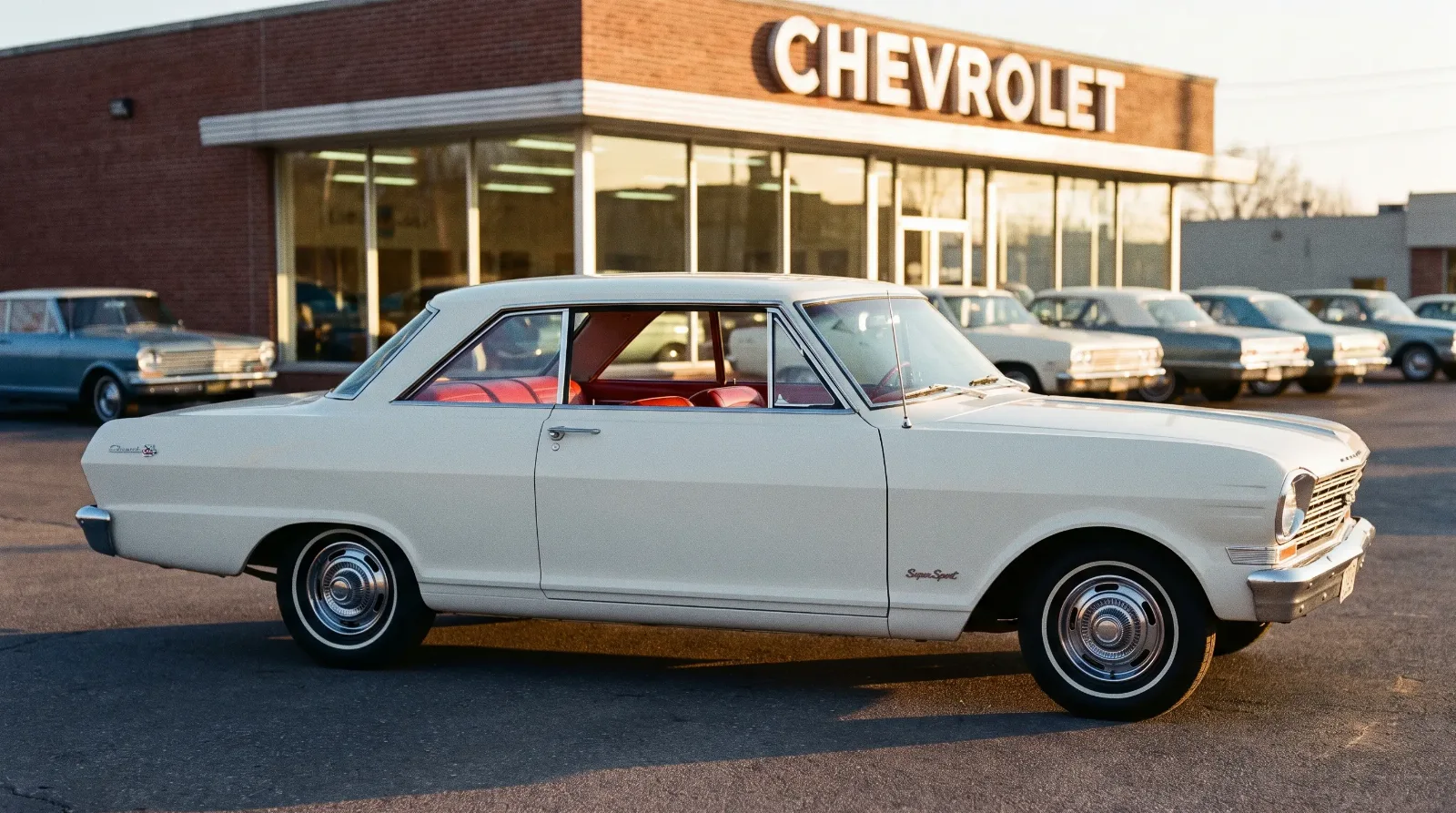
The 1963 nova ss is where all of this started, and it is also the year buyers misunderstand the most. Chevrolet had launched the Chevy II a year earlier as a plain, cheap answer to the Ford Falcon, nothing more ambitious than that. Nova was simply the top trim level of the Chevy II line, and for 1963 Chevrolet added a Super Sport option on top of it. That single decision is the reason this whole nameplate exists, but the car itself was a lot less dramatic than the name it started.
A compact built to answer the Falcon, not to race
Chevrolet did not design the Chevy II with performance in mind. GM built it in a hurry to compete with Ford's Falcon and the wave of small imports eating into compact sales, and the whole point was low cost and light weight, not speed. The Nova trim sat at the top of the range with nicer interior appointments and better standard equipment than the base Series 100 and 300 cars, but it was still fundamentally an economy car body.
That cheap, light construction turned out to matter enormously later, once bigger engines became available. In 1963 nobody was thinking that far ahead. Chevrolet just needed a small car that undercut the competition on price, and the Chevy II did that job.
The SS package arrives partway through the year
Chevrolet introduced the Super Sport option on the Nova for 1963, and it is worth saying plainly: this was an appearance and convenience package, not a factory hot rod kit. You could order it on the two-door hardtop or the convertible, and it dressed the car up with special wheel covers, bright body trim, an engine-turned aluminum instrument panel, a three-spoke steering wheel, and bucket seats. If you specified the floor-mounted shifter, you got a console between the seats too.
None of that touched the engine bay. This was Chevrolet borrowing a formula that was already working on bigger cars, dress up a model with sporty details and sell it as an upgrade, without necessarily requiring the buyer to also pay for a bigger engine.
What the first Nova SS actually offered under the hood
Here is the part that surprises people who assume "SS" always meant a hot engine. In 1963 the Nova SS could be ordered with the standard 194 cubic inch inline six, rated at 120 horsepower, as the base powerplant. Chevrolet also offered the 230 cubic inch six, rated at 140 horsepower, as a step-up option. There was no factory V8 in the 1963 Nova SS at all. The 283 small-block did not become a factory option until 1964, a year later; a handful of dealers would install one at a customer's request, but that was dealer work, not a box you could check on the order form that year. None of the factory engines were performance units by the standards that came later in the decade. Even the six was built for real-world driving, not for embarrassing anyone at a stoplight.
What that means for a buyer today is straightforward. A genuine, numbers-correct 1963 Nova SS with a six-cylinder under the hood is not a disappointment or a fake. It is exactly what Chevrolet built and sold that year, since a factory V8 was not even on the order form yet. The mistake is assuming this year's SS ever hid a factory V8. None of them did. This was never the fast one.
| Option | Displacement | What it bought you |
|---|---|---|
| Base six | 194 cu in, 120 hp | Standard SS engine, no cost upgrade required |
| Optional six | 230 cu in, 140 hp | More torque, still an economy engine |
| V8 | Not a factory option in 1963 | 283 small-block arrived as a factory option in 1964, not 1963 |
| SS trim | N/A | Bucket seats, console, wheel covers, dash trim |
Reading the SS badge correctly on an early car
If you are shopping a 1963, the SS badge tells you what trim the car left the factory with, not what is under the hood. That is worth knowing before you get excited or before you talk yourself out of a genuinely nice example because it does not have a V8. Across its whole run, the Nova Super Sport covers a much wider range than this single year, and the 1963 car sits right at the mild end of that range.
The real performance story for this platform starts a couple of years later, once Chevrolet let a genuinely quick small-block into the Nova SS. If you want a related deep-dive on that engine and why it changed everything, that is where the car actually starts earning the "sport" half of its name. For the complete arc of how the Nova nameplate grew from here, the full Nova story is worth reading too.
Why the first-year car matters to collectors now
Early Nova SS cars are not chased for speed. They are chased for being first. A documented 1963 example, especially a convertible, has historical weight that later, faster cars do not carry the same way. Fewer of these survived in original condition than the more popular later years, since a lot of them were treated as ordinary used cars for decades before anyone thought to preserve one.
If you are considering one, the buying advice does not change much from any other Chevy II of the era. Check the floors, trunk pan, and rocker panels for rust before anything else. Ask for a build sheet or dealer paperwork if the seller claims a factory V8 car, since no factory V8 existed for the 1963 Nova SS and any V8 in one today is either a rare dealer installation or a later swap. And do not pay big-block SS money for a car that was never built to carry one. This generation simply was not that car, and pretending otherwise just sets you up to overpay.
Buy a 1963 Nova SS for what it is, an honest first chapter in the Super Sport story, and it is a satisfying car to own. Buy it expecting a sleeper big-block and you will be disappointed by a car that never claimed to be one.
"The first Nova SS was a dress-up package with bucket seats, nothing more. That's not an insult. It's just what 1963 was, and there's nothing wrong with owning exactly what the factory built."
— Mike Sullivan
If you are ready to look at one, checking a classic Nova SS for sale against everything above will save you from paying performance-car money for a car that was built to be a comfortable, sporty commuter, and nothing more.