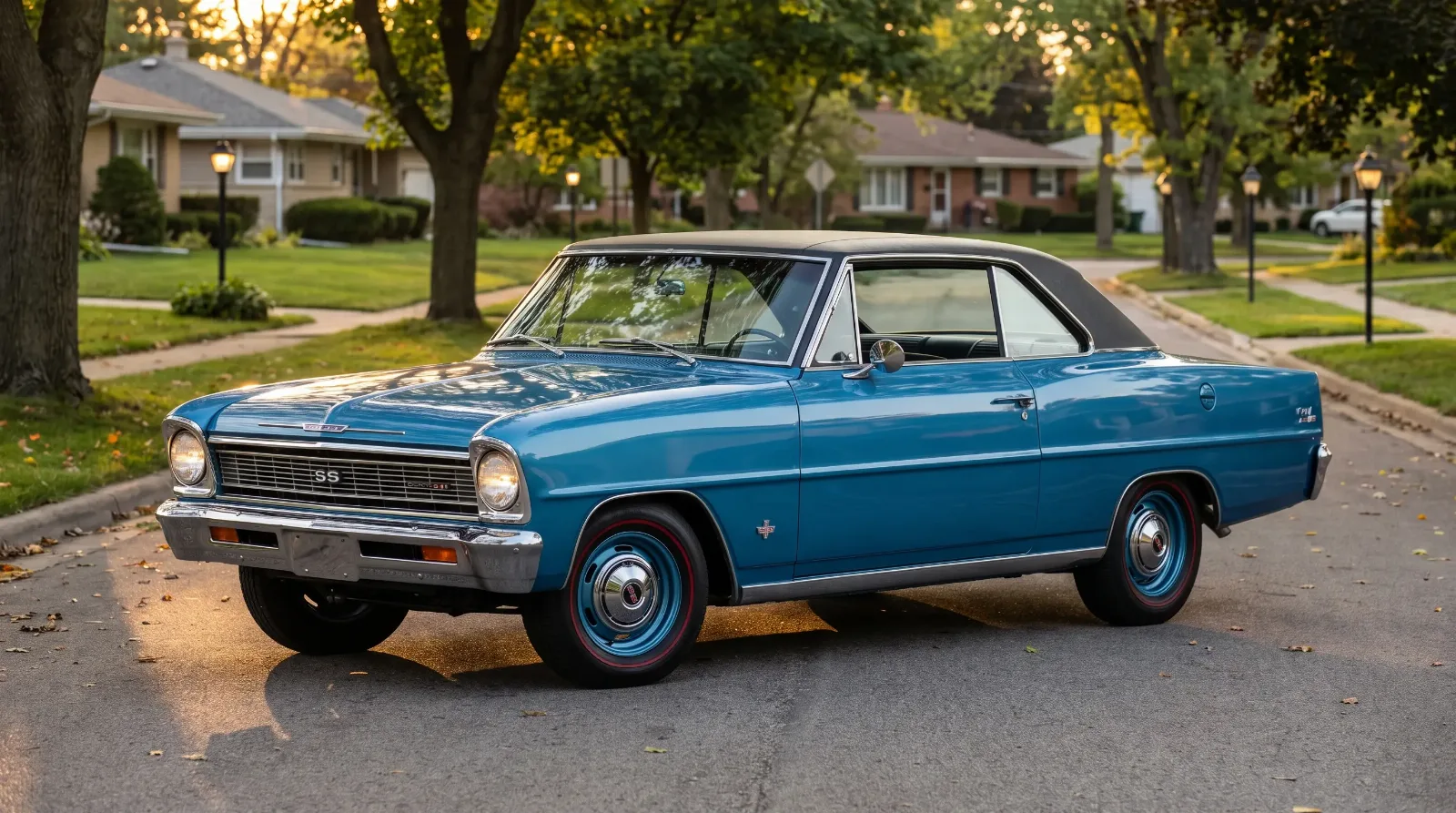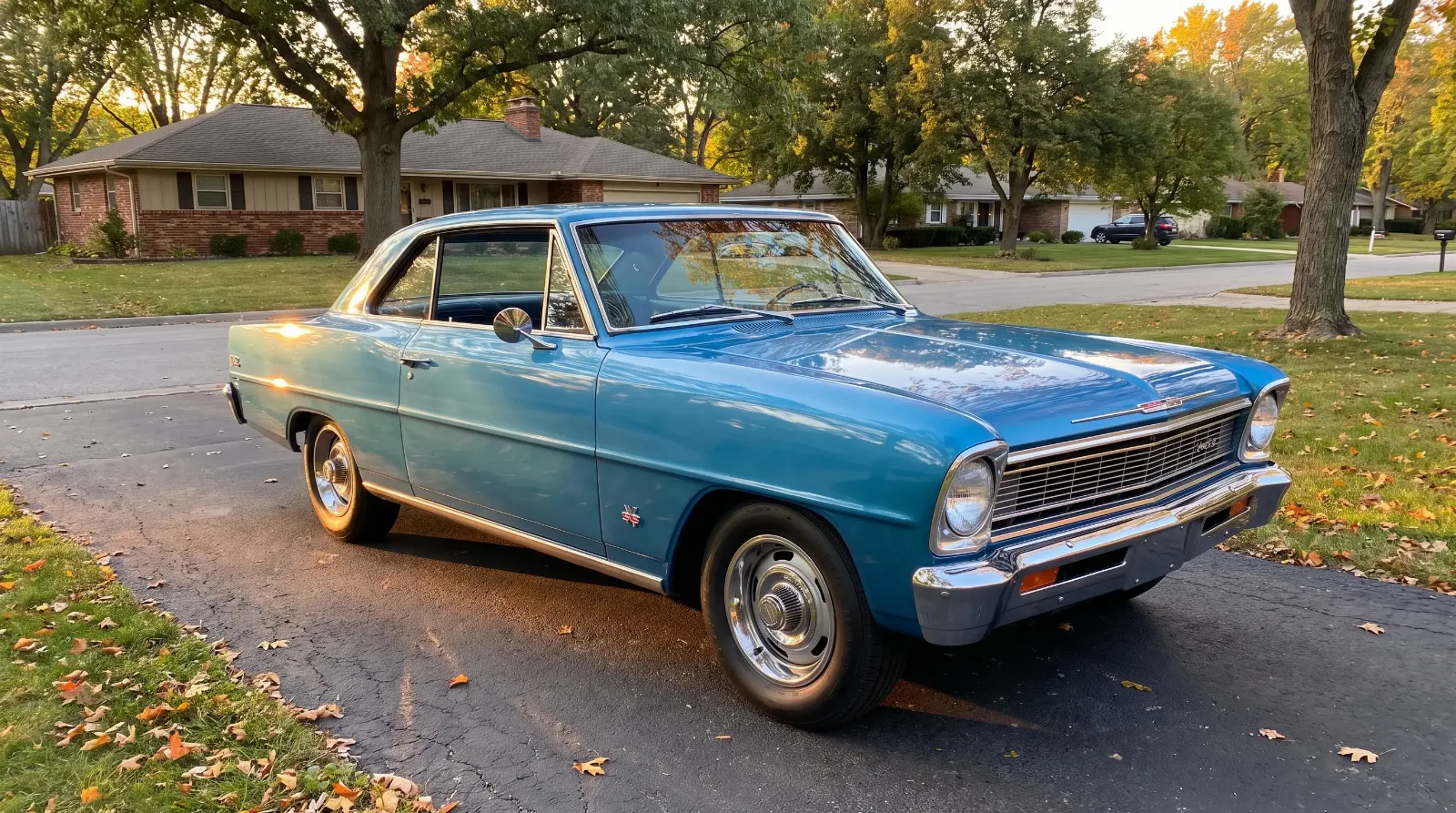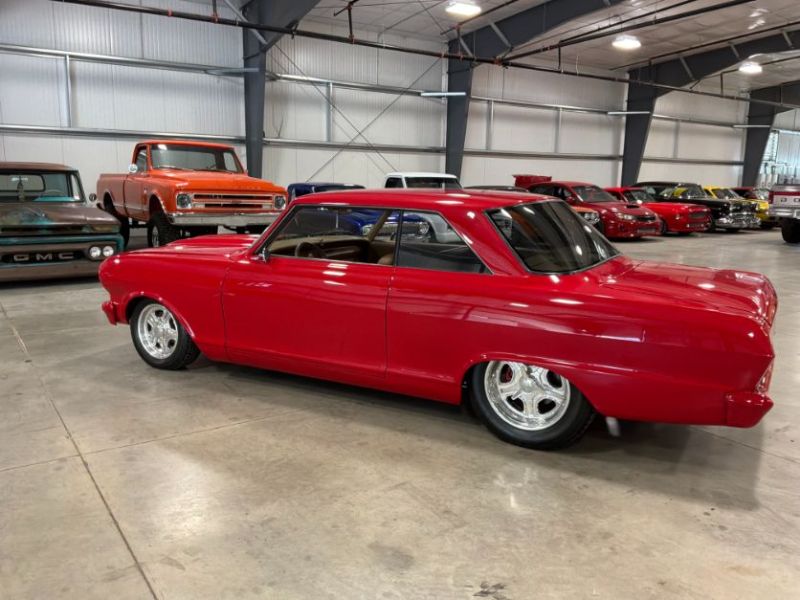
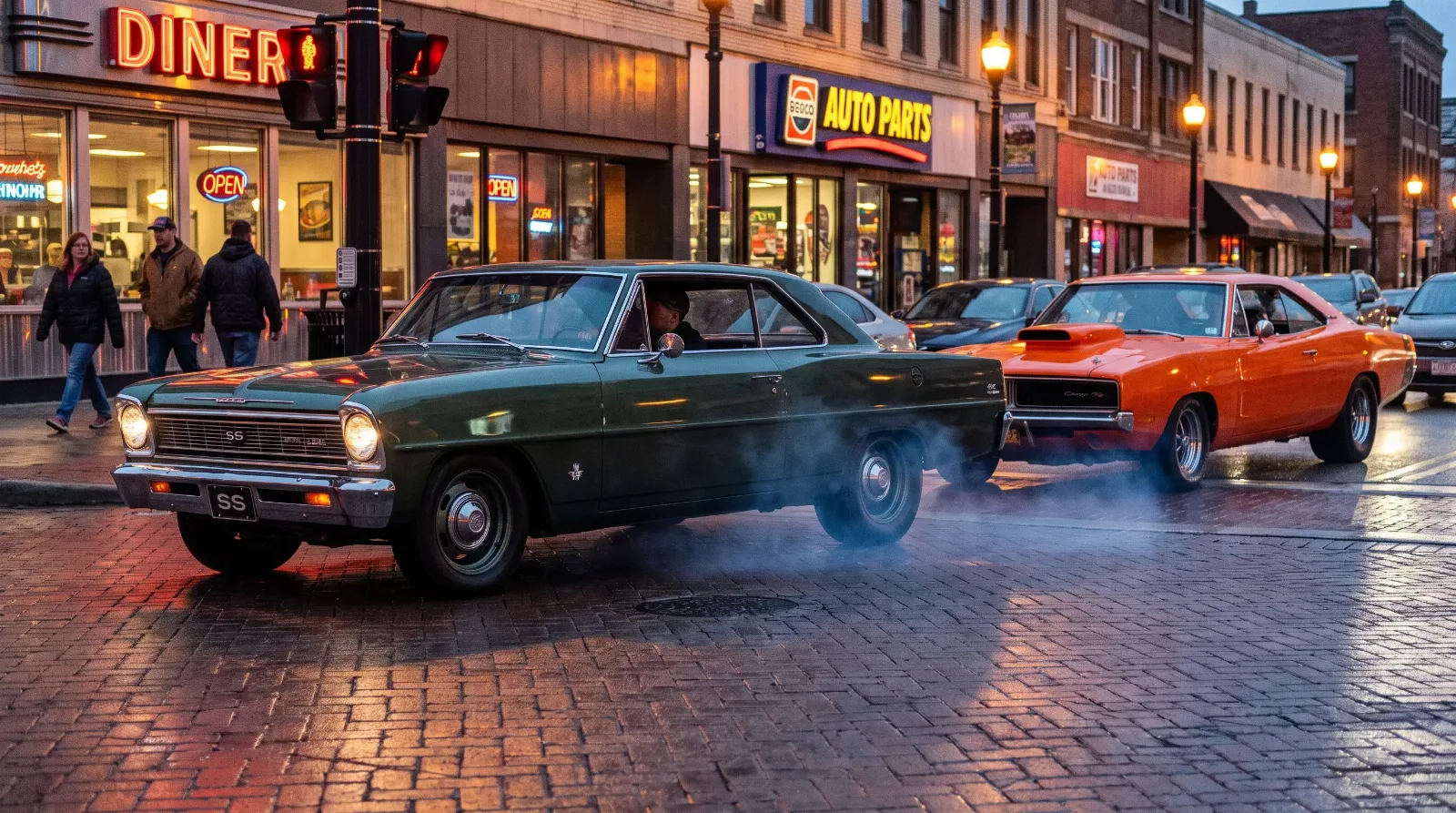
The 1966-67 Nova does not look like a car that should embarrass a GTO at a stoplight. That is the entire point. Chevrolet redrew the Chevy II for 1966 with softer, Chevelle-adjacent lines and folded the old top-trim badge into a full model name, so "Nova" now sat on the fender of what was still, underneath, a compact economy car. Order the right box on the build sheet, though, and that plain shell hid one of the strongest small-block combinations GM sold that year. That combination is what earns the car its reputation as the Nova gen2 sleeper among people who take drivetrains seriously rather than just badges.
A body redesigned, a mission unchanged
Chevy II arrived in 1962 as Chevrolet's answer to the Falcon, a simple, cheap, reliable car built to move families and payrolls. The second generation, sold for 1966 and 1967 only, kept that mission but updated the skin. Curved side glass, a longer hood, and a fastback-adjacent roofline on the coupe made the 1966-67 Nova look like a smaller, cheaper Chevelle, which was more or less the intent. Chevrolet wanted buyers cross-shopping the mid-size car to notice the compact costs less.
Nobody at the time expected that new shell to become a performance footnote. The Chevy II line had dabbled in warmed-over sixes and small V8s before, but the SS package on the redesigned car opened the door to something more serious, and Chevrolet's engineers did not hold back once that door was open.
The L79 327: 350 horsepower in a compact skin
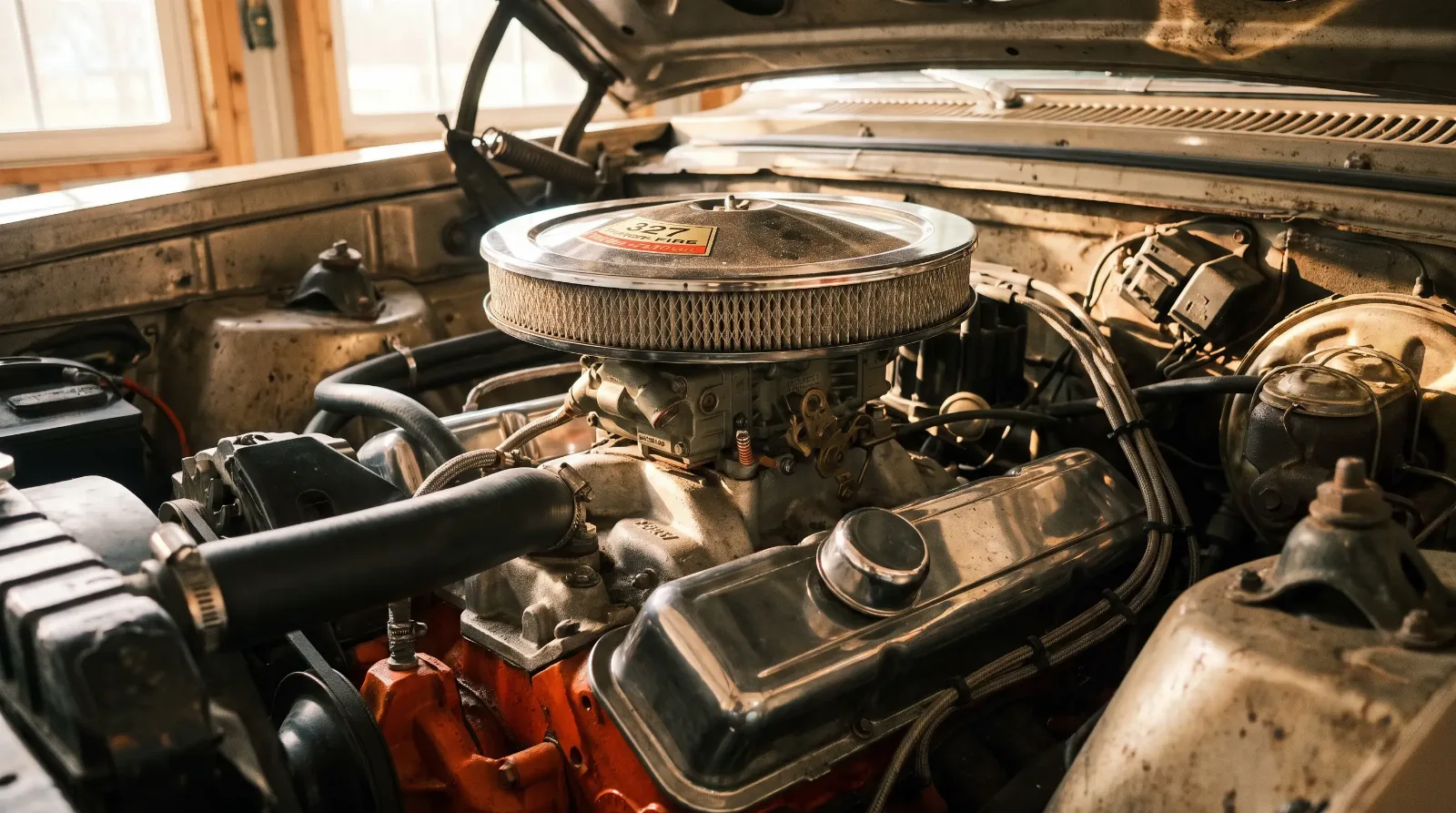
The headline engine for 1966 was the L79, a 327 cubic inch small-block rated at 350 horsepower, the same basic engine doing duty in Corvettes and Chevelles that year. Dropped into a car that weighed several hundred pounds less than either of those, the result was a compact with a genuine power-to-weight advantage over cars people assumed were faster. Chevrolet did not advertise the Nova SS with the L79 as a drag strip weapon the way it pushed the Chevelle SS 396 or the Corvette; the car simply showed up at tracks and did the talking.
Base and mid-range buyers had plenty of other choices. The standard engine was a 194 cubic inch inline six, with a 230 cubic inch six and a 283 cubic inch V8 filling the gap between economy and performance, the sixes rated at 120 and 140 hp and the 283 rated at 195 or 220 hp depending on carburetor. The spread meant a Nova could be ordered as a stripped commuter or a genuine sleeper, and dealers rarely stocked the latter in volume, which is exactly why they are hard to find today.
| Engine | Displacement | Approximate Output | Typical Buyer |
|---|---|---|---|
| Base inline six | 194 cu in | 120 hp | Fleet, commuter |
| Optional inline six | 230 cu in | 140 hp | Family buyer wanting more torque |
| Small-block V8 | 283 cu in | 195-220 hp | Buyer wanting V8 sound without the SS price |
| L79 small-block V8 | 327 cu in | 350 hp | SS buyer chasing real performance |
What made it a sleeper on the street
A sleeper needs two things: real performance and a disguise good enough that rivals underestimate it. The 1966-67 Nova had both. The SS badge, standard bucket seats, and a set of styled wheels were about as far as the visual cues went; there was no massive scoop or side-exit exhaust screaming "beware." A buyer could even order the L79 with the standard three-speed column shift instead of the console-equipped Powerglide or four-speed, which meant a genuine 350-horsepower Nova could roll up without so much as a floor shifter to tip off a stranger at a light.
Weight is the part people forget. A 1966 Nova SS with the 327 carried noticeably less iron over the front wheels than a Chevelle SS 396 or a full-size Impala SS, and that lighter nose translated directly into quicker acceleration for a given horsepower figure. Contemporary magazine testing, including Motor Trend's period review of an L79 Nova SS with Powerglide, showed the car holding its own in a straight line against machinery that cost more and looked far more serious, even with the less aggressive automatic behind the engine.
Records, restraint, and how rare survivors are today
Chevrolet built the vast majority of 1966-67 Novas with sixes and small V8s, because that is what the buying public actually wanted from a compact car. SS models with the L79 were always a minority within a minority, and Chevrolet's own production breakdowns for the option reflect a genuinely small build number, commonly cited at 3,547 L79 Novas for 1966 against roughly six known 1967 examples. Add in decades of Novas bought as cheap transportation, driven hard, and eventually scrapped, and the surviving population of documented sleeper-spec cars is thin.
That scarcity is part of why the badge still generates conversation at swap meets and shows decades later. Tom Ramirez has spent enough time with build sheets and dealer invoices from this era to know how easily the story gets inflated in retelling.
"Every third car somebody points to as a numbers-matching L79 Nova has a story that does not match the invoice. The real ones exist, but they are outnumbered by the legend."
— Tom Ramirez
Sources and notes
- Chevy's Giant Killer: The 1966 Chevy II L79 - Mac's Motor City Garage
- Nova Production Numbers - NovaResource
- 1-of-6: 1967 Chevrolet Nova SS L79 - Barn Finds
- Vintage Motor Trend Review: 1966 Chevy II Nova SS 327 - Curbside Classic
- Chevrolet Chevelle - Wikipedia
Reading the paperwork before you believe the badge
Because the L79 Nova was rare from new, verifying one today means going past the SS trim and badges and into the documentation. The RPO code on the original invoice, the engine stamping, and the trim tag all need to agree before a buyer should pay a premium for what is claimed to be an original sleeper build. This is exactly the kind of research covered in a companion piece on how briefly this body style stayed in production and why that short window matters to documentation and parts interchange today. Anyone chasing a genuine 1966-67 L79 car should treat the paper trail as more important than the paint.