
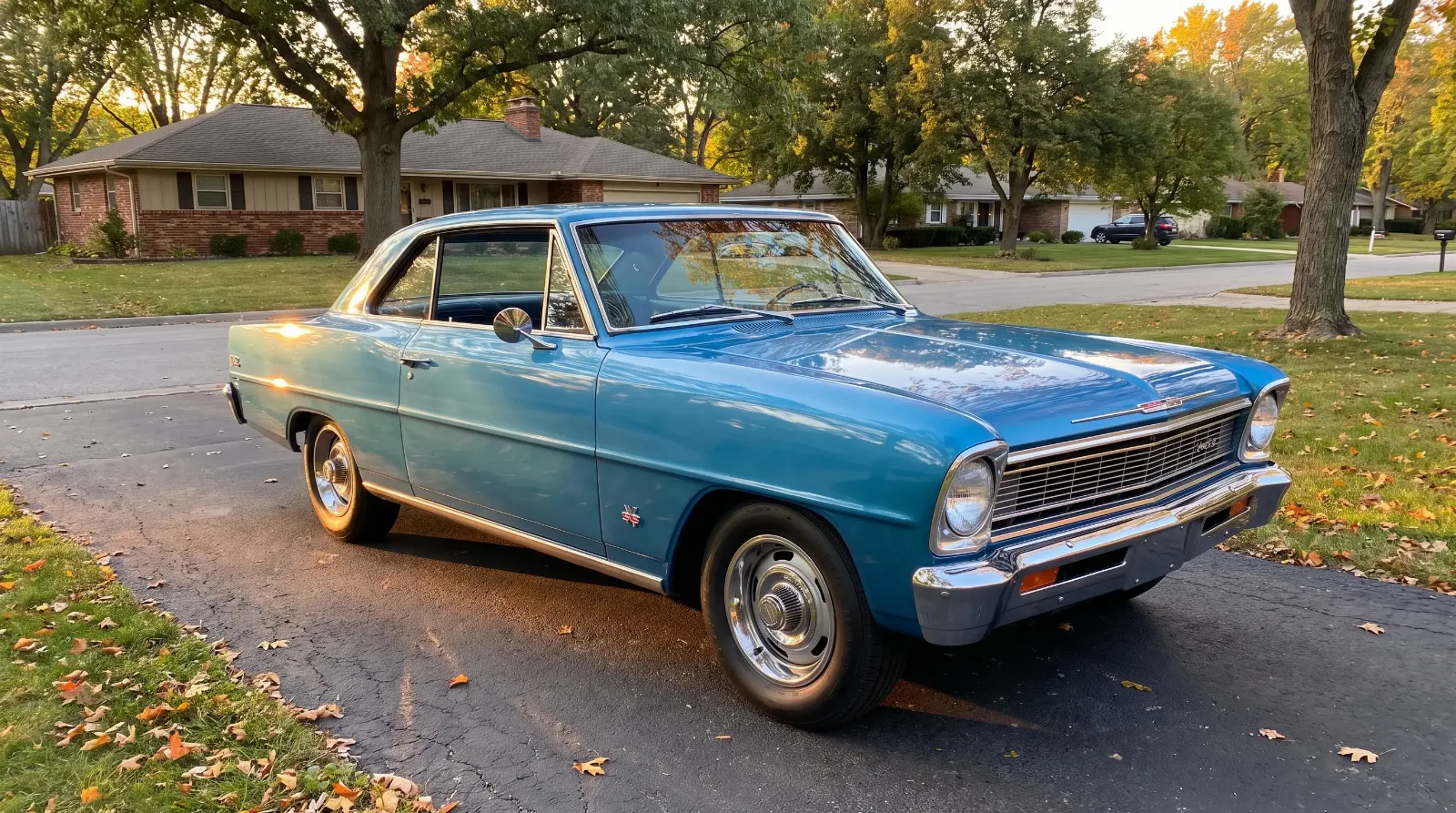
Most Chevrolet body styles from the muscle car era stuck around for four, five, sometimes six model years before a redesign. The Nova that Chevrolet introduced for 1966 lasted exactly two. It arrived with new curved glass and a Chevelle-inspired profile, sold through 1967 largely unchanged, and then made way for an all-new 1968 car that would itself run five years. That narrow window is the nova gen2 short run enthusiasts talk about when they explain why parts, documentation, and even casual identification of this generation get complicated fast.
Car Features
6 min read
The Two-Year Wonder Explained
The 1966-67 Nova's redesigned body lasted just two model years before GM's broader product cycle moved on, leaving a short run that still complicates parts sourcing and documentation today.
Why the redesign happened when it did
Chevrolet's compact line needed to answer two threats at once heading into 1966: the Ford Falcon and Fairlane squeezing it from below and above, and its own Chevelle eating into Chevy II sales from the mid-size lane. The response was a Chevy II that looked less like an economy box and more like a scaled-down performance car, with the Nova name promoted from top trim level to the effective identity of the whole line. It was a deliberate styling and marketing pivot, not a routine refresh, and Chevrolet clearly meant it to hold the line for a while.
Instead, the corporate product cycle moved faster than that plan allowed. GM was in the middle of restyling nearly its entire compact and mid-size range for 1968, and the Nova got swept into that broader redesign rather than being given its own extended run. The 1966-67 body, in other words, was never meant to be a two-year footnote. It became one because of timing elsewhere in the company.
What actually changed for 1967
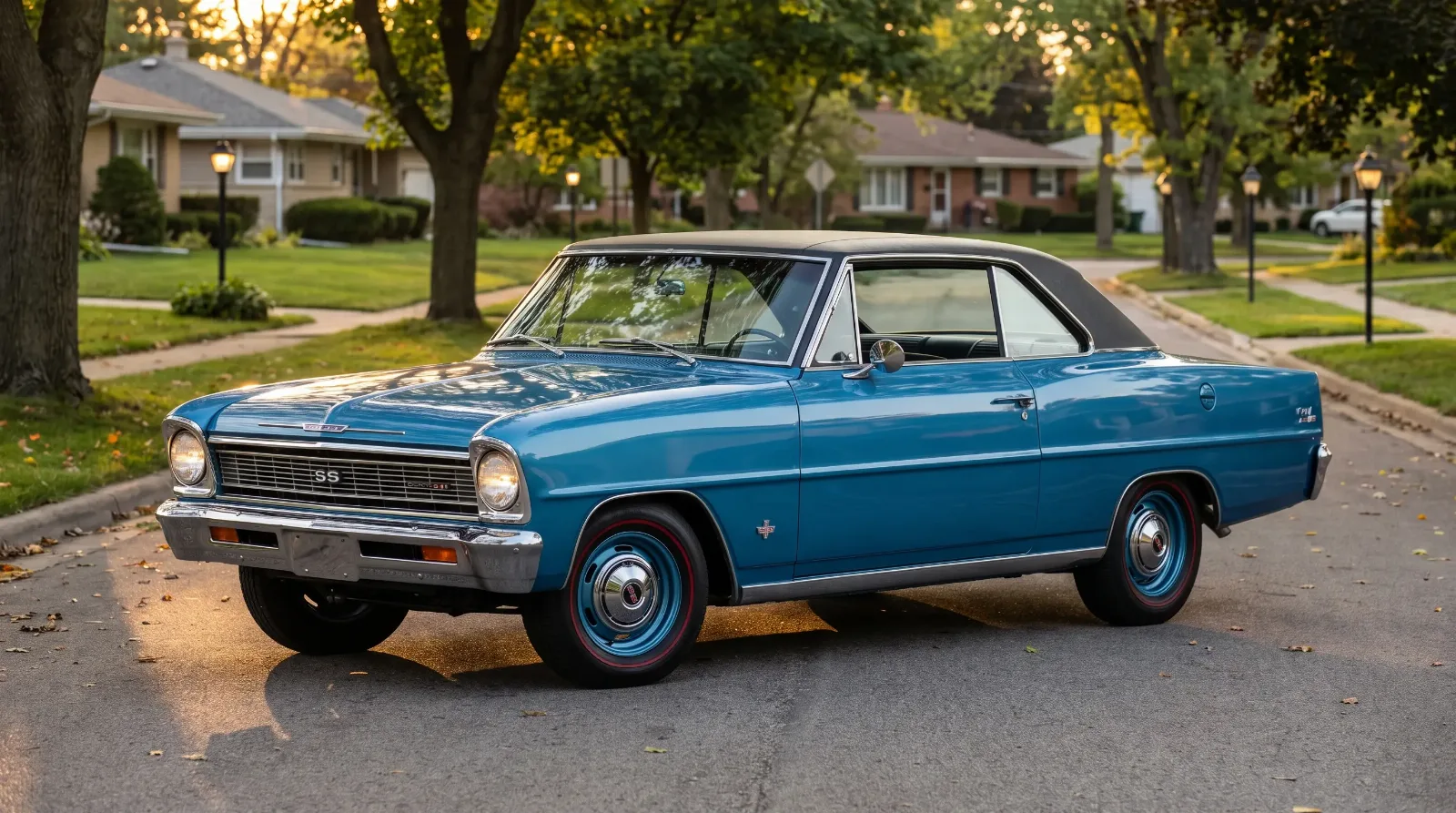
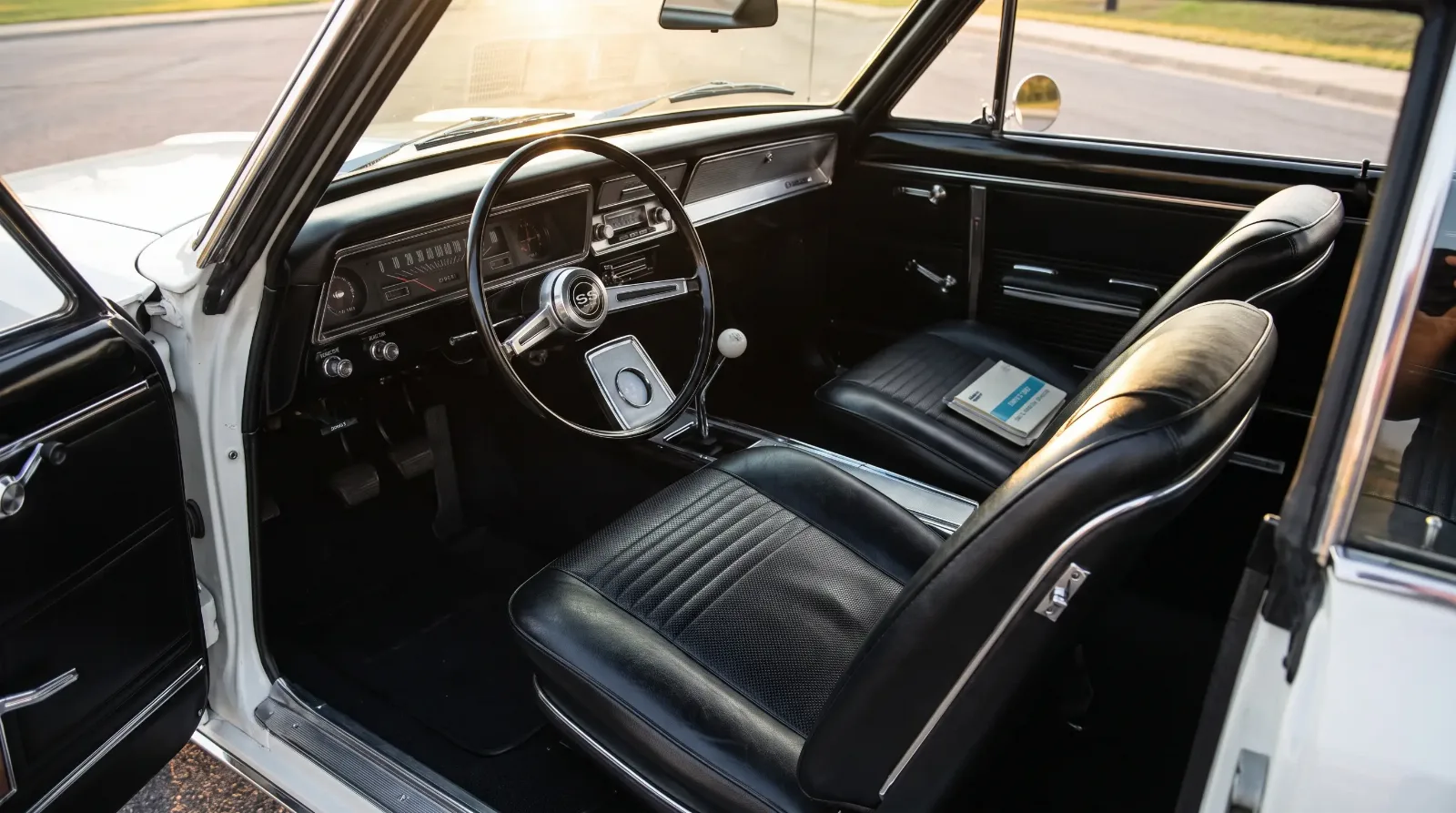
Anyone expecting a dramatic split between 1966 and 1967 examples will be disappointed, and that is useful information for buyers. The two years share the same basic body, glass, and structure, with Chevrolet limiting changes mostly to trim details, some interior material updates, and minor running-gear revisions: a new anodized aluminum grille with a horizontal center bar, cast pot-metal headlight bezels replacing 1966's stamped units, a crosshatch deck lid panel, "Nova SS" badging in place of the 1966 "Chevy II SS" script, and small interior touches like color-keyed window crank knobs and a rear seat that was now bolted in rather than removable. This is different from the situation with the second-gen Nova's successor, where the 1968-72 cars saw more visible year-to-year changes across a longer production run.
The practical result is that a 1966 and 1967 Nova can be difficult to tell apart at a glance unless someone knows exactly where to look, which is both a blessing and a curse for restoration work. It is a blessing because parts compatibility across the two years is generally strong. It is a curse because a seller with a loose grip on facts can pass one year off as the other without much resistance.
The engine lineup carried over with similarly modest tweaks. The six-cylinder and small-block V8 options that defined the 1966 car remained the backbone of the 1967 range, though the L79 350 hp 327 was dropped from the regular lineup for 1967, leaving the 275 hp L30 as the sole 327 in the Nova SS that year, with only a small number of L79 cars known to have slipped through outside the official offering. Chevrolet's focus during this period was clearly on getting the new body established in the market rather than chasing a second round of mechanical news so soon after the first.
Where the two years do diverge is mostly in small, easy-to-miss details: grille texture, taillight treatment, and minor badge placement changes that a casual observer would never clock but that a judge at a concours event will note immediately. These are exactly the kind of differences that separate an accurately restored car from one that simply looks close enough.
How the short run compares to the model's other generations
Context helps here. The original 1962-65 Chevy II ran four model years before its own redesign, and the 1968-72 Nova that followed this generation stretched to five. Against either of those benchmarks, a two-year body is unusually brief, and it puts this generation in the same rare-window category as a handful of other mid-1960s GM redesigns that got overtaken by the next round of corporate restyling before they had much time to mature in the market.
Why a short production run complicates parts and research
A two-year body means a smaller total production pool than most muscle-era Chevrolets, and it means the window during which factory documentation, dealer literature, and press coverage focused on this specific shape was brief. Chevrolet's marketing attention moved on to the 1968 redesign quickly once it launched, and the 1966-67 cars stopped being the current product almost as soon as parts suppliers and reference books had caught up to them.
That has real consequences for owners today. Reproduction parts suppliers naturally prioritize the longer-running, higher-volume body styles, so some trim and interior pieces specific to 1966-67, particularly grille, bezel, and badge parts unique to the shorter run, are scarcer or more expensive to source than equivalent parts for the 1968-72 cars. Anyone restoring one of these needs to budget extra time for sourcing, not just extra money.
| Detail | 1966-67 Nova (Gen 2) |
|---|---|
| Production years | Two model years only |
| Successor body | 1968-72 Nova, five model years |
| Predecessor body | 1962-65 Chevy II, four model years |
| Key styling change | Curved side glass, longer hood, Chevelle-influenced profile |
What this means for buyers and researchers today
A short production run does not automatically make a car more valuable, but it does make correct documentation more important. Trim tags, cowl tags, and dealer paperwork matter more here than on longer-running body styles, because the smaller universe of surviving cars means mistakes and misattributions travel further and get repeated more often. Tom Ramirez has run into this repeatedly while cross-referencing factory literature against cars presented at shows and auctions.
"With a two-year body, there just is not much slack for guessing. Either the documentation lines up with 1966-67 production, or it does not, and I would rather tell an owner that up front than let a bad assumption follow the car to its next sale."
Tom Ramirez
Sources and notes
- Chevrolet Chevy II / Nova - Wikipedia
- Differences Between the 1966 & 1967 Chevy II - Northwest Nova
- Generations of the Chevrolet Nova - Ground Up Motors
- 1967 Chevrolet Chevy II Fact Sheet - Over-Drive Magazine
- Chevrolet Nova Generations Guide - HotCars
For readers wanting to go deeper on how this body's interior evolved across its brief run, a related deep-dive covers the cabin materials and trim decisions Chevrolet made during those two years. And for anyone stepping back to see how this short-lived generation fits into the model's full history, the complete Nova guide lays out the complete timeline from 1962 through the badge's final years. Understanding the short run is really the first step toward understanding why this particular Nova generation gets treated as its own distinct chapter rather than a footnote to the cars around it.
Related Reading
Have a
Chevrolet Nova
for Sale?
Reach thousands of serious classic car collectors across the US.
Sell It Here →
Are You a Classic Car Dealer?
List your full inventory and connect with targeted classic car buyers.
Join as a Dealer →
#classic chevrolet
#chevrolet nova
#chevy ii
#1966 nova
#Tom Ramirez
#1967 Nova
#GM production history

About the author
Tom Ramirez
Corvette researcher and historian based in Bowling Green, Kentucky. Two decades documenting Corvette production history from original factory records.
Related Listings - Chevrolet Nova
Comments
Be the first to comment on this article.