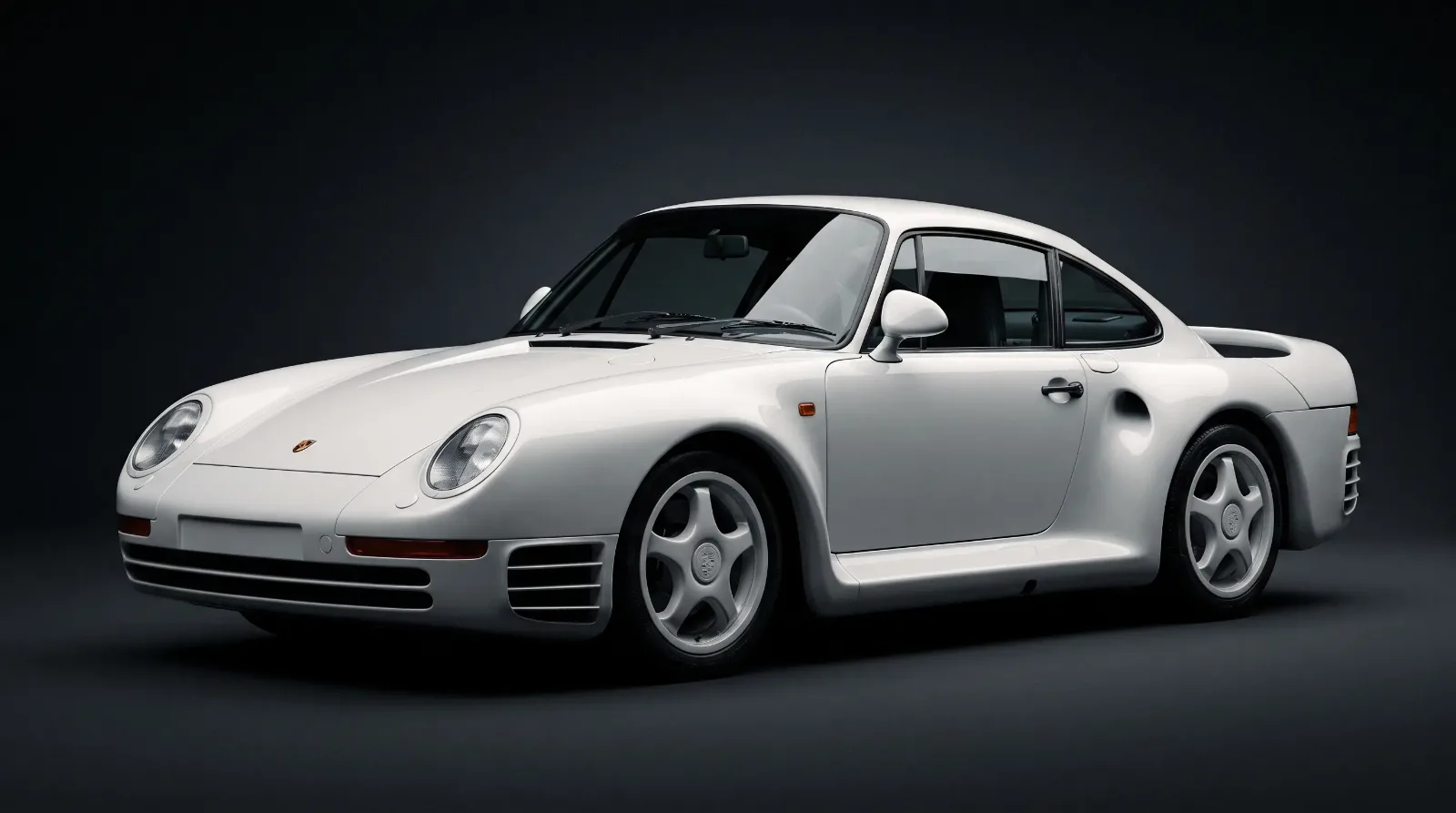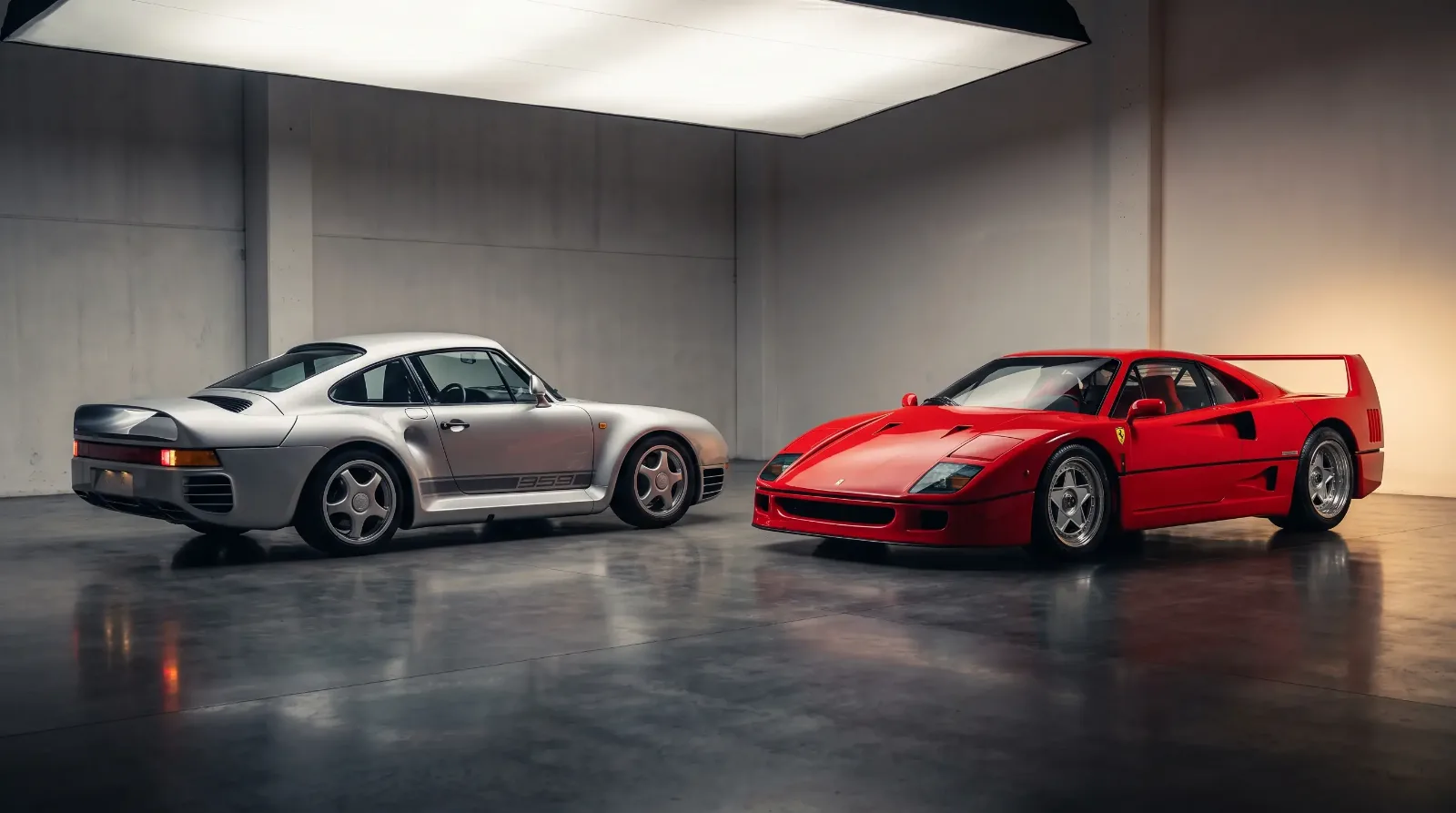
The Porsche 959 Dakar is the version of this car that gets left out of most spec-sheet comparisons, and that is an oversight, because it is arguably the more important 959 from a historical standpoint. Before the road car reached customers in 1986, Porsche had already proven the underlying all-wheel-drive and turbo technology in the harshest possible test: the Paris-Dakar Rally, run across thousands of miles of desert, rock, and sand where anything unproven simply breaks. The road car's reputation for control did not come from a lab. It came from the Sahara.
How Dakar became the 959's proving ground
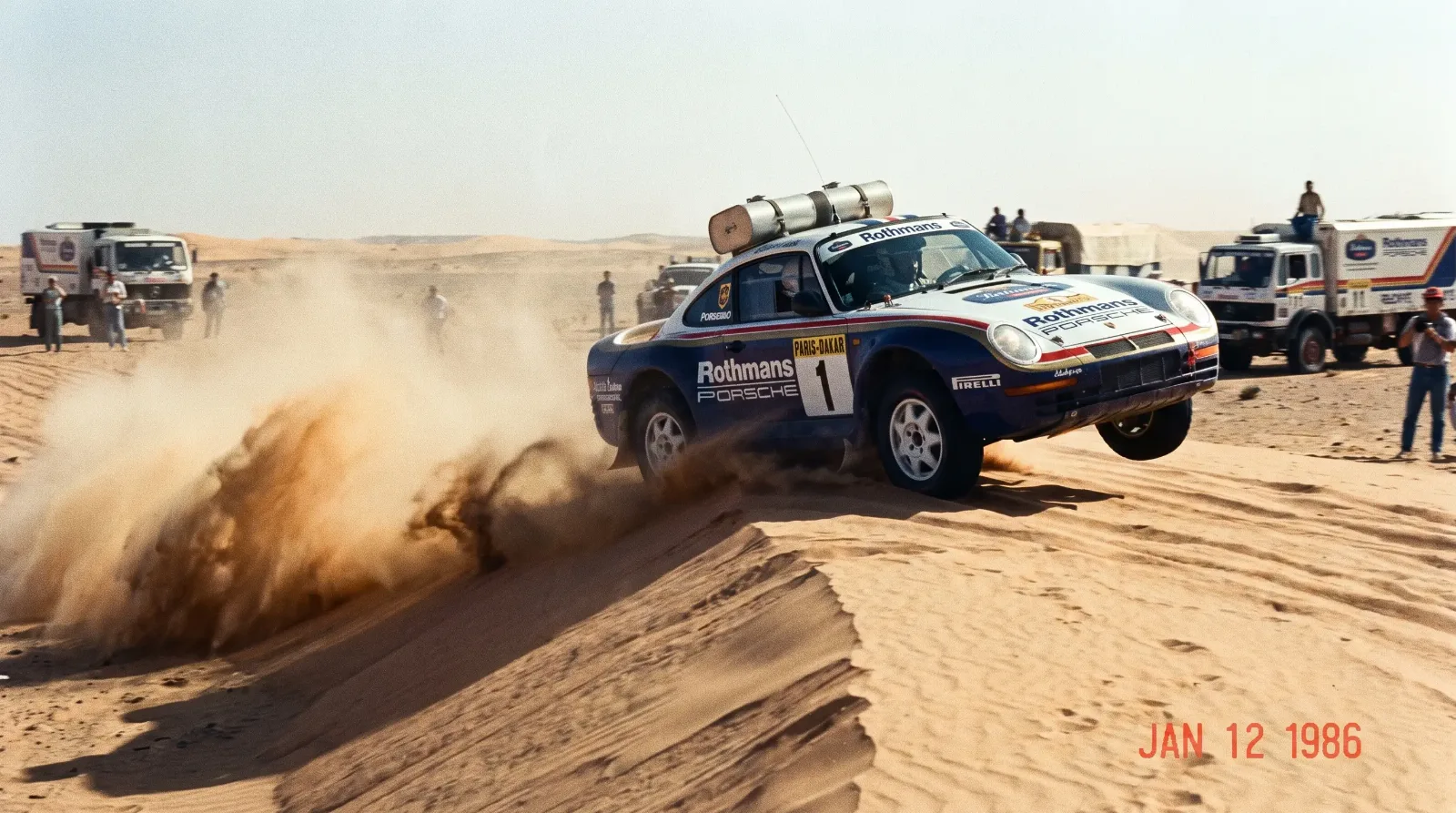
Porsche's rally program predates the 959 nameplate itself. In 1984, the factory entered a 911-based prototype, internally designated 953, fitted with early versions of the all-wheel-drive system that would later define the 959. Driven by Rene Metge and Dominique Lemoyne, that car took the outright win at the 1984 Paris-Dakar, the first time a sports car had won the event, with a second 953 finishing sixth and all three factory entries reaching the finish. By 1986, Porsche entered purpose-built 959-based rally cars, and the result reads almost too well to be true: Metge won outright in a 959, with Jacky Ickx finishing second more than ninety minutes back in another 959, and a third car built mainly as a support vehicle finishing sixth.
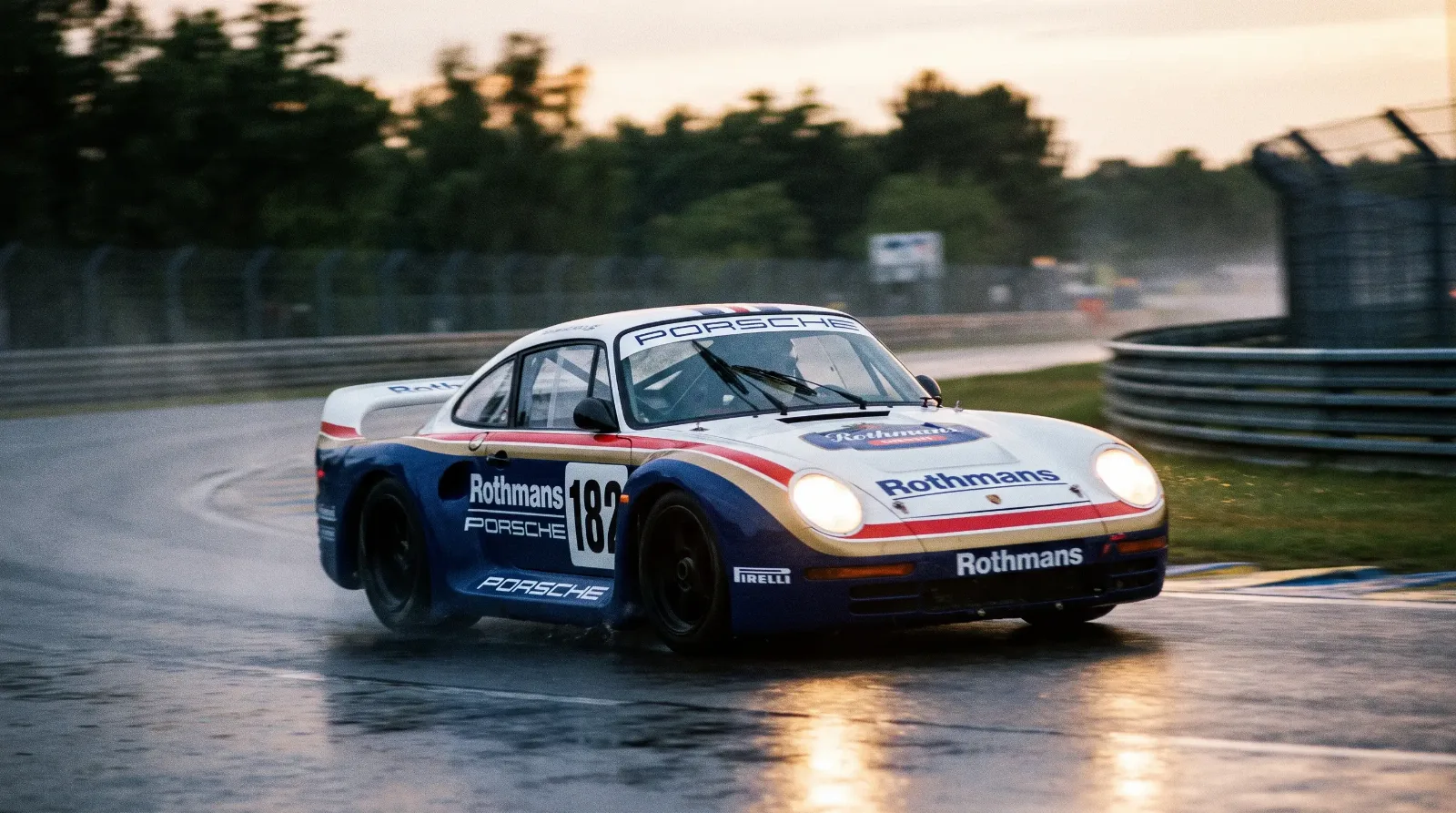
The rally cars were not simply road cars with a roll cage bolted in. Porsche raised the ride height further, reinforced the underbody against rock strikes, added long-travel suspension, and fitted auxiliary fuel tanks for stage lengths that could run past 500 miles between service. The bodywork carried the Rothmans livery that has since become as recognizable to Porsche collectors as any factory racing color scheme from the period.
What the rally program proved about the road car
Everything that made the road-going 959 usable in a way its rivals were not traces back to this program. The variable all-wheel-drive torque split, the adjustable ride height, the reinforced underbody protection on the Komfort trim, all of it existed first as a rally solution to a rally problem before Porsche decided customers deserved the same engineering. That is a meaningfully different origin story than most 1980s halo cars, which were usually built for the road first and raced second, if at all.
| Detail | Note |
|---|---|
| First AWD prototype entered | 1984 Paris-Dakar, 911-based 953 (overall winner) |
| 959-based rally entry | 1986 Paris-Dakar |
| Livery | Rothmans factory colors |
| Key upgrades over road car | Raised ride height, underbody armor, long-travel suspension, auxiliary fuel |
Why Dakar-linked cars carry a different value conversation
Actual surviving Dakar-spec rally cars almost never trade hands publicly, and when something described as "Dakar specification" or "Dakar tribute" comes up for sale, an appraiser has to separate three very different things: a genuine factory rally car with period competition history, a factory-built road car finished in Rothmans livery as a tribute to the rally cars, and an aftermarket recreation built later by an owner or shop. Only the first category carries genuine competition-history value, and even there, provenance research has to go well beyond a livery match. Chassis numbers, factory build sheets, and period photography are what separate a documented rally survivor from a good-looking story.
Road-going 959s finished in Rothmans-style liveries are not rally cars and should never be priced as though they were, though buyers sometimes conflate the two because the visual link is so strong. A tribute livery on a genuine 1987 or 1988 road car is a cosmetic choice, not a competition pedigree, and the honest appraisal treats it that way even when the seller's listing leans hard on the Dakar connection.
There is a middle category worth flagging too: cars that received period or later modifications intended to mimic the rally spec, such as raised suspension or auxiliary tanks fitted by an owner rather than by the factory. These are neither road cars in original form nor genuine competition cars, and they sit in an awkward spot for resale. Some buyers value the mechanical work involved. Others want originality above all else and see any deviation from factory road spec as a mark against the car. An appraiser has to ask which buyer pool a given car is actually being sold into before assigning it a number, because the same modification can be a selling point in one conversation and a liability in the next.
"When a listing leads with Dakar, the first thing I ask for is the chassis number and the period documentation, not the livery photos. The livery tells you what the car looks like. The paperwork tells you what it actually is."
— Marcus Feld
Buying into the Dakar story responsibly
If you want a 959 connected to this chapter of Porsche history without chasing an actual rally survivor, the honest path is a well-documented road car with a clear provenance trail, understood clearly by the buyer as a road car inspired by the rally program rather than a participant in it. That distinction should also be reflected in the price you are willing to pay, regardless of how the paint scheme reads in photographs.
Insurers and specialist brokers who handle this tier of the market generally ask the same first question an appraiser would: is this a rally car, a tribute, or a modified road car. Getting that answer wrong on a policy application can create real problems at claim time, which is one more reason the distinction matters beyond simple resale value. Buyers who do the homework upfront, rather than relying on a seller's framing, are the ones who end up with a car that is priced fairly on both sides of the transaction.
For the wider context of why Porsche built the 959 at all, the 959 and the halo cars covers the homologation rules behind the entire program, and another angle on the same car looks at the circuit-racing sibling built alongside the rally effort. For the fuller arc of the marque, the broader Porsche saga is worth the read. Buyers ready to shop this category can browse current exotic classic Porsches for sale with the documentation questions above already in mind.