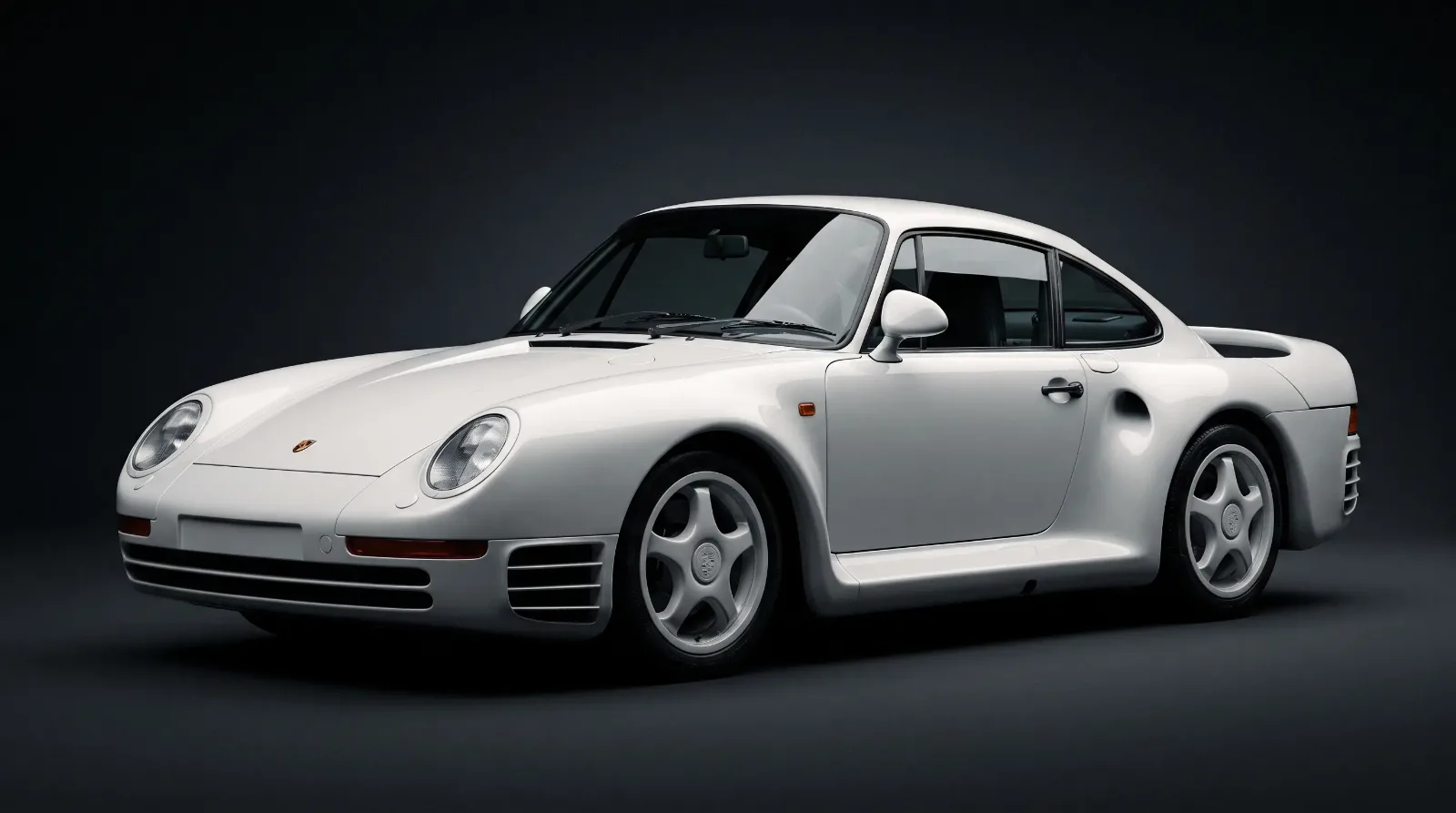
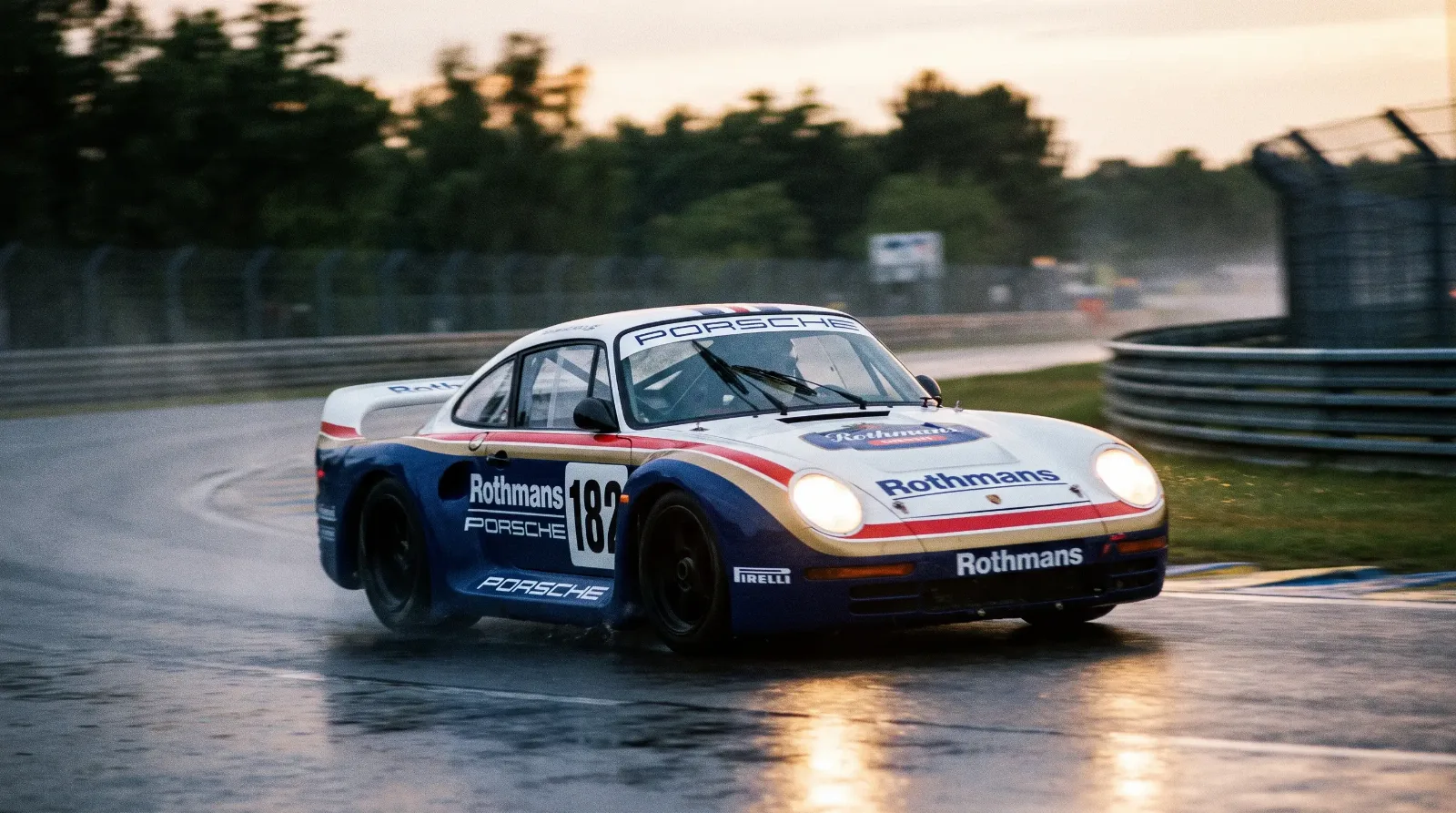
The Porsche 961 is the car most 959 buyers never hear about, which is a gap worth closing, because it is the closest thing to a pure competition version of that road car Porsche ever built. Where the 959 was a homologation special engineered to satisfy Group B rules while still working as a customer road car, the 961 dropped the compromise. It was built to race at Le Mans, entered there twice, and survives today as one of the rarest and most specific pieces of Porsche's 1980s halo-car story.
How the 961 differs from the 959 it was built from
Porsche built the 961 on the 959's core architecture, carrying over the twin-turbo flat-six and the all-wheel-drive system that defined the road car, but stripped the interior, added a full roll cage, and reworked the aerodynamics for sustained high-speed circuit running rather than street use or rally-stage abuse. This was not a customer car in any sense. It existed to prove the 959's underlying engineering could survive twenty-four hours of Le Mans racing at the top level of GT competition, a very different test than either the road or the rally program had asked of the platform.
Porsche's homologation rules for the era required the road-going 959 to exist in sufficient numbers before a race-spec derivative like the 961 could compete, which is part of why Porsche's homologation specials matter so much to understanding why this car was built at all rather than simply campaigning a more conventional 911 race car.
Le Mans, twice, with two very different outcomes
The 961 ran at Le Mans in 1986, finishing seventh overall (47 laps behind the winning factory 962C) and winning its GTX class as the only entrant in that experimental category, a genuinely strong result for a car derived from a road-legal homologation special rather than a purpose-built prototype racer. Porsche returned with the car in 1987, but that outing ended badly: running eleventh overall, driver Kees Nierop lost control and crashed, and the car then caught fire as he tried to nurse it back toward the pits. Nierop escaped safely, but the car suffered serious damage. That single incident effectively ended the 961's competition career, and the car's subsequent history has been defined as much by its restoration as by its racing record. Porsche did not build a second example to continue the program, which means the entire competition chapter of this car begins and ends within those two Le Mans entries.
| Detail | Note |
|---|---|
| Base platform | Porsche 959, race-modified |
| Units built | One |
| 1986 Le Mans result | 7th overall, GTX class win |
| 1987 Le Mans result | DNF, crash and fire |
Why a one-off race car is nearly impossible to appraise cleanly
Most appraisal work leans on comparable sales. With the 961, there are effectively none, because only a single example exists and it has changed hands at auction only rarely across its entire history. When it does surface, the sale becomes the reference point for everything discussed about the car afterward, for better or worse. That is an unusual position for any asset to sit in: the market has almost no ability to independently verify a valuation because there is no second data point to check it against.
What an appraiser can look at is the restoration record following the 1987 fire. A car that suffered visible damage and was subsequently restored carries a fundamentally different conversation than an undamaged, continuously original example would. That does not make the 961 a lesser object. Its damage and restoration are part of its documented history and, for a one-off competition car with this level of significance, arguably add to the story rather than detract from it, provided the restoration itself is well documented and traceable to reputable specialists.
Ownership of a car like this also comes with practical questions most collectors never have to face. Insurance for a genuinely irreplaceable single-example competition car is its own specialized field, distinct even from the agreed-value policies written for 959 road cars, because there is no replacement cost to fall back on if something goes wrong. Storage, transport, and even display at concours events all require a level of care and planning that scales with the fact that a mistake here cannot be corrected by sourcing another example. There is no other example.
That singularity also shapes who is realistically in the market for a car like this. It is not a purchase for someone assembling a broad collection of usable classics. It sits closer to institutional or museum-grade ownership, where the value proposition has as much to do with historical stewardship as with any expectation of driving the car regularly. An appraiser working on a 961 valuation has to account for that narrower buyer pool explicitly, because it changes both the achievable price and the realistic timeline for finding it.
"There is no comparable sale for a car like the 961. Every time it trades, the sale itself becomes the new benchmark, which means the appraisal has to lean almost entirely on documentation rather than precedent."
— Marcus Feld
What this car means for the wider 959 story
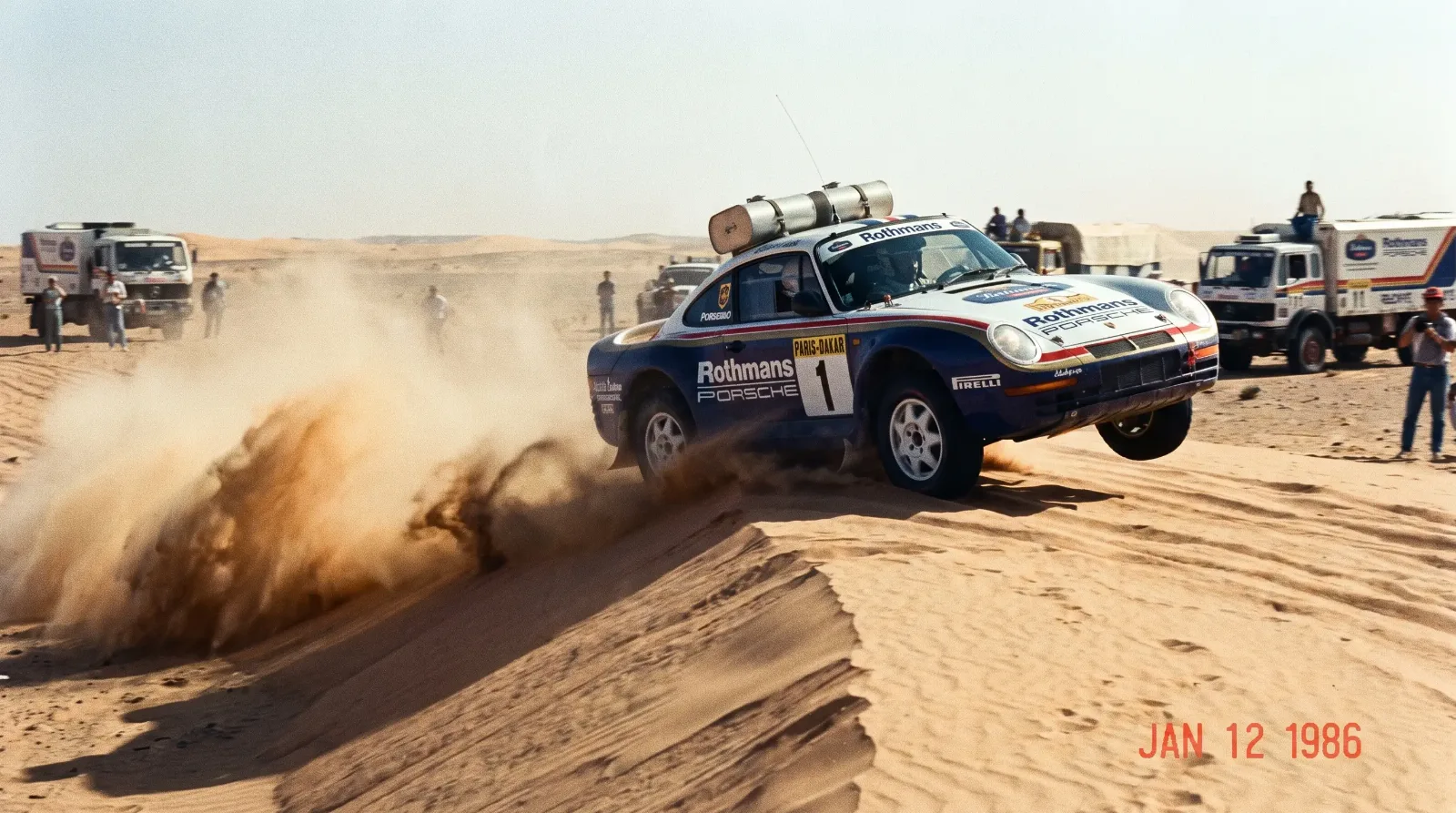
The 961 is not a car most collectors will ever have the opportunity to buy, and the practical reality is that most who encounter it will do so at a museum display or a concours field rather than a private sale. Understanding it still changes how you should think about every road-going 959 in the market. The competition program, both at Le Mans and on the Dakar rally stages, is what proved the road car's engineering under conditions no ordinary buyer would ever subject it to. A 959 in a collection is, in a real sense, benefiting from lessons this car and its rally siblings paid for the hard way. For readers who want to keep following this thread through Porsche's later GT racing efforts, keep reading the series to see where that competition lineage went next.