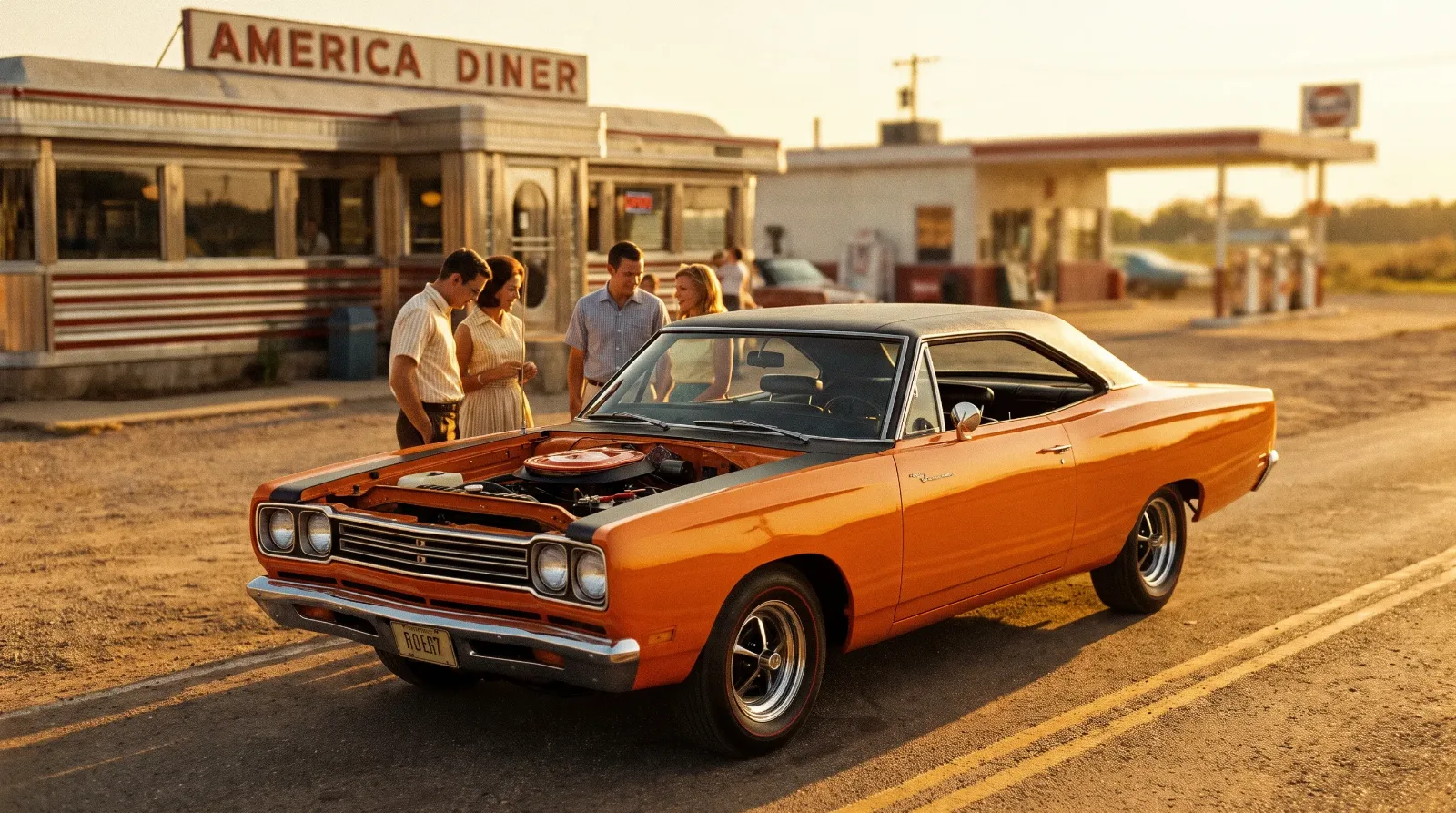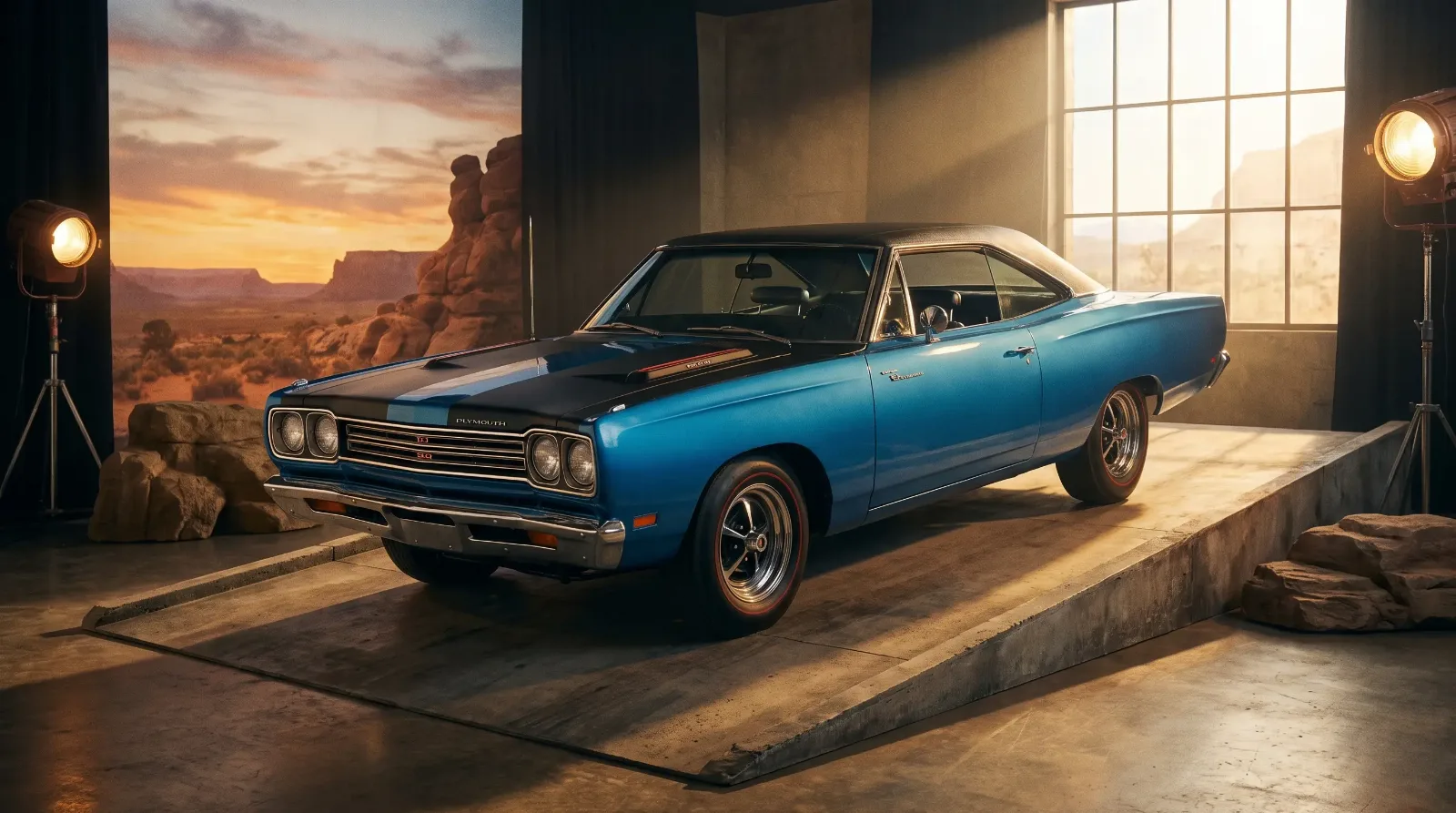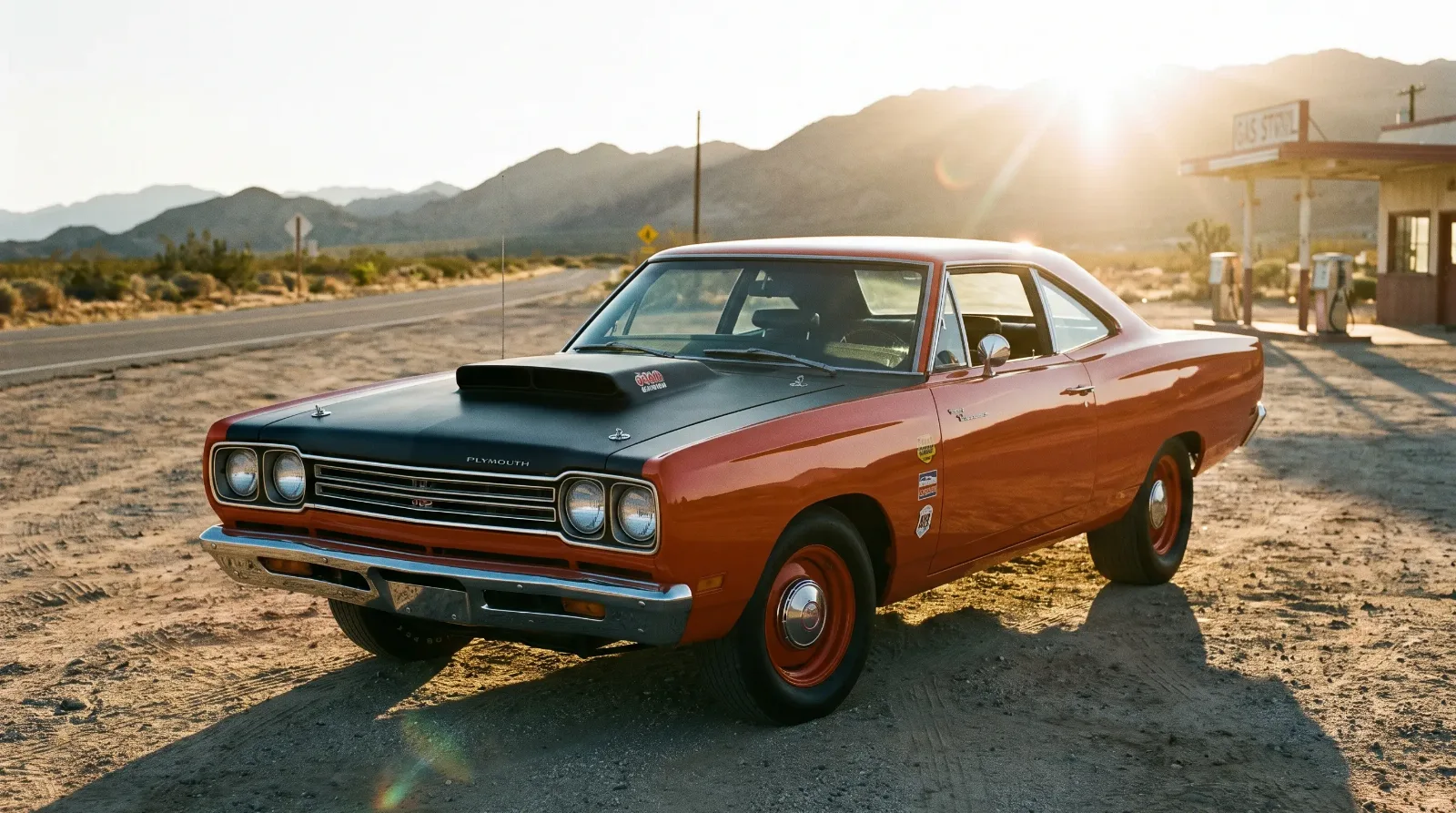
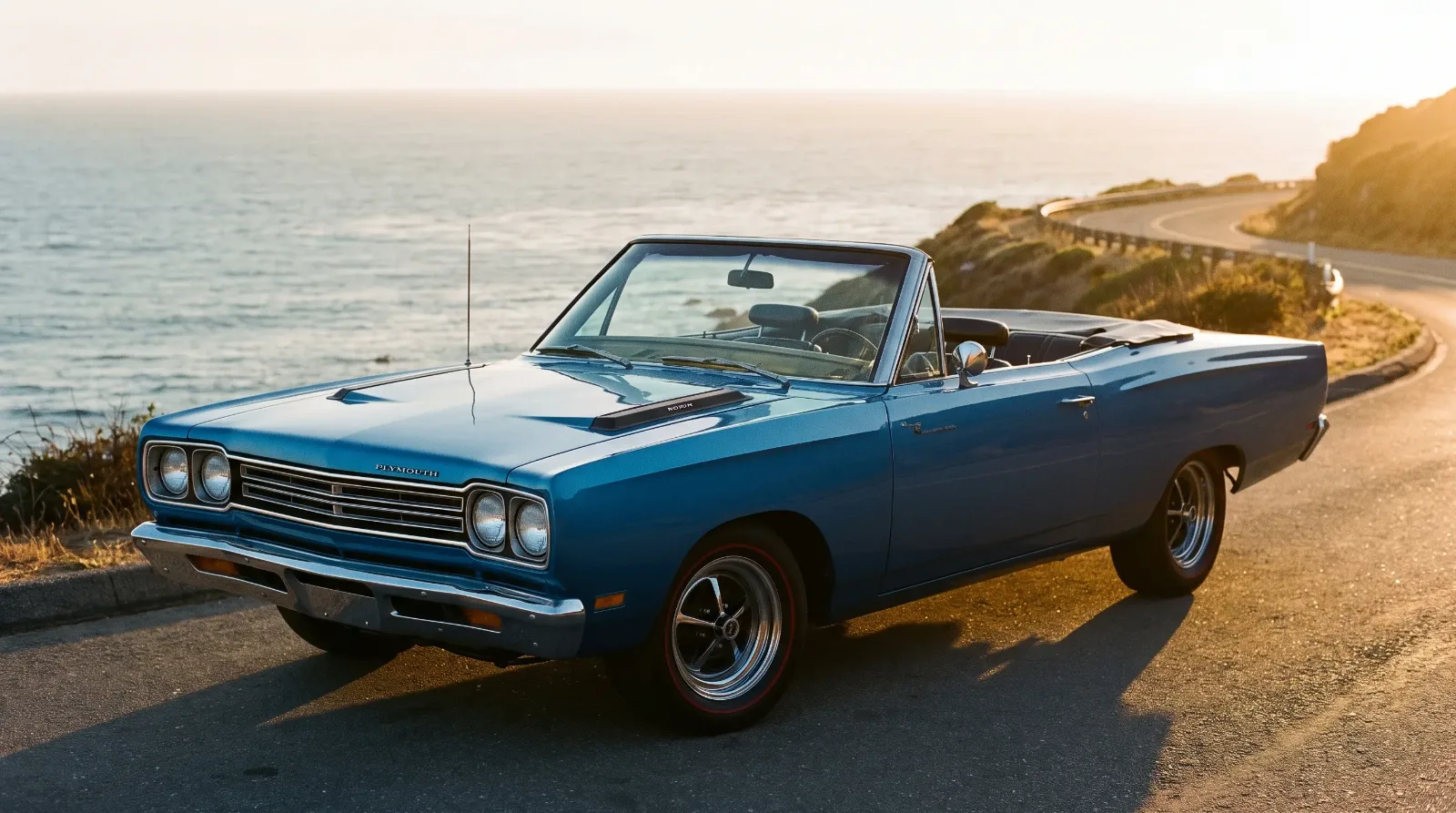
The 1969 Road Runner convertible is the version of Plymouth's cartoon muscle car that almost did not happen. Road Runner was built as a stripped down, low cost bruiser for the street racer who wanted a big engine and nothing else. A soft top with a power motor and glass windows ran against that idea on paper. Yet Plymouth built it anyway, and the factory records show why: dealers wanted it, and a handful of buyers wanted the meanest engine in the lineup with the top down.
For 1968, the Road Runner had launched as a coupe only. The convertible joined for 1969, the model's second year and its high point for sales and cultural reach. Plymouth added the open body alongside the existing pillared coupe and the new hardtop, rounding the lineup out to three distinct shapes riding on the same B-body platform as the Belvedere and GTX.
Why Plymouth built a convertible at all
Road Runner existed to undercut the GTX on price while matching or beating it on straight line performance. A convertible cut against that mission because ragtop bodies cost more to engineer, needed reinforced frame rails to fight cowl shake, and added weight nobody wanted on a car built around a 383 or 440 engine. Plymouth product planners green lit it anyway because the Detroit market of 1969 still rewarded a full body style spread. Every rival intermediate, from the Chevelle SS to the GTO, offered a convertible, and Plymouth was not going to concede that segment to Pontiac and Chevrolet without a fight.
The result sold in far smaller numbers than the coupe or hardtop, and that scarcity is the whole story of the 1969 road runner convertible today. Where the hardtop moved by the tens of thousands, drop top production landed in the low thousands, a rounding error next to the rest of the lineup. Buyers in period cared about a fast car for cheap money. A ragtop cost more and weighed more, so the math pushed most shoppers toward the coupe.
Engines and how the convertible was ordered
Plymouth built the convertible with the same drivetrain menu as the rest of the range. The standard 383 cubic inch V8 rated at 335 horsepower handled most orders, backed by either a three speed manual, a four speed, or the TorqueFlite automatic. Buyers chasing more could step up to the 440 cubic inch Super Commando, and partway through the model year the 440 Six Barrel option, known internally as A12, arrived with three two barrel carburetors on an aluminum intake. That engine is worth a look too, since it changed what a Road Runner could do at the drag strip without touching the convertible's own numbers directly. Hemi power was technically available across the Road Runner line, though very few soft tops left the factory with the 426 under the hood, and any surviving example with factory documentation for that combination commands serious attention from collectors.
Most convertibles that left Lynch Road and other assembly points carried the 383, ordered by buyers who wanted the Road Runner look and the open air experience without the insurance premium that came with a 440 or a Hemi. That combination, mid range engine and drop top body, defines the typical surviving car far more than the rare big block examples that get the magazine covers.
Options that separated one convertible from the next
A base Road Runner arrived with rubber floor mats, a bench seat, and painted steel wheels because Plymouth's engineers designed the car to be light and cheap first. The convertible buyer who wanted comfort could add bucket seats with a center console, power steering, power brakes, power windows, and the vinyl top boot cover that kept the folded roof out of the weather. Air conditioning existed as an option too, though it rarely appeared paired with the 440 since Plymouth restricted certain combinations to keep engine bay heat and belt routing manageable.
| Item | 1969 Road Runner convertible detail |
|---|---|
| Body style added | New for 1969, joining coupe and new hardtop |
| Base engine | 383 cid V8, 335 hp |
| Optional big block | 440 cid Super Commando, later 440 Six Barrel (A12) |
| Rare option | 426 Hemi, very few convertibles so equipped |
| Platform | Chrysler B-body, shared with Belvedere and GTX |
Production numbers and why they matter now
Plymouth's own broadcast sheets and dealer invoices, cross referenced by marque researchers over the decades, put 1969 convertible output at a small fraction of total Road Runner sales for the year. The hardtop and coupe carried the volume; the convertible was closer to a halo offering that kept the body style chart complete. That low number is exactly why a documented, numbers matching 1969 road runner convertible draws serious money at auction today. Fewer were built, fewer survived the decades of rust, resale as a used muscle car, and eventual restoration costs that scared off casual owners.
Because the convertible was always the smallest slice of Road Runner production, provenance research matters more here than almost anywhere else in the muscle car hobby. A fender tag, broadcast sheet, or period build sheet can be the difference between a car valued as a genuine rare survivor and one flagged as a clone built from a coupe or hardtop shell with a replacement top mechanism grafted in. Buyers serious about this body style should always start research with read the background on the full 1969 model year before chasing a specific car, since the convertible cannot be understood apart from the broader story of that year's Road Runner lineup.
"The convertible was never the car Plymouth built the Road Runner to be. It was the car Plymouth built because the market demanded every body style have one, and that reluctant origin is exactly why so few survive with honest paperwork today."
- Tom Ramirez
What collectors look for today
A restored or original 1969 Road Runner convertible with a big block engine, factory air, and a documented build sheet sits near the top of the desirability ladder for this generation of Plymouth muscle. Even a 383 car with a manual top and no options draws real interest simply because so few were made compared to the hardtop. Restoration shops that specialize in Mopar convertibles watch for rust in the trunk floor, the rear frame rails, and the area under the rear seat, all points where water intrusion around a folded top does its slow damage over fifty plus years.
Shoppers who want to see what is currently available should shop classic Runner listings rather than chase a car sight unseen from a photo listing, since condition and documentation vary enormously within this small production run. A convertible with a clean Carfax style paper trail and matching numbers is a different asset than a car assembled from parts, even if both wear the same badges and paint code.
The lasting appeal
What keeps the 1969 Road Runner convertible relevant in the collector market more than fifty years later is the tension at its core. It is a car Plymouth built almost against its own founding principle, a no frills speed machine wearing a body style meant for comfort and style rather than the quarter mile. That contradiction, low volume, high demand, big block available but rarely ordered, is precisely what makes it one of the more interesting footnotes in the broader Road Runner story rather than just another open top muscle car from Detroit's golden year.
Sources and notes
- Plymouth Road Runner - Wikipedia
- 1969 Plymouth Road Runner Convertible Doesn't Need a Hemi To Be Rare - autoevolution
- 1969 Plymouth Road Runner Specifications - conceptcarz
- 1969 Plymouth Road Runner Convertible full range specs - Automobile Catalog
- 1969 Plymouth Road Runner Base - Hagerty Valuation Tools