
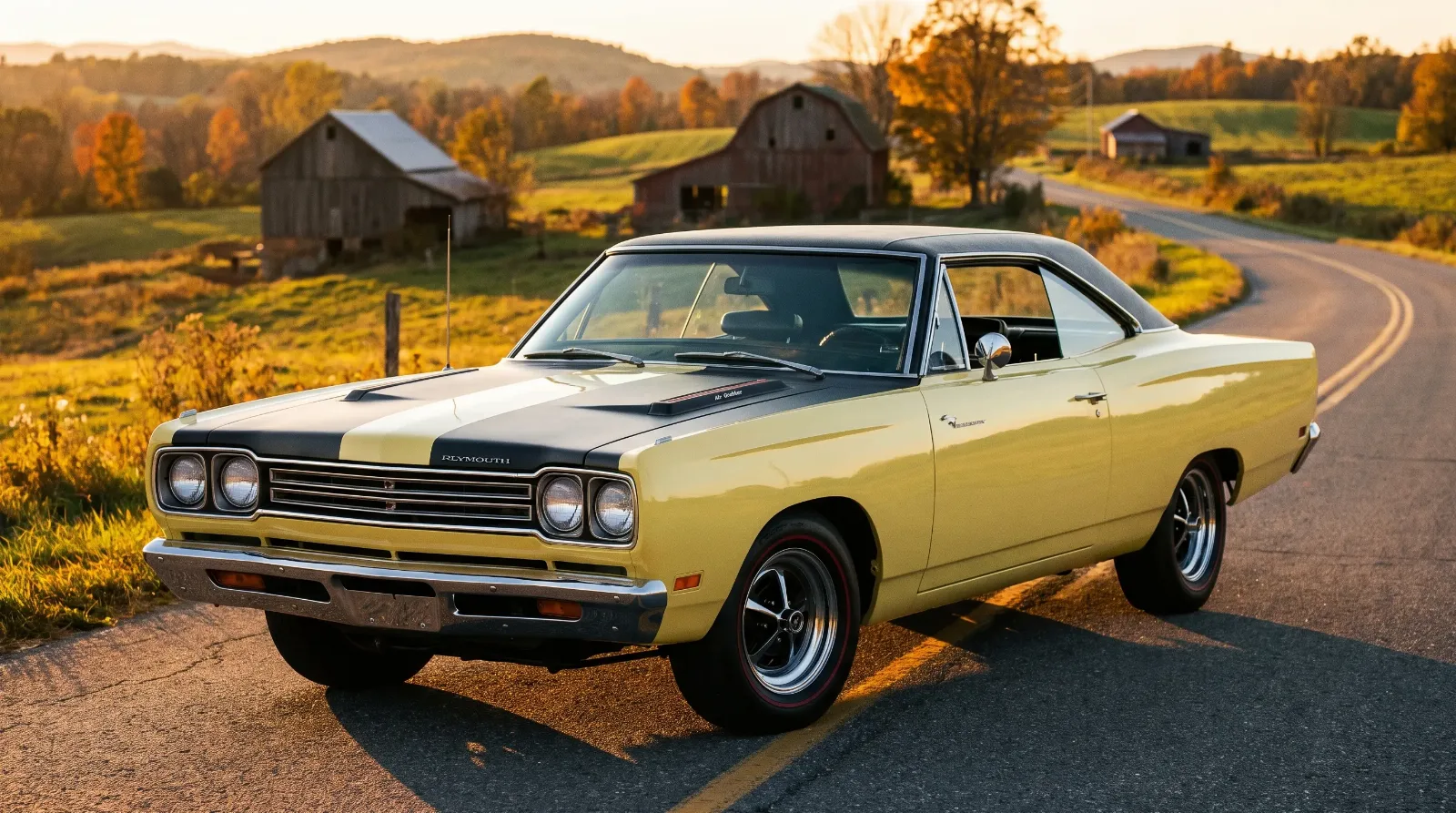
The 1969 Plymouth Road Runner is the year the concept stopped being an experiment and became an institution. Plymouth built the first car in 1968 as a calculated risk, a stripped mid-size aimed at buyers the muscle market had priced out. When the sales figures came back at roughly ten times the internal forecast, the company did the sensible thing. It expanded the line, added a convertible, refined the details, and let the horn keep honking. The result was the best-selling and, to many people who track these things closely, the definitive version of the car.
Car Features
10 min read
The 1969 Road Runner: Peak Beep-Beep
By 1969 the Road Runner was no longer a gamble. A convertible, the A12 Six Barrel, and record volume made it the year most collectors call the definitive one.
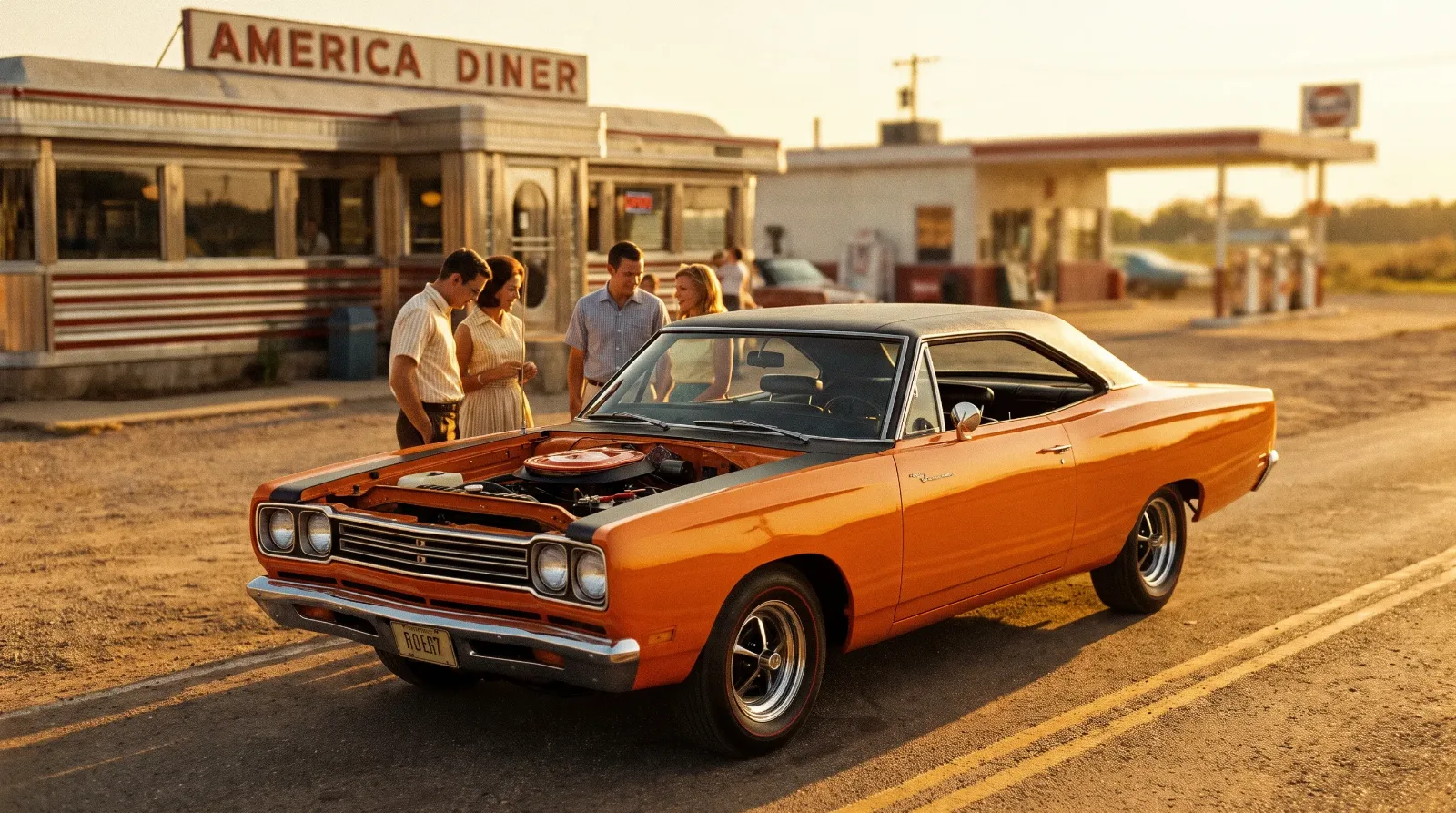
Production records tell the story better than nostalgia does. Where 1968 had been a coupe-and-hardtop proposition, 1969 opened the range. A convertible joined mid-year. The interior gained a few concessions to comfort without abandoning the plain-spoken character that made the car work. Most importantly, the volume climbed to levels that made the Road Runner one of the pillars of Plymouth's performance division. This was no longer a gamble. It was the plan.
What actually changed for 1969
The temptation with a second-year car is to assume the changes were cosmetic. In the case of the 1969 Plymouth Road Runner, several of them were substantial. The front and rear received revised trim and lighting. The convertible arrived as a genuine addition to the catalog rather than a rumor. And Plymouth broadened the engine and option story in ways that would matter enormously to collectors decades later.
The standard engine remained the 383 with its 440-sourced breathing hardware, rated at 335 horsepower. The 426 Hemi carried over as the top-tier option for buyers who wanted the ceiling. Between those two poles, though, 1969 introduced the piece that Road Runner history now treats as a landmark. The full account of how these variants fit together runs through the wider the plymouth road runner story, but the mid-year addition deserves its own paragraph.
The Six Barrel and the A12 cars
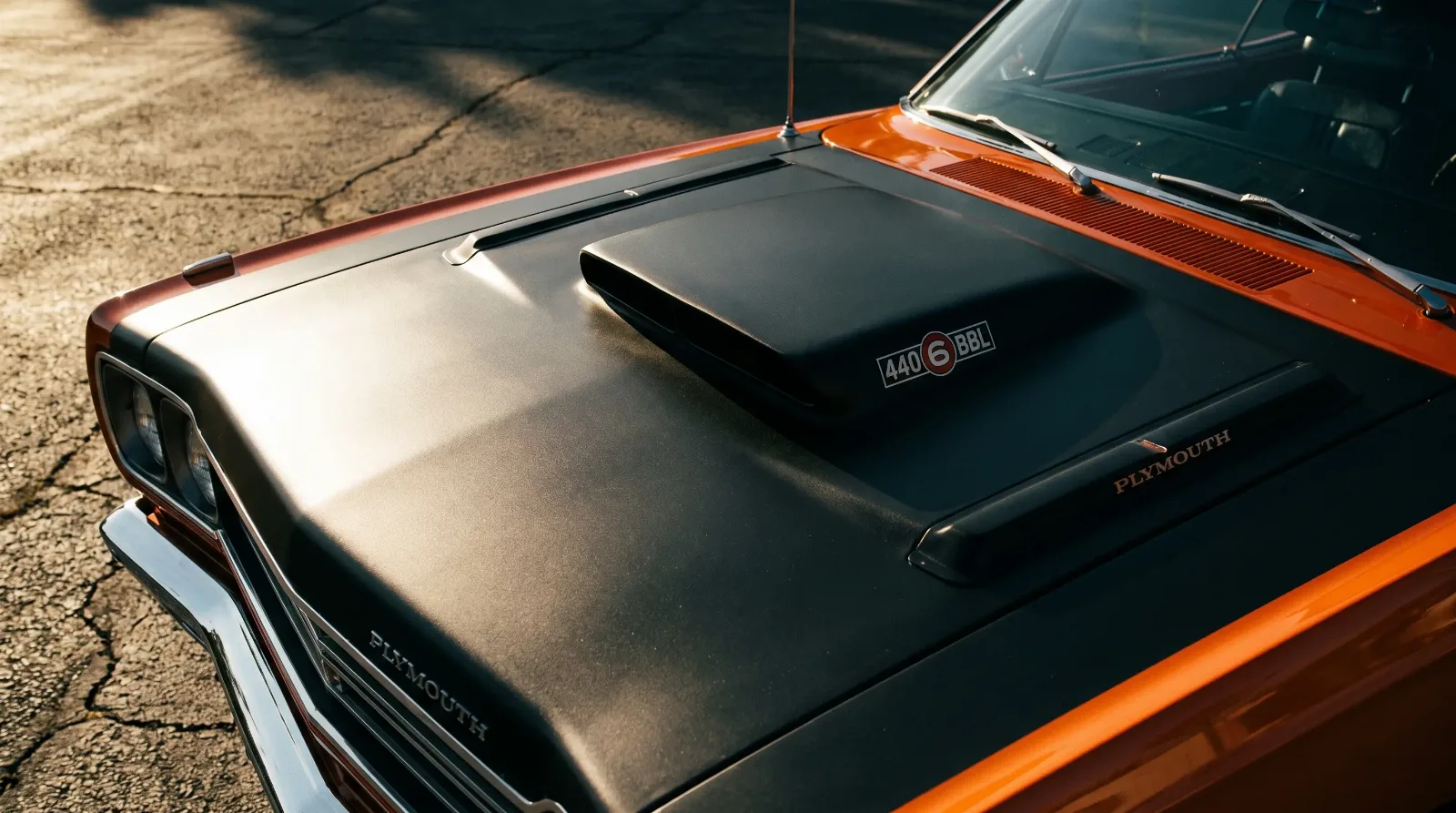
In the spring of 1969 Plymouth released a package that has become one of the most collected configurations in the entire Mopar catalog. Known internally by the A12 order code, it paired a 440-cubic-inch engine with three two-barrel carburetors, an arrangement Plymouth branded as the 440 Six Barrel, rated at 390 horsepower. The A12 cars came with a lift-off fiberglass hood held down by pins, black steel wheels without hubcaps, and a deliberately raw presentation that took the stripped-car philosophy to its logical extreme.
These were built in limited numbers, and their significance goes beyond scarcity. The A12 package sat almost exactly between the affordable 383 and the expensive, temperamental Hemi. It offered close to Hemi acceleration at a friendlier price and with fewer of the tuning headaches, which made it a favorite of buyers who wanted maximum performance without maximum complication. Today an authenticated A12 car is one of the more sought-after Road Runners a collector can find.
| 1969 engine option | Rated output | Notes |
|---|---|---|
| 383 cu in V8 | 335 hp | Standard engine, the volume seller |
| 440 Six Barrel (A12) | 390 hp | Mid-year package, lift-off hood, no hubcaps |
| 426 Hemi V8 | 425 hp | Top option, small production, high value today |
The numbers behind the peak
Production for 1969 climbed well above the debut year, with domestic volume reaching roughly 81,000 units across all body styles, plus several thousand more built for Canada and other export markets. That figure is worth pausing on. A car that Plymouth's planners had once expected to sell in the tens of thousands had, within two model years, become one of the best-selling performance cars in the country. The convertible remained a small slice of that total, which is why open cars command a premium now. The hardtops and coupes carried the volume, and the Hemi and A12 cars represented the rare, expensive top of the range.
It is easy to misremember the era as one where every muscle car was a Hemi or a Six Barrel monster. The records correct that gently. The overwhelming majority of 1969 Road Runners left the factory with the 383, exactly as intended. That engine was the car. The exotic options were the halo. Understanding that balance is the key to reading the production story honestly rather than through the lens of auction headlines.
The convertible deserves a closer look, because it is the body style that most distorts modern perceptions. Plymouth built the open Road Runner in genuinely small numbers, a tiny fraction of the coupes and hardtops that carried the year. Order that convertible with a Hemi or the 440 Six Barrel and the resulting car is one of the rarest factory combinations in the entire model run. Those examples now anchor the top of the market, and their scarcity was baked in from the moment they left the line. Most buyers wanted the closed cars, which were cheaper and better suited to the stoplight duty the Road Runner was built for.
The Hemi reality
The 426 Hemi looms over every conversation about these cars, and it is worth setting the record straight on what owning one actually meant in 1969. The Hemi was expensive, both to buy and to keep running right. It demanded frequent attention to stay in tune, it added a significant sum to the sticker, and it was overkill for the daily driving most owners did. That combination is exactly why so few were sold. The engine that collectors now treat as the ultimate prize was, when new, a hard and costly choice that only a small and dedicated slice of buyers made.
That history has a direct effect on the market today. Because so few Hemi cars were built, and because the engine carries such mythology, an authenticated 1969 Hemi Road Runner sits in a valuation tier far above the standard car. It also invites imitation, which is why the documentation matters so intensely. A genuine Hemi car with matching numbers and a paper trail is a blue-chip piece. A car merely wearing Hemi badges is a very different thing, and the gap between the two is measured in large multiples.
The design that aged well
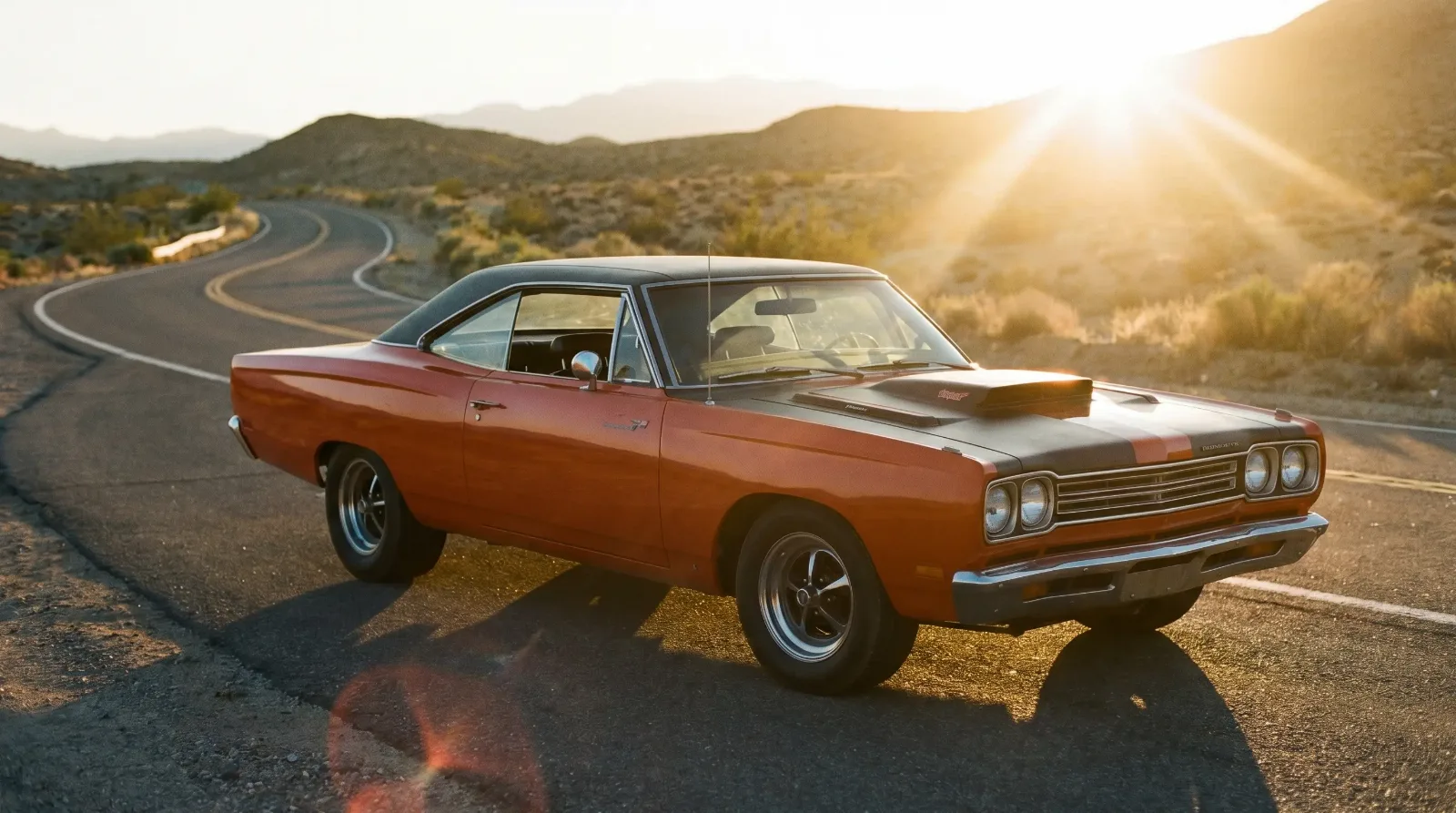
The 1969 body has become the shape most people picture when they hear the name Road Runner. The proportions were clean, the detailing restrained, and the whole car carried itself without the visual noise that would creep into later years. Plymouth resisted the urge to over-decorate. The bird decals and the horn were the flourishes. Everything else stayed purposeful.
Color played its part too. The palette leaned into the bright, confident hues of the moment, and a 1969 Road Runner in one of the high-impact shades that would fully arrive the following year still reads as a statement. The plain steel wheels of the A12 cars, in particular, gave those examples a stripped menace that no amount of chrome could match. This was a design that understood the difference between looking fast and looking expensive, and it chose the former every time.
The interior followed the same logic. Plymouth added a few comforts for 1969, but the cabin stayed honest to the original brief. A buyer could still order the car close to bare, with a bench seat and a column shifter and very little else, and many did. Others ticked a handful of boxes for a nicer seat or a console. The point was that the plainness was a choice rather than a punishment. You bought exactly the car you wanted, and the base version was never treated as an embarrassment to be upgraded away from. That respect for the budget buyer was central to why the model sold as well as it did.
"When you cross-check the build sheets against the sales ledgers, the 1969 car tells a consistent story. Plymouth found the exact point where price, power, and honesty met, and the production numbers prove the public agreed."
- Tom Ramirez
Reading a genuine 1969 car
Because the valuable configurations command such strong money, the 1969 model year attracts more than its share of recreated cars, and the factory documentation is what separates the real from the reimagined. The fender tag and the broadcast sheet record the original engine, options, and paint codes, and a serious collector reads those first. An A12 car without the correct paperwork is a very different proposition from a documented one, and the market prices that gap accordingly.
None of that should scare off the person who simply loves the shape. A well-kept 383 hardtop remains an accessible and honest way into the story, and it represents the car exactly as most 1969 buyers experienced it. The exotic engines get the attention, but the standard car is the one that earned the reputation. If you want to see the full spread of what survives, it is worth taking time to browse classic Runner listings and compare a documented example against a hopeful one.
Where 1969 sits in the story
Every long-running model has a year that enthusiasts point to as the high-water mark, and for the Road Runner the argument almost always lands on 1969. The formula was proven, the options were at their most interesting, and the design had reached a confident maturity before the weight and regulation of the coming years began to change the character of American performance cars. The Six Barrel and the Hemi gave the range a ceiling that few rivals could match, while the 383 kept the promise of affordable speed that had launched the whole idea.
The industry recognition of that year sealed the point. Praise piled up, and the sales ledger kept climbing, and other manufacturers scrambled to answer with budget performance models of their own. That competitive response is itself a kind of evidence. When rivals rush to copy a car you were nervous to build, you have found something real. Plymouth spent 1969 consolidating its lead, refining the formula rather than reinventing it, and the numbers rewarded the restraint. The A12 cars added a hardcore edge at the top, the convertible added glamour, and the humble 383 hardtop kept doing the quiet work of paying the bills. It was a rare moment when a model was firing on every cylinder of its own lineup at once.
What came next took the story in a wilder direction, out of the drive-in and onto the superspeedway, where Plymouth would chase records with a car so extreme it barely looked related. If the racing chapter is the part that pulls you, there is another one worth knowing that grew directly out of this moment. But the 1969 Road Runner remains the version that captured the concept at its clearest, sold in the greatest numbers, and left the deepest mark on how people remember Plymouth's most famous joke that turned out to be completely serious.
Sources and notes
- Plymouth Road Runner - Wikipedia
- 1969 Motor Trend Car of the Year: The Plymouth Road Runner - Fossil Cars
- Top Cars of the '60s: 1969 Plymouth Road Runner - OnAllCylinders
- 1969 Plymouth Road Runner Base - Hagerty Valuation Tools
- 1969 Plymouth Road Runner: Top 10 Facts Revealed - Muscle Cars Illustrated
- Curbside Classic: 1969 Plymouth Road Runner Hardtop
Related Reading
Article
The Plymouth Road Runner Story: How a Cartoon Bird Became Budget Muscle King
Article
The 1968 Road Runner: The Budget Muscle Car That Changed Everything
Article
The 1970 Plymouth Superbird: The Winged Warrior of NASCAR
Article
Why 1969 Was the Road Runner's Peak Year
Article
Motor Trend Car of the Year 1969
Article
The 1969 Road Runner Convertible
Article
The 440 Six Barrel Arrives: The A12
Article
The A12 Road Runner: The Lift-Off Hood 440-6
Article
The 1969 Road Runner Hardtop
Article
1969 Road Runner Production
Article
The Coyote Duster Air Grabber
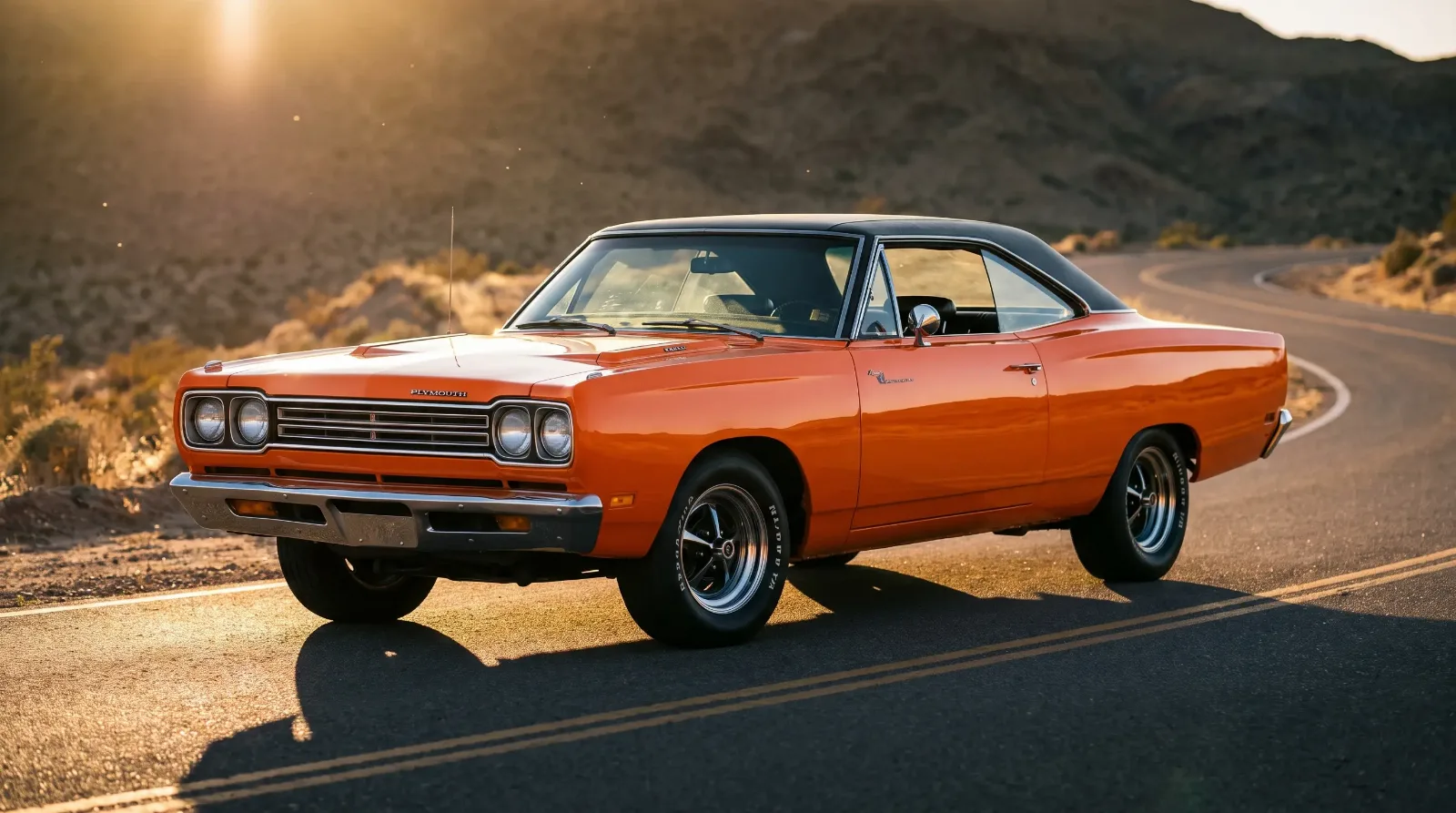
Article
1969 Road Runner Colors
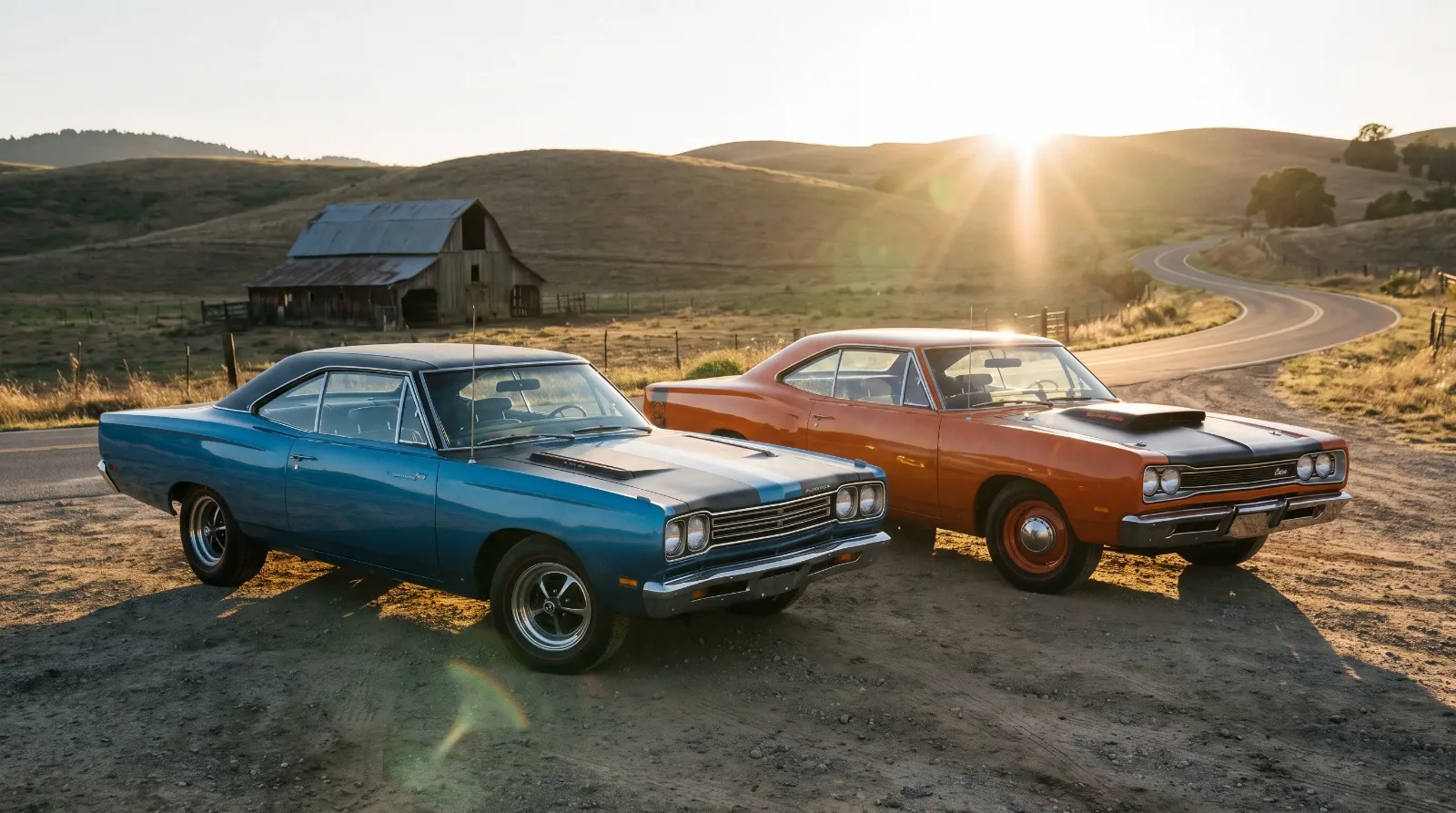
Article
1969 Road Runner vs Super Bee
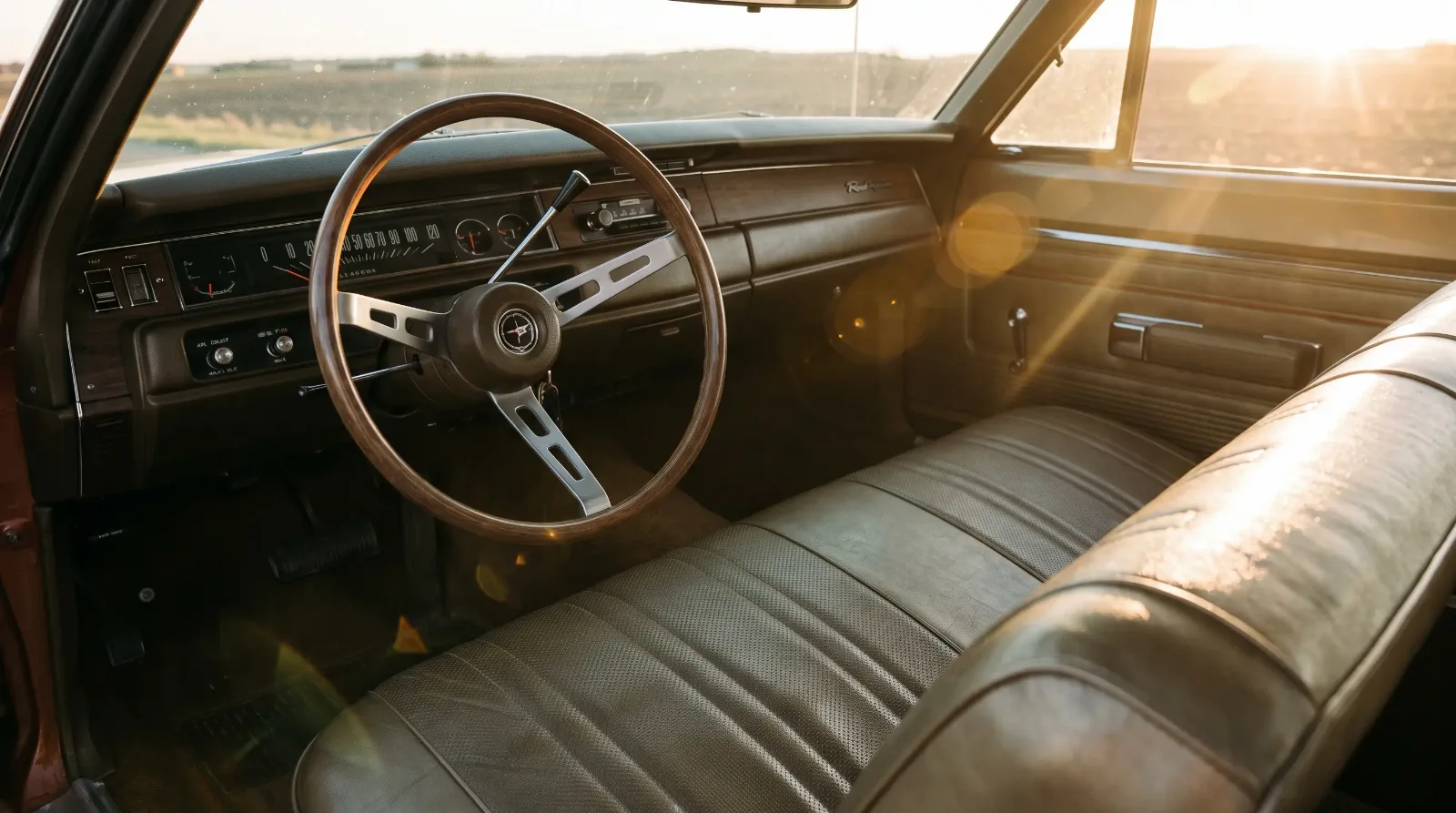
Article
The 1969 Road Runner Interior
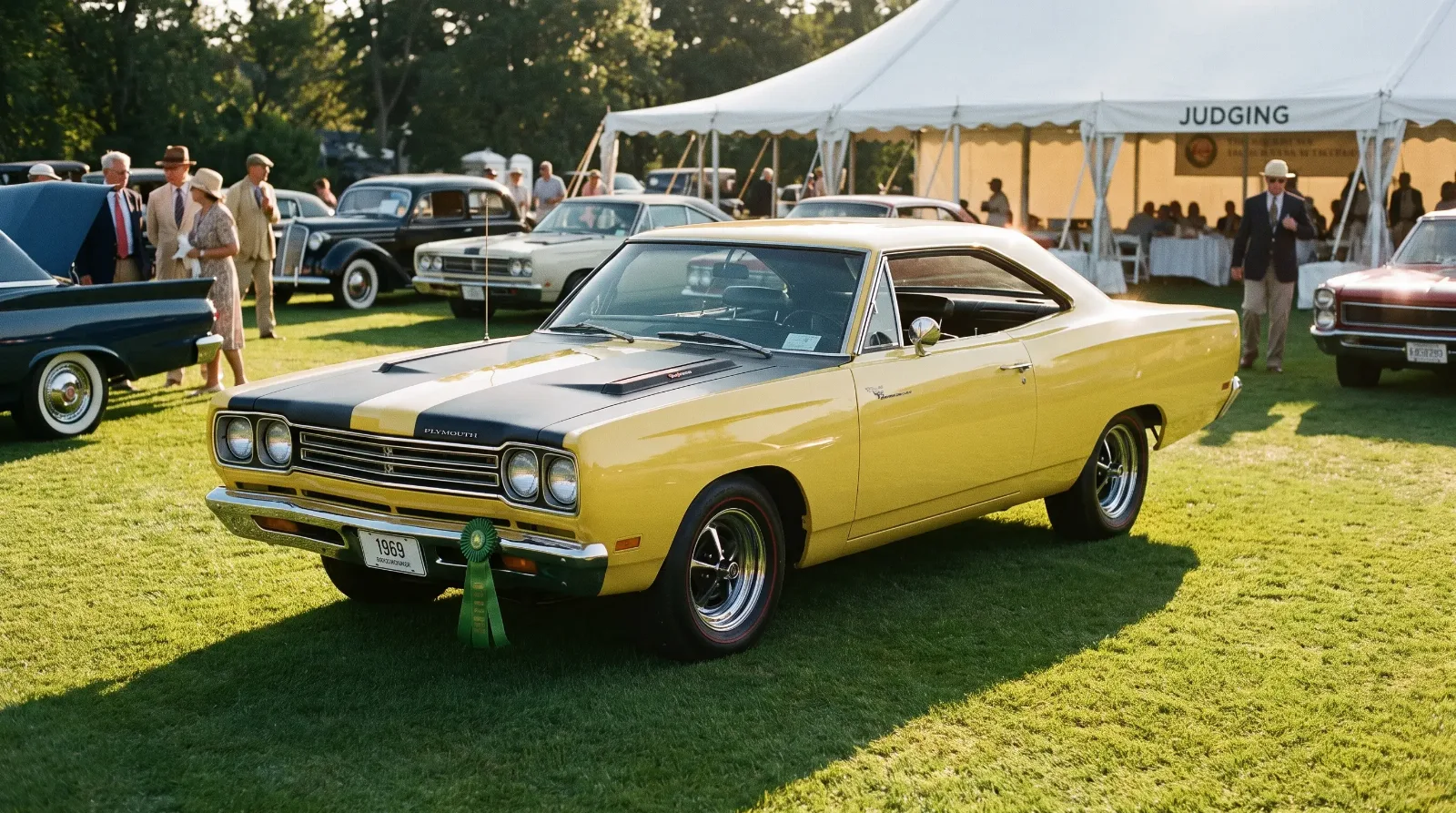
Article
Why 1969 Is the Collector's Choice
Article
1969 Road Runner Values Today
Have a
Plymouth Road Runner
for Sale?
Reach thousands of serious classic car collectors across the US.
Sell It Here →
Are You a Classic Car Dealer?
List your full inventory and connect with targeted classic car buyers.
Join as a Dealer →

About the author
Tom Ramirez
Corvette researcher and historian based in Bowling Green, Kentucky. Two decades documenting Corvette production history from original factory records.
Related Listings - Plymouth Road Runner
Comments (1)
M
Mike Ferrano
3 weeks ago
The cooling system note is accurate. Gets overlooked because these cars run fine at idle. Not fine on a highway in July.