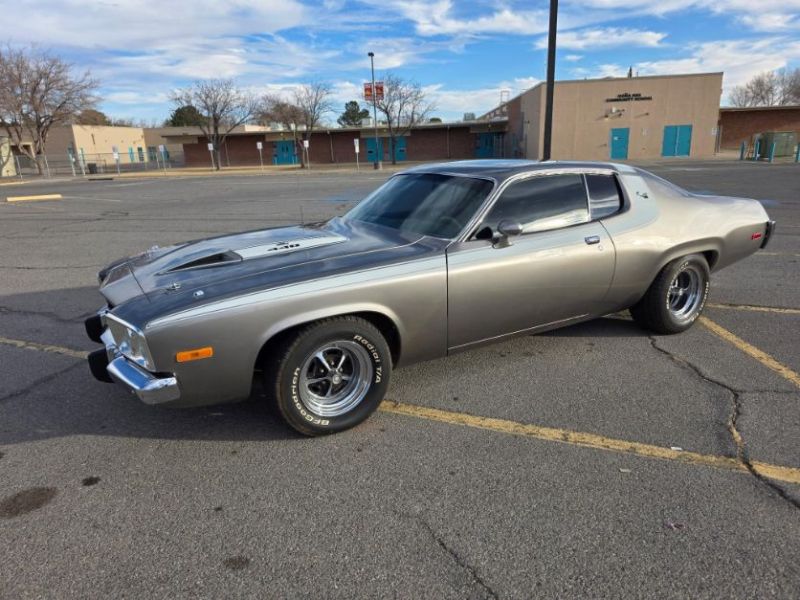
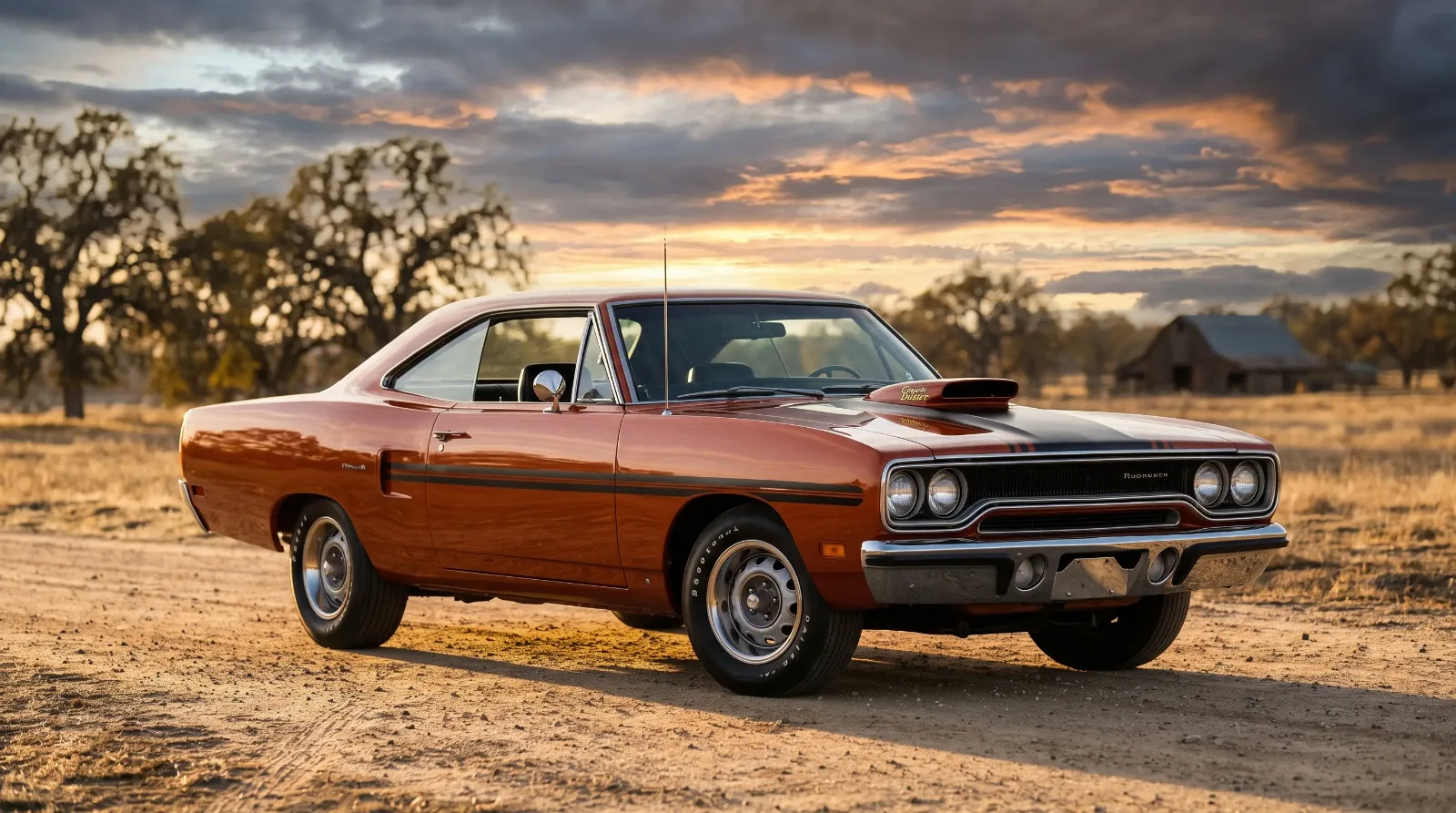
The road runner coyote duster air grabber system is one of the more unusual functional details Plymouth ever put on a production performance car, and the engineering behind it deserves more attention than the novelty of its name usually gets. Officially cataloged as the Air Grabber, and tied to the Coyote Duster nickname through the Wile E. Coyote decal Plymouth applied to the oval air cleaner lid underneath, the system gave Road Runner buyers a driver operated cold air induction setup controlled from inside the car rather than a fixed, always open hood scoop.
How the system actually worked
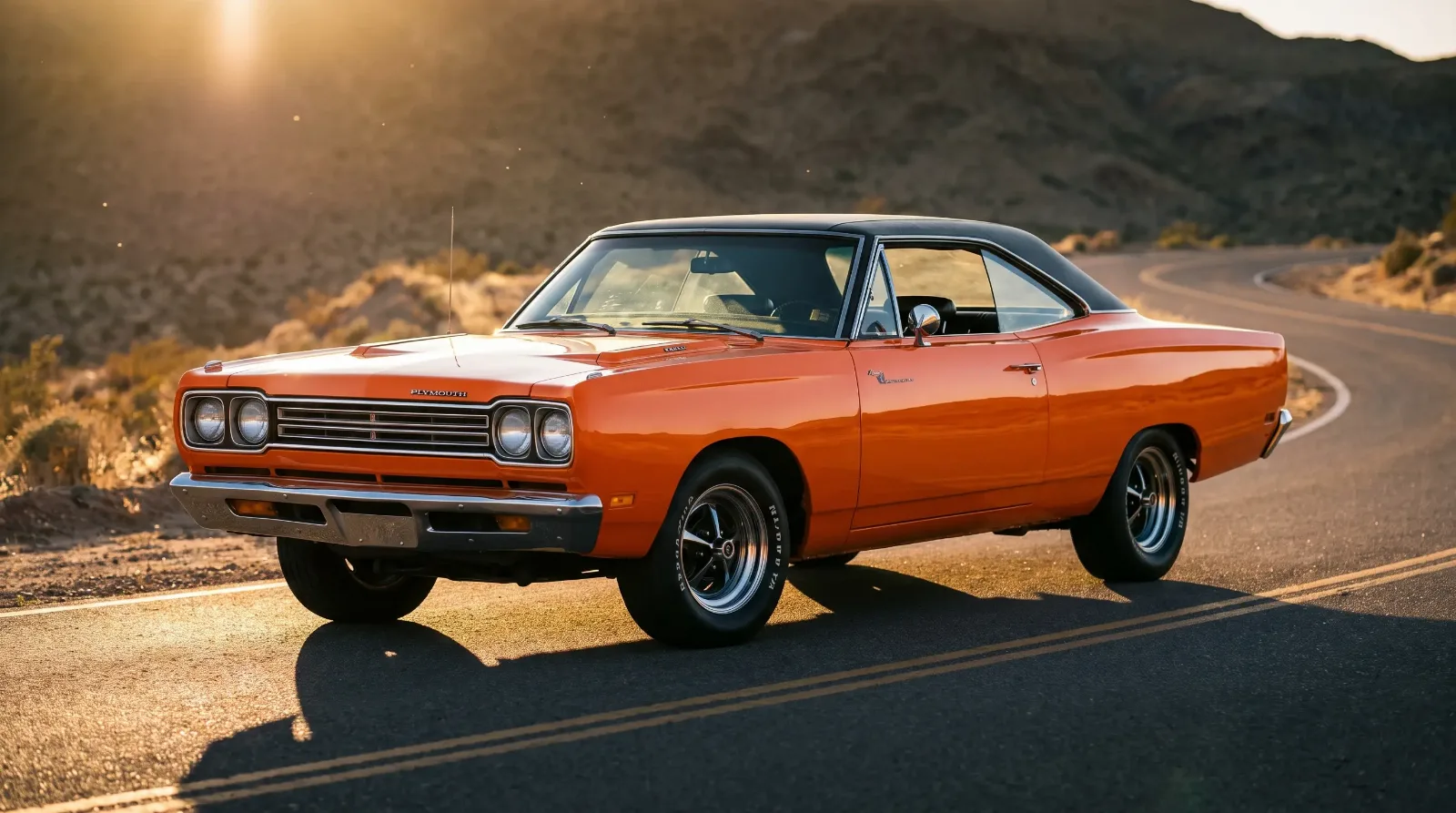
Most performance hoods of the era took one of two approaches: a purely decorative raised section that did nothing for airflow, or a fixed functional scoop that fed cold outside air to the carburetor continuously regardless of what the driver wanted. Plymouth's engineers built something more interesting. On the 1969 Road Runner, a lever under the dash marked "Carb Air" pulled a cable that opened twin hood vents, exposing a duct feeding directly to the air cleaner below. Closed, the hood presented a flush, unremarkable surface. Opened, the vents fed cool outside air straight to the oval air cleaner lid underneath, the piece carrying the Wile E. Coyote graphic and the Coyote Duster name that gave the whole setup its nickname among owners and later enthusiasts. Plymouth revised the system for 1970, switching to a vacuum operated actuator triggered by a dash mounted switch and a scoop that opened to reveal orange and white shark tooth decals.
From a pure engineering standpoint, the driver operated design solved a real problem. A fixed open scoop constantly pulls in outside air, which is exactly what a driver wants under hard acceleration but is less than ideal in wet weather or at idle, when it can pull in more moisture and debris than a sealed underhood environment. Giving the driver a switch meant the car could run with a sealed, quieter induction path for normal driving and switch to cold air ram induction only when the driver wanted maximum performance, typically right before a stoplight launch or a pass down the strip.
| Detail | Air Grabber (Coyote Duster) specification |
|---|---|
| Official name | Air Grabber |
| Enthusiast nickname | Coyote Duster, for the toothy graphic on the flap |
| Actuation | 1969: cable pull via dash lever marked "Carb Air." 1970: vacuum operated dash switch |
| Function | Cold air ram induction on demand |
| Closed state | Flush hood surface, sealed underhood path |
Why cold air induction mattered on these engines
Big block engines of this period, whether the 383, the 440, or the rare 426 Hemi, made noticeably more power when fed cooler, denser outside air rather than the hot air trapped inside a closed engine bay. A carburetor pulling air heated by exhaust manifolds and radiator discharge loses some of its potential output simply because hot air is less dense and carries less oxygen per volume than cool outside air. A functional cold air system like the Air Grabber addressed that directly, and restorers and performance shops working on these cars today generally agree the system delivers a real, if modest, gain when engaged compared to a closed hood running on underhood air alone, even without a precise period dyno figure to cite.
That gain mattered most exactly when a driver wanted it most, at the drag strip or in a stoplight matchup, which is precisely the scenario the switch operated design was built around. A system that ran open constantly would have delivered the same cold air benefit under acceleration but at the cost of comfort and reliability during ordinary driving, a tradeoff Plymouth's engineers clearly decided was not worth making for a car that still had to function as everyday transportation for a meaningful share of its buyers.
Reliability and what restorers deal with today
Vacuum operated systems from this era are not maintenance free, and the Air Grabber is no exception. Decades of dried out vacuum lines, weakened actuator diaphragms, and worn hinge points mean a large share of surviving cars have a system that either does not open fully, does not seal properly when closed, or has been disconected entirely by a previous owner who got tired of chasing a vacuum leak. Restorers who want the system working as designed usually replace the vacuum lines and actuator as a matter of course rather than trying to nurse original components along, since the parts are inexpensive relative to the rest of a restoration budget and a nonfunctional Air Grabber undercuts the whole point of having one.
"The switch is the part people underestimate. It is a small detail on the dash, easy to overlook next to the tachometer and the gauges, but flipping it and watching that scoop pop open is the moment a Road Runner stops being just another muscle car and starts being this specific car."
- Emily Chen
How it compared to rival scoop systems
Plymouth was not alone in chasing driver controlled cold air induction during this period. Pontiac's Ram Air setups and various hood mounted scoops from Chevrolet and Ford competed for the same basic engineering goal, denser air under acceleration without the daily driving penalties of a permanently open scoop. What set the Air Grabber apart, and what earned it the Coyote Duster nickname specifically, was the theatrical presentation. Rivals largely stuck to functional but visually plain scoop designs. Plymouth leaned into the Road Runner's cartoon branding and built a system that looked deliberately aggressive when triggered, turning a purely mechanical airflow decision into a small piece of showmanship every time a driver flipped the switch in front of an audience at a stoplight or a cruise night. That willingness to combine genuine engineering function with personality is part of why the system still generates enthusiasm among collectors who have never once needed the extra horsepower it delivers on the street.
Placing the Air Grabber within the model year
The Coyote Duster system was one of several details Plymouth layered onto the Road Runner during its most successful production years, alongside the body style expansion, the mid year 440 Six Barrel engine option, and the broader sales momentum that made this era the commercial high point for the entire nameplate. Readers curious how a driver operated air scoop fits into that larger story of engineering choices and market positioning can read the background on the model year as a whole.
For buyers today, a functioning Air Grabber system is a genuine point of differentiation on an otherwise comparable car, since it demonstrates both mechanical completeness and, often, a level of owner care that extends to less visible systems throughout the vehicle. Anyone shopping specifically for a car with this feature intact and operational can find a classic Runner and ask directly whether the scoop still opens on demand, a simple test that tells you more about a seller's honesty than almost any other single question you could ask during a walk around inspection.
Sources and notes
- Plymouth Road Runner - Wikipedia
- The Ultimate Stoplight Intimidator: Air Grabber & Ramcharger - Mopar Connection Magazine
- 1970 RR Air Grabber Vacuum Actuator Problems - For Plymouth Road Runners Only Forums
- 1970 Road Runner Air Grabber underhood pictures/diagrams - For B Bodies Only
- 69 Roadrunner Air Grabber vs Non-Air Grabber Hood Question - Moparts Forums