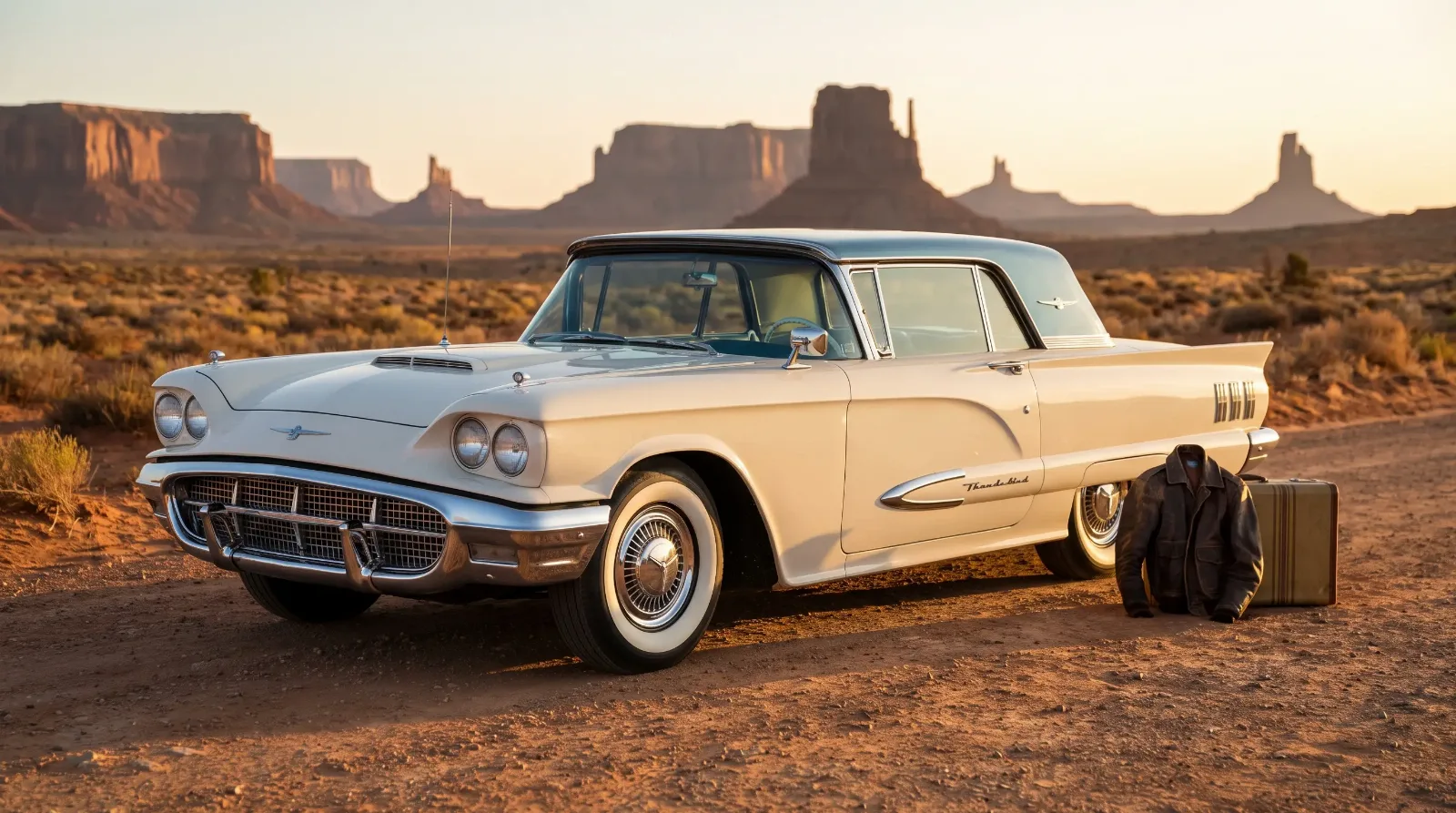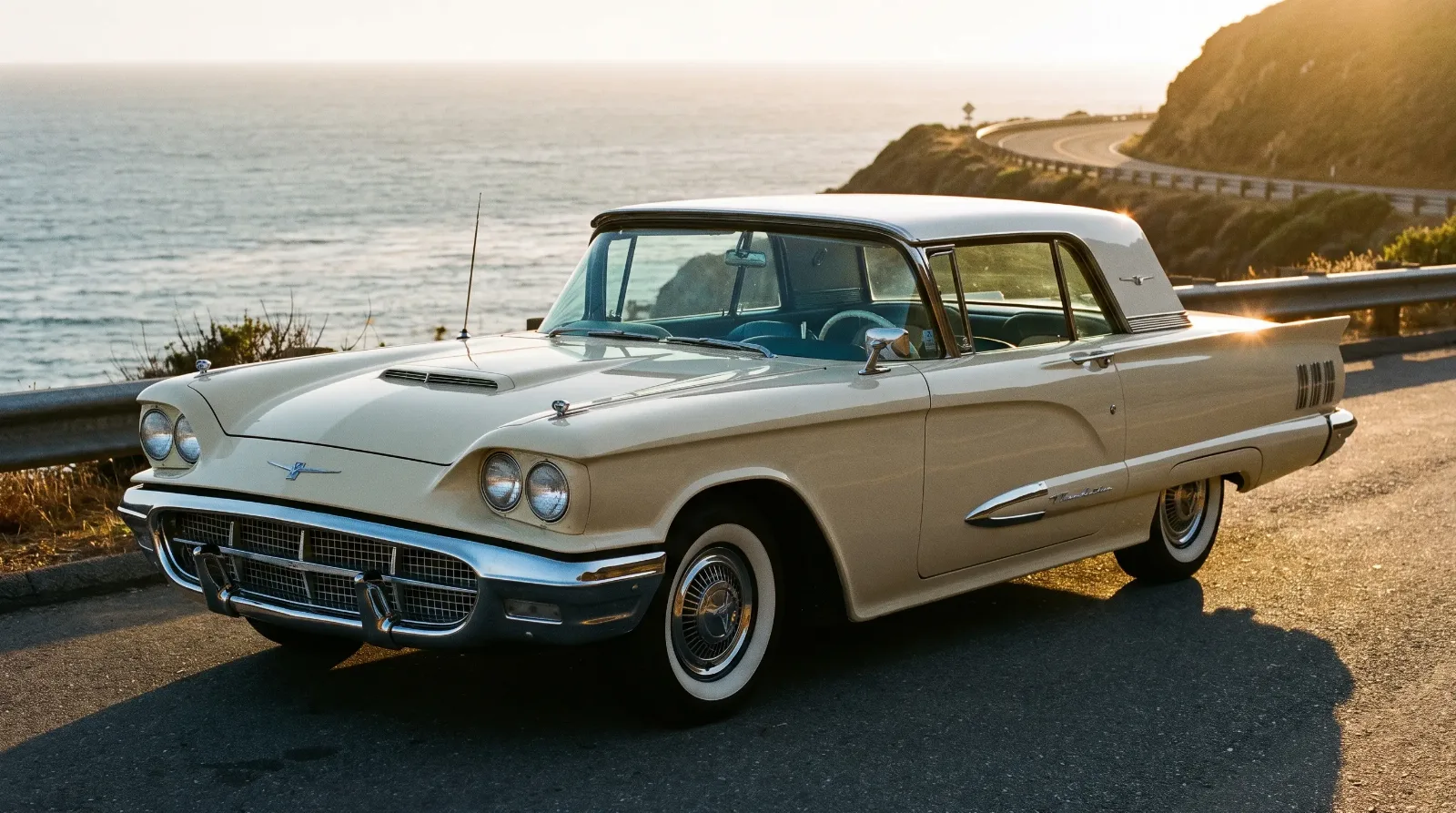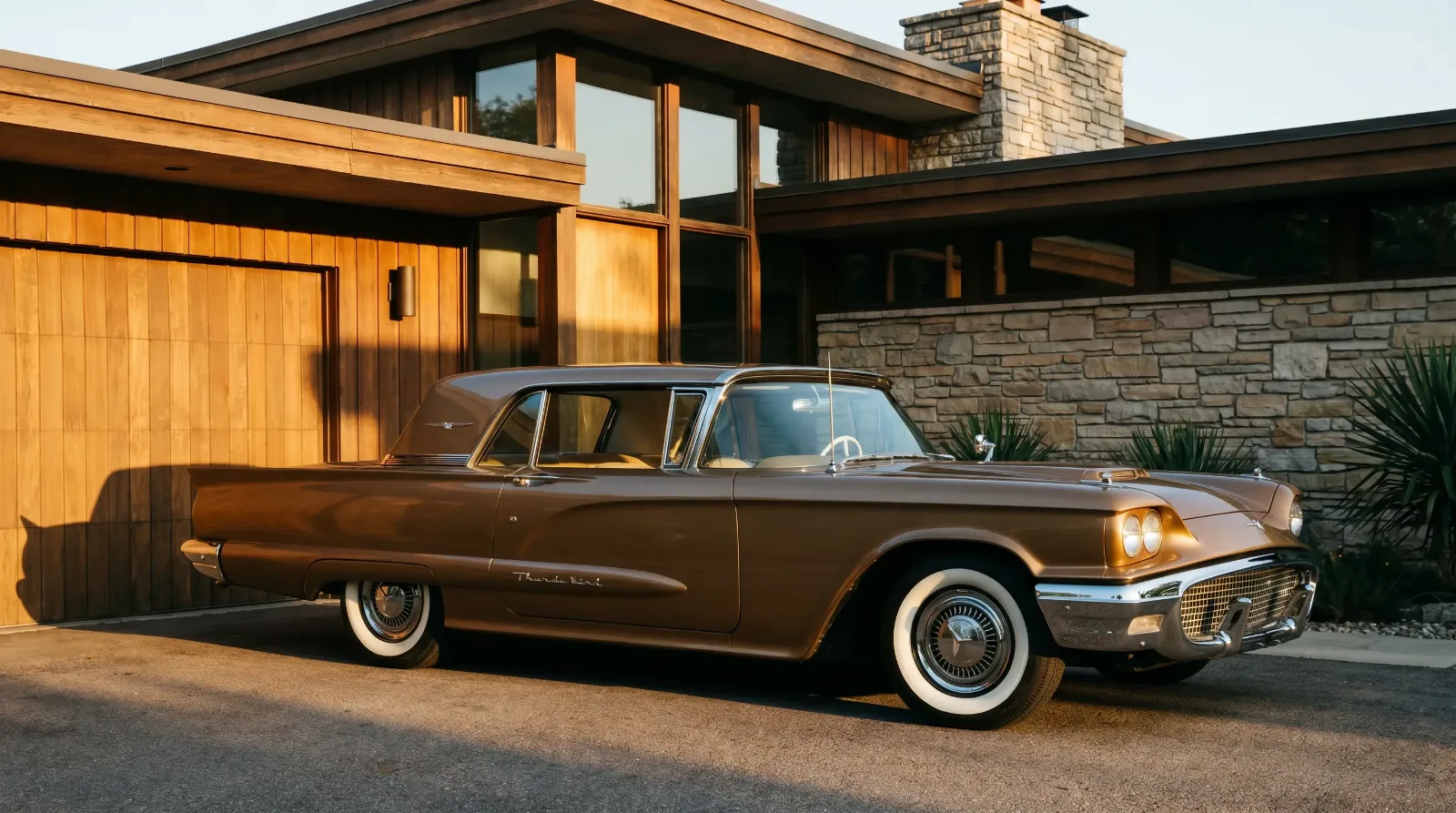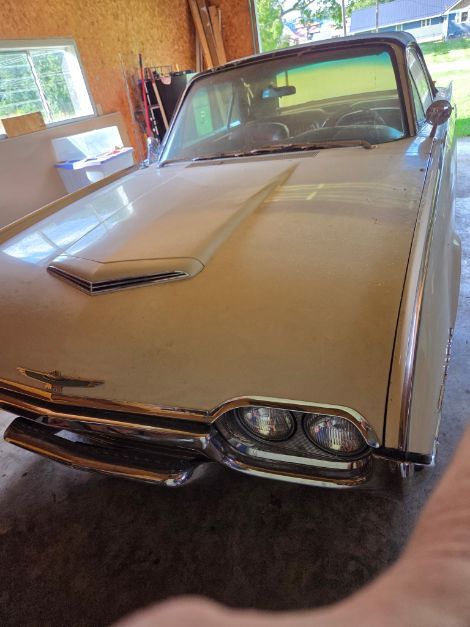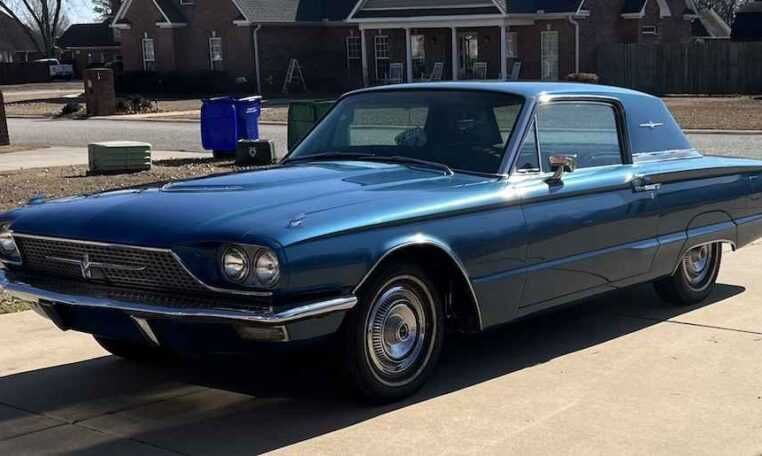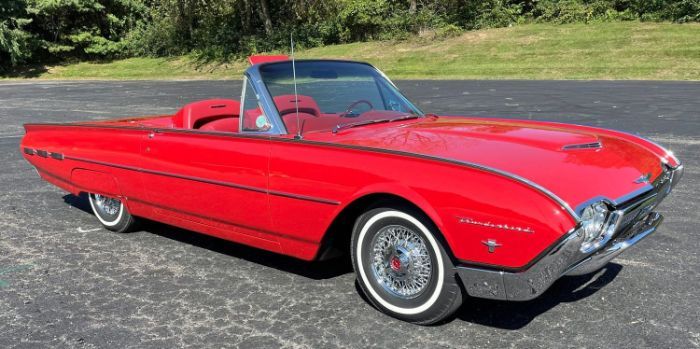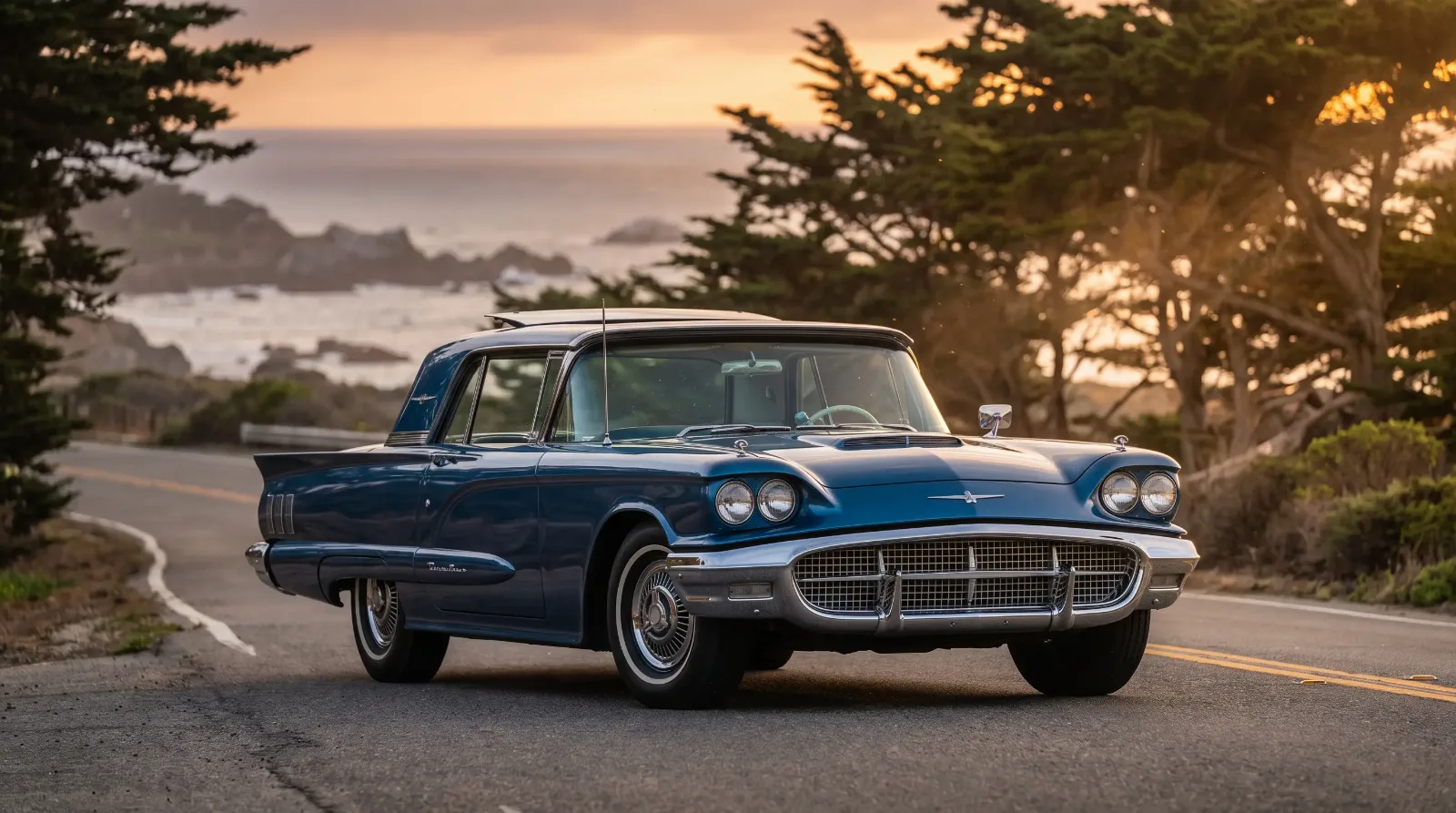
The 1960 Thunderbird sunroof option was a genuine first for a mass-production American car, and the factory records around it are more interesting than the feature's short production run might suggest. Ford sourced the mechanism from Golde, a German supplier with a long history building folding and sliding roof systems for European manufacturers, and fitting it to a Detroit product in volume required solving problems nobody in Dearborn had faced before.
Why Ford looked to Germany for a sunroof
By 1960, the Thunderbird had spent two full model years as a four-seat personal luxury car, and Ford's product planners were looking for a feature that would distinguish the top-trim hardtop from the rest of the lineup without requiring another full redesign. A power-retractable steel sliding sunroof fit the bill, but no American supplier had the tooling or manufacturing experience to build one at the quality level Ford wanted. Golde had already supplied sliding roof systems to European manufacturers for years and had the engineering base to adapt the mechanism for the Thunderbird's unibody roof structure.
The result was the first factory-installed power sliding sunroof offered on an American production car, fitted to the hardtop coupe body only, not the convertible, since the convertible's folding top mechanism already occupied the space a sunroof track would have needed. Ford marketed the option under a straightforward name and positioned it as a genuine luxury feature, priced at $212.40, well above most other individual options on the car and enough to push a sunroof-equipped hardtop close to convertible money.
| Detail | Specification |
|---|---|
| Supplier | Golde (Germany) |
| Mechanism | Power sliding steel panel |
| Body availability | Hardtop coupe only |
| Model years offered | 1960 only on Thunderbird |
An engineering challenge unique to a unibody roof
Cutting a sliding aperture into a unibody roof panel is a more delicate operation than doing the same to a body-on-frame car, because the roof itself contributes real structural rigidity to a unibody design. Ford's engineers had to reinforce the surrounding structure to compensate for the material removed, adding weight and complexity that a body-on-frame competitor would not have faced to the same degree. The Golde mechanism itself needed a sealed track system robust enough to handle water intrusion, a persistent concern with any sliding roof design of this era, since rubber seal technology in 1960 was nowhere near what later decades would produce.
Those engineering compromises are part of why the sunroof option remained rare rather than becoming a standard fixture across the Thunderbird lineup. It added cost, added weight, added a genuine point of potential water leakage, and required a body style, the hardtop, that already competed for buyers against the convertible and the standard closed coupe.
Ford's decision to work with a German supplier at all is worth pausing on, given how insular American automotive sourcing tended to be in this period. Domestic manufacturers generally preferred domestic suppliers for anything touching the body structure, both for logistical simplicity and for the tariff and shipping costs that came with importing specialized components. Golde's technical advantage was significant enough to override that preference for this one option, which tells you Ford's engineers concluded no American supplier could deliver a comparable sliding roof mechanism on the timeline and quality level the Thunderbird program demanded.
How rare surviving examples really are
Exact production figures for the sunroof option specifically are harder to pin down than overall model-year totals, since Ford's records for individual options were not always preserved with the same care as body style and engine breakdowns. What is clear from surviving build sheets and marque club registries is that Ford built roughly 2,536 sunroof-equipped 1960 Thunderbirds, a small fraction of the year's total production of 92,843 cars, and an even smaller fraction has survived in working order given the mechanism's exposure to water intrusion and the scarcity of replacement seals and tracks today.
A functioning original Golde sunroof, verified to actually operate rather than simply present, adds a meaningful premium to a 1960 Thunderbird's value among collectors who specifically seek out the option, distinct from the broader market for standard 1960 hardtops and convertibles.
The option's rarity also reflects buyer hesitance at the time rather than pure supply constraints. A sliding steel roof panel was a novelty that many 1960 buyers, especially those in warmer climates who already valued the convertible's open-air appeal, simply had less use for. Colder-climate buyers who wanted some open-air feel without a full convertible's compromises on quietness and weather protection were the more natural audience, and regional sales patterns for the option, where records survive, tend to bear that out.
What to check if you find one
Anyone evaluating a 1960 Thunderbird advertised with the sunroof option should confirm the mechanism actually cycles open and closed smoothly, check the surrounding headliner and roof structure for water staining that would indicate past leaks, and look closely at the track seals for cracking or hardening that suggests they have never been replaced. A non-functioning sunroof is not necessarily a dealbreaker for a restoration project, but sourcing replacement parts for a Golde mechanism this old requires patience and a network of specialists rather than a standard parts catalog.
Interior inspection matters just as much as the mechanism itself. A leaking sunroof track over decades tends to leave evidence well beyond the headliner, sometimes reaching the front seat frames or the carpet padding if water found its way past the drain channels Ford built into the design. A careful buyer traces that water path all the way down rather than stopping at the first sign of a stain, since surface repairs on the headliner alone can mask a more serious rust problem developing underneath in the unibody structure itself.
Marque club registries and regional Thunderbird clubs remain the best resource for tracking down parts specialists who still stock or can fabricate Golde mechanism components, since general classic car parts suppliers rarely carry anything specific to this option. Owners who have gone through a full sunroof rebuild describe it as a project measured in months rather than weeks, largely because of how much of the work involves sourcing or remanufacturing parts that have not been produced since the early 1960s.
The 1960 model year sits at the end of the Square Bird generation that began with the redesigned 1958 car, and where this started is worth reading for anyone who wants the full arc from the two-seat original through this final year of the body style. For buyers actively shopping, a classic Thunderbird for sale from the 1960 model year turns up with some regularity, though sunroof-equipped cars specifically require more searching.
"Every time I catalog one of these with a working Golde roof, I am reminded how much risk Ford was willing to take on a fairly low-volume option. It would have been easier to skip it entirely. They did not, and that stubbornness is exactly why the surviving cars matter."
- Tom Ramirez
The 1960 Thunderbird sunroof stands as a small but genuine footnote in American automotive engineering, a German solution grafted onto a Detroit unibody at a moment when almost nobody else in the domestic industry was even asking the question. It closed out the Square Bird era with a flourish that the more conservative 1961 redesign would not attempt to repeat.
Sources and notes
- Barn Finds - Rare Factory Sunroof 1960 Ford Thunderbird Coupe
- Daniel Schmitt & Co - 1960 Ford Thunderbird Sunroof Hardtop
- Squarebirds.org - 1960 Ford Thunderbird Production Numbers
- Automotive Mileposts - 1960 Ford Thunderbird Production Numbers
- Ford Thunderbird (second generation) - Wikipedia
- Hagerty Valuation Tools - 1960 Ford Thunderbird