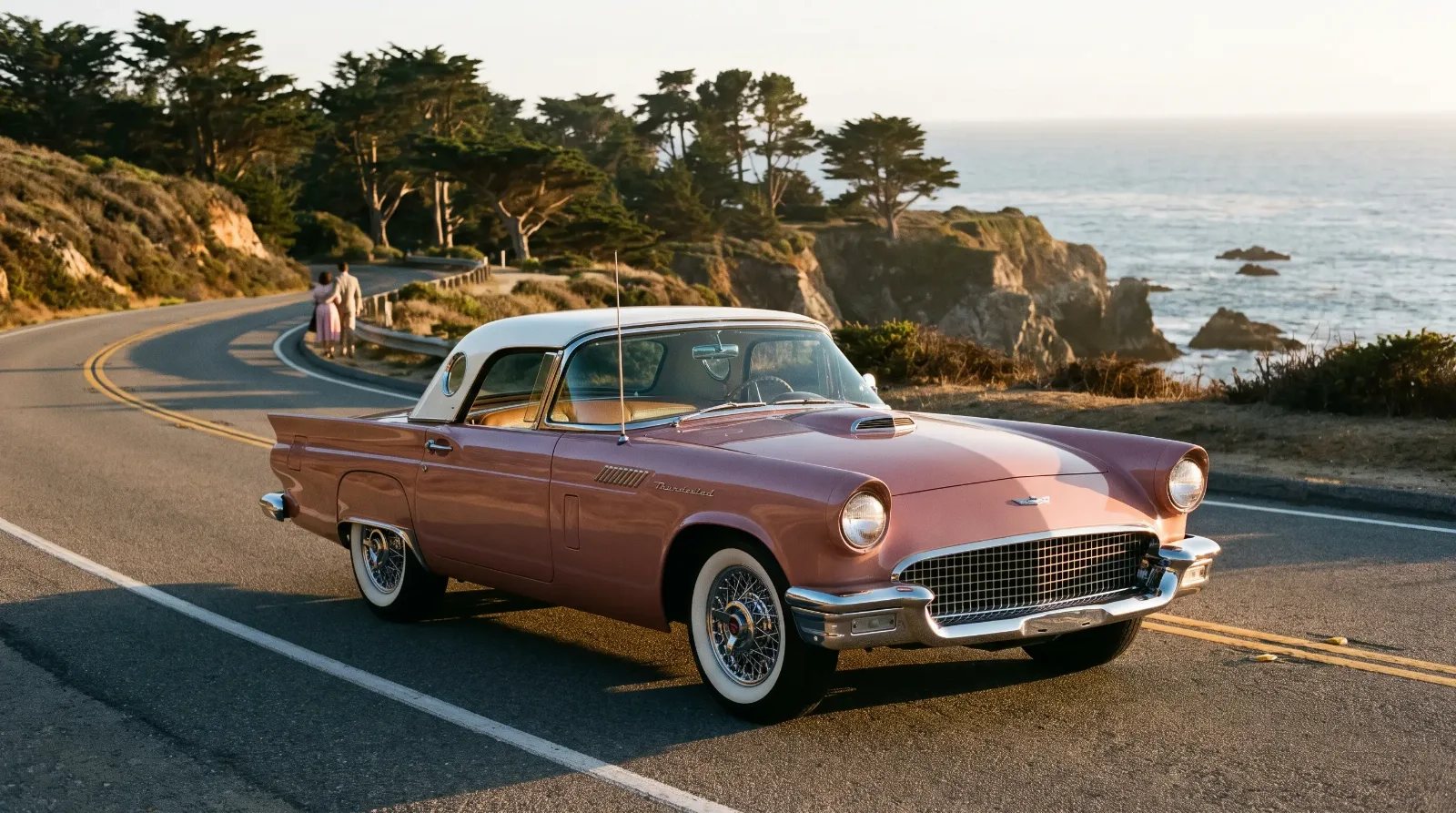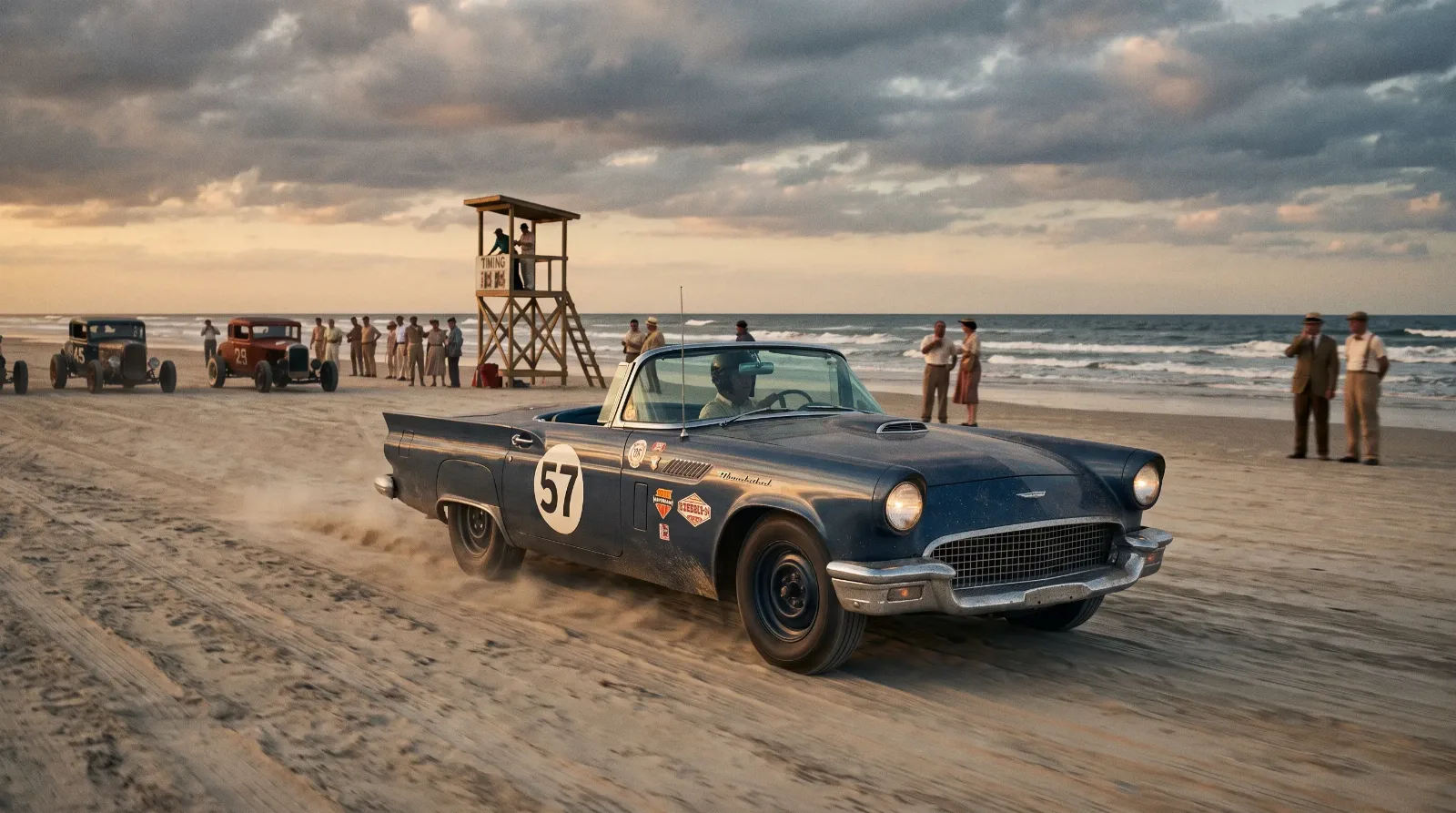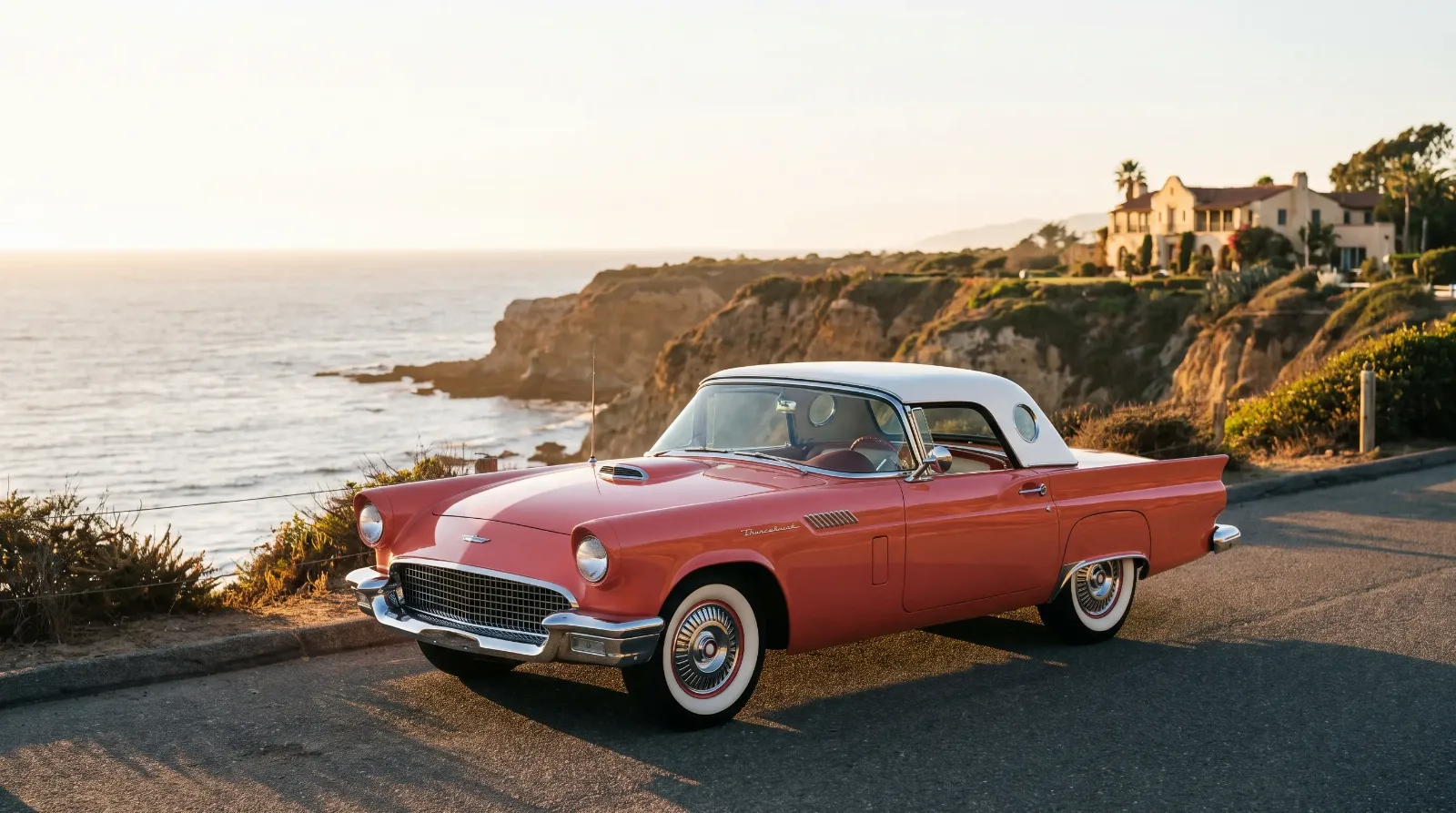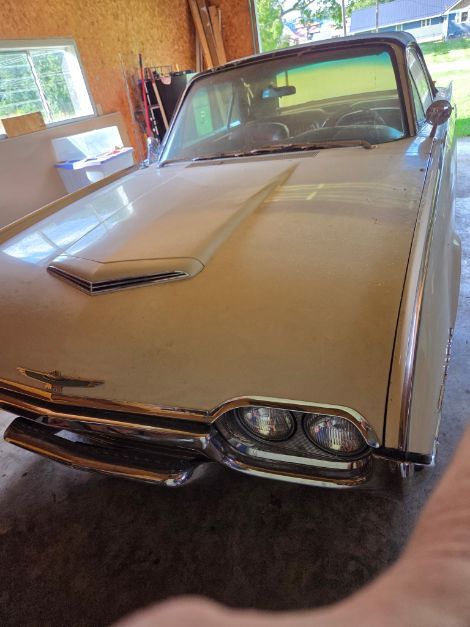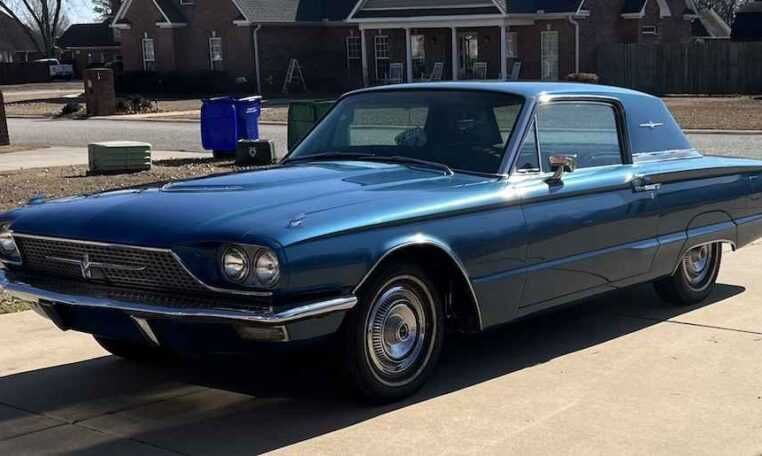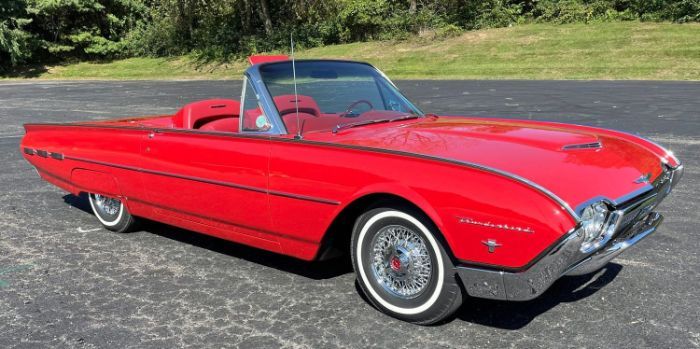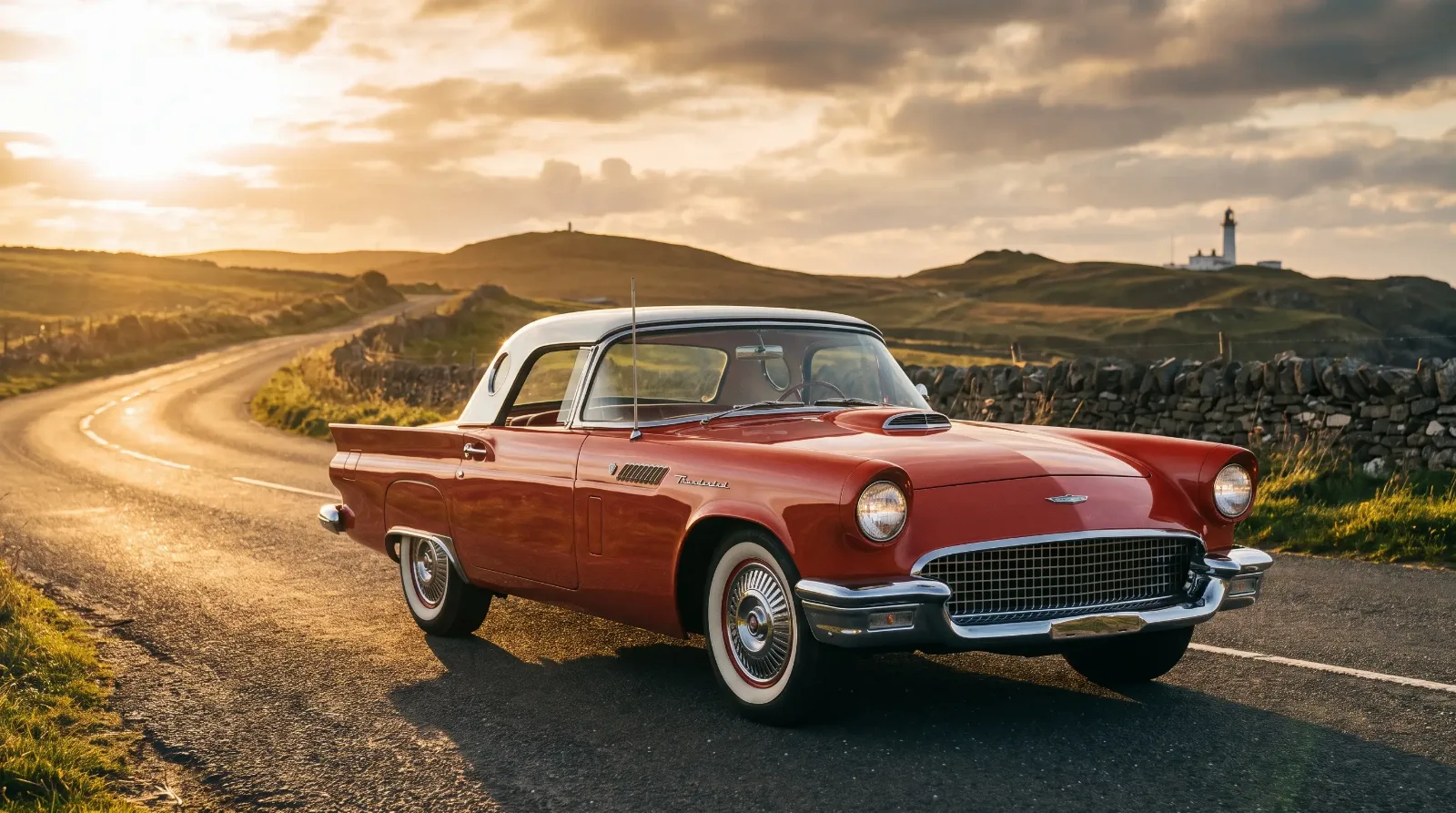
Pull into any Thunderbird show and you can spot the argument before anyone opens their mouth. One row of cars wears its steel hardtop with those signature porthole windows, the other runs bare-headed with the fabric top folded down behind the seats, and the owners on each side will tell you, politely but firmly, that their version is the real 1957 Thunderbird. Ford built the two-seat Thunderbird to wear both, and the detachable hardtop became one of the most recognizable design details in the whole nameplate's history.
A car designed to be two different cars
When Ford launched the Thunderbird for the 1955 model year, it shipped with a removable fiberglass hardtop as standard equipment and offered a folding fabric soft top as a commonly specified option, a choice that let a single car serve as an open air roadster in summer and a snug coupe the rest of the year. That flexibility was central to the Thunderbird's pitch from the very beginning, positioning it against sports cars like the Corvette that demanded owners commit to one roofline or accept a clumsy, heavy folding top as their only alternative.
The hardtop was not an afterthought bolted on to chase sales. Ford's designers built the car's proportions around the idea that buyers would frequently swap between the two configurations, which meant the beltline, the windshield rake, and the overall greenhouse had to look right whether the hardtop was in place or the fabric top was folded flush behind the seats.
Those portholes were not just decoration
The circular portholes that appeared on the hardtop starting with the 1956 model year solved a real visibility problem rather than existing purely as styling flair. Early hardtops without the opening created a significant blind spot over the driver's shoulder, made worse by the low, sporty roofline Ford wanted for the car. The porthole restored enough rear quarter visibility to make the hardtop genuinely usable rather than just handsome, and it became so popular with buyers that it turned into one of the most identifiable design cues on the entire car.
Ford offered the portholed hardtop as a running change and buyers responded well enough that it quickly became the more commonly ordered version, which is part of why porthole hardtops are more familiar to most people today than the smooth-roofed early 1955 style that preceded them.
Living with the swap in period
Switching between the hardtop and the soft top was not a five-second operation. The fiberglass hardtop was substantial enough that it took two people to lift it safely on and off the car, and most owners did not casually swap it back and forth on a whim. In practice, many buyers picked a season and stuck with one configuration for months at a time, storing whichever top was not in use in a garage or a dealer's back room rather than treating the swap as a daily convenience.
That reality shaped how people actually experienced the car. A Thunderbird bought primarily as a soft-top summer car and a Thunderbird bought primarily as a hardtop coupe could feel like genuinely different ownership experiences, even though they were mechanically the same automobile underneath. Anyone researching 1957 ford thunderbird history in depth will notice how much of the period marketing leaned on this dual identity as a selling point rather than treating it as a minor equipment option.
How the hardtop changed across three model years
The Thunderbird's hardtop was not a static piece of tooling frozen in 1955. The smooth-roofed original gave way to the portholed version, and Ford continued to refine trim details, paint matching, and the fit of the top against the body through the 1956 and 1957 model years as the car itself evolved. Buyers cross-shopping the three model years quickly notice that a 1955 hardtop and a 1957 hardtop, while sharing the same basic purpose, are not interchangeable in every detail, and restorers working on a specific model year need to source the correct period piece rather than assume any Thunderbird hardtop will bolt on and look right.
Color matching added another layer of complexity. Ford offered hardtops that could be ordered to match the body color or, on some cars, contrast with it, and buyers today chasing a factory correct appearance need to know what their specific car's build sheet actually called for rather than guessing based on what looks good. This is one of the areas where a knowledgeable restoration shop earns its fee, since getting the hardtop's color and trim wrong is an easy way to turn a numbers matching car into something that merely looks close.
What survives and what collectors chase
Original hardtops, especially matching numbers examples still paired with the car they were sold with, carry real value on their own in the collector market. Tops got separated from their original cars over decades of ownership changes, storage moves, and the simple fact that a detached fiberglass shell is easy to lose track of compared to a car with a title and a VIN. A correct, numbers matching hardtop reunited with its original car is a meaningfully more complete piece of history than a mismatched replacement, even a period correct one.
Soft top mechanisms have their own set of wear points that inspectors look for, including the frame, the fabric condition, and the boot that covers the folded top when it is stowed. Buyers who want the full experience of both configurations should expect to pay a premium for a car that still has its original hardtop present and accounted for.
"I met a man at a swap meet who had been looking for his father's original hardtop for six years. He found it two states away, still wearing the same touch-up paint from a 1962 fender bender. That is the kind of story this car generates."
- Patrick Walsh
Two roofs, one legacy
The detachable hardtop and its portholed successor did more than solve a visibility problem or add a styling flourish. It gave the two-seat Thunderbird a dual personality that no direct competitor matched in the same way, and it remains one of the details buyers ask about first when evaluating a car today. For more background on how this generation of Thunderbird came together, a related story covers the color choices Ford paired with these bodies. If you are ready to see what is actually out there, Thunderbirds for sale now will show you the range between hardtop-only cars, soft-top-only cars, and the rarer examples that still have both. Ask about the hardtop's history before you ask about anything else. On this car, that one detail tells you more than the paint or the interior ever will, and it always has, going back to the day these two roofs first left the factory together.
Sources and notes
- Wikipedia - Ford Thunderbird (first generation)
- SlashGear - What Year Did The Ford Thunderbird Have Portholes?
- Old Cars Weekly - Car of the Week: 1955 Ford Thunderbird
- ClassicCars.com Journal - 1957 Thunderbird with the Iconic Porthole Hardtop
- Minter's Thunderbird's - Original Restored Early-Bird Hardtops