
My grandmother could name every color the Thunderbird came in before she could name the presidents in order, or so my mother tells it. The car arrived in 1955 wrapped in a palette that had nothing to do with the muted grays and blacks that dominate parking lots now, and everything to do with a country that had just discovered it could afford to want something beautiful and impractical at the same time. Colors like Torch Red and Thunderbird Blue were not just paint codes. They were promises about the kind of life a buyer was signing up for.
Car Features
7 min read
Colors of the Two-Seat Thunderbird
The two-seat Thunderbird's paint and interior palette said as much about the buyer as the car itself, and the colors shifted meaningfully across the 1955 through 1957 model years.
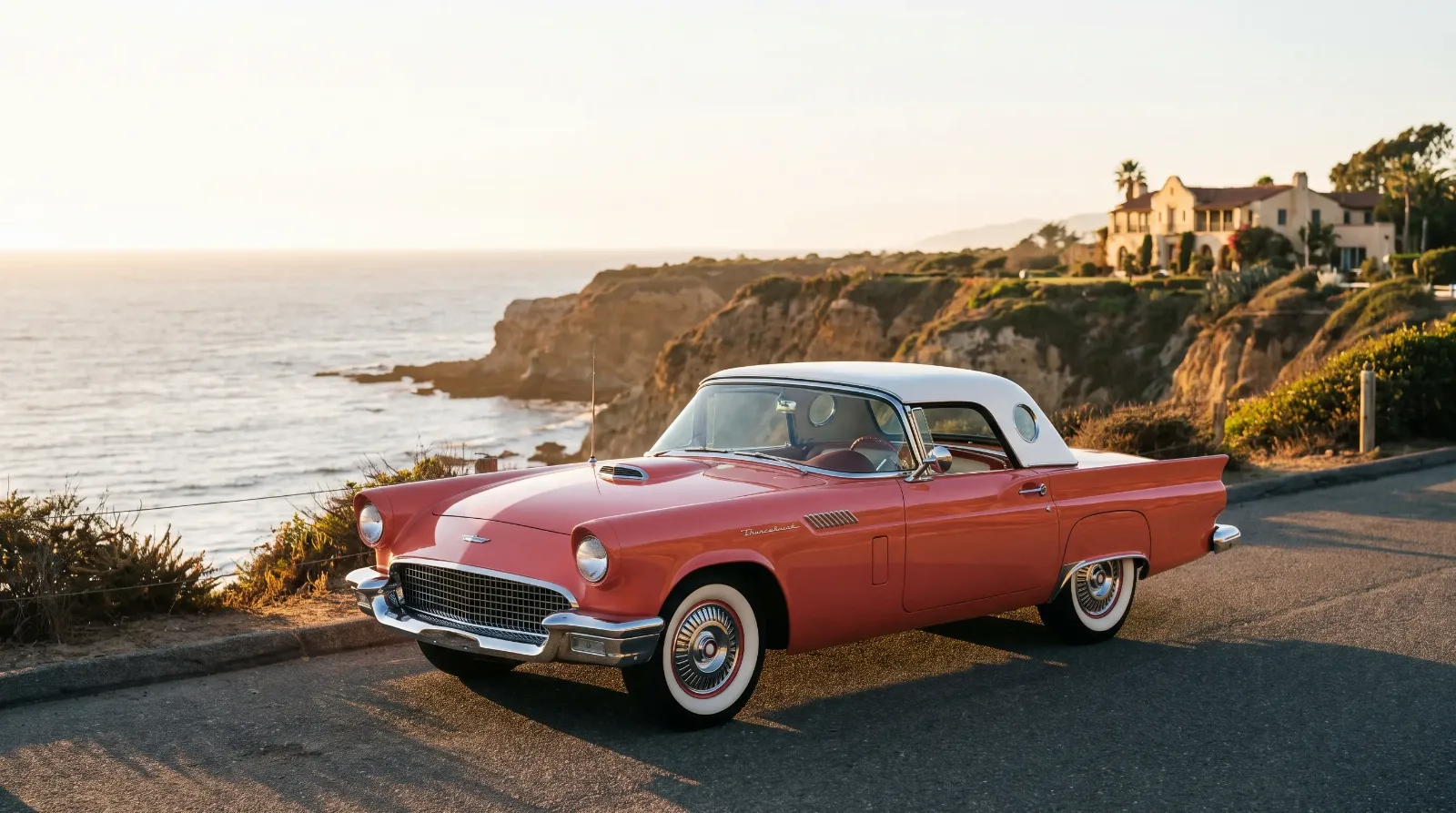
A palette built for a specific kind of buyer
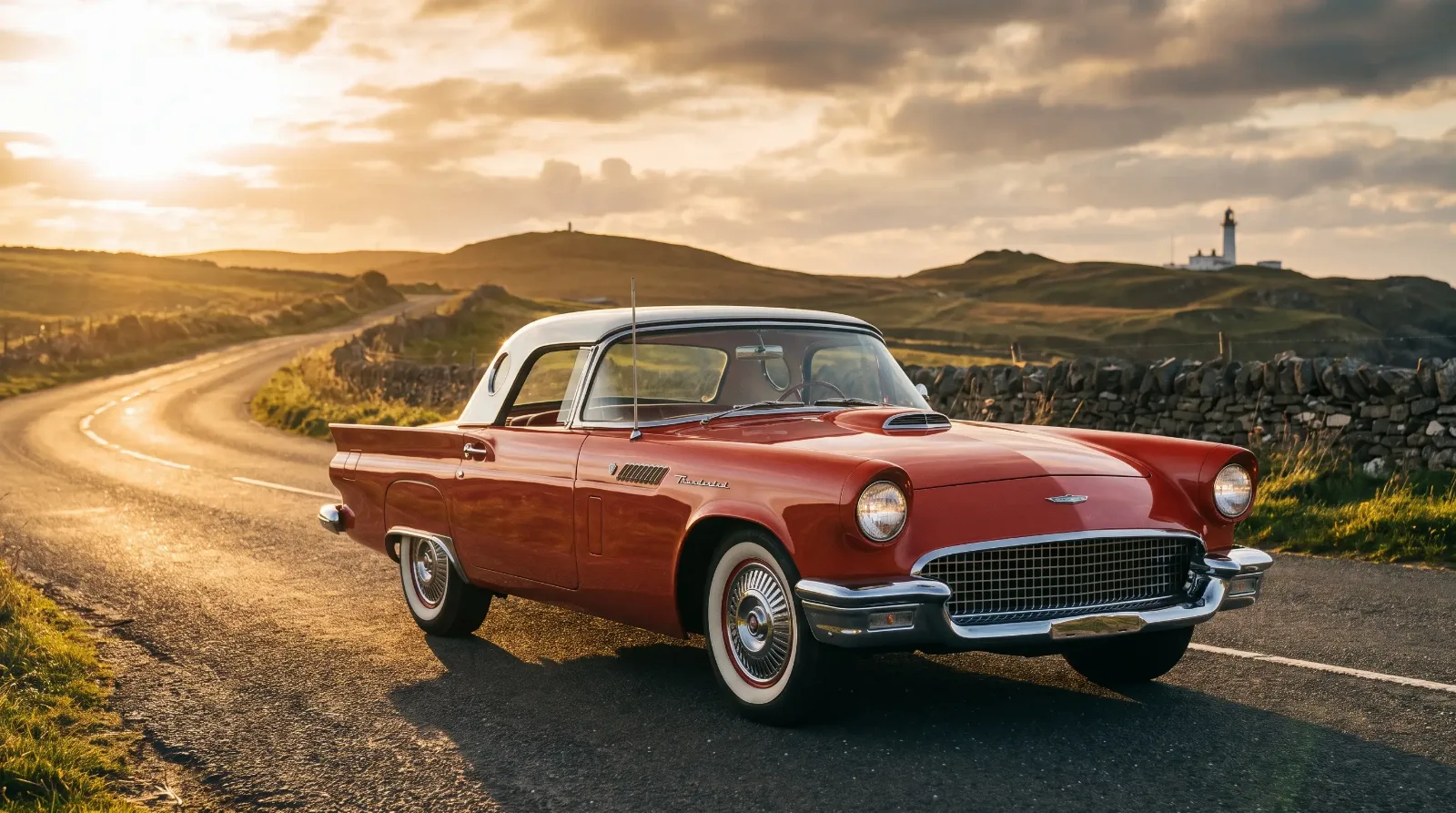
Ford's color engineers understood that the two-seat Thunderbird was never going to be a family's only car. It was the second car, the treat, the thing parked in front of the house that told the neighbors something about the people who owned it. That freedom showed up in the color list. Where a Ford sedan aimed at practical, forgiving shades that hid road grime and resold easily, the Thunderbird's palette leaned into colors that demanded attention: Torch Red, Colonial White, Raven Black, and a rotating cast of blues and golds that changed slightly from one model year to the next.
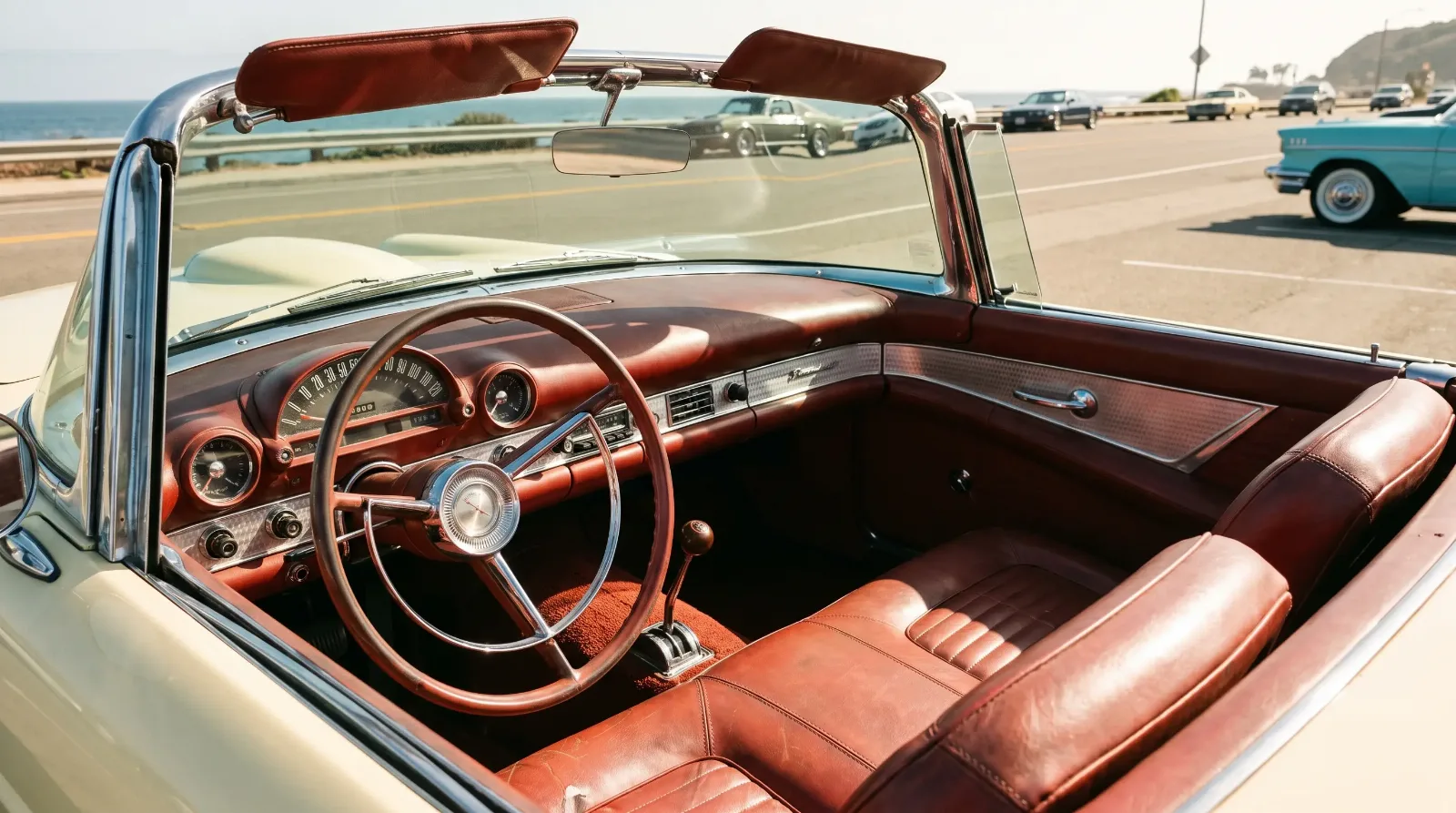
Interior colors mattered just as much as exterior paint, and Ford paired specific interior trims with certain exterior colors to create combinations that felt deliberately composed rather than randomly assembled from an options sheet. A red car with a white interior said something different from a black car with red leather, and buyers in the 1950s understood that language fluently, even if nobody wrote it down as a rule.
How the palette shifted across three model years
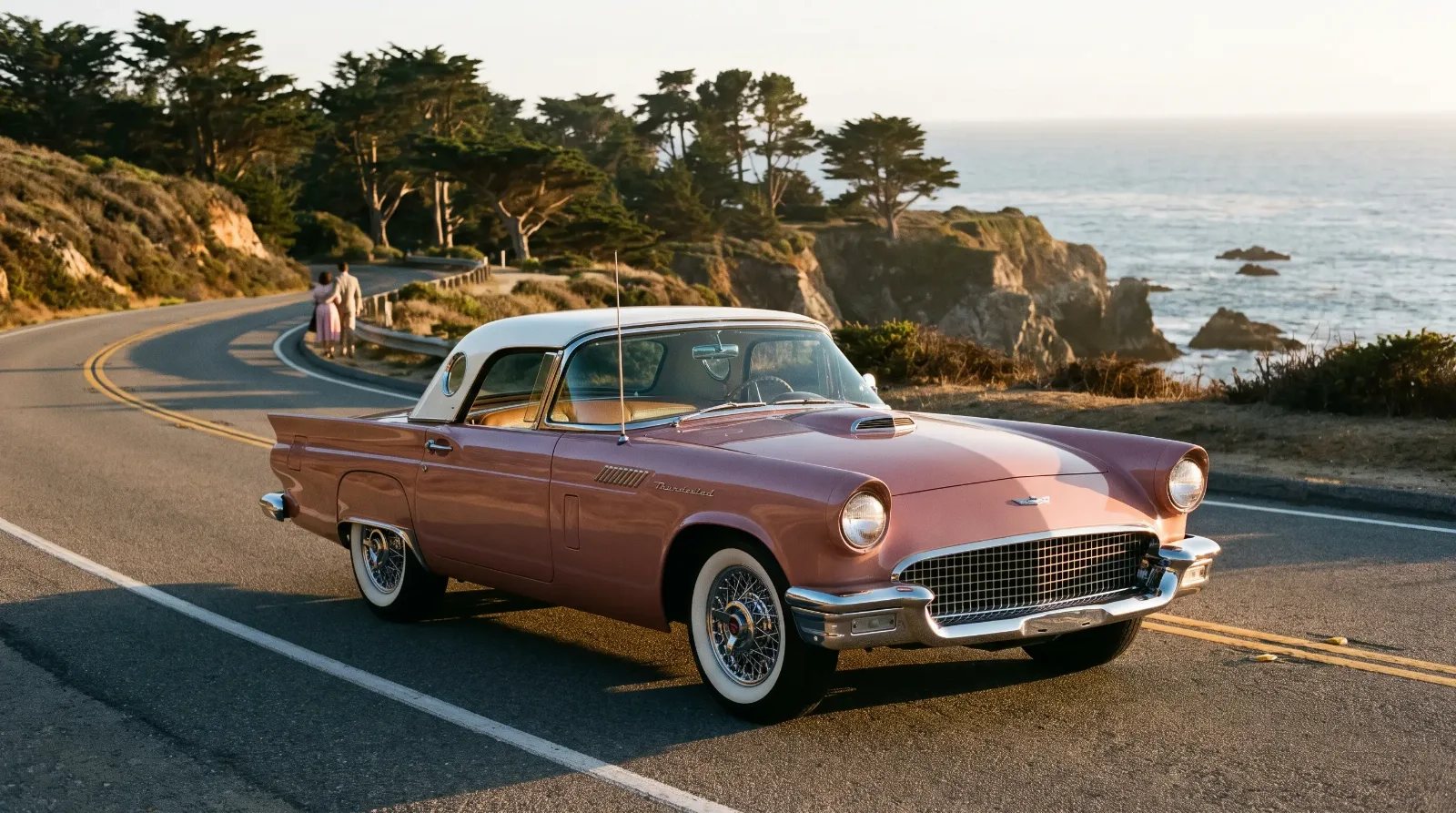
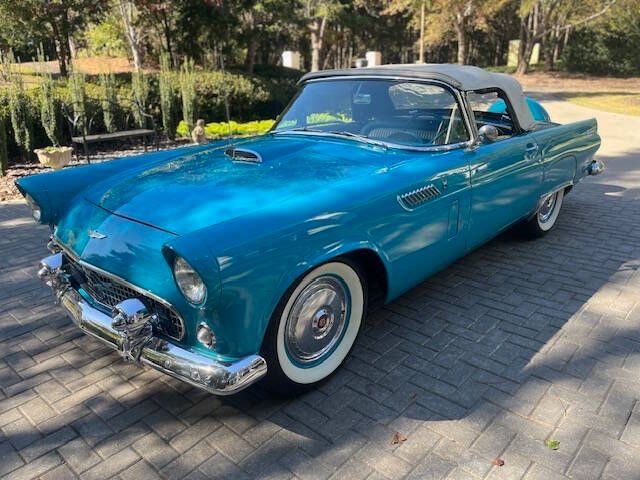
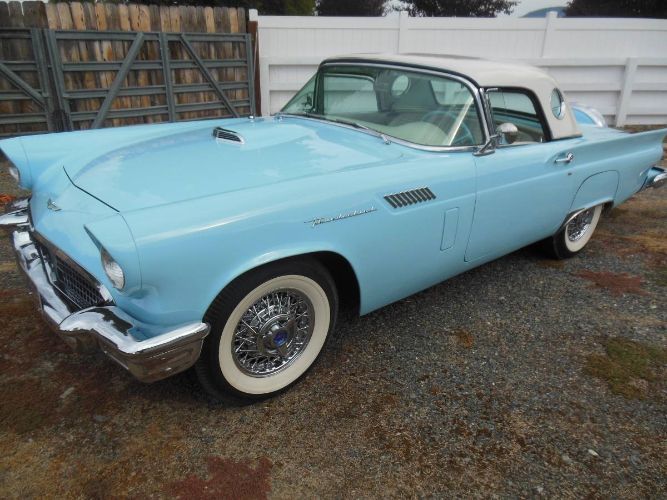
The colors offered on the Thunderbird were not frozen in place from 1955 through 1957. Ford refreshed the palette each model year, retiring some shades and introducing others as tastes shifted and as the car itself evolved. Dresden Blue and Starmist Blue are two names collectors bring up often when discussing which specific year a particular blue Thunderbird might be, since the blues in particular changed enough between years that an incorrect color on a restored car can be a tell for anyone who knows the sequence.
Getting the year-correct color right matters enormously to serious restorers, and it is one of the more common points of dispute at concours judging, where a beautifully executed repaint in the wrong period shade can cost real points even if the bodywork underneath is flawless.
The most requested shades, and why they endure
Ask a room full of Thunderbird owners which color they would choose if money were no object and Torch Red wins more often than not, followed closely by a well kept black car with the right interior. There is something about a red Thunderbird that photographs the way the car was always meant to be seen, top down, chrome catching the light, the kind of image that ended up on more than one period magazine cover. Colonial White runs a close third among people who want something that reads as clean and formal rather than flashy, a color that ages gracefully in photographs from any decade.
The blues deserve their own mention, if only because they cause the most confusion. Thunderbird Blue, Dresden Blue, and Starmist Blue are close enough in tone that even experienced eyes can mix them up from a faded photograph or a poorly lit auction listing, and getting the specific shade right on a restoration requires cross-referencing the car's original build sheet rather than trusting memory or a modern paint chip that claims to be a match. A shop that has restored a dozen of these cars will tell you the blues are where more restorations go quietly wrong than any other color family in the lineup.
What a color choice actually meant to a 1957 buyer
Ordering a Thunderbird in 1957 was an act of self-description in a way that ordering most cars is not anymore. A buyer choosing Torch Red was saying something different than a buyer choosing Colonial White, and dealers understood this well enough to steer certain colors toward certain customers based on nothing more than a read of who was standing in front of them. That informal choreography does not survive in any sales record, but it survives in the stories families still tell about which color grandfather picked and why.
There is a particular kind of quiet that settles over a room when someone pulls out a faded photograph of a Torch Red Thunderbird parked in front of a 1957 driveway, the grass a little too green from the exposure, someone's mother leaning against the fender in a dress that matched nothing on purpose. The color choice becomes part of the memory itself, inseparable from the moment.
"Every color on that Ford paint chip had a name that sounded like a promise. Nobody names a car color 'Beige Number Four' anymore, and something real was lost when they stopped trying."
- Nora Beckett
Finding the right color for the right reason today
Collectors today chase certain colors for reasons that mix genuine rarity with pure nostalgia, and the two do not always point in the same direction. A color that was common in 1957 might be rare today simply because so few survived in good condition, while a color that was always rare stays rare for the obvious reason. Buyers should decide honestly whether they want a color because it is scarce, because it is period correct for their specific car's build sheet, or because it is the one their family remembers from a photograph on the mantle. All three are legitimate reasons. Only one of them is really about the car.
I would add a fourth reason, one that does not fit neatly into any collector's checklist. Sometimes a color is right simply because it makes you happy every time you walk toward the car in a parking lot, and that reaction does not need to be justified by rarity codes or auction results. My grandmother never once mentioned resale value when she talked about that Torch Red Thunderbird. She talked about how it looked pulling up to the church on a Sunday morning, and sixty years later that is still the only fact about the car that has stayed with me completely intact.
For the broader arc of how the two-seat Thunderbird came to exist at all, the whole picture covers the design and market pressures that shaped this generation before the paint chip ever got chosen. And if a particular color has stuck with you the way it stuck with my grandmother, find a classic Thunderbird currently on the market and see what is actually out there wearing it. Whatever shade catches you, trust that instinct. It has been catching people the same way since 1955, and it is not going to stop now.
Sources and notes
Related Reading
Have a
Ford Thunderbird
for Sale?
Reach thousands of serious classic car collectors across the US.
Sell It Here →
Are You a Classic Car Dealer?
List your full inventory and connect with targeted classic car buyers.
Join as a Dealer →
#ford thunderbird
#classic car paint
#thunderbird history
#two-seat thunderbird
#1957 Thunderbird colors
#Torch Red

About the author
Nora Beckett
Automotive features writer and photographer who tells the human stories behind the cars, from show fields to cross-country road trips.
Related Listings - Ford Thunderbird




Comments
Be the first to comment on this article.