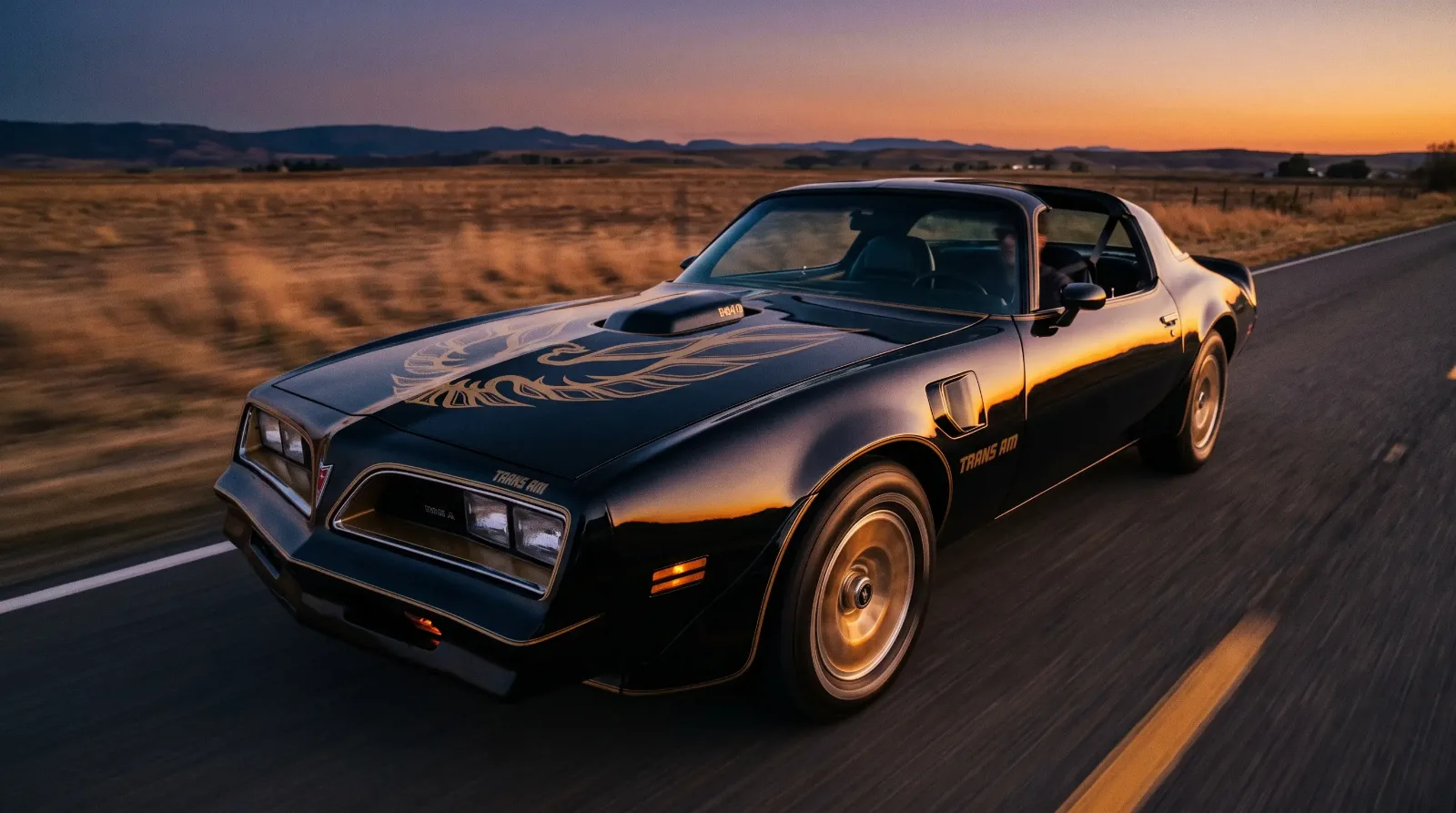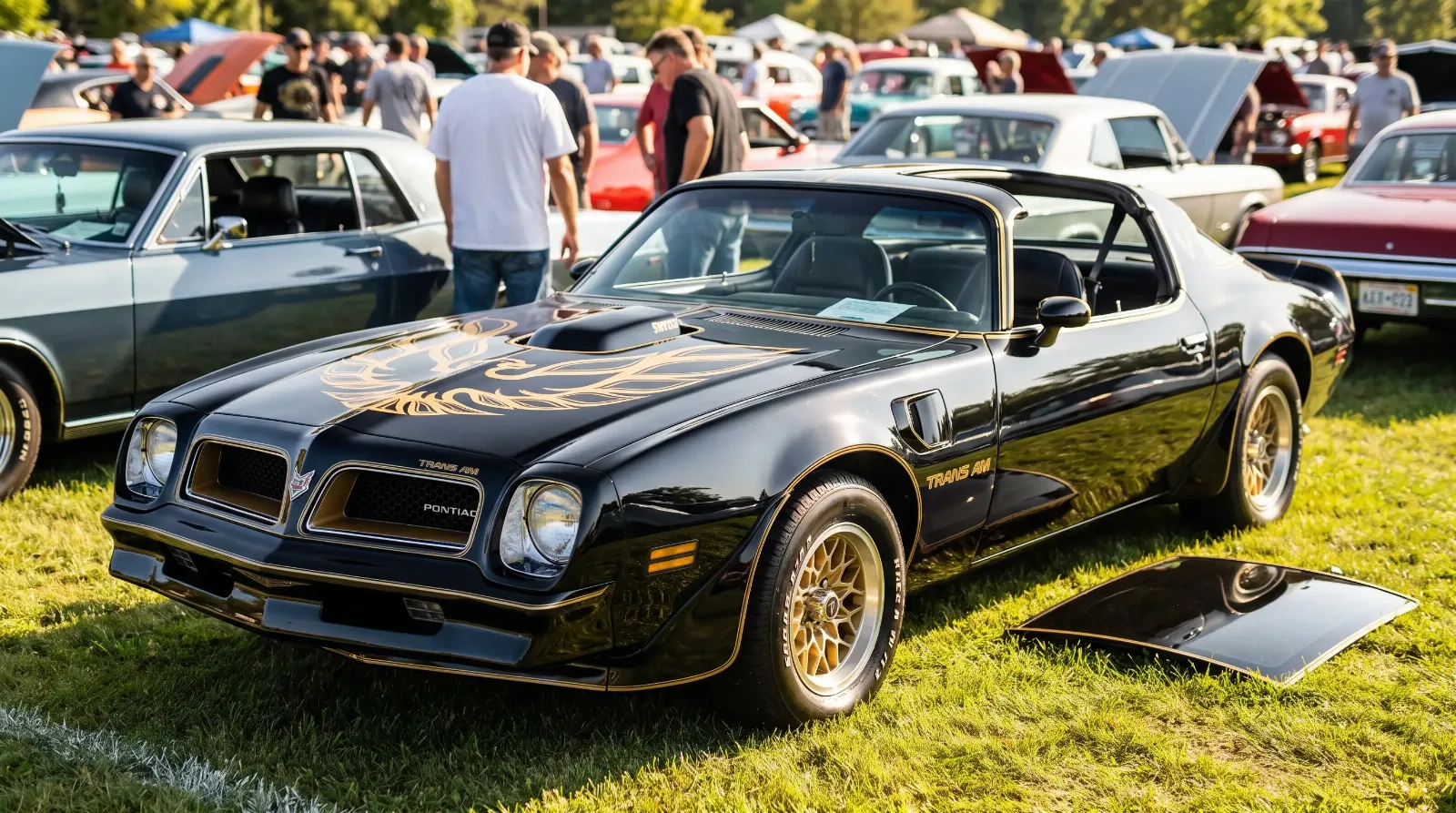
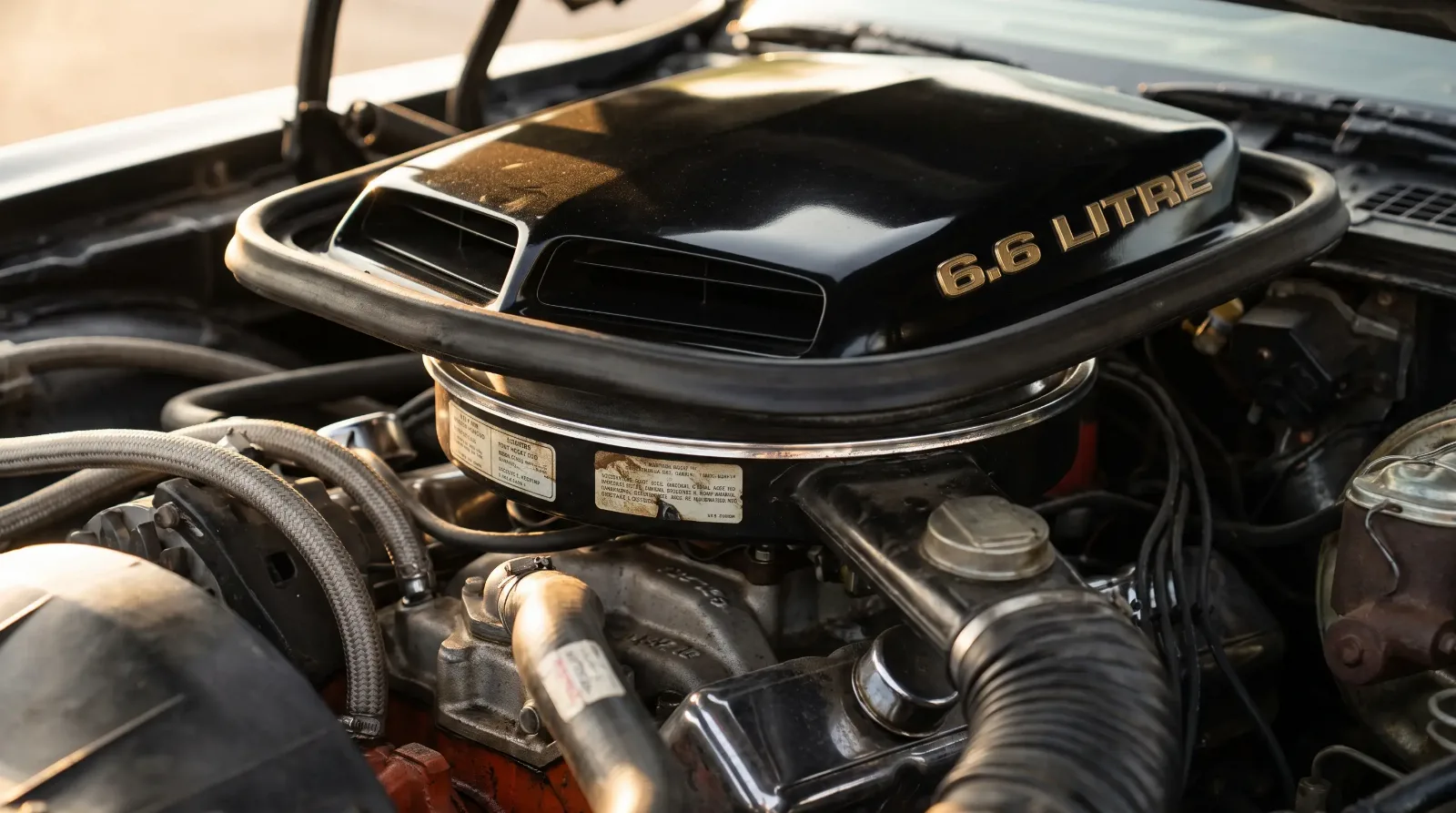
Pop the hood on a mid-1970s Trans Am and the first thing you notice isn't the engine. It's the badge on the shaker scoop, big block letters spelling out "6.6 LITRE" where the older "T/A 6.6" script used to sit. Pontiac changed that badge in 1975, and the story behind why tells you almost everything about what happened to American performance in the back half of the decade. The the Pontiac Trans Am had survived the first wave of emissions regulation, but it survived by changing, and the 6.6 Litre era is where you can watch that change happen year by year.
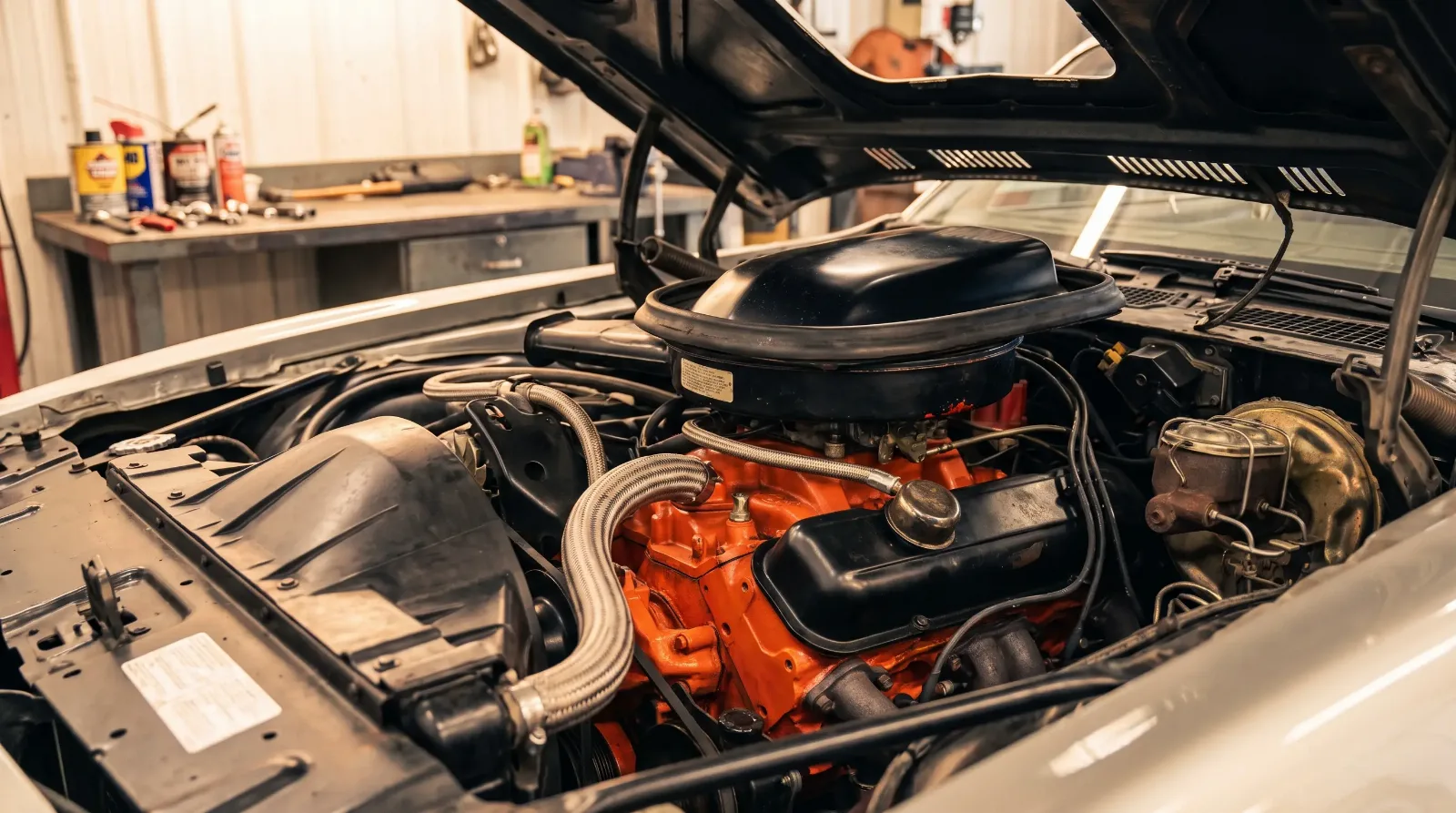
The switch from "T/A 6.6" to "6.6 Litre" wasn't cosmetic. Pontiac was moving to metric displacement callouts across its performance lineup, a small detail that says a lot about how the era's marketing had shifted from raw horsepower bragging to something more careful, more apologetic almost, dressed up in international units. Underneath the badge sat the 400 cubic inch V8, and for buyers in California and high altitude states, the Oldsmobile-sourced 403. That substitution alone tells you how tangled GM's engine sharing had become by 1977 and 1978, with corporate divisions borrowing blocks from each other to meet state-by-state emissions rules that Pontiac's own engines couldn't clear everywhere.
What "6.6 Litre" actually meant under the hood
The core engine most people associate with this badge is the W72 400, the high output version Pontiac built starting in 1977 specifically to answer complaints that the Trans Am had gone soft. It used a different camshaft, a re-worked exhaust, and a higher compression ratio than the standard 400, and it was rated at 200 horsepower in 1977, rising to 220 horsepower for 1978 and 1979, in a Trans Am with the four-speed manual. That number looks unimpressive next to a 1970 Ram Air IV, but context matters. This was a net horsepower rating measured with all accessories and emissions equipment installed, not the optimistic gross figures Detroit used to publish before 1972. A 200 net horsepower rating in 1977 represented a real fight to keep performance alive, not a retreat from it.
Buyers who ordered an automatic transmission, or who lived somewhere the W72 wasn't certified, got the standard 400 or the 403 Oldsmobile, both making less power and carrying a milder cam. The 403 in particular has become something of an asterisk in Trans Am history. It's a fine engine, smooth and reasonably torquey, but it isn't a Pontiac engine, and that matters to buyers who care about matching numbers and factory intent. If you're shopping a 1977 or 1978 Trans Am today, knowing which engine sits between the fenders changes the car's story completely.
Why the badge changed when it did
1975 was the year catalytic converters became mandatory on most American cars, and it was also the year Pontiac quietly dropped the more aggressive "T/A 6.6" script for the plainer "6.6 LITRE" callout. Some of that was federal, since GM was moving toward metric specifications across its documentation. But there's also a reasonable read that Pontiac wanted distance from the "T/A" designation during a stretch when the cars underneath it were making less power than they had five years earlier. A quieter badge for a quieter time, in a sense, even as the cars themselves kept selling in bigger numbers than the muscle car era ever managed.
"Nobody at a cruise night in 1978 was bragging about net horsepower ratings, but everybody who drove a W72 car back to back with a standard 400 knew exactly which one they wanted parked in the driveway."
— Patrick Walsh
Sales numbers tell a different story than the horsepower charts
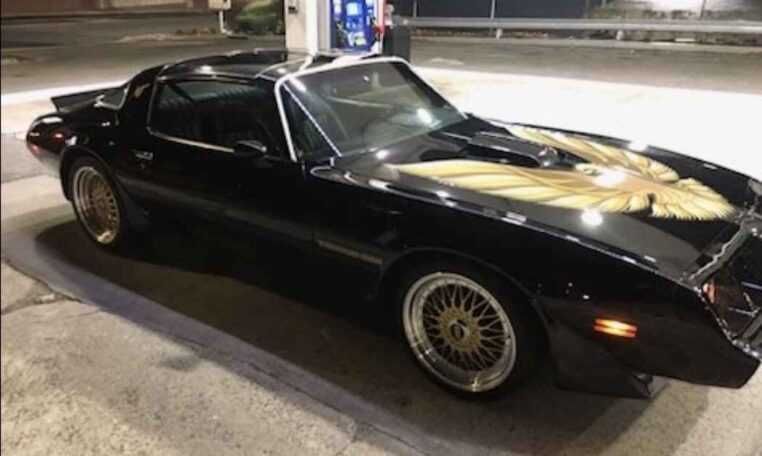
Here's the part that surprises people who assume the mid-1970s were a dead zone for performance cars. Trans Am sales climbed almost every year of the 6.6 Litre era, eventually reaching about 93,000 units for the 1978 model year alone. That's a staggering number for a car built around a big-inch V8 during an oil crisis, and it says the buying public wasn't nearly as scared off by lower horsepower numbers as collectors sometimes assume in hindsight. Pontiac had figured out how to sell the image of performance even as the underlying numbers softened, and the Screaming Chicken hood decal, the shaker scoop, the wide flared fenders, all of it did as much work as the engine did.
| Engine | Years offered | Approximate net horsepower | Notes |
|---|---|---|---|
| 400 W72 (4-speed) | 1977-1979 | 200-220 | Pontiac-built, higher compression, performance cam |
| 400 (automatic) | 1975-1979 | 180 | Milder cam, wider availability |
| 403 Oldsmobile | 1977-1979 | 185 | Used in California and high-altitude states |
Buying one today
If you're looking at a 6.6 Litre car now, the first question is which engine actually came in it, not which badge is on the scoop, since replacement engines and mismatched documentation are common after five decades. Ask for build sheet or window sticker confirmation before you assume a car is a W72 car. Values track that distinction closely. A documented W72 four-speed car commands a real premium over an automatic 403 car in similar condition, and that gap has only widened as buyers have gotten more educated about what these engines actually were.
The 6.6 Litre years don't get the attention the earlier Ram Air cars do, and they don't get the spotlight the later turbo cars earned either. But they're the years that kept the Trans Am alive through the hardest stretch American performance ever faced, and there's a real case that Pontiac's engineers did more with less during this period than at almost any other point in the car's history. If you want to keep reading the series, the next chapter covers a special edition that came directly out of this same era. And if the 6.6 Litre years have you thinking about ownership, there are classic Trans Ams for sale worth a look, several of them wearing this exact badge on the scoop.