
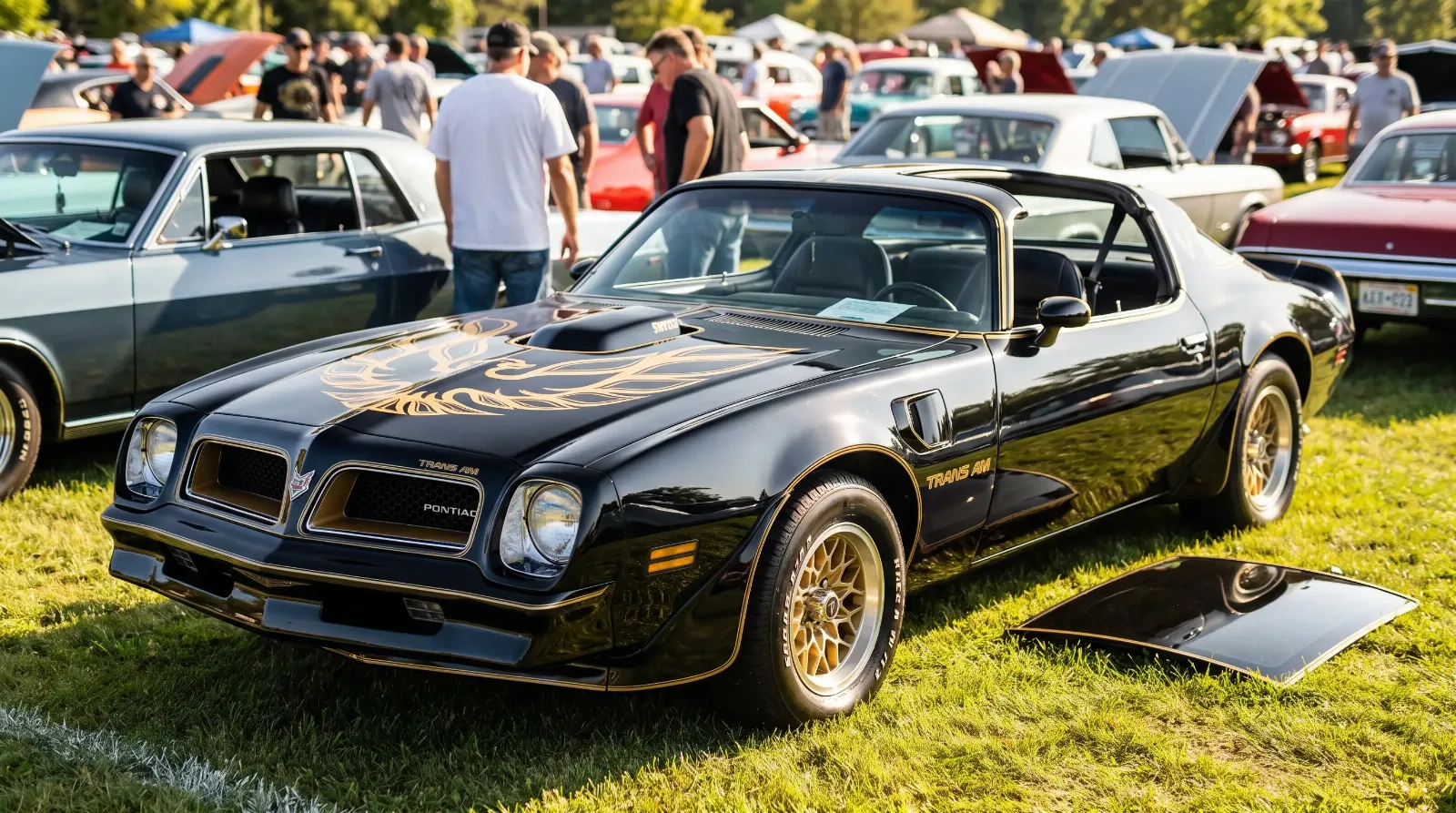
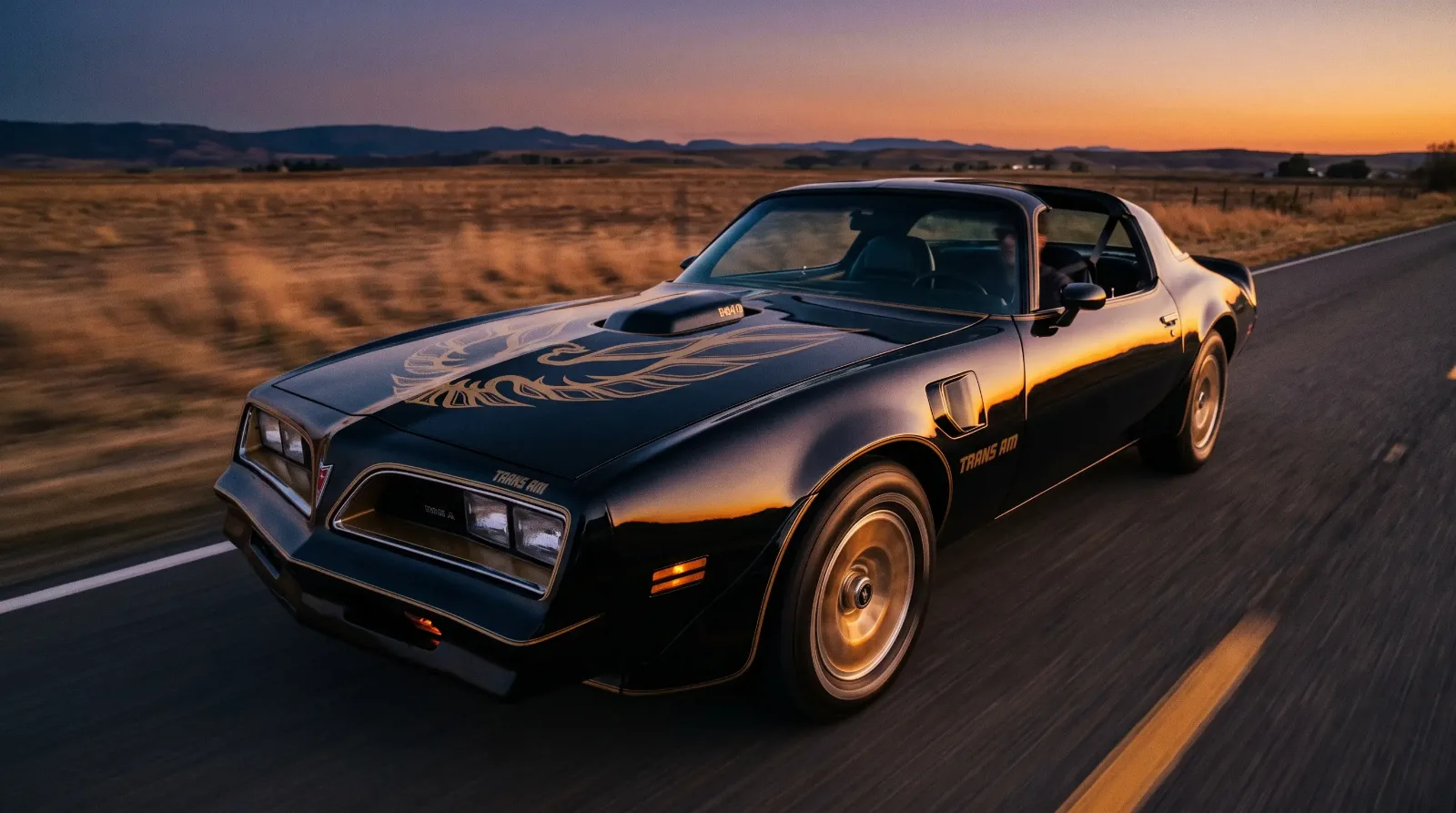
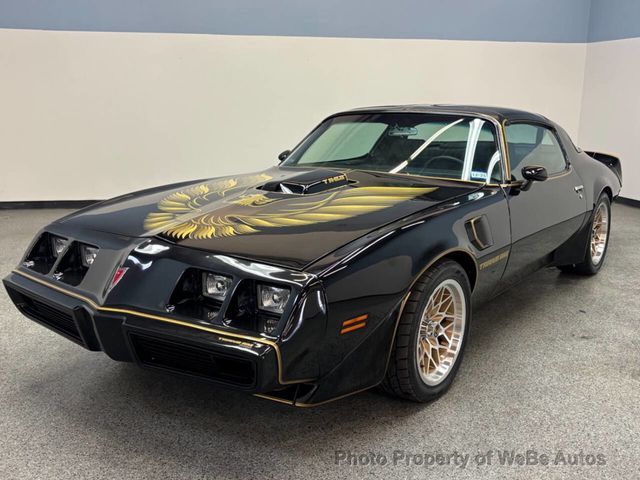
Walk a car show in 2026 and you can spot a 1976 Trans Am Special Edition from thirty feet away before you read a single badge. Black paint, gold Honeycomb wheels, gold pinstriping tracing the beltline, and a gold Screaming Chicken decal spread across the shaker hood scoop like it owns the car. It usually does. Pontiac built this package to mark its own 50th anniversary as a brand in 1976, and somewhere along the way it became the single most recognizable Trans Am of the entire decade, more photographed than the six cylinder Ram Air cars that came before it and better remembered than plenty of Trans Ams with more horsepower.
Car Features
6 min read
The Black and Gold Special Edition
The 1976 Special Edition turned a 50th anniversary package into the most recognizable Trans Am color scheme ever built.
Why Pontiac built a black and gold anniversary car
1976 marked fifty years since Pontiac's founding, and the division wanted a halo car to mark the occasion without waiting for a new generation of Firebird, which was still a couple of years off. The answer was the Y82 Special Edition package, a cosmetic treatment layered onto the existing second generation Trans Am body. Black paint wasn't new to the car, but pairing it with gold accents across the wheels, the decals, and the interior trim gave the package an identity distinct from the standard blue or white cars that had defined the model up to that point. It's a rare case of a purely visual package outliving the mechanical story around it, since most of what made a 1976 Trans Am quick or slow was identical whether or not a buyer checked the Special Edition box.
What buyers actually got for their money was the black exterior, gold accent striping, gold Honeycomb aluminum wheels in place of the usual steel Rally wheels, gold interior trim accents, and for the first time on a Trans Am, an available T-top roof option. That last piece matters more than it sounds. Removable glass panels turned a car built around a fixed steel roof into something that felt genuinely different to drive on a summer evening, and the T-top option proved popular enough that it stuck around on Trans Ams for years afterward.
The numbers behind a car everyone remembers
Despite how often you see this car referenced as the defining Trans Am of the era, actual Special Edition production was relatively limited, with the run landing at 2,590 units for the 1976 model year. That's a small fraction of total Trans Am production for the year, which climbed well past 40,000 cars once every configuration is counted. The Special Edition's outsized reputation compared to its modest build numbers is a genuinely interesting case study in how a strong visual identity outlasts raw sales figures in the collector world.
| Feature | 1976 Special Edition detail |
|---|---|
| Exterior color | Starlight Black with gold accent striping |
| Wheels | Gold-finished Honeycomb aluminum wheels |
| Hood treatment | Large gold Screaming Chicken decal on shaker scoop |
| Roof option | T-tops, first year available on Trans Am |
| Total production | 2,590 units |
"You could build a faster Trans Am in 1976 if you wanted one, but you couldn't build a more famous one. Black and gold became shorthand for the whole decade of cars almost by accident."
Patrick Walsh
An engine story secondary to the paint job
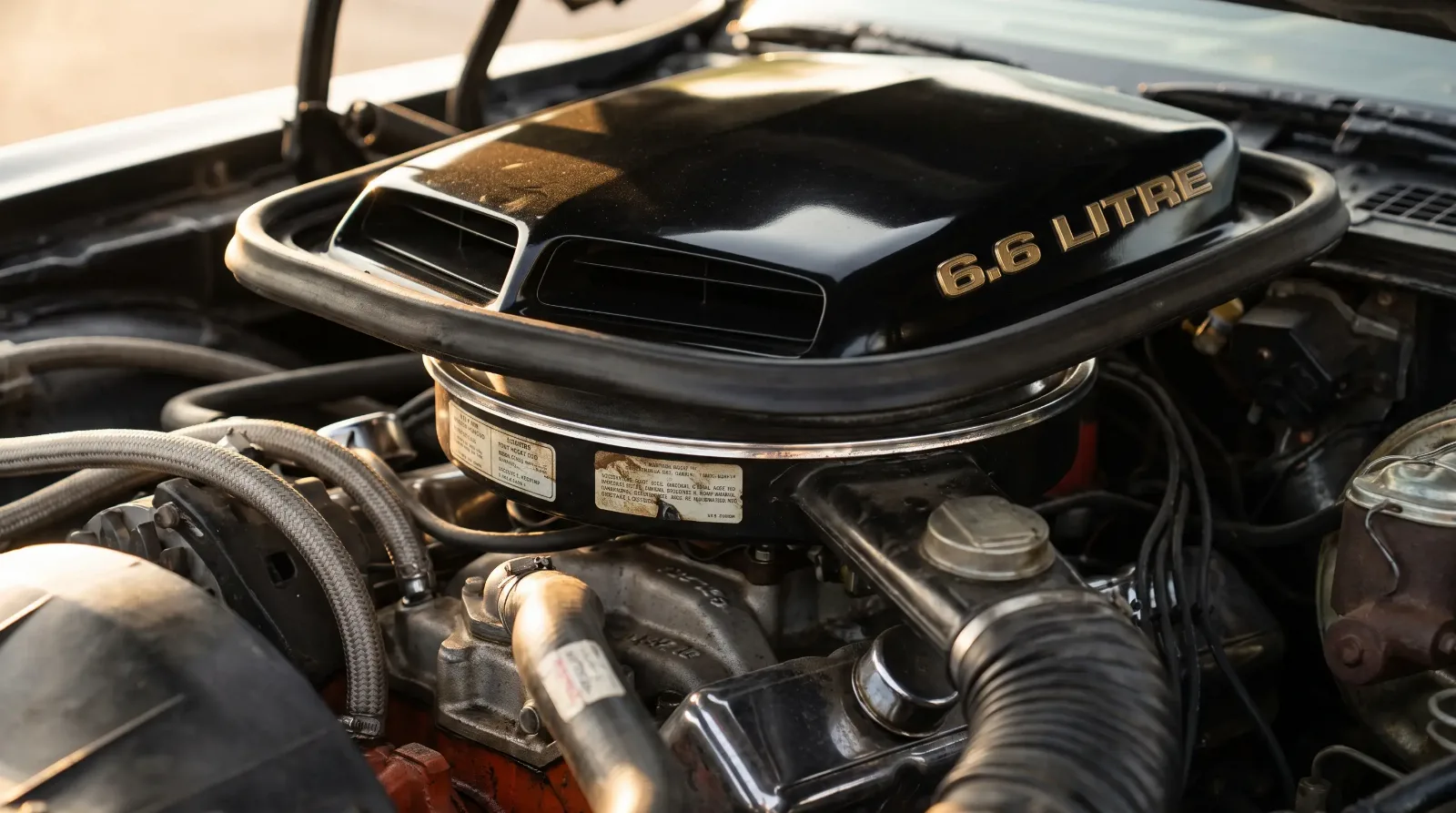
Mechanically, the Special Edition rode on the same platform as any other 1976 Trans Am, which meant the 455 was gone by this point, replaced by the 400 as the top available engine, offered in both standard and W72 high-output form depending on emissions certification in the buyer's home state. That's covered in more detail in the Trans Am story, but the short version is that the Special Edition wasn't sold as a performance package. It was sold as a statement, and buyers who wanted both speed and the black and gold look could order the W72 engine right alongside it. Plenty did.
That distinction between how a car looks and how a car performs sounds obvious now, but it wasn't a given in 1976. Muscle car buyers a few years earlier had been conditioned to judge a Trans Am almost entirely by what sat under the shaker scoop. The Special Edition asked a different question, whether a buyer wanted to be seen in a specific, deliberately designed car regardless of the number stamped on the intake manifold. Pontiac's marketing team leaned into that shift hard, running print ads that photographed the car from angles built to show off the gold wheels and hood decal rather than dwelling on horsepower figures the way earlier Trans Am advertising had. It worked well enough that other manufacturers spent the following years chasing their own commemorative special editions, chasing a formula Pontiac had more or less invented by accident with this one anniversary package.
What these cars are worth now
Genuine, documented 1976 Special Edition cars carry a real premium over standard black Trans Ams from the same year, and buyers should be careful about clone cars built from later black repaints without the correct decal package, gold wheels, and trim. The T-top option adds further value when original and functioning correctly, since the seals on these early T-top systems are notorious for leaking if they haven't been properly serviced. A documented, numbers-correct 1976 Special Edition with T-tops in good condition is one of the more desirable second-generation Trans Ams a collector can own, and the market has recognized that consistently for years.
Verifying a genuine car takes patience. Start with the fender tag and body plate, cross reference the option codes against a build sheet if one survives, and inspect the wheels closely since aftermarket gold-painted Honeycomb wheels have been sold as reproductions for decades and don't always match the factory finish under close light. Interior trim pieces are another giveaway, since the gold accented door panels and dash trim from this package are harder to fake convincingly than the exterior decals. Buyers who take the time to check all three, the paperwork, the wheels, and the interior trim, rarely get fooled by a car dressed up after the fact to look like something it isn't. If this is the era of the car you're chasing, the next story in this set picks up just a few years later, and there are usually classic Trans Ams for sale worth cross-shopping against whatever black and gold example you find.
Sources and notes
- Hitman's Pontiac Trans Am Site - 1976 Limited Edition 50th Anniversary
- Hitman's Pontiac Trans Am Site - Wheels and Rims
- Hitman's Pontiac Trans Am Site - Production Numbers
- Rare 1976 Pontiac Trans Am Y82 Special Edition For Auction - Motorious
- Everything To Know About The 1976 Pontiac Trans Am - SlashGear
- 1976 Pontiac Trans Am - why it Ruled in 1976 - Old Car Memories
Related Reading
Have a
Pontiac Firebird
for Sale?
Reach thousands of serious classic car collectors across the US.
Sell It Here →
Are You a Classic Car Dealer?
List your full inventory and connect with targeted classic car buyers.
Join as a Dealer →

About the author
Patrick Walsh
Automotive journalist covering classic car shows, events, and the enthusiast community across North America.
Related Listings - Pontiac Firebird
Comments
Be the first to comment on this article.