
The wood on a luxury dashboard is the detail buyers photograph and judges lean in to inspect, and it is also one of the few restoration jobs where a careful owner can add real value at modest cost. Cracked, cloudy wood makes an otherwise sorted car look neglected. Deep, clear veneer makes a driver-grade car look expensive. Wood trim restoration on a classic car sits at that intersection of appearance and value, and because the dashboards and door cappings are self-contained pieces you can remove and work on separately, this is often the highest-return job on the whole car relative to what it costs.
Market & Values
7 min read
Wood Trim Restoration: Dashboards and Door Cappings
Wood trim restoration for classic cars: how dashboards and door cappings fail, when to re-lacquer versus re-veneer, and real costs for each job.
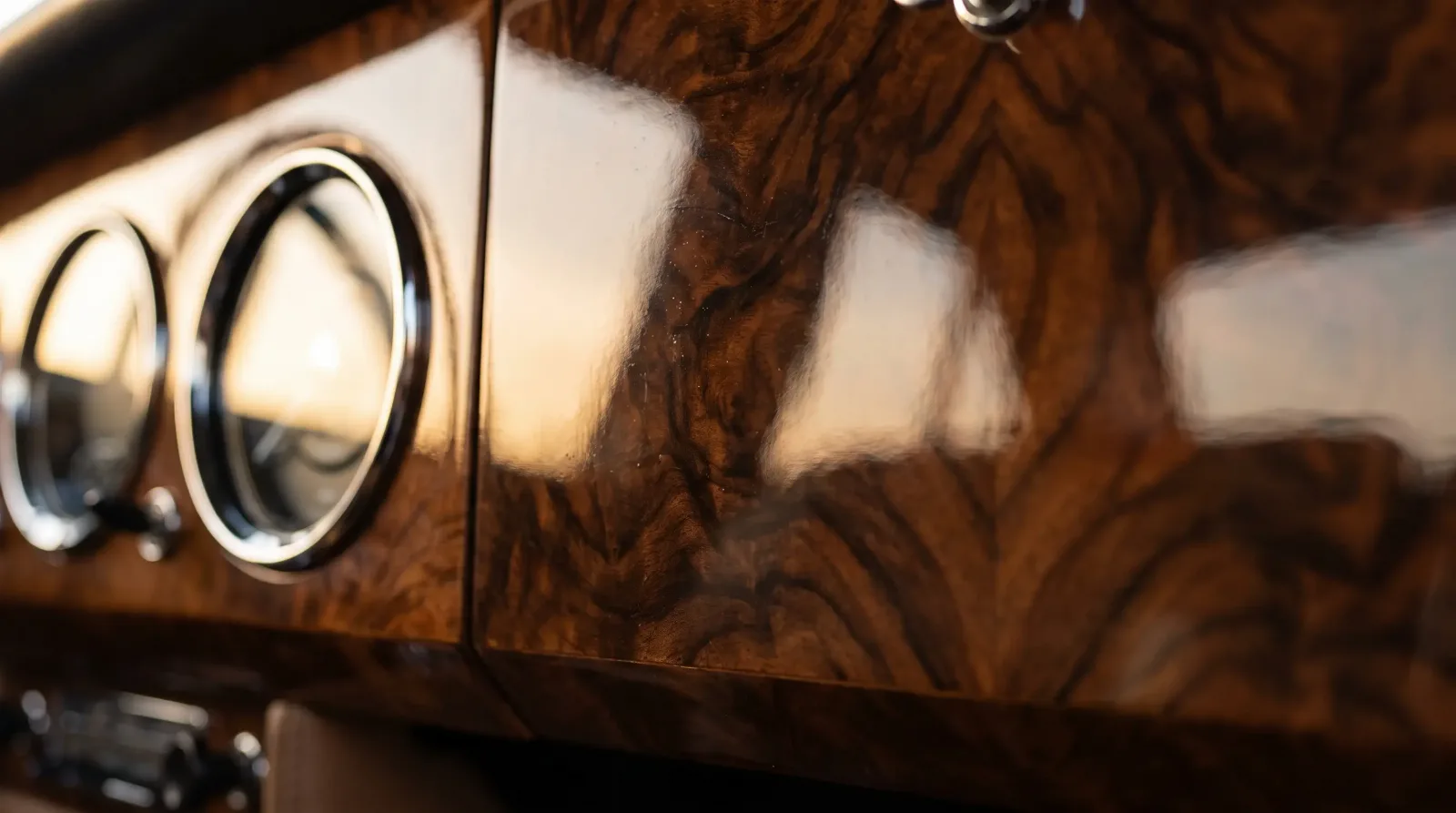
The pieces in question are the dashboard fascia, the window cappings along the tops of the doors, and any console or picnic-table wood. They share a construction: a thin sheet of figured veneer bonded to a wooden or metal substrate, then built up under many layers of clear lacquer. Knowing how they are made tells you exactly how they fail and what it takes to bring them back.
How dashboard and capping wood fails
Two enemies do most of the damage, and they attack different parts of the piece. The first is ultraviolet light. Years of sun through the windscreen break down the lacquer over the dashboard until it crazes into a fine web of cracks and goes milky, and it fades the colour of the veneer beneath. The second is moisture. Door cappings sit right at the window line, so water that gets past a tired seal soaks into the capping, lifts the lacquer, and delaminates or blackens the veneer at the edges. Cappings are almost always worse than the dash for this reason.
The distinction that governs the whole job is simple. If the lacquer has failed but the veneer underneath is sound, the piece can be stripped and refinished, and the original wood stays in the car. If the veneer itself is cracked, bubbled, blackened, or missing, the piece needs re-veneering, which means the old veneer comes off and new veneer is cut and laid to match. The first is a refinishing job. The second is a craft job, and the price gap between them is large.
| Condition | Correct fix | Approx. cost per set |
|---|---|---|
| Lacquer crazed, veneer sound | Strip & re-lacquer | $1,500–$4,000 |
| Veneer faded but intact | Re-lacquer, light colour work | $2,000–$5,000 |
| Veneer cracked or lifting | Re-veneer affected pieces | $3,000–$8,000+ |
| Water-blackened cappings | Re-veneer, reseal window line | $2,500–$6,000 |
What the refinishing process involves
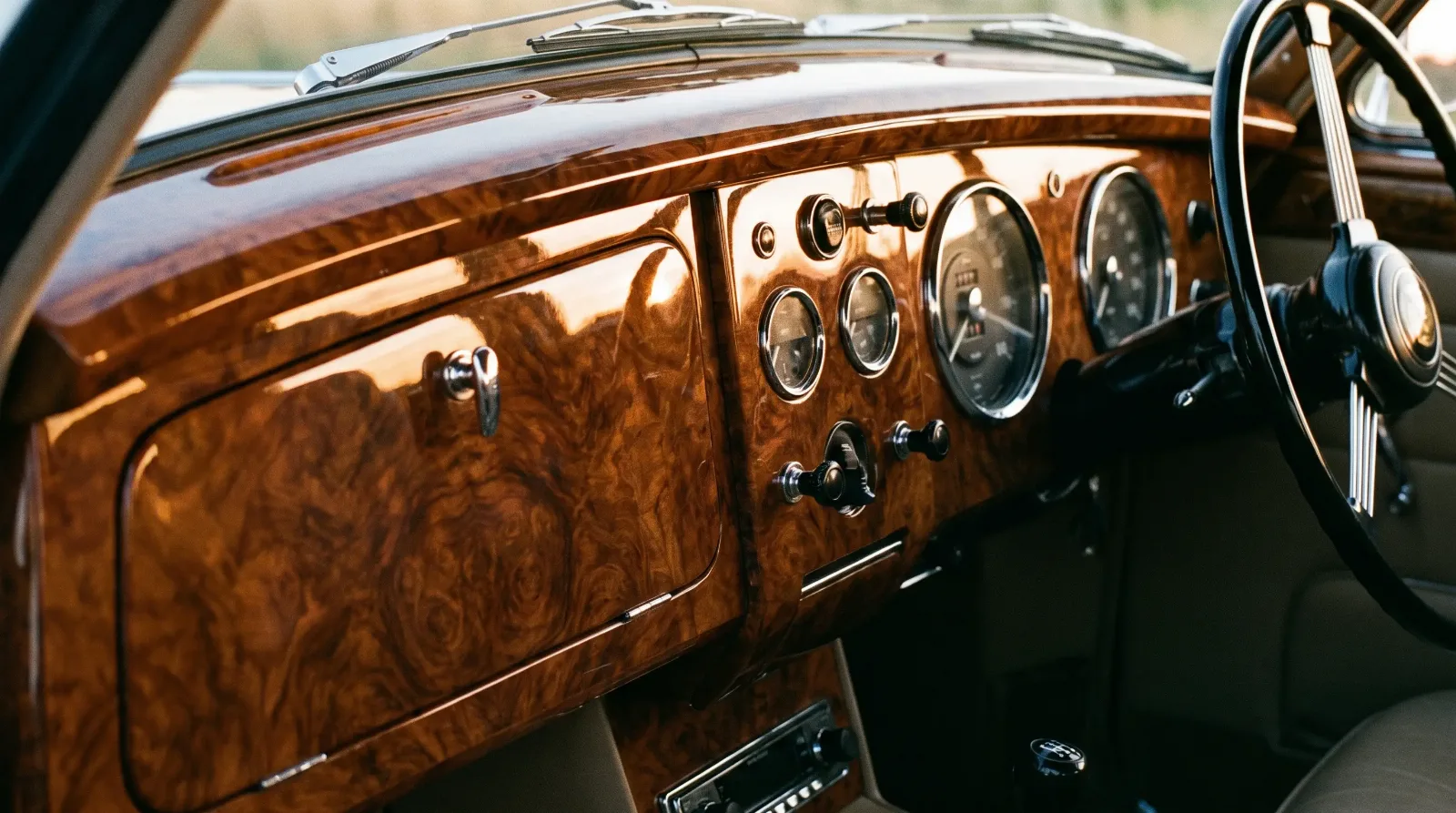
Refinishing sound wood is methodical work, and it is the part a patient owner can sometimes tackle. The lacquer is stripped back carefully so the thin veneer is not sanded through, the wood is cleaned and any colour corrected, and then many thin coats of clear are built up and cut back between coats until the surface is deep and flat. The depth of finish on good luxury wood comes from that layering, not from one thick coat, which is why a rushed job always looks shallow and plasticky next to a correct one.
Re-veneering is where it becomes specialist territory. The craftsman removes the failed veneer, prepares the substrate, then selects and cuts new veneer to match the original figure and grain direction before bonding and finishing it. Matching the figure matters, because these cars used specific woods chosen for their pattern. Burr walnut was the classic English luxury choice, with birdseye maple, and other figured timbers appearing across the segment. A re-veneer that ignores the original figure looks wrong even to an untrained eye, which is why this belongs with a shop that does it regularly. The value framework behind decisions like this runs through restoring and collecting a classic luxury car.
🔧 Inspection Priorities
- Door capping edges. Press along the window line for soft or lifting spots. Water-damaged cappings are the most common and most expensive wood fault on these cars.
- Crazing versus cracking. Cloudy, cracked lacquer over solid veneer is cheap to fix. Cracks that run into the wood itself mean re-veneering. Learn to tell them apart before you buy.
- Veneer thickness history. A dash that has been sanded through in a past refinish shows pale patches where the figure is gone. That piece needs new veneer, not another polish.
- Originality of the wood. Confirm the figure matches the marque's correct timber. A mismatched previous re-veneer hurts both correctness and value.
"Wood is the rare restoration line where the math favours the owner. A few thousand dollars refinishing original dashboards and cappings can lift a car's presentation more than the same money spent almost anywhere else. Buyers read the wood first, and they pay for what they see."
David Mercer
Can you do it yourself
Refinishing sound veneer is one of the few luxury restoration jobs a careful amateur can genuinely take on, and plenty of owners do. The pieces come out of the car with a modest set of hand tools, the workspace can be a clean corner of a garage, and the materials, stripper, fine abrasives, and clear lacquer, are not exotic. The skill is patience: stripping without sanding through the thin veneer, and building the finish in many light coats rather than one thick one. A first attempt on a spare piece teaches the feel before you touch the real dashboard.
Where the line falls is re-veneering. Cutting and laying new veneer to match original figure, keeping a book-matched pattern symmetrical, is a craft that rewards experience and punishes the first-timer, and a botched re-veneer costs more to correct than it would have cost to farm out. The honest split is simple: refinish sound wood yourself if you have the patience, and send anything that needs new veneer to a specialist. Knowing which job you are looking at is the whole decision, and it comes back to reading crazed lacquer against cracked veneer.
Why the wood pays you back
Treat the wood as an investment rather than a cosmetic afterthought, because in value terms that is what it is. The dashboards and cappings are the first thing a buyer's eye lands on inside the car, and a correct, deep finish signals a car that was cared for. Refinishing sound original wood is a modest cost with an outsized effect on how the car presents, and preserving the original veneer is always worth more than replacing it. When you shop the market, use the wood as a tell: cloudy, cracked trim is negotiating room, and it flags cars where the interior was neglected. Browse current classic luxury cars for sale with that eye and you will spot the difference between a car that needs a weekend of refinishing and one that needs a full re-veneer.
With the wood sorted, the other piece of brightwork that defines a luxury car's presentation is the metal that surrounds it, and that job has its own economics and its own surprises, covered next: next: Chrome and Trim Restoration.
Related Reading
Have a
Classic Car
for Sale?
Reach thousands of serious classic car collectors across the US.
Sell It Here →
Are You a Classic Car Dealer?
List your full inventory and connect with targeted classic car buyers.
Join as a Dealer →

About the author
David Mercer
Classic car market analyst with two decades of experience tracking collector car valuations, auction results, and investment trends.

Comments
Be the first to comment on this article.