
Willys Jeep Buyer's Guide (1941–1971)
The Willys Jeep is the original — the WWII MB and its civilian CJ descendants that defined what a purpose-built off-road vehicle could be. Military originals are historical artifacts; the CJ-2A through CJ-5 are the working trucks. Either way, you're buying the most proven four-wheel-drive platform ever mass-produced.

I grew up around a CJ-3B on my grandfather's ranch in East Texas. He bought it new in 1955 and used it every day until 1989 when the transfer case finally gave out — at which point he just put it in the barn and said it needed work. I pulled it out after he passed and drove it home with a rebuilt T-90 transmission and a set of new tires. That's the Willys Jeep story: they don't wear out, they just need attention every few decades. Find one without serious rust and you've got a vehicle that will outlast you.
The Willys Family: Military to Civilian
The Jeep story begins with the WWII military contract won by Willys-Overland in 1941. The MB — built by Willys — and the GPW — built by Ford under contract — are mechanically identical, government-issued vehicles used in every theater of the war. After the war, Willys immediately recognized the civilian potential and launched the CJ (Civilian Jeep) series.
Willys MB / Ford GPW (1941–1945): The Military Original
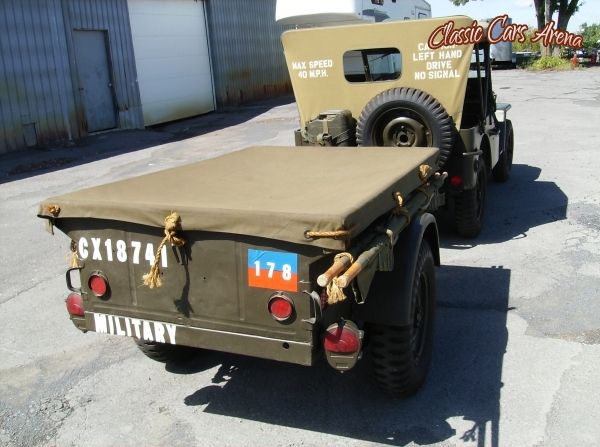
The WWII Jeep is a historical artifact. Documentation — particularly the data plate and any surviving provenance connecting the vehicle to a specific unit or veteran — is the foundation of value. The "Go Devil" L134 four-cylinder flathead engine produces 60 horsepower and is virtually indestructible. Surviving WWII Jeeps range from barn finds in need of complete restoration to show-quality museum pieces. The Ford GPW and Willys MB are equivalent in value; some collectors prefer the GPW because it was made in fewer numbers.
CJ-2A (1945–1949): The First Civilian Jeep
The CJ-2A introduced the tailgate, a rear-mounted spare, a side-mounted fuel tank, and civilian-appropriate improvements over the strictly utilitarian military spec. The L134 Go Devil engine continued. These are popular restoration subjects — more usable than the military MB/GPW while retaining the original architecture.
CJ-3A and CJ-3B (1949–1968): The Workhorse Generation
The CJ-3A updated the body with a one-piece windshield. The CJ-3B introduced the higher hood needed to accommodate the larger F134 Hurricane engine — 75 horsepower and significantly better than the Go Devil for sustained work. The CJ-3B was produced in enormous numbers and is the most common vintage Willys Jeep in the market today. Kaiser-Willys continued building the CJ-3B as late as 1968 in some markets.
CJ-5 (1955–1971): The Rounded Jeep
The CJ-5 introduced a longer wheelbase and the rounded body style that defined the Jeep CJ through 1983. Early CJ-5s used the F134 Hurricane; later versions adopted the Buick/Dauntless V6 or AMC engines. The CJ-5 bridges the Willys era and the AMC-ownership era of Jeep history.
Rust Inspection
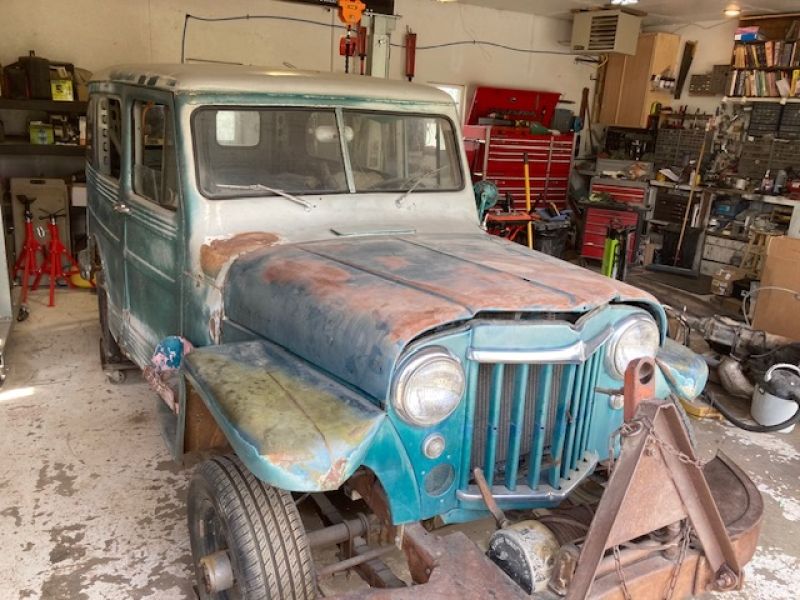
The tub floor is ground zero. These vehicles were designed to operate in the field with no concern for water intrusion — they got wet regularly and the floors paid for it. Probe the entire tub floor from below if possible. The wheel arches within the tub rust from packed dirt and debris. The firewall at the lower corners where it meets the floor is a secondary zone. Frame rails are generally robust but check at the spring perch attachment points.
| Model | Years | Engine | Notes |
|---|---|---|---|
| MB / GPW | 1941–1945 | L134 Go Devil, 60 hp | Military original |
| CJ-2A | 1945–1949 | L134 Go Devil, 60 hp | First civilian Jeep |
| CJ-3A | 1949–1953 | L134 Go Devil, 60 hp | One-piece windshield |
| CJ-3B | 1953–1968 | F134 Hurricane, 75 hp | High hood, most common |
| CJ-5 (Willys era) | 1955–1971 | F134 / Dauntless V6 | Rounded body, longer wb |
"I've rebuilt Willys Jeeps from bare frame up and bought finished ones at auction, and the lesson is always the same: the tub is everything. A Jeep with a solid tub and tired mechanicals is a weekend project. A Jeep with a rotted tub and rebuilt mechanicals is a money pit. The Go Devil and Hurricane engines don't wear out — I've seen them run past 200,000 miles on nothing but oil changes. The tin is what fails."
— Robert Halloran
Pricing
CJ-3B driver quality: $8,000–$15,000. Show-quality restoration: $18,000–$28,000. CJ-2A driver: $12,000–$18,000; show: $22,000–$35,000. WWII MB/GPW driver condition: $15,000–$25,000; correct military restoration: $28,000–$45,000; documented provenance: $45,000–$70,000+. Early CJ-5 (1955–1964) driver: $10,000–$18,000; show: $22,000–$35,000.
Browse Jeep Willys listings
What to Look For
Tub floor — probe the entire floor from below if possible, and from inside at every corner and center section. Wheel arch interiors within tub for packed debris and rust. Firewall lower corners. Frame rails at spring perch attachment points. On military vehicles: verify data plate is present and correct for the vehicle. Engage 4WD and listen for transfer case clunks at front output. Check all u-joints in front and rear driveshafts. Engine cold start — Go Devil and Hurricane should idle steadily with minimal smoke. Verify transmission shifts through all gears including reverse.Pre-Purchase Checklist
-
Tub floor probe
Probe entire floor from below and inside — the single most important inspection point -
Wheel arch interiors
Check inside tub wheel arches for packed debris and rust -
Firewall lower corners
Inspect where firewall meets floor at both corners -
Frame spring perches
Check frame at all four spring attachment points for corrosion -
Military data plate (MB/GPW)
Verify data plate is present and legible on military vehicles -
4WD engagement
Engage 4WD — listen for transfer case clunks indicating output shaft wear -
Driveshaft u-joints
Check all u-joints in front and rear driveshafts for wear -
Engine cold start
Start from cold — steady idle and no heavy smoke required -
Transmission all gears
Shift through all gears including reverse — grinding indicates worn synchros -
Provenance documentation (military)
Request any paperwork supporting military history — verbal stories have no value
Common Issues
Tub floor rust is the defining issue — these vehicles were never weatherproofed and the floors deteriorate from below. Wheel arch rust from packed debris. Frame rust at spring perch attachment points on high-use examples. Dana 18 transfer case output shaft yoke wear. Universal joint wear in front axle shafts. The Go Devil engine is robust but carburetor rebuilds are needed on most unrestored examples. Hurricane engine governor failures on CJ-3B trucks used for power take-off applications. Military Jeep provenance documentation fraud — unverifiable "combat" histories are a common market fiction.More Willys for sale
 Dealer
 United States
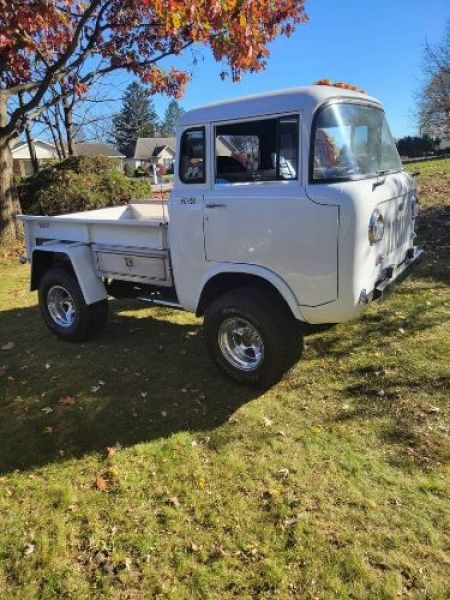
1961 Jeep Willys

Pricing Guide
CJ-3B driver: $8,000–$15,000; show: $18,000–$28,000. CJ-2A driver: $12,000–$18,000; show: $22,000–$35,000. WWII MB/GPW driver: $15,000–$25,000; military restoration: $28,000–$45,000; documented provenance: $45,000–$70,000+. Early CJ-5 driver: $10,000–$18,000; show: $22,000–$35,000. Tub replacement runs $3,000–$8,000 in reproduction steel — factor into any project with floor rust.Fun Facts
The Jeep was designed in 49 days in response to a US Army specification — American Bantam submitted the winning design, but Willys won the production contract due to manufacturing capacity. "Jeep" may derive from the military designation GP (General Purpose), though the Eugene the Jeep cartoon character is also cited. The CJ-3B was manufactured in India as the Mahindra CJ340 until 2010 — making it one of the longest-running vehicle designs in history. Willys-Overland filed to trademark the Jeep name in 1950, cementing a generic word as a brand.Frequently Asked Questions
Ready to find your Willys?
Browse 6+ active Jeep Willys listings on Classic Cars Arena.
View Listings →