
Jeep Grand Wagoneer Buyer's Guide
The Jeep Grand Wagoneer invented the luxury SUV category 30 years before anyone thought to call it that — a full-size 4WD station wagon with wood paneling and a leather interior that set the template every luxury SUV has followed ever since.

Robert Halloran here. I want to be direct: the Jeep Grand Wagoneer is the most important SUV in history. Not the Range Rover (which came later), not the Ford Bronco (which was smaller), and certainly not the Toyota Land Cruiser (which was stripped by comparison). The Wagoneer proved in 1963 that a 4WD vehicle could have air conditioning, power windows, leather seats, and wood paneling — and buyers would pay for the combination. Every Range Rover, every Cadillac Escalade, and every Lincoln Navigator owes its existence to the Wagoneer concept.
The Grand Wagoneer name was applied in 1984 to distinguish the original full-size wagon from the smaller Cherokee-based Wagoneer. But collectors use "Grand Wagoneer" to cover the entire 1963–1991 production run of the original full-size body. This guide covers that complete run.
The Invention of the Luxury SUV
When AMC (who owned Jeep from 1970 to 1987) introduced the Wagoneer for 1963, it combined capabilities that no one had thought to put together: the Jeep brand's 4WD credibility, the passenger-car comfort that family buyers expected, and a station wagon body that could carry eight people and their luggage. The first Wagoneer had an independent front suspension — a first for a production 4WD vehicle — and an available automatic transmission, another Jeep first.
Gradually through the 1960s and 1970s, the Wagoneer acquired the luxury features that defined it in its final years: real wood paneling (not contact paper — real wood applied over the fiberglass substructure), leather upholstery, full climate control, and every power accessory available. By the late 1970s, the Wagoneer was competing directly with the luxury car segment while offering 4WD capability that no luxury car came close to matching.
Which Year to Buy
The 1984–1991 "Grand Wagoneer" years are the most sought after: these trucks had the benefit of 25 years of iterative refinement, AMC's final improvements before the Chrysler acquisition, and Chrysler's subsequent quality investments after purchasing AMC/Jeep in 1987. The AMC 360ci V8 engine in these final trucks is one of the more reliable large-displacement American engines of the era.
The 1979–1983 trucks are interesting transition vehicles — the final pre-"Grand Wagoneer" designation cars that are often less expensive than post-1984 examples despite similar quality. The 1974–1978 trucks introduced some of the luxury features that defined the nameplate but can have more deferred maintenance issues than later examples.
The 1963–1973 original-era Wagoneers are the enthusiast's choice for those who want the full historical experience: these are simpler, lighter trucks that ride and drive differently from the refined later cars. The Tornado-derived Quadra-Trac full-time 4WD (introduced 1973) was a significant feature — it allowed 4WD engagement without stopping the vehicle.
The Wood Paneling
The wood paneling that defines the Wagoneer's visual identity is actually Di-Noc vinyl-covered steel panels over a fiberglass base — not solid wood. This matters for maintenance: the vinyl film delaminates from UV exposure and age, and the steel substrate can rust behind the delaminated film without visible surface rust. A Wagoneer that "needs new wood" is actually a delisting — the panels are typically restored with new vinyl wrap or replaced entirely. Proper restoration of the wood panels runs $2,000–$4,000 for quality work.
The AMC 360 V8
The 1984–1991 Grand Wagoneers used the AMC 360ci V8 — an engine that AMC developed in-house and that has proven surprisingly durable in these applications. It's not a powerful engine by modern standards (140 horsepower in emissions-era tune), but it's torquey at low rpm and mechanically robust with proper maintenance. Parts availability has improved significantly as the Grand Wagoneer's collector status has risen.
Browse Jeep Grand Wagoneer listings
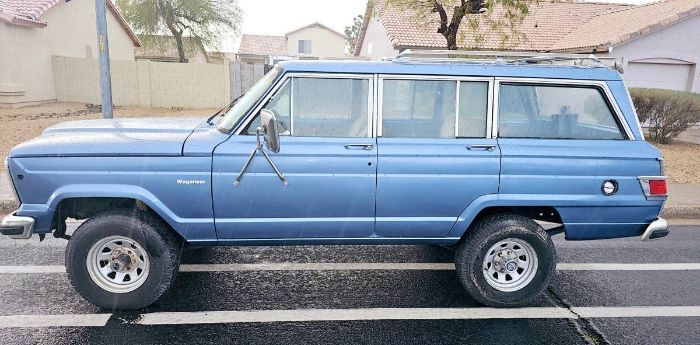 Dealer
 United States
1982 Jeep Grand Wagoneer
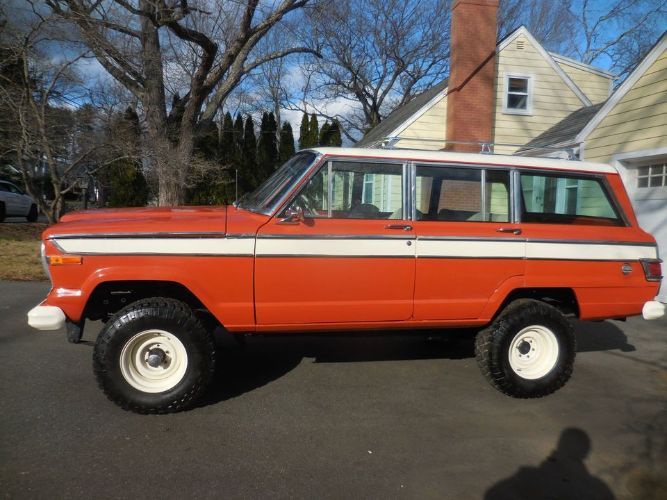 Dealer
United States
Dealer
United States
1976 Jeep Grand Wagoneer
What to Look For
The wood panel condition is the most visible indicator of care — delaminating vinyl is a warning sign about overall maintenance quality. Inspect the steel substrate under the wood panels for rust, particularly at the lower edges. Check the frame rails for rust and any cracking at the body mount points. Verify the Quadra-Trac or Selec-Trac 4WD system engages smoothly. On the AMC 360 V8, check for oil leaks from the rear main seal and head gaskets. Test all power accessories — window regulators and locks on these trucks are failure-prone with age.Pre-Purchase Checklist
-
Wood Panel Condition
Inspect wood panels for vinyl delamination and probe the steel substrate edges for rust. -
Frame Rust
Inspect the full frame length for rust and cracks at body mount points. -
4WD System
Test Quadra-Trac or Selec-Trac engagement — both high and low ranges should function smoothly. -
AMC 360 Oil Leaks
Check for rear main seal and head gasket leaks — inspect the bellhousing area and under the exhaust manifolds. -
Power Accessories
Test all power windows and door locks — actuator failures are common on older examples. -
Carburetor Condition
Cold start and warm idle should be smooth — Carter or Motorcraft carbs need rebuilding on unrestored trucks. -
AC System
Note whether AC uses original R-12 (requires conversion) or has been converted to R-134a. -
Body-on-Frame Mounts
Check body mount rubber bushings — deteriorated mounts cause body flex and squeaks.
Common Issues
Wood panel vinyl delamination and underlying steel rust — the most common visible deterioration. Frame rust from road salt exposure on northern trucks. Quadra-Trac 4WD system seal leaks and engagement issues. AMC 360 rear main seal leaks. Power window and door lock actuator failures. Carburetor deterioration on high-mileage unrestored examples. Air conditioning system R-12 freon conversion requirement.More Grand Wagoneer for sale
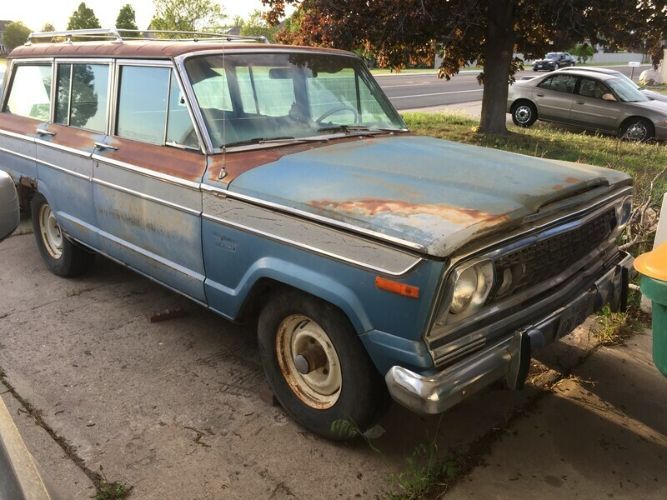 Dealer
United States
Dealer
United States
1974 Jeep Grand Wagoneer
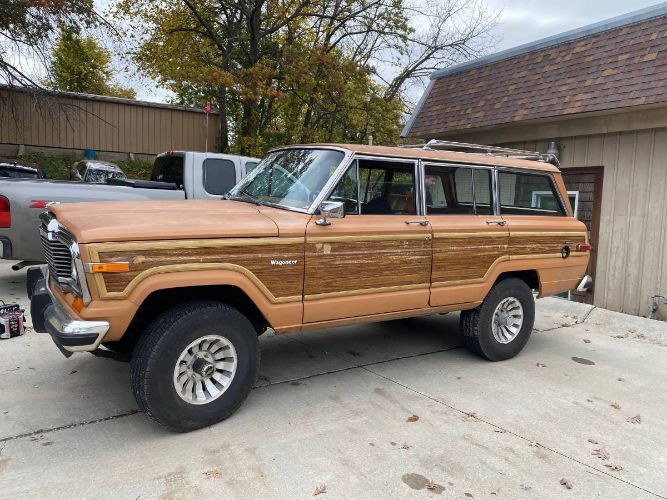 Dealer
United States
Dealer
United States
1983 Jeep Grand Wagoneer
Pricing Guide
1963–1978 Wagoneer: $8,000–$25,000 for drivers, $30,000–$55,000 for restored examples. 1979–1983 Wagoneer: $12,000–$30,000 for good drivers. 1984–1991 Grand Wagoneer: $18,000–$45,000 for well-maintained drivers, $50,000–$90,000 for show-quality restorations. The market has appreciated 40–60% over the past five years and continues to rise.Fun Facts
The Jeep Wagoneer was the first 4WD production vehicle with an independent front suspension (1963) — a feature that competing 4WD trucks didn't offer for years. The 1973 Quadra-Trac full-time 4WD was derived from the Oldsmobile Toronado's front-wheel-drive transfer case technology — an unusual piece of cross-platform engineering. The Grand Wagoneer was in continuous production for 29 years (1963–1991) with essentially the same body — the longest production run of any American SUV body style.Frequently Asked Questions
Ready to find your Grand Wagoneer?
Browse 6+ active Jeep Grand Wagoneer listings on Classic Cars Arena.
View Listings →