
Plymouth Deluxe Buyer's Guide
The hot rod and kustom builder's classic starting point — the Plymouth Deluxe offers late-1930s to early-1950s Mopar style at prices that leave room for the build.

History & Overview
Plymouth launched as Chrysler Corporation's volume brand in 1928, positioned to compete with Chevrolet and Ford. The "Deluxe" designation appeared in the mid-1930s as the upper trim level within Plymouth's lineup, remaining through the early 1950s as the top-of-the-line model before Plymouth introduced more elaborate naming conventions.
The collector-significant Plymouth Deluxe spans several design generations:
- 1939–1942 Prewar: Streamlined styling with "Speed Lines" — the last great flowing prewar Plymouth bodies. The 1941–1942 cars in particular have superb proportions. The sedan, business coupe, and club coupe are all hot rod staples.
- 1946–1948 Postwar (P15 series): The prewar 1942 bodies resumed production with minor updates — essentially the same gorgeous shapes, now available in postwar America.
- 1949–1952 Second Postwar: All-new "box" design — completely different character, upright and formal. Less loved by custom builders but historically important.
Which Plymouth Deluxe to Buy
For the custom and hot rod tradition, the 1941–1942 and 1946–1948 bodies are the targets — the same beautiful streamlined shape in prewar and postwar forms. The business coupe (two-door with no rear seat, enormous trunk space) is the holy grail of custom building — the long, unbroken body sides are perfect for channeling and chopping. The club coupe and four-door sedan are more practical stock restorations.
For the stock preservationist, the 1949–1952 Plymouth is genuinely underappreciated — the upright styling has a formal dignity that rewards correct restoration, and these cars are priced extremely low relative to their rarity and condition.
Common Problems & What to Inspect
Engine Guide
| Engine | Years | Output | Notes |
|---|---|---|---|
| 201ci Flathead Six | 1939 | 82 hp | Final 201ci variant |
| 217ci Flathead Six | 1940–1947 | 87 hp | Most common; proven and repairable anywhere |
| 218ci Flathead Six | 1948–1952 | 97 hp | Mild overbore; slightly more power, same architecture |
| Hemi/SBC/small-block Mopar swap | various | varies | Extremely common in custom builds; adds significant value |
"A 1941 Plymouth business coupe with the body sitting three inches lower, a mild chop, and a built flathead six is everything the hot rod tradition means to me — honest, functional, and earned with wrench time. You can't fake that." — Jim Vasquez
Pricing & Market
The Plymouth Deluxe is one of the most accessible entries in the prewar and early postwar market. A running, driving 1946–1948 sedan or coupe can be found for $8,000–$18,000 in honest driver condition. The business coupe — especially 1941–1942 and 1946–1948 — commands $15,000–$28,000 as a custom project base. Completed kustoms and hot rods on Plymouth platforms span a huge range: a mild street rod might fetch $25,000–$45,000; a master-built full kustom can reach $80,000+ at auction. Stock restorations of 1949–1952 cars: $10,000–$20,000.
Browse Plymouth Deluxe listings
 Dealer
 United States
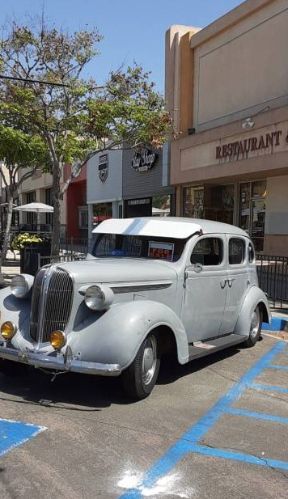
1938 Plymouth Deluxe
 Dealer
United States
Dealer
United States
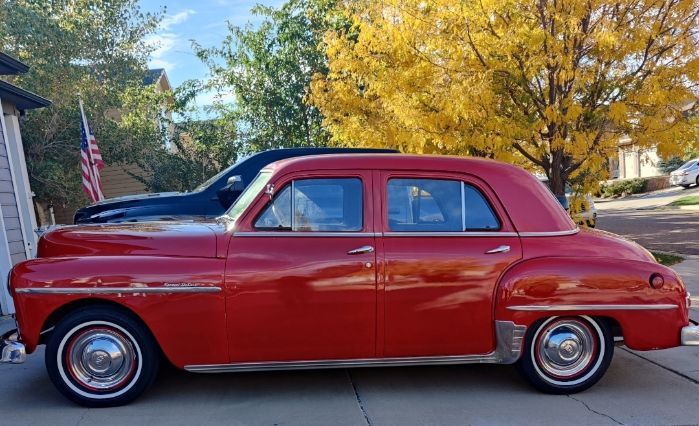
1950 Plymouth Deluxe
What to Look For
The ideal Plymouth Deluxe purchase is a southwestern business coupe or club coupe with solid structural metal — even if the drivetrain and cosmetics are rough. Frame integrity and cowl/firewall condition are everything. A car with a freshly rebuilt flathead and sorted brakes in rough body condition is more valuable than a beautiful paint job hiding metal problems. For stock restoration, seek a one-owner car with the original engine still installed.Pre-Purchase Checklist
- Probe cowl and firewall thoroughly for rust — this is the critical water intrusion zone
- Inspect trunk floor and spare tire well for patch work over rust
- Compression test all six cylinders (look for 90+ psi consistent)
- Check brake master cylinder and all four wheel cylinders for leaks
- Use magnet on all body panels to detect excessive filler
- Verify windshield channel condition and glass seal integrity
- Check door gaps and body alignment for signs of accident damage or flex
- On custom/project cars: verify frame integrity and inspect all welds
Common Issues
Cowl and firewall rust from windshield water ingress is the defining structural problem on these cars. Trunk floor rust is nearly universal. The flathead six needs a valve job and ring/bearing work on most unrestored examples — it's cheap and accessible to do. Brake systems require complete refresh. On custom project cars, excessive body filler and questionable welds are common.More Deluxe for sale
 Dealer
United States
Dealer
United States
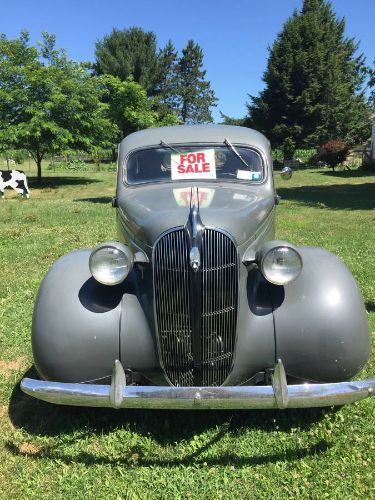
1937 Plymouth Deluxe
 Dealer
United States
Dealer
United States
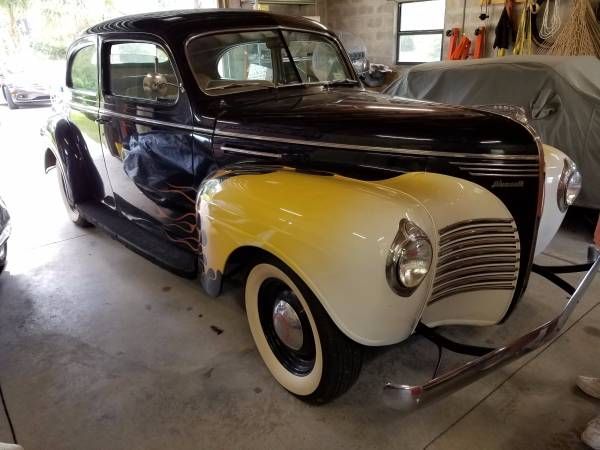
1940 Plymouth Deluxe
Pricing Guide
Stock driver (1946–1948 sedan/coupe): $8,000–$18,000. Business coupe as project: $15,000–$28,000. Mild street rod completion: $25,000–$45,000. Master-built kustom: $60,000–$100,000+. Stock restoration (1949–1952): $10,000–$20,000. Flathead rebuild budget: $1,200–$2,500.Fun Facts
Plymouth was the first American low-priced car to offer hydraulic brakes as standard equipment (1928), and the 1940s Plymouths remained leaders in feature accessibility. The 1940–1948 Plymouth body is so beloved in hot rod culture that complete new-manufacture body panels and even complete fiberglass body shells have been produced to support the custom community. The business coupe's massive trunk was designed to hold commercial samples — making it the preferred vehicle for traveling salesmen, and decades later, for hot rod builders.Frequently Asked Questions
Ready to find your Deluxe?
Browse 6+ active Plymouth Deluxe listings on Classic Cars Arena.
View Listings →