
1997 Chevrolet Camaro
$29,997
Vehicle Details
Chevrolet
Camaro
1997
14,610 miles
2G1FP22P0V2149955
Hatchback
Manual
Gasoline
5.7L 8 Cylinder
Description
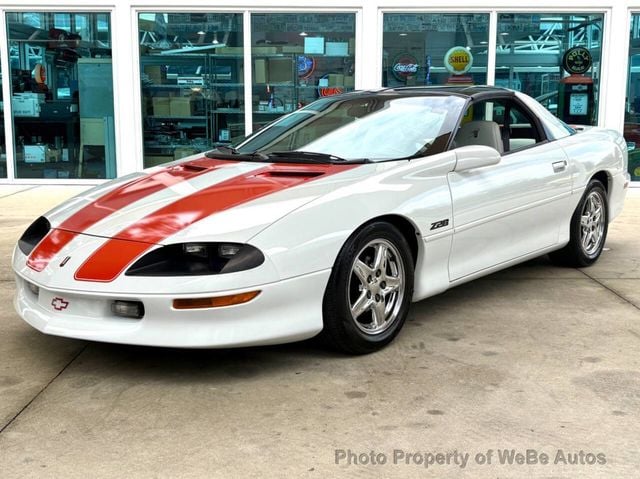
1997 Chevrolet Camaro Z28 30th Anniversary Edition — LT1 V8, 6-Speed Manual, T-Top, Arctic White with Hugger Orange Stripes Why This Car Is Special The 1997 Chevrolet Camaro Z28 30th Anniversary Edition exists at the crossroads of two milestones: the last full model year of the fourth-generation Camaro before Chevrolet retooled the platform, and the 30th birthday of a nameplate that first appeared in 1967. Chevrolet marked the occasion with a specific appearance package that deliberately called back to the original 1969 Camaro pace car colors — Arctic White exterior with Hugger Orange racing stripes running over the hood and decklid. It was a direct, intentional nod to the car's own history, and it worked.
The 30th Anniversary package was offered exclusively on the Z28 and came as a bundled option that included the Hugger Orange stripe treatment, special 30th anniversary embroidered white leather seats, and unique exterior badging. It was not available on the base V6 Camaro — you had to have the Z28, which meant you also got the LT1 5.7-liter V8 as standard equipment. Chevrolet produced a limited number of these Anniversary cars, making them more sought after than a standard Z28 from the same year.
The combination of the white and orange color scheme, the commemorative interior embroidery, and the LT1 drivetrain makes this one of the more historically significant variants of the fourth-generation Camaro to collect. This particular car was built at the Ste. Therese, Quebec assembly plant, as indicated by the second character of the VIN, and it is a Z28 coupe with the T-top roof option.
It is powered by the LT1 5.7-liter V8 backed by the Borg-Warner T56 6-speed manual transmission — the combination that Camaro enthusiasts specifically seek out. The undercarriage photographs show a clean, solid floor pan with no visible rust or structural compromise, which is exactly what you want to see on a car of this age. Features List - LT1 5.7-liter V8 engine, rated at 285 horsepower - Borg-Warner T56 6-speed manual transmission - 30th Anniversary Edition package - Hugger Orange racing stripes over Arctic White exterior - Embroidered 30th Anniversary white perforated leather seats - T-top removable roof panels - Chrome 16-inch 5-spoke wheels - Rear spoiler - Dual exhaust outlets - Four-wheel disc brakes - ABS brakes - Traction control - Dual airbags (driver and passenger) - Power windows and door locks - Power mirrors - Power steering - Cruise control - Tachometer - AM/FM/CD stereo - Air conditioning - Center console with storage - Clean undercarriage Mechanical The LT1 5.7-liter V8 is a pushrod small-block that Chevrolet developed for the C4 Corvette before bringing it to the Camaro Z28 for the 1993 model year.
In Z28 trim, it was rated at 285 horsepower and 325 lb-ft of torque. The LT1 introduced reverse-flow cooling — a design where the coolant runs through the cylinder heads before the block — which allowed for tighter ignition timing and improved thermal efficiency compared to the earlier L98. It also used an Opti-Spark distributor mounted at the front of the engine, driven directly off the camshaft.
The engine was well-regarded for its pulling power in the mid-range, which translates to strong real-world performance on the street. Backing the LT1 in this car is the T56 6-speed manual, the same basic transmission architecture used in the Corvette. The T56 was specifically chosen for the Z28 because it could handle the torque output and offered a better spread of gear ratios than the earlier 5-speed.
The combination of the LT1 and T56 is considered by fourth-generation Camaro enthusiasts to be the definitive mechanical specification. Braking is handled by four-wheel discs with ABS, and traction control is also present. The undercarriage photos reveal a floor pan that shows no signs of rot or patch work — the metal appears original and intact, with no visible surface rust beyond what is expected from normal age
Trim: Z28
Classic Chevrolet Camaro Buyer's Guide
Chevrolet Camaro Market Overview
Based on 327 Chevrolet Camaro listings currently on ClassicCarsArena.com
Classic Chevrolet Camaro Buyer's Guide
The Chevrolet Camaro launched in September 1966 as Chevy's direct response to the Ford Mustang, and for over five decades it has defined American performance for an entire generation of enthusiasts. Whether you're hunting a numbers-matching first-generation Z/28, a survivor split-bumper second-gen, or a clean third-gen IROC-Z, the Camaro buyer's market is deep, varied, and full of pitfalls for the unprepared.
What to Check Before Buying
Common Issues
What to Look For
Price Guide
Did You Know?
Also Consider
Similar classic cars shoppers also browse:
How Does It Compare?
Head-to-head matchups for the Chevrolet Camaro:
1997 Chevrolet Camaro
Contact Seller
Listed by dealer
Nationwide consignment dealer
WeBe Autos lists vehicles from sellers across multiple states. The vehicle may not be at the dealer's address shown. Contact the dealer to confirm the vehicle's actual location before traveling.
Buying safely?
Read our scam-avoidance tips before paying →
Listing Actions
Browse by Era
1990s Classics for SaleAll 1997 Classics
Browse all 1997 Cars for SaleGet classic car alerts
Latest arrivals, newest deals, and discount coupons — straight to your inbox.
Selling your classic car?
Reach millions of classic car enthusiasts on the largest US classics marketplace.
Sell Your Car →Similar Listings
 Dealer
 United States
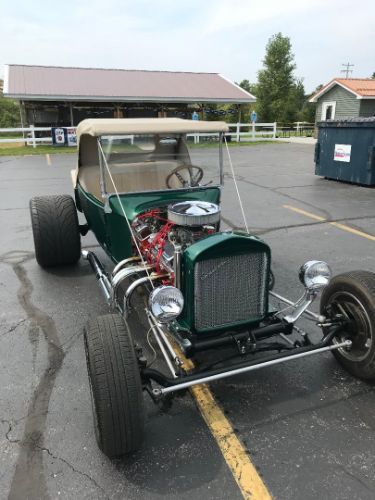
1918 Chevrolet 100
 Dealer
United States
Dealer
United States
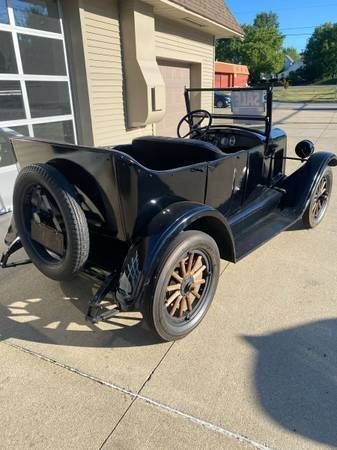
1923 Chevrolet Master
 Dealer
United States
Dealer
United States
1925 Chevrolet Superior K
 Dealer
United States
Dealer
United States
1926 Chevrolet 100
Contact Seller
Call this seller?
You're about to call WeBe Autos about the 1997 Chevrolet Camaro.
+1 (631) 339-0399
Report this Ad
Help us keep the marketplace clean. Our moderation team reviews every report within 24 hours.