
1966 Chevrolet Corvette
$49,997
Vehicle Details
Chevrolet
Corvette
1966
45,148 miles
194376S121897
Coupe
Manual
350ci V8
Description
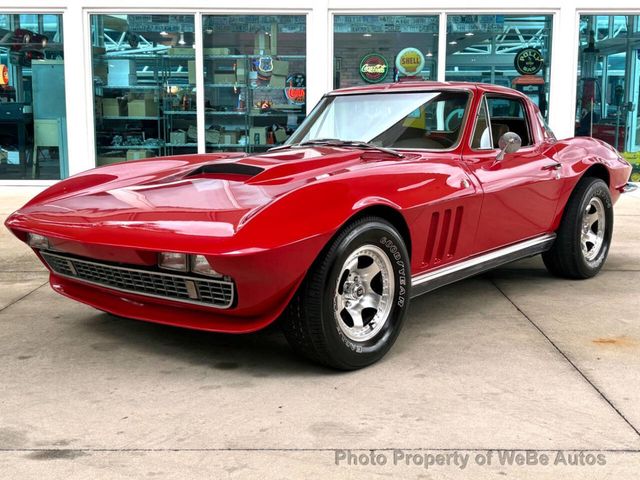
1966 Chevrolet Corvette Sting Ray Coupe — Milano Maroon, 4-Speed, 327ci V8, Solid Driver with Character Why This Car Is Special The second-generation Corvette, known to enthusiasts as the C2 or Sting Ray, ran from 1963 through 1967 and is widely considered the most visually pure Corvette ever built. The 1966 Chevrolet Corvette Sting Ray coupe sits right in the heart of that generation — past the split-window controversy of 1963, past the early teething issues, and one year before the body style gave way to the C3. By 1966, Chevrolet had refined the C2 platform to a high point.
The car had independent suspension at all four corners, a fiberglass body over a steel ladder frame, and a lineup of small-block and big-block V8 engines that could satisfy almost any buyer. Total 1966 Corvette production came in at 27,720 units, split between coupes and convertibles, with coupes accounting for 9,958 of those cars. That makes the fastback coupe the rarer body style for that model year.
This particular 1966 Chevrolet Corvette Sting Ray is finished in Milano Maroon Metallic over a tan vinyl interior — a combination that reads as serious and intentional rather than flashy. The car has been driven and enjoyed, and it shows that history honestly. It has received a handful of thoughtful upgrades over the years — an electronic ignition conversion, a Hurst shifter, matched crossed-flags valve covers and air cleaner — that make it more reliable and more fun to use without disguising what it is.
The undercarriage is solid and clean, the independent rear suspension is intact and correctly configured, and the fiberglass body wears its Milano Maroon without any signs of major repairs or patchwork. This is a driver-quality 1966 Corvette Sting Ray coupe at a point in the market where honest, sorted C2s have become genuinely difficult to find. One detail from the VIN worth noting: the build sequence number encoded in the vehicle identification number places this car among the later production units of the 1966 model year run, which typically means the assembly team had worked out the bugs that sometimes appeared early in a production cycle.
Features List - 327ci V8 engine - 4-speed manual transmission - Accel HEI electronic ignition upgrade with Accel Super Coil, high mileage rated - Hurst shifter with cream ball knob and shift gate plate - Matched crossed-flags chrome valve covers and air cleaner - Dual rear-exit exhaust with square chrome tips - Independent rear suspension, intact and correctly configured - Solid, clean undercarriage - Polished aluminum wheels - Goodyear Eagle GT+4 white letter tires - Hidden retractable quad headlamps, functioning - C2 fastback coupe roofline - Three-slot fender vents - Corvette Sting Ray script badging on rear deck - Quad round taillamps with chrome surrounds - Tan bucket seats with ribbed stitching - Tan vinyl door panels with chrome hardware - Full 5-gauge instrument cluster with 160 mph speedometer and 7,000 rpm tachometer - AM/FM radio in center console - Grant aftermarket steering wheel - Matching tan carpet throughout - Milano Maroon Metallic exterior Mechanical The engine in this 1966 Chevrolet Corvette Sting Ray has been upgraded from the original small-block displacement to a V8 configuration backed by a 4-speed manual transmission. The original 327 cubic inch small-block was the bread-and-butter engine in the 1966 Corvette lineup, available in multiple states of tune ranging from 300 horsepower to 350 horsepower depending on carburetion and compression ratio. The small-block C2 Corvette has always been regarded as the better-balanced car to drive — lighter up front than the big-block cars, with more neutral handling through corners.
The 4-speed manual was the transmission of choice for serious drivers in this era, and it remains the right tool for a C2 Corvette. The ignition system has been upgraded to an Accel HEI electronic unit, paired with an Accel Super Coil rated for high-mileage use. Thi
Classic Chevrolet Corvette Buyer's Guide
Chevrolet Corvette Market Overview
Based on 477 Chevrolet Corvette listings currently on ClassicCarsArena.com
Selling a classic? Here's how
Fees, audience and photo limits compared: compare the places to sell classic cars .
Classic Chevrolet Corvette Buyer's Guide
The Chevrolet Corvette has been America's sports car for over seventy years, but the classic Corvette market splits into three distinct generations, each with its own buyer profile and its own pitfalls. The C1 (1953-1962), C2 mid-year (1963-1967), and C3 shark (1968-1982) cover three decades of evolution from solid-axle straight-six convertibles to small-block legends to LT-1-powered chrome-bumper cars. Knowing which Corvette is yours, and what it actually is versus what the seller claims, is the difference between a sound investment and an expensive lesson.
What to Check Before Buying
Common Issues
What to Look For
Price Guide
Did You Know?
Also Consider
Similar classic cars shoppers also browse:
How Does It Compare?
Head-to-head matchups for the Chevrolet Corvette:
1966 Chevrolet Corvette
Contact Seller

Car alert
Get an email when a 1961-1971 Chevrolet Corvette is listed
At most one email a day. Stop anytime with one click.
Nationwide consignment dealer
WeBe Autos lists vehicles from sellers across multiple states. The vehicle may not be at the dealer's address shown. Contact the dealer to confirm the vehicle's actual location before traveling.
Buying safely?
Read our scam-avoidance tips before paying →
Listing Actions
Browse by Era
1960s Classics for SaleAll 1966 Classics
Browse all 1966 Cars for SaleOriginal Factory Colors
Official paint codes for the Chevrolet Corvette (1966).
🎨 View Factory ColorsModel History
How the Chevrolet Corvette evolved (1953–1996) across 4 generations.
📈 View Full EvolutionGet classic car alerts
Latest arrivals, newest deals, and discount coupons, straight to your inbox.
Selling your classic car?
Reach millions of classic car enthusiasts on the largest US classics marketplace.
Sell Your Car →Similar Listings

 United States
1917 Chevrolet Touring Car
 United States
1918 Chevrolet 100
 United States
1924 Chevrolet 100
 United States
1925 Chevrolet 100
Contact Seller
Call this seller?
You're about to call WeBe Autos about the 1966 Chevrolet Corvette.
+1 (631) 339-0399
Car alert
Get an email when a 1961-1971 Chevrolet Corvette is listed
At most one email a day. Stop anytime with one click.
Report this Ad
Help us keep the marketplace clean. Our moderation team reviews every report within 24 hours.