
1932 Ford Hot Rod
$87,495
Vehicle Details
Ford
Hot Rod
1932
1,413 miles
5089574
Coupe
Automatic
Gasoline
383 STROKER
Description
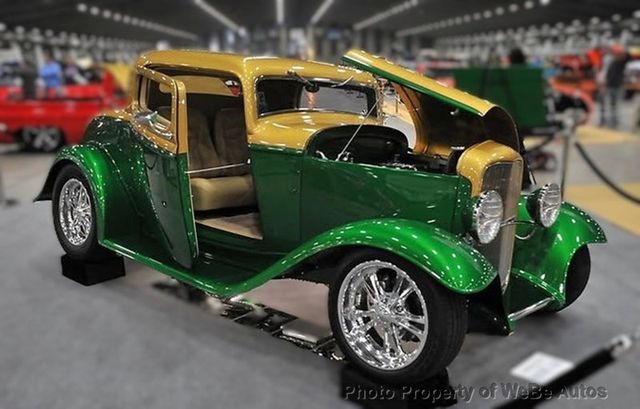
1932 Ford 3-Window Coupe For Sale
383 Stroker V8 * 700R4 Automatic * Outlaw Body * Wescott Frame * $120K+ Build
This 1932 Ford 3-Window Coupe is an exceptional custom street rod, professionally built with premium components, outstanding craftsmanship, and the perfect combination of traditional hot rod styling and modern driving comfort. Featuring an Outlaw fiberglass body, Wescott frame, powerful 383ci stroker V8, TCI 700R4 automatic transmission, and beautifully detailed chrome Jaguar rear suspension, this Ford represents an investment of more than $120,000. With just 1,540 miles since completion, this stunning coupe has been carefully maintained and presents in outstanding condition.
The owner describes the paint as flawless, with no scratches, rattles, squeaks, or overheating issues. Best of all, this isn't simply a showpiece. It was built to be driven and enjoyed, offering smooth road manners, ice-cold Vintage Air conditioning, modern electronics, and the unmistakable presence of a classic 1932 Ford hot rod.
383 Stroker V8 - Performance & Reliability
Under the hood is a beautifully detailed 383 cubic-inch Chevrolet small-block stroker V8, equipped with an impressive selection of performance components.
The engine combines traditional small-block horsepower with modern induction and ignition upgrades, delivering responsive acceleration and the unmistakable sound of an American V8. Engine & Performance Highlights:
383ci Chevrolet small-block stroker V8
Aluminum cylinder heads
Pete Jackson quiet gear drive
Edelbrock chrome intake manifold
Edelbrock AVS2 carburetor
MSD distributor
Ceramic-coated exhaust headers
Full stainless steel exhaust system with mufflers
Professionally detailed engine compartment
The ceramic-coated headers and stainless exhaust provide a clean appearance and a distinctive V8 exhaust note, while the Edelbrock induction system and MSD ignition contribute to dependable performance. The owner reports that the engine runs exceptionally well, maintains proper operating temperatures, and delivers excellent performance.
TCI 700R4 Automatic & Chrome Jaguar Rear End
Backing the 383 V8 is a TCI 700R4 4-speed automatic overdrive transmission, paired with a matching TCI torque converter. The overdrive transmission makes this Ford particularly enjoyable for highway cruising, providing a more relaxed driving experience than a traditional three-speed automatic. Power is transferred through a beautifully detailed chrome Jaguar rear suspension assembly with 3.70 gears.
Drivetrain Highlights:
TCI 700R4 automatic overdrive transmission
TCI torque converter
Chrome Jaguar rear suspension
3.70 rear gearing
Rack-and-pinion steering
Smooth, responsive road manners
The combination of a powerful stroker V8, automatic overdrive, and 3.70 rear gears provides an excellent balance of acceleration and cruising capability. Premium Chassis, Suspension & Wilwood Brakes
This coupe was constructed using a Wescott frame, providing a strong foundation for the entire build. Up front, a Heidts Superide independent suspension system delivers improved ride quality and handling while maintaining the classic proportions of a traditional 1932 Ford.
Braking performance is equally impressive, thanks to polished Wilwood disc brakes at all four corners. Chassis & Suspension Highlights:
Wescott frame
Heidts Superide independent front suspension
Chrome Jaguar rear suspension
Rack-and-pinion steering
Four-wheel Wilwood polished disc brakes
Functional parking brake
17-inch Foose custom wheels
The polished brake components, chrome rear suspension, and premium chassis hardware reflect the attention to detail invested throughout this build. Classic 1932 Ford Styling & Exceptional Finish
The iconic 1932 Ford 3-window coupe remains one of the most recognizable and desirable body styles in hot rod history.
This example features a beautifully finished Outlaw body, with carefully fitted panels, exceptional paintwork, and the timeless proportions that make these coupes so appealing. The owner reports that the exterior is virtually flawless, with no visible scratches and excellent overall fit and finish. One particularly impressive detail is the operation of the doors, which reportedly close smoothly with just the gentle pressure of a single finger.
Exterior & Custom Features:
Outlaw 1932 Ford 3-window coupe body
Beautiful, high-quality paint finish
Excellent panel fit and alignment
17-inch Foose wheels
Power-operated doors
Remote-operated door functions
Power-operated windows
Remote window operation
Power trunk
Power windshield wipers
Emergency cable-operated door entry
Emergency cable-operated trunk entry
The combination of traditional styling and thoughtfully integrated modern conveniences makes this coupe as practical as it is visually impressive. Custom Leather Interior & Modern Comfort
Inside, this Ford features a beautifully appointed custom leather interior, complemented by a matching leather-trimmed trunk. The cabin combines the timeless atmosphere of a traditional street rod with the comfort and convenience expected from a premium modern build.
Interior & Convenience Highlights:
Custom leather upholstery
Leather-trimmed trunk
Vintage Air air conditioning and heating
Dakota Digital gauges
Dakota Digital electronic components
Kenwood AM/FM/Satellite/CD/USB stereo system
Key-fob remote control
Power windows
Remote window operation
Power-operated doors
Power trunk
Power windshield wipers
Remote battery disconnect
Functional emergency brake
The Vintage Air heating and air conditioning system makes this coupe comfortable in a variety of driving conditions, while the Kenwood stereo provides modern entertainment options. The Dakota Digital instrumentation offers accurate, easy-to-read information while complementing the car's custom interior. Thoughtful details such as the remote battery disconnect and emergency cable releases for the doors and trunk demonstrate the planning that went into making this Ford convenient and enjoyable to own.
More Than $120,000 Invested - Documented Build
This exceptional 1932 Ford represents a reported investment of more than $120,000, reflecting the quality of the components, craftsmanship, and attention to detail throughout the vehicle. Even more importantly, the car comes with a complete build binder, providing documentation of the project and its construction. With just 1,540 miles since the build, this coupe has seen limited use while remaining ready for the open road.
The owner reports that everything operates as intended, including the power accessories, air conditioning, heating, and stereo. The car is described as driving smoothly, without rattles, squeaks, or overheating concerns. A Beautifully Built Street Rod Ready to Enjoy
Finding a 1932 Ford 3-window coupe with this level of craftsmanship, documentation, and premium equipment is a special opportunity.
This example offers the ideal combination of traditional hot rod character and modern convenience, featuring a 383 stroker V8, TCI overdrive automatic, chrome Jaguar rear suspension, Heidts independent front suspension, four-wheel Wilwood disc brakes, Vintage Air climate control, Dakota Digital instrumentation, and luxurious leather upholstery. Unlike street rods built primarily for display, this Ford was designed to be enjoyed on the road. Simply get in, turn the key, switch on the air conditioning, turn up the stereo, and head out for a cruise.
With its exceptional finish, low post-build mileage, extensive documentation, and reported $120,000-plus investment, this is a truly impressive custom 1932 Ford Coupe. A spectacular 1932 Ford 3-Window Coupe with a powerful 383 stroker V8, premium Wescott and Heidts chassis components, chrome Jaguar rear suspension, polished Wilwood brakes, custom leather interior, and all the modern comforts needed to enjoy every mile. A beautifully executed $120,000-plus street rod that's ready to drive, show, and enjoy!
For Sale By Owner Located In Tampa, FL 33601
Take A L@@K At The Video On YouTube:
Trim: Coupe For Sale
Options: Premium Sound System, Leather Interior Surface
Classic Ford Coupe Buyer's Guide
Ford Hot Rod Market Overview
Based on 21 Ford Hot Rod listings currently on ClassicCarsArena.com
Selling a classic? Here's how
Fees, audience and photo limits compared: sell my classic car .
Classic Ford Coupe Buyer's Guide
The Ford Coupe, particularly the iconic 1932-1934 cars and the post-war 1946-1948 cars, represents the foundational platform of American hot rodding. The 1932 Ford with its flathead V8 launched a tradition that defined American performance culture for the next ninety years, and the 1933-1934 cars refined the formula. Period-correct flathead V8 power, chopped tops, channeled bodies, and traditional kustom kulture aesthetics define the genre. Whether you're hunting an original-condition Deuce coupe for restoration or a chopped-and-channeled period-correct hot rod from a recognized builder, the Ford coupe market is one of the most active and most actively-judged segments in the entire American collector hobby. The Goodguys circuit, the Grand National Roadster Show, and SEMA Battle of the Builders all maintain build-quality standards that separate the legitimate traditional builds from the hobby work.
What to Check Before Buying
Common Issues
What to Look For
Price Guide
Did You Know?
1932 Ford Hot Rod
Contact Seller

Car alert
Get an email when a 1927-1937 Ford Hot Rod is listed
At most one email a day. Stop anytime with one click.
Nationwide consignment dealer
WeBe Autos lists vehicles from sellers across multiple states. The vehicle may not be at the dealer's address shown. Contact the dealer to confirm the vehicle's actual location before traveling.
Buying safely?
Read our scam-avoidance tips before paying →
Listing Actions
Browse by Era
Pre-War Classics for SaleAll 1932 Classics
Browse all 1932 Cars for SaleGet classic car alerts
Latest arrivals, newest deals, and discount coupons, straight to your inbox.
Selling your classic car?
Reach millions of classic car enthusiasts on the largest US classics marketplace.
Sell Your Car →Similar Listings


 United States
1915 Ford T Bucket
 United States
1915 Ford Model T
 United States
1917 Ford Model T
Contact Seller
Call this seller?
You're about to call WeBe Autos about the 1932 Ford Hot Rod.
+1 (631) 339-0399
Car alert
Get an email when a 1927-1937 Ford Hot Rod is listed
At most one email a day. Stop anytime with one click.
Report this Ad
Help us keep the marketplace clean. Our moderation team reviews every report within 24 hours.