
1932 Ford Hot Rod
$149,995
Vehicle Details
Ford
Hot Rod
1932
100 miles
Other
Description
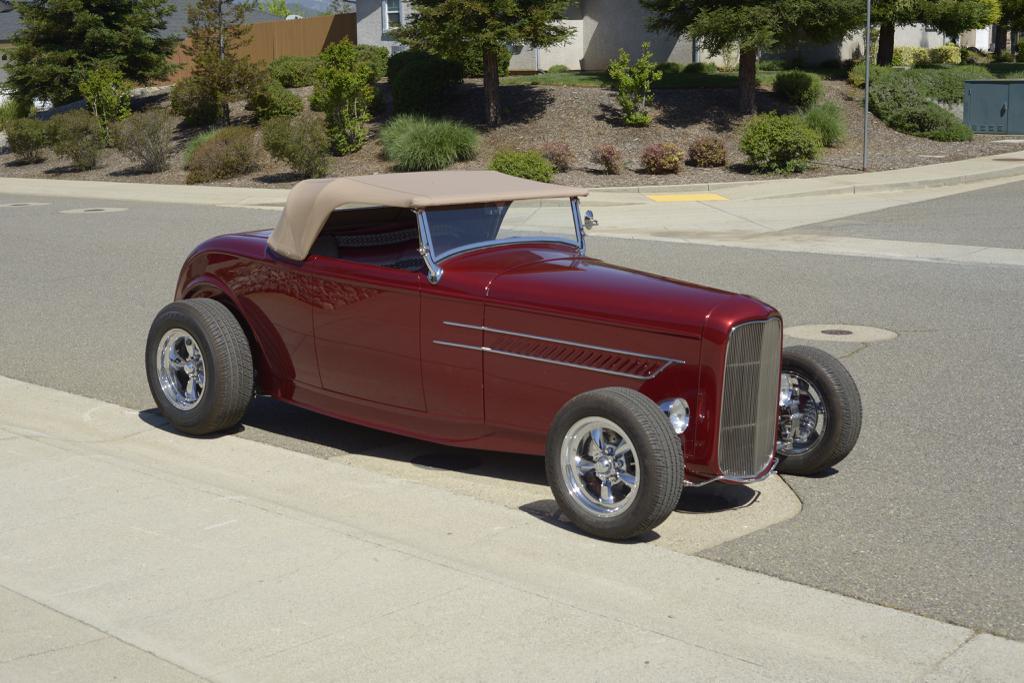
1932 Ford Roadster
• Brookville All-Steel Body
• Supercharged 383 V8
• Kugel Independent Suspension
• Exceptional Custom Build One-Owner Custom Build | Extensive Documentation | Less Than 100 Miles Since Completion | 517 HP Engine Specification Some automobiles are restored. Others are modified. And then there are automobiles that represent the culmination of one individual's vision, years of dedication, and an unwavering commitment to craftsmanship.
This remarkable 1932 Ford Roadster belongs in that final category. Offered by Platt Motors, this exceptional all-steel Brookville Roadster is the product of a highly personalized construction project undertaken by longtime automotive enthusiast Warren Hansen. Conceived as a tribute to traditional American hot rodding while incorporating sophisticated modern engineering, this vehicle represents a remarkable collaboration between its owner and several accomplished craftsmen.
With fewer than 100 miles reported since completion, over 200 construction photographs, detailed mechanical records, and an extraordinary level of finishing throughout, this Roadster presents a special opportunity for the discerning collector. The Inspiration and Construction The inspiration for this project came from Warren's brother, who owned a 1932 Ford three-window coupe powered by an Oldsmobile 302 V8. That automobile helped inspire Warren to create his own interpretation of one of America's most celebrated hot rods.
Rather than purchasing an existing completed vehicle, Warren elected to undertake an ambitious custom build from the ground up. The foundation began with a brand-new, all-steel Brookville Roadster body, personally acquired by Warren at the Los Angeles Roadster Show. Throughout the project, Warren remained actively involved in the design, fabrication, assembly, and countless decisions that ultimately shaped the finished automobile.
The project brought together several talented individuals: Bill Enderson: Technical consultation and project guidance. Dan Laughlin: Bodywork and paint. Steve White: Custom engine construction. Dave Tuttle: Fabrication and design.
Seann Kearney: Custom upholstery. Each contributed specialized expertise while Warren maintained personal oversight and participation throughout construction. The result is not simply a collection of aftermarket components but an individually conceived automobile reflecting its owner's vision and attention to detail.
Supercharged 383 Cubic-Inch Chevrolet V8 At the heart of this Roadster is a professionally constructed 383-cubic-inch Chevrolet small-block V8 assembled by Steve White. Beginning with a new GM four-bolt-main 350 engine block, the engine was developed into a 383-cubic-inch stroker featuring carefully selected performance components. Its most recognizable feature is the Weiand 177-cubic-inch Roots-style supercharger, selected in part for its traditional appearance reminiscent of the legendary GMC 4-71 blowers associated with early American hot rodding.
Documented engine specifications include: 383-cubic-inch Chevrolet V8 New GM four-bolt-main engine block 4.030-inch cylinder bore 3.750-inch crankshaft stroke 8.5:1 compression ratio Weiand 177 Roots-style supercharger Air Flow Research 195 Street cylinder heads 2.050-inch intake valves 1.600-inch exhaust valves Hydraulic roller camshaft 0.510-inch intake and exhaust valve lift Performance rotating assembly Custom-fabricated engine components 91-octane gasoline requirement The accompanying engine documentation includes detailed component specifications, cylinder-head airflow figures, camshaft specifications, performance calculations, and original engine-building invoices. The supplied engine performance calculations indicate a peak of 517 horsepower at 6,000 RPM and 501 lb-ft of torque at 4,500 RPM. These figures come from engine performance modeling documentation rather than a verified physical dynamometer test, an important distinction for serious collectors.
GM 700-R4 Automatic Transmission Power is transmitted through a GM 700-R4 four-speed automatic overdrive transmission built by RTS Transmission. The transmission combines the convenience of an automatic with the advantages of overdrive gearing, making it a thoughtful choice for a high-performance street rod. Supporting documentation includes information relating to the Lokar transmission kickdown system and related hardware.
Kugel Chassis and Independent Suspension Beneath the traditional 1932 Ford body lies a sophisticated, fully boxed Kugel chassis. Rather than utilizing the conventional solid-axle arrangement found beneath many traditional hot rods, this Roadster incorporates independent suspension at both ends. The chassis features: Fully boxed Kugel frame Kugel independent front suspension Kugel independent rear suspension Adjustable coilover suspension Four-wheel disc brakes Inboard-mounted rear disc brakes Extensively polished suspension components Custom fabrication and detailed chassis finishing The independent rear suspension is particularly noteworthy, incorporating an elegantly engineered arrangement of suspension arms, coilovers, and inboard disc brakes.
The front suspension receives equally impressive attention, with beautifully finished control arms, exposed coilovers, and polished components. Photographs taken beneath the automobile reveal an extraordinary level of detail, extending to the painted floor panels, suspension mounting points, structural components, and polished hardware. This is an automobile that deserves to be viewed from underneath as well as above.
Exterior and Paintwork The all-steel Brookville Roadster body was professionally finished by Dan Laughlin. Warren selected a color from the 2012 Lincoln paint palette, producing a sophisticated finish that complements the Roadster's traditional styling and extensive brightwork. The body retains the unmistakable proportions that made the 1932 Ford one of the most influential automobiles in American hot rod history.
Its exposed suspension components, traditional Roadster silhouette, and supercharged engine create a compelling combination of classic appearance and modern mechanical engineering. The seller has disclosed some paint damage, which will be documented for prospective buyers. Interior and Custom Upholstery The interior was completed by Seann Kearney, complementing the exterior presentation and overall character of the build.
Like the rest of the automobile, the interior reflects an emphasis on thoughtful design and craftsmanship rather than unnecessary ornamentation. Custom electrical work beneath the dashboard represents another example of the attention devoted to components and systems that are not immediately apparent. Extensive Build Documentation One of the most compelling aspects of this Roadster is the accompanying documentation.
Warren carefully preserved an extensive collection of construction photographs, mechanical specifications, invoices, parts records, and installation literature. The collection includes more than 200 detailed build photographs illustrating various stages of the vehicle's construction. Documentation includes: Photographs of the body and chassis construction Engine specifications and component records Engine-building invoices Cylinder-head airflow data Camshaft specifications Engine performance modeling reports and graphs Transmission component literature Suspension and undercarriage photographs Additional installation and technical documentation For collectors who appreciate understanding not only what was built but how it was constructed, these records add meaningful depth to the vehicle's history.
Ownership, Mileage, and Condition This Roadster represents a single individual's vision from its initial conception through completion. Warren has remained the owner throughout the project, personally participating in its construction and overseeing the work of the various craftsmen involved. According to the owner, the automobile has accumulated fewer than 100 miles since completion.
It has not yet been exhibited at major automotive shows or featured in publications, leaving opportunities for its next caretaker to introduce the vehicle to the broader hot rod community. The automobile is represented as a 1932 Ford and is currently titled as such. As with any individually constructed automobile, prospective buyers are encouraged to review the documentation, inspect the vehicle, and satisfy themselves regarding its specifications and condition.
A Personal Achievement When asked what he was most proud of after the years of planning, effort, and personal involvement, Warren offered a simple response: – It's the best project I've ever undertaken and it is a joy to look at." That statement perhaps captures the spirit of this Roadster better than any list of specifications. This was not an automobile assembled for quick resale. It was built to fulfill a personal ambition, bringing together traditional styling, thoughtful engineering, talented craftsmen, and the owner's own considerable involvement.
Offered by Platt Motors Platt Motors is proud to represent this extraordinary 1932 Ford Roadster. Having represented classic and collector automobiles for many years, we recognize that certain vehicles stand apart not simply because of their appearance or mechanical specifications, but because of the individuals, dedication, and craftsmanship behind their creation. We believe this Roadster is among the most significant custom-built automobiles we have had the privilege of representing.
Interested collectors are invited to contact Platt Motors for additional information, photographs, documentation, and inspection arrangements. Nationwide enclosed transportation can be arranged.
Classic Ford Coupe Buyer's Guide
Ford Hot Rod Market Overview
Based on 26 Ford Hot Rod listings currently on ClassicCarsArena.com
Selling a classic? Here's how
Fees, audience and photo limits compared: the best sites to sell a classic car .
Classic Ford Coupe Buyer's Guide
The Ford Coupe, particularly the iconic 1932-1934 cars and the post-war 1946-1948 cars, represents the foundational platform of American hot rodding. The 1932 Ford with its flathead V8 launched a tradition that defined American performance culture for the next ninety years, and the 1933-1934 cars refined the formula. Period-correct flathead V8 power, chopped tops, channeled bodies, and traditional kustom kulture aesthetics define the genre. Whether you're hunting an original-condition Deuce coupe for restoration or a chopped-and-channeled period-correct hot rod from a recognized builder, the Ford coupe market is one of the most active and most actively-judged segments in the entire American collector hobby. The Goodguys circuit, the Grand National Roadster Show, and SEMA Battle of the Builders all maintain build-quality standards that separate the legitimate traditional builds from the hobby work.
What to Check Before Buying
Common Issues
What to Look For
Price Guide
Did You Know?
1932 Ford Hot Rod
Contact Seller
Listed by dealer
Car alert
Get an email when a 1927-1937 Ford Hot Rod is listed
At most one email a day. Stop anytime with one click.
Buying safely?
Read our scam-avoidance tips before paying →
Listing Actions
More in this area
Browse by Era
Pre-War Classics for SaleAll 1932 Classics
Browse all 1932 Cars for SaleGet classic car alerts
Latest arrivals, newest deals, and discount coupons, straight to your inbox.
Selling your classic car?
Reach millions of classic car enthusiasts on the largest US classics marketplace.
Sell Your Car →Similar Listings


 United States
1915 Ford T Bucket
 United States
1915 Ford Model T

Contact Seller
Call this seller?
You're about to call Platt Motors about the 1932 Ford Hot Rod.
+1 (707) 599-9448
Car alert
Get an email when a 1927-1937 Ford Hot Rod is listed
At most one email a day. Stop anytime with one click.
Report this Ad
Help us keep the marketplace clean. Our moderation team reviews every report within 24 hours.