
Pontiac didn't just restyle the GTO for 1968. It restyled the entire A-body platform, and the GTO happened to be the flagship that carried the new design language first into the public eye. Understanding what changed under that Endura nose tells you as much about Chevelle, Skylark, and Cutlass engineering decisions that same year as it does about the GTO itself, because Pontiac's design studio work rippled across the whole General Motors A-body family in ways that don't get enough credit outside the Pontiac-specific literature.
Car Features
7 min read
How the 1968 Restyle Set the Template for the Whole A-Body Line
Pontiac's 1968 GTO restyle wasn't just a new look for one car, it changed how the whole GM A-body platform was understood.
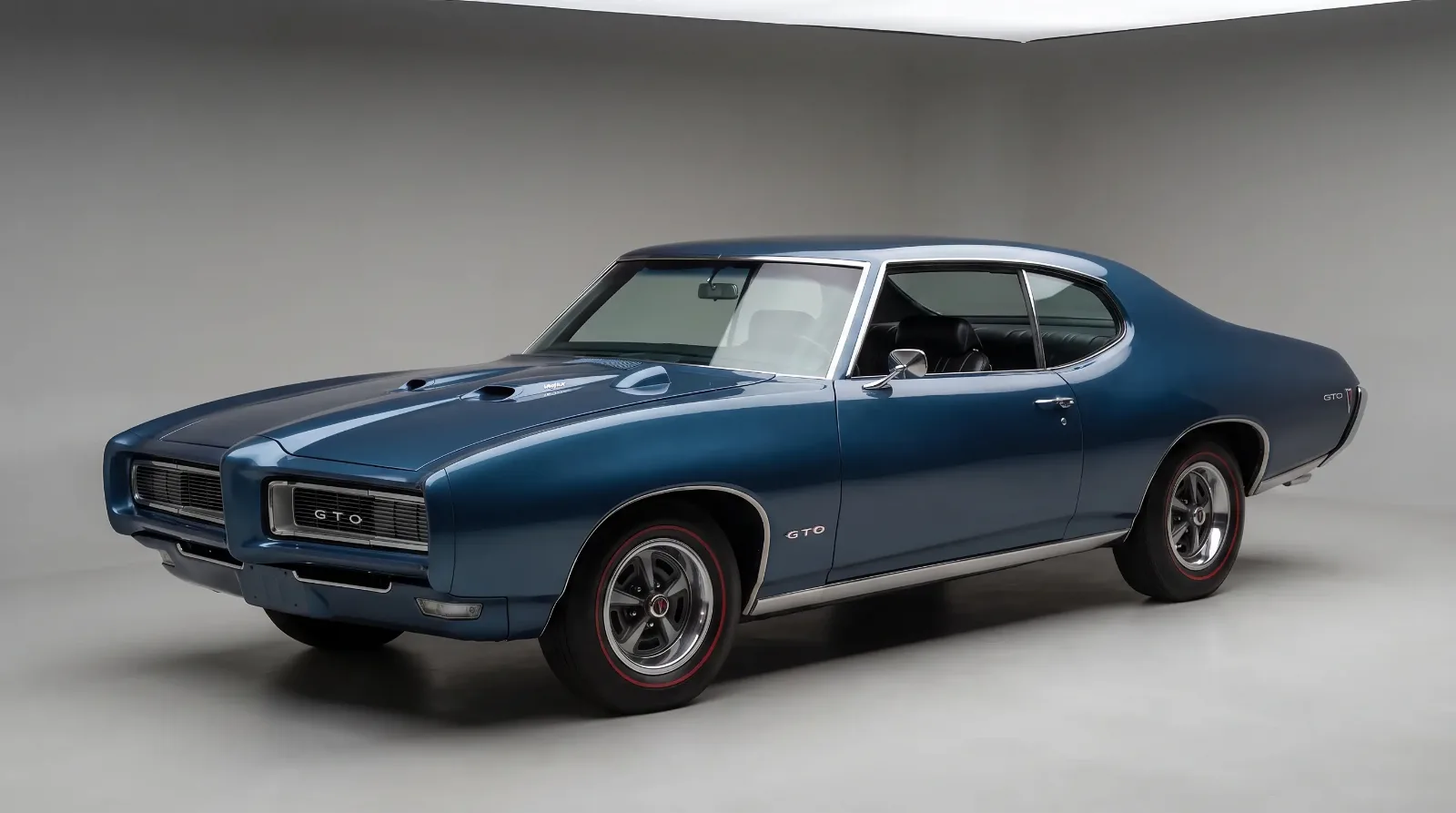
A new body on a familiar chassis
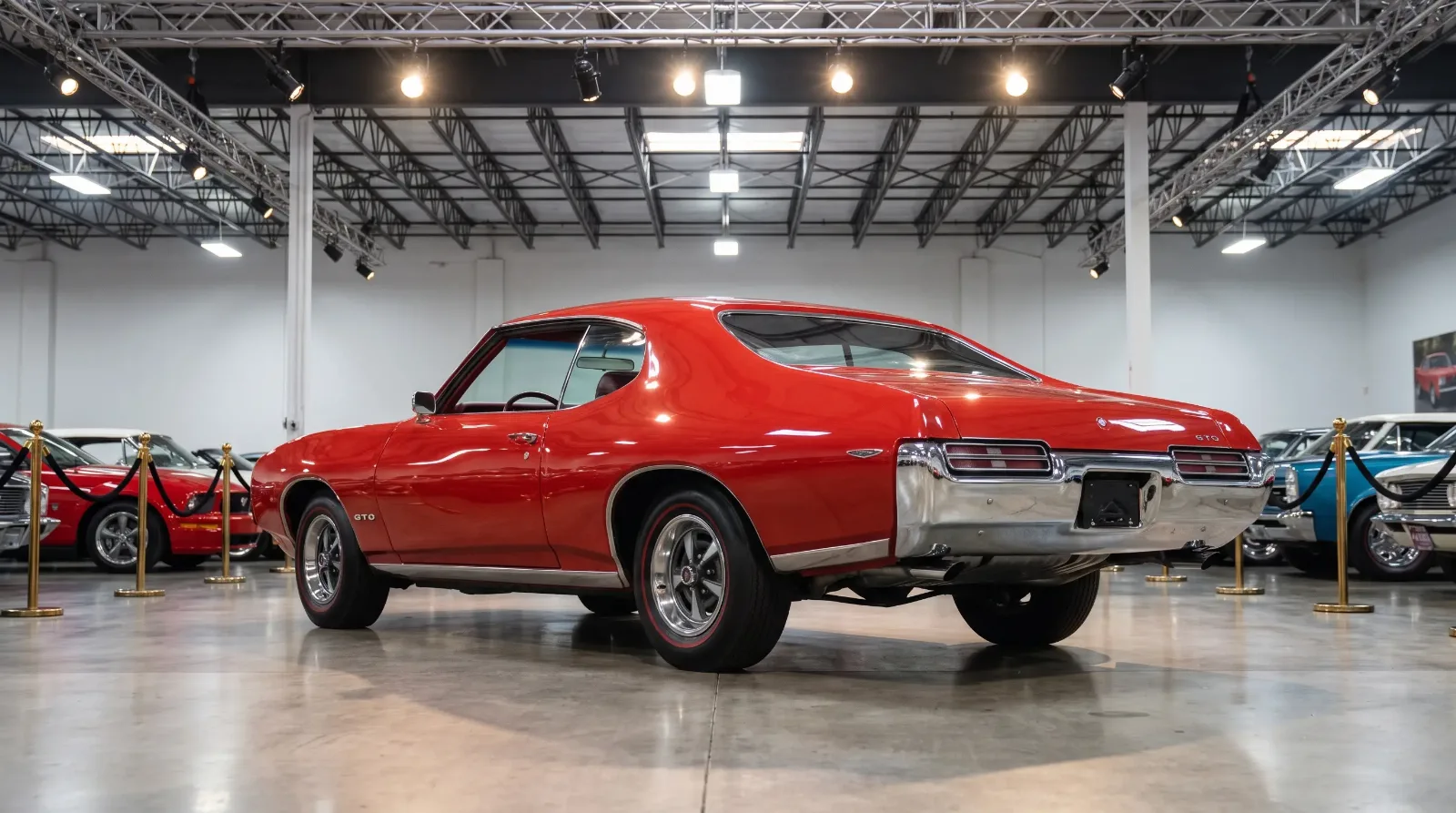
The 1968 GTO rode on a shortened wheelbase compared to the 1967 model, a change that applied across the two-door A-body lineup that year as GM moved to a semi-fastback profile with more pronounced wheel arches and a lower beltline. The A-body coupes shared their basic structure across divisions, meaning the sheet metal changes Pontiac's studio pushed through for the GTO's restyle had to work within engineering parameters shared with Chevrolet, Oldsmobile, and Buick's equivalent models. That's a detail that gets lost when people talk about the GTO restyle in isolation. It wasn't a Pontiac-only styling exercise. It was Pontiac's specific execution of a shared platform redesign, and Pontiac's execution, specifically the Endura nose, became the one everyone remembers.
The Endura nose as the defining decision
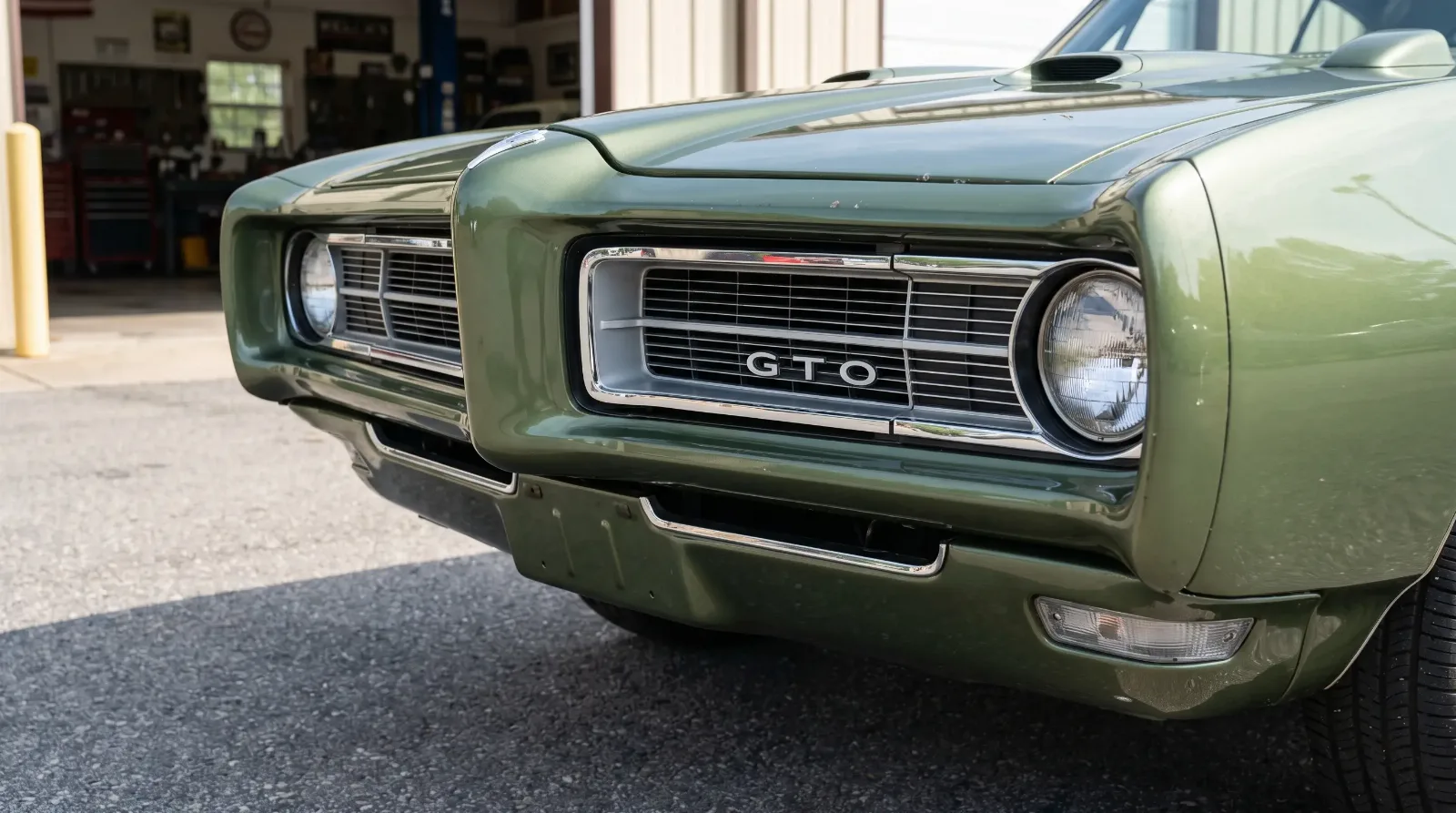
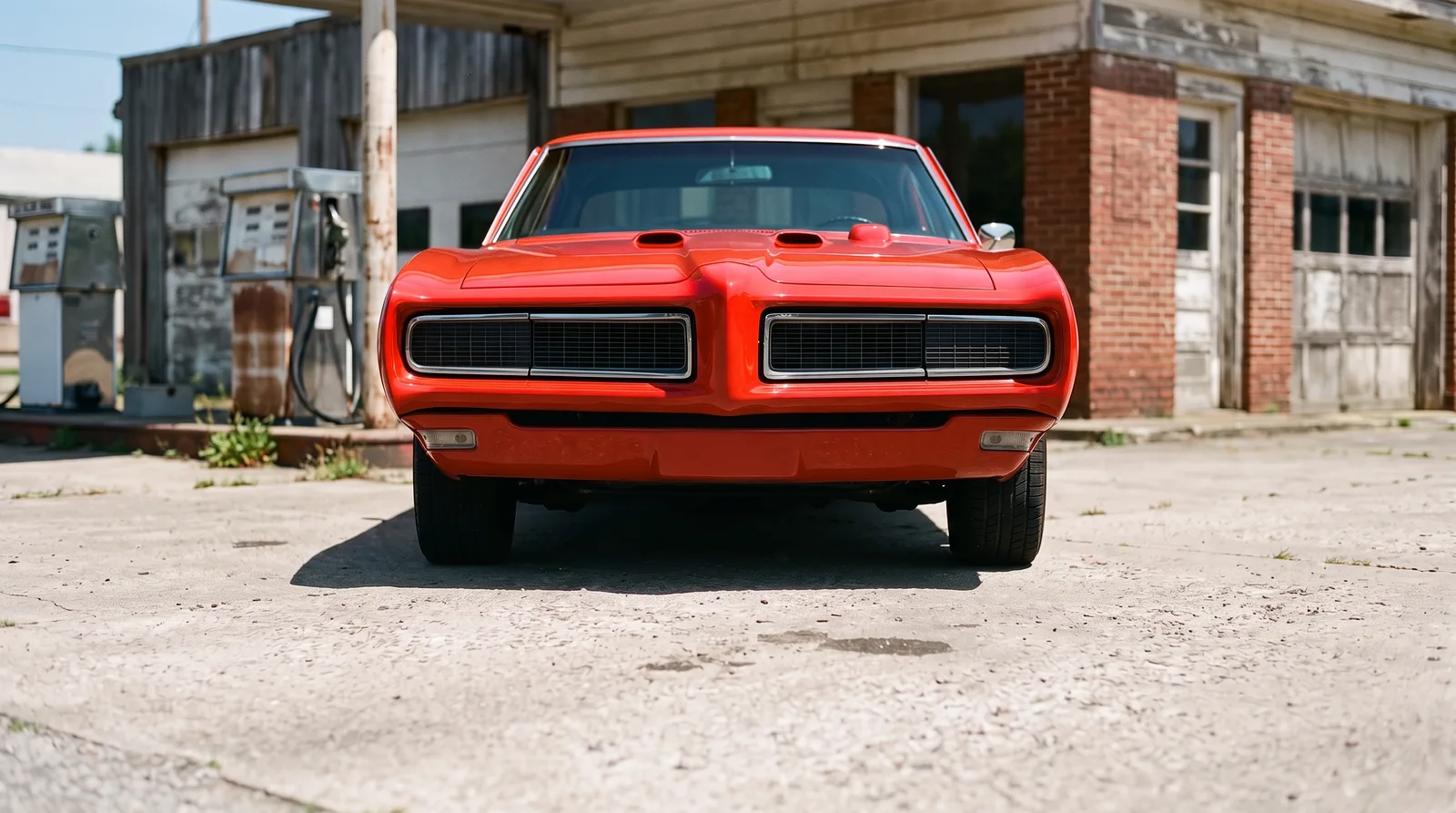
The Endura bumper, a color-matched, semi-flexible urethane front cap that replaced the traditional chrome bumper, was the single most consequential design decision Pontiac made for the hidden-headlight GTOs generation, and I use "hidden-headlight" loosely here because the 1968-69 GTO's headlights sit behind the Endura panel but aren't concealed by doors the way a true hidden-headlight car works. The material itself was new to American production cars at this scale, developed to flex on minor impact and return to shape rather than dent or crack the way chrome-over-steel bumpers did. Pontiac's engineering team ran extensive impact and temperature-cycling tests on Endura before committing to it as a production material, because a bumper that cracked in cold weather or sagged in summer heat would have been a public relations disaster on a flagship model.
What most people don't realize is how much the rest of GM's design studios watched the Endura nose's reception closely. It wasn't universally copied outright, but the idea of a body-colored, energy-absorbing front treatment influenced bumper design thinking across the industry through the early 1970s, well before federal 5-mph bumper standards forced every manufacturer's hand later in the decade. Pontiac got there first on a production car, voluntarily, as a styling and engineering statement rather than a regulatory requirement.
| Element | 1967 GTO | 1968 GTO |
|---|---|---|
| Wheelbase | 115.0 in | 112.0 in, shortened from prior year |
| Front bumper | Chrome, fixed | Endura color-matched urethane |
| Body style | Squared-off notchback profile | Semi-fastback, curved beltline |
| Platform status | Second-generation A-body | All-new A-body generation, shared across GM divisions |
What the studio actually changed panel by panel
Walk around a 1967 and a 1968 GTO side by side and the differences go well past the nose. The greenhouse dropped, the rear quarter panels picked up a pronounced kick-up over the wheel arch that hadn't existed on the previous body, and the rear bumper, while conventional chrome rather than Endura material, was reshaped to integrate with the new quarter panel line rather than sitting as a separate bolt-on element the way older designs treated it. The hood grew longer relative to the cabin, part of the long-hood-short-deck proportion that muscle car styling across the industry was chasing by the late 1960s, and Pontiac's execution of that proportion on the GTO became one of the more widely referenced examples of the look done well.
The interior received its own update to match, with a new dash architecture that housed the available Rally Gauge Cluster in a more integrated pod than the prior generation's layout, and door panels reshaped to follow the new lower beltline. None of these changes happened in isolation. Pontiac's studio treated the restyle as a complete package, exterior and interior working together, rather than a fresh skin over an unchanged cabin, which is part of why the 1968 GTO reads as such a coherent design even five decades later.
Why the shared platform matters for parts and originality
Because the GTO's 1968 restyle sits on a platform shared with Chevrolet's Chevelle, Oldsmobile's Cutlass, and Buick's Skylark, a lot of underlying structural and mechanical parts, floor pans, some suspension components, glass in certain configurations, interchange across those divisions even though the body panels and trim do not. That interchange is both a blessing and a curse for anyone restoring a GTO today. It means certain hard-to-find pieces can sometimes be sourced from a parts car of a different GM division, but it also means an inexperienced restorer or a dishonest seller can substitute a non-Pontiac-specific part and have it fit well enough that a casual inspection won't catch it.
I've examined enough of these cars for documentation purposes to know that the Endura nose itself, the fenders, the hood, and the interior trim are all Pontiac-specific and don't interchange with sibling divisions. Where you need to watch closer is underneath, on production numbers read on for how this shows up specifically in how surviving 1969 cars get documented and verified against their build sheets, because platform-sharing complicates authentication in ways a lot of buyers don't anticipate.
How the restyle changed the GTO's identity
The 1966-67 GTO had established the car as its own model, separate from the Tempest and LeMans option-package origins of 1964-65. The 1968 restyle went further: it gave the GTO a face that no other Pontiac, and arguably no other car on the road, shared. That distinctiveness was deliberate. Pontiac wanted the GTO to be instantly identifiable at a glance, separate from its A-body siblings even though the underlying architecture was common across the corporation. In that sense, the restyle wasn't just a styling refresh. It was a statement about what the GTO needed to be as competition in the muscle car segment intensified through the late 1960s.
"People ask me why the 1968 restyle matters so much to collectors today, more than some later, more powerful GTOs. It's because that body and that nose are the reason the car reads as unmistakably a GTO from fifty feet away, and Pontiac's design team knew exactly what they were building when they committed to it."
Tom Ramirez
The 1968 restyle is one of those inflection points in automotive design history that gets discussed narrowly, as a GTO story, when it's really a story about how one division's execution of a shared corporate platform became the version everyone remembers. Chevrolet, Oldsmobile, and Buick all built good-looking A-bodies that year. Pontiac built the one that changed how people thought bumpers could look, and that decision still defines how collectors and buyers identify these cars today.
Sources and notes
Related Reading
Have a
Pontiac GTO
for Sale?
Reach thousands of serious classic car collectors across the US.
Sell It Here →
Selling a classic? Here's how: the best sites to sell a classic car
Are You a Classic Car Dealer?
List your full inventory and connect with targeted classic car buyers.
Join as a Dealer →

About the author
Tom Ramirez
Corvette researcher and historian based in Bowling Green, Kentucky. Two decades documenting Corvette production history from original factory records.
Related Listings - Pontiac GTO




Comments
Be the first to comment on this article.