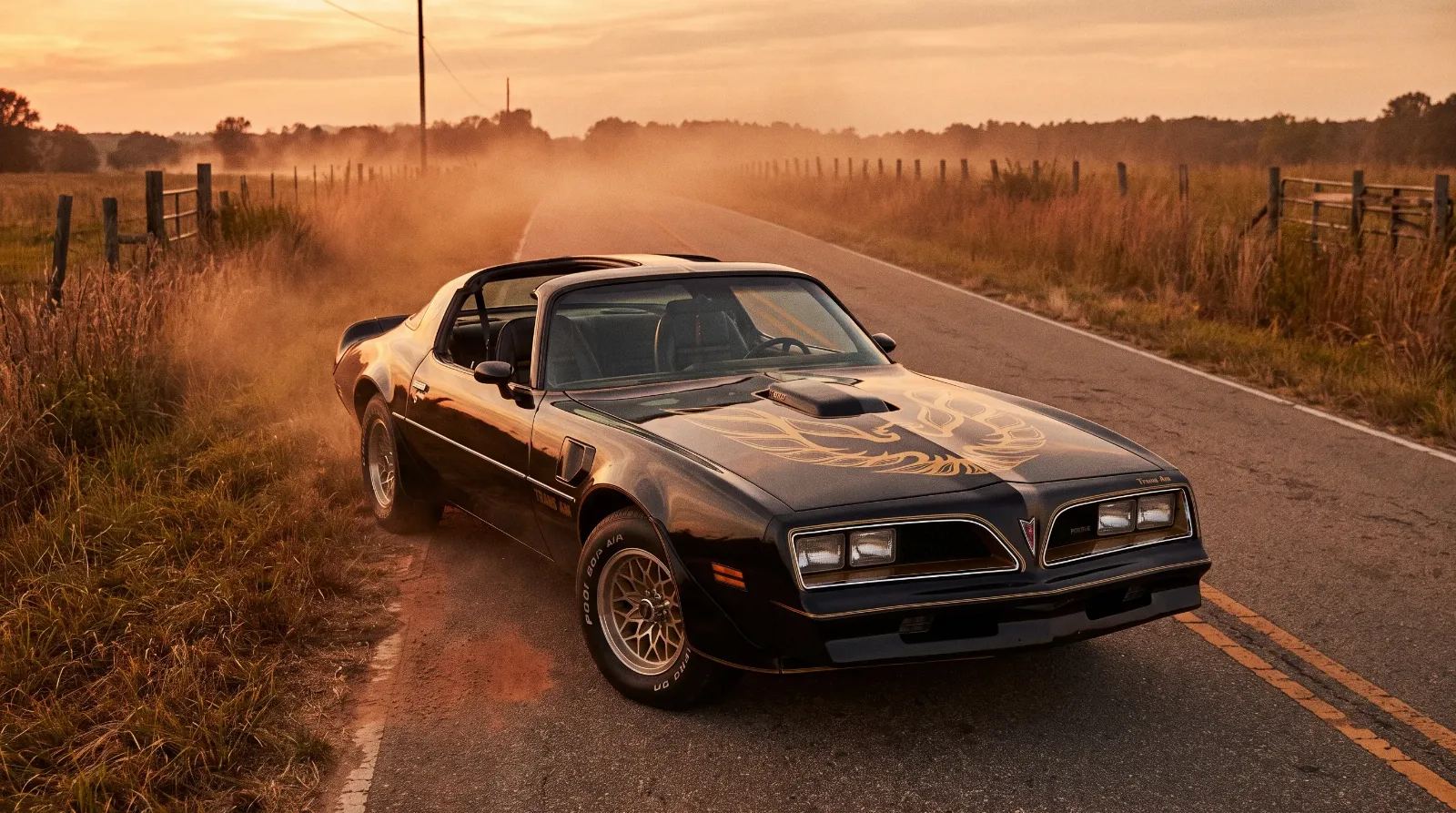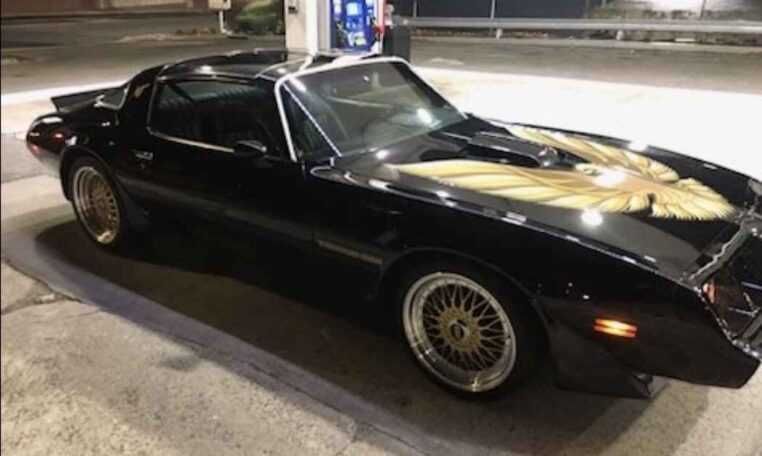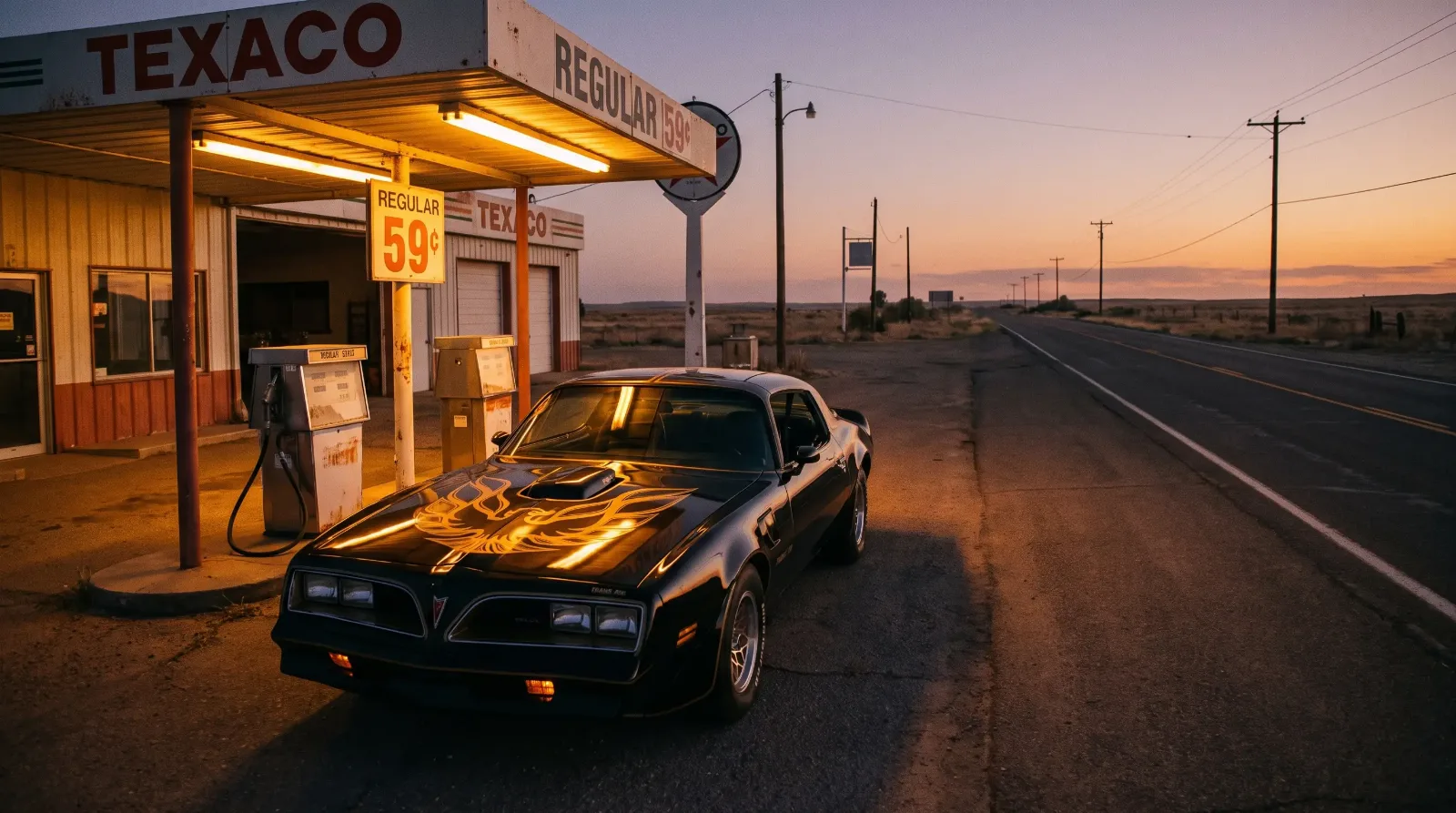
A black Trans Am with a screaming gold firebird on the hood pulls into a gas station outside Atlanta, and the kid pumping gas forgets what he's doing. That is not a scene from a movie. That is a story I have heard, in almost identical form, from at least a dozen people who grew up watching Burt Reynolds outrun Sheriff Buford T. Justice across two states in a car that Pontiac almost discontinued a few years earlier. The bandit cultural impact of "Smokey and the Bandit" is not a footnote in Firebird history. It is the reason most people under sixty know the name Trans Am at all.
A coupe that needed saving
By the mid 1970s, the Firebird was not exactly Pontiac's crown jewel. Emissions rules had gutted horsepower across the board, insurance companies had turned muscle cars into a rate-hike liability, and GM executives were quietly debating whether the whole platform was worth carrying into the next decade. The Trans Am trim existed, but it was a niche pick for buyers who wanted the look more than the numbers behind it.
Then a stunt coordinator named Hal Needham wrote a script about a bootlegger running Coors beer from Texarkana to Georgia, and he needed a car that looked fast standing still. He picked the 1977 Trans Am because it had the silhouette for it, not because Pontiac paid for the placement. There was no marketing deal in place when cameras started rolling. That detail matters, because it means the car earned its stardom on screen presence alone before anyone in Detroit thought to capitalize on it.
The chase that rewired a generation's taste
"Smokey and the Bandit" opened in the summer of 1977 and became the second highest grossing film of the year, trailing only "Star Wars." Audiences did not walk out talking about the plot, which is thin by design. They walked out talking about the car. The Trans Am's E-body stance, the shaker hood scoop, that enormous bird decal, all of it became instantly recognizable shorthand for a specific kind of American cool, the kind that outruns the law with a grin instead of a getaway plan.
Pontiac dealers noticed within weeks. Trans Am orders climbed through the back half of 1977 and kept climbing into 1978 and 1979, years when the car had no business selling as well as it did given what emissions-choked V8s were actually putting down. People were not buying the car for straight-line performance. They were buying a piece of a scene they had watched in a dark theater and wanted to drive home in.
What is easy to miss, decades later, is how counterintuitive the timing was. This was the same era that gave us the 400 cubic inch engines choked down to a fraction of their earlier output, the same era where a lot of enthusiasts assumed the muscle car was simply over. A movie about a bootlegger and a talking, screeching Trans Am arrived at exactly the moment the platform needed a reason to exist, and it gave Pontiac one that no ad campaign could have manufactured.
Why a movie prop outlasted its marketing budget
Part of the reason the bandit cultural impact has stuck around for nearly fifty years is that it never depended on Pontiac's own advertising. The company leaned into the association after the fact, sure, and later Trans Ams picked up special editions that nodded openly to the film. But the original spark came from a stunt coordinator's casting choice, not a boardroom decision. That gives the story a kind of authenticity that survives generational turnover in a way that a corporate tie-in usually does not.
There is also the simple fact that Burt Reynolds played the Bandit as likable, not villainous. He was breaking the law in the loosest possible sense, hauling beer across state lines before interstate beer distribution rules caught up with reality, and audiences rooted for him anyway. The car absorbed some of that charm by proximity. A Trans Am parked in a driveway started to read less like a muscle car with soft-era power and more like an invitation to a good time.
"I've talked to owners who bought their first Trans Am specifically because of that movie, and forty years later they still can't watch the opening chase scene without grinning. That is not nostalgia marketing working on them. That is a genuine memory of the first car that made them fall for this hobby."
— Patrick Walsh
What the sales numbers actually show
The clearest evidence of the film's pull is in Pontiac's own production figures. Trans Am output rose sharply in the years immediately following the film's release, at a moment when the broader muscle car category was contracting under emissions and insurance pressure. Special edition packages, including cars finished in the film's black and gold color combination, became some of the most requested configurations on Pontiac lots, and dealers reported customers walking in asking specifically for "the Bandit car" by name rather than by trim code.
| Year | Context | Firebird/Trans Am relevance |
|---|---|---|
| 1976 | Pre-release baseline | Trans Am a niche trim, modest volume |
| 1977 | Film released, summer | Orders climb through back half of year |
| 1978-1979 | Peak cultural momentum | Production climbed from about 93,000 units in 1978 to over 117,000 in 1979, the strongest Trans Am years of the decade |
| 1980 | Second sequel released | Association still driving showroom traffic |
You can read the Bandit story in full for the broader arc of how Hollywood and Pontiac's fortunes tangled together across that stretch of the late 1970s. It is a more complete picture than any single chase scene can tell on its own.
The legacy still idling at car shows
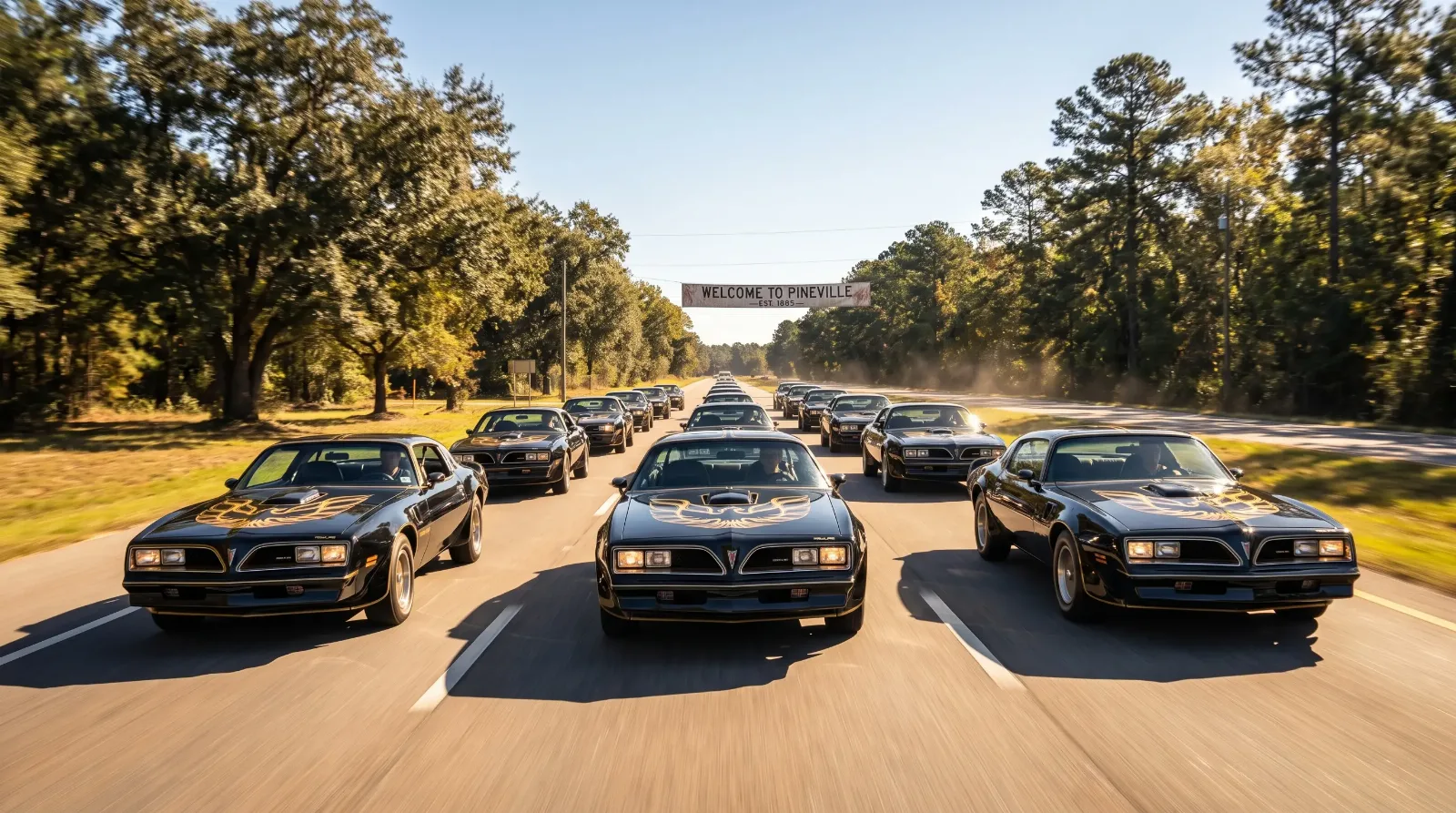
Walk any classic car show today and you will find at least one black and gold Trans Am with a bird decal on the hood, usually surrounded by a small crowd, usually with an owner happy to talk about the movie before he talks about the engine. That is unusual. Most muscle cars get remembered for what they could do on a drag strip or a dyno. The Trans Am gets remembered for a scene, a soundtrack cue, and a grin, and that emotional attachment has proven more durable than raw horsepower numbers ever could.
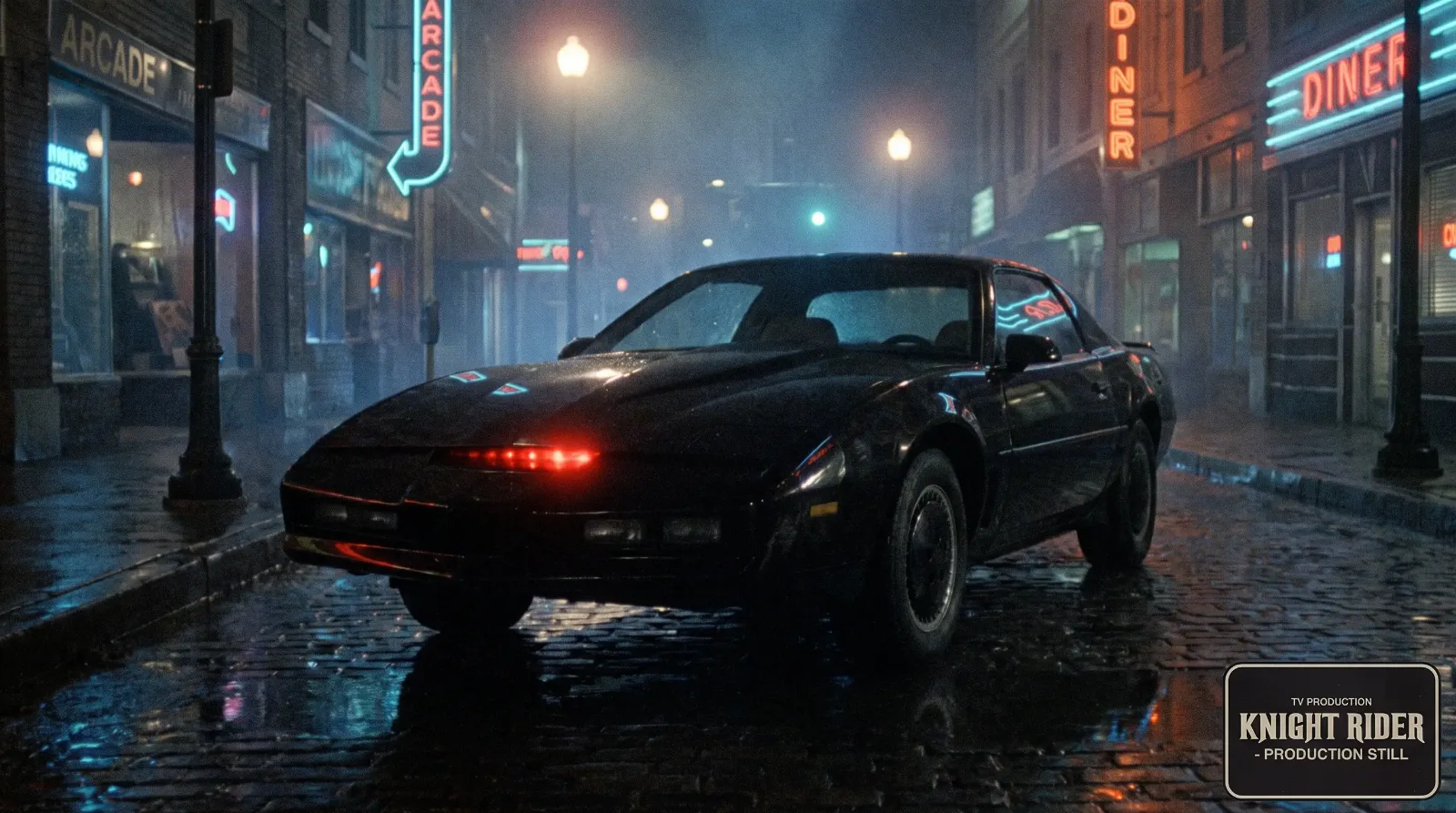
It also explains why the car's value held up reasonably well through decades when plenty of comparable muscle cars from the same emissions-strangled years struggled to find buyers. Collectors are not just paying for a Pontiac 400 or Oldsmobile 403 under the hood. They are paying for a piece of a specific American moment, one where a bootlegger, a sheriff, and a screaming chicken hood decal added up to something bigger than any single car spec could explain. For a deeper look at how that legend measures up against fiction from the same era, a related deep-dive walks through what the Bandit's Trans Am shares, and doesn't, with the small screen's most famous Firebird.
Sources and notes
- Wikipedia: Smokey and the Bandit
- Hitman's Pontiac Trans Am Site: Production Numbers
- Trans Am World: Firebird Production Numbers
- Raybuck: Bandit's Ride, 1977 Trans Am Legacy and Specs
- Classics on Autotrader: 1977 Trans Am, Star of Smokey and the Bandit
- Hagerty Media: Reynolds' Final Bandit Trans Am Roars Across the Auction Block