
Every kid who grew up with a television in the 1980s remembers a black Trans Am with a red scanner light sliding across its nose, talking in a calm British accent while it outran helicopters on cue. KITT was never meant to be a real car you could buy, but the show borrowed its shape from one that was: the Pontiac Trans Am, eventually badged in its most serious production form as the GTA. Putting kitt vs gta side by side is a useful exercise, because it shows exactly where Hollywood's imagination stopped and Pontiac's engineering actually began.
Car Features
6 min read
KITT vs the Real GTA
How the fictional supercomputer car from Knight Rider stacks up against the real Pontiac Trans Am GTA it was built from.
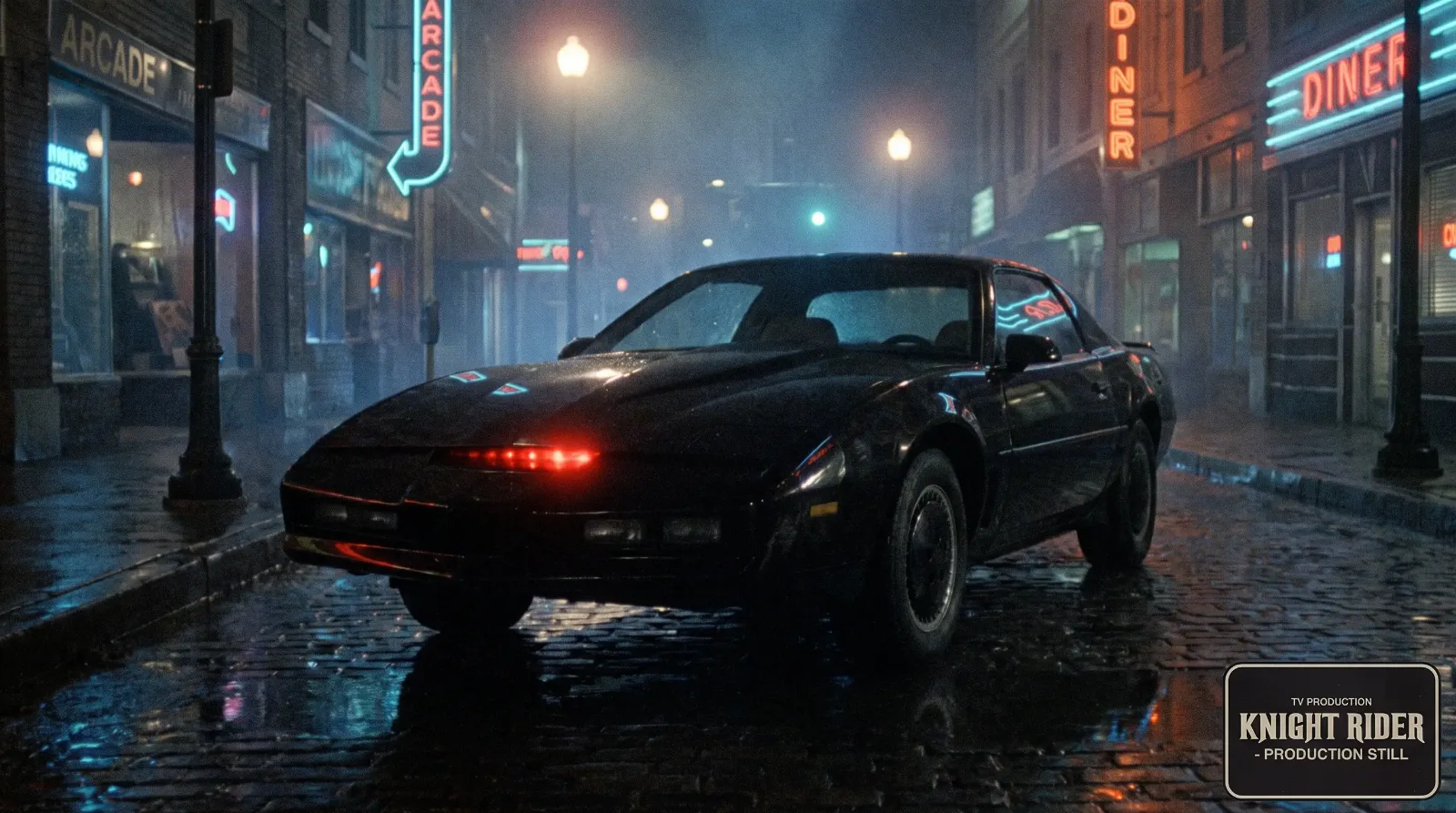
Two black Trans Ams, one fictional
"Knight Rider" premiered in 1982 and cast the Trans Am as a co-star with a name, a personality, and a voice actor. The show's producers picked the third-generation Firebird for the same reason Hal Needham had picked the second-generation car five years earlier for "Smokey and the Bandit": it looked fast standing still, and it photographed beautifully at night under studio lighting. But KITT was never presented as a stock car. The show built an entire mythology around molecular bonded shell armor, a turbine engine, and computer intelligence, none of which existed in any Pontiac parts catalog.
That distinction matters more than it sounds. A generation of viewers absorbed the idea that the Trans Am was somehow already a supercar in disguise, when the reality of what Pontiac was selling in showrooms during the same years was a much more grounded, if still respectable, performance coupe.
What KITT actually was under the fiberglass
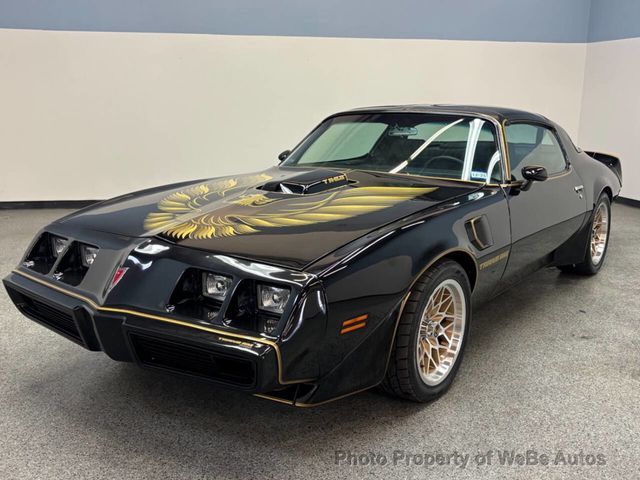
The hero cars used for filming were customized 1982 Pontiac Trans Ams, heavily modified with a widened fiberglass body kit, a distinctive scanner light bar across the nose, and a fabricated interior console built to look like a talking computer. Several cars were built for the production run across the show's four seasons, since stunt work and static shots demanded different builds. None of them contained a turbine engine or actual molecular armor, obviously. Under the show's fictional shell sat a conventional Pontiac drivetrain, dressed up for the camera.
The show's fictional premise did line up with one real detail: Pontiac's actual marketing in the early 1980s leaned hard into a technological, almost futuristic identity for the Trans Am, with digital dashboards and aerodynamic styling that felt genuinely ahead of its GM siblings. KITT exaggerated that image into science fiction, but the seed of "this car is smarter than the rest of the lineup" was already there in Pontiac's own advertising.
The real GTA: what you could actually buy
The Trans Am GTA arrived as a production trim in 1987, positioned as the top of the Firebird range, well after "Knight Rider" had already made the nameplate a household name. Buyers who wanted the closest real equivalent to KITT's silhouette could walk into a Pontiac dealer and order a GTA with a 5.7 liter V8, a WS6 handling package, and the kind of digital dash display that echoed the show's console aesthetic without any of the artificial intelligence.
What the GTA delivered was genuine, class-competitive performance for its era, not science fiction. It was quicker and better equipped than a base Trans Am, with real numbers that owners could verify on a dyno or a stopwatch rather than a script page. That grounding in actual, buildable engineering is exactly what separates it from its television counterpart.
| KITT (fictional) | Trans Am GTA (real, 1987+) | |
|---|---|---|
| Engine | Turbine, per the show's premise | 5.7 liter V8, roughly 210 to 235 hp depending on year |
| Body | Molecular bonded shell, self-repairing | Steel unibody with fiberglass front cladding |
| Special abilities | Artificial intelligence, turbo boost jump mode | WS6 handling package, digital instrument cluster |
| Top speed claim | 300 mph per the show's dialogue | A period-tested quarter mile in the low 15s at roughly 92 mph, well under half that claim |
Where fiction and fact diverge
The gap between KITT and the GTA is not really a knock on Pontiac. It is a reminder of how effectively television can reshape public memory of a real object. Ask a casual fan what a Trans Am could do in the 1980s and there is a decent chance they will describe something closer to KITT's abilities than to a genuine road test from a period car magazine. The GTA was a strong performer for its category and decade, but it was not bulletproof, it did not talk, and it certainly did not jump ravines on command.
"People come up to Trans Am owners at shows and half-jokingly ask where the turbo boost button is. The honest answer is that the closest thing Pontiac ever built to KITT's personality was an eight-track and later a talking dashboard warning system, and that's a charming gap between fiction and fact, not a disappointment."
Patrick Walsh
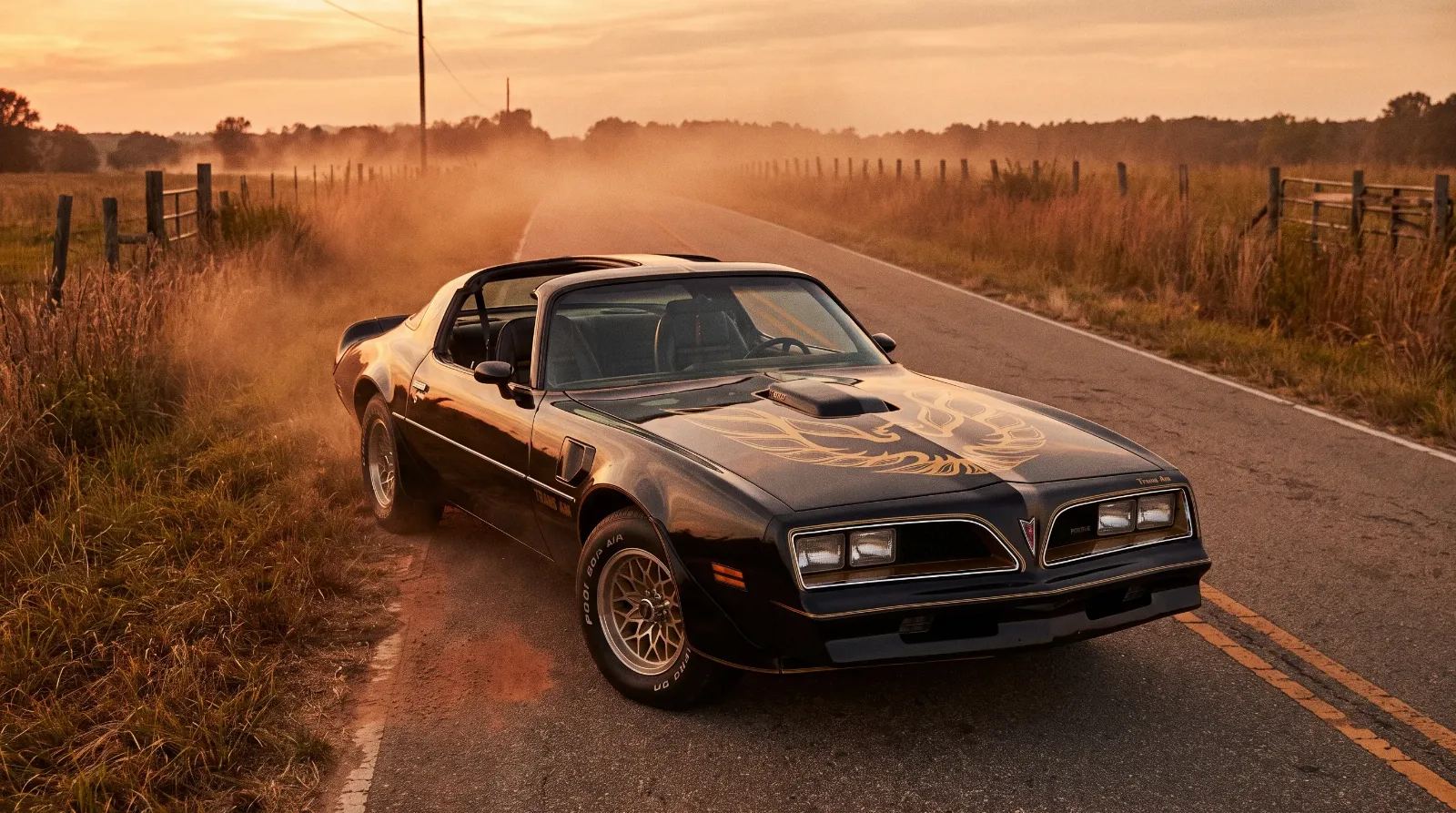
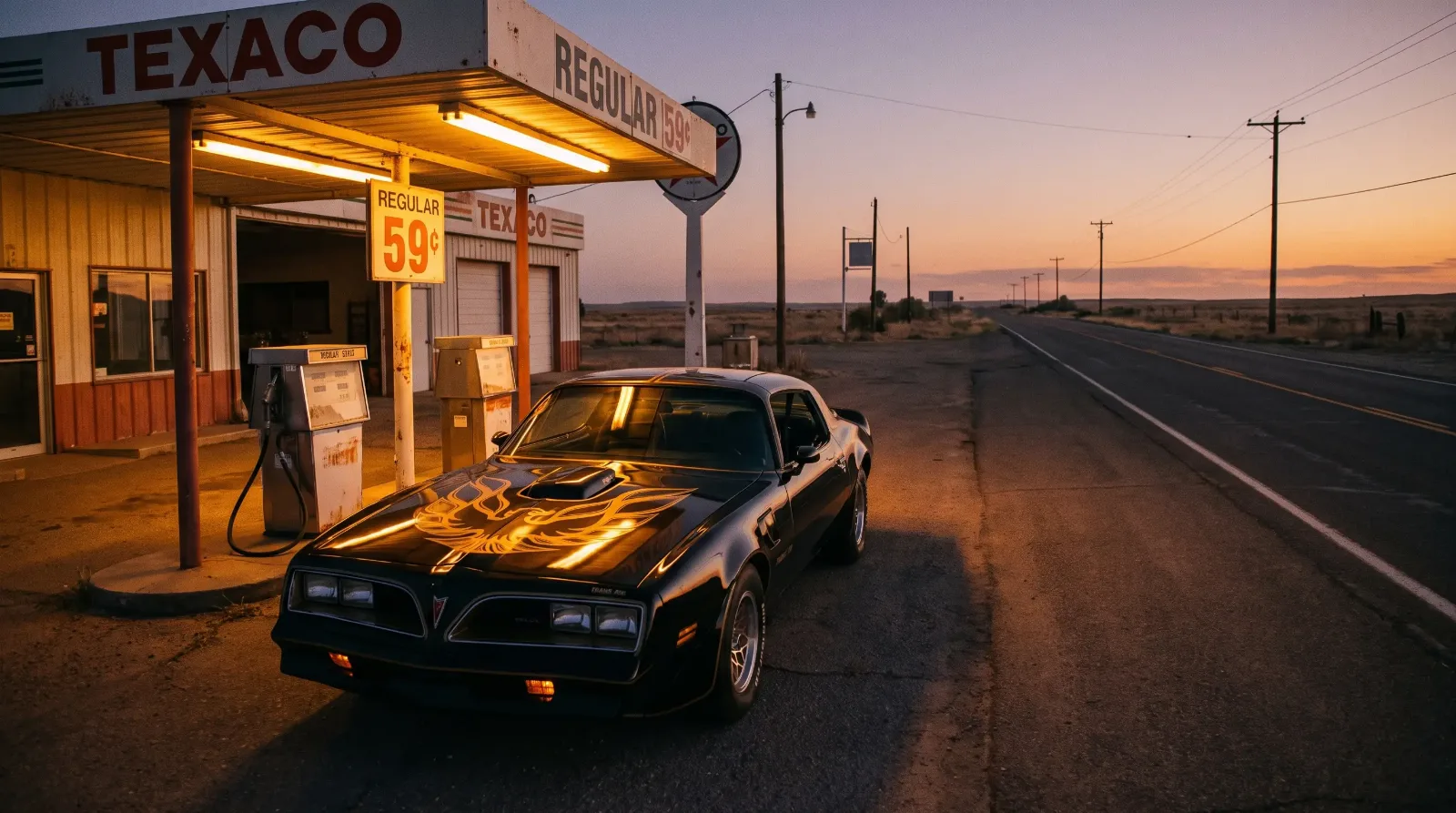
The comparison also says something about how Pontiac's marketing and Hollywood's imagination fed each other in a loop across the late 1970s and early 1980s. Read how Hollywood made it a star for the fuller arc of that relationship, starting several years before KITT ever hit the screen.
Which one wins today
For a collector deciding what to actually chase, the answer is simple: you cannot buy KITT, but you can buy a real GTA, and it remains one of the more satisfying third-generation Firebirds to own precisely because it does not pretend to be anything other than a well-built performance coupe from its era. Its value has held up well among enthusiasts who appreciate the WS6 package and the digital dash without needing a fictional backstory to justify the appeal.
Our Firebird feature covers the full production history of the nameplate if you want the complete picture beyond this single comparison, and if pop culture is your real interest here, keep reading the series for a look at the clubs and communities that grew up around cars like this one.
Sources and notes
- Hagerty Media: How Knight Rider's KITT became a Pontiac Trans Am
- Wikipedia: KITT
- MotoGallery: 1987-1992 Pontiac Firebird Trans Am GTA Specs and History
- Automobile-catalog: 1989 Pontiac Firebird Trans Am GTA 5.7 L V8 TPI specs
- GTA Source Page: 1987 GTA Road Test, Hot Rod Magazine, August 1987
- Wikipedia: Pontiac Firebird
Related Reading

Have a
Pontiac Firebird
for Sale?
Reach thousands of serious classic car collectors across the US.
Sell It Here →
Are You a Classic Car Dealer?
List your full inventory and connect with targeted classic car buyers.
Join as a Dealer →

About the author
Patrick Walsh
Automotive journalist covering classic car shows, events, and the enthusiast community across North America.
Related Listings - Pontiac Firebird
Comments
Be the first to comment on this article.