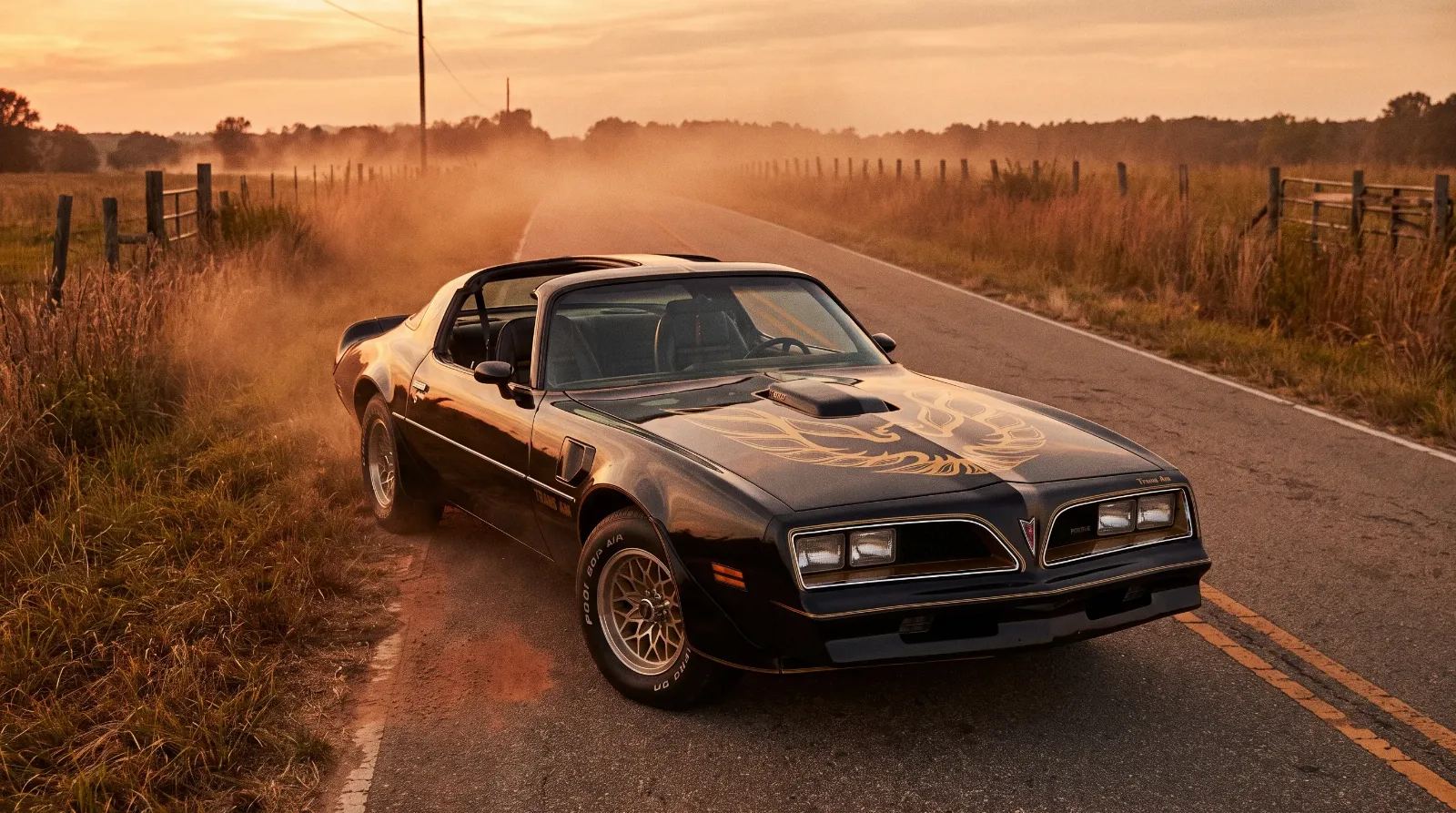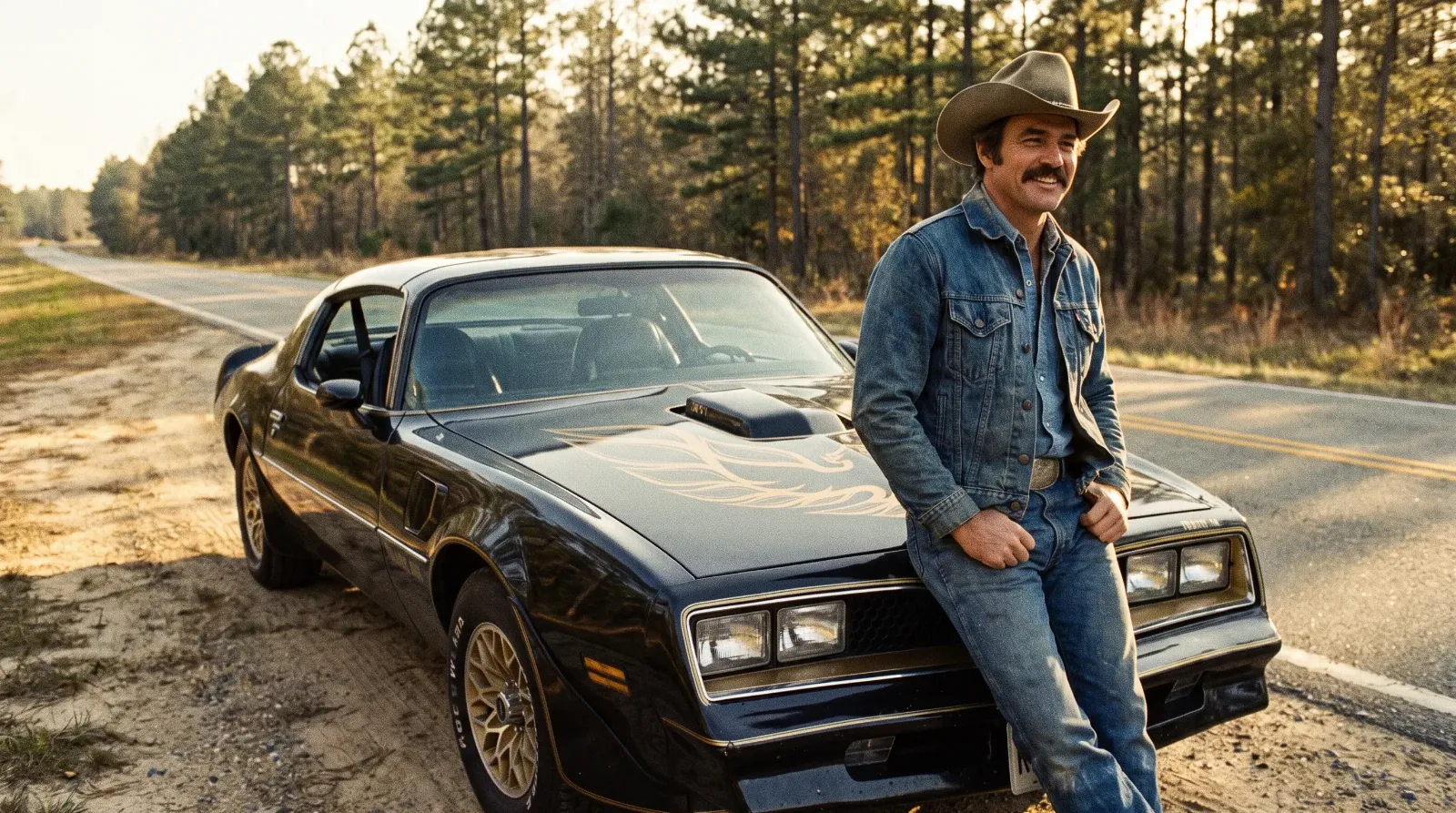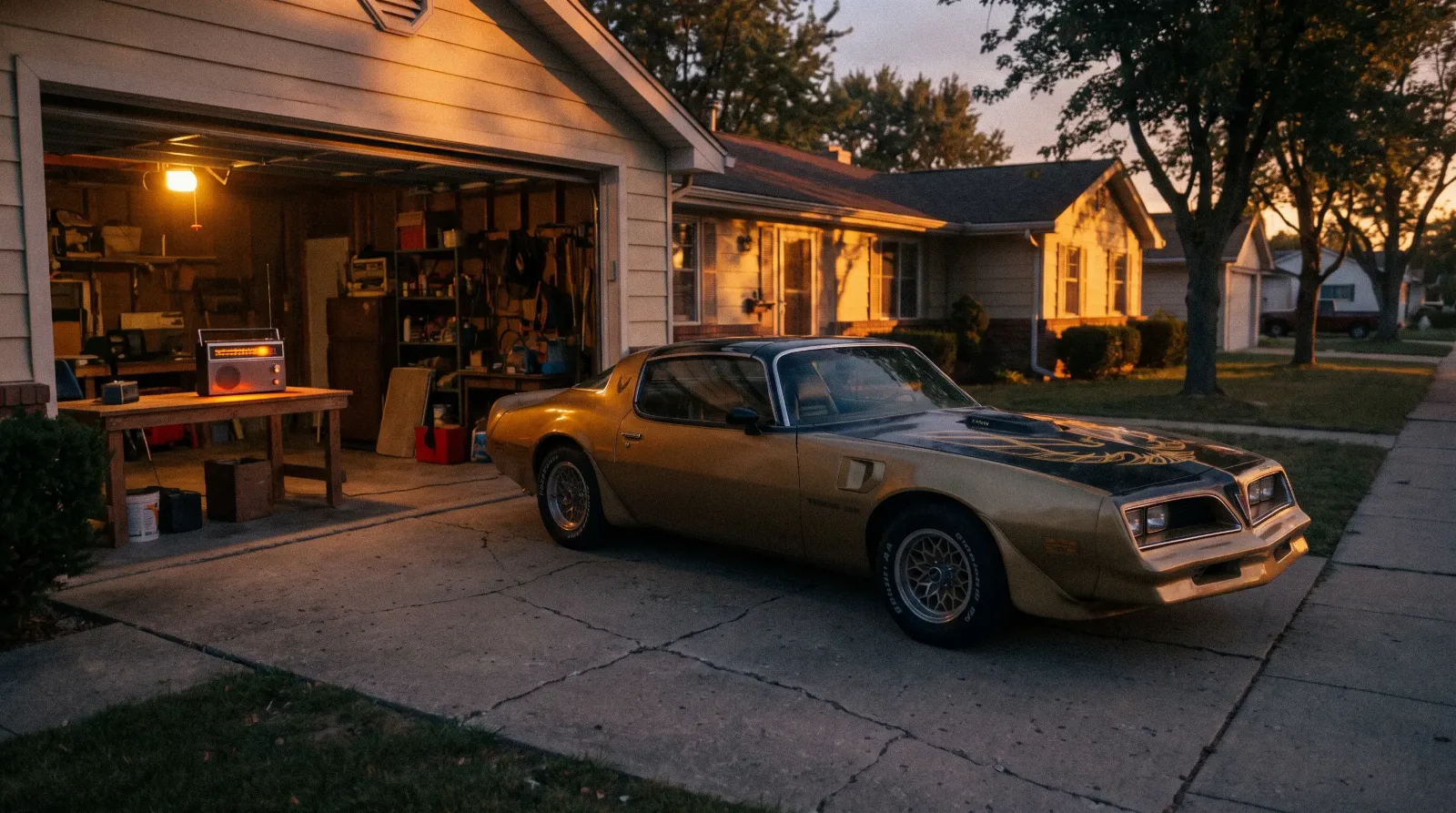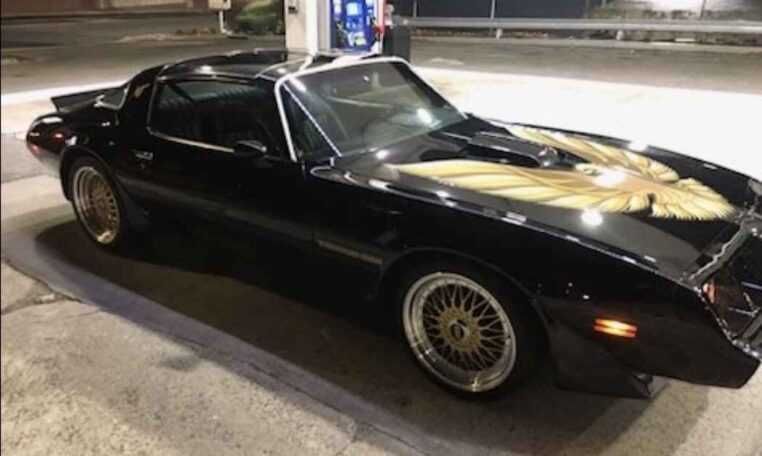
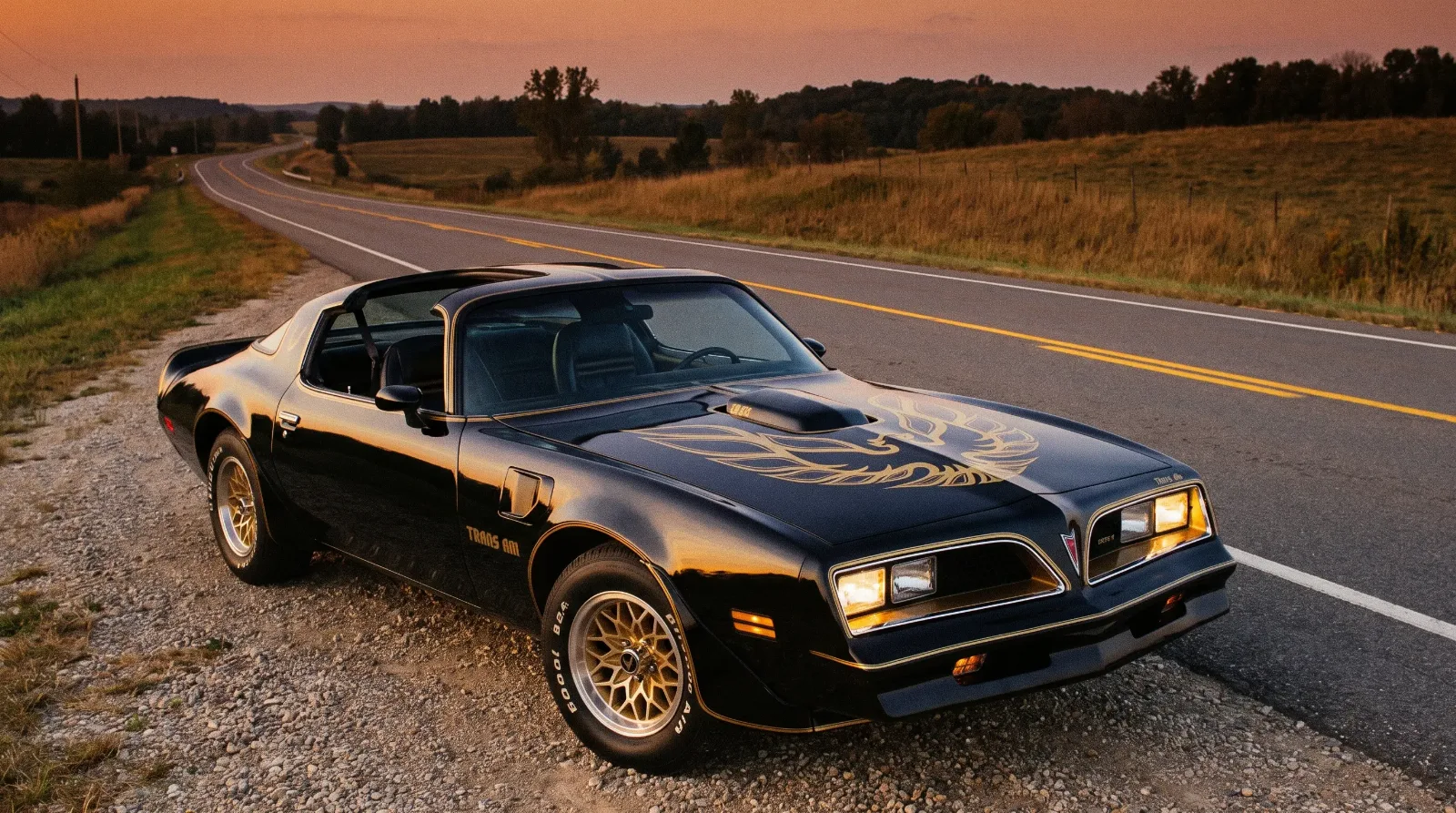
Hal Needham had never directed a movie before. He had spent three decades getting hit by cars, set on fire, and thrown off buildings as one of Hollywood's busiest stuntmen, and in 1977 Universal gave him a small budget, a borrowed script, and permission to make something fast. What came out was Smokey and the Bandit, a chase movie built around a black and gold 1977 Pontiac Trans Am, and it turned that car into one of the most recognized shapes in American pop culture. Nearly fifty years later, people who cannot name a single option code on a Trans Am can still describe the smokey and the bandit trans am on sight: the shaker hood, the gold screaming chicken across the nose, the T-tops down on a two-lane highway at night.
A stuntman's movie becomes a phenomenon
Needham wrote the outline for Smokey and the Bandit on a cocktail napkin, reportedly during a conversation with his old friend Burt Reynolds about the CB radio culture that was sweeping the country in the mid-1970s. The plot barely needs explaining: a bootlegger named Bandit takes a bet to run four hundred cases of Coors beer from Texarkana to Atlanta in twenty-eight hours, and a small-town Texas sheriff named Buford T. Justice chases him the whole way. Universal budgeted the film at roughly 4.3 million dollars, cut down from an original 5.3 million dollars two days before shooting began, and expected a modest regional hit to fill out a summer schedule dominated by a much bigger release that year, a space movie called Star Wars.
Instead, Smokey and the Bandit became the second-highest-grossing film of 1977, trailing only Star Wars itself. That kind of box office run was not supposed to happen to a movie about a beer run and a car chase, and it happened because audiences fell for two things in equal measure: Burt Reynolds's grin and the car he was driving.
The car built for a chase
Pontiac supplied the production with several 1977 Trans Ams, and depending on which account you trust, somewhere between four and six cars were used and largely destroyed over the course of filming. The hero car, the one that actually appears in close-up shots and the poster art, was a Trans Am finished in black with gold pinstriping, gold Snowflake wheels, and the big gold Firebird decal spread across the hood, a design touch Pontiac had introduced as an option a few years earlier and that the movie turned into a signature.
🔧 Inspection Priorities
- Confirm it is a genuine 1977 Trans Am, not a later clone. The number of surviving cars claiming a connection to the film far outweighs the number that could possibly have been on set. Ask for documentation before you ask about price.
- Check the shaker hood scoop and gold decal application. Reproduction decals are common and not a problem on a driver, but they should be described honestly, not passed off as original.
- Look at the T-top seals. These cars are known for leaks after decades of sun and heat, and a bad seal is cheap to fix but easy to ignore in a quick sale.
How the Trans Am ended up on screen
The arrangement between Pontiac and Universal was not a formal sponsorship in the way modern product placement deals work. It was closer to a favor, cars supplied at a discount in exchange for exposure, and nobody at General Motors seems to have predicted what that exposure was worth. The Trans Am had been a slow seller through the early 1970s, a performance car fighting for relevance during an era of emissions regulations and insurance surcharges that had gutted the muscle car market. Smokey and the Bandit arrived at exactly the moment Pontiac needed a reason for buyers to walk back into showrooms.
They did, in numbers nobody at Pontiac had budgeted for. Trans Am sales climbed sharply in the years following the film's release, and the car went from a niche performance option to the best-known Pontiac on the road. Pontiac's Firebird history up to that point had been a story of steady, unremarkable growth. After 1977, it became a story people wanted to be part of.
What the movie did for Pontiac
| Detail | 1977 Trans Am (film-spec) |
|---|---|
| Engine | 6.6L (400 cu in) Pontiac V8, around 200 hp; California and high-altitude cars got an Oldsmobile 403 instead under emissions certification rules |
| Transmission | 3-speed automatic (screen cars) |
| Signature color | Starlight Black with gold accents |
| Wheels | Gold Snowflake alloy |
| Roof | T-top glass panels |
The blockquote below captures how Patrick Walsh has heard longtime Pontiac people describe it at shows over the years, the same story told with slightly different details every time but the same ending.
"Every dealer who was around in '77 has a version of the same story. Cars sitting on the lot in June, gone by September, and a waiting list by Christmas. Nobody wrote a memo that made that happen. A movie did."
— Patrick Walsh
Why the black and gold still matters
What makes the smokey and the bandit trans am endure is not that it was the fastest car of its era or the most technically advanced. It was neither. What it had was a role in a story that millions of people watched at exactly the age when a car on a movie screen becomes a permanent fixture in memory. Kids who saw the Bandit's Trans Am jump a broken bridge in 1977 grew up to buy real ones, restore them, and pass the habit down. That is the Bandit story in miniature: a low-budget chase movie that outran its own expectations and took a struggling Pontiac coupe along with it.
If you want the fuller picture of what came next for Reynolds and the car that made him a symbol of the era, keep reading the series. The sequels, the sales numbers, and the man behind the wheel all trace back to this one summer release nobody at Universal expected to matter this much.
Sources and notes
- Smokey and the Bandit - Wikipedia
- Smokey and the Bandit (1977) - Box Office and Financial Information, The Numbers
- Smokey and The Bandit - The Movie Cars, PontiacV8.com
- Bandit's Ride: The 1977 Pontiac Firebird Trans Am, Raybuck
- Burt Reynolds was gifted a brand new Pontiac Trans Am every year, Supercar Blondie
- Burt Reynolds' 1977 Pontiac Trans Am, GM Authority