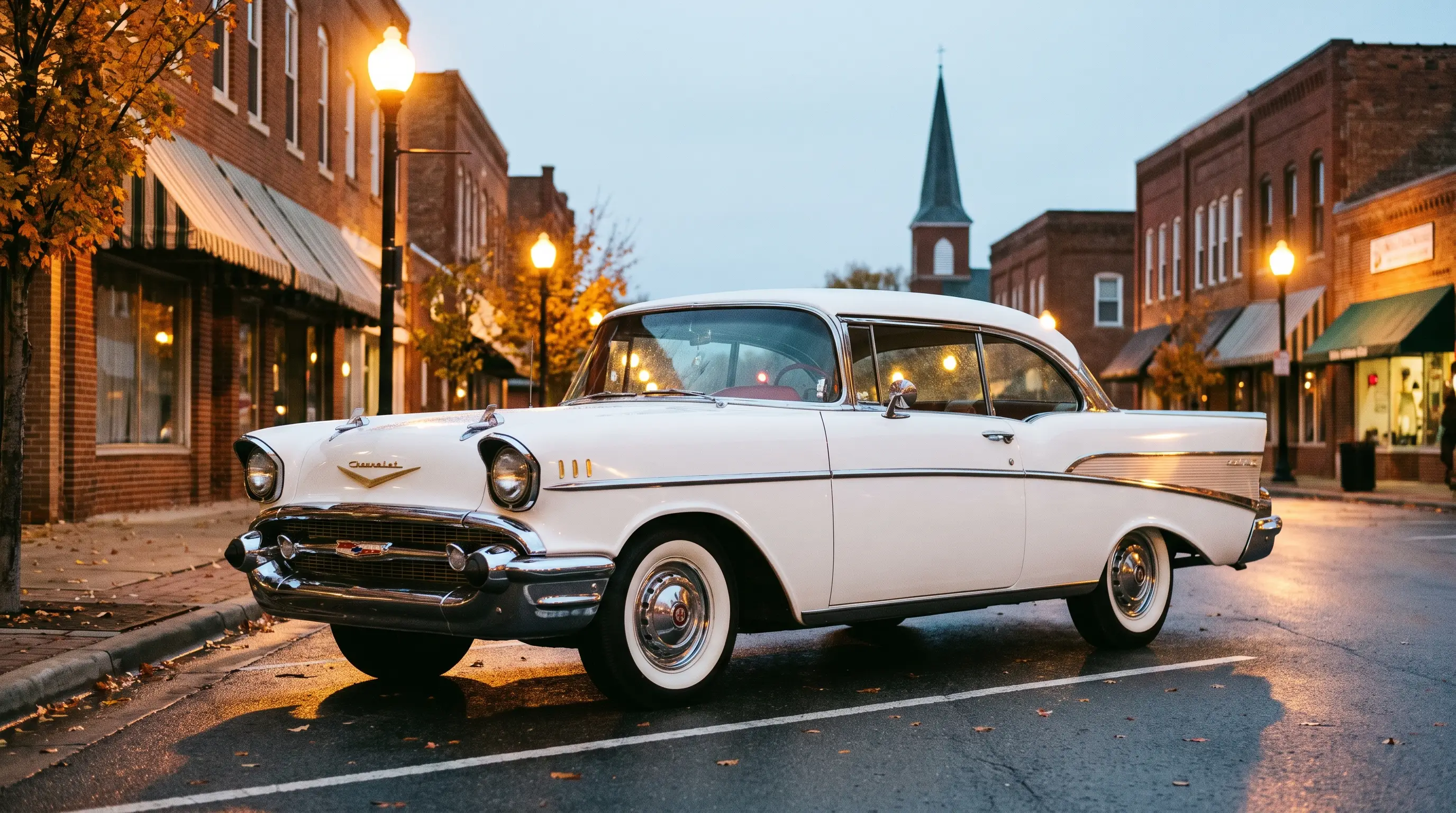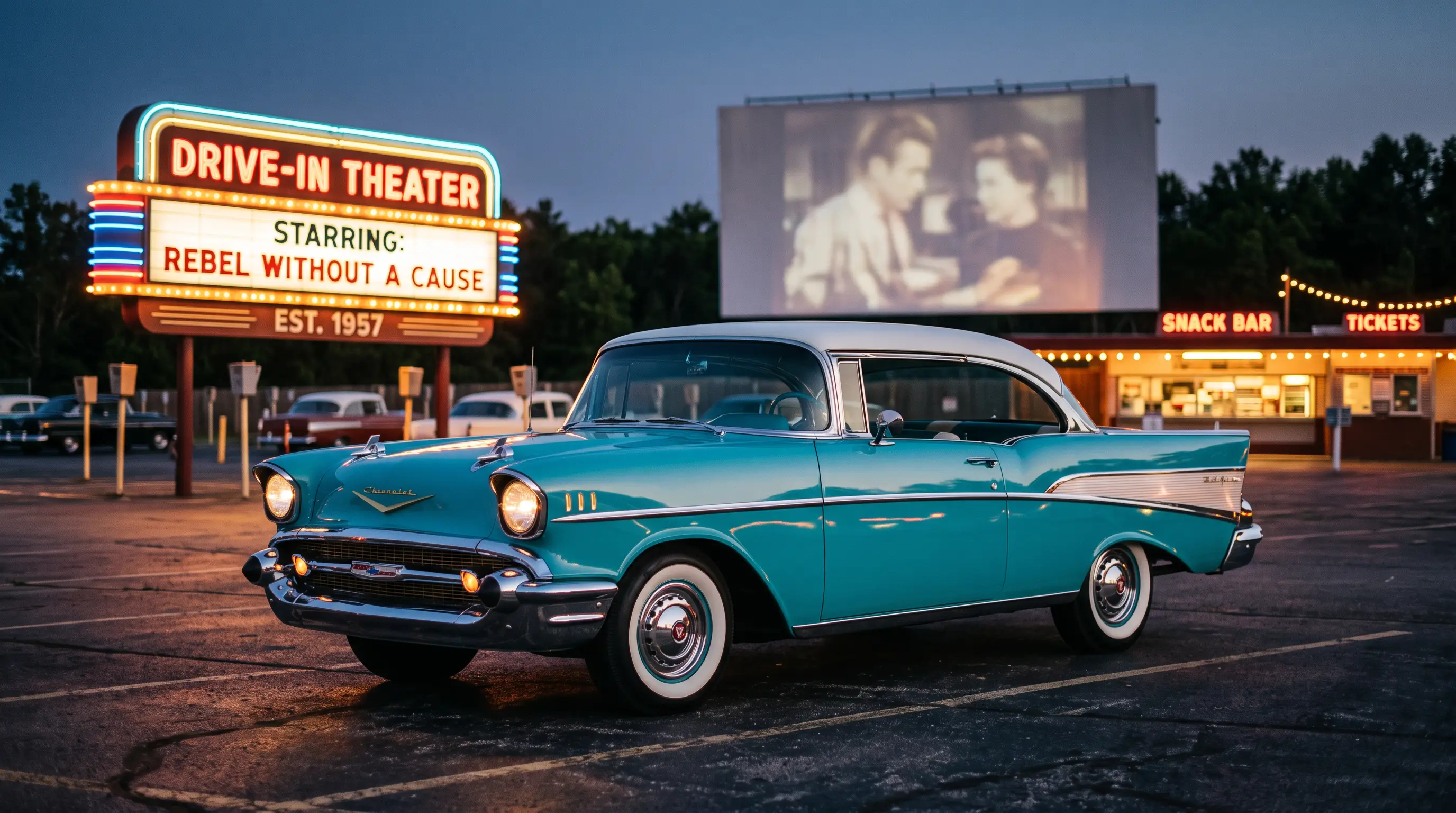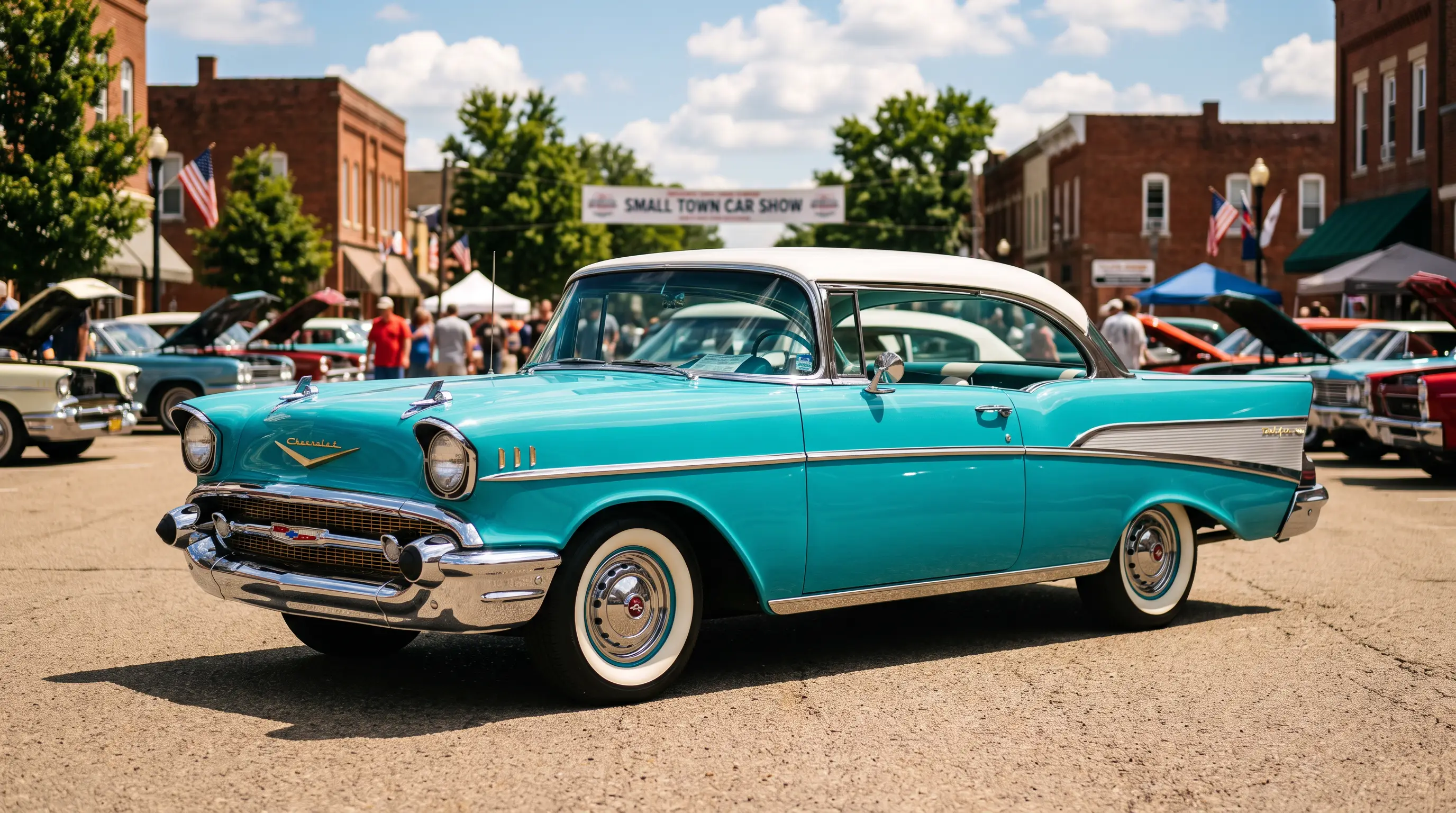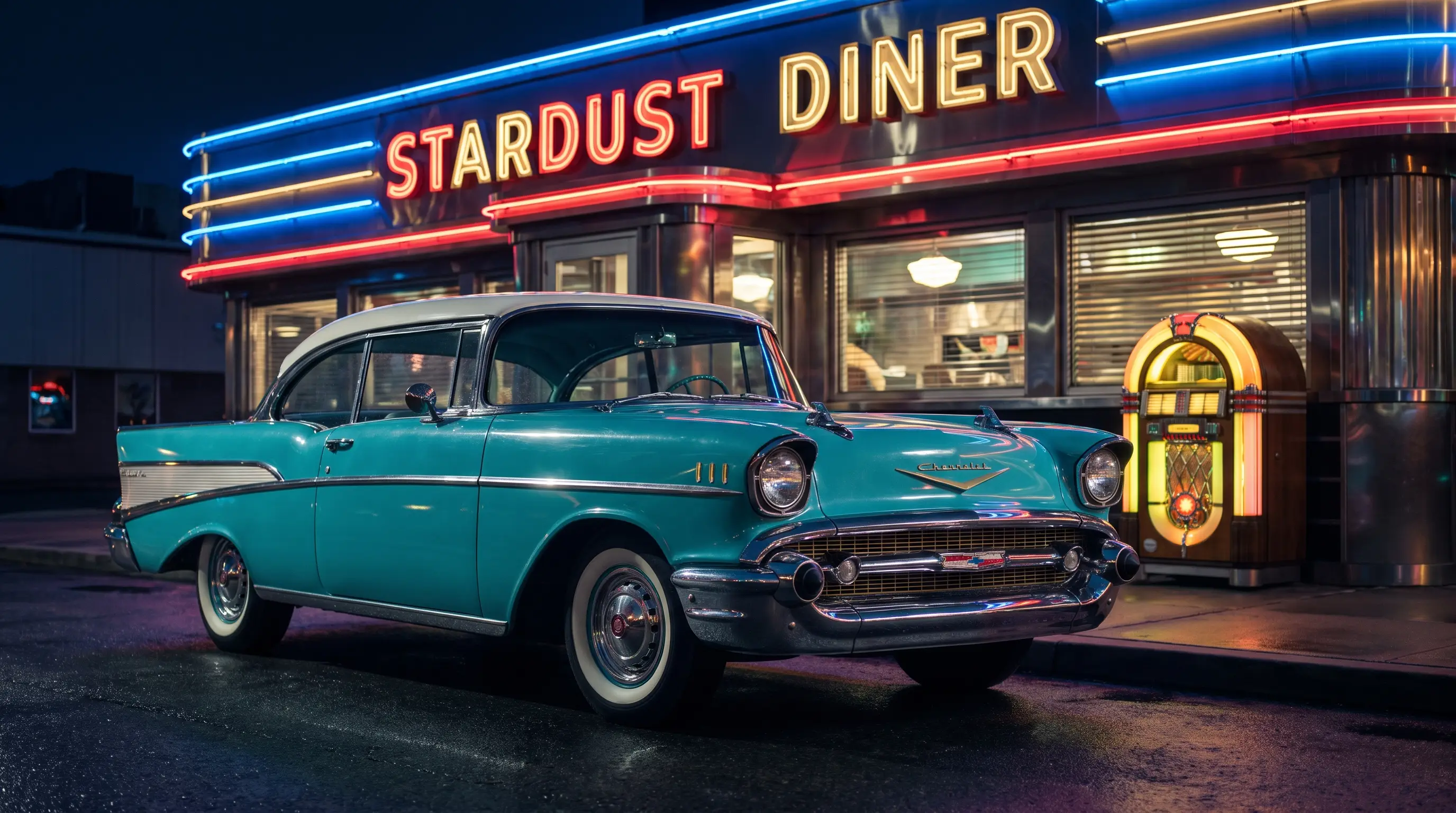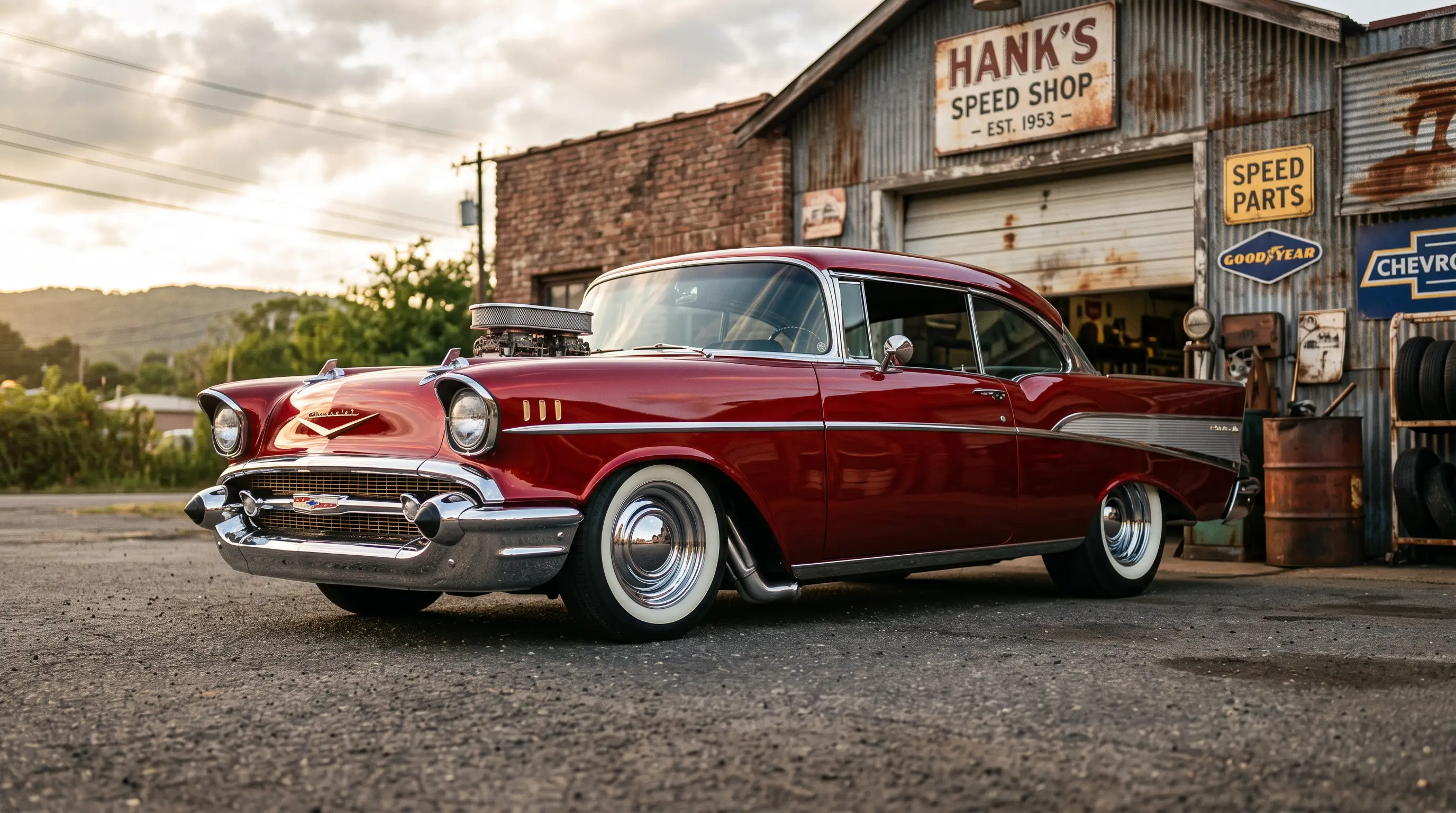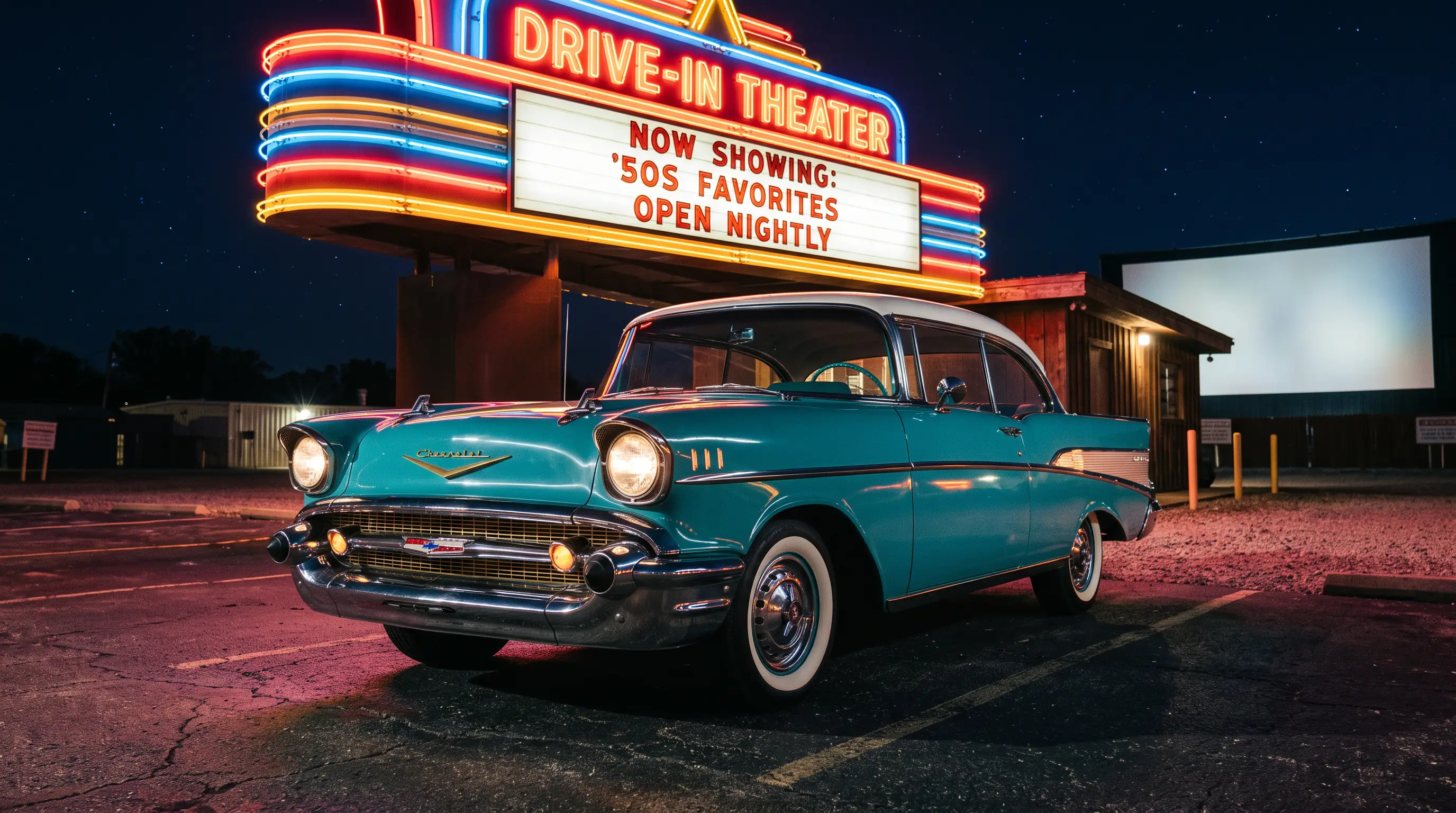
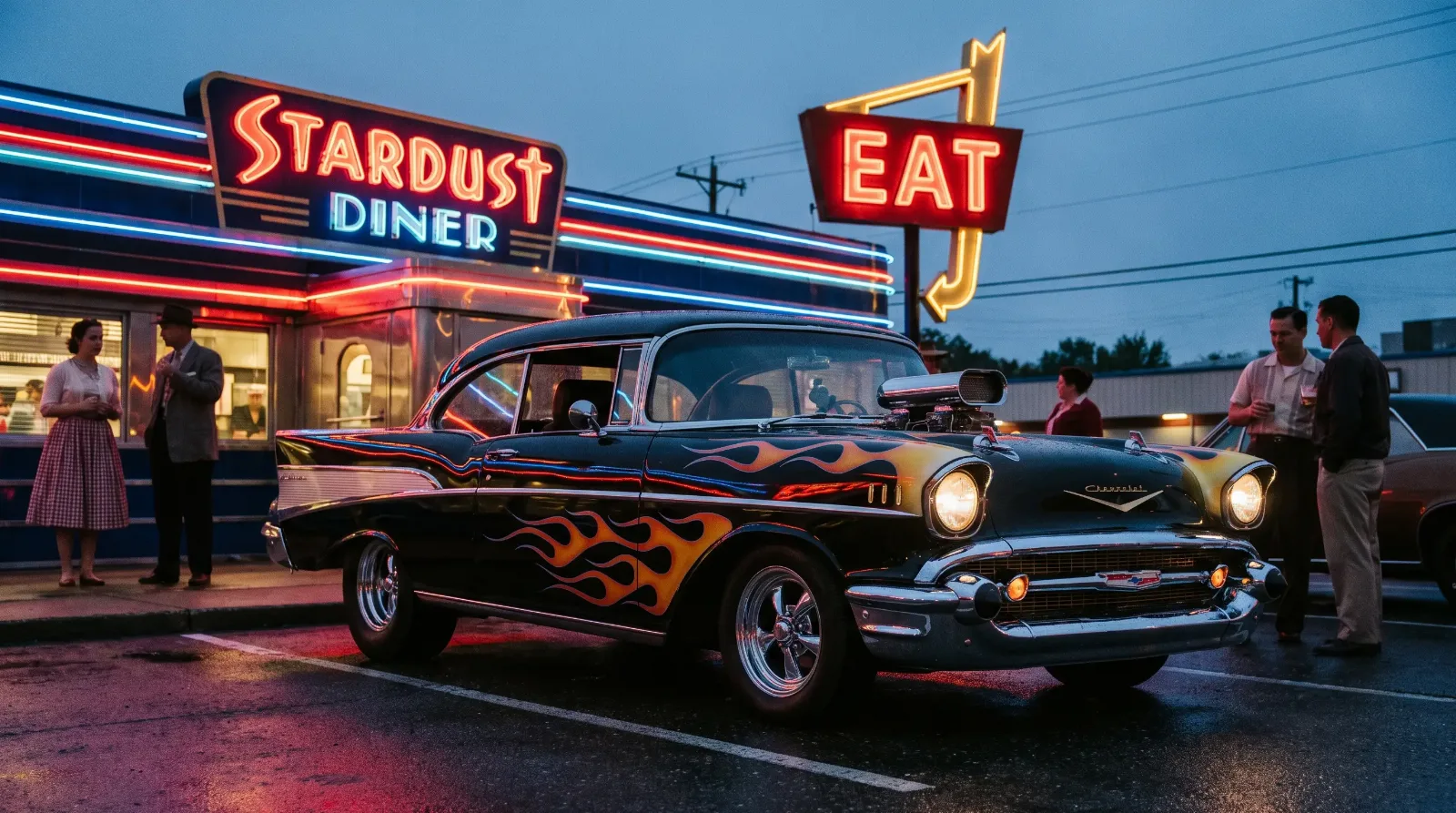
The white Thunderbird gets the mystery, but watch any warm night at a drive-in and the car that keeps pulling in, over and over, is a Chevrolet Bel Air. A girl leans out the window. A boy pretends he is not looking. Somewhere a radio plays low. For a whole generation of Americans, that shape was not a collector car or a magazine cover. It was the car parked in the driveway, the one that took the family to church and then, after dark, took the oldest son somewhere he did not tell his mother about. The Bel Air earned its place in American memory the honest way, by being everywhere.
That ubiquity is the whole point. Chevrolet built the Bel Air to be aspirational and attainable at the same time, and it landed in the exact years when the country had money in its pocket and open road in front of it. The result is a car that carries more cultural weight than its price tag ever suggested.
The car Middle America actually drove home
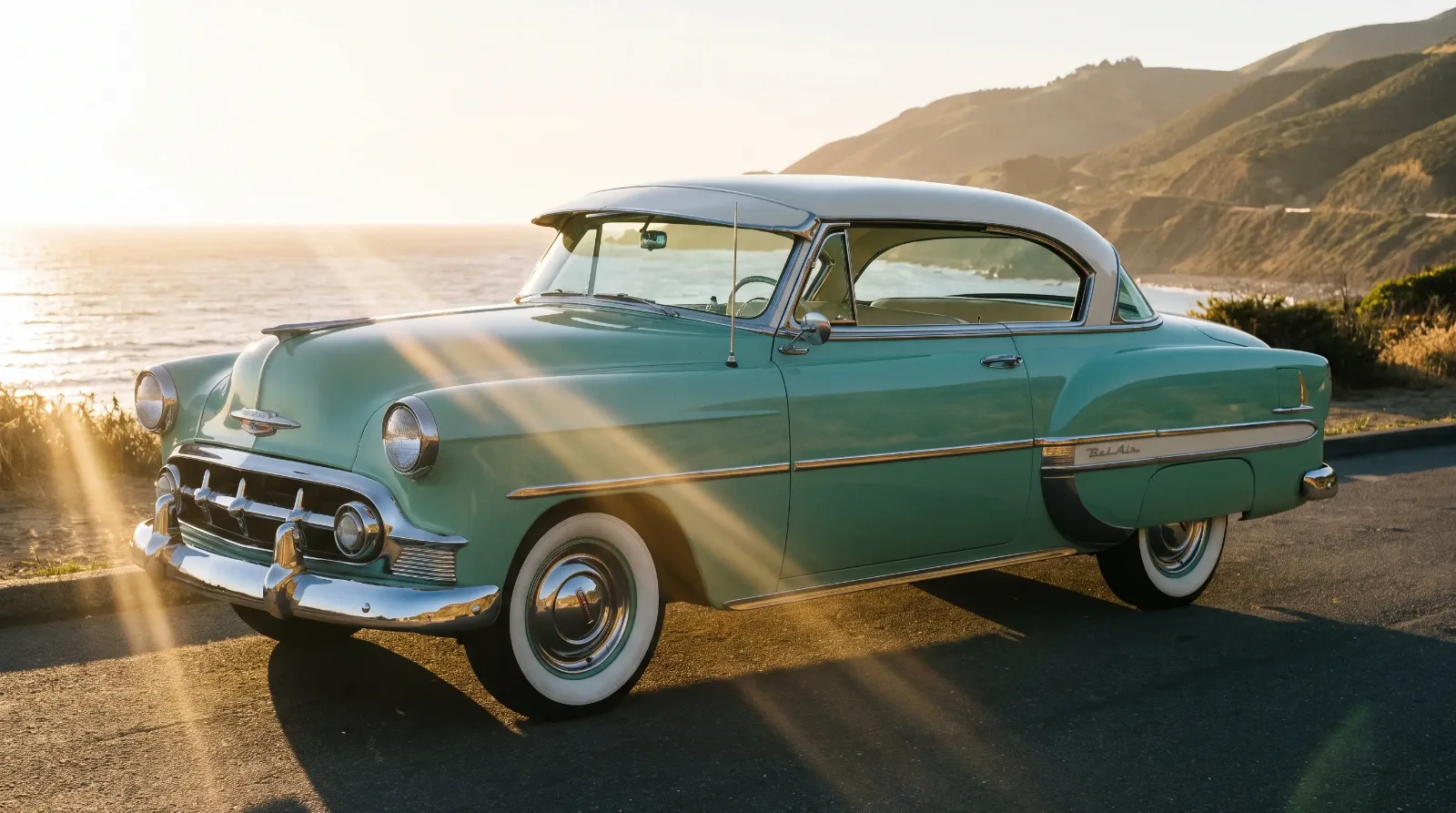
When the Bel Air arrived as its own model line in 1953, it sat at the top of the Chevrolet range without pricing itself out of a working family's reach. That balance mattered. A Cadillac told the neighbors you had made it. A Bel Air told them you were on your way, and that felt more like most people's lives. The nameplate, borrowed from a fashionable Los Angeles district, promised a little glamour to buyers in Ohio and Georgia and Kansas who were never going to see the actual Bel-Air but liked the sound of it on their own street.
By the middle of the decade the car had become a kind of shared national object. It showed up at high school parking lots and county fairs, at diners and church lots, in wedding photos and in the background of a thousand ordinary snapshots that nobody thought to stage. When people my parents' age talk about their first car or their first date, the odds are good a tri-five Chevrolet is somewhere in the story. If you want the fuller account of how the line grew from a trim package into an institution, the chevy bel air history is a study in how an ordinary product becomes a symbol.
There is a democratic quality to that spread that later collector cars never quite matched. A Bel Air did not announce a fortune. It announced effort, taste, and a good year at work. That is a narrower and more relatable kind of pride, and it is part of why the car reads as warm rather than showy in old photographs. The people posing beside their Bel Airs are not aristocrats. They are teachers and mechanics and shop owners, and the car flatters them without embarrassing them. Few American products have ever threaded that needle so well, and fewer still have been remembered so fondly for doing it.
Chrome, color, and the two-tone dream
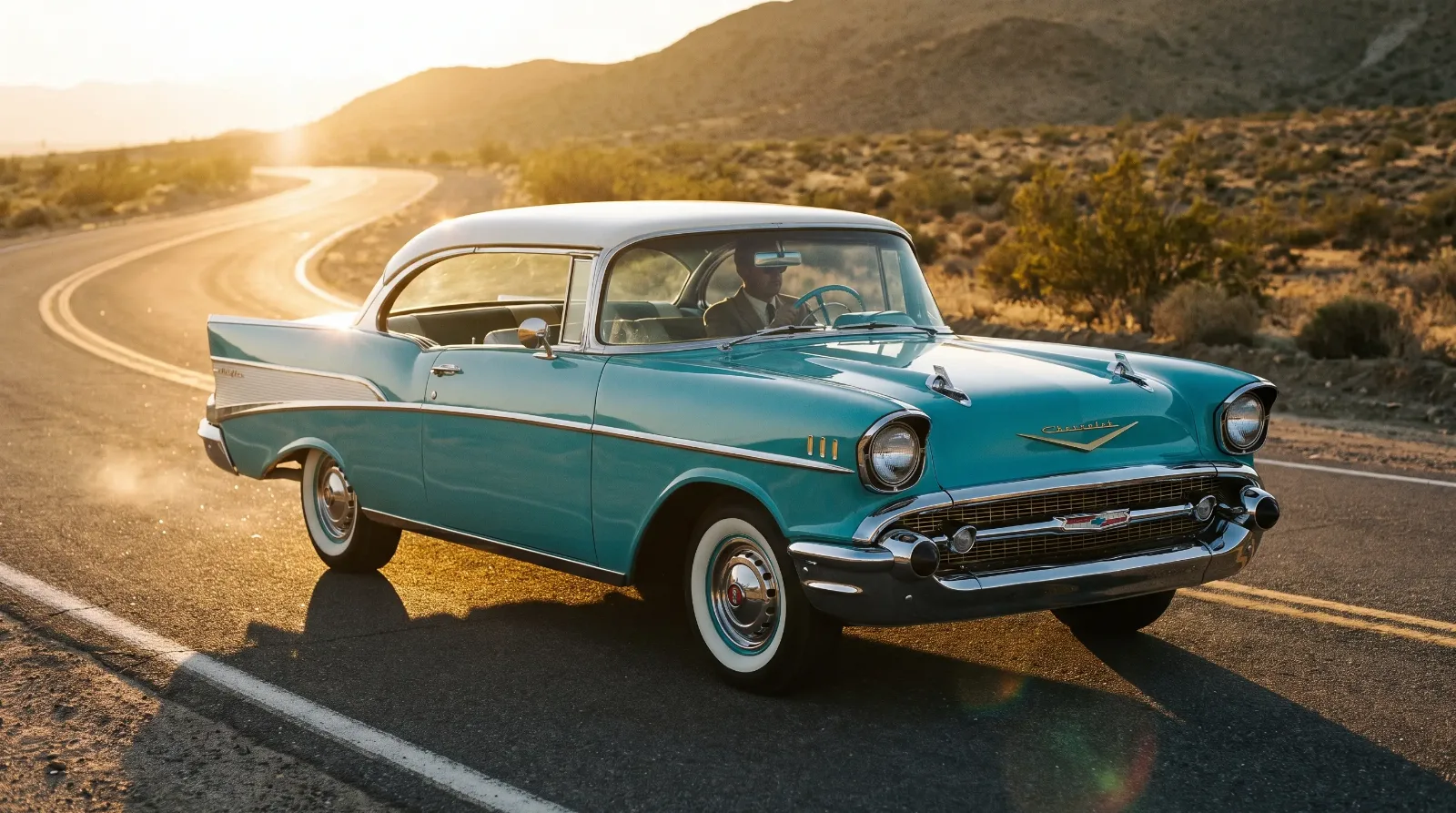
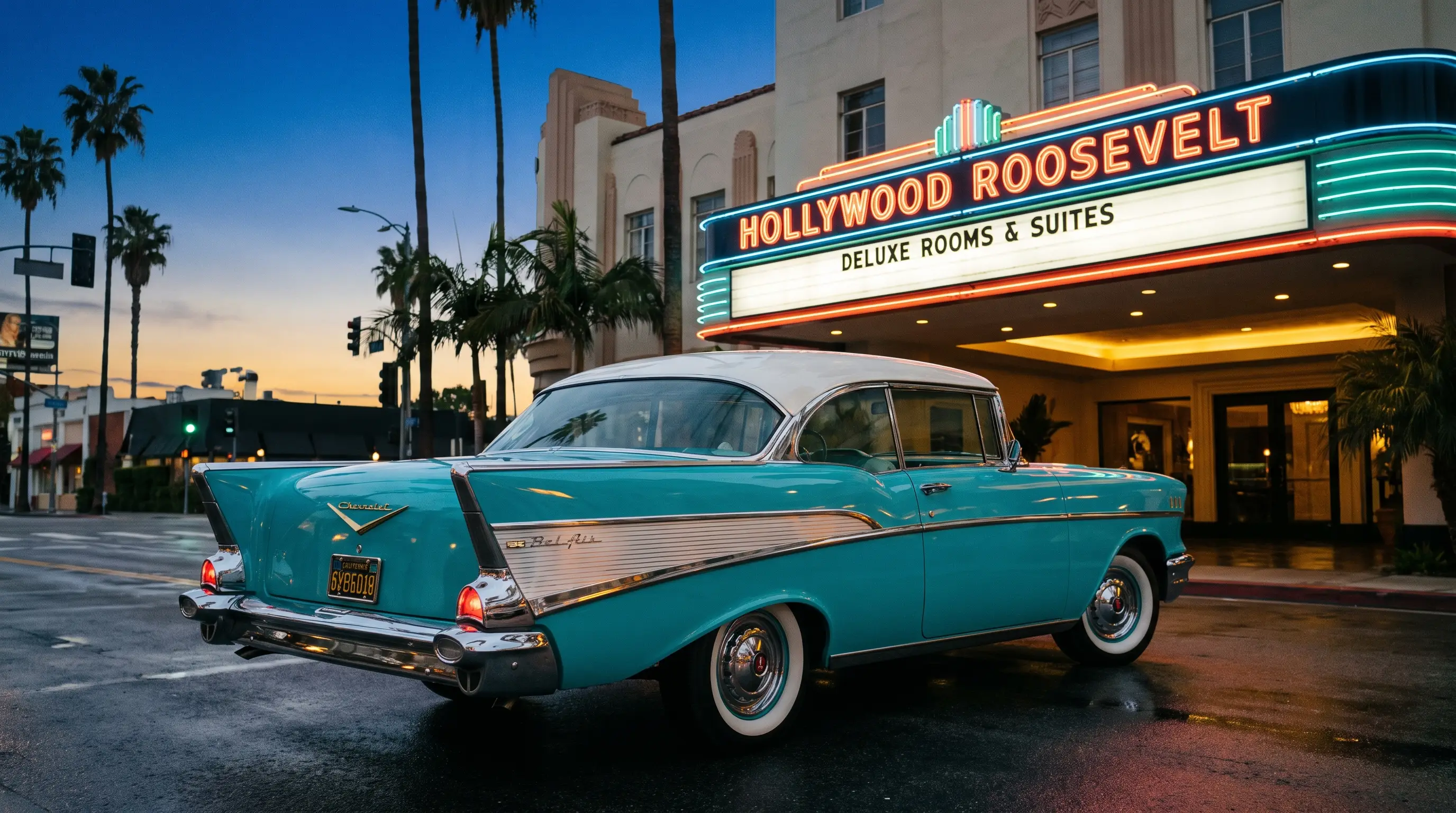
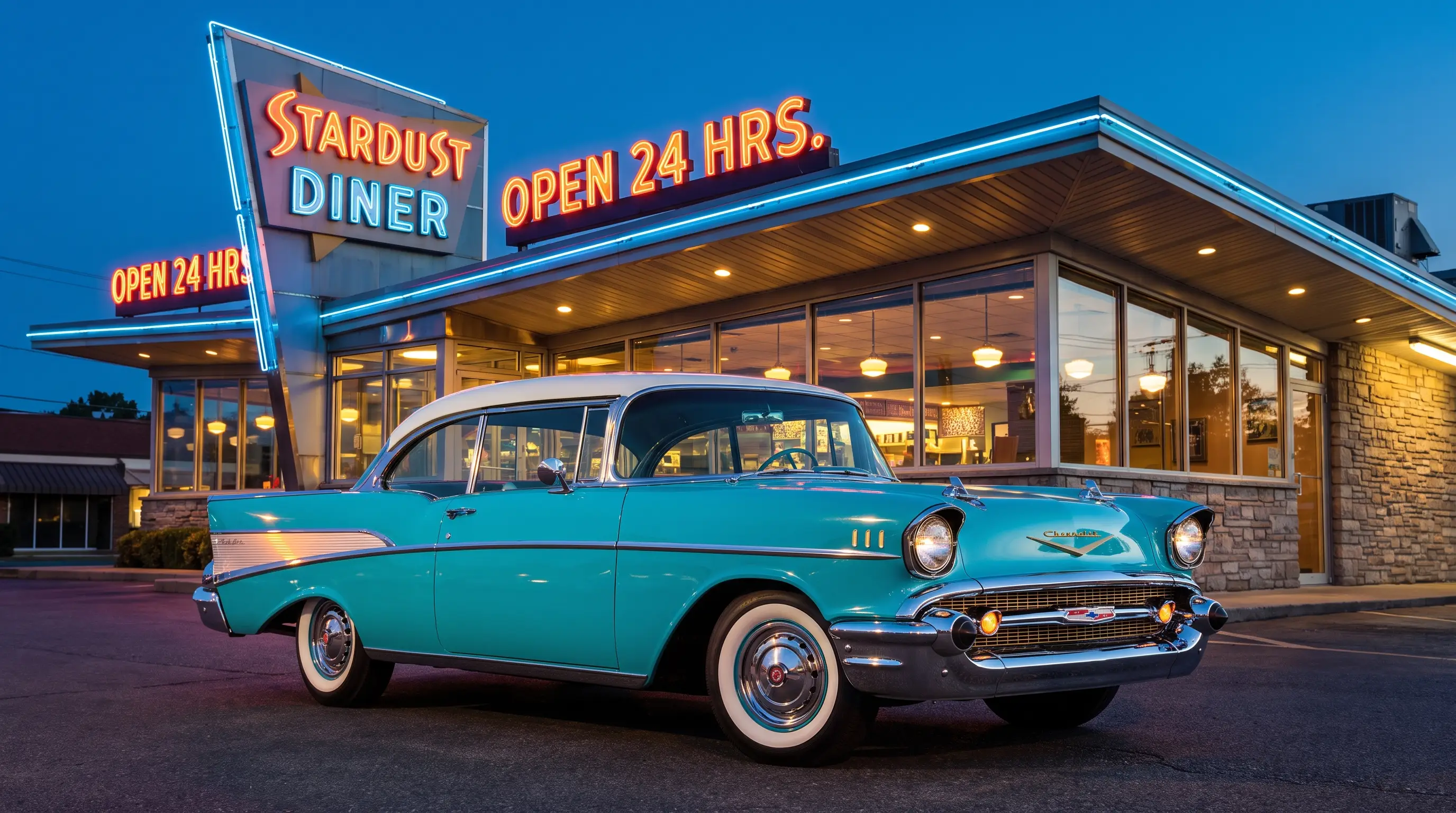
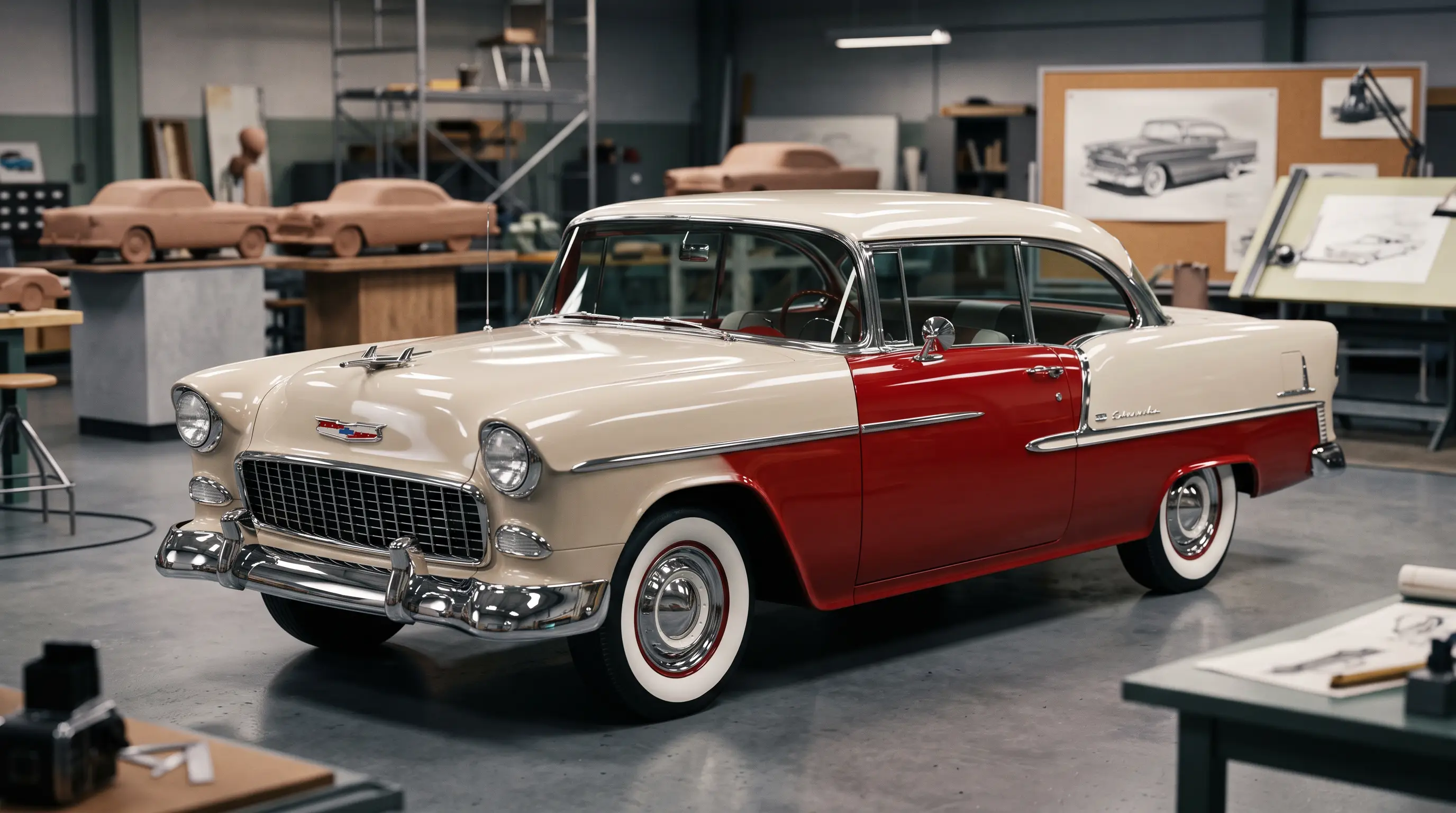
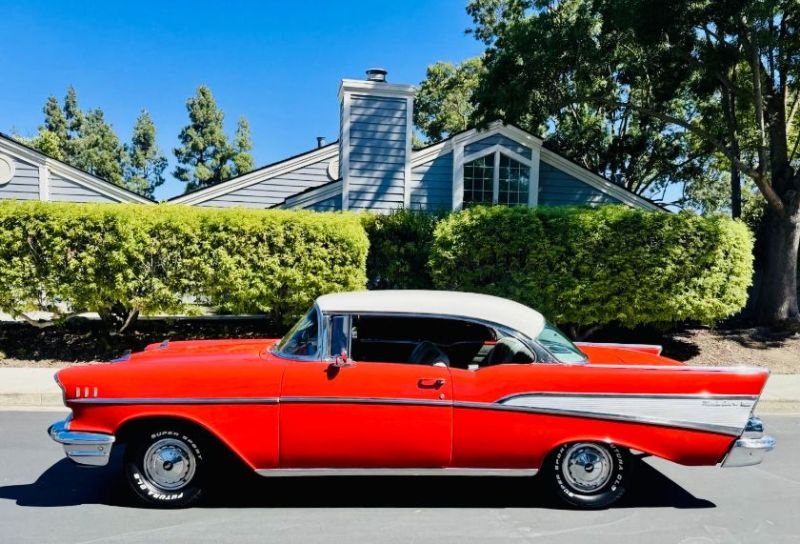
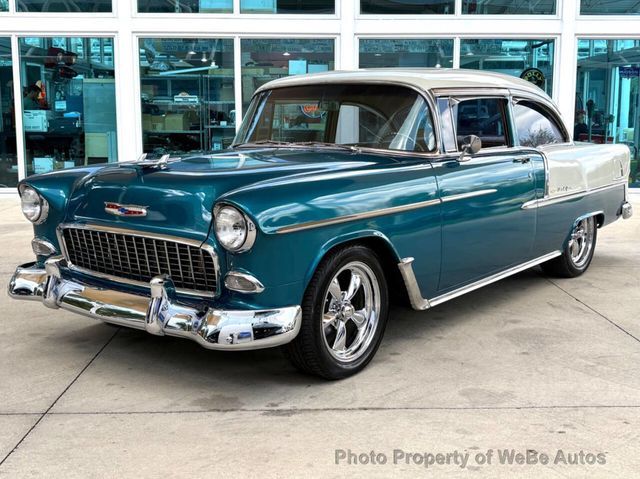
Color is where the Bel Air stopped being transportation and started being a mood. The 1955 through 1957 cars, the ones enthusiasts call the tri-fives, arrived in paint combinations that read almost like candy names, and the two-tone treatment turned a family sedan into something you noticed from across a parking lot. India Ivory over Surf Green. Coral and gray. That famous turquoise, the shade so tied to the era that people now call it Bel Air blue without needing to explain.
The chrome did the rest. Chevrolet layered on brightwork with a generosity that later decades would call excessive and that buyers at the time simply called beautiful. The gold anodized grille on the 1957 in particular caught the light in a way that made the car feel expensive. Half the appeal was that the color and the chrome did not hide the car's roots. Everyone knew what a Bel Air cost. Dressing it up anyway was part of the fun, a small act of optimism you could park at the curb.
| Tri-five year | Signature look | Cultural footprint |
|---|---|---|
| 1955 | Ferrari-inspired eggcrate grille, clean flanks | The fresh start, the year the small-block V8 arrived |
| 1956 | Full-width grille, bolder two-tone sweep | The confident middle child, often overlooked today |
| 1957 | Gold grille, tailfins, rocket-style hood trim | The one that became the icon and the poster |
From showroom floor to hot rod
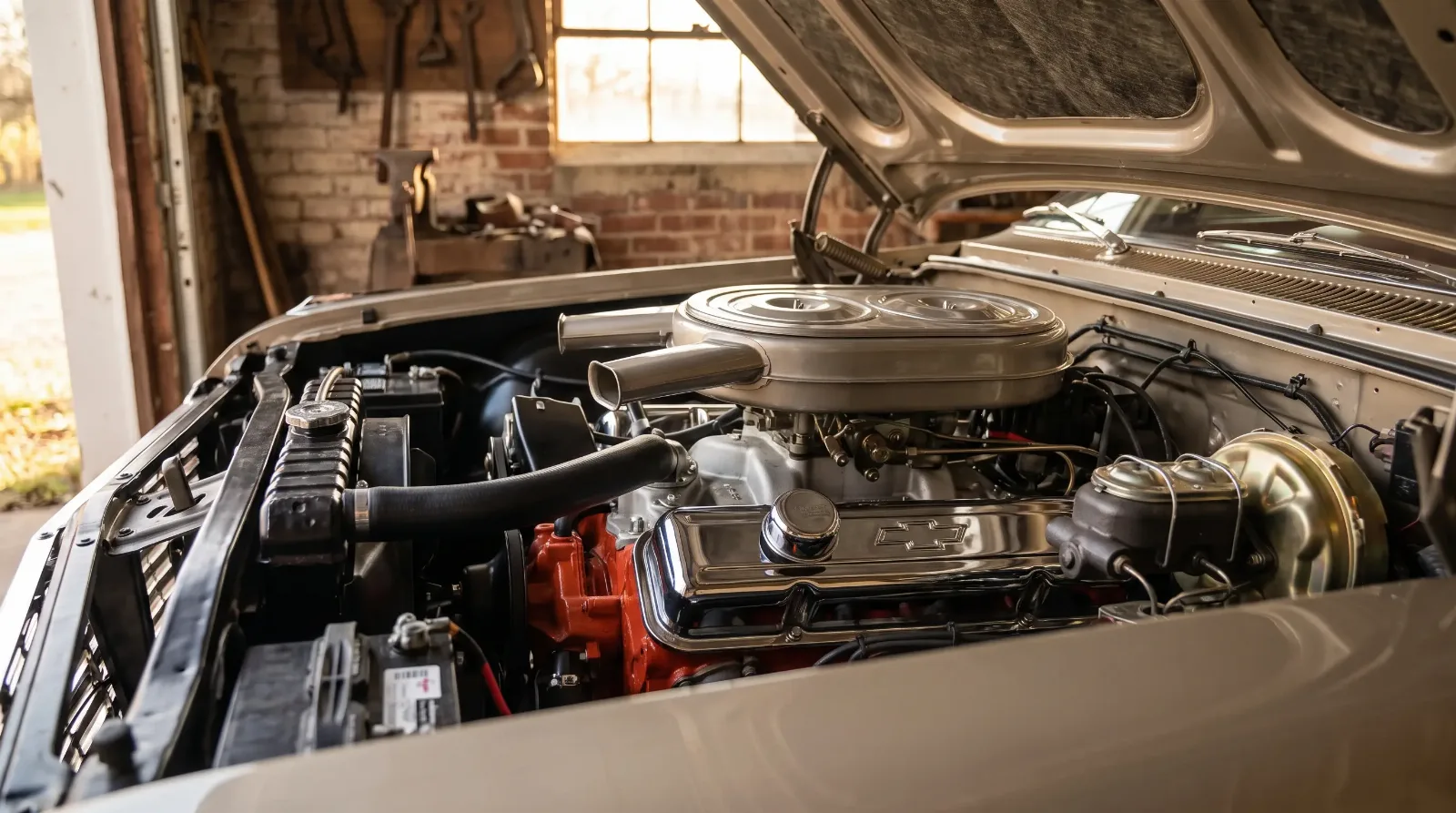
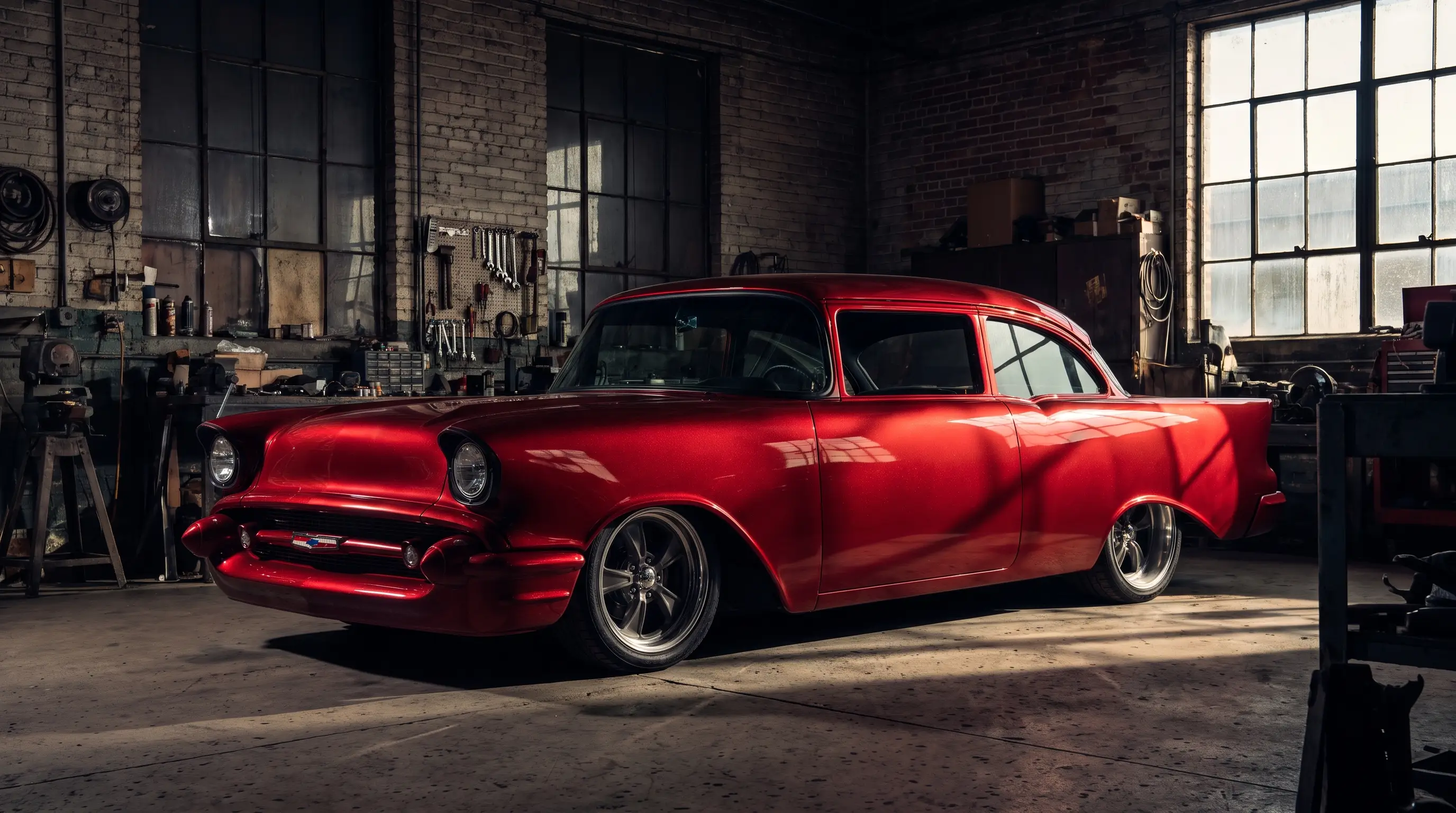
The Bel Air did not stay stock for long, and that is a compliment. The same qualities that made it a good family car, a strong body, a willing V8, plenty of them on the road, made it perfect raw material for anyone with a wrench and an idea. Young men who could not afford a purpose-built race car could afford a used Bel Air, and by the early 1960s the tri-five had become one of the foundational shapes of American hot rodding.
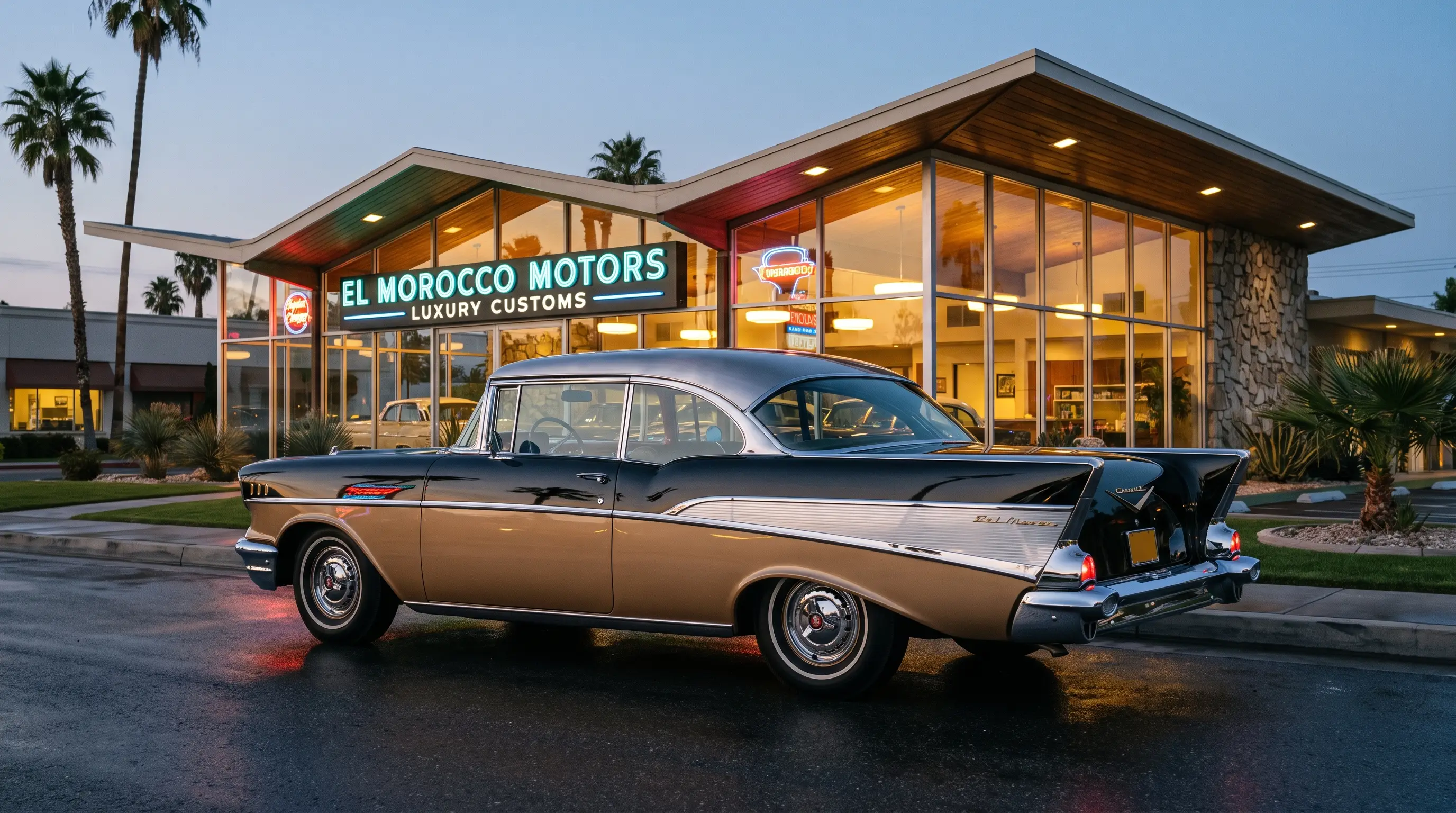
What is striking is how the customizing followed the culture. On the coasts and in the barrios of the Southwest, the Bel Air became a canvas for lowriders, dropped and detailed and treated with a devotion that had nothing to do with quarter-mile times and everything to do with pride and craft. In the drag strips of the Midwest, the same car got lightened and loud. One model, two entirely different dreams, both of them deeply American. For readers who want the earlier chapter of where these cars came from before the customizers got to them, there is a related story worth your time.
"The Bel Air is the rare car that means one thing in a family album and something completely different in a garage at midnight, and it wears both without contradiction."
- Nora Beckett
The Bel Air on screen
Hollywood understood the shorthand early. Put a tri-five Chevrolet in a frame and the audience instantly knows the decade, the class, the feeling. No dialogue required. The car does the work. That is why the association between the 1957 bel air american graffiti nostalgia runs so deep in the popular imagination, even for people who have never sat in one. George Lucas set his 1973 film in a single California night in 1962, and the whole movie runs on the ache of cruising, of engines idling at red lights, of teenagers measuring their lives one lap of the main drag at a time. The tri-five Chevrolet is stitched into that world, but the pedigree is worth getting right. The black, menacing hot rod that Harrison Ford's Bob Falfa drags down the strip is not a Bel Air at all. It is a stripped 1955 One-Fifty, the cheapest and lightest full-size Chevrolet sold that year, chosen for the film precisely because a bare-bones car reads as meaner on screen. The actual Bel Air in the story belongs to Ron Howard's Steve Bolander, who cruises a white 1958 Chevrolet Impala, the top trim of the Bel Air line that year before Impala broke off into its own series in 1959. Knowing which car is which does not dim the nostalgia, it sharpens it.
The reason the shorthand works is that the car already carried the meaning before any camera found it. Filmmakers did not have to teach audiences what a tri-five Chevrolet stood for. They only had to point at one. That is the difference between a prop and a symbol, and the Bel Air had crossed that line long before the studios started mining the 1950s for nostalgia. When you feel a pang at the sight of one on screen, the movie is not manufacturing the feeling so much as borrowing it from your own memory of driveways and drive-ins.
Beyond that one film, the 1957 in particular has done decades of work as visual shorthand. It shows up whenever a director needs to say 1950s America without a caption, in period dramas and music videos and advertisements that trade on a warmth the car earned honestly. The screen did not create the Bel Air's mystique. It confirmed it, then handed it to generations who were born long after the last one left the showroom.
Why the 1957 became the icon
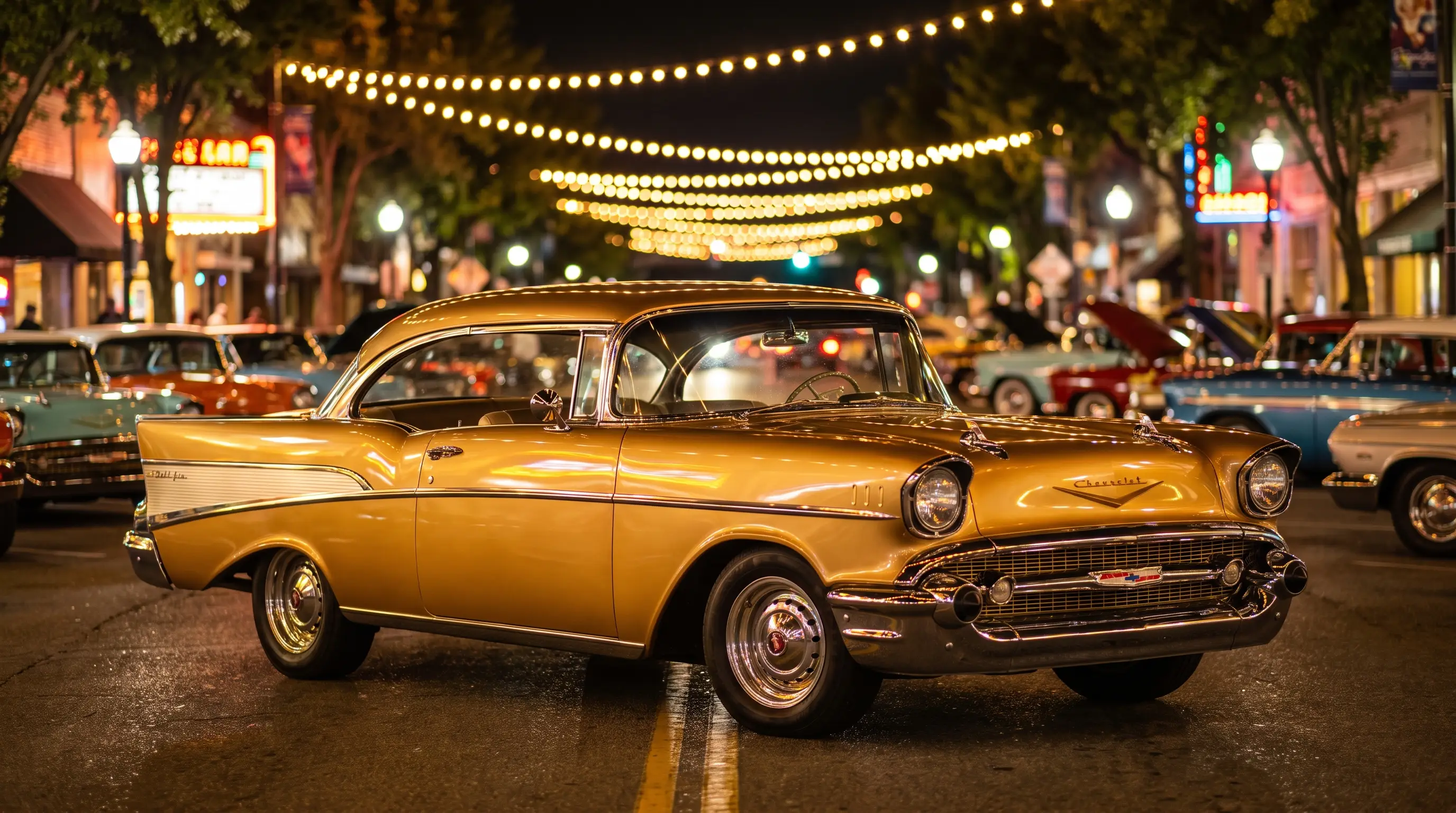
Ask a room full of enthusiasts to picture a Bel Air and most of them will land on the 1957, and it is worth asking why that particular year won. It was not the best seller of the three. Chevrolet actually moved more cars in some earlier years. It was not even universally loved when new, since some buyers found the tailfins and the gold trim a little much. But time has a way of sorting these things, and the 1957 had the details that photograph well and age into charm rather than out of it.
The tailfins helped. So did the two-tone bodies and that grille. There is also the matter of timing. The 1957 sat right at the hinge of the decade, the last gasp of one design language before the longer, lower, wilder cars of the 1960s took over. That made it a bookend, and bookends get remembered. When the nostalgia wave of the 1970s and 1980s arrived, hungry for a clean symbol of a simpler-seeming America, the 1957 Bel Air was standing right there, chrome catching the light, ready to be a poster.
The long afterlife of a family car
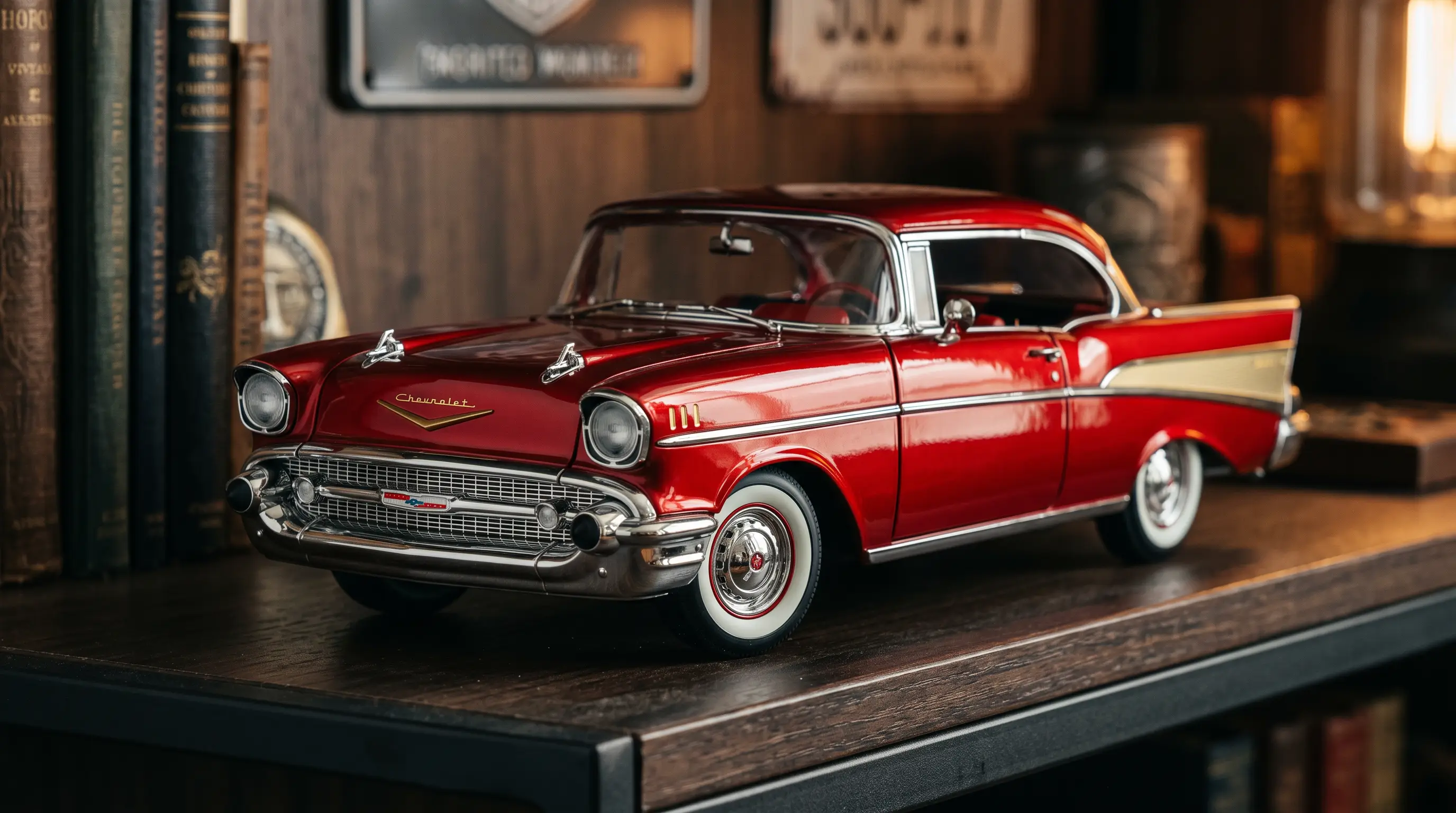
What happened next is the strangest and most touching part of the story. A car built to be used up and traded in became, instead, an heirloom. The Bel Air outlived its own practicality and turned into something people restore in retirement, drive to shows on Sunday, and hand down to children who were not alive to see it new. The nostalgia is real, but it is not only nostalgia. Sit in one and the appeal is plain. The visibility, the bench seat, the way the whole car feels like an object made by people rather than by software.
That endurance is why the tri-five market has stayed lively for so long. These cars trade hands constantly, from unrestored survivors to frame-off show cars to the wild customs that never pretended to be original. For anyone who has read this far and felt the pull, there are plenty of Airs for sale now, and the range in condition and price is wide enough that the dream is not reserved for the wealthy. That, in the end, is the most faithful thing about the Bel Air. It started as an attainable piece of glamour, and it has managed to stay one.
The Bel Air's genius was never speed or luxury or even beauty, though it had a share of all three. Its genius was belonging. It belonged to families and to hot rodders, to the coasts and the flyover states, to the screen and to the driveway. Most cars are remembered by the few who could afford them. The Bel Air is remembered by nearly everyone, and that is a rarer and better kind of fame.
Sources and notes
- Where Were You In '62? The Cars of American Graffiti - ClassicCars.com Journal
- IMCDb: 1955 Chevrolet One-Fifty in American Graffiti
- MyStarCollectorCar: Why American Graffiti's 1958 Impala Was a Movie Star
- Curbside Classic: The 1957 Chevrolet Fuel-Injected 283 V8
- Automobile Catalog: 1957 Chevrolet Bel Air 283 V8 Fuel Injection Performance Review
- Wikipedia: Chevrolet Bel Air